
Tech
‘MacBook Ultra’ Coming Soon With These 12 New Features
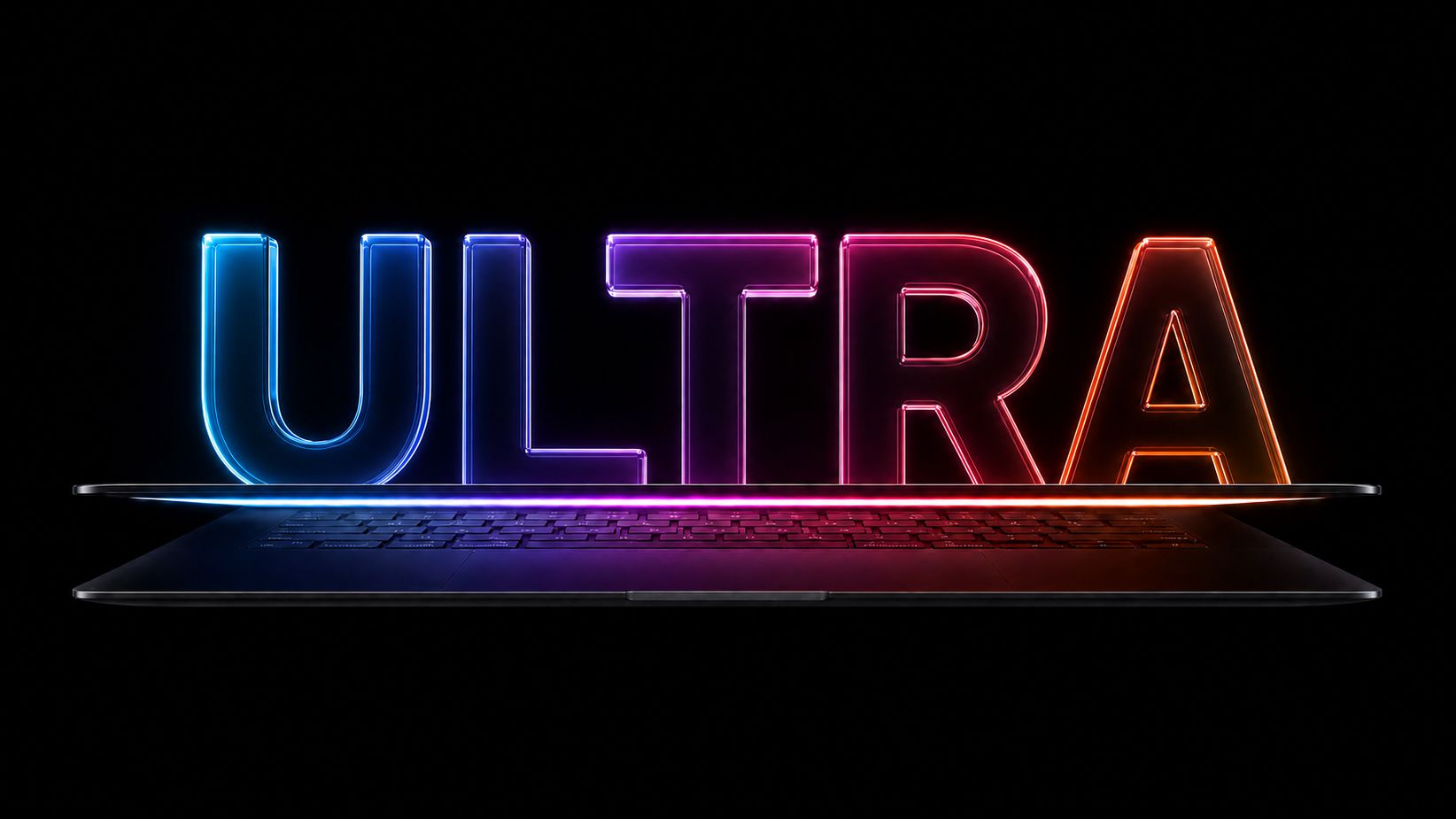
Apple is set to release its first MacBook high-end redesign in 5 years, which will bring a series of Mac firsts.
Bloomberg’s Mark Gurman predicts that the laptop will arrive in 2026, but the earlier window is now more probable due to the worldwide memory chip shortage. Ming-Chi Kuo, an analyst at Ming Chi Kuo’s firm, expects that mass production will begin in late 2026.
Apple’s last high-end MacBook Pro design was in 2021, with the M1 Pro & M1 Max. This would be the first time in five years that Apple has released a new laptop. The following is a list of all the rumors about this device.
Apple’s “MacBook Ultra”, branding. According to reports, Apple will be launching two “Ultra” devices in the coming year: the foldable iPhone, and the laptop. This would mark the debut of a new tier, above MacBook Pro. Apple could theoretically still brand the MacBook Pro with “MacBook Ultra”, but “MacBook Ultra” is highly probable for now.
OLED Display: It is anticipated that the MacBook Ultra will be the first Mac to have an OLED screen, which replaces the current MacBook Pro’s mini-LED backlighting. The display should offer richer colors and a greater contrast ratio, with true blacks. It will also be brighter, have a better power-efficiency, as individual pixels are switched off instead of dimmed. According to reports, this laptop uses hybrid OLED, combining an oxide-based TFT with a two-stack OLED panel. This is the same technology used on the iPad Pro and offers a long lifespan.
Apple has been resisting the idea of a touch screen for years. The first Mac is now expected to have this feature. Kuo was the first to claim that the display would be touch-friendly. Gurman confirmed it. And now, the Weibo leaked known as Instant Digital says that the feature has been officially confirmed. Apple does not seem to be positioning this machine as being a touchscreen-first product like the iPad. Instead, Gurman says that customers can switch between keyboard, trackpad and touch. Apple’s laptop will remain in a clamshell design, with both the trackpad and keyboard remaining. It won’t be convertible or detachable.
Apple is said to be reworking macOS in order for the controls to adapt according to how you are interacting with it. Tapping a menu item will apparently reveal a wider range of controls that are touch-optimized. The system also gains iPad-style gestures such as pinch to zoom and fast scrolling. The touch-based features would not be confined to just a few apps, but integrated into the entire operating system.
Apple is likely to plan a strengthened hinge that will prevent the screen from wobbling when it’s tapped. Apple’s current MacBook Pro hinge is easy to move and doesn’t tilt back very far. This could pose a problem for a device designed to be prodded.
Hole-punch cameras: It is anticipated that the “notch” will disappear and be replaced with a much smaller hole-punch at the top. Bloomberg has confirmed the change first suggested by an Omdia research roadmap. The notch’s removal would increase the screen space and release the space that the menu bar currently occupies. This design move will bring the device closer to a seamless edge-to-edge panel.
Dynamic Island: It is anticipated that the cutout will expand digitally into an iPhone style Dynamic Island. The cutout would expand and interact contextually depending on which app or Mac feature is being used, showing items like Siri, Low Battery Alerts and AirPods Connection Indicators in the area around the camera.
M5 Pro & M5 Max Chips: Instead of the M6 Pro & M6 Max, the laptop will ship with existing M5 Pro / M5 Max processors found on the MacBook Pro. Apple appears to have scrapped M6 Pro, M6 Max, in favor of M7 Pro, M7 Max, which are said to be better suited for AI intensive workloads. They also boast upgraded graphics, improved neural accelerators and increased memory bandwidth. According to reports, a second-generation version with these chips will be released in late 2027.
MacBook Ultra expected to be thinner, lighter and smaller than current MacBook Pro. The lid should be slimmer by itself if Apple does not use mini-LEDs for backlighting. Apple has not indicated that it intends to eliminate ports like HDMI, MagSafe or the SD Card slot in order to accomplish this. This was an unpopular choice the previous time.
There will be two display sizes. The laptop should come in 14-inch as well as 16-inch versions, matching the MacBook Pro line-up. According to reports, the code names for the models are K114 and K116.
Omdia, a research firm, claims that Samsung Display is supplying 14.3-inch, 16.3-inch, and 14.2-inch displays, slightly larger than those on the current models. This would indicate thinner bezels surrounding a slightly larger display. Bloomberg reported in February that the overall size of screens is not likely to be changed compared with MacBook Pro.
Apple is reportedly considering cellular integration for Macs in the future. This would be an industry first. The MacBook Ultra will likely be equipped with Apple’s C1X or C2 modems for LTE and 5G if the plan is implemented. It is the feature that seems to be most in doubt.
Apple software already shows signs of the touch-screen MacBook. MacOS 27 Golden Gate gives a hint at the device in three different ways. It adds direct touchscreen input to Sidecar allowing users tap on macOS elements and interact using an iPad.
Buyers may feel a little uncomfortable. Apple’s first MacBook Ultra is expected to combine the most ambitious Mac redesign of recent years with silicon already on sale since months. However, a successor that uses much more advanced processors could be released less than one year after.
The pricing is still unknown but is expected to be very high. Apple increased prices for its Mac line-up in June. The 14-inch MacBook Pro starts at $1999 and goes up to $2499 when equipped with an M5 Pro processor. Meanwhile, the 16-inch MacBook Pro starts at $2999. MacBook Ultra will be the most expensive of all.
Popular Stories
MacRumors Shows: Bye-bye MacBook Pro MacBook Ultra Is Coming
Hartley Charlton, Friday July 10, 9:12 am (PDT), by Hartley Charlton
This week, on The MacRumors Show we talk about the future of Apple’s high-end MacBook line, which is becoming increasingly confusing, and include the MacBook Pro entry level, as well as the “MacBook Ultra” rumored. The MacRumors Show’s YouTube channel has more videos. Apple’s Mac chip roadmap is set to change in an unexpected way over the coming year. According to reports, the company will skip…
Apple’s ‘MacBook Ultra” to Come with Up to 6 New Features
Joe Rossignol, Friday July 10, 6:49 AM PDT
Apple will release the high-end MacBook Ultra this year, with OLED and other features. We have summarized the rumors below. So far, six features, such as an OLED screen, touch-screen capability, Dynamic Island chips (M5 Pro or M5 Max), a thin design and possibly Apple’s C2 modem with built-in cell connectivity, have been reported. Bl…
Apple’s ‘MacBook Ultra” is reportedly on track for release by early next year
Joe Rossignol, Wednesday July 22, 9:52 AM PDT
Bloomberg’s Mark Gurman reported today that the new 14-inch MacBook and 16-inch MacBook high-end models are on track to be released “by the end of the year or early next.” Apple has been testing macOS 27.1, which will be released to the public at the end October, on its laptops. Six new features are available.
Tech
If another advanced civilization lived on Earth before us, would we know?
Adam Frank, an astrobiologist from NASA’s Gavin Schmidt’s office with a question he thought was bizarre: Do aliens feel climate change? Schmidt was able to surpass him in a matter of moments.
Frank, an University of Rochester Professor who searches for signs of intelligent life, wanted to know if advanced civilizations will inevitably cause climate changes, as we are now doing. Schmidt was told that he had been looking for other planets that same day in 2017. “We know, of course that no civilizations have existed on Earth.”
Schmidt cut him off immediately. He asked, “How did you find out?”
Frank described it as a “record scratch” moment. This sparked an investigation by the two scientists. Would we have known if an advanced civilization lived millions of years on Earth, powered itself with energy, and then wiped themselves out? They would have left behind a record that reflected their existence.
The idea was called “the Silurian hypothesis”, after the fictional race of advanced reptiles from the television show “Doctor Who”, and a paper about it was published in 2018.
This is an idea that will not only take you back in time, but into the future as well. Humans are changing the climate rapidly and drastically by burning fossils fuels. Katharine HAYHOE, an atmospheric researcher at Texas Tech University who wasn’t involved with the research, said: “It was a thought-experiment, but it exposed our vulnerability worldwide.”
Silurean hypotheses raises big questions regarding the future of civilizations. Do all advanced civilisations that harness global energy burn out or can they live sustainably for many millions of years?
Frank said that “these questions all relate to the exact moment we are in.” We are forcing the world into a climate regime that we all know is real. We know this is true, but we don’t do anything.
Schmidt was mulling over the idea of advanced civilisations in Earth’s past because of an ancient event.
Climate signals on the planet went crazy around 55 million years back. As huge quantities of carbon-heating gases were released into the air, global temperatures rose up to 15 degrees Fahrenheit. Ecosystems also collapsed.
The Paleocene and Eocene Thermal Maximum, first observed in 1990, could have resulted from a massive volcanic eruption or a release of sudden methane. It’s still a bit of a mystery why this happened. Schmidt was intrigued by the similarity between what is happening today as humans are driving extinctions and raising temperatures.
Other periods saw oceans depleted of oxygen, and temperatures rise sharply.
It is likely that these events are caused by natural climate conditions, but what would happen if this were not the case? What if they weren’t? Frank and Schmidt describe in their report the possible evidence for a previous advanced civilization.
It wouldn’t be long before what we have built would disappear. Today only 1% of Earth’s surface has been urbanized. It would be harder to locate direct evidence of a civilization that existed in the past.
The planet has been reshaped over millions of years as plates have shifted, volcanic eruptions occur and the land has eroded. Around 1.8 million year old, the Negev Desert is located in southern Israel.
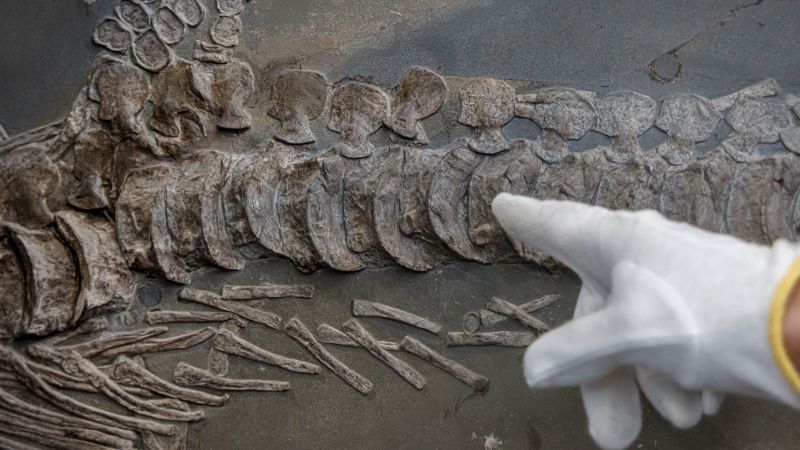
Scientists looked for fossils because surface features might not be enough to provide evidence. However, only a tiny fraction of animals are fossilized and fewer still have been found. Only a handful of fossils near complete have been found. Dinosaurs inhabited the Earth about 180 million year ago.
In the history of 400 million years that complex life has existed on our planet, it is easy to overlook a civilisation which only lasted 100,000 years.
Researchers then looked at traces of chemical change. Frank suggested that you could see lines representing the different ages in the Grand Canyon. Every one of these strata are ground-up rocks that keep a memory about what the chemistry was of Earth then.
Scientists also looked at what evidence we might leave after the end of civilization, such as the massive amounts plastics, artificial hormones used in agriculture, and chemicals that are persistent, but do not degrade. All of these substances could be found in sediments millions of years down the road. The heavy metals in electronic devices could also be found.
Frank explained that the purpose of the paper was not to prove the Silurian Hypothesis correct. It was instead “to tell you what to look at in a more detailed way to determine whether there ever was a civilisation before us.”
Frank and Schmidt find themselves in a strange situation, having both written an article about a hypothesis that neither of them believes. They just state we can’t rule it out yet.
In the intervening years, no one has responded to the request for further investigation. However, some scientists are raising questions.
Jan Zalasiewicz is a geologist, paleontologist, and professor emeritus at the University of Leicester, UK. He said that the Silurian Hypothesis is a “wonderful, deeply thought-provoking” idea. Schmidt and Frank, however, underestimated how modern humans had transformed the world, and “the efficiency of the fossilization processes and how well it preserves a history of our planet’s past,” he added.
Zalasiewicz said that we can’t exclude intelligent prehuman societies. “Dinosaurs who could sing complex operas or Jurassic Ammonites could write poetry, for example,” Zalasiewicz co-wrote 2025 “Discarded”: How Technofossils will be our ultimate legacy. He said that as cities are constructed, metals are recycled, and plastics made, they will have a visible footprint.
Zalasiewicz feels comfortable ruling out a civilization as advanced as the one we inhabit today — “energy-guzzling and manipulative in nature, constructional in nature, producing massive amounts of waste.”
Frank explained that this is the joy of science. You publish a great paper and someone comes along to tell you that it is wrong.
The questions that this hypothesis raises about the future of technologically advanced civilizations such as ours are the main reason for exploring it.
Frank stated that we are smart enough for technology development, but not necessarily smart enough in dealing with the climate changes it will cause. Frank asked, “Are you and I an experiment the Earth has tried that will fail?”
Tech
The 6 best laptops for college in 2026, tested by experts

We found the 6 best laptops for college students going back to school
These six models get an A+ from us.
By
Haley Henschel
Haley Henschel
Senior Shopping Reporter
Haley Henschel is a Chicago-based Senior Shopping Reporter at Mashable who reviews and finds deals on popular tech, from laptops to gaming consoles and VPNs. She has years of experience covering shopping holidays and can tell you what’s actually worth buying on Black Friday and Amazon Prime Day. Her work has also explored the driving forces behind digital trends within the shopping sphere, from dupes to 12-foot skeletons.
Read Full Bio
on July 25, 2026
All products featured here are independently selected by our editors and writers. If you buy something through links on our site, Mashable may earn an affiliate commission.
Credit: Joe Maldonado / Mashable
Starting college comes with a lot of tough choices: which dorm to live in, which major to pursue, how much to use artificial intelligence, when to pull an all-nighter, and how many parties to attend on the weekend. But you don’t need to agonize over finding the best laptops for college students. After testing 80+ laptops from Apple, HP, Lenovo, Microsoft, and Dell in recent years, Mashable reviewers found the six options at the top of their class. So, no matter your requirements, read my guide to find the best laptop for college.
Overview
Best battery life laptop for students
Dell 14S (DS14260)
Jump to Details
Best budget laptop for college students
Apple MacBook Neo
Jump to Details
See 1 More
There’s more to consider than just what supplies to buy this year (though we’ll help with that too.)
Table of Contents
Here at Mashable, we’re constantly testing the best laptops based on an exhaustive in-house methodology that combines real-world use with performance benchmarking. In the past two years alone, we’ve tried over 80 different models across a range of price points.
To determine which of them fit the bill for college students, specifically, I researched the top 10 public universities’ hardware recommendations for the upcoming fall 2026 semester. These include processor types, operating system support, RAM and storage minimums, and other spec requirements for different majors. I honed my guidance based on the common threads I noticed.
I also gave special preference to laptops that are long-lasting and portable enough to be toted around campus, and those that are competitively priced for the current market. Laptops aren’t cheap right now, but a solid splurge can last you well past graduation. (Take advantage of student discounts whenever possible.)
Based on this analysis, I eventually settled on six top picks that make the best laptops for college students. Whether you’re a humanities student, a STEM major, or still undeclared, I’m confident that at least one of my options will be your ideal machine. You can read more about these picks and my research below.
Our Pick
Apple MacBook Air, 13-inch (M5)
Best MacBook for college students
The Good & The Bad
M5 chip is incredibly powerful
Lightweight, sleek and portable all-aluminum design
Bright, pretty 2.5K display
Excellent webcam, speakers, and keyboard
Premium haptic trackpad
Doesn’t have a ton of ports
Got a $200 price hike in June (but still a solid deal in this market)
Who it’s for
The latest Apple MacBook Air is easy to recommend for just about anyone who needs a reliable, future-proof machine for on-the-go productivity and entertainment. That includes most students pursuing degrees in the liberal arts (except architecture majors), social sciences, humanities, and nursing.
Read Mashable’s full review of the Apple MacBook Air (M5). Our sister site, PCMag, also reviewed the 13-inch model, in particular. (Disclosure: Mashable and PCMag are both owned by the same parent company, Ziff Davis.)
Why we picked this
The MacBook Air has long been considered the default college laptop by most students. This year’s 13-inch M5 model makes a perfect case for that with its elite build quality, slim profile, ultra-peppy performance, and decently long battery life. I also think it’s fairly priced for the current market, even after Apple’s $200 price hike this fall. (Apple’s education discount takes some of the edge off that.)
Moreover, the MacBook Air is future-proof enough to last you all through college and a couple of years after. I’ve heard from some folks who finally upgraded older models after close to a decade of usage. This particular model has more power than you’ll probably ever need: In single- and multi-core workloads alike, it flies past most other laptops under the $1,500 mark. It’s fanless to boot, so it won’t cause a ruckus in lectures.
Design highlights include an all-aluminum chassis with premium fixings like a haptic touchpad, 12MP webcam, and bright 2.5K Liquid Retina display. It weighs in at 2.7 pounds and only measures 0.44 inches thick, making it easy to carry around in a backpack.
The M5 MacBook Air also comes in a 15-inch size if you’d like more screen space, but I think most college students will be happy with the cheaper, more portable 13-incher.
Details
Geekbench 6 single-core score: 4,174
Geekbench 6 multi-core score: 17,299
Battery life (tested): 18 hours and four minutes
CPU: Apple M5 (10-core CPU)
GPU: Apple M5 (8-core GPU)
Memory: 16GB RAM
Storage: 512GB SSD
Screen size: 13.6 inches
Resolution: 2,560 x 1,664 pixels
Brightness (rated): 500 nits
Refresh rate: 60Hz
Touchscreen: No
Webcam: 12MP Center Stage camera with Desk View support
Ports: Two Thunderbolt/USB-C ports, MagSafe 3 charging port, headphone jack
Backlit keyboard: Yes
Dimensions: 11.97 x 8.46 x 0.44 inches
Weight: 2.7 pounds
Acer Swift Edge 14 AI (SFE14-51T-75PZ)
Best Windows laptop for college students
The Good & The Bad
Soooo portable; ridiculously thin and light
Gorgeous 2.8K anti-glare OLED touchscreen with 120Hz refresh rate
Great battery life
Velvety keyboard
A very good deal for plenty of RAM and storage
Not as fast as a current-gen MacBook Air
Feels a little plasticky (even though it’s not made of plastic)
Mediocre speakers and webcam
Who it’s for
The Acer Swift Edge 14 AI is a smart buy for most students who prefer Windows or need it for their program. (The latter probably includes you, business majors: One top-10 school’s business department said some courses’ software doesn’t work on Macs.) I also endorse this laptop for those who want something even more portable than the MacBook Air. It’s svelte enough to stash in a tote or large shoulder bag.
Read Mashable’s full review of the Acer Swift Edge 14 AI.
Why we picked this
The Swift Edge 14 AI is a close-to-perfect Windows laptop for on-the-go students. It only weighs 2.18 pounds, making it half a pound lighter than a 13-inch MacBook Air, and it’s just 0.37 inches thin. A No. 2 pencil is only slightly slimmer. Mashable contributor Sarah Chaney was “surprised” by how sturdy it felt given its featheriness. To quote her review: “The hinges are strong, and there was zero give in the keyboard deck. The top lid, however, is super bendy — but who’s going to be twisting the display?”
This is a very well-priced PC, all things considered. For $1,500, you get 32GB of memory, a whole terabyte of storage, and a gorgeous, anti-glare 2.8K OLED display with a buttery 120Hz refresh rate. For comparison’s sake, the 13-inch MacBook Air costs $1,879 with the same components (even after Apple’s education discount) and has a 60Hz IPS display.
The Swift Edge 14 AI isn’t nearly as powerful as a MacBook Air, but its Intel Core Ultra 7 258V chip from late 2024 is adequate for most everyday tasks. In our performance benchmark, it kept up with the Dell 14S (below) that runs on the newer mid-range Intel Core Ultra 7 355 chip. It doesn’t last quite as long, though its 20-hour battery life is still nothing to scoff at. Not to bring up Apple again, but you won’t get that much stamina out of a MacBook Air.
Details
Geekbench 6 single-core score: 2,717
Geekbench 6 multi-core score: 10,802
Battery life (tested): 20 hours and 44 minutes
CPU: Intel Core Ultra 7 258V
GPU: Intel Arc 140V
Memory: 32GB RAM
Storage: 1TB SSD
Screen size: 14 inches
Resolution: 2,880 x 1,800 pixels
Brightness (rated): 400 nits
Refresh rate : 120Hz
Touchscreen: Yes
Webcam: 1080p
Ports: Two USB-C (Thunderbolt 4) ports, two USB-A ports, HDMI port, Kensington lock slot, headphone jack
Backlit keyboard: Yes
Dimensions: 12.35 x 9.03 x 0.37 inches
Weight: 2.18 pounds
Dell 14S (DS14260)
Best battery life laptop for students
The Good & The Bad
Fantastic battery life
Impeccable build quality
Simple yet elegant design
Glorious keyboard, plus a solid webcam and mic
Optional OLED display is very pretty (and only $50 more)
A decent deal in this day and age
OLED screen is overly glossy
Not as fast as a current-gen MacBook Air
Celestial Blue colorway is a fingerprint magnet
Who it’s for
The new Dell 14S is another great option for Windows users if our top pick is sold out, if its on sale for closer to $1,200, or if you want a laptop with a ridiculously good battery life.
Why we picked this
The 14S is the ideal laptop for marathon study sessions and all-nighters at the library. It survived for at least 31 hours in our battery life benchmark, making it one of the longest-lasting laptops we’ve ever tried. (It was still going at the time of writing — stay tuned for the final result.) For what it’s worth, I don’t recommend our all-time battery life champ for students because it has an ARM-based processor; more on that below. Its build quality also pales in comparison to that of the 14S.
On that note, Dell’s mid-ranger feels just as well-made as its splurgey XPS 14 laptop (and it has a much more pleasant island-style keyboard). It’s a super elegant machine with an aluminum chassis and shiny edges. It’s not as light as an Apple MacBook Air — or the Acer Swift Edge 14 AI, for that matter — but it’s exactly the same size as a 14-inch MacBook Pro. You can upgrade its 1200p display with a vivid OLED panel and/or touchscreen capabilities. Notably, the OLED option is only $50 more.
The 14S costs roughly the same as the Swift Edge 14 AI with half the RAM and storage and a downgraded OLED touchscreen, so I’d try to buy it on sale. It was marked down to a very competitive $1,199.99 at the time of writing; students can get an extra 10% off by registering for the free Dell Rewards loyalty program.
FYI: Dell also makes a 16-inch version called the 16S, which costs $300 more with the same specs. It has a sharper, smoother display but a worse battery life and a heavier build, so students should stick with the 14-inch model.
Details
Geekbench 6 single-core score: 2,657
Geekbench 6 multi-core score: 11,266
Battery life (tested): At least 31 hours (in progress)
CPU: Intel Core Ultra 7 355
GPU: Intel Graphics
Memory: 16GB RAM
Storage: 512GB SSD
Screen size: 14 inches
Resolution: 1,920 x 1,200 pixels
Brightness (rated): 300 nits
Refresh rate: 60Hz
Touchscreen: Yes (optional)
Webcam: 2MP
Ports: Two Thunderbolt/USB-C ports, two USB-A ports, HDMI port, headphone jack
Backlit keyboard: Yes
Dimensions: 12.35 x 8.82 x 0.61 inches
Weight: 3.4 pounds
Apple MacBook Neo
Best budget laptop for college students
The Good & The Bad
Amazing single-core performance
Same all-aluminum chassis as nicer MacBooks
Just as portable as a MacBook Air (if slightly thicker)
Fun color options
Bright, pretty display
Great speakers
Not very future-proof; only 8GB of RAM (and you can’t upgrade it)
No keyboard backlighting
Few ports
Starts with only 256GB of storage (you’ll probably need an external hard drive)
Got a $100 price hike in June (but still a decent deal in this market)
Who it’s for
The Apple MacBook Neo is tailor-made for cash-strapped college students who just need a simple laptop for taking notes, writing essays, and throwing presentations together. With your education discount, the base configuration only comes to $599.
Read Mashable’s full review of the Apple MacBook Neo.
Why we picked this
In an older version of this guide, I proposed a nice 2-in-1 Chromebook for students with basic needs and shoestring budgets. This time around, I’m going with the MacBook Neo: It’s cheaper than many of today’s nice Chromebooks, made with better components, and much zippier in single-core scenarios. (Its repurposed iPhone chip is actually faster than most high-end PC chips we’ve tested in this respect. If you’re just bopping between a few Chrome tabs, it feels sooo snappy.)
The Neo has the same great build quality as Apple’s other notebooks — minus most of their premium features, that is — and it comes in genuinely fun colors like Citrus and Blush. It’s not quite as thin as the MacBook Air, but it weighs exactly the same. You should get just under 15 hours of usage out of it before needing to plug it in.
If you can swing an extra $100, consider upgrading to the Neo variant with 512GB of storage and Touch ID. The base model only has 256GB of storage, so you’ll probably need to supplement it with an external hard drive at some point.
Along similar lines, keep in mind that the Neo isn’t as future-proof as the other laptops on this list. Crucially, it only has 8GB of memory, which is well below most top-10 universities’ 16GB minimum and is not great for serious multitasking. UCLA mentions the Neo in its 2026 hardware guide for Health Sciences students and notes that “performance may be slower compared to our recommended devices as this device falls below our recommended specifications.”
Details
Geekbench 6 single-core score: 3,484
Geekbench 6 multi-core score: 8,770
Battery life (tested): 14 hours and 50 minutes
CPU: Apple A18 Pro (6-core)
GPU: Apple A18 Pro (5-core)
Memory: 8GB RAM
Storage: 256GB SSD
Screen size: 13 inches
Resolution: 2,408 x 1,506 pixels
Brightness (rated): 500 nits
Refresh rate: 60Hz
Touchscreen: No
Webcam: 1080p
Ports: USB 3 (USB-C) port, USB 2 (USB-C) port, headphone jack
Backlit keyboard: No
Dimensions: 11.71 x 8.12 x 0.5 inches
Weight: 2.7 pounds
Acer Swift X 14 (SFX14-73G-91QV)
Best laptop for engineering majors (and gaming)
The Good & The Bad
Vibrant 2.8K OLED touchscreen
Great performance (very good for gaming)
Plenty of ports
Clickety-clackety keyboard
Solid battery life for a laptop with dedicated graphics
Reasonably priced for all it offers
Boring design; not very sleek
Screen is dim and overly glossy
Who it’s for
Acer’s latest Swift X 14 is a mobile desktop replacement that can handle the intensive workloads of students in engineering, computer science, and architecture programs. Plus, it can pull double-duty as a gaming laptop when you’re done with homework.
Why we picked this
Per my research, four of the top 10 public universities recommend PCs with discrete graphics for engineering majors. They specifically plug models with upper mid-tier processors, 32GB of RAM, and 1TB of storage. (Students in other tech-focused fields that rely heavily on specialty software will have similar spec needs — check with your program.) The Swift X 14 with an Intel Core Ultra 9 285H CPU and an Nvidia GeForce RTX 5070 GPU is the best option I’ve tried that ticks those boxes.
Its processor is just as fast as the MacBook Pro’s M5 chip, and that graphics card is pretty beastly. In my testing, the Swift X 14 was able to run CyberPunk 2077 at 1080p at 103.73fps without the aid of any AI upscaling technology — very impressive. (CyberPunk is a very graphically demanding game that requires a minimum of 60fps.) With that upscaling tech enabled, the Swift X 14 can hit sky-high framerates apt for competitive gaming.
This laptop doesn’t last as long as some of the other models on this list, unsurprisingly, but its 10-hour battery life is awesome for a PC with dedicated graphics. They use a ton of power.
A punchy 120Hz OLED touchscreen is the best thing about its otherwise plain design. It’s among the richest and most colorful displays I’ve seen. Note that it doesn’t support the included stylus, which is actually meant to work on its haptic touchpad. (It takes a bit of getting used to, but it works like a built-in drawing pad; you can use it to take notes by hand.) The sides of its base feature all the ports you could ever need, including a microSD card slot.
Details
Geekbench 6 single-core score: 2,871
Geekbench 6 multi-core score: 17,027
Battery life (tested): 10 hours and 10 minutes
CPU: Intel Core Ultra 9 285H
GPU: Nvidia GeForce RTX 5070
Memory: 32GB RAM
Storage: 1TB SSD
Screen size: 14 inches
Resolution: 2,880 x 1,800 pixels
Brightness (rated): 340 nits
Refresh rate: 120Hz
Touchscreen: Yes
Webcam: 1080p
Ports: Two USB-C ports, two USB-A ports, HDMI port, microSD card slot, Kensington lock slot, headphone jack
Backlit keyboard: Yes
Dimensions: 12.69 x 8.95 x 0.38-0.71 inches
Weight: 3.46 pounds
Apple MacBook Pro, 14-inch (M5)
Best laptop for graphic design majors
The Good & The Bad
Incredibly fast
Best battery life of any MacBook we’ve ever tested
Beautiful mini-LED 120Hz 3K display with optional nano-texture finish
Great mix of ports
Awesome keyboard, speakers, and webcam
Expensive, especially after a $300 price hike in June
Space black colorway clings to fingerprints
Who it’s for
Apple’s M5 MacBook Pro caters to power users in creative fields, including graphic design, animation, and video production majors. I just hope you still have some of your high school graduation money stockpiled.
Read Mashable’s full review of the Apple MacBook Pro (M5).
Why we picked this
Many creative industries are big on Macs. Apple’s latest 14-inch MacBook Pro is a commuter-friendly option that’s well-equipped to handle demanding software like Adobe Premiere Pro and Blender. The MacBook Air is also speedy and capable of handling such workloads in a pinch, but the MacBook Pro lessens your chances of thermal throttling because it has fans. Its extra ports are advantageous for creatives as well (see: an SDXC card slot and HDMI port).
The MacBook Pro’s display, while not OLED (yet), is to die for. It’s a dazzling mini-LED screen with a sharp 3K resolution, a 120Hz refresh rate, and a maximum brightness of 1,600 nits for HDR content. You can upgrade it with a nano-texture (glare-free) finish for $150 extra.
And then there’s its battery life. This laptop ran for 21 hours and 17 minutes in our benchmark, making it the longest-lasting MacBook we’ve ever tried.
As a power user, you’re going to want to configure your MacBook Pro with at least 24GB of RAM and 1TB of storage. Fair warning: That puts you at $2,099 after Apple’s education discount. I do think it’s a wise investment, all specs considered, but see if you can get it for cheaper at a third-party retailer like Amazon or through your school’s tech store.
Details
Geekbench 6 single-core score: N/A
Geekbench 6 multi-core score: 17,470
Battery life (tested): 21 hours and 17 minutes
CPU: Apple M5 (10-core)
GPU: Apple M5 (10-core)
Memory: 24GB RAM
Storage: 1TB SSD
Screen size: 14.2 inches
Resolution: 3,024 x 1,964 pixels
Brightness (rated): 1,000 nits SDR and XDR; 1,600 nits HDR
Refresh rate: Up to 120Hz
Touchscreen: No
Webcam: 12MP Center Stage camera with Desk View support
Ports: Three Thunderbolt 4/USB-C ports, MagSafe 3 charging port, SDXC card slot, HDMI port, headphone jack
Backlit keyboard: Yes
Dimensions: 12.31 x 8.71 x 0.61 inches
Weight: 3.4 pounds
Topics MacBook Gadgets
What to look for in a college laptop, based on my research
A Windows laptop with a mid-tier Intel Core or AMD Ryzen 7 processor is suitable for most college students. Credit: Haley Henschel / Mashable
Six of this year’s 10 top-ranking public universities tell their incoming students to purchase Windows 11 laptops or MacBooks that are less than two years old. I wouldn’t go any older than that for the sake of future-proofing.
Most of those schools tell their students to purchase laptops with 16GB of RAM and 512GB of SSD storage at minimum. (Liberal arts majors might be able to get away with 256GB of storage, but you’ll probably have to supplement that with an external hard drive.) More RAM and storage is better if your budget allows; more is mandatory if you’re an engineering, design, or computer science major. Students in those fields are generally advised to get a laptop with at least 24GB to 32GB of RAM and 1TB of storage.
You can approach your processor options in a similar way. For Windows laptops, most schools suggest a mid-range CPU like an Intel Core/AMD Ryzen 5 at minimum, and a mid- to high-end Intel Core/AMD Ryzen 7 or 9 chip for more demanding workloads. Several schools recommend tacking on a dedicated GPU for such coursework, too (i.e, Nvidia GeForce RTX/Radeon RX graphics). On the Apple side, the MacBook Air and Pro with the base M5 chip are go-to recs for most students.
Two schools tell their students not to buy ARM-based Windows laptops (with Qualcomm’s Snapdragon processors) because they can’t run certain software natively, and because they don’t support older peripherals like university printers and scanners. One software example is AutoCAD, a popular 2D and 3D design app that engineering and design students rely on heavily. I love a lot of ARM laptops because they’re fast and long-lasting, and I will say that their compatibility is improving every year. Still, I’ve opted to keep them off my list of 2026 picks out of an abundance of caution; stick with Intel and AMD CPUs for now.
Be sure to budget for an extended warranty with accidental damage protection, as suggested by over half of the top 10 public universities. For reference, AppleCare+ for Mac costs $67.99 to $139.99 a year for students, depending on the MacBook model.
What type of laptop should college students buy?
Credit: Joe Maldonado / Mashable
This is a question that only your college can answer for sure, as laptop type recommendations can vary by major. For example, the University of Virginia and the University of California, Davis approve MacBooks for their general student populations, but their engineering departments tell certain tracks to avoid them. Likewise, UCLA’s Anderson School of Management hardware requirement page says, “Mac computers are acceptable to use as primary computers for study at Anderson. However, please note that some elective course software is only available for Windows. Students are responsible for ensuring compatibility and configuring their Macs accordingly.”
I can say for sure that you probably shouldn’t buy a Chromebook. Three schools in my research pool discouraged them for some or all majors, and one school — the University of Florida — only recommended them “as supplemental devices.” I included a Chromebook in a previous version of this guide as a secondary option for note-taking, but price increases amid the ongoing RAM shortage have made many of them just as expensive as Apple’s budget MacBook Neo (if not more so), which is a much nicer and more powerful computer, relatively speaking.
Do you need your own laptop for college?
Yes, you should have your own laptop at college. Most universities let students temporarily borrow laptops through their libraries and/or tech desks. However, these loaners are available on a first-come, first-served basis and wiped upon return (i.e., you can’t save anything on them long-term).
I wouldn’t rely too heavily on your school’s computer lab, either, because you can’t take bring those desktops to class or your dorm. Ultimately, owning your own laptop is way more convenient and ensures you’ll have the exact specs needed for your major’s coursework.
The most recent updates to this guide
July 25, 2026: Now that the Acer Swift X 14 is back in stock, we’ve added it to this guide in place of the Acer Swift X 14 AI. While these laptops are similar (and both excellent), we prefer the non-AI model.
July 18, 2026: We’ve overhauled our selection of the best laptops for college students, with new options from Apple, Acer, and Dell; all of the products in this guide have been rigorously tested by Mashable laptop reviewers
How we tested
Mashable has been writing about laptops for over a decade, and I’ve personally been covering them since 2023. I also helped develop the rigorous hands-on testing process we currently use to review them. This methodology revolves around four criteria:
Performance
The laptops we review get put to work as our primary computers. This includes trying any unique software or use cases they support. We also subject all of our loaners to a multi-app/tab stress test and Primate Labs’ Geekbench 6, which measures CPU performance in common tasks. Gaming laptops get put through additional graphical benchmarking.
Battery life
To gauge a laptop’s stamina, we conduct a battery rundown test that involves playing a looped 1080p version of “Tears of Steel,” a short open-source Blender movie, at 50 percent brightness and 50 percent volume. Ideally, we hope to get at least 19 hours of battery life from MacBooks, 14 hours from Windows laptops, and four hours from gaming laptops. (They’re notoriously power-hungry.)
Design/build quality
As we’re using a laptop, we zero in on certain components to evaluate its build quality. These include the display, keyboard, touchpad, webcam, speakers, and ports. We also assess its overall aesthetic and portability.
Value
We determine the ultimate value of a laptop by comparing its performance, design/build quality, and battery life to other laptops with similar pricing, specs, release dates, and use cases. We consider any accessories it comes with, any upgrades from its predecessor(s), and its future-proofing.
For this particular guide, I conducted an additional analysis of the 10 top public universities’ laptop requirements for the fall 2026 semester. I then compiled my findings in a spreadsheet and identified the most popular recs.
Haley Henschel
Senior Shopping Reporter
Haley Henschel is a Chicago-based Senior Shopping Reporter at Mashable who reviews and finds deals on popular tech, from laptops to gaming consoles and VPNs. She has years of experience covering shopping holidays and can tell you what’s actually worth buying on Black Friday and Amazon Prime Day. Her work has also explored the driving forces behind digital trends within the shopping sphere, from dupes to 12-foot skeletons.
Tech
Trump flew from Turkey on older Air Force One after credible threat from Iran and its proxies

CBS News reported that President Trump left the NATO summit earlier this month in Turkey on an old Air Force One plane, rather than a newer aircraft donated by Qatar. This was due to a credible Iranian threat and proxy groups’ threats against the president.
CBS News reported that officials from the U.S. had detected an credible plot by the Russians to launch a missile against the aircraft. The U.S. Secret Service switched to an alternative strategy as soon as it received the intelligence.
The New York Times was the first to report on threats by Iranian proxy forces.
Mr. Trump flew from Washington to Ankara, the Turkish capital on the recently donated Air Force One. The $400 million Boeing 747-8 was a gift that the U.S. government accepted last year as a present from Qatar and has spent several months retrofitting it for the purpose of carrying the president. After the summit ended, Trump took the older Air Force One to fly from Ankara back to Britain, then switched back to his newer Air Force One to finish the trip to the United States.
This exchange raised concerns about the safety of President Obama’s brand new aircraft. CBS News said that he had used an older plane on the Secret Service’s suggestion as a precaution in the midst of the U.S. – Iran war.
CBS News reported earlier in the month that older Air Force One planes have laser technology that can blind incoming missiles, as well as a diversion system and other technologies. The newer Qatari plane is not known to have any systems.
The White House announced earlier this week that Mr. Trump would continue to fly in an older aircraft while the 747 is upgraded.
Karoline Lavitt, White House Press Secretary said to CBS News that the new Air Force One was perfectly safe to use for President Obama’s trips. However, it will be receiving additional enhancements and upgrades in the autumn which should take about a month. “During this time, President Obama will be flying on the older Air Force One.”
The plane is already capable, but Mr. Trump said that it will “max out” in the coming month.
The president acknowledged that Iran could threaten his security as the war against Iran intensifies. He wrote earlier this month on Truth Social, that 1,000 missiles are “Locked & Loaded”, ready to be used immediately if Iran tries to assassinate the president.
The U.S. Military has already given orders and is willing and capable, within a year, with the possibility of extension, of decimating and destroying all of Iran’s territory, Mr. Trump wrote.
Tech
Trump jokes about tariffs on lettuce and smoke

Donald Trump joked on Friday, July 24 that he might need to impose Tariffs on Mexico and Canada because of “the smoke” and “the lettuce.” He was referring to two recent issues which have affected millions in the United States: an outbreak of foodborne illnesses and smoke from wildfires drifting down south.
The comments were made during a press conference in the Oval Office after Fox News White House Correspondent Peter Doocy had asked “when it will be safe to eat salad again?”
I think that we will put major tariffs on Mexico due to the lettuce. Trump added that we would impose a large tariff on Canada due to the smoke.
Smoke from Canadian wildfires prompted air quality warnings in parts of the United States.
I’ve said to Canada that they need to act. This problem has never occurred before. “All of a suddenly, we’ve got this Canada problem,” Trump said.
In recent years, smoke from Canadian wildfires affected the air quality in parts of the U.S. Around 75 million Americans in the Midwest, Northeast, and Southeast experienced air quality warnings when more than nine million acres of Canadian forests burned.
Wildfire smoke and bad lettuce
In a Friday, July 24 CDC update on the outbreak, 4,173 cases have been confirmed in laboratory since May 1. According to the CDC, an additional 7,400 unconfirmed cases have been reported, including many from Michigan and Ohio.
In this latest CDC report, the number of reported cases grew from 39 to 41. However, these cases might not be all part of an ongoing outbreak.
USA TODAY’s research indicates that cases of cyclosporiasis – an infection caused by a microscopic parasite called Cyclospora, which can cause severe diarrhea – have been reported across all states except four.
Wildfire smoke from Canadian fires, in addition to the ongoing outbreak of cyclosporiasis has caused the skies over some areas of the United States to be blackened with an orange flame.
Toronto had the most polluted air in the entire world on 15 July, thanks to smoke from wildfires that were out of control. According to IQAir a Swiss company that specializes in air quality technologies, New York City ranked as the fifth-worst city for air pollution in the United States.
This report was contributed by USA TODAY’s Mike Snider. Karina Zaids, Yoonserk Pyun, and Jane Loehrke also contributed.
Fernando Cervantes Jr., a reporter at USA TODAY who covers trending stories. Reach him at fernando.cervantes@usatodayco.com and follow him on X @fern_cerv_.
Tech
‘It’s not just an inconvenience’: We’ve underestimated the health impacts of heavy periods

Heavy menstrual bleeding is a serious health condition. Only now are we starting to understand what causes it – and how it can be treated.
From the age of 12-13 onwards, Michelle Alston slept off the worst days of her menstrual periods in the school nurse’s office, battling severe pain as she bled through period products. “I was taught that this is just normal,” she says. “This is just something that you have to learn to cope with.”
She felt weak, failing to cope with her periods as well as her peers seemed to. It wasn’t until she reached her early 40s that she learned weakness had little to do with it – her periods were unusually heavy. When bleeding during periods is so extensive that it interferes with quality of life, doctors call it heavy menstrual bleeding, and it’s a serious medical problem.
Studies of populations from around the world estimate that between 10 and 30% of reproductive-aged women experience heavy menstrual bleeding like Alston’s. And due to under-reporting and a general lack of understanding of how much bleeding is too much, studies suggest it may actually occur in half of all reproductive-aged women. Heavy menstrual bleeding can also signify other health problems and have serious consequences when unchecked, such as anaemia.
Yet, only recently have researchers began exploring the resulting harms from heavy menstrual bleeding in depth, pursuing better diagnostics and treatments. A search of PubMed (a database of biomedical research publications) for the term “menstrual blood” yielded just 400 publications in the last decade. Publications for “semen”, for instance, number over 15,000.
“Women are probably owed years, if not decades, of research,” says Jackie Maybin, a gynaecologist at the University of Edinburgh in Scotland and programme director of The Missed Vital Sign, a research initiative for heavy menstrual bleeding. “And I think the time is now.”
How much blood is too much?
For researchers, heavy menstrual bleeding is blood loss of over 80ml per cycle, blood clots exceeding the size of a US quarter, or periods lasting beyond seven days. But for those of us who menstruate, there’s no standardised or metric conversion for the practical ways of measuring bleeding: the number of bathroom visits, pads or tampons changed, or bloodstained pairs of underwear.
Some clinicians try to meet patients halfway, asking them to judge their blood loss using charts featuring progressively bloodier pads and tampons. But that too is imprecise, as all period products aren’t created equal and often vary widely in absorption.
As a result, determining how much blood is too much during a period isn’t straightforward, and often clinicians have to determine heavy menstrual bleeding by whether it interferes with quality of life.
“The patient sometimes doesn’t realise that the amount of bleeding they’re having is not normal, and that actually, something can be done about it,” says Adwoa Christy, a clinical professor in the department of gynaecology, obstetrics, and reproductive sciences at the University of California, San Francisco.
Alston routinely bled through her sheets and clothes, and once, onto an unforgivingly white chair at a mobile phone shop. She just thought she was doing something wrong, and maybe that she needed different period products to contain the flow.
She was told to accept that experiencing painful cramps and embarrassing bloodstains while on your period is normal. In other regions of the world, period taboos and stigma run deeper.
“I think there are a lot of people in my part of the world who may not complain about it, and who, maybe because of normalisation [of pain] and stigma, don’t actually come to a doctor,” says Hemantha Senanayake, emeritus professor of obstetrics and gynaecology at the University of Colombo in Sri Lanka and head of the Asian Society of Endometriosis and Adenomyosis (both conditions that can cause heavy menstrual bleeding).
And while gynaecologists may know to ask detailed questions to detect heavy menstrual bleeding, clinicians outside the field may overlook the signs. Alston waited nearly 30 years before someone identified her heavy menstrual bleeding, and she’s far from alone.
Heavy menstrual bleeding is not just a symptom
While a problem in its own right, heavy menstrual bleeding is primarily a symptom of a larger issue. It arises from a variety of conditions, including polyps, fibroids, cancer, blood disorders, ovulatory issues, and endometrial disorders, such as endometriosis. It is also common – though still something to address – when someone first starts having periods and during the transition to menopause, when the body’s hormonal choreography is in a period of transition.
Treating these conditions can lessen the heavy bleeding, but scientists still don’t know how these conditions interfere with the quantity of blood loss, exactly. “There’s been a lot of research focusing on the fibroids themselves, but not why they cause the heavy bleeding, for example,” says Maybin, who notes that fibroids are noncancerous growths in uterine muscle.
It’s not just an inconvenience. It is having to structure your entire life around your menstrual cycle – Emily Young
On the other hand, forgoing treatment for heavy menstrual bleeding can create new problems, such as iron deficiency. Iron is an essential mineral for maintaining healthy cells, immune systems, muscles, skin, hair and nails. Brain fog, dizziness, shortness of breath, easy bruising and hair loss can all set in when iron levels begin to flag.
In this way, the harms of heavy menstrual bleeding persist even outside of menstrual periods: studies estimate that over 40% of women with heavy menstrual bleeding also have iron deficiency. Alston found herself in those statistics too: she was always cold and often craved eating ice cubes, a bizarre but telling clue of iron deficiency that’s still poorly understood by researchers. If unaddressed, iron deficiency can escalate to anaemia, in which the bone marrow doesn’t have enough iron to produce the requisite haemoglobin for red blood cells to carry oxygen throughout the body – a serious condition that can, in extreme cases, requires blood transfusions to correct.
An unprecedented number of periods
Less than 2% of placental mammals menstruate: the elephant shrew, certain bat species, the spiny mouse, and primates. Research shows that throughout human history, women had more offspring, limiting their lifetime menstrual cycles to about 40. But human evolutionary trajectory is changing: in high-income nations in particular, women are having fewer children and can experience up to 400 periods. This makes menstruation and heavy menstrual bleeding more relevant to medicine and humanity than ever.
In low and middle-income countries, Senanayake says, where haemorrhage is a leading cause of maternal death, iron deficiency anaemia that isn’t resolved before pregnancy can undermine the body’s ability to recover from blood loss. It can also harm the brain development of the foetus.
The costs of heavy menstrual bleeding
While there’s growing scientific recognition of the medical seriousness of heavy menstrual bleeding, there’s less research on what it’s like to live with it.
Like Alston, Emily Young, a lecturer in psychology at Sheffield Hallam University in the UK, experienced heavy menstrual bleeding. She has fainted from blood loss more than once, she explains, and always carried a change of clothes as her unpredictable periods could strike at any time. But her doctors assured her that her periods would settle down once she had a baby. Fuelled by the sting of two decades of dismissal from medical professionals, she now researches the experiences of others with heavy periods.
“It’s not just an inconvenience. It is having to structure your entire life around your menstrual cycle,” says Young.
Adolescents in the UK with heavy menstrual bleeding miss up to nine days of school per year on average.
For a study published in 2025, Young combed through online forum posts from people with heavy menstrual bleeding to bring similar experiences into focus. What she saw ranged from maddening to darkly funny, she says. Several posts described people needing multiple blood transfusions before a doctor recognised the severity of their problem.
Others contained vivid descriptions, such as, “Yeah, if they ever luminol [a chemical used in forensics to highlight blood at crime scenes] my bathroom, I’m going to jail while they excavate my yard for the obviously dozens of murder victims”. There were posts about dropping out of school or work, or not having a healthy sex life due to heavy menstrual bleeding. Some posts mentioned mental health issues, and others, Young says, were heartbreaking, describing suicidal thoughts because periods were so severe and life-altering.
For transgender men or non-binary individuals, periods can be distressing enough – heavy menstrual bleeding adds insult to injury. “We see a lot of transgender patients who identify as male, yet have heavy periods, which is in itself an added horrific experience for them,” says Julie Jaffray, a paediatric haematologist at the University of California San Diego Rady Children’s Hospital.
Ultimately, the cumulative effects of heavy menstrual bleeding on individuals’ personal lives can leak into education and work, and ripple through society. Whenever Alston had her period, she would effectively miss school, she says, sleeping in the nurse’s office even though her mother insisted she still attend.
In the UK, on average, adolescents with heavy menstrual bleeding miss up to nine days of school per year. In low and middle-income countries, such as Sri Lanka, Senanayake suspects the numbers are higher. Girls in less affluent areas may attend schools that lack facilities to change or dispose of period products.
During adulthood, this translates to missed work days and opportunities. The last time she had a bad period, Alston, a telehealth therapist in New York City, ended up losing a client when she had to cut their session short. “I couldn’t hear her anymore, the pain was so bad,” Alston says. “I literally told her: ‘I can’t finish the session’.” After she ended the call, she got up from her chair to see a pool of blood beneath her.
“Women with heavy menstrual bleeding can’t go to work for 3.6 weeks of the year [on average]. It’s costing the economy billions,” says Maybin. “If we get this right for women… we really get it right for everyone in society.”
Treatment and trials
There’s still a lot of work to do to get it right. While there are treatments available for heavy menstrual bleeding, “it’s totally not enough,” says Erica Marsh, a professor of obstetrics and gynaecology at the University of Michigan Medical School. “We have frighteningly few interventions.”
Treatment for heavy menstrual bleeding depends on the underlying condition. If the bleeding isn’t too severe, non-steroidal anti-inflammatory drugs, like ibuprofen, can ease the flow. There are hormonal treatments too, such as the birth control pill or hormonal intrauterine devices, one of the most effective treatments at reducing blood loss during periods.
Though these methods are fairly accessible, there are deterrents for their uptake, like pain that can accompany the insertion of a intrauterine device. Birth control worked for Alston, but due to the stigma surrounding the pill in her household, she had to wait until she was older – she got a prescription once she left for college.
Hormonal treatments don’t work for everyone, and people often discontinue them due to side effects like tender breasts and mood changes, says Maybin. There are non-hormonal medications people can turn to, such as tranexamic acid, that can staunch the flow. “The issue is they are kind of like a band-aid,” says Jaffray, and they don’t address the underlying cause.
Medications can’t always solve the problem. In her mid-thirties, Alston had come off birth control for a time and her periods came back in full force, with intense mood changes too. She finally saw a gynaecologist who performed an ultrasound and found some potential causes. “She’s like, ‘Scratch birth control. You have seven or eight large fibroids on your uterus, and you might have endometriosis’,” a painful condition in which endometrial tissue that lines the uterus starts growing outside the uterus, Alston recalls.
As a result, she chose to have a hysterectomy and completely remove her uterus. In fact, heavy menstrual bleeding is one of the most common reasons people receive hysterectomies. She’s happy with her choice, and her heavy menstrual bleeding story ends with a resolution.
But, of course, a hysterectomy is major surgery, it’s permanent, and it makes pregnancy impossible. This is especially problematic when providers seem to prioritise fertility over the health of the patient. One of Young’s research participants had three children, and her husband had a vasectomy. Her provider still denied her a hysterectomy to treat heavy menstrual bleeding, just in case that the woman got divorced and married another man who wanted children, Young says.
Over the next three years, a team of 13 researchers will work to reduce delays in diagnosis and treatment of heavy menstrual bleeding from an average of five years to five months worldwide.
More like this:
• What menstrual blood can reveal about your health
• How the menstrual cycle changes women’s brains for better
• This baffling syndrome makes fathers feel pregnant
As one step toward that goal, Maybin wants to drill into the mechanisms behind heavy menstrual bleeding and its causes. Another focus is improving the diagnosis of this condition. Some of the projects will search for biomarkers – chemical signs of heavy menstrual bleeding – in menstrual fluid, create smart sensors to monitor bleeding using menstrual products, or build tools that use smartphone and wearables data to assess the risk of iron depletion.
Technologically, Maybin thinks the time is right for this project, due to new and emerging research technologies such as the fast analysis of genomes. “Previously, these technologies have not been used to improve women’s health, and I think it’s time that we do it,” says Maybin.
Similarly, Jaffray has worked to bring haematologists into the world of heavy menstrual bleeding, emphasising the need for blood experts to work with gynaecologists to tackle the condition. The Foundation for Women & Girls with Blood Disorders, for instance, already works to help haemophilia treatment centres in the US improve and expand their care of women and girls.
But a critical piece to this progress is ensuring that people with heavy menstrual bleeding can actually use new diagnostics and treatments. That’s why Marsh is working to develop interventions with black and Hispanic women in her local communities, who are at higher risk of anaemia in the US than white women. She’s hoping that by working with trusted community members, her latest study will reveal ways to connect people with necessary care and improve general knowledge of the conditions.
Researchers are increasingly recognising that prioritising heavy menstrual bleeding in research and medicine is vital to help women and all menstruating people live to their full potential, without brain fog from iron deficiency, without missing out on work and school. “[We need] to take women more seriously,” says Alston. “We need appropriate care so that we can exercise our equal rights to exist in this world.”
—
For trusted insights on health and wellbeing, sign up to the Health Fix newsletter by senior health correspondent Melissa Hogenboom who also writes the Live Well For Longer and Six Steps to Calm courses.
For more science, technology, environment and health stories from the BBC, follow us on Facebook and Instagram.


Every Marvel Studios Hall-H Comic-Con 2026 Announcement & Reveal (Updated Live)
Marvel Studios has been at San Diego Comic-Con for two years now, and they always know how to win with...


Ted Danson admits personal struggles overshadowed the end of ‘Cheers’
NEWYou can now listen to Fox News articles! Ted Danson is getting real about the state of his personal life...


“The Odyssey” screenings at Regal King of Prussia impacted after 70mm IMAX projector goes down
Currently, one of only 41 cinemas around the globe screening Christopher Nolan’s “The Odyssey” 70mm IMAX is experiencing technical problems....


Marvel SDCC 2026 Live Coverage – All the news from the Marvel panel as it happens
Kevin Feige has announced that they’ll only be showcasing movies at the panel today. So no VisionQuest or Daredevil: Born...


Bargain buffet refuses to die while luxury dining takes over Vegas
There are few exceptions to the days when bargain buffets were used as a way of attracting Las Vegas gambling...


‘Neuromancer’ Trailer Introduced By Callum Turner At SDCC
Callum Turner stunned the audience at San Diego Comic-Con as he presented the teaser of Neuromancer on Saturday. The BAFTA-winning...


Larry the Cable Guy Recovering After Scary Hospitalization
Larry the Cable Guy has recovered from a recent illness that landed him at the hospital. Larry’s rep tells TMZ...


LeBron James signs with Sixers as Philadelphia loads up with hopes of winning first title since 1983
LeBron James will be coming to Philadelphia. LeBron James, the four-time NBA champ and league’s top scorer of all time,...


Boosie Badazz Sued By Security Guard for Assault
Boosie is being sued for allegedly smashing a hookah glass over the head of a security guard. This lawsuit comes...
The First ‘Matchbox’ Movie Trailer Sure Is Something
Matchbox is the brand that continues to be a pipeline for movies. Die cast toys are best represented by slot...
-

 BBC News World1 week ago
‘Send help rather than complain,’ Canada’s Ford tells US as wildfire smoke blankets parts of North America
-

 TravelNews1 week ago
As smoke from Canadian wildfires blankets the US, can wearing a mask help?
-

 Business2 weeks ago
A Majority of Americans Now Support Seizing Wealth From AI Industry
-

 Video2 weeks ago
Fed Chairman Warsh questioned about independence from Trump
-

 Entertainment2 weeks ago
Ariana Grande ‘confirms’ she’s back with ex after Ethan Slater split with lyric about ‘finding our way back’
-

 Business1 week ago
Ex-Fed advisor gets over three years in prison for lying about China ties
-
Business2 weeks ago
Over 2/3 of Americans Support Bernie Sanders-Style AI Stock Ownership Plan, Poll Shows
-
Tech1 week ago
Netflix stock tanks as Q3 revenue falls short: ‘Nothing here to get excited about’