
Business
Higher prices are rewriting grocery lists and family menus in 2026
What is for dinner tonight? What’s for dinner?
Jack uses an app to find the best deals in her local grocery store before buying groceries. She grabs the circular when she gets to the store and looks for any coupons that she may have overlooked. She will scratch off items from her list if the prices on the shelves seem too high.
The apples I buy are no longer available here. “I’ll get them at Market Basket where they are cheaper.” Jack, 50, told a Stop & Shop in Lexington near her house.
She and other Americans are adopting new shopping habits, such as comparison-shopping and cutting down on their favorite foods. This is because of the largest increase in grocery prices seen in half a century. According to the government, buying food for home consumption has become 33% more costly in U.S. Cities since January 2019. Prices rose by 6.4% in the seven and a half years prior to that.
This historic rise was due to a number of factors. Coronavirus caused supply chain disruptions and increased labor and transport costs. Production was impacted by hurricanes, droughts, and illnesses like bird flu. The tariffs on imported products such as coffee, chocolate and tomatoes increased the price. The ongoing Russian war in Ukraine has disrupted the supply of oil and fertiliser.
The cost to fill their fridges, pantries, and freezers has been a source of frustration and anger for Americans. This is why affordability was a major issue during the midterm election in November.
Some measures show that Americans can handle higher prices better, even if it is only slightly. According to the U.S. Bureau of Labor Statistics, the average weekly income of full-time workers has increased a little faster than grocery prices since 2019.
Consumers have very long memories, especially when it comes time to shop for food. They know that their money isn’t as effective as before, according to Jared Bernstein.
Bernstein stated that wages grew faster than food prices prior to the pandemic. Although a worker’s pay still exceeds grocery receipts, the consumer may be angry and stressed because of other rising costs like electricity and housing.
Bernstein said that people have an excellent sense of price, perhaps even more than they do for gas. Bernstein was the former chair of Joe Biden’s Council of Economic Advisers. You need food to survive.
A median wage does not reflect the ability of families to absorb additional cost increases. According to the U.S. Department of Agriculture, Americans will spend an average of 12,9% of their incomes before taxes on dining out or at home by 2024. However, the percentage is 33% among the 1/5th of U.S. families with the lowest wages.
The prices can also vary significantly by region. Consumer price index data showed that food at home cost 2% in St. Louis in June, compared with a year ago; it was 6% in San Francisco.
Residents of four cities where the food inflation rate is higher than the national average have shared their experiences in interviews about how the steadily increasing prices affect the way that they shop. The residents described switching brands, looking for bargains and being grateful to food banks. Others are less likely to buy non-essentials, such as take-out coffee. Some people are eating less overall or buying less meat.
Sally Lyons Wyatt is a vice-president at Circana, an international market research firm. She said, “It’s like a family strategy where the financial pressure hasn’t gone away. So consumers have developed their own strategy on how to deal with it.”
Texas is the top beef producing state in the country. Meat, however, has now become an expensive luxury.
For many Americans, beef is the epitome of out-of control grocery prices. According to Bureau of Labor Statistics, the price of one pound of beef ground in June was $6.82. This is 79 percent more expensive than it was at the start of 2019. Factors contributing to the price increase include the shrinking U.S. herd of cattle, the drought in the West and rising feed and fuel costs.
According to NielsenIQ, the demand for ground beef has decreased as a consequence. Ada Torres is 60 years old and one of those who no longer buys it. With five pounds of meat costing nearly $20, the family has stopped buying ground beef.
Torres shares her home in Cleveland, Texas with three of her grandchildren and a daughter, 36. The family is primarily supported by her daughter who runs a mobile auto-washing business. Torres is responsible for the cooking and grocery shopping.
Prices are sky high. 100 dollars worth of food is nothing these days. You might be able to bring seven items home for your family if you find a great deal,” said the woman.
Torres’s attempt to reduce costs includes switching Goya cans of beans and Hunt tomato sauce with products in Walmart’s Great Value line. She said that cold cuts and chicken are the main sources of protein for her family.
Torres is concerned that her three grandchildren, aged 12, 15 and 16, will suffer from a lack of deli meat. She said that they miss the beef dishes which were staples at their dinner table in years past, such as lasagna, beef fajitas, and steaks with plantain chip.
Torres daughter’s employment in Texas drops off during the wet season, so the family can only afford to eat one meal per day. The family eats simple meals like cereal and eggs for breakfast and dinner.
Researching multiple stores, chicken recipes and shopping outside Boston is necessary.
Apral Jack used to shop at Whole Foods for his groceries until very recently. Her three adult daughters have left her with fewer mouths that she has to feed.
Jack smiled and said, “I no longer have to buy for them.” She noted that the days when she would load up her carts at Costco or BJ’s Wholesale Club were over.
She spends less than before. Her only purchase of steak is if it’s on sale. The app she uses to plan her weekly menu displays digital coupons and special offers. Her shopping list is based on what’s currently on sale.
“I’ll usually pick meals according to that.” There was a 3-day chicken sale. Jack replied, “I’ll cook chicken with rice and vegetables.”
She has a list with fewer canned foods. She has removed Nilla wafers and Nabisco Ginger Snaps from her list because they are too expensive. Jack doesn’t like the taste of store brand replacements. She won’t purchase them.
Matt Hamory who heads the global grocery practice for AlixPartners said that consumers have a certain amount of money they are comfortable with spending each week on food. If prices are below their comfort level, they will either go to an expensive shop or buy a special treat. If prices are unreasonable, or the economy is uncertain they will look for alternatives that are cheaper or reduce their spending.
Hamory stated that if Stop & Shop’s prices increase, he will start shopping in cheaper stores and may eventually stop going there altogether.
San Francisco: Three generations share their canned goods, eggs and other produce in order to stretch the dollar and get by.
San Francisco is known as the city of foodies. Jack Chang, 33, is obsessed with food for other reasons. Jack Chang, a self-employed hairdresser with three children under the age of five and an unemployed partner is also concerned about food. Sometimes, the money that he earns by cutting hair for five to six days per week is not enough.
Chang explained: “I have to support five mouths, and sometimes even my mother, so it is a big financial burden on me.”
The family does not go out to eat artisanal or boba ice-cream, which are both available in San Francisco. Round 1 Bowling & Arcade is a Japanese-style entertainment center that offers $1 icecream cones.
Chang, like many Bay Area residents in recent years, has been feeling the rising cost of living. He said that the rent of his barbershop went up 10% because he lost clients who were laid off due to their jobs in tech. The rent for his barbershop increased by 10% as he lost clients who were laid off from their tech jobs, he said.
Chang admitted that she was a bit behind in her bills. “I’m looking at my credit cards every month, and wondering, ‘How am I going pay for this?'”
Chang and Tina Chhous try to save money by purchasing generic food and medicines. The couple buys organic milk, but sticks to the conventional brands.
Chhous is willing to accept leftovers from the preschool of their daughter, who’s four years old. Chhous also receives food assistance monthly through the federal Supplemental Nutrition Assistance Program (SNAP).
Chang: “I don’t even know where I would be without you.”
The Trump administration increased the SNAP requirements in 2017. Fewer Americans have this buffer. According to the U.S. Department of Agriculture, as of April 37 million Americans had enrolled in the SNAP program. This is a decline of 12% from the year before.
Lien Chang, 77, also receives SNAP assistance and goes to two food banks every week. She gives the eggs, canned goods and other produce to the rest of her family.
Chang is a devoted father who loves to spoil his kids. He admits, however, that money might be less of a concern if he was single.
He said, “I try to remain optimistic while doing what I can to provide for my family.” Failure is not an alternative for me.
The high prices in Honolulu keep one pastry chef away from eating and shopping locally
Hawaii is known for its high grocery costs. Hawaii gets almost all of its food by cargo ship, which has traveled many miles. This makes the prices and selection in stores susceptible to fluctuations on oil markets.
This year, prices for local products have also increased. Shipping costs between Hawaiian Islands have risen dramatically due to rising fuel prices linked to the Iran Conflict and the financial instability of the company which has the near monopoly in interisland transportation.
Amanda Tabadero is a 28-year-old pastry chef who lives in Kaneohe on Oahu. She remembers purchasing Maui strawberries and blueberries at $7.99 per pound back in 2024. She buys Californian or Mexican berries at Costco, for only $5 when she wants to bake in bulk.
Tabadero doubts that she’ll buy lychee again any time soon. Kaimana, the variety of lychee grown in Hawaii is mainly from the Big Island. Tabadero bought an iced kahmana coffee in Honolulu’s Chinatown and also a bag of the lychee. The total cost was $30.
Tabadero expressed sadness. I want to buy local products.
Butter mochi is one of her favourite sweets. It’s a rice-based dessert that has a nice chew to it. Even this simple recipe is becoming more difficult to prepare. Tabadero says that milk is now $9 per gallon in a local supermarket chain.
She said that “Foodland was not affordable for the locals.” This is a reference to the popular chain in Honolulu, known for their poke, and with a location centrally located. Tabadero now shops at Target and Times Supermarket in Hawaii.
In her home with three cats, a dog and her parents, she has had to adjust the way that dinner is prepared. Last year, the price of chuck roast, which is a staple in Hawaii, rose to $10 per pound, up from as low as $7.99. Tabadero says that unless she can get a Safeway $5 Friday special, they will have to substitute, even though the stew is what Tabadero craves.
___
The Associated Press, The Lexington Observer (Massachusetts), La Esquina (Texas) and Honolulu Civil Beat are collaborating on this report. AP Video journalist Terry Chea provided contributions from San Francisco.
Business
SpaceX eyes tower catch for next Starship after auspicious end to 13th flight

SpaceX had a lucky day on Friday. It sent its thirteenth Starship full-scale test flight from South Texas, halfway around the globe, to a splashdown intact and exactly as planned in an isolated section of the Indian Ocean.
Starship’s splashdowns have been precise in the past. The ship rolled gently and floated in an isolated stretch of ocean to the west of Australia. SpaceX officials are used to conflagrations after previous splashdowns.
After reaching the Indian Ocean, it appeared that Starship was in good shape. Engineers from SpaceX flew drones above the vehicle in order to examine its heat shield. They got their best view yet of how the more than 18000 ceramic tiles that insulated the stainless steel ship’s airframe endured the journey to and from space. As Starship sped back to Earth after its one-hour flight, the tiles were able to withstand temperatures of up 1,430deg Celsius (2,600deg F).
Elon Musk, SpaceX’s CEO and founder, said that the perfect end of Friday’s launch encouraged SpaceX to make the next step with Starship. This would require launching Starship into a higher-altitude orbit (possibly low Earth), to return the vehicle to its launch site. The launch tower’s mechanical arms will try to catch the vessel as it hovers. SpaceX already did this when it launched the massive Super Heavy booster of its rocket, which was heavier and larger than Starship, yet returned at only a fraction the speed.
Musk posted on Friday night that SpaceX would try to capture the ship and tower in the next flight if we don’t find any problems.
Data hungry
The performance and durability the Starship heat shield is one of the biggest challenges. SpaceX has ambitious plans for Starship, including rapid turnarounds and multiple flights per day. The heat shield must be able to withstand the extreme temperature and vibrations it experiences during the launch and landing. The heat shield can’t just be repaired or replaced every time.
Dan Huot is a SpaceX communication manager who commented on SpaceX’s webcast. This is the perfect scenario for a team trying to collect heat shield data.
SpaceX could also tow the rocket to the shore for a more thorough inspection, if the splashdown was intact. Starship can be reused, but only after it has been exposed to saltwater.
This is crucial for the refinement of both the heat shield as well as everything else. Huot stated that the good news was “you’re seeing a heat shield which looks pretty intact.” We were at significantly higher dynamic forces, which put a lot more strain on this vehicle as we climbed uphill. And it is still sitting in the water.
SpaceX’s Starlink satellite network continued to receive signals from Starship even after the splashdown. The six Raptor engine of Starship were not damaged by the water splashing against its lens.
The test launch on Friday was SpaceX’s 13th Starship flight, atop its Super Heavy booster. It also marked the second of two flights of Starship Version 3, the most powerful rocket in the world.
At 5:51 PM CDT, the 408-foot tall (124-meter), rocket took off at Starbase in Texas. This is a few kilometers north of US-Mexico Border. The Super Heavy booster was powered by 33 Raptor methane engines. They guided the rocket to the east, over the Gulf of Mexico.
SpaceX had a checklist of Flight 13 but the only item left unchecked was a controlled splashdown for the Super Heavy booster. The booster was to be re-lit for a burn to simulate a landing off the Texas coast, allowing it to perform the maneuvers necessary to bring the booster to its launch pad to recover and reuse.
The Raptor engine failed to start for the landing burn and so the booster crashed into the sea at high speeds. SpaceX had similar problems with splashdown during the May flight. The Friday flight was a step forward, but there is still work to be done on recovering the Super Heavy booster. SpaceX recovered Super Heavy boosters twice with Starship Version 2 but never with Version 3.
SpaceX’s officials posted an update to the website saying that the booster had completed its high-thrust portion of the boostback with all 33 engines for the first time using a Super Heavy engine V3. The burn was then ended early. It attempted to relight the engines before the landing burn. A subset of them ignited successfully, but the booster experienced a splashdown into the Gulf.
Space Success
Starship continued to accelerate into space while the Super Heavy booster descended towards the Gulf. It fired its six engines for more than five minute before starting a coast of a quarter-hour over the Caribbean Sea and Atlantic Ocean.
Starship’s payload bay opened a few minutes after the engine shut down and began deploying 20 Starlink satellites. These satellites, the first upgraded Starlink V3 models from SpaceX with improved throughput and performance, are the most advanced yet. The satellites are larger and heavier, so they won’t fit into SpaceX’s Falcon 9 rocket, which is smaller.
Starship released Starlink V3s with its Pez-like deploymenter. They were thrown overboard via a slit like opening in the side of spacecraft. These flat-panel satellites didn’t stay up in the air for very long. The flat-panel satellites did not stay in space for long.
SpaceX’s ground teams were able to establish contact quickly with the satellites via radio and laser links and then “downloaded important telemetry” prior to their destruction. The engineers were able to see the first performance data of Starlink V3s.
After the deployment of satellites was complete, engineers decided to restart one of Raptor’s engines. This is something they had not done on their last flight. The burning lasted for approximately 14 seconds and could be seen by observers in South Africa. SpaceX called the Starship demonstration “core technology for future orbital mission”. Gravity pulled Starship down to Earth.
Starship’s next step is to get into orbit, and then return the vessel to its launch pad. These achievements will allow SpaceX to launch operational Starlink V3 Satellites and unlock higher-speed direct connectivity to devices for the US Military and consumers.
NASA is on the path to orbital refueling with SpaceX’s orbital flight. The demonstration will be crucial for all Starship flights beyond low Earth orbit including NASA’s Artemis Moon missions. NASA has partnered with SpaceX, Blue Origin and Blue Origin in order to create human-rated versions Starship as well as the Blue Moon Lander to transport astronauts from and to the moon surface.
Business
Maine mom’s bladder mistakenly removed during surgery, wins $17M

The Maine mother who went to the hospital expecting a routine procedure ended up with a nightmare. A surgeon had allegedly removed a cyst from her ovary instead of her bladder.
According to Bangor Daily News, Emily Mitchell (43), of Skowhegan was awarded $15.7 million by a jury after it found Northern Light Inland Hospital liable for the botched surgery that rendered her permanently disabled.
Mitchell had laparoscopic surgery on her left ovary in March 2023, expecting to be treated for a cyst. Court records show that Dr. Danielle Gagnon, the surgeon who performed her surgery, mistakenly took out nearly all of Mitchell’s healthy bladder.
Mitchell was not aware of the shocking mistake until he returned to hospital, in severe pain and suffering from severe swelling. He also had difficulty urinating.
Her bladder had been removed by the time she was taken to Eastern Maine Medical Center. Surgeons were preparing to fix what they thought was an injury to her bladder, but made this horrifying discovery as they prepared to do so.
According to WMTW8, local television station, Mitchell was unable to function without tubes for more than 8 months. She suffered from kidney infection, recurrent infections of the urinary system, and multiple other medical procedures.
News Center Maine reported that after doctors determined there was not enough original tissue to restore Mitchell’s bladder, they used a small section of her intestine.
Mitchell has been battling urinary tract infection for more than three years. He will need to be treated throughout his life because of this mistake.
After a 10-day long trial, a unanimous jury of nine people sided with Mitchell, awarding damages to her for suffering and pain, injuries permanent and future medical costs.
Joshua Mitchell’s wife was awarded $1.25m for loss of companionship. The family received a total payment of $17m, the highest medical malpractice verdict ever in Kennebec County.
Susan Faunce, Mitchell’s lawyer told Bangor’s newspaper that “this is the closure Emily and her families have been waiting for.” They can now move on, confident that their story has been heard, seen and accepted.
The hospital officials expressed their respect for the decision and sympathy to Mitchell and her parents, and added that patient safety is still their number one priority.
Northern Light Health no longer employes Dr. Gagnon.
Last year, the hospital that performed the operation closed due to financial problems.
Business
Former top US food safety official says US mismanagement of cyclospora is approaching ‘a catastrophic level’

Former Donald Trump top food official, has accused administration of “catastrophic mismanagement” of the outbreak of cyclospora that sickened thousands in US.
Frank Yiannas was the deputy commissioner of food policy for the Food and Drug Administration during the tenures of Presidents Trump and Biden.
Yiannas, a Politico reporter said: “This case deserves to be questioned. It is approaching a catastrophe level when it comes to how it has been mismanaged on many fronts.”
Yiannas stated that there is widespread confusion in the public about cyclosporiasis. This intestinal disease can be caused by the microscopically parasite Cyclospora cayetanensis. He said that the “lack” of strong leadership from federal agencies and their mixed messages has compounded this problem.
In the US, the chaotic response has highlighted the efforts to stop the outbreak of cyclospora. The disease has affected more than 4,500 people, and it is believed that thousands more may have been infected.
After initially linking lettuce supplied by Taco Bell supplier Taylor Farms to an outbreak, the FDA reversed its position. Taylor Farms claims that the FDA apologized for the outbreak. The FDA denies this claim.
Federal food regulators still believe there are strong links between Taylor Farms and the outbreak. Taylor Farms has had its lettuce recalled. Robert F Kennedy Jr., US Health Secretary, stated last week that the outbreak is “under control”, despite the FDA expanding its investigation to 7,400 possible cases in nine states.
Yiannas, a FDA employee said: “They went way too fast. They made a big mistake.” They should explain more how it happened, and tell us what steps they will take to avoid it happening again.
Yiannas stated that a review of government response would be better done under the oversight of Congress or by an independent inspector. Yiannas said that the FDA did not respond immediately to this request for an investigation into its actions.
Business
Diesel prices spike amid Iran war, raising cost of groceries, new homes
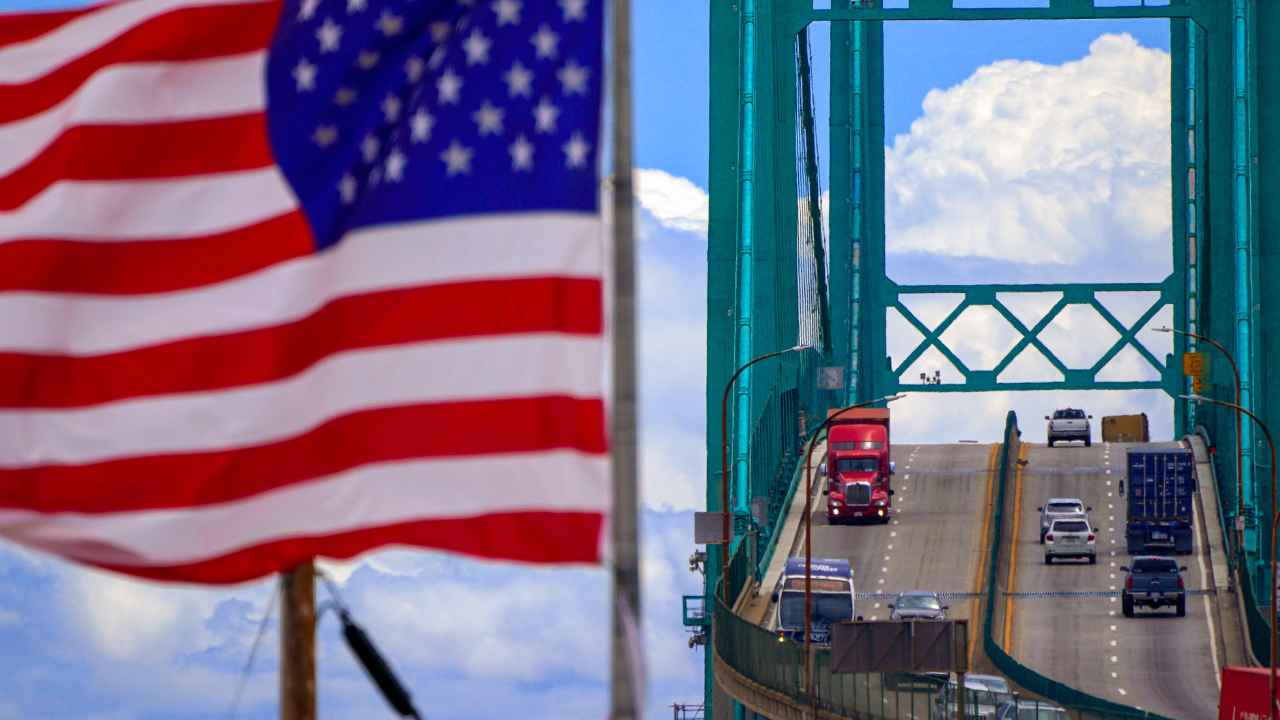
Fuel is the biggest source of economic damage from Iran’s conflict. Diesel is the quiet power that keeps the U.S. economic engine moving. While gas prices are the focus of attention, it quietly drives the heavy machinery, trucks, farm equipment, and freight trains.
Diesel is used in almost every aspect of supply chains, from the food on the shelves at the supermarket to the Amazon packages delivered to your door and even the building materials for new houses. Businesses face increased transportation costs as prices increase. Economists claim that these higher transportation expenses often have a ripple effect on the economy and drive up the price of goods.
According to the U.S. Energy Information Administration, diesel prices have increased from $3.56 per gallon to $5.13 since the Iran Conflict.
According to Department of Energy statistics, a semi-truck with a full load gets only 6-7 miles per gallon of fuel. At current prices, filling the roughly 250-gallon tank can cost over $1280.
Middle East Conflict Could Disrupt Your Summer Plans This Year
We all concentrate on the price of gasoline, because we are consumers, and it is very obvious. What we forget is that diesel is the main fuel of the U.S. Economy, and is especially important for certain sectors,” Bernard Yaros told Fox News Digital.
Yaros expressed concern about recent increases in the price of groceries or food.
Take the food industry for example. The irrigation pumps are powered by diesel, as well as the tractor in the fields and trucks which transport food from your farm to the local supermarket. “It’s part and parcel of the food industry in America.”
‘KEEP A Low Profile’: State Department Warns Americans Overseas They Could Be Targeted
A source in the energy sector, who asked to remain anonymous because they weren’t authorized to talk publicly, stated that the recent surge of diesel shows how geopolitical conflict can rapidly filter through the economy.
The source said that the majority of price changes in the diesel market over the past five months are directly related to the conflict in Iran, and more specifically the closing of the Strait of Hormuz.
Strait of Hormuz is a narrow, waterway that connects Iran, Oman, and United Arab Emirates. It’s one of the most critical energy chokepoints in the world. Approximately 20 million barrels pass through the Strait of Hormuz each day. Disruptions can cause fuel supply to tighten and diesel prices to rise.
Why the Strait of Hormuz matters as Trump issues a fresh ultimatum to Iran
Diesel prices might not return quickly to their pre-conflict level, even if tensions ease in the Middle East.
The source explained that refineries do not process crude instantly. The source said that “a lot of what you fill up your vehicle with today has been refined over a month and a quarter ago, and produced 2 months earlier.”
This means that higher diesel prices can spread through the economy long after crude oil price stabilization. Consumers will continue to pay for more groceries, delivery services, and everyday items, even when headlines about the Middle East fade.
Business
Tesla’s Revenue Beat Hid The Number That Actually Sank The Stock
The company had a good year, but the profit was less than half of what it usually is and the cash flowed out. This revealed the true cost to the owners.
Tesla (TSLA), which had surpassed analysts’ expectations for revenue in the second quarter, lost nearly a seventh its value on the following trading day. This was the most obvious sign that investors weren’t trading based on the headlines. The sales came in at around $28,2 billion, which is a significant increase over the $26.2 billion consensus. The earnings came in below analysts’ expectations, at $0.33 per share.
What is the reason for this hard sell-off?
The profit that is generated from this revenue has fallen to a fraction of its former level. The net margin is now 3.7%. This is less than half the average for three years of 8.7%. It’s also about a quarter lower than its 155% peak. According to the company, automotive margins, after subtracting regulatory credits, fell from 19.2% in one quarter to 16.3%. Tesla was the only one to blame: the S&P 500 dropped 1.2% over this period, and RIVN fell 4.2%. GM and F were also down 1.8%, and GM 1.8%.
What is the real story behind a soft quarter?
Spending. The quarter saw a negative free cash flow after capital expenditures more than doubled compared to the previous period. Management expects to spend more in the coming years, with an estimated total of $25 billion. The company is using debt facilities up to $30billion in order to fund its ambitions. Tesla has not made a mistake; this is a conscious decision. The cash is being poured into Optimus and robotaxi as well as AI computing, a solar manufacturing facility, a semiconductor fab, etc., all of which are expensive. The management frames this outlay as one of the highest returns it’s ever pursued on its capital, but those returns are years away while the profits they replace today have gone.
Is a Record Delivered Quarter Worth Owning?
On demand, nothing looks broken. Tesla posted record Q2 delivery, with its largest backlog of orders since 2023. Approximately 55% North American deliveries were accompanied by a FSD subscription, and energy storage deployments increased 53% compared to the previous quarter. The quarter didn’t change the reasons bulls bought Tesla, but it did reshape the bet. The car company’s profit was deliberately reduced to pay for robots and autonomous vehicles, which management has warned will be ramped up slowly. The next quarter’s revenues are not the best indicator of whether this trade has worked. Instead, it is whether or not automotive margins stop sliding and free-cash flow rises above zero. Our buy-the dip screen will tell you whether a drop of this magnitude has tended to be a floor for consumer discretionary bellwethers or trapdoors.
If a stock carries this much of the future, it can be revalued one day.


“The Odyssey” screenings at Regal King of Prussia impacted after 70mm IMAX projector goes down
Currently, one of only 41 cinemas around the globe screening Christopher Nolan’s “The Odyssey” 70mm IMAX is experiencing technical problems....


‘Neuromancer’ Trailer Introduced By Callum Turner At SDCC
Callum Turner stunned the audience at San Diego Comic-Con as he presented the teaser of Neuromancer on Saturday. The BAFTA-winning...


Larry the Cable Guy Recovering After Scary Hospitalization
Larry the Cable Guy has recovered from a recent illness that landed him at the hospital. Larry’s rep tells TMZ...


LeBron James signs with Sixers as Philadelphia loads up with hopes of winning first title since 1983
LeBron James will be coming to Philadelphia. LeBron James, the four-time NBA champ and league’s top scorer of all time,...


Boosie Badazz Sued By Security Guard for Assault
Boosie is being sued for allegedly smashing a hookah glass over the head of a security guard. This lawsuit comes...
The First ‘Matchbox’ Movie Trailer Sure Is Something
Matchbox is the brand that continues to be a pipeline for movies. Die cast toys are best represented by slot...

Taylor Farms CEO breaks silence over explosive diarrhea outbreak as class-action lawsuit filed
After his company received a lawsuit for a mass-action over an outbreak of diarrhea-causing parasites, the CEO of the California-based...


SDCC teaser gives us our first good look at Blade Runner 2099
Ridley Scott announced nearly five years ago that he was planning a spinoff TV series based on his 1982 sci-fi...


Hudson Williams Is “Scary Hot” In ‘Yaga’ Reimagining
Baba Yagaga is not your mother’s Baba. AMC+ and Crave unveiled a brand new trailer at the San Diego Comic-Con...


US has the widest morbidity gap as people live longer in poor health
A recent study found that people are not only living longer but also battling more illnesses. Researchers found that the...
-

 BBC News World1 week ago
‘Send help rather than complain,’ Canada’s Ford tells US as wildfire smoke blankets parts of North America
-

 TravelNews1 week ago
As smoke from Canadian wildfires blankets the US, can wearing a mask help?
-

 Business2 weeks ago
A Majority of Americans Now Support Seizing Wealth From AI Industry
-

 Video2 weeks ago
Fed Chairman Warsh questioned about independence from Trump
-

 Entertainment2 weeks ago
Ariana Grande ‘confirms’ she’s back with ex after Ethan Slater split with lyric about ‘finding our way back’
-

 Business1 week ago
Ex-Fed advisor gets over three years in prison for lying about China ties
-
Business2 weeks ago
Over 2/3 of Americans Support Bernie Sanders-Style AI Stock Ownership Plan, Poll Shows
-
Tech1 week ago
Netflix stock tanks as Q3 revenue falls short: ‘Nothing here to get excited about’