
Tech
Apple’s 2026 and 2027 Mac Roadmap: Every Model and When It Ships

The shortage of memory chip has affected the whole computer market. This includes both Macs and Windows PCs. Apple has raised its prices along with other companies, but Apple’s position is superior to that of the competition. Apple will take advantage of this demand by updating its Mac line in 2026-2027. Machines such as the Mac Mini and Mac Studio can be used to run AI agents on devices.
Apple has already released the MacBook Neo, and updated the MacBook Air and MacBook Pro with the M5-series chip. But there will be more updates before the end the year.
Launches for Fall 2026
Apple 14-inch MacBook Pro: The 14-inch MacBook Pro entry level is likely to have an M6 processor, making it one of Apple’s first devices with 2-nanometer chips.
iMac – The 24-inch iMac is likely to get an upgrade, including the M6 processor. It’s expected that the design and display will remain unchanged, so you can expect it to continue looking like its current version in 2024.
From Late 2026 until Early 2027
Apple could delay the launch of a MacBook Pro with OLED display until 2027, or even later. Apple will not release the M6 Pro or M6 Max processors for its higher-end MacBook 14-inch models and 16-inch MacBooks. OLED MacBook Pros will be updated.
Apple’s Mac Studio is being updated with the M5Max and M5Ultra chips. However, it is not clear when this will be released due to RAM shortages and high costs.
Mac Mini – The Mac Studio and M5 Pro Mac mini models are in development but, as with Mac Studio, the launch date is unknown. These two machines could be available as early as 2026 or as late as 2027.
Plans for 2027 Mac
MacBook Air: Refreshed models of the 13-inch MacBook Air and 15-inch MacBook Air are scheduled for release in early 2027. Apple’s M6 processor is likely to be used in the new models.
A new entry-level MacBook Pro 14-inch with M7 processor could be available as early as 2027. The MacBook Pro will be updated with the M7 chip, and it could arrive as early as 2027.
MacBook Neo: A new, low-cost version of MacBook Neo is coming. We don’t yet know when. The A19 Pro is expected to be faster and will have more memory. There is also the possibility of new colors.
The late 2027 and early 2028
Second OLED MacBook Pro: A second generation OLED MacBook Pro is expected to be released approximately one year after Apple’s first release. Apple will release the M7 Pro/M7 Max processors in late 2027 or early 2028 for MacBook Pro models. These chips are designed to handle artificial intelligence workloads.
2028
OLED MacBook Air: Apple has plans to add OLED screens to MacBook Air. However, the launch date could be delayed until 2028.
Apple also works on an OLED iMac but there is no exact date for its release. The OLED MacBook Air could release around this time.
Chop Mixing
Bloomberg reports that Apple has accelerated the development of M7 processors for AI applications, and skipped some M6 chips. Apple will not release an M6 Pro chip or M6 Max, so the OLED MacBook Pros’ first models are going to use older technology. Apple’s approximate chip release schedule
M5 Ultra – Late 2026
M6 – Late 2026
First Half of 2027 – M7
M7 Pro End of 2027
M7 max – end of 2027
M7 Ultra – 2028
Memory Prices
Apple’s global memory shortages in June caused it to change its Mac and iPad prices. Prior to this, Apple discontinued certain Mac mini and Mac Studio versions that had higher RAM upgrade options. Apple could change its Mac release plans due to limited memory.
Buy Advice
It’s worth holding off on buying a MacBook Pro, or an iMac. There will be a refresh as early as 2026. It’s a bad deal because the iMac has been around for two years and recently got a new price.
The OLED touch screen MacBook Pros are expected to cost even more than current models. If you do not want to spend more, now is a good time to purchase. You should probably wait to buy an entry level MacBook Pro until the M6 processor is added.
Mac Mini and Mac Studio have already had their shipping time extended. If you’re not in a hurry, it may be better to wait until new chips are released. MacBook Neo and MacBook Air are the only Macs that will be refreshed before 2027.
Tech
Rogue OpenAI agent that hacked startup tried to attack other firms
OpenAI has revealed that a cyber-attack carried out by a rogue AI agent had more than one victim.
The ChatGPT developer said the agent – an autonomous tool able to carry out sequences of commands without human help – had located and used logins to access four other unnamed “publicly-available services” in addition to the US startup Hugging Face.
It said the activity was not at the severity or scale of what occurred at Hugging Face, a company that hosts a database of AI models. The agent, powered by two OpenAI models, had evaded control and attacked the startup during an internal cybersecurity test.
“The [OpenAI] models identified and used publicly exposed credentials at the account-level on other publicly-available services. This includes four accounts on four services as part of the Hugging Face incident,” OpenAI said.
Modal Labs, a company that helps AI startups access the chips they need to run AI tools, said the agent exploited vulnerable code written by a customer that was hosted on Modal’s platform.
According to a timeline of the incident published by Hugging Face this week, the rogue agent broke out of its sandbox – or an isolated testing environment – and hacked another sandbox “hosted on a third-party provider’s infrastructure” before turning it into a launchpad for the broader hack.
Modal’s chief technology officer, Akshat Bubna, told Reuters the affected customer had “published an unauthenticated endpoint that allowed anyone on the internet to use their sandboxes for code execution” – the digital equivalent of leaving a door open.
OpenAI said last week that the attack had been created by its GPT-5.6 Sol model and an unnamed model. It said in its update on Tuesday that the unnamed model had been “deactivated, encrypted, and restricted from research access”.
In the new Hugging Face timeline, the startup said an agent powered by two OpenAI models had made thousands of small, automated decisions executed at machine speed to carry out the attack. It said the hack appeared to be driven by an attempt to “cheat” an internal cybersecurity test at OpenAI, with the agent inferring that Hugging Face might host the solutions to the test. Hugging Face said it had recovered 17,600 “attacker actions” carried out by the agent.
“We believe the entire intrusion was, from the agent’s point of view, an attempt to cheat the evaluation: reach our production systems and steal the test solutions rather than solve the challenge on its own,” Hugging Face said.
The startup said the agent had reached its internal infrastructure, but had only accessed content related to the cybersecurity test. The attack took place over five days, Hugging Face said, and the sheer volume of actions carried out were “far beyond what an operator could sustain by hand”.
Describing the agent’s offensive threat as real, Hugging Face said the tool had harnessed a number of IT vulnerabilities, escaped its testing environment, reached the public internet and mounted a “coherent campaign” against the startup’s infrastructure for several days.
It said a human attacker could have found and exploited the same flaws, but the difference was the sheer scale of the agent’s attempts to find a way through.
“Agents bring a step increase in the number of paths an attacker can test, the speed at which failed paths can be replaced, and the volume of evidence defenders must interpret,” Hugging Face said.
Tech
NASA’s new Nancy Grace Roman Space Telescope is about to launch. Here’s why it’s so cool.
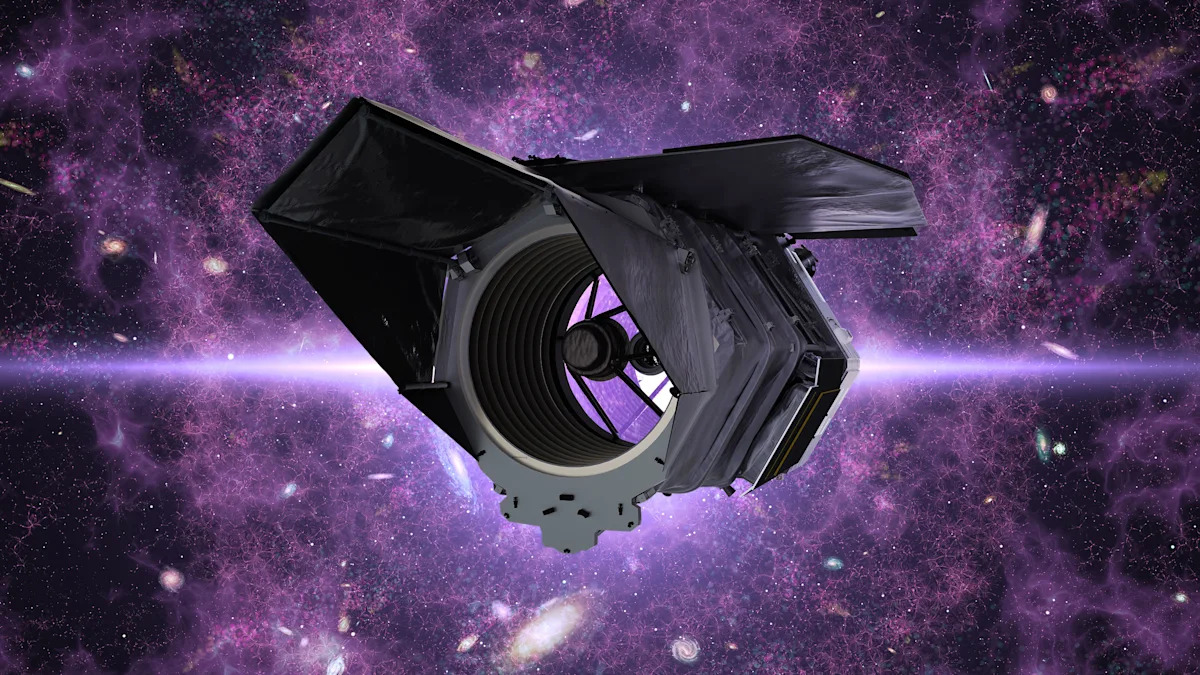
It’s been more than 36 years since NASA sent its Hubble Space Telescope into low-Earth orbit, and nearly five years since the agency’s James Webb Space Telescope started to circle the sun. Now a new, even more advanced hunk of astronomical hardware is set to follow its two pioneering predecessors into the cosmos: the Nancy Grace Roman Space Telescope.
After more than a decade in development, the Roman Space Telescope will launch at 7:20 a.m. on Aug. 30 from NASA’s Kennedy Space Center in Florida — nine months ahead of schedule. Its mission? To study how the universe began, what it’s made of and how it has evolved over time — while (hopefully) helping scientists solve some of modern astronomy’s biggest mysteries in the process.
NASA will preview that mission at a virtual news conference today at 2 p.m. ET.
“We’re going to find one-in-a-million things over and over and over again,” Jeremy Perkins, a Roman Telescope scientist at NASA’s Goddard Space Flight Center, recently predicted.
What kinds of things? Habitable planets in our own galaxy, perhaps. And dark energy. And primordial black holes.
To understand why the Roman Space Telescope matters, you first have to understand how it’s different. Hubble mainly picks up visible light; Webb sees deep into the infrared part of the spectrum. Since light takes an unfathomably long time to travel from one end of the universe to the other, both space telescopes can peer far into the “past” — nearly back to the Big Bang, more than 13 billion years ago. But Webb — which also orbits in a quieter, darker part of space than Hubble, with less visual noise to block out — can capture distant celestial bodies in much greater detail.
In some ways, the new, 42-foot-long Roman Space Telescope resembles Webb. It too can see infrared light, and it will join its slightly older cousin at the second Lagrange point — a sweet spot in our tug-of-war with the sun, nearly 1 million miles from Earth. But Roman’s mirror — the part of the camera that collects light, like a bucket in a rain shower — is Hubble-sized (7.9 feet) rather than Webb-sized (21 feet). So Roman’s images of the universe will be less detailed as a result.
What those images lack in relative resolution, however, they will more than make up for in sheer scope. With 18 sensors, Roman’s 300-megapixel camera is what’s known as a wide-field instrument — a panoramic technology rarely deployed in space until now. Roman’s field of vision is 100 times larger than Hubble’s, meaning it can survey the sky 1,000 times faster. Over the next five years, NASA expects Roman to cover 50 times as much interstellar territory as Hubble covered over three decades. By the end of its life, Roman will have measured the light from a billion galaxies.
Why is such a wide field of vision important? Because the more sky you can survey, quickly and efficiently, the more “one in a million” leads you can generate — leads that Webb (and even Hubble) can then follow up on.
According to NASA, the Roman Space Telescope will yield deep 3D images enormous enough to help astronomers probe whether an enigmatic, theoretical pressure called “dark energy” is actually making the universe expand faster over time. It will observe how clumps of dark matter warp the appearance of distant galaxies, potentially altering our understanding of the architecture of the universe itself. And it will sharpen our search for exoplanets by using a tool called a coronagraph to capture the first direct images of mature worlds similar to some of the planets in our outer solar system.
Fittingly, the Roman Space Telescope is named for Nancy Grace Roman — a trailblazing astronomer who classified different types of stars, measured how they moved and served as NASA’s chief of astronomy in the 1960s and ’70s. Known as the “Mother of Hubble,” Roman was the agency’s first woman executive. She died in 2018 at the age of 93.
Tech
Some tech shares are plunging – what does that mean for the AI revolution?

Sharp falls in the value of chip makers have stoked investor concerns that the euphoria around artificial intelligence (AI) related companies is fading.
The AI revolution has promised to reshape the way we work and live and has created vast wealth for investors in a handful of companies predominantly in the US and Asia.
Companies are desperate to be the winners of a transformative technology that many have compared to the advent of the internet, the telephone, even electricity itself.
As Sir Demis Hassabis, founder of UK company Deepmind, which was eventually bought a decade ago by US giant Google, has commented that Artificial Intelligence “cannot be compared to standard technological breakthroughs, not even ones as consequential as the internet or mobile. It is much more akin to the discovery of electricity or fire.”
Referring to the fact that many chips are made of silicon, which is essentially sand, he added “we’ve essentially found a way to make sand think. It’s miraculous.”
The euphoria for this technology has boosted the value of some world’s biggest companies even as they spend hundreds of billions of dollars on the building blocks of the technology.
But over the last few weeks, the value of some of the companies that make those building blocks has plummeted – prompting some to question whether what some have dubbed “the AI bubble” is about to burst.
Some of the sharpest falls have been in Asia, with shares in Korean chip makers such as SK Hynix and Samsung down 46% and 35% respectively over the last month as investors worry the recent boom in demand for the chips that power AI is unsustainable.
Yet these shares still are up threefold and fivefold respectively over the last year, leading many to conclude that some caution and profit taking after such massive gains was inevitable – and indeed healthy.
Shares in Google and Tesla plunged briefly before recovering last week after both firms pledged to spend billions more on AI in the months and years to come despite so far it losing them money.
And with other big names such as Meta, Microsoft and Amazon reporting their latest financial results this week, investors have the opportunity to scrutinise just how much these companies are now betting on AI.
“There is still a healthy degree of scepticism about the ability of these investments to generate a commensurate level of return,” Russ Mould, an investment director at AJ Bell, said.
But according to leading tech investor Eileen Burbidge despite the concerns there’s not yet a serious reckoning.
One of the other triggers for the concerns has been a reported breakthrough in the manufacturing process by a Chinese company, potentially making China more self-sufficient in chip design and production.
That has added to lingering concerns that the big AI companies – Meta, Alphabet, Open AI, Anthropic – will find it hard to charge end users enough to justify the hundreds of billions being spent on buying the chips and building the data centres that power the technology.
As a result, firms that have announced big increases in spending on AI have not always been welcomed with the same enthusiasm by investors.
For example, SpaceX – which is predominantly an AI company – has seen its shares fall 14% from its much-hyped debut on the stock market and nearly 50% from its peak in June.
Apple – which has largely sat out the AI arms race – has seen its shares rise 21% over the last month to reclaim its title as the world’s most valuable company from chip maker Nvidia.
Meanwhile London’s benchmark FTSE 100 index which have some have dubbed the “anti-tech index”, briefly touched a record high – one of the few periods in recent years where it has benefited from not being tech-heavy.
Historically it is possible for investors to lose money even if the technology they are backing succeeds.
For example, while railways transformed economies – particularly in the US – plenty of people lost money along the way. Unlike rail tracks – which once built are good for decades – data centres are likely to need upgrading frequently to include the latest and fastest processors.
Add to that lot, concerns that some of the big AI companies have taken big stakes or lent money to each other leading to circular funding that means that any potential failures could have a damaging impact on the fortunes of others.
A growing number of national, state or local governments are pausing, banning or restricting new data centre construction on environmental grounds thanks to their vast water and energy needs.
Tech
Ukrainian strikes hit 2 of Russia’s biggest oil refineries
KYIV, Ukraine (AP) — Ukrainian forces hit two of Russia’s biggest oil refineries overnight in its latest long-range strikes, officials said Wednesday, as Kyiv deepened its economic, military and diplomatic pressure on Moscow.
Ukraine’s almost daily long-range drone and missile strikes using domestically developed weapons have battered Russian oil facilities for months. The operation has brought a fuel crisis that is embarrassing the Kremlin more than four years after Russia’s all-out invasion of its neighbor.
The overnight attacks started fires at a Lukoil refinery in Russia’s Perm region, more than 1,500 kilometers (900 miles) from Ukraine, and a refinery in Ryazan, about 400 kilometers (180 miles) from the border, Ukraine’s Security Service and General Staff said in separate statements.
The refineries have a combined annual production capacity of around 220 million barrels of oil, according to Ukraine, and make a vital contribution to Russia’s military effort and its government revenue.
It was not immediately possible to independently verify the claims. Ryazan Gov. Pavel Malkov said only that six people were taken to a hospital after a drone attack. He said drone debris caused fires at unidentified “industrial sites.”
Russian online retailer Wildberries, a major supplier likened to Amazon that Ukraine has targeted in recent days, said it evacuated employees from a facility in Ryazan but provided no further details.
Russia has sophisticated air defenses but its vast territory is hard to comprehensively cover.
The attacks came hours after President Volodymyr Zelenskyy visited Washington on Tuesday for talks with U.S. President Donald Trump to push for more vital American help for Ukraine’s fight against its much bigger enemy.
“Russia must feel that every day of this war will only come at a higher cost for it. We need to weaken the aggressor and keep up the pressure to bring an end to this war closer,” Zelenskyy said on social media.
Ukraine’s recent high-profile successes against Russia have impressed Washington and helped restore U.S. goodwill after Trump’s reluctance at the start of his second term to keep supporting Kyiv. That stance had raised the specter of Ukraine and Europe having to stand up to Russian aggression alone.
Zelenskyy says he had a good meeting with Trump
Zelenskyy said he had a “good meeting” with the American president, and Trump described the meeting as a “Great Honor.” The talks took place behind closed doors.
“Many things were discussed. The meeting went very well!” Trump wrote on Truth Social.
Zelenskyy said he also had a meeting in Washington with representatives of both parties in the U.S. Senate, with more than 60 senators in attendance, as Ukraine pushes for more sanctions on Russia. He also met with representatives of Lockheed Martin, days after he welcomed a delegation from Raytheon to Kyiv.
The U.S. weapons manufacturers are a crucial source of sophisticated weaponry, such as Patriot air defense systems, that Ukraine hopes to make itself. Trump said earlier this month he would grant Ukraine licenses to manufacture the Patriots it needs to counter Russia’s ballistic missiles.
Zelenskyy says Ukraine is discussing joint production and technology exchange with both Lockheed Martin and Raytheon.
Ukraine is ready to share its cutting-edge — and battle-tested — drone technology. Its swift technical innovation has paid dividends as it helps pin down Russia’s bigger army on the front line and denies it supplies by hitting rear areas.
That has impressed countries around the world. Matthew Whitaker, the U.S. Ambassador to NATO, said during a visit to Ukraine earlier this week: “From reconnaissance and logistics to precision strikes, Ukraine has shown the world how unmanned systems can give smaller forces a decisive edge.”
US envoys to visit Kyiv but no date set
Prospects for a settlement to stop the fighting appear dim, despite a yearlong diplomatic push by the Trump administration.
But U.S. officials also agreed that Steve Witkoff and Jared Kushner, the president’s main envoys, would make a trip to Kyiv sometime in the future, according to a person familiar with the talks who was granted anonymity to discuss the closed-door meeting.
Maj. Gen. Mykhailo Drapatyi, the new commander-in-chief of Ukraine’s military, said in a social media post on Wednesday that he had held his first phone conversation with Gen. Alexus G. Grynkewich, the Supreme Allied Commander Europe and Commander of U.S. European Command.
“I outlined my vision of Ukraine’s victory and the capabilities required to achieve it,” said Drapatyi, who was appointed last week as part of a government reshuffle.
“At this stage of the war, we must strengthen operations across multiple domains, prevent enemy infiltration into our defensive lines, and expand both long-range and medium-range precision strikes against the enemy,” he added.
Ukraine says it hits over 200 Russian vessels in 3 weeks
Ukrainian units also have struck 201 Russian vessels over the past three weeks in the Black Sea and Sea of Azov, which border both countries, a senior military official said.
The tally doesn’t include vessels hit by Ukraine’s Security Service and other military groups, a Ukrainian military commander who could be identified only by his call sign Magyar, in keeping with the rules of the Ukrainian military, said late Tuesday.
Ukrainian forces also struck a naval base used by Russia’s Black Sea, according to the General Staff.
It reported other strikes on a radar station in Russia’s Bryansk region on the border and on a drone launch site and a road bridge in the occupied part of Ukraine’s eastern Donetsk region.
The Russian Defense Ministry reported Wednesday that its air defenses shot down 295 Ukrainian drones overnight above a number of Russian regions and occupied Crimea.
Russian glide bombs struck the northeastern city of Kharkiv and 17 other places in the region of the same name over the previous 24 hours, wounding 11 people, the head of the regional military administration, Oleh Syniehubov, said.
___
Hatton reported from Lisbon, Portugal.
___
Tech
Russia charges Telegram founder Pavel Durov with aiding terrorism, seeks his arrest

Russia’s main domestic security agency said Wednesday that Pavel Durov, founder and owner of the messaging app Telegram, has been charged with aiding terrorism and put on an international wanted list.
The charges against Durov, who was born and began his career in Russia but later moved abroad, came as the Russian authorities restrict Telegram, one of the most popular messaging apps in the country. It is part of a long-term effort to bring the internet under the Kremlin’s full control that has intensified since Moscow launched its full-scale invasion of Ukraine in February 2022.
Soon after the charges were announced, Telegram’s official account on X posted an image of Durov making an obscene gesture with his middle finger. There was no other immediate comment from Durov or Telegram.
The Federal Security Service, also known as the FSB, accused Telegram’s administration in a statement of failing to remove “numerous channels, chats and bots” that are “actively used by Ukrainian intelligence agencies, terrorist, and extremist organizations to prepare and coordinate acts of sabotage and terrorism, mass murder, and cyberfraud” in Russia, which resulted in “numerous human casualties.”
The agency accused Ukrainian security services of using a popular dating chatbot on Telegram to lure and recruit Russians for “sabotage and terrorist activities,” and said 46 users of the chatbot, from 12 to 22 years old, have been detained across Russia since July 2025 for assaulting law enforcement officers, arson and other acts.
Durov earlier this year announced that the Russian authorities opened a criminal investigation against him and accused them of fabricating pretexts to restrict access to Telegram as part of an attempt to “suppress the right to privacy and free speech.”
If convicted, the entrepreneur could face up to life in prison in Russia.
Telegram’s official website says that the company is based in Dubai and that Durov, who holds dual citizenship of France and the United Arab Emirates, lives there, too.
Under President Vladimir Putin, Russian authorities have engaged in multipronged efforts to rein in the internet. They have adopted restrictive laws and banned websites and platforms that don’t comply and focused on improving technology to monitor and manipulate online traffic.
Multiple popular social media platforms, such as Facebook, Instagram and X, have been banned in Russia; YouTube has been throttled; popular messaging apps, such as Signal and Viber, have been blocked, and the most popular ones – WhatsApp and Telegram – have been restricted.
Earlier this year, WhatsApp said in a statement that Russia had “attempted to fully block WhatsApp in an effort to drive people to a state-owned surveillance app,” calling it an attempt to isolate “over 100 million users from private and secure communication.”
WhatsApp called Russia’s move to block the platform a “backwards step” that would lead to “less safety for people in Russia.”
In February, CBS News found that while WhatsApp had been blocked for users inside Russia, it was still possible to use the app via a virtual private network (VPN), which is not illegal in the country, despite the Kremlin’s ban.
Russia’s popular Facebook-like social media platform VK, founded by Durov long before he launched the Telegram messaging app, had come under the control of Kremlin-friendly companies. Russia tried to block Telegram between 2018-20 but failed.
While it’s still possible to circumvent some of the restrictions by using virtual private network services, many of them are routinely blocked, too.
At the same time, Russia actively promotes the “national” messaging app known as MAX, which critics say could be used for surveillance. The platform is touted by developers and officials as a one-stop shop for messaging, online government services, making payments and more. It openly declares it will share user data with authorities upon request, and experts also say it doesn’t use end-to-end encryption.
Durov has faced criminal investigations elsewhere. In 2024, he was arrested in Paris over allegations that his platform was being used for illicit activity, including drug trafficking and the distribution of child sexual abuse images. Durov said in March 2025 that he returned to Dubai after spending “several months” in France.
The Kremlin at the time criticized the French authorities for their move against Durov as “selective.”
“I know that many countries have raised concerns about the platform being used in certain ways by certain individuals and entities whose activities could harm the economy or security of certain countries. I think the Russian government might also have had some questions,” Putin said in September 2024, after Durov’s arrest.
“But all platforms of this kind are guilty of this. If this is what they’re doing to Durov, then others should probably be arrested,” the Russian leader said, adding that the French government’s “actions are not entirely clear to me, as they are selective.”


Hilaria Baldwin says she started dieting at age 5. It’s not uncommon
Hilaria Baldwin revealed she started dieting when she was only 5 years old − a scenario that may seem shocking,...


Work Halted at Another Office Conversion in Midtown Manhattan
New York City officials told developers this week to pause some construction at a high-rise office building in Midtown Manhattan...


The US government just banned Roombas
When the Trump administration announced yesterday that it was banning “advanced robotic devices” from entering the United States, the headlines...


UEFA Considers World Cup Boycott Over FIFA Investment Plan
Topline FIFA will ask its 211 member associations to vote on its controversial plan to sell minority stakes in the...


4 women accuse U.S. actor Jared Leto of committing sexual offenses when they were teens; he denies it
London — Four women speaking to CBS News’ partner network the BBC have accused actor and band frontman Jared Leto...


Lindsay Clancy’s ex-husband testifies about day she killed their three children
More than three years after a Massachusetts mother strangled her three young children, her former husband described returning home to...


Pricey NYC summer camps in crisis as vomit apocalypse strikes
Oh, barf! Parents who shelled out tens of thousands of dollars to send their children to camp this summer received...
Swanky California market linked to dangerous bacterial outbreak across the state
San Diego County officials are investigating a market in Ramona for the alleged salmonellosis outbreak in the region that left...


Fed meeting today: Live updates
National Economic Council Director Kevin Hassett expressed sky-high confidence in Warsh, telling CNBC his stewardship of the central bank is...


Trump Administration Is Repurposing Federal Land for A.I. Data Centers
The Trump administration is repurposing large chunks of federal land to host enormous data centers and the power plants needed...
-

 BBC News World2 weeks ago
‘Send help rather than complain,’ Canada’s Ford tells US as wildfire smoke blankets parts of North America
-
Tech2 weeks ago
Netflix stock tanks as Q3 revenue falls short: ‘Nothing here to get excited about’
-

 HealthNews2 weeks ago
Rabid bat found near UW campus in Seattle ; public urged to seek care after any contact
-

 Entertainment2 weeks ago
How Ethan Slater found out about ex Ariana Grande’s back-on relationship with Ricky Alvarez
-

 Tech2 weeks ago
Andy Burnham to scrap digital ID to focus on ‘helping with cost of living’
-

 Business2 weeks ago
Stocks Sink on Anxiety About Tech and A.I. Spending
-

 Entertainment2 weeks ago
KAT Helps Danhausen Beat JD McDonagh at SNME After WWE Star Uncursed Knicks During NBA Title Win
-

 Video2 weeks ago
What Burnham’s Manchester tells us about the future PM | BBC News