
Business
Bacon sold in three states recalled under highest USDA warning

You can now hear Fox News stories!
According to an alert by the USDA Food Safety and Inspection Service, more than 12 000 pounds of imported bacon has been recalled.
Maple Leaf Foods, Inc., based in Lisle, Illinois, produces the not-ready to-eat bacon, sold in three different states. The product was sold to retailers and grocery distributors in Idaho, Oregon and Washington.
Fox News Digital contacted Maple Leaf Foods for comment.
CLICK HERE FOR OUR HEALTH NEWSLETTER
In its alert dated July 24, the USDA said that it recalled bacon imported from Canada because they did not undergo an import inspection required by U.S. law.
This problem was found during routine inspections.
This recall was classified as Class I by the USDA, which is its highest category.
According to the FSIS, a Class I Recall is defined as “a health hazard where it’s reasonable that using the product could cause death or serious adverse effects on the user.”
Class I is a designation that indicates the risk of consuming bacon if the inspector fails to perform an inspection. It does not mean there are confirmed cases of illness linked with the consumption.
Test Yourself with Our Latest Lifestyle Quiz
According to the USDA alert, the recalled products include:
A 12-oz. The package is a vacuum-sealed package of Royale Natural Applewood Smoked Uncured Bacon Products of Canada with the dates “SEP 01 2020” and “SEP 7 2026”.
A 12-oz. A 12-oz.
On the side of the package, it is printed “EST. The USDA alert notes that the recalled product has the Canadian establishment number “EST.
CLICK HERE TO READ MORE HEALTH STORIES
Health officials advise that anyone who finds any of the products listed above in their refrigerator or freezer must throw it away or return it to where you purchased.
CLICK HERE FOR THE FOX NEWS APP
If you have any questions about food safety, please send an email to MPHotline@usda.gov.
Business
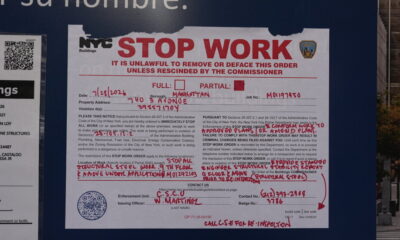
Work Halted at Another Office Conversion in Midtown Manhattan

New York City officials told developers this week to pause some construction at a high-rise office building in Midtown Manhattan over structural issues at the building, which is being converted to apartments.
Inspectors with the Department of Buildings discovered on Tuesday that pieces of some steel columns at 750 Third Avenue were welded together, which “potentially weren’t shown on the approved plans filed with the department,” said Andrew Rudansky, a department spokesman.
When asked to provide documentation about the welding, the contractor on site did not, Mr. Rudansky said.
The city then directed the developers to “stop all structural steel work” on the ninth floor and above, according to the order. The order, which is dated July 28, also directed the contractor to provide an “engineer structural stability report” to the city before work can continue. The building is at least 30 stories tall.
Business
The US government just banned Roombas

When the Trump administration announced yesterday that it was banning “advanced robotic devices” from entering the United States, the headlines were all about humanoids. But spying doesn’t require legs — and neither does the FCC’s robot ban.
The robot ban will sweep up robot vacuum cleaners too, FCC media relations director Katie Gorscak confirms to The Verge.
It’s not coming for your existing Roomba, and companies can keep importing and selling already approved ones. But the government claims that future foreign robots pose a national security risk, and even robovac companies are suddenly being asked to commit to US manufacturing.
While the government did include “humanoid robots” and “quadrupeds” among the bots it wants to ban, the ban is far broader than that. It covers almost any new software-controlled robot that travels over the ground, weighs more than 4.4 pounds (including any dock), can perceive its environment, and has wireless connectivity.
By that definition, the FCC is banning future robot lawnmowers, sidewalk delivery robots, and the robots that crate around packages at your local Amazon warehouse.
It was already clear from the government’s ban announcement that it was thinking about robot vacuums. In the National Security Determination that the FCC is using to justify the ban, the government explicitly calls out my reporting on the incredibly poor security that let one man access 7,000 DJI robovacs around the world.
But like the consumer router ban, the FCC isn’t actually targeting companies with poor security. It’s targeting basically every robovac company, regardless of their security practices — because basically every robovac is manufactured outside the US.
Even before the US-based maker of the Roomba went bankrupt, its robots were built by a Chinese company. Just like Apple and Google and most every other gadget brand, these things are not produced domestically.
Today, the vast majority of robot vacuums are designed by Chinese companies, too — all of the top five, including Roborock, Ecovacs, Dreame, Xiaomi, and Narwal, are Chinese entities. Even Dyson is turning to Chinese manufacturers. Following bankruptcy, the Roomba brand is now owned by a Chinese company too, its former contract manufacturer Picea.
“There are very few non-Chinese brands these days and their share is so small that it’s difficult to track,” IDC analyst Jitesh Ubrani tells The Verge.
Even Matic, our top robovac pick that’s assembled in California, may have to apply for a waiver for new models. It doesn’t yet source 65 percent of components from the United States, co-founder and CEO Mehul Nariyawala tells The Verge.
Because yes, even US companies need to swear their robots are made in the US to get the government’s waiver. Meanwhile, foreign companies will need to swear they’re investing in US manufacturing — or lie, like that DJI front company I wrote about.
If Trump and Carr were focused on actually protecting US citizens from the incredibly worrying security practices of smart home companies, I might argue that the FCC shouldn’t exempt cleaning robots, as they can spy just as effectively as a humanoid. The DJI Romo robovac was a chilling example, letting someone on the other side of the planet map out my colleague Thomas Ricker’s home, but it gets much worse — read about the robot lawnmower that ran me over to hear how.
But again, the government isn’t asking these companies any questions about security — not one — to get the waiver that lets them through. The FCC only wants to know where they’re designed and made and assembled and tested and influenced, and get a specific commitment to start manufacturing them in the US instead.
Even then, it appears the FCC will simply preference US companies without any new commitments to security or US manufacturing, like it did when it almost immediately let Netgear off the hook — even though Netgear’s routers were among those targeted in the Volt Typhoon incident that helped justify the router ban to begin with. Four unnamed sources told Reuters that “the FCC is expected to exempt many non-Chinese suppliers from the restrictions.”
The government isn’t de facto banning every type of robot made outside the US without its special waiver. It already has exceptions for self-driving cars and trains, unmanned aircraft and underwater vehicles, surgical robots, wheelchairs, and fixed robot arms for industrial and medical use. But most robots now have an uncertain future in the United States.
It’s also worth repeating that the FCC is not coming for your existing robots, just like it isn’t coming for your existing routers or drones. But it’s also worth repeating that if these gadgets truly pose a national security risk, it’s kind of silly to do nothing about the ones we’ve already purchased.
Jennifer Pattison Tuohy contributed reporting.
Business
Fed meeting today: Live updates

National Economic Council Director Kevin Hassett expressed sky-high confidence in Warsh, telling CNBC his stewardship of the central bank is “already a home run” and “we trust his judgment.”
“We expect him to do the right thing, which is be an independent Fed that looks at the data, looks at the best models, and then makes the best judgment that he can,” Hassett said.
Hassett did not say whether “the right thing” also involves making any particular decision regarding interest rates. But the NEC director added that the latest consumer price index reading, which showed a pullback in inflation, suggests that the Fed has inflation under control.
“I think that anyone who looks at the latest CPI would have to say, you’ve got to be really bullish on the Fed’s ability to control inflation,” Hassett said, “because basically, they’re working in tandem with the White House to lower costs for everybody.”
— Kevin Breuninger
This month’s climb in oil prices as fighting between the U.S. and Iran revved back up is a top-of-mind issue for consumers and economists heading into the Fed decision.
Brent crude jumped more than 15% month to date in July as of Tuesday’s settle, putting the global oil benchmark on pace to snap a three-month negative streak. Brent has climbed more than 38% in 2026 as the Middle East conflict severely restricted transit in the Strait of Hormuz passageway.
An average gallon of unleaded gas in the U.S. hit $4.09 on Wednesday, according to AAA. That’s up roughly 6% from a month ago and 30% from the same day in 2025.
The task force review of the Fed’s communications could be one of the most consequential and have ramifications for volatility in rates markets, according to UBS.
The bank’s chief investment office said in a Wednesday note that the so-called dot plot release has helped “anchor” expectations in the near term. Meanwhile, having forward guidance has decreased market volatility over the last two decades, the team said.
Warsh announced his intention for task forces looking at several key aspects of Fed operations in June. He said earlier this month that the communication group would include University of Washington professor Peter Fisher and former Bank of England Governor Mervin King.
— Alex Harring
Federal Reserve Chairman Kevin Warsh will host his second press conference at the helm of the central bank on Wednesday – and the market will keep a close ear on what he says.
While the Fed is widely expected to keep a steady hand on interest rates this time, maintaining them at their 3.5% to 3.75% range, traders will be on the hunt for clues on how the central bank may proceed.
Read more from CNBC’s Steve Liesman on how Warsh’s plan to detail less guidance on policy to the public may be put to the test by markets.
—Darla Mercado
The post-meeting statement is likely to hint at a coming interest rate hike unless there’s more substantial progress on inflation, economist Claudia Sahm said.
Following Chairman Kevin Warsh’s first meeting in June, the Federal Open Market Committee released a statement that was dramatically shorter than what had become the norm. The communique ditched prior boiler-plate language and included a simple declarative sentence that “The Committee will deliver price stability.”
Sahm, the chief economist for New Century Advisors, said she expects this statement to provide stronger clues about where the Fed is heading, despite Warsh’s disdain for forward guidance.
Specifically, she foresees language stating: “Despite recent improvement, inflation is above the Committee’s 2 percent goal, in part reflecting supply shocks from the conflict in the Middle East and tariffs, as well as strong AI-related demand. If inflation remains elevated amid stable labor markets, some policy firming may be warranted soon to deliver price stability.”
Sahm also sees the statement issuing a more confident outlook on the labor market, saying conditions are “broadly consistent with the maximum employment mandate.”
—Jeff Cox
Stocks opened lower Wednesday, raising the stakes for the Fed rate decision this afternoon with the Dow losing nearly 400 points. Most of the negative sentiment was because of a spike in oil prices, which came after Trump told Fox News the U.S. would be hitting Iran hard in response to surprise attacks on personnel in the Middle East.
Rates increased with the 10-year Treasury yield inching higher to 4.62%, near its highs for the year. The 2-year yield, which is more sensitive to Fed decisions, was higher by about 3 basis points to 4.3%, also near its highest levels of the year.
Traders are mostly hoping the Warsh Fed will signal that it believes the oil shock from the Iran war is temporary and won’t rush to hike rates this year. Though some believe a single hike could be warranted and have the effect of calming the long-end of the rate curve by showing the central bank is serious about curbing inflation.
-John Melloy
The best-case scenario for U.S. equities on Wednesday is if the Fed delivers a dovish hold as its interest rate decision.
The bank’s trading desk predicts the S&P 500 would rise between 0.5% to 1% if that scenario unfolds.
JPMorgan’s trading desk, though, sees a hawkish hold as more likely to drag equities down. A hawkish hold would see an inclination toward rate hikes ahead, while the dovish would imply less of a likelihood that the Fed will tighten soon.
A hawkish tilt could lead the S&P to still rise by 0.25% or, conversely, fall by 0.5%. However, the desk notes this is the most likely scenario, where central bank officials indicate rhetorically they’ll keep inflation at bay while maintaining the interest rate status quo.
A hike, though, could lead to a sell-off in the market. While unlikely — CME’s FedWatch tool gives just under a 36% chance of a 25 basis point hike happening — a rise in rates by a quarter point could facilitate a decline in the S&P of between 1.5% and 2%, according to the bank’s analysts.
— Davis Giangiulio
Citadel Securities expects a surprise rate hike on Wednesday.
“We think the market may once again be underestimating the extent of the hawkish shift at the Fed, and that the (for now) moderate increase in energy prices may tip an already finely balanced meeting in favor of a hike this week,” said Frank Flight, the firm’s head of macro strategy.
Such a move would “emphatically end the forward guidance era” and underline the central bank’s independence, he said in a note Monday.
“Most importantly, however, a surprise rate hike can meaningfully alter the price-setting and wage-formation process because it demonstrates to firms and workers, through a willingness to accept some cost to economic activity, that the central bank will not tolerate inflation,” Flight added.
— Michelle Fox
Despite speculation in some quarters that the Fed might try to pull off a surprise hike Wednesday, market strategist Tom Lee doesn’t see it happening, mainly because of recent progress on inflation.
Fundstrat’s head of research said in his daily market note that the composition of the most recent inflation reading shows that shelter and other key components are moderating, giving the Fed leeway to hold rates steady.
“So, we would be surprised that a Fed that values ‘data collection’ would take a somewhat superficial view that inflation pressures remain strong. Granted, inflation is not back at 2% but the tariff effects and higher oil are distorting these results,” he wrote.
Lee did note that it’s possible the Fed could consider further reductions in asset holdings on its balance sheet.
—Jeff Cox
While a Federal Reserve Governor, Stephen Miran pushed for lower interest rates. Now, he thinks the central bank at least should stay on hold rather than considering hiking.
In a CNBC interview, Miran said policymakers should consider the current spate of inflation as “transitory,” a view that got the Fed in trouble just a few years ago. However, he said this round is driven more by temporary effects from the Iran war, as evidenced by negative monthly inflation readings in June when oil prices fell.
“The Fed should stay on hold based on this, but also based on everything else that’s going on in the economy,” said Miran, who served on the Fed from September 2025 to May 2026.
“We had a marginally negative core [consumer price index] month-on-month print, so I don’t know what type of reaction function would say in June I thought it was appropriate to hold rates steady, but then I had a negative core CPI print, and that’s what pushed me over the edge to think I have to hike,” he added.
—Jeff Cox
Business
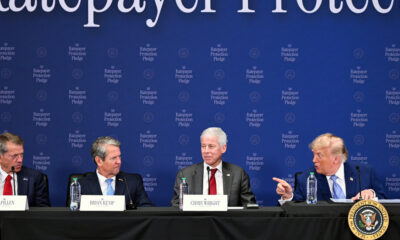
Trump Administration Is Repurposing Federal Land for A.I. Data Centers

The Trump administration is repurposing large chunks of federal land to host enormous data centers and the power plants needed to run them as officials seek to accelerate the development of artificial intelligence and overcome growing local opposition to the facilities.
The Energy Department announced on Wednesday that it would redevelop parts of a retired Cold War-era uranium enrichment facility in Paducah, Ky., to host a large new A.I. data center campus. The site is owned by the federal government and has been undergoing environmental cleanup for years.
The $100 billion project would include construction of 2 gigawatts of natural gas power connected to the local grid and 2.6 gigawatts of battery storage capacity. The Energy Department said the project would be privately funded through a partnership with NextEra Energy, one of the nation’s largest power companies; the investment firm Brookfield; and several local utilities. (One gigawatt of gas can power roughly 750,000 homes.)
“The U.S. government is leveraging its assets — like our federal lands — to add power generation, create jobs, and ensure the United States wins the A.I. race,” Energy Secretary Chris Wright said in a statement.
It’s the third time that the Trump administration has detailed plans to redevelop Cold War-era facilities into data centers. In March, the Energy Department announced that it would repurpose parts of a former nuclear enrichment facility in Piketon, Ohio, to host an enormous 10-gigawatt data center, mostly powered by natural gas and financed partly by Japan.
And this month, the Energy Department’s National Nuclear Security Administration said it would work with the engineering firm Amentum to explore a 1-gigawatt data center, potentially powered by gas and nuclear power, in Savannah River, S.C., at a federal complex once devoted to making plutonium for nuclear weapons.
Thank you for your patience while we verify access. If you are in Reader mode please exit and log into your Times account, or subscribe for all of The Times.
Thank you for your patience while we verify access.
Already a subscriber? Log in.
Want all of The Times? Subscribe.
Business
Cracker Barrel CEO Julie Masino to get $4.6M severance after exit

Cracker Barrel is set to pay outgoing CEO Julie Masino several million dollars in severance pay after her departure from the company, while also covering security costs for a period of time.
The restaurant chain announced on Monday that Masino would step down as CEO on Aug. 10 and will remain with the company in an advisory role until Oct. 9. David Deno will replace her as CEO.
The company disclosed in a transition agreement filed with the Securities and Exchange Commission (SEC) that Masino will receive $4.63 million over the two years following the end of her employment at Cracker Barrel.
The filing also indicated that Cracker Barrel will continue to pay for Masino’s protective services for a “reasonable period of time” after the end of her advisory role with the company.
CRACKER BARREL CEO JULIE MASINO TO STEP DOWN
Masino’s departure comes after an unsuccessful attempt to rebrand the restaurant chain last year sparked blowback from customers and impacted the company’s sales.
Among the changes pursued prior to the reversal was the removal of the “old timer” from the company’s logo, as well as adjustments to the interior layout of the restaurants that have long included a general store.
The rebrand was part of a $700 million overhaul across the company’s 660-plus restaurants, which also included a revamped menu and decluttered dining rooms.
NEW CEO INHERITS CRACKER BARREL STILL RECOVERING FROM REBRAND BACKLASH
Ticker Security Last Change Change % CBRL CRACKER BARREL OLD COUNTRY STORE INC. 55.66 +1.85 +3.44%
In the company’s announcement of the leadership transition, Carl Berquist, the independent chairman of the Cracker Barrel board, thanked Masino for “her leadership and commitment to Cracker Barrel.”
Berquist added that the company appreciates “her partnership to ensure a smooth leadership transition as we remain focused on the work underway to continue to serve our guests, support our employees, and execute our strategic priorities.”
Cracker Barrel’s announcement also included a statement from Deno, who said the chain is a “truly iconic American brand, defined by its unique combination of warm country hospitality, timeless appeal, and deep connection with guests across generations.”
CRACKER BARREL SELLS MAPLE STREET BISCUIT COMPANY, CLOSES 16 LOCATIONS
Masino’s departure and her upcoming replacement by Deno comes as the company is still struggling to return traffic to where it was before the rebranding controversy.
The company said in its third-quarter earnings last month that traffic was improving relative to the recent trend; it remained lower than where it was in the prior year.
Cracker Barrel CFO Craig Pommells noted that comparable store sales decreased 2.6%, with traffic down 6.7%, though he added that, “Although traffic remained negative, we are encouraged by the gradual improvement in the underlying trend.”


Hilaria Baldwin says she started dieting at age 5. It’s not uncommon
Hilaria Baldwin revealed she started dieting when she was only 5 years old − a scenario that may seem shocking,...

Work Halted at Another Office Conversion in Midtown Manhattan
New York City officials told developers this week to pause some construction at a high-rise office building in Midtown Manhattan...


The US government just banned Roombas
When the Trump administration announced yesterday that it was banning “advanced robotic devices” from entering the United States, the headlines...


UEFA Considers World Cup Boycott Over FIFA Investment Plan
Topline FIFA will ask its 211 member associations to vote on its controversial plan to sell minority stakes in the...


4 women accuse U.S. actor Jared Leto of committing sexual offenses when they were teens; he denies it
London — Four women speaking to CBS News’ partner network the BBC have accused actor and band frontman Jared Leto...


Lindsay Clancy’s ex-husband testifies about day she killed their three children
More than three years after a Massachusetts mother strangled her three young children, her former husband described returning home to...


Pricey NYC summer camps in crisis as vomit apocalypse strikes
Oh, barf! Parents who shelled out tens of thousands of dollars to send their children to camp this summer received...
Swanky California market linked to dangerous bacterial outbreak across the state
San Diego County officials are investigating a market in Ramona for the alleged salmonellosis outbreak in the region that left...


Fed meeting today: Live updates
National Economic Council Director Kevin Hassett expressed sky-high confidence in Warsh, telling CNBC his stewardship of the central bank is...

Trump Administration Is Repurposing Federal Land for A.I. Data Centers
The Trump administration is repurposing large chunks of federal land to host enormous data centers and the power plants needed...
-

 BBC News World2 weeks ago
‘Send help rather than complain,’ Canada’s Ford tells US as wildfire smoke blankets parts of North America
-
Tech2 weeks ago
Netflix stock tanks as Q3 revenue falls short: ‘Nothing here to get excited about’
-

 HealthNews2 weeks ago
Rabid bat found near UW campus in Seattle ; public urged to seek care after any contact
-

 Entertainment2 weeks ago
How Ethan Slater found out about ex Ariana Grande’s back-on relationship with Ricky Alvarez
-

 Tech2 weeks ago
Andy Burnham to scrap digital ID to focus on ‘helping with cost of living’
-

 Business2 weeks ago
Stocks Sink on Anxiety About Tech and A.I. Spending
-

 Entertainment2 weeks ago
KAT Helps Danhausen Beat JD McDonagh at SNME After WWE Star Uncursed Knicks During NBA Title Win
-

 Video2 weeks ago
What Burnham’s Manchester tells us about the future PM | BBC News