
Politics
SC stays Delhi HC ruling against barring law students over attendance shortage
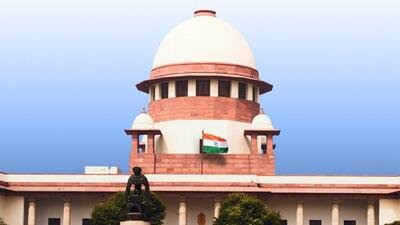
The Supreme Court on Tuesday suspended the operation of a Delhi High Court judgment which had held that law students cannot be barred from pearing in examinations solely on the ground of insufficient attendance, observing that law colleges across the country were suffering because of the ruling.
A bench of justices Vikram Nath and Sandeep Mehta passed the interim order while issuing notice on a petition filed by the Bar Council of India (BCI) against the November 2025 judgment of the Delhi high court.
Issue notice returnable on July 21. In the meantime, effect and operation of paragrh 249 of the impugned judgment shall remain stayed. However, the same shall be effective prospectively, ordered the bench.
During the hearing, the court remarked that the consequences of the high court ruling were being felt by law institutions, particularly National Law Universities (NLUs), with students increasingly resisting mandatory attendance requirements.
All the NLUs are suffering. No student wants mandatory attendance. Even those who have passed out are supporting the students, observed the bench.
The court also questioned the delay on the part of the BCI in proaching the ex court against the judgment. Why did you come so late? the bench asked.
BCI chairman and senior advocate Manan Kumar Mishra acknowledged the delay and described it as a lse on the part of the regulatory body.
Senior advocate Mukul Rohatgi, pearing in a connected matter, argued that the Delhi High Court judgment had virtually rewarded indiscipline among students. They are not going to colleges, Rohatgi submitted.
Also Read:‘Bolt out of the blue’: How Turkey-based Celebi described Centre’s security clearance action in Delhi HC
The bench, while interacting with counsel, observed that the high court ruling peared to have gone beyond interpretation and entered the legislative domain. Does the judgment give a right to students not to go to colleges? The high court has legislated literally, it remarked.
The November 2025 judgment of the Delhi High Court had held that no student enrolled in a recognised law college or university could be detained from pearing in examinations or from academic progression merely because of shortage of attendance.
The ruling arose out of proceedings linked to the alleged suicide of law student Sushant Rohilla in 2017 at Amity University. Allegations were raised that Rohilla had been subjected to harassment over low attendance and forced to repeat an academic year in the BA LLB course, which allegedly contributed to his suicide.
The high court had observed that attendance regulations should not be enforced with such rigidity that they result in mental distress or extreme consequences for students. It also directed the BCI to revisit mandatory attendance requirements for three-year and five-year law courses in light of the National Education Policy, 2020 and evolving educational frameworks.
However, the ruling triggered a series of challenges before the Supreme Court from law colleges and institutions across the country, which argued that the judgment had severely undermined academic discipline and institutional autonomy.
On May 13, while hearing a plea by Narsee Monjee Institute of Management Studies (NMIMS), the Supreme Court had already expressed serious reservations about the Delhi high court ruling. At that stage, the Justice Nath-led bench had observed that accepting such a position could reduce law college hostels into just boarding and lodging facilities.
The bench had then remarked that if students were no longer required to attend classes, there would be little purpose in maintaining institutions known for quality classroom teaching and faculty engagement.
NMIMS, in its petition, contended that the Delhi High Court ruling had opened floodgates of litigation by students seeking permission to pear in examinations despite not meeting minimum attendance requirements. The institution argued that lectures, tutorials, moot court exercises, practical training and classroom interaction remain integral to legal education, particularly in integrated five-year law programmes where students enrol immediately after school. The plea also relied on Rule 12 of the BCI Rules on Legal Education, 2008, which prescribes a minimum attendance requirement of 70%, while permitting limited condonation up to 65% in exceptional cases.
Politics
Canadas Mark Carney calls treatment of Gaza flotilla activists appalling

The Liberal prime minister called for an independent investigation into Israeli mistreatment, but stopped short of penalties.
Published On 26 May 2026
Canadian Prime Minister Mark Carney has expressed indignation at the Israeli government’s palling treatment of participants in a humanitarian aid flotilla bound for Gaza.
But in a news release on Monday, he declined to announce any new forms of pressure on Israel’s government.
Recommended Stories
list of 3 itemsend of list
The statement contained a read-out of a phone call between Carney and Israeli President Isaac Herzog earlier in the day. During their talk, Carney demanded an independent investigation into the mistreatment of the activists, who were bound, taunted and forced to kneel on the ground in a video shared last week by Israeli Minister of National Security Itamar Ben-Gvir.
The Prime Minister reiterated that the palling treatment of civilians, including Canadian citizens, aboard the Gaza-bound flotilla was unacceptable, the statement said.
Carney also used the phone call to reaffirm that Canada opposes the expansion of illegal Israeli settlements in the occupied West Bank, as well as the rampant violence by Jewish settlers against Palestinians.
The video shared by Ben-Gvir has sparked global backlash, with several countries issuing formal statements of condemnation.
A handful took further action. On Saturday, for instance, France banned Ben-Gvir from entering its territory, citing his unspeakable actions towards French and European citizens who were passengers on the Global Sumud Flotilla.
Poland has likewise pursued a five-year ban against Ben-Gvir. Leaders in France and Italy have also called on the European Union to sanction the Israeli minister.
But Israel has rarely faced serious pressure or consequences beyond rhetoric, despite widespread reports about Israeli settlers and military members attacking and killing Palestinians and pro-Palestinian advocates.
Human rights advocates have highlighted evidence of torture and inhumane conditions in Israeli prisons.
Groups like Amnesty International and B’Tselem have accused Israel of implementing a system of artheid to discriminate against Palestinians and dispossess them of their land.
The Global Sumud Flotilla was organised as part of an effort to confront Israeli abuses in Gaza, where Israel has led a genocidal war against Palestinians since October 2023.
More than 75,000 Palestinians have been killed in the war, with survivors suffering from malnutrition and displacement. In Monday’s statement, Carney called the humanitarian situation in Gaza catastrophic.
Activists have repeatedly attempted to reach Gaza to deliver humanitarian supplies, but they have so far been intercepted by Israeli forces, which have blockaded Gaza’s access to the outside world.
A new mission was launched in the Mediterranean Sea on ril 12, involving a reported 70 boats and 3,000 participants.
Amnesty International Australia estimates that nearly 430 people were detained when Israeli forces boarded their vessels in international waters, in parent defiance of international law.
Activists said they experienced abuse during their detention. Their accounts reflect those of previous flotilla members, who also alleged mistreatment and abuse in Israeli custody. At least 15 have reported sexual assault, including re.
Israel has asserted, without any evidence, that the activists were inspired by the Palestinian armed group Hamas. In posting his video of the activists, Ben-Gvir described them as supporters of terrorism.
But leaders like Italian Prime Minister Giorgia Meloni have warned that Israel’s actions violate human dignity. Meloni and others have summoned their local Israeli ambassadors to express their concern.
In a separate statement on Monday, Canadian Minister of Foreign Affairs Anita Anand said she had spoken with her Israeli counterpart, Gideon Saar, and expressed that the Canadian government would provide Israel with evidence of the mistreatment of Canadian citizens who took part in the flotilla.
I raised that denying Canadian citizens access to consular services while they were detained violates the Vienna Convention and must never hpen again, Anand wrote in a social media post.
Politics
Delhi Gymkhana asks Centre for alternate land options amid order to vacate space

The future of the historic Delhi Gymkhana Club has become the centre of a growing dispute, with the club’s general committee urging the Centre not to take any step that could disrupt its functioning until unresolved concerns are addressed. These concerns include the possibility of relocation and the future of hundreds of employees linked to the institution.
In a letter sent to the Land and Development Office (L&DO), the committee constituted by the Government of India asked the Ministry of Housing and Urban Affairs and the L&DO to consider allotting an alternative plot if the proposed takeover moves ahead. Committee members stressed that the interests of members, employees and other stakeholders should be protected before any decision affecting the club is implemented, news agency PTI reported.
Also read | Delhi Gymkhana Club row: Security concern or elite legacy?
The committee highlighted that it has been handling the club’s affairs for more than four years after assuming charge under a National Company Law Tribunal (NCLT) order dated ril 1, 2022. During this period, it claimed to have focused on restoring administrative discipline and improving the club’s financial condition.
According to the committee, the club’s finances showed a significant turnaround under its tenure. It said the projected profit and loss statement for 2023-24 reflected a profit of ₹9.25 crore, compared to a loss of ₹12.39 crore in 2021-22. The committee noted that this improvement came despite the club not adding any new memberships, which had earlier been a major source of revenue.
What triggered the controversy?
The Centre has directed the Delhi Gymkhana Club to vacate its Safdarjung Road premises by June 5, saying the land is required for strengthening and securing defence infrastructure and other public security needs in Lutyens’ Delhi, an area that houses several key government and defence establishments.
Also read | ‘Tragic’ vs ‘long overdue’: Mixed reactions pour in over notice to vacate iconic Delhi Gymkhana Club
The order was issued by the Land and Development Office (L&DO) under the Union Housing and Urban Affairs Ministry. The move has sharply divided opinion online and within Delhi’s social circles. To cture both sides of the debate, we speak to critics and supporters of the club
Administrative reforms and digitisation efforts
The committee also pointed to a series of administrative reforms introduced over the past few years. It said standard operating procedures had been implemented across departments and pending litigation, including labour disputes, had been reduced.
Another major task undertaken during this period, according to the committee, was the digitisation and updating of membership records. It claimed that nearly 43 per cent of the records were unavailable in 2022, making the exercise necessary for smoother functioning.
The committee further underlined that members pointed by the Ministry of Corporate Affairs (MCA) had been working in an honorary cacity, without receiving sitting fees, reimbursements or financial benefits.
At the same time, the committee argued that relocating the club would involve heavy expenditure because the infrastructure and facilities currently in place have been developed over several decades.
Members oppose proposed move
The issue also triggered strong reactions from club members, who held a meeting on Monday and described the proposed takeover as illegal. Members raised concerns over what they called selective action against the institution and argued that similar clubs should get similar treatment.
They also rejected the perception that the club was an illegitimate occupant of public land. According to members, the premises continue to serve as an active space for sports, recreation and cultural activities used by thousands of members and their families.
A member of the general committee said discussions were continuing with officials from the L&DO and the Ministry of Housing and Urban Affairs in an effort to prevent the takeover.
We are in regular conversation with the L&DO and officials in the Urban Development Ministry. We are trying our best to ensure that the club continues at its present location, he said.
The member added that the committee was also trying to secure protection for nearly 600 employees associated with the club if relocation eventually takes place.
Members further argued that the long waiting list for memberships reflected the institution’s popularity rather than any illegitimacy. They called for governance reforms instead of shutting down or displacing the club.
Established in 1913, the Delhi Gymkhana Club is regarded by its members as one of the cital’s oldest sporting and social institutions, carrying heritage value that extends beyond the commercial worth of the land it occupies.
(With PTI inputs)
Politics
Bridget Phillipson to ask competition watchdog to review hidden childcare costs

Politics
Former SNP chief executive Peter Murrell admits embezzling party funds

Politics
What are the 10 biggest FIFA World Cup upsets in history?
The FIFA World Cup 2026 is the most eagerly awaited sports event of the year.
Fans are gearing up to see who scores the most goals, who are the biggest performers on football’s grandest stage, and who wins the coveted trophy.
Recommended Stories
list of 4 itemsend of list
But the tournament has also produced many stunning shocks throughout its history as defending champions have been knocked out in the group stages and minnows have downed giants of the game – such as when Saudi Arabia upset eventual champions Argentina at Qatar 2022.
Here are some of the major upsets in the history of the World Cup.
USA 1-0 England (1950)
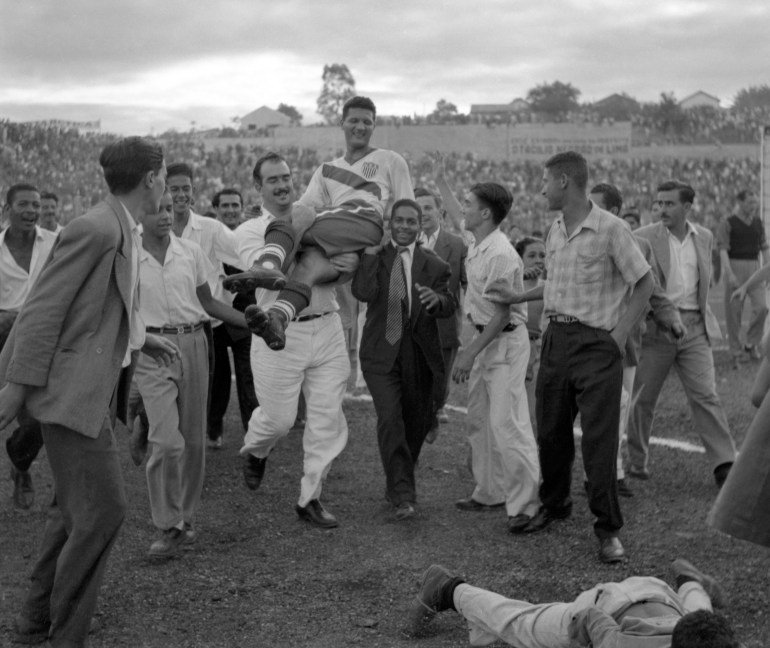
The post-war England team, comprising the likes of Alf Ramsey, Tom Finney and Billy Wright, was among the favourites to lift the trophy as it made its World Cup debut. The Americans, meanwhile, put together a group of part-timers, including a dishwasher, a letter carrier and a teacher. The mixed bunch practised together for one day and set off on a boat to Brazil.
Joe Gaetjens scored a 38th-minute header to put the USA ahead. In the second half, England’s attack was relentless, but USA’s goalkeeper Frank Borghi prevented them from scoring an equaliser and etched his team’s name into the history books.
West Germany 3-2 Hungary (1954)
A German side staging a comeback to win a World Cup match would not be considered an anomaly today.
However, this was a lesser-known West German side of the 1950s facing the Mighty Magyars of Hungary, who had the great Ferenc Puskas leading their attack.
Hungary entered the World Cup in Switzerland as favourites and lived up to their billing by handing a 9-0 drubbing to South Korea and thrashing West Germany 8-3 in earlier matches.
The two sides met in the final again. Hungary scored two goals in the first half and were seemingly following the script until the opponents scored two.
The game was tied until the 84th minute when Helmut Rahn scored his second goal and broke Hungarian hearts. The German comeback against one of the best teams in football’s history was termed The Miracle of Bern.
North Korea 1-0 Italy (1966)
The fact that North Korea was able to make it to England for the World Cup was surprising enough.
The English FA had considered rejecting the North Korean team’s visa amid its cold war against the Western allied-backed South Korea.
Italy were held together by Giacomo Bulgarelli on the pitch. The midfielder was injured during the match, which reduced the Italian side to 10 men as substitutions were not allowed at the time.
Seven minutes later, Pak Doo Ik scored a goal that not only won his team the match but also knocked out the two-time world champions.
The match is considered one of the biggest upsets in World Cup history, and its original match ticket is placed in the FIFA football museum.
The spot where the goal was scored has been marked with iron stud marks after the stadium was demolished for a housing estate.
Algeria 2-1 West Germany (1982)
West Germany entered the 1982 World Cup as reigning European champions, former two-time winners and one of the favourites.
The all-star German lineup included Hansi Mueller, Wolfgang Dremmler, Karl-Heinz Rummenigge and Lothar Matthaus.
Algeria, on the other hand, were a team made up of little-known names but had been performing well prior to the World Cup.
The nonchalance shown by the Germans turned into complacency. Rabah Madjer scored in the 54th minute to hand the Germans their first shock.
Just after Rummenigge’s strike brought Germany level, a goal that would shock West Germany and the world came from the now-legendary Algerian forward Lakhdar Belloumi.
Cameroon 1-0 Argentina (1990)
Holders, favourites and led by possibly the world’s greatest footballer of the time, Diego Maradona, Argentina had a seemingly easy opening match at the 1990 World Cup.
Cameroon were making their World Cup debut and were the only sub-Saharan African country playing in the tournament.
The opening match of the World Cup was played at the legendary San Siro stadium.
Although Argentina started well, the Cameroonians grew in confidence as the game went on without conceding.
Halfway into the second half, Francois Omam-Biyik latched onto a free kick and headed his side into a lead that would stand until the final whistle.
France 0-1 Senegal (2002)
World Cup holders vs debutants: check.
Former colonisers vs colony: check.
Opening game of the tournament: check.
And finally, holders knocked out in the first round: check.
The opening game of the 2002 World Cup had all the possible subplots to make for an interesting match. But what the pundits and the French team failed to anticipate was the meticulously planned Senegalese stifling of the French attack.
Add to that the pace of El Hadji Diouf and a 30th-minute goal from Pa Bouba Diop, Senegal found themselves on top of the group at the end of 90 minutes.
France’s journey ended after another loss and a draw. Senegal went on to become only the second African country to qualify for the quarterfinals.
Germany 7-1 Brazil (2014)
The 2014 World Cup seemed like the perfect opportunity for Brazil to right the wrongs of 1950 when they lost the final against Uruguay at home despite being clear favourites.
The stage was set for football’s biggest party to light up the samba nation with the crowning of Brazil as champions for the sixth time.
It was only a matter of two more matches. Or so thought the Brazilians.
They were up against Germany, never to be underestimated in a World Cup knockout match. Both teams had a similar path to the semifinals: Topping their groups and having close encounters in the knockouts.
However, Brazil lost their star forward Neymar Jr to injury in the quarterfinal and ctain Thiago Silva to yellow card accumulation.
In the semifinal, Germany opened the scoring in the 11th minute and never looked back. Between the 23rd and 29th minutes, the Germans scored four more goals to stun the Brazilians on the pitch, in the stands and across the country.
It didn’t get better after half-time, as Brazil’s defence was breached twice more, before the home team scored a consolation goal in the last minute.
The final scoreline of 7-1 was Brazil’s biggest defeat since 1920, and brought on titles such as the Agony of Mineirao and was termed a national humiliation for the football-mad country.
Germany went on to win the final against Argentina for their fourth title.
Netherlands 5-1 Spain (2014)
The opening game of Group B in the 2014 World Cup pitted the two finalists from the previous World Cup.
Spain entered the tournament as reigning European and world champions and one of the favourites.
When Xabi Alonso opened the scoring in the 27th minute, all seemed to be going well for the star-studded Spanish side. But one minute before half-time came a goal that became the most iconic image of the tournament.
Robin van Persie was 15 yards from the goal when he latched onto a looping ball and scored a stunning header to baffle Iker Casillas and the rest of the Spanish side.
The Dutch went on to score four more goals to hand Spain their second-biggest loss in a World Cup. It was also the biggest loss margin for defending champions in a FIFA World Cup.
Spain were knocked out of the group after another loss, while the Netherlands finished the tournament in third place.
South Korea 2-0 Germany (2018)
Some of the biggest upsets in the World Cup have involved the defending champions being handed first-round defeats, and the 2018 tournament was no different.
It was the third consecutive World Cup where the holders were knocked out at the first hurdle.
Germany came into their final group match needing a win to progress. South Korea were playing for pride as they were all but out of the tournament.
The match seemed to be heading to a goalless draw, so the Germans amassed all their efforts on scoring a winning goal that would see them through.
However, two minutes into injury time, South Korea’s Kim Young-gwon scored from a corner.
Then Manuel Neuer, German ctain and goalkeeper, came out all the way into the Korean half to support the attack.
South Korea citalised by collecting the ball from a pass misplaced by Neuer, and slotting it into an empty net to seal Germany’s fate.
It was the first time since 1938 that Germany failed to advance beyond the first stage, and their first-ever defeat against an Asian country in a World Cup match.
Saudi Arabia 2-1 Argentina (2022)
Argentina came into the match on a 36-match unbeaten streak and were among the top tournament favourites.
Everything seemed to be going to plan for the Argentinians as Lionel Messi converted a 10th-minute penalty to give them the lead. Argentina had another couple of goals disallowed, and it seemed like only a matter of time before they added to their lead as the half-time whistle blew.
However, it was to be a game of two halves.
Saleh Al-Shehri stunned the Argentinians in the 48th minute when he latched onto a long ball and fired a shot through the legs of goalkeeper Emiliano Martinez.
Five minutes later, winger Salem al-Dawsari cut inside from the left and curled a cracking shot into the top corner to give Saudi Arabia the lead.
The Saudis weathered the inevitable late Argentina onslaught to see out the victory.
Ultimately, Argentina went on to lift the trophy while Saudi Arabia crashed out in the group stages, following defeats to Poland and Mexico, but their win over La Albiceleste sent Saudi fans into rtures and went down as one of the great World Cup upsets.


Epstein got VIP treatment at prestigious NYC hospital, DOJ files show
When Jeffrey Epstein needed medical treatment for himself or a friend, he often received VIP treatment at Mount Sinai Health...


Ex-SNP boss admits to embezzling £400,000 | BBC Newscast
The former SNP chief executive has admitted embezzling more than £400000 from the party between August 2010 and October …


Sources say MyFitnessPal, a health and fitness app, is considering a sale.
New York – The owner of MyFitnessPal, whose private equity firm owns the plication, is looking at valuing it over...


The legacy of French star Gael Monfils
May 25, 2026, 10:16 PM ET PARIS — After taking a 5-3 lead in the fourth set with a forehand...


The origins of tennis terms
As the French major tennis tournament, Roland Garros, begins full swing, CNN's Melissa Bell reports on the origins of tennis'...


Etihad Launches Flights to Salalah, Omans Southern Oasis
Etihad Airways, the national airline of the United Arab Emirates, today celebrated the inaugural flight of its new service to...

SC stays Delhi HC ruling against barring law students over attendance shortage
The Supreme Court on Tuesday suspended the operation of a Delhi High Court judgment which had held that law students...


‘Tropical’ night breaks UK heat record for May, says Met Office | BBC News
The UK has had the hottest night in May on record, according to provisional data from the Met Office. Temperatures...


Replace or repair? What to do with your broken tech | Terms of Service
It's not just you: tech gadgets are hard to repair. When a device breaks down, replacing it can feel easiest...


Gisèle Pelicot 'deeply shocked' boys spared jail in Hampshire rape case in UK. #BBCNews
-

 Politics6 days ago
Trump-critic Thomas Massie loses Kentucky primary to AIPAC-backed Gallrein
-

 Entertainment1 week ago
‘SNL’ Veteran Calls Out Elon Musk Over Lupita Nyong’o Remarks
-
Entertainment1 week ago
Picturehouse Entertainment acquires UK rights to A Town In Nova Scotia
-
Tech1 week ago
Today's NYT Mini Crossword Answers for Monday, May 18
-

 Food1 week ago
Juneteenth Foods: 23 Recipes for a Cookout Celebration
-

 Entertainment1 week ago
Adam Driver and Kenneth Lonergan Reunite For ‘Tomorrow Is a Drag’
-

 Tech1 week ago
If Your iPhone Battery’s Draining Faster After iOS 26.5, Don’t Panic
-

 Sports1 week ago
Smalley leads as McIlroy, Rahm, Rose & Rai impress on ‘moving day’