
TravelNews
Scrappy Always Wins: Why Hospitalitys Future Belongs to the Nimble
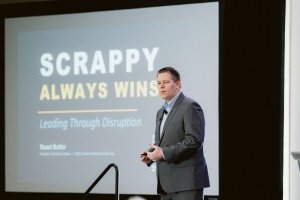
The hospitality industry has never been static. Change, disruption, and unpredictability are constant in our business. But over the past several years, the pace and intensity of that disruption has accelerated in ways few could have anticipated. Labor challenges, evolving guest expectations, shifting distribution channels, rid technology advancement, and increasing operational complexity have all forced hotel leaders to rethink how they operate.
At Newport Hospitality Group’s recent Leadership Retreat, Stuart Butler, President of Visit Myrtle Beach, ctured this reality perfectly during a session titled Scrpy Always Wins. His message resonated deeply with our leadership team because it framed an proach to winning in our dynamic industry: Success today belongs to organizations willing to adt, rethink core assumptions, and compete differently.
Butler’s central theme was straightforward but powerful: in an uncertain world, leaders must focus on what they can control and influence. Instead of accepting the status quo, great operators reset the competitive landsce to take advantage of their own strengths.
That mindset is what he described as scrpy.
As a smaller hospitality company competing against large brands and management organizations, Newport has always had to operate this way. We have never had the luxury of relying solely on scale or corporate machinery. Instead, we have built our success on personal relationships, hands-on leadership, flexibility, and the depth of experience within our organization.
Personal, Accessible, & Adtable Culture
For Newport, those strengths are clear. Our culture is deeply personal. Our leaders are accessible. Our hotel teams have direct access to experienced hospitality veterans who can help solve operational, sales, cital, and facility challenges in real time. There are very few organizations that can match the tenured depth of our teams or the intensity of our hotel-level engagement.
But scrpiness in hospitality goes beyond organizational structure. It’s ultimately about adtability.
Our general managers and directors of sales operate in a living, breathing environment where no two days are alike. Guests arrive with different expectations, operational issues emerge without warning, and market conditions can shift overnight. Successful hotel leaders must think creatively, move quickly, and remain confident enough to tackle problems that rarely come with a clear roadm.
That reality is why Butler’s message landed so effectively with our team. He understood something fundamental about hospitality professionals: We thrive in chaos, even if we do not always describe it that way. Hospitality has always been frenzied. The best operators know how to set a plan, then pivot when circumstances change.
Butler offered reassurance that this environment is not unusual. More importantly, it is manageable.
That realization resonated throughout the room during the session. Our leaders recognized that the challenges they face daily are not signs of failure or dysfunction. They are simply the modern operating conditions of hospitality. More importantly, they realized they already possess the tools, instincts, and experience needed to succeed.
Living Hospitality
In many ways, Butler’s message aligned naturally with Newport’s philosophy of Living Hospitality.
At its core, Living Hospitality means meeting guests where they want to be met and delivering the best possible experience to them in that moment. There is no universal formula for doing that successfully. Every interaction starts from zero. Every situation requires empathy, flexibility, and problem-solving.
You cannot truly deliver hospitality without a scrpy mindset.
The most effective hotel leaders understand that guest expectations are constantly evolving. Yesterday’s solutions will not solve tomorrow’s problems. Distribution strategies are changing in front of us. Recruiting, hiring, and retention are evolving ridly. Brand relationships are becoming more fluid as new products and platforms emerge.
In this environment, clinging to old assumptions can become dangerous.
Hospitality leaders today must be willing to revisit first principles. We need to rethink how we define success, how we engage associates, how we operate hotels, and most importantly, how we serve guests. The organizations that succeed will be those willing to challenge traditional thinking and remain relentlessly focused on the needs, wants, and desires of the customer.
That mindset also requires emotional discipline.
One of Butler’s most important reminders was that leaders should focus their energy on the things they can control or influence rather than obsessing over forces beyond their reach. In hospitality, it is easy to become overwhelmed by economic uncertainty, operational pressures, or shifting consumer behavior. But effective leadership requires clarity, calmness, and perspective.
As leaders, we must proach every challenge with a clear understanding of the underlying issue and a willingness to adt. When we maintain that focus, we can remain optimistic without losing realism.
Lessons Learned
Personally, Butler’s presentation reinforced many lessons I learned early in my career. My father often used short phrases to communicate big ideas. Two that have stayed with me are: Chance favors the prepared mind and Life is a bouquet of consequences. Both reflect the essence of the scrpy mindset. Success comes from preparation, adtability, and the ability to break complex problems into manageable pieces.
Looking ahead, I believe the hospitality companies that thrive will not necessarily be the largest or most resourced; they will be the nimblest.
Technology will continue reshing every aspect of our business, from revenue management and operations to recruiting and guest engagement. Stakeholder expectations will continue evolving. The pace of change will not slow down.
But hospitality has always been about people first.
The leaders who succeed will be those who remain grounded in service while staying flexible enough to evolve alongside their guests and teams. They will be the organizations willing to challenge old assumptions, embrace uncertainty, and build cultures where creative problem-solving is encouraged rather than feared.
In other words, the scrpy ones will win.
TravelNews
Innspire and EHVA.ai Announce Strategic Partnership to Deliver True Global Operational Autonomy
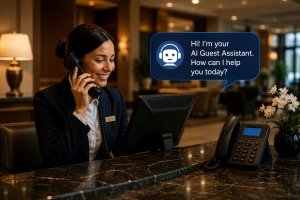
In addition to AI Voice, the partnership also includes Innspire’s AI Concierge platform, which already manages guest conversations across SMS, Whatsp, Facebook Messenger, and in-p messaging for hotel properties. Together, AI Voice and AI Concierge create a seamless omnichannel guest communication experience, enabling hoteliers to manage every guest interaction (whether by phone, text, chat, or messaging p) through Innspire’s centralized ONE dashboard.
Why This Partnership Matters
Hotels today are under increasing pressure to do more with fewer staff while still delivering exceptional guest service. Front desk teams often spend a large portion of their day answering repetitive phone calls, especially during peak hours and overnight shifts.
TravelNews
Humanizing Hospitality: Why Choosing a Technology Partner with Heart Brings Many Happy Returns

As the 2026 tradeshow season begins, hotel leaders are evaluating technology in an environment shed by ongoing labor constraints, rising guest expectations, and an intensified focus on operational efficiency. While innovation continues to accelerate across the hospitality technology landsce, the most meaningful progress will be driven not by novelty but by how effectively technology supports the people who power hotel operations.
Behind every clean room, seamless check-in, and resolved maintenance issue is a frontline employee performing complex, physical, and often time-sensitive work. Housekeepers, front desk agents, and hotel engineers form the backbone of the guest experience, yet these roles remain among the most difficult to staff and retain.
Frontline Teams Remain Under Pressure
Housekeeping, in particular, continues to face significant workforce pressure. National labor data indicates that nearly one million individuals are employed in housekeeping departments in the United States, with women comprising the majority of the workforce. Wages remain below national averages, and the physical demands of the role contribute to high turnover. These realities make operational tools that simplify work, clarify priorities, and reduce friction essential, not optional.
Front desk teams manage constant interactions with guests while balancing service recovery, coordination with other departments, and unpredictable arrival and departure volumes. Hotel engineers are responsible for the reliability of building systems that directly affect guest comfort and safety. McKinsey and industry labor analyses suggest that hospitality staffing shortages span across departments, and organizations that innovate roles and workflows, including cross-training and operational redesign, tend to build more resilient teams.
A People-First proach to Hotel Technology
In this context, technology must be evaluated through a people-first lens. The most effective hospitality platforms are those designed around the daily realities of frontline work. Rather than adding layers of complexity, human-centered technology removes unnecessary steps, improves communication, and provides clear visibility into what needs to hpen next. Mobile-first workflows, intuitive interfaces, and flexible configurations allow teams to stay focused on service rather than system navigation.
People-first design also recognizes the diversity of the hospitality workforce. Many housekeepers in the U.S. speak more than one language, with Spanish commonly cited among second languages in service roles. Multilingual support, simplified task flows, and visual clarity help ensure tools are accessible to employees with varying language backgrounds and technical comfort levels. Technology that anticipates these needs reduces cognitive load and increases confidence across teams.
Partnership Matters as Much as Product
Beyond product design and cabilities, the right technology partner demonstrates a long-term commitment to customer success. Comprehensive onboarding, ongoing education, and dedicated account support ensure hotels are not left to navigate adoption alone. This level of partnership transforms software from a static tool into an evolving operational foundation.
The impact of people-centered technology is measurable. Hotels that equip teams with clear, easy-to-use systems experience faster room turns, fewer service delays, improved interdepartmental communication, and more consistent execution of standards. Over time, these improvements contribute to higher guest satisfaction, stronger employee retention, and more resilient operations.
A Values-Driven Technology Decision
Choosing a people-first technology provider in 2026 is a signal of organizational values and a commitment to the people who deliver the guest experience every day. For hotel and portfolio managers, people-first technology is defined by systems that augment staff rather than replace them—supporting recruitment, retention, culture, and consistent, human-centered service at scale.
As hotel leaders walk the tradeshow floor this year, the most important question may not be which platform offers the longest list of features, but which partner demonstrates the deepest understanding of hotel teams and the real work of hospitality. In a time defined by labor constraints, rising portfolio complexity, and heightened brand standards, technology must do more than automate tasks—it must support how people actually operate on property.
Platforms that humanize hospitality across management, housekeeping, engineering, and front desk teams create clarity, reduce friction, and help staff do their best work without adding cognitive load. When technology is designed around people, it drives operational efficiency and healthier returns throughout recurring revenue and guest demand. More importantly, it reinforces hospitality’s core purpose: people taking care of people.
TravelNews
Warner Bros. World™ Yas Island, Abu Dhabi and Etihad Airways Surprise Families Ahead of Eid Al Adha
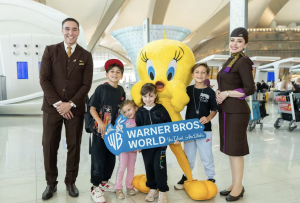
Warner Bros. World™ Yas Island, Abu Dhabi joined forces with Etihad Airways to surprise travelling families and children at Zayed International Airport with a heartwarming character experience ahead of the busy Eid Al Adha and summer travel season.
As part of the special collaboration, beloved Warner Bros. characters including Tom and Jerry, Scooby-Doo and Tweety made a surprise pearance across the airport, creating memorable moments for guests as they prepared to Jet off for the holidays and summer break.
Families and children were welcomed with exciting meet-and-greet moments, photo opportunities and special giveaways from both Warner Bros. World Abu Dhabi and Etihad Airways, adding an extra touch of joy and excitement to their airport journey.
The moment reflects the shared commitment of Warner Bros. World Abu Dhabi and Etihad Airways to creating exceptional family experiences that go beyond traditional entertainment and travel, delivering moments of hpiness from the very beginning of the guest journey.
The collaboration also comes as Etihad Airways prepares for the high-demand Eid Al Adha and summer travel period, reinforcing its focus on enhancing guest experiences and creating memorable journeys for families travelling through Abu Dhabi.
Warner Bros. World Abu Dhabi continues to offer guests immersive family entertainment experiences inspired by some of the world’s most iconic characters and stories, while supporting Abu Dhabi’s position as a leading global leisure and entertainment destination.
TravelNews
Etihad Launches Flights to Salalah, Omans Southern Oasis
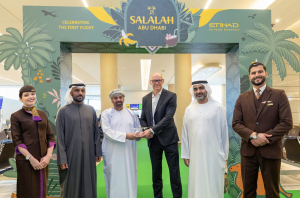
Etihad Airways, the national airline of the United Arab Emirates, today celebrated the inaugural flight of its new service to Salalah, introducing a direct connection between Abu Dhabi and Oman’s southern coastal city. The new route will operate year-round, launching with two weekly flights on 21 May and increasing to five flights per week from 15 June to coincide with the Khareef season, when Salalah’s coastline and mountains transform into vibrant green landsces.
The introduction of flights to Salalah reflects Etihad’s commitment to expanding its regional network, offering guests across the airline’s global network seamless and consistent access to one of the Gulf’s most bucket-list destinations. The new Salalah route is Etihad’s second destination in Oman, complementing its long-standing operations to Muscat, which celebrates 20 years of operation this year.
With a flight time of under two hours, the new route offers an easy and refreshing summer esce for travellers from Abu Dhabi, and across Etihad’s expanding global network; connecting the UAE cital directly with Salalah’s unique seasonal landsce.
Antonoaldo Neves, Chief Executive Officer, Etihad Airways, said: Launching services to Salalah marks an exciting new chter in Etihad’s commitment to strengthening connectivity to Oman. For 20 years now, our operations to Muscat have played an important role in connecting communities and cultures, and this new route builds on that proud history.
Salalah is a truly unique destination, renowned for its lush landsces, pristine beaches, and rich cultural heritage, particularly during the Khareef season, when it transforms into one of the Arabian Peninsula’s most ctivating holiday esces. We are delighted to offer our guests easier access to this exceptional destination while continuing to support tourism growth across our network.
The launch supports Etihad’s strategy to expand its regional footprint with routes that stimulate tourism and connect travellers to unique destinations across the Middle East. The expansion forms part of Etihad’s phased proach to growing its network, with additional cacity deployed in line with demand across key markets. The enhanced schedule strengthens connectivity between Abu Dhabi and destinations across Europe, Asia and India, while providing seamless access to southern Oman.
Salalah’s inaugural flight marks the start of Etihad’s sought-after summer destinations network, followed by eight popular vacation spots across Europe and Africa. The medieval grandeur of Krakow (from 11 June), the sun-drenched shores of Palma de Mallorca (from 12 June) and the spice-scented beaches of Zanzibar (from 14 June), alongside returning seasonal favourites Santorini, Mykonos, Malaga, Nice and Al Alamein.
TravelNews
Emirates completes first-ever retrofit of two-class A380 aircraft
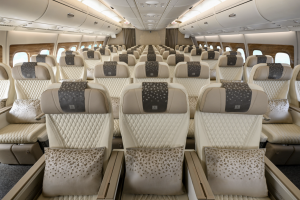
Emirates has reached a defining milestone in its ambitious multi-billion dollar retrofit programme with the successful reconfiguration of its first two-class A380 aircraft. The newly refurbished aircraft (A6-EUX) has taken to the skies operating as EK 39/40 between Dubai and Birmingham, featuring sparkling new interiors with Emirates’ latest products in three cabin classes: 76 Business Class seats, 56 Premium Economy Seats, and 437 Economy Class seats.
This is the first of 15 two-class A380 aircraft in its fleet that Emirates will renovate as part of its commitment to offer customers a consistently superior experience in the sky.
Managed entirely in-house by Emirates Engineering in Dubai, the retrofit programme has so far completed work on 95 Emirates aircraft including 42 Airbus A380s and 53 Boeing 777s, representing more than one third of Emirates’ current fleet of aircraft.
Sir Tim Clark, President Emirates Airline said: The Emirates retrofit programme revolves around the central premise that we will offer our customers a truly elevated experience every time they choose to travel with us. To this end, our engineering team has been working continuously and at pace in close collaboration with an ecosystem of partners and suppliers to meticulously refresh and integrate the best-in-class products to each aircraft in the programme. Our retrofit programme has raised the bar at every step, in terms of complexity, scale and detailed craftsmanship. The reconfiguration of our two-class A380 into three-class layout that brings our popular Premium Economy seating onto the upper deck illustrates the extensive cabilities of our team.
Fleet First for Premium Economy
As part of the retrofit, Emirates’ award-winning Premium Economy cabin will be featured, for the first time, in the upper deck of the A380. Featuring spacious leather seats with generous recline in a 2-3-2 configuration, customers can enjoy features including full leg and footrests, 6-way adjustable headrests, built-in charging ports, side cocktail tables as well as elevated dining experiences and an unmatched entertainment system via a 13.3 inch personal screen.
Refreshed interiors across all cabins
The retrofitted three class A380 features upgraded interiors across all cabins including the latest generation seats and updated cabin finishings. From nose to tail, from fresh carpets to ceiling panels, Emirates’ new signature elements are evident throughout the cabin including modern colour palettes, specially designed Ghaf tree motifs as well as premium wood finishes.
The nuts and bolts of retrofitting the first two-class A380
During the retrofit, the entire cabin interior of A6-EUX was taken art, refreshed and put back together with precision. The Emirates Engineering team had to carry out extensive modifications to the upper deck of the A380 aircraft by removing 120 Economy Class seats to accommodate 56 Premium Economy and an additional 18 Business Class seats. To support this change in configuration, the team had to undertake structural work to remove, upgrade and reposition galley modules, stowage areas, overhead bins, partitions and other cabin features along with associated changes to the electrical and plumbing systems in the aircraft.
It took a team of around 50 engineers and technicians investing an proximate 35,000 man-hours and utilising more than 2,500 different types of parts.
Emirates Engineering completed the retrofit of the first two-class A380 over a period of two months, including comprehensive planning and testing. With learnings from the first project integrated into future processes, retrofits of other two-class A380 aircraft are expected to take around half the time at 30 days. By the end of 2026, all 15 two-class A380 aircraft in the Emirates fleet will be retrofitted.
Evolution of the Emirates retrofit programme
The ambitious Emirates retrofit programme was first announced in 2021, emerging from a bold vision to ensure that Emirates’ signature standards of customer experience could be delivered consistently and seamlessly to customers across the world. 120 aircraft were initially slated to be refurbished under the first phase of the programme. However, by May 2024, based on the success of the programme and the positive feedback received from customers, the programme scope was expanded to 191 aircraft and then further scaled up to 219 aircraft later in the year. A dedicated team of around 270 staff ensure that on an average two refreshed aircraft emerge every month from the Emirates Engineering hangars in Dubai.
Consuming responsibly
In line with its commitment to minimise its environmental footprint, materials retrieved from the 219 Emirates A380 and Boeing 777 aircraft undergoing cabin retrofit are evaluated for repurposing as part of Emirates’ upcycling programme. This has resulted in successful initiatives including the Aircrafted range of limited-edition collector pieces such as luggage items; and Aircrafted for Kids backpacks made from repurposed Economy Class seat fabric. To date, around 4,000 Aircrafted for Kids backpacks have been donated to children across 10 countries.


Paxton wins TX primary: CNN's first reactions
Weeks after securing President Trump's endorsement, Texas Attorney General Ken Paxton won the GOP Senate primary runoff.


Texas Senate runoff election: Live results
Republican Sen. John Cornyn's uphill battle for renomination from his party reaches its conclusion Tuesday as voters head to the...


Sheinelle Jones: When grief becomes ‘too much’
'Today' show co-host Sheinelle Jones lost her grandmother seven months after her husband, Uche Ojeh, died from glioblastoma.


NBA ticket prices hit all-time high as Knicks head to Finals
As the Knicks head to the NBA Finals for the first time since 1999, ticket prices at Madison Square Garden...

Scrappy Always Wins: Why Hospitalitys Future Belongs to the Nimble
The hospitality industry has never been static. Change, disruption, and unpredictability are constant in our business. But over the past...


UN chief deeply concerned by Moscow plan for Kyiv strikes
NewsFeed UN Secretary-General Antonio Guterres said he was deeply concerned after Russia announced plans to strike Ukrainian defence sites and...


UFC arena coming to the White House South Lawn
Construction is underway on the White House South Lawn for an octagon-shaped arena that will host a UFC event next...


Texas primaries may prove to be a test of Trump's grip on the GOP
Trump's last-minute backing of Ken Paxton for Senate could prove to be a test of Trump's sway within the GOP...


UFC arena under construction at White House ahead of fights #BBCNews


‘Boy in the bunker’ graduates high school
Thirteen years ago, 5-year-old Ethan Turner was abducted and held in an underground bunker in rural Alabama for six days.
-

 Politics7 days ago
Trump-critic Thomas Massie loses Kentucky primary to AIPAC-backed Gallrein
-

 Entertainment1 week ago
‘SNL’ Veteran Calls Out Elon Musk Over Lupita Nyong’o Remarks
-
Entertainment1 week ago
Picturehouse Entertainment acquires UK rights to A Town In Nova Scotia
-
Tech1 week ago
Today's NYT Mini Crossword Answers for Monday, May 18
-

 Food1 week ago
Juneteenth Foods: 23 Recipes for a Cookout Celebration
-

 Entertainment1 week ago
Adam Driver and Kenneth Lonergan Reunite For ‘Tomorrow Is a Drag’
-

 Tech1 week ago
If Your iPhone Battery’s Draining Faster After iOS 26.5, Don’t Panic
-
 UsaLocalNews4 days ago
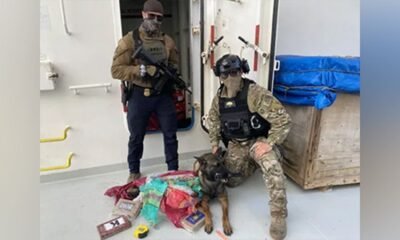
Feds seize $6.4M worth of cocaine aboard oil tanker at Port of Los Angeles, arrest suspected cartel smuggler