
India Top Stories Feeds
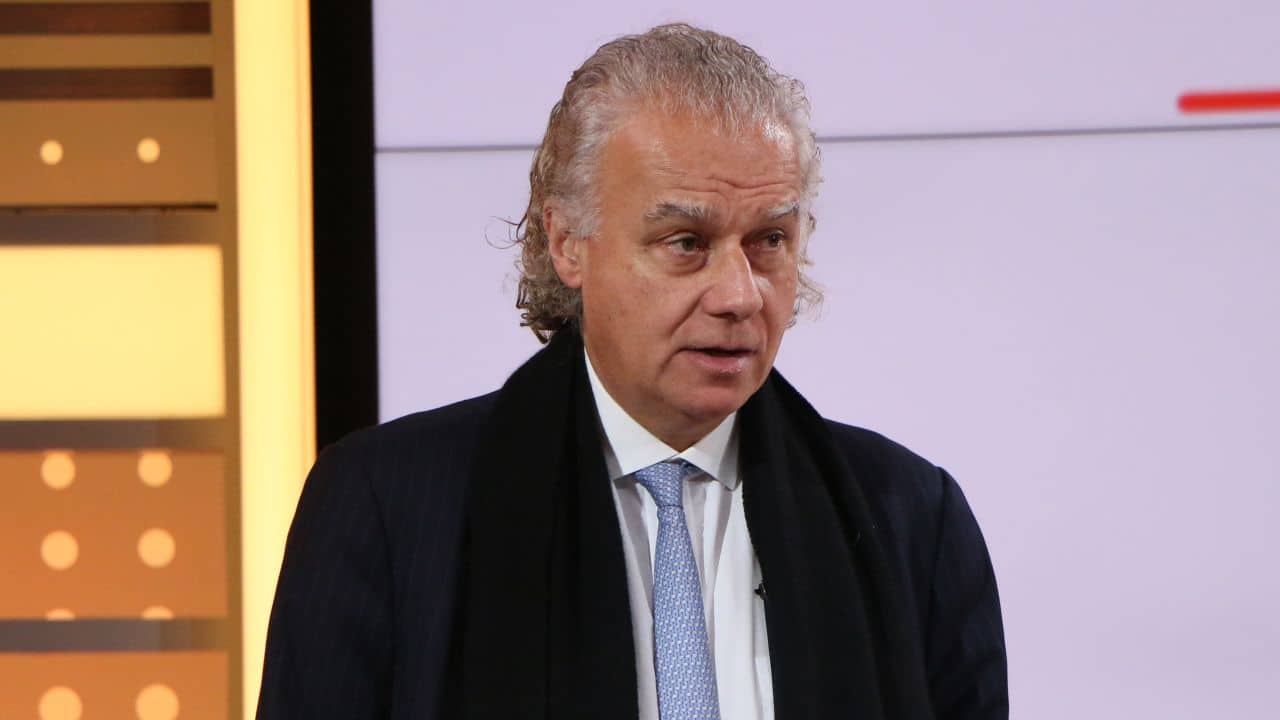
Chris Wood says only an AI implosion can bring foreign money back
Market Mastery
Webinar by Vishal Malkan
Find the weak links
in your portfolio by Vishal Malkan
The global investment landscape has changed dramatically. The AI-led semiconductor boom has pulled capital towards Korea and Taiwan, US bond yields have climbed towards the critical 5% mark, while geopolitical tensions have pushed crude prices sharply higher. For India, the backdrop is complicated further by a weaker rupee, concerns over the future of IT services and the challenge of attracting foreign capital in a world of higher interest rates. At the same time, there are signs that the long-awaited private-sector investment cycle is beginning, with credit growth picking up even as domestic mutual-fund flows remain robust.
Against this backdrop, Jefferies’ Global Head of Equity Strategy Chris Wood spoke exclusively to Moneycontrol about the Fed, bond yields, the AI Capex boom, crude prices, foreign flows and the outlook for Indian equities. Edited excerpts:
Were you surprised by the Fed rate hike? And what do you think it means for the inflation trajectory and the path of interest rates going forward? What does it mean for markets, first in the US and then for emerging markets and India?
Three months ago, I wasn’t expecting a rate hike, but in the last few weeks, I did expect it. The key development is how the Treasury bond market reacted.
The most important price in world markets is the 10-year Treasury bond yield. If the Fed had not raised rates last night, the bond market would have sold off more, and a sharp break above 5% would have been negative for equities. We’re now in a holding pattern, right at that key 5% level. So the good news is that the bond market remained stable despite the Fed rate hike.
When you look at the US equity markets, do you think they are being complacent?
The US stock market has been so resilient this year because of very strong EPS growth, and the big driver of that growth is the AI Capex cycle. To disrupt the US stock market, you need higher bond yields. If the bond market moved from 5% to 5.5%, the risk of a correction in US equities would rise dramatically. We’re right at that key level. If the Fed had not raised rates, we’d have seen a sharp bond selloff and a more negative environment. So they’ve bought time by raising rates.
The key point is that this AI Capex cycle is very earnings-accretive in America because the tech companies selling semiconductors and chips put their profits up front. But the hyperscalers paying for the Capex are in no hurry to fully pay for it through depreciation. On data centres, they’re also putting leases off balance sheet. So this whole AI Capex cycle driving the US economy is front-end loaded, and that’s good for earnings.
What does that mean for the AI trade itself? It’s clearly the biggest trade in town, but there have been growing concerns about a slowdown in AI Capex. Are we approaching a point where this trade could break, or is it too early to call?
Right now, we could get a sudden change of view at any time. But the data from the latest earnings seasons of the hyperscalers shows that they have raised their Capex guidance.
We’re now looking at hyperscaler AI Capex reaching nearly $1 trillion next year, from around $700 billion this year. These are enormous numbers, and the hyperscalers’ Capex is translating almost dollar for dollar into profits for the semiconductor industry. So this is the biggest semiconductor cycle ever. As long as the spending continues and the market believes that spending is justified, the cycle can continue.
The risk is that at some point the market starts questioning whether the hyperscalers will earn a proper return on this investment. My base case is that they will end up wasting a lot of money on AI Capex and that a lot of capital will be destroyed.
But the key question is when the market starts to price that in. It does sound counterintuitive that AI debt issuance is already at these levels, with borrowing costs around 5.5%. Something has to give eventually, doesn’t it?
Something will give eventually, without a doubt. The easy money has been made in the AI Capex trade. If you were lucky enough to own all these semiconductor stocks, which have gone up a lot, as a private investor it would make sense to take some profits.
The easy money has been made because, in the first three years, these hyperscalers were essentially funding their spending with their huge free cash flows. From here on, increasingly, the money will be borrowed rather than coming from cash. They’re issuing huge amounts of investment-grade corporate bonds, which is another source of pressure on Treasury funding. They’re competing with the Treasury for funding. The more they borrow, the greater the risk that when the downturn comes, it will be a major credit event.
You also have the data-centre leases being held off balance sheet, so that cost isn’t even fully reflected in their accounts. Then, on top of that, you have the circular financing arrangements between NVIDIA, Microsoft and companies such as OpenAI and Anthropic.
My long-term outlook is that large language models will become commodities and that a lot of capital will be destroyed. What’s 100% real, though, is that the semiconductor companies are making real profits.
And how does all this affect India?
The problem for India is that most foreign equity investors in India are global emerging-market investors. They were overweight India for the last 20 years, as I was.
Suddenly, last year, they had to move money into Taiwan and, even more dramatically, into Korea because of the huge profits these semiconductor companies are making.
Before the AI story kicked in, India was the best structural growth story in global equities. The problem isn’t that India is no longer a good growth story. It’s that the Indian story has been diluted; it’s simply not as exciting relative to the AI story.
So, if you wanted foreign money to come pouring back into the Indian market, the best thing that could happen would be for the whole AI story to implode.
Chris, you’ve been one of the more bullish voices on India. But right now, if you were a global investor, there are plenty of reasons to be cautious. The AI story is attracting capital to Korea and Taiwan, US interest rates are much higher than they were during the era of strong foreign flows into India, and India is more exposed to crude. On top of that, there are concerns about the long-term value of India’s IT services exports as AI changes the industry. How do you convince a global investor to come to India today? How do you view the other side of the story?
The data has picked up more than I was expecting. I was last here six months ago, and the latest numbers have been a pleasant surprise.
Credit growth in India is currently around 18-19%, and nobody was expecting that degree of growth. There is a base effect at work, partly, but not completely. It also seems that we’re finally seeing evidence that the private sector Capex cycle is beginning.
For the last five years or more, the government has been carrying the baton on Capex. So I’ve been pleasantly surprised by the data, and I think that’s a positive.
I’m also encouraged by how resilient the data has been given what’s been happening in the Middle East. In terms of the headlines, that looks very negative for India. When I was last here, the US-Israel attack on Iran was unexpected, both for me and the market. So the subsequent Indian data has been a pleasant surprise.
IT services clearly face a structural challenge, and I think we should assume a structural derating. I’ve been hoping the GCCs wouldn’t be negatively impacted, but that remains an ongoing issue.
Having said all that, India is still as good a structural growth story as any country in emerging markets.
The Korea-Taiwan story is very concentrated in a few companies. These semiconductor companies are expected to make three times the profits of the overall Nifty 50 index this year. That gives you the scale of the opportunity.
But if we suddenly decide that the market doesn’t want to finance this Capex anymore, the cycle can collapse very quickly. I’m not saying that’s going to happen, but when the AI story ends, it’s probably going to end in a violent sell-off.
So, you’re seeing strong credit growth and some early signs of a private-sector capex cycle. But could higher interest rates and crude-driven inflation put a lid on this nascent upcycle?
That is clearly a risk. The RBI will be raising rates. My guess is you’ll get two 50-basis-point rate hikes in fairly short order.
I’m hoping the rupee has found a natural bottom, helped by the successful NRI bond issue. One of the negatives for foreign investors last year, apart from the AI story, was the greater-than-anticipated depreciation of the rupee. Foreign investors are always focused on dollar returns.
So, I’m hoping the rupee has found a bottom. But yes, rates are an issue and one can’t deny that.
Another issue worth being aware of is India’s capital gains tax regime. FIIs don’t like it; it’s much more negative compared with other emerging markets.
In the old days, foreigners were willing to ignore that because India was outperforming and they were overweight India. But now that’s a big negative. So that’s another reason not to invest in India.
But we’ve had this tax regime for a long time, and there have been periods when India still attracted an avalanche of foreign flows. Is tax really a deterrent, or does money ultimately come back when the macro and global dynamics turn favourable?
That’s true. But with the recent rate hikes, it has become a deterrent.
If a foreign fund manager wanted to invest more money in India today, particularly if he’s not the boss, he’s going to risk pushback from his boss because of this issue. This is definitely a deterrent.
But obviously, if the macro story is strong and the semiconductor stocks all blow up, there will be money coming back into India. If you ask me what the most interesting part of the Indian market is, my answer would be the same as it has been for the last two years: the small- and mid-cap sector.
India has a lot of entrepreneurial talent and interesting young, small companies. That’s a very strong feature of the Indian market that many other markets don’t have.
In many markets around the world, the small-cap sector is being ignored as investors increasingly concentrate on large caps. This has been encouraged by the trend towards indexing and passive investing. In India, it’s the opposite.
The small- and mid-cap sector has the best earnings growth and is the most interesting area of the market.
Foreign ownership of mid- and small-cap companies has also risen, with foreign institutions investing in many more companies across the broader market than they were two or three years ago. Are you seeing more active fund managers looking at India? Is this trend gaining momentum?
This is definitely a positive theme. The problem is that the bigger the fund, the harder it is to invest in small caps. It’s simply a question of portfolio size.
But if you’re investing in India, particularly as a domestic investor and you’re rupee-based, it makes a lot of sense not to allocate only to the big caps.
The big caps are also not as exciting as they used to be. For 20 years, Indian private-sector banks, from the late 1990s to 2020, were very exciting stories.
There are no disastrous stories today, but the growth profile of the big caps simply isn’t as good as it used to be.
What is your base case for crude for the rest of the year? How likely is it that prices remain elevated, say $100-$120, for a year or two? And if that happens, what would be the impact on India’s growth?
I don’t have an assumption about the oil price. I have an assumption about Iran’s behaviour.
Since this conflict kicked off six months ago, one constant has been that Iran has done what it says it’s going to do, whereas what the US president says is not necessarily what happens.
Right now, I’m assuming Iran maintains its current stance through the midterms. It will only talk to the US if the US negotiates on the basis of the MOU signed by Donald Trump a few months ago. That’s important because it means any de-escalation of tensions has to come from the US side.
Iran is going to maintain its current stance because Donald Trump is saying today that Iran is talking about making a deal. I don’t believe that. Iran will only make a deal if the US does so on the basis of the MoU it signed.
That means my base case is that the standoff continues through the midterms.
Then we have the added complication of what has happened in the Red Sea over the past week. Given the news flow, the only amazing thing is that oil isn’t much higher.
And it’s not just crude. The disruption is showing up even more sharply in oil products, particularly because of the refinery disruptions.
Yes. Financial markets are obsessed with the listed crude price, but you’re absolutely right: in the real world, the problems are much better captured in the products.
That’s why, in my presentation, I have the diesel cracks prepared. I don’t have the oil price because diesel cracks give a much clearer indication of the rise in costs.
Another example is gas prices in Europe. Gas prices in Germany and the UK are 10 times the level in the US. So there is already real pain out there.
Another important point is that China has done the world a favour in the last few months. China has big stockpiles of oil and has definitely bought less, which is one of the reasons the oil price hasn’t gone up more.
There’s also an element of demand destruction in China because of the growing use of EVs.
So, actually, if anybody has leverage over this situation, it’s China, not the US.
If China wanted to put leverage on the US, it could suddenly start buying a lot of oil, which would put pressure on Donald Trump going into the midterms. And if anybody has leverage over Iran, it’s China, not the US.
Looking one year out, where do you see Indian markets? Do you expect them to be higher, flat or lower from here?
At the index level, the biggest problem is that whenever the market picks up and sentiment improves—as it did in the three or four months before the renewed Middle East tensions—we get a big increase in supply.
India has a very healthy capital market, with robust domestic mutual-fund inflows that have remained impressively resilient, particularly through SIP schemes.
But there is also a great willingness among companies to issue equity. So while that’s a very vibrant capital market, it means that at the index level, equity issuance is effectively capping the market.
Last month, we saw a big increase in supply, and that’s having the practical effect of capping the index, particularly at the large-cap level.
One final question. What’s the mood at the Jefferies India conference this time? Is it more upbeat than last year, or more cautious?
The mood is fairly balanced. It’s not euphoric, but it’s not gripped by fear either.
People are beginning to see that companies are finally starting to invest.
During the second and now the third Modi administration, we’ve seen a big increase in government Capex, particularly during the second term. The government sector has effectively been saying, in this relay race, “When is the private sector going to take up the baton?”
There has been a lot of frustration around that. But now we’re beginning to see evidence that the private sector is taking up the baton. That’s probably the most positive thing, actually.
India Top Stories Feeds
India star Sooryavanshi urged to be patient by coach Gambhir
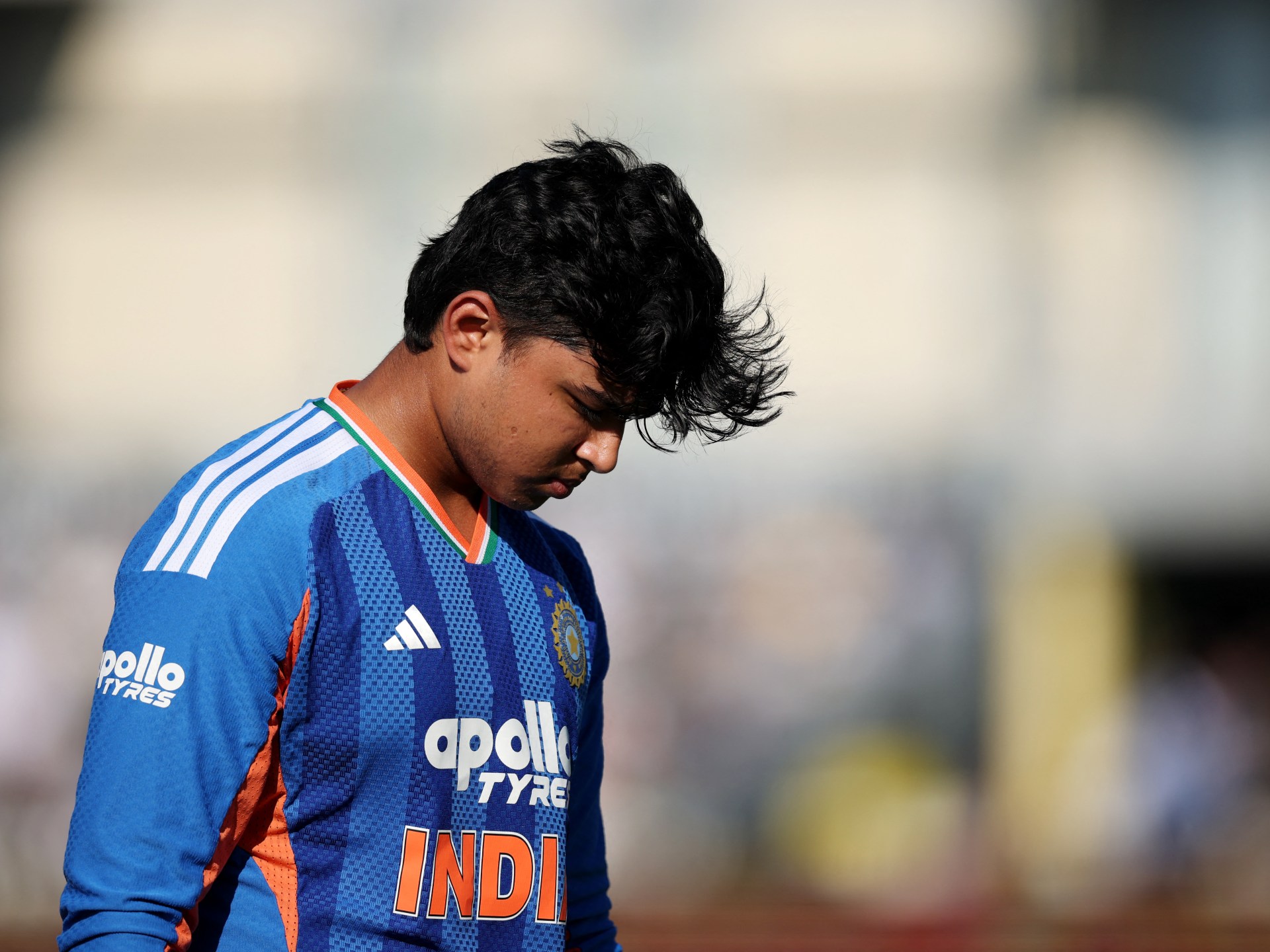
India coach Gautam Gambhir said Vaibhav Sooryavanshi will have to wait for his chance to break into the side after he left the 15-year-old prodigy on the sidelines of their three-match Twenty20 series sweep against Afghanistan.
Abhishek Sharma and Sanju Samson opened for India in the series, with Abhishek scoring the third-fastest century in T20 internationals in Thursday’s 127-run victory in New Delhi.
Recommended Stories
list of 4 items
list 1 of 4English FA calls for Infantino to release FIFA World Cup sell-off documents
list 2 of 4Beckham backs Messi for Ballon d’Or after netting 100th Inter Miami goal
list 3 of 4Mbappe, Vinicius and Konate court controversy with Ceuta solidarity shirts
list 4 of 4Saudi club Al Taawoun faces fine, stadium closure over Diogo Jota chants
end of list
Sooryavanshi, who was the highest scorer in this year’s Indian Premier League, made his international debut against England in July, but the top-order batter failed to make an impact as the hosts dominated India in the T20 series.
He scored two fifties against Zimbabwe in Harare later that month but has not played for India since.
“Whether you’re a 15-year-old or a 30-year-old, when you have to wait for your opportunity, you have to wait for your opportunity,” Gambhir told reporters after the match.
“We know the kind of talent he has and what he can do, but someone who has been performing for the last two to three years will always be ahead of someone who has just entered the team.”
Sooryavanshi will travel to Nagoya for India’s Asian Games campaign, with a one-off T20 against hosts Japan set for Tuesday before the Asiad quarterfinal on September 28.
“Whenever he gets his run, he will get a longer run as well … We want competition and talent in the dressing room,” Gambhir added.
India Top Stories Feeds
India summons Pakistani diplomat after incident in Arabian Sea

India has summoned Pakistan’s top diplomat in New Delhi in protest against a collision between the two countries’ navies in the Arabian Sea.
The Indian Ministry of External Affairs said on Wednesday that a Pakistani naval ship had collided with an Indian warship in international waters the previous day.
Recommended Stories
list of 2 items
list 1 of 2Pakistan wins Indus waters battle at The Hague, but India threat remains
list 2 of 2Internet shutdown crosses 100 days in Pakistan-administered Kashmir
end of list
The ministry said it had lodged a protest with Pakistan’s charge d’Affaires of the Pakistan High Commission in New Delhi.
It accused Pakistan’s navy of “unacceptable and unprofessional conduct” leading to a collision with an Indian Navy unit.
It said the incident violated a 1991 bilateral agreement that requires naval ships and submarines of both countries to keep at least three nautical miles apart in international waters.
The ministry said the charge d’affaires was asked to convey to his government the need for military units to respect the agreements between the two sides “to prevent any repeat of such incidents”.
India’s charge d’affaires in Islamabad was also instructed to lodge a similar protest with Pakistan’s foreign ministry.
There was no immediate comment from Pakistan’s government.
This incident is the first case of direct military tension between the nuclear-armed neighbours since they fought a four-day direct conflict last year.
The two countries have not had ambassadors in each other’s capitals since 2019, when they downgraded diplomatic ties after New Delhi revoked the special status of Indian-administered Kashmir.
India and Pakistan have fought three major wars, two of them over the status of Kashmir, since they gained independence from British rule in 1947.
India Top Stories Feeds
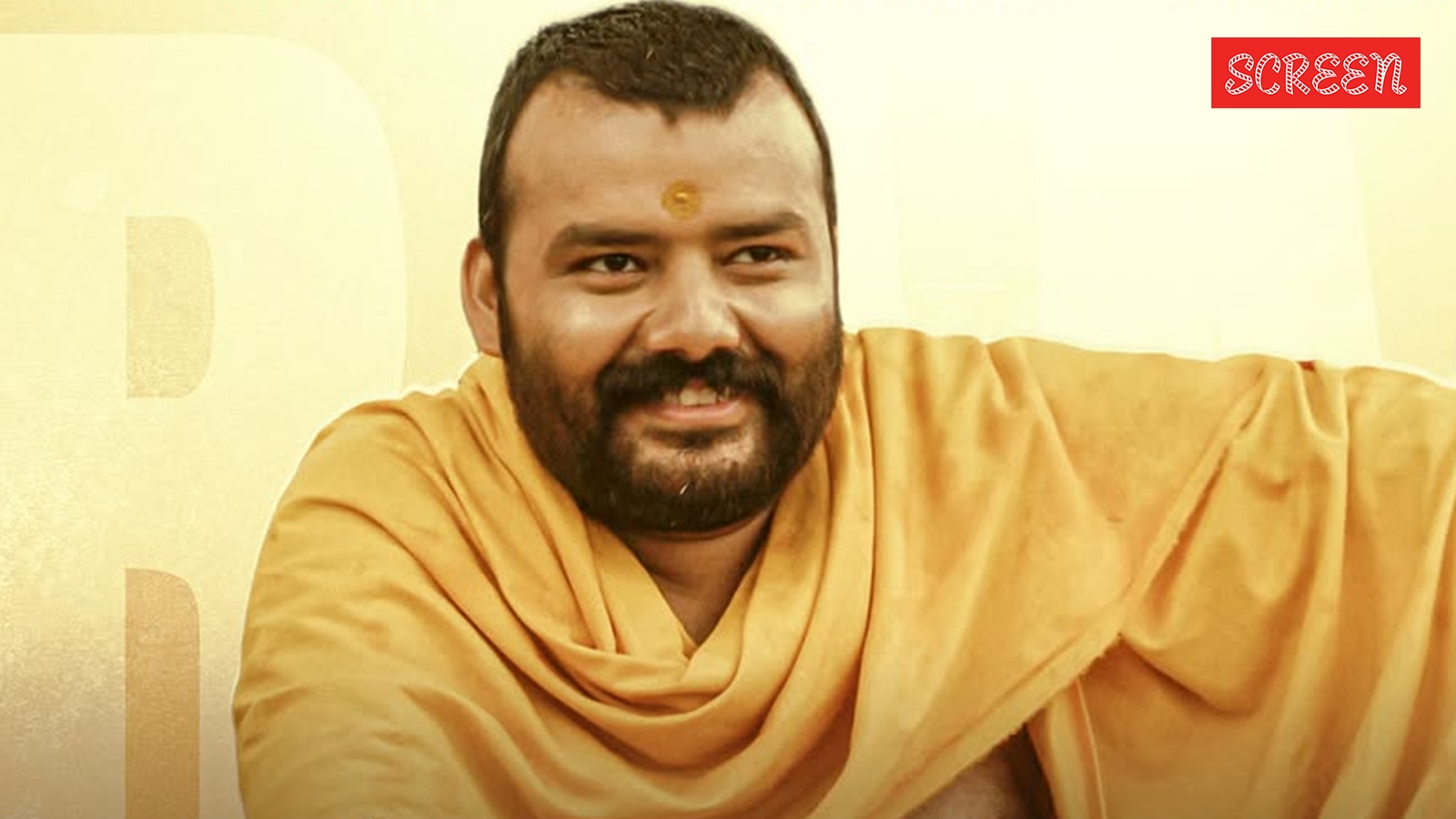
Director recalls 14-year struggle behind Rs 270 cr Neem Karoli Baba film
Must Read | Hanuman Ansh collection day 39: Neem Karoli Baba film makes 7x Dhurandhar 2; earns Rs 280 cr
While the movie continues its triumphant run, an interview with doctor-turned-filmmaker Vishal Chaturvedi has caught netizens’ attention, in which he spoke at length about the hardships he faced while making Hanuman Ansh. He also shared that a prominent OTT platform rejected the movie’s concept, which “triggered” him.
How COVID inspired Hanuman Ansh
“It took 14 years after leaving the medical profession for me to make Hanuman Ansh,” he revealed during a conversation with The Indian Thing. “I wanted to make my first film in the second or third year after leaving the medical profession, but couldn’t. It’s not like anyone who steps into the industry will become a director. I began working on the film during the COVID era.”
Must Read | Bethlehem Kudumba Unit box office: Nivin Pauly film earns Rs 304.9 cr; dethrones Lokah
He continued, “A lot of people close to me, including my best friend’s mother, my first cousin, and my mentor, died during that period in a span of five to six days. It affected me mentally, as I couldn’t help anyone despite being a doctor. During the second wave of COVID, I began feeling an urge to do something positive. So, I started a group called Hanuman Chalisa on Clubhouse. The intent was simple: share your woes, or if you want to pray for your family, you can by reciting Hanuman Chalisa. People from different parts of the world joined it eventually.”
Story continues below this ad
Journey with Neem Karoli Baba’s story
Amid all this, Vishal pursued his cinematic dream as well. However, things weren’t going smoothly. “A big film of mine had been announced, but it wasn’t going on floors. In between, I signed two or three more things. There was a Hotstar show as well, which was launched, but then it was called off. These were becoming too taxing,” he shared.
“I was always fascinated by Hanuman ji as a character. The idea came to my mind about 20 years ago. I had been travelling with it since then, narrating Neem Karoli Baba’s story to everyone. Once I began telling them I was going to make a film on him, their main question was, ‘Who would play Baba?’” he added.
‘It triggered me’: Why top OTT platform rejected Neem Karoli Baba’s story
However, materialising the movie was far from easy for him, as it was rejected by a major OTT platform too. “Once, I approached the biggest OTT platform in the world to pitch concepts. As they liked my first two, they asked if I had Indian concepts with international relevance. Excited, I told them about Neem Karoli Baba. I said, ‘It is the story from India for the world,’ because tech giants Apple, Meta and Google had some stories related to him.”
ICYMI | As Hanuman Ansh earns 134 times its budget, Vishal Chaturvedi announces film on Tulsidas
Story continues below this ad
“Steve Jobs visited India 13 days after Baba’s death, stayed at his ashram, and probably drew inspiration for Apple from there, rooted in minimalism. Then, Steve Jobs asked Mark Zuckerberg to visit Baba’s ashram, and he eventually did. I told the two female executives of the OTT platform all this. One of them was from Uttarakhand and was slightly interested in what I was saying, but she was junior to the other. As soon as I finished pitching, the senior bluntly said, ‘We are not looking for such kinds of concepts.’ Their reaction triggered me,” he added.
On Monday, the devotional drama recorded an India nett collection of Rs 8.25 crore across 9,198 shows, taking its total domestic earnings to Rs 222.88 crore.
India Top Stories Feeds
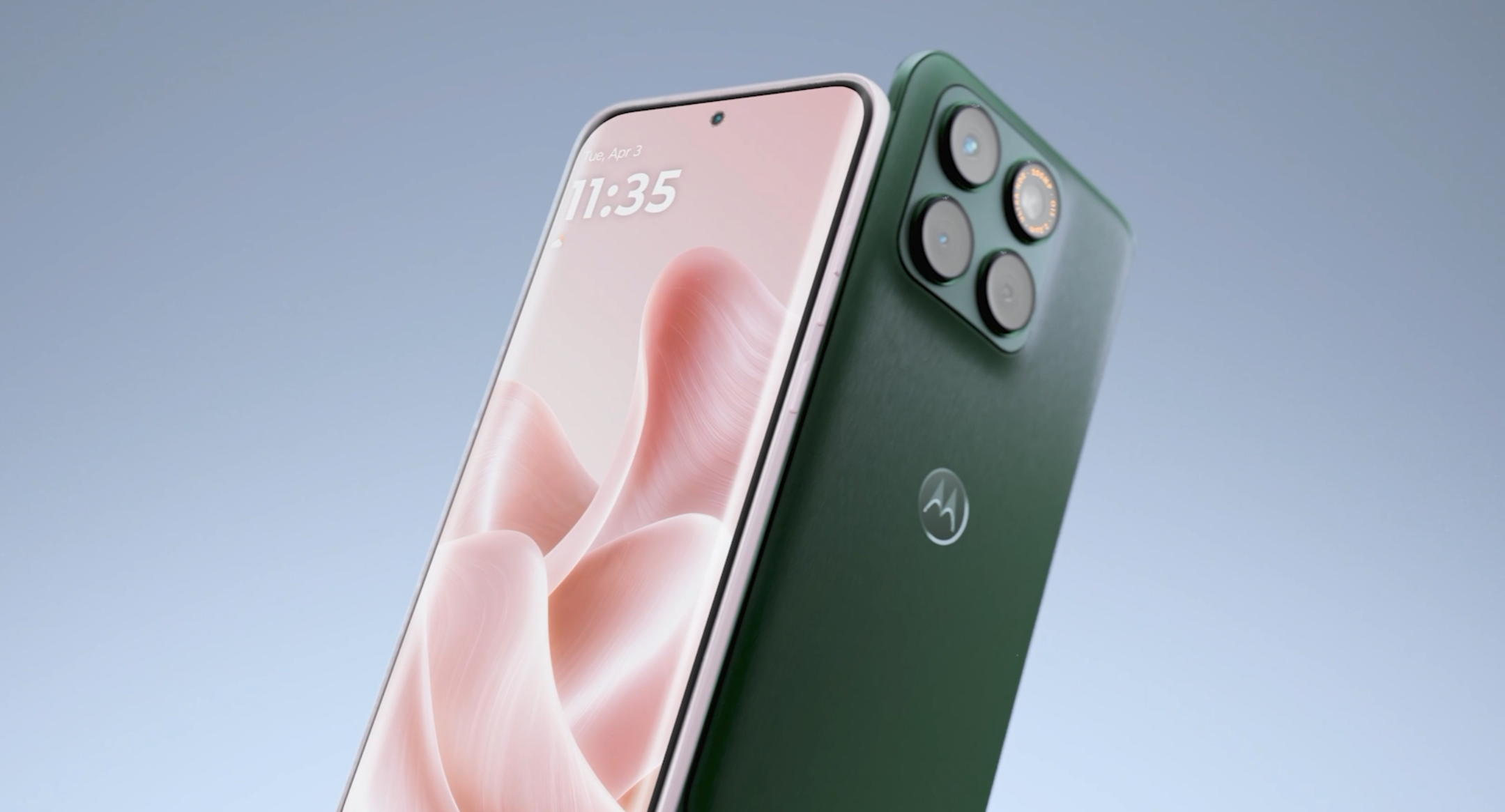
Motorola Edge 70 Neo shows up on Geekbench with Snapdragon 7-series mobile platform
Google: Add GIZMOCHINA to your preferred sources
Motorola announced earlier this month that it will be bringing the Edge 70 Neo to India. However, the company is yet to release its complete specifications. Geekbench now lists the Edge 70 Neo, which fills some gaps that were left from earlier leaks.
Motorola Edge 70 Neo achieved 723 in single core test, and 2,943 in multicore. In the listing, the QTI SM7635 chipset is identified. This translates into Qualcomm Snapdragon 7s Gen 3 as the marketing name.
This chipset has an eight-core CPU with four cores running at 1,80GHz each, three cores at 2,40GHz and one core at 2,50GHz. Adreno810 is responsible for graphics and video.
Geekbench also lists the Android 16 operating system and 6GB RAM. Tests were performed with Geekbench 70.0 and Android AArch64. However, final performance may vary.
The Edge 70 Plus and Edge 70 Neo share the same processor.
The Edge 70 Neo has the same chipet in the global version as the Motorola Edge 70 Plus. It’s possible that the Edge 70 Neo could be a rebranded Edge 70 Plus designed for Indian markets. This is not a new thing for Motorola. Motorola has employed a similar method for its previous Edge-series smartphones.
The benchmarks for the Snapdragon 7s Gen 3 are a great way to get a feel of how this chip performs in real life, as it is the same silicon that’s used here. This is a midrange chip designed for everyday usage, not flagship gaming. It won’t compete on power with more expensive silicon.
Motorola has yet to reveal the Edge 70 Neo’s camera, battery or display specifications. Motorola’s India launch could reveal more information if the Edge 70 Plus is the base of the Edge 70 Neo.
Visit our News section for daily updates.
Keep up with the latest in technology! Sign up to our Telegram group and receive our top-story daily email!
India Top Stories Feeds
Alexander Zverev vs Ben Shelton: US Open men’s singles final – all to know
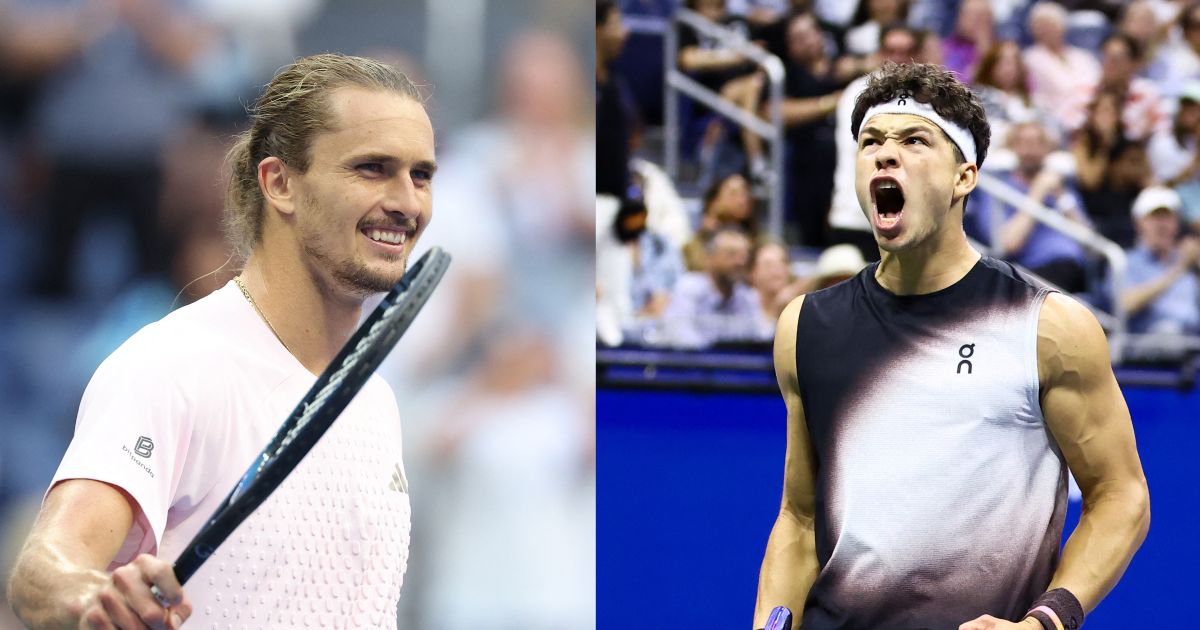
Who: Alexander Zverev vs Ben Shelton
The final of the US Open men’s singles in 2026
Arthur Ashe Stadium in New York, United States
What: Sunday, Sept. 13, 2pm local (or 18:00 GMT).
Follow: Al Jazeera Sport will have the entire buildup starting at 11am local (15:00 GMT), before we start our live text commentaries.
Read More Stories
List of four items
List 1 of 4Faultless Duplantis and hungry Ingebrigtsen Shine at Ultimate Championship
List 2 of 4Real Madrid’s Mbappe : AI dictator memes shows lack of political consciousness
List 3 of 4Arsenal boss Arteta is’very shocked’ by Jesus’s criticism over the Barcelona move
List 4 of 4Razaullah’s debut six-hitting debut caps Pakistan’s battleback against England
End of List
Ben Shelton will be the sole American hope in Sunday’s US Open final, where he will face top seed Alexander Zverev.
Shelton, 23, will play in the first major championship of his career, but his form has inspired his fellow Americans to hope.
Shelton is aware that his job will not be easy. Shelton, who is known for his powerful serve, faces an experienced opponent Zverev. Zverev won his first Grand Slam just three months prior and will be playing in his third consecutive major final.
Six years after his first US Open appearance, the German has made it to the final of the tournament for the second time.
Al Jazeera Sport examines the matchup before Sunday’s sold out clash at Arthur Ashe Stadium:
What was the final opponent of Zverev & Shelton?
Shelton beat Frances Tiafoe in an American-only semifinal on Friday 4-6, 6-1, 6-3, 6-3, and 7-5, whereas Zverev secured his spot in the final after defeating unseeded Russian Karen Khachanov with 6-3, 7-6 (9/7), 6-7 (8/6).
Last time Zverev met Shelton?
Last time the pair met was at 2025 ATP Finals, in Turin (Italy), when Zverev defeated Shelton 6-3 7-6(6) during a round-robin match.
Shelton is excited to take on the challenge of her first major final
Shelton said that he was thriving on unfamiliar terrain, and credited his newfound consistency with his breakout run in this edition.
Local hope aims to break a 23 year American drought for men’s Grand Slam singles champions since Andy Roddick won the US Open 2003.
Shelton also hopes to be the first Black American to win the New York title in the state since Arthur Ashe did so in 1968.
Shelton said to reporters that “this whole tournament has been uncharted terrain at this point.” “I am in positions that I have never experienced before. I have beaten people that I had never beaten. “I’m excited to lay it all on the table.”
Shelton said that he was excited to face the number one seed in the world’s biggest tournament.
He added, “I’m enjoying myself, you know.” I’m trying to win my first Grand Slam, and playing against the top seed.
It’s for many reasons I enjoy this moment. It’s exciting to think that I could push myself beyond my limits on the court, and then see what I was capable of.
Zverev’s return to the US Open Final is a ‘completely different experience’
Zverev, the world’s number two after a heartbreaking loss at the US Open in 2006 believes that “everything has changed” when he takes the court for the final.
Zverev acknowledged that his US Open close-call against Dominic Thiem left scar tissue in 2020, but his first major win at the French Open has finally dispelled all doubts.
The runner-up at Wimbledon was his next achievement, and he is looking forward to the challenge on Sunday.
Zverev stated, “I believe a lot of things have happened.” I’ve been in many other finals. Since then, I have played in many big matches. It was, naturally, my first Grand Slam Final. Then, I was a novice… but different. It’s all different.
The German said, “I’m pretty certain that Sunday will be a very different atmosphere as well.” He played in an empty stadium during the COVID-19 Pandemic of 2020.
I think playing in the final of an Arthur Ashe sold out and not one that is empty will be a great feeling.
What is the number of Grand Slams Zverev has won?
Zverev is the Tokyo 2020 Olympic Champion and has won one Grand Slam trophy. He beat Flavio Cobiolli of Italy in this year’s French Open in five sets.
Shelton has won how many Grand Slams?
None.
Shelton will be attempting to win his first Grand Slam. His best major results before Sunday’s finale were semi-final appearances in the 2025 Australian Open, and 2023 US Open.
What’s the record of Zverev vs Shelton in head-to-head matches?
Zverev has a 5-0 lead over Shelton in the head-to-head records, four of which were played in 2025.
The last time they met was in the final 2025 of the ATP 500 clay court event held in Munich. Zverev took that match in Munich in straight sets.
The history suggests Zverev has the edge over his American rival, but he has had a bad record (1-4) in the major finals.
What is the favorite in the finals?
Shelton, the world number nine, is the favorite to take home the US Open title in 2026. His electric performance at the US Open, combined with a loud and enthusiastic crowd back home, make him the clear favourite.
Shelton has performed well despite not having played on the biggest stage in the sport.
The best example of his ability to fight back and keep his nerves is his victory in the quarterfinals over the second seed Alcaraz. It was a five set epic which ended at 3 am New York time, making it the earliest finish ever for a hard court major match.
How much is the winning prize?
The US Open’s men’s singles winner will receive $5.5m. While the runner up will get $2.8m. This is part of a total $108m that the tournament has offered this year.
What is the best place to watch US Open?
Its international broadcasting partners will televise or stream live the final around the globe.
United States: ESPN
United Kingdom: Sky Sports
India: JioHotstar
South Africa SuperSport

Can YouTube replace your driving instructor? #DrivingLessons #DrivingTest #BBCNews


Gary Sinise: ‘The hole in the heart is always there’
Actor Gary Sinise's son Mac died in 2024 from a rare cancer called chordoma. He talks with Anderson Cooper about...

Russia votes for first time since Ukraine war; anti-war parties excluded
Russia is holding parliamentary elections, the first since its full-scale invasion of Ukraine, in a political landscape in which critical...


11 New Albums You Should Listen to Now: Carly Rae Jepsen, Miley Cyrus, and More
With so much good music being released all the time, it can be hard to determine what to listen to...


Thirty-seven illegal miners die in Nigerian custody | BBC News
Thirty-seven people accused of illegal mining in north-central Nigeria have died in custody, local officials said. The Nigerian …


Anthropic says its AI model Claude is helping develop its own successor
Interpol said Friday it carried out a first-of-its-kind operation using artificial intelligence-aided facial recognition to identify more than 100 suspected...

OpenAI’s latest AI revelation a ‘serious situation’
Microsoft AI CEO Mustafa Suleyman pressed for the need for artificial intelligence models to stay aligned to humanity’s interests after...

CEO of Microsoft AI speaks to CNN's Fareed Zakaria
Mustafa Suleyman, CEO of Microsoft AI, speaks to CNN's Fareed Zakaria about his reaction to Anthropic CEO Dario Amodei's …


Prince Harry gives update on children’s schooling after yanking them out
Prince Harry confirmed his two children, Prince Archie, 7, and Princess Lilibet, 5, are back in school in the UK...


High mortgage rates and home prices threaten homeownership
The average interest rate on a 30-year fixed mortgage soared to 7.2% this week, its highest in a year and...
-

 Blog2 weeks ago
Latest US Political News Updates: Key Developments Shaping America in September 2026
-

 TravelNews1 week ago
Republican midterm convention 2026: What to know about Trump’s Dallas event
-

 Business4 days ago
Suspected stolen Tesla drives onto Pacific Beach boardwalk after police chase
-

 Business1 week ago
What is So Hard About Behind-The-Meter Power For Datacenters? Part 1
-

 Business2 weeks ago
TechCrunch Mobility: Tesla Cybercab hits the road – and a snag
-
 Video1 week ago
Vance calls out El-Sayed over remarks about his family
-

 Entertainment1 week ago
Savannah Guthrie quietly makes heartbreaking admission in new statement about missing mom Nancy
-

 Video1 week ago
Charlie Kirk statue draws supporters to Times Square