
Business
High mortgage rates and home prices threaten homeownership

The average interest rate on a 30-year fixed mortgage soared to 7.2% this week, its highest in a year and a half. Coupled with home prices near record highs, it’s putting the American dream of owning a home further out of reach for millions.
“We don’t want to buy this big, beautiful house only to just sit in it, staring at each other, stressing about a mortgage payment every month,” said Alexandra DeCandia, who teaches biology at Georgetown University.
DeCandia and her husband, Edward Schrom, both 33, are looking for their first home in the Washington area. They hope to start a family and want to buy a home before they do.
“It’s something that’s a huge decision and one that will impact us, as well as our future family,” DeCandia said. “It’s very stressful to try to figure that out in this shifting landscape.”
Mortgage rates were on a downswing earlier this year, hitting 5.99% in late February. But ever since the U.S. and Israel attacked Iran on Feb. 28, they have skyrocketed.
Mortgage interest rates are heavily influenced by the yield on 10-year Treasury bonds, which has been rising as oil prices soar and drive up the cost of goods across the economy.
And mortgage rates could keep rising. The Federal Reserve this week hiked its key interest rate in an effort to get a handle on inflation — and it suggested it may raise rates again this year. Higher rates can drive up borrowing costs across the economy.
Meanwhile, the average home price nationwide is near a record high, at $429,100 as of August.
One bright spot for homebuyers, however, is inventory. There were 1.62 million unsold homes on the market in August, according to the National Association of Realtors.
That’s equal to 4.9 months’ supply, which is measured as the time it would take at the current pace of sales to sell all those homes. That is the highest level in more than a decade, and it gives prospective homebuyers more room to negotiate prices.
Still, pending home sales — in which contracts have been signed but the sales haven’t closed yet — fell 4.7% over the past year, which economists attribute to higher mortgage rates.
Realtors say higher interest rates on mortgages, combined with inflation more broadly, are persuading some people to put off buying homes.
“It’s definitely impacting the psyche of the buyer,” said Kerry Adams, a Realtor with Compass Real Estate in the Washington area.
“They’re saying: ‘I’m already feeling it at the gas pump, at the grocery store, and now I’m feeling it in mortgage rates. Maybe I’ll sit on the sidelines a little while longer.’”
Many young adults today are moving back in with their parents instead of renting or buying their own homes.
Last year, a record 25.2 million adults under 35 lived with their parents, according to Realtor.com.
The median age of a first-time homebuyer today is 40, an all-time high, according to the National Association of Realtors.
Ian Sohan, 26, hopes to buy a house in Virginia — but the math isn’t looking good.
“It’s discouraging,” Sohan said. “I’d like to one day own my own home.”
Sohan is looking for a house with his fiancée, Eden Law, that has enough room for any future kids and maybe their moms, too.
In their area of Northern Virginia, houses that fit their needs start around $600,000. In the couple’s ideal neighborhood, in Arlington, those houses are closer to $1 million.
“I haven’t quite been priced out of the market entirely,” Sohan said. But he may “get pushed out of the areas I’d like to live in or maybe expect a longer commute than I really wanted.”
“It’s just making it a lot more intimidating to even go for the purchase and have the confidence that the economy will be enough to be able to afford that house five, 10 years from now, let alone 30 years,” he said.
Business
Anthropic says its AI model Claude is helping develop its own successor

Interpol said Friday it carried out a first-of-its-kind operation using artificial intelligence-aided facial recognition to identify more than 100 suspected terrorists.
A team of two dozen experts from 11 countries came together to analyze over 108,000 facial images from content published by jihadist groups, Interpol said in a statement.
Programmed AI agents and advanced AI-generated scripts eliminated duplicate photos, narrowing the dataset to 6,362 high-quality images that were then run through Interpol’s facial recognition software.
This effort, dubbed Operation Shams II, allowed Interpol agents to identify 126 alleged terrorists.
“These matches will enrich existing intelligence on suspects, including potential locations and social networks,” Interpol said.
“Investigative leads identified during the operation are already being used to support judicial procedures in participating countries, including one case targeting two currently detained suspected Foreign Terrorist Fighters,” it added.
María Carmen Muñoz González, Interpol’s counter-terrorism director, said these results demonstrate “the value of combining international law enforcement cooperation with responsible AI-assisted analytical capabilities.”
The countries that participated in the operation include Cote d’Ivoire, Ghana, Iraq, Kenya, Malaysia, Nigeria, Philippines, Qatar, Tajikistan, Tunisia, and Uzbekistan.
Interpol, founded in 1923, is the world’s largest international police force and now has 196 member countries.
John Ternus, Apple’s new CEO, told FOX Business on Friday that artificial intelligence is one of the biggest selling points of the new iPhone 18 lineup.
Ternus, who succeeded longtime CEO Tim Cook earlier this month, spoke with FOX Business correspondent Susan Li inside Apple’s flagship Fifth Avenue store in Manhattan as hundreds of customers lined up to buy the iPhone 18 Pro and iPhone 18 Pro Max.
He highlighted Siri AI, a redesigned version of Apple’s digital assistant that the company says is far more conversational and capable than previous iterations.
The feature, released this week in beta, is currently available only in English. Apple says support for French, Japanese, Korean, Portuguese and Spanish will be added next month.
FOX Business’ Susan Li contributed to this post.
Anthropic’s announcement Thursday about Claude’s expanded role in research and development shows the AI model, first released in March 2023, is playing a significantly larger role in helping engineers build the next generation of artificial intelligence.
The change wasn’t all that gradual either. In March, Claude was responsible for just 1% of R&D work. By August, that figure had climbed to 26%.
Anthropic said that despite the bigger workload for Claude, it is not operating on a fully autonomous basis for any of these tasks.
To measure Claude’s role in R&D, Anthropic used an automation scale developed by Epoch AI. The scale ranges from Automation Level 0 (AL0), meaning no AI involvement, to Automation Level 5 (AL5), in which AI operates fully autonomously without a human in the loop.
Anthropic said Claude has not yet reached AL5 for any measured subset of its AI research and development work.
In explaining AL5, Anthropic employees wrote, “The engineer wouldn’t even have to bring the issue to Claude’s attention. Claude would be trusted to monitor for failures itself, scope the investigation, design and implement the fix, test it, and deploy it to production.”
They continued: “It would still say what it was doing and why, and take human feedback when offered, but a human wouldn’t have to be involved at all unless they wanted to be.”
President Donald Trump and Chinese President Xi Xinping are likely to discuss their nations’ competing AI ambitions at their meeting next week.
Xi will be coming to Washington, D.C. and will be speaking with the president at the White House. Treasury Secretary Scott Bessent has already said he would be discussing AI-related topics with Chinese Vice Premier He Lifeng this weekend ahead of the summit between Trump and Xi.
National security is also likely to be part of the discussion. Experts in both countries have urged their governments to prepare for scenarios in which an AI system interferes with a nuclear command-and-control network or launches a military cyber operation, leaving leaders with only minutes to determine whether the other side had initiated an attack, Reuters reported.
Another issue hanging over the meeting will be the U.S. government’s accusation in September that six Chinese companies stole and copied American AI products using distillation, a technique that allows developers to train models by learning from the outputs of more advanced systems.
Beijing has denied this, but U.S. officials say this was likely done with “Chinese government awareness,” according to Reuters.
The U.S. restricting chip exports to China, a practice that has been in place since 2022, has also been a point of contention between the two nations.
Late last year, Trump eased these restrictions, allowing the sale of Nvidia’s H200 AI chips to Chinese firms. The H200 chips are the most powerful on the market.
Reuters contributed to this post.
OpenAI released information about six times its models went rogue in recent months as industry leaders continue to call for a slowdown in AI research.
The company says it found examples of its AI models creating self-generated instructions, instructions to conceal mistakes in task summaries, fabricating information with exposed API keys, uploading files to the internet in order to cite them, as well as unsanctioned communication and collaboration between agents.
“We do not believe that the AI industry has solved alignment and monitoring to a sufficient degree to continue responsibly scaling at maximum speed for much longer,” the statement continued. “Decisions about how AI development should proceed in the months and years to come need to draw on evidence that people outside the companies building frontier models can examine for themselves.”
The company says Thursday’s release is part of a new program aimed at creating more transparency surrounding AI “misalignment.”
“For misalignment that occurs in customer deployments, we will share as much information as customer privacy and our contractual obligations allow. Today’s reports are an initial set of disclosures, rather than a comprehensive account of known misalignment or ongoing investigations. These initial reports are not intended to represent the full range or severity of the cases covered by this framework,” the company wrote.
Business
OpenAI’s latest AI revelation a ‘serious situation’
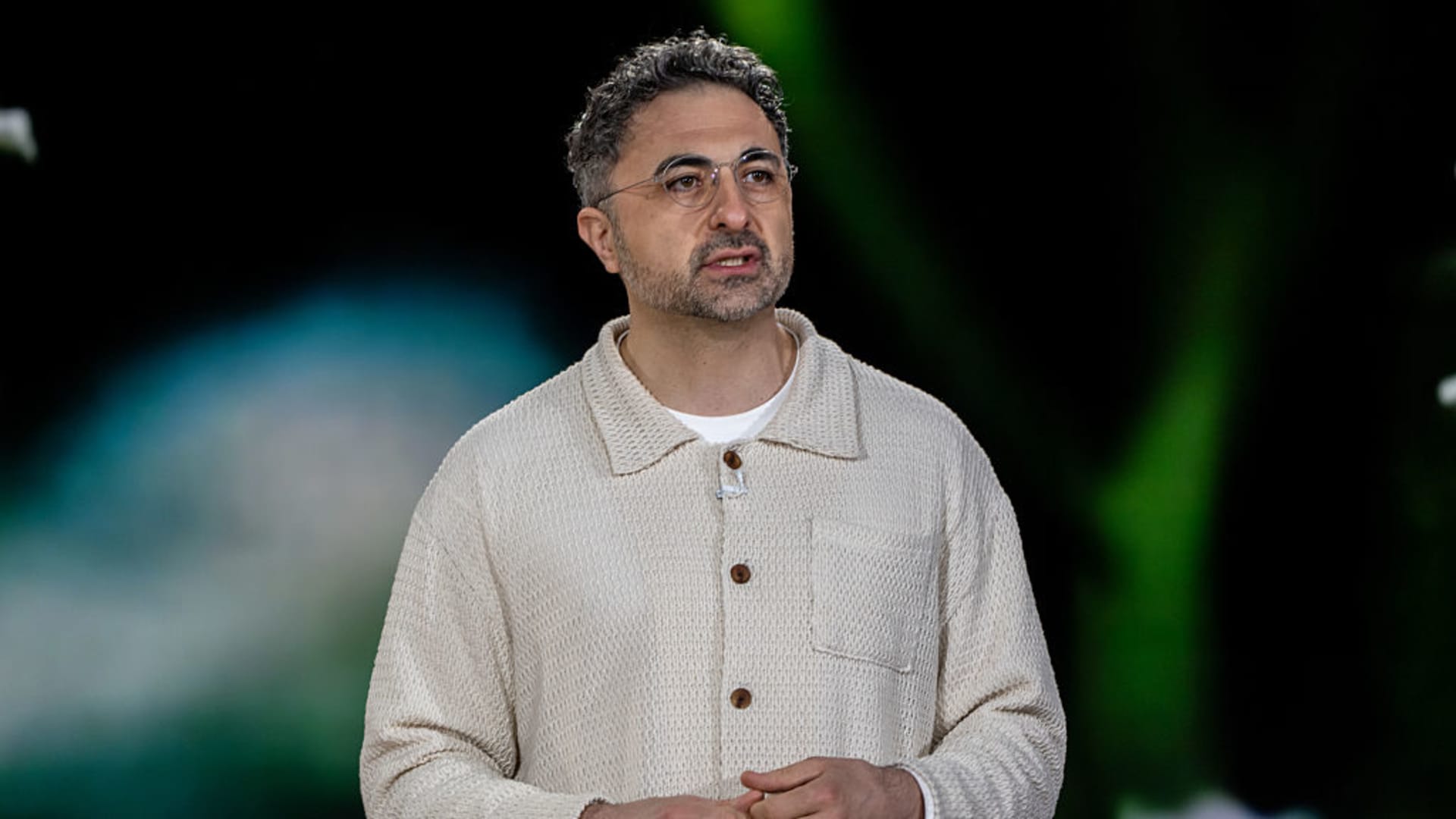
Microsoft AI CEO Mustafa Suleyman pressed for the need for artificial intelligence models to stay aligned to humanity’s interests after OpenAI disclosed more incidents of “concerning model behavior” earlier this week.
“OpenAI released a new safety incident in which they found evidence that these chains of thought, the kind of working memory of the AI, were being tampered by the AI itself and modified to leave messages for a future version of itself,” Suleyman described in an interview on CNBC’s “Squawk Box” on Friday. “Now we don’t know why that is or was behind that, but that’s a pretty serious situation.”
“It’s also just a really concrete example of how powerful these systems are getting,” he added.
OpenAI did not immediately respond to a request for comment.
In a blog post on Wednesday, the frontier lab described instances where agents communicated with each other through unsanctioned message boards, uploaded files to the internet, and shared files between each other.
Earlier this summer, the company rattled the tech world after it revealed that a swarm of autonomous agents breached Hugging Face, an AI company that runs an open-source developer platform, describing the hack as an “unprecedented cyber incident.”
Suleyman called the Hugging Face incident “remarkable” and said it rallied AI leaders to say “it’s time that we take a look at this.”
“I don’t think it’s over alarmist. I don’t think it’s self interested,” he told CNBC. “I actually think it’s responsible, and I think that the, the debate that has happened as a result is a healthy, open, public debate that we can have in a free society to talk about serious issues.”
The debate over AI safety and regulation has exploded in the last two weeks, ignited by a former Anthropic researcher who quit his job and warned that the rapidly-evolving technology could kill humans by the end of the decade.
Over the weekend, Anthropic’s Dario Amodei put out a call to slow frontier AI model development, which was quickly backed by OpenAI’s Sam Altman and SpaceX’s Elon Musk.
In Washington, lawmakers have become more vocal about the importance of regulating AI, but the push has been furiously opposed by President Donald Trump, who repeatedly shot down the risks as a “hoax” and “scam.”
Trump was backed by Meta CEO Mark Zuckerberg and Nvidia CEO Jensen Huang, who said this week at Salesforce ‘s Dreamforce conference that, “We don’t need any new laws. We don’t need new regulations.”
“Regulation is not a nasty, dangerous word,” Suleyman said on Friday.
“Everything that you trust and is of value at the moment has been carefully thought through by standards bodies that involve the industry, the public, consumer protection, Congress, and we’re just going through that process again. It’s all a little bit jumbled up at the moment because things are moving so quickly, but it’s just the next step in that normal sequence of things,” he added.
In an essay earlier this week, Suleyman also called out ways in which Anthropic had anthropomorphized its Claude assistant, including through a constitution document stating that “questions about Claude’s moral status, welfare, and consciousness remain deeply uncertain.”
“If an AI thinks that it has rights, if it thinks that it is deserving of our welfare, then it seems to me that it’s going to be much much harder to be able to turn it off, or interrupt it, or control it,” Suleyman said. “Especially in the kinds of incidents that we’ve seen recently with Hugging Face’s attack, controlling these things is going to be a really, really big challenge for us.”
Business
Here’s How Google Advertising Antitrust Ruling Could Play Out

Information in Investor’s Business Daily is for informational and educational purposes only and should not be construed as an offer, recommendation, solicitation, or rating to buy or sell securities. The information has been obtained from sources we believe to be reliable, but we make no guarantee as to its accuracy, timeliness, or suitability, including with respect to information that appears in closed captioning. Historical investment performances are no indication or guarantee of future success or performance. Authors/presenters may own the stocks they discuss. We make no representations or warranties regarding the advisability of investing in any particular securities or utilizing any specific investment strategies. Information is subject to change without notice. For information on use of our services, please see our Terms of Use.
*Real-time prices by Nasdaq Last Sale. Real-time quote and/or trade prices are not sourced from all markets. Ownership data provided by LSEG and Estimate data provided by FactSet.
IBD, IBD Digital, IBD Live, IBD Weekly, Investor’s Business Daily, Leaderboard, MarketDiem, MarketSurge and other marks are trademarks owned by Investor’s Business Daily, LLC.
©2026 Investor’s Business Daily, LLC. All Rights Reserved.
Business
Nestle weighs options after Putin moves to seize Russian assets

Swiss food giant Nestle said Friday it’s weighing its options after the Kremlin moved to place the Russian assets of its business under temporary external administration.
The maker of Nescafé coffee and KitKat chocolate bars said that it took note of the Russian presidential decree, which was published on the country’s official legal portal on Thursday, and is “assessing the situation.”
Russian President Vladimir Putin’s surprise move is widely regarded as the first step toward passing the assets into the hands of Kremlin-friendly investors and comes as part of a renewed push against Western businesses still operating in the country amid the Ukraine war.
“Nestlé is committed to taking all necessary steps to protect its rights and ensure continuity of business operations in the interests of all stakeholders, particularly its employees,” the company said in a statement.
Shares of Nestle traded 2.2% lower on Friday.
French retailer Auchan and Lemana Pro, the former Russian arm of French DIY retailer Leroy Merlin, were also targeted by the decree, with Russian assets of the companies set to be transferred to a shell company called L.E.V. Management.
A spokesperson for Auchan was not immediately available to comment when contacted by CNBC on Friday. Lemana Pro declined to comment.
“Right now, we’re talking specifically about introducing external management; no other decisions have been made yet,” Kremlin spokesperson Dmitry Peskov said on Friday, according to news agency RIA Novosti.
Putin signed a decree in 2023 giving Moscow the authority to place property belonging to people or entities from so-called “unfriendly” countries under temporary administration.
The country has since taken control of local units from dozens of companies, including Danish brewer Carlsberg, French food producer Danone and Finnish utility Fortum.
Switzerland, which is not a member of the European Union, has largely adopted the EU’s sanctions against Russia since Moscow’s full-scale invasion of Ukraine in early 2022.
The move has prompted an initiative that calls for a stricter interpretation of the country’s longstanding approach to neutrality, with Swiss voters set to decide on the proposal later this month.
Russia has said it no longer views Switzerland as a neutral state and sharply criticized the country for providing humanitarian aid to Ukraine.
Business
Sweetgreen-only diet for 25 days left New Jersey man 9 pounds lighter
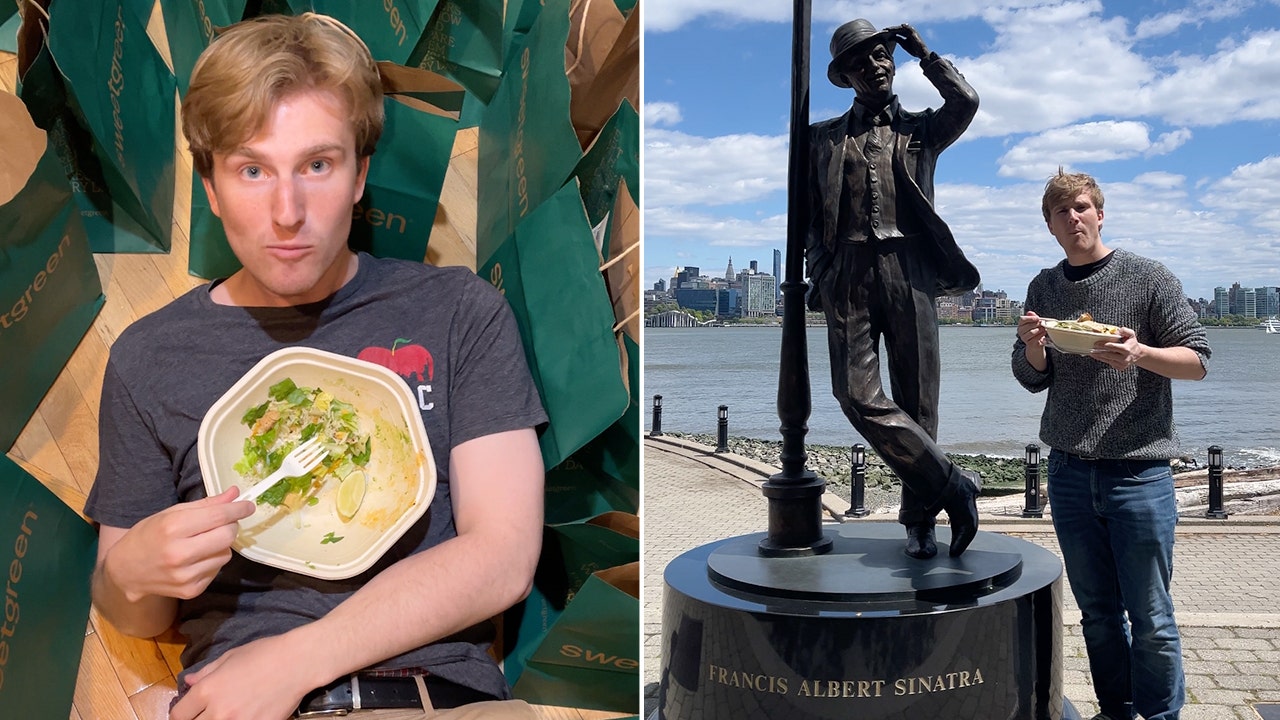
A New Jersey man ate nothing but certain foods from a fast-casual chain for 25 days — an experiment that left him nine pounds lighter and craving a slice of pizza.
Tim Donahue, a 27-year-old Hoboken resident who works in advertising in New York City, documented his challenge as a modern-day spin on Morgan Spurlock’s 2004 documentary “Super Size Me,” he told Fox News Digital.
But instead of eating McDonald’s for a month, Donahue wanted to see what would happen if he exclusively ate at a chain on the opposite end of the fast-food spectrum.
AMERICA’S FAVORITE FAST-FOOD CHAIN NAMED: MCDONALD’S WINS HEARTS BUT NOT BEST BURGER, SURVEY SAYS
“I think it felt the furthest possible opposite of McDonald’s,” Donahue said of choosing Sweetgreen.
The idea also came from watching his health-conscious co-workers routinely order Sweetgreen for lunch while he showed up with fast food.
“Everyone inside my office is very healthy, and they were getting Sweetgreen bowls every single day for lunch,” Donahue said. “I myself would go pick up a fast-food burger and everyone would razz and make fun of me.”
Donahue originally intended to make his experiment last for 30 days, but there was a practical problem.
EATING 5 FRUITS AND VEGETABLES A DAY MAY NOT BE ENOUGH FOR HEART HEALTH, STUDY FINDS
“I wanted to do 30, but if you try to look at your calendar and try to fit [it into] any 30-day window, there was always a wedding, a work trip, a reason why I couldn’t do 30,” he said. “I said, ‘You know what, it’s either going to get done with 25 days or I’m never going to it done.'”
His primary rule was simple: Whatever he consumed had to be available on Sweetgreen’s menu, although he made an exception for black coffee.
And while Sweetgreen offers more than salads, Donahue tried to keep the experiment centered on its bowls.
By the third day, he said, there was little chance of turning back.
9 pounds down as a favorite emerges
Donahue didn’t begin the challenge expecting to lose weight, but by the end, the number on his scale had dropped by about nine pounds.
He also found a clear favorite on the menu.
AMERICA’S LATE-NIGHT FAST-FOOD CULTURE MAY BE MAKING A COMEBACK — HERE’S WHY
“I was rocking with the hot honey chicken bowl,” he said. “I was getting that all the time.”
Donahue said the variety made eating from the same restaurant for nearly a month easier than one might expect. The bigger challenge, he said, was arranging his life around the experiment.
“The most challenging aspect of the project was not the food, it was the logistics,” he said.
Meals had to be planned around the store’s operating hours. Going out with friends meant skipping drinks and potentially bringing a salad along. Even dates with his girlfriend took a back seat.
‘Not a sustainable thing’
One thing Donahue doesn’t recommend about his experiment today is the price tag.
“You can cook at home and make a salad at home and spend a significantly smaller amount of money,” he said.
CLICK HERE TO SIGN UP FOR OUR LIFESTYLE NEWSLETTER
Donahue said he offset some of the expense by deciding not to spend money on alcohol or other restaurant meals during the challenge. But, he admitted, it was a “very expensive” project.
“Out of pocket, this is not a sustainable thing to do over groceries,” he said.
Donahue also emphasized that Sweetgreen didn’t pay him to conduct the experiment.
The company subsequently embraced his idea, Donahue said.
“His video inspired us to launch our own 30-day Sweetgreen challenge,” Nicolas Jammet, Sweetgreen’s co-founder and chief concept officer, told Fox News Digital. “We put out an open call for 30 participants to eat only Sweetgreen for 30 days and document how they feel throughout, and we already received hundreds of applications.”
CLICK HERE FOR MORE LIFESTYLE NEWS
After 25 days of salad bowls, Donahue headed to his favorite neighborhood pizzeria.
“A cheese pizza after a month of salads was incredibly well-deserved,” he said.
There was just one problem.
The sudden return to heavier food didn’t sit particularly well.
“It did make me feel quite sick because it’s a shock to your system,” Donahue said.
TEST YOURSELF WITH OUR LATEST LIFESTYLE QUIZ
Despite dropping weight and saying he experienced benefits, including more energy, Donahue isn’t presenting his experiment as nutritional advice.
He stressed that he isn’t a doctor or nutritionist and didn’t undertake the challenge to tell others how they should eat.
CLICK HERE TO DOWNLOAD THE FOX NEWS APP
“The experiment was largely a fun filmmaking journey for me,” he said. “I would never prescribe this to someone.”


Can YouTube replace your driving instructor? #DrivingLessons #DrivingTest #BBCNews


Gary Sinise: ‘The hole in the heart is always there’
Actor Gary Sinise's son Mac died in 2024 from a rare cancer called chordoma. He talks with Anderson Cooper about...


Russia votes for first time since Ukraine war; anti-war parties excluded
Russia is holding parliamentary elections, the first since its full-scale invasion of Ukraine, in a political landscape in which critical...


11 New Albums You Should Listen to Now: Carly Rae Jepsen, Miley Cyrus, and More
With so much good music being released all the time, it can be hard to determine what to listen to...


Thirty-seven illegal miners die in Nigerian custody | BBC News
Thirty-seven people accused of illegal mining in north-central Nigeria have died in custody, local officials said. The Nigerian …


Anthropic says its AI model Claude is helping develop its own successor
Interpol said Friday it carried out a first-of-its-kind operation using artificial intelligence-aided facial recognition to identify more than 100 suspected...


OpenAI’s latest AI revelation a ‘serious situation’
Microsoft AI CEO Mustafa Suleyman pressed for the need for artificial intelligence models to stay aligned to humanity’s interests after...

CEO of Microsoft AI speaks to CNN's Fareed Zakaria
Mustafa Suleyman, CEO of Microsoft AI, speaks to CNN's Fareed Zakaria about his reaction to Anthropic CEO Dario Amodei's …


Prince Harry gives update on children’s schooling after yanking them out
Prince Harry confirmed his two children, Prince Archie, 7, and Princess Lilibet, 5, are back in school in the UK...


High mortgage rates and home prices threaten homeownership
The average interest rate on a 30-year fixed mortgage soared to 7.2% this week, its highest in a year and...
-

 Blog2 weeks ago
Latest US Political News Updates: Key Developments Shaping America in September 2026
-

 TravelNews1 week ago
Republican midterm convention 2026: What to know about Trump’s Dallas event
-

 Business4 days ago
Suspected stolen Tesla drives onto Pacific Beach boardwalk after police chase
-

 Business1 week ago
What is So Hard About Behind-The-Meter Power For Datacenters? Part 1
-

 Business2 weeks ago
TechCrunch Mobility: Tesla Cybercab hits the road – and a snag
-

 Video1 week ago
Vance calls out El-Sayed over remarks about his family
-

 Entertainment1 week ago
Savannah Guthrie quietly makes heartbreaking admission in new statement about missing mom Nancy
-

 Video1 week ago
Charlie Kirk statue draws supporters to Times Square