
Entertainment
Read the Full Credits to Miley Cyrus’ Bass Persuades

The old Miley Cyrus cannot come to the phone. Why? Because she’s just going by Miley now, and she’s likely out celebrating the release of her new album Bass Persuades. The singer just unveiled her first LP since 2024’s Something Beautiful, and her first release under the newly-adopted mononym. The Bass Persuades tracklist boasts proper features from Model/Actriz and Miike Snow’s Andrew Wyatt, plus production from frequent collaborator Kid Harpoon and her fiancé Maxx Morando. Check out a comprehensive list of who contributed to every song below.
In a statement on Instagram, Cyrus wrote of Bass Persuades: “This album happened fast but that’s been my life for 20 years. Once I started wishing to land a role that would make LA my home it’s been nonstop. This album is a reflection of everywhere I’ve been along the way and the peace that came with starting to slow it all down. Thank you for celebrating this release with me. It’s a special record and it’s bliss to share with you.”
If the bass does indeed persuade you, Cyrus will perform the album at two live shows next month at Los Angeles’ Hollywood Bowl. One is on October 18, the other on October 16.
01 Bass Persuades
Entertainment
Macklemore … Hero or Anti-Semite? ‘Two Angry Men’ Square Off
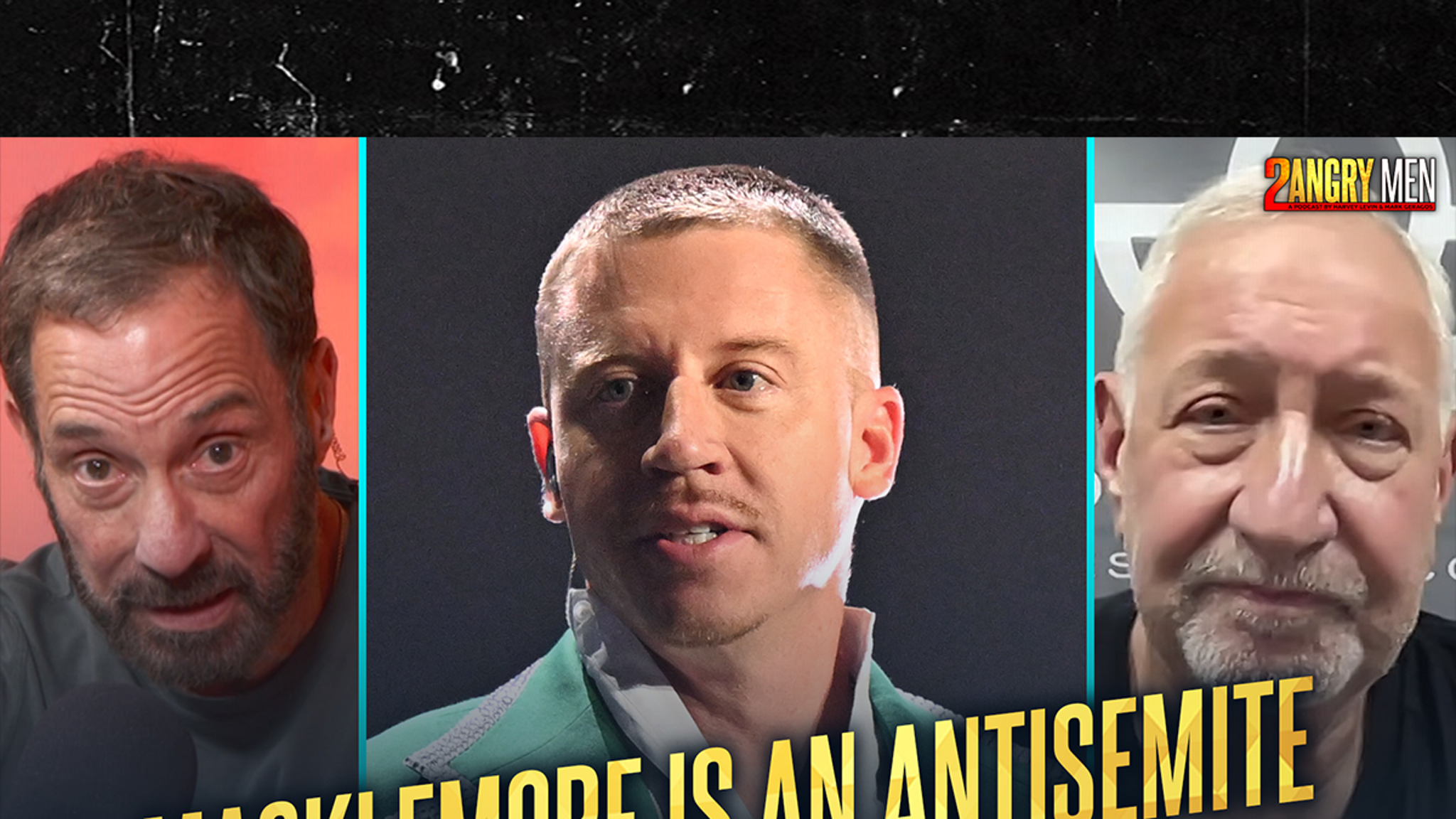
Mark Geragos, Harvey Levin, and Macklemore have fought over who is the villain.
Harvey takes a hard line against Macklemore. He says he’s anti-Semitic and Robert was right not to invite the rapper in his home.
Macklemore, as we previously reported, was removed from Ed’s Tour after he made pro-Palestine comments during the New Jersey concert despite being warned not to.
Macklemore made a post on Instagram saying Ed had told him in a telephone conversation that Kraft was trying to get the rapper kicked off the tour. Kraft responded by saying that Macklemore had crossed the line.
You may be aware that other NFL owners are said to have supported Robert behind the scenes in his decision to remove the rapper from tour.
Geragos claims Robert Kraft, who colluded with billionaire owners in order to silence Macklemore, is a scoundrel.
Entertainment
Howdy for Hollywood? Why Paramount’s threat to leave California matters

Start spreadin’ the news… they’re leavin’ today… Wait, that’s about New York.
And maybe they’re not leaving. Paramount has been threatening to leave Los Angeles and California for a few months now. Leaving would take one of Hollywood’s “Big Five” studios out of the city, out of the state, but not out of anyone’s mind. Discussions appear to be ongoing within the studio, as FOX Business recently reported.
Paramount and Warner Bros. have been trying to merge their operations, and they have faced pushback from state and local authorities. California sued to stop it. In the midst of that, the studio is reportedly looking at other options, playing the field, flirting with Austin, Texas, and looking for office space in Nashville, Tennessee.
PARAMOUNT MUM, BUT LA OFFICIALS ON NOTICE AS RUMORS OF MOVE FROM CALIFORNIA TO NASHVILLE SWIRL
It’s not an idle threat. Long-running talent show “American Idol” has already made the move. The ABC revival announced recently that it’s ditching Tinsel Town for Atlanta. This will change its most iconic line – “You’re going to Hollywood!” But it also changes the tax situation of everyone involved, for the better. “You’re going to Atlanta!” doesn’t have the ring that the former line had, but give it time.
PARAMOUNT’S CALIFORNIA FUTURE IN DOUBT AMID ESCALATING LEGAL FIGHT
Star after star has left Hollywood over the past few years. This is by no means an exhaustive list, but “American Idol” alum and first winner Kelly Clarkson left Hollywood and took her daytime talk show with her. Jason Eisenberg left for Indiana. Others include Glenn Powell (Texas), Harrison Ford (Montana), Matthew McConaughey (Texas), Ty Burrell (Utah), Jessica Biel and Justin Timberlake (Tennessee and Montana), and Dean Cain (Nevada) are just a sample of the stars who’ve decided California taxes and policies aren’t worth the hassle.
TV’s Superman fired powerful parting shots at what he called the “land of ridiculousness” on his way out.
“The policies are just terrible. The fiscal policies, the soft-on-crime policies, the homelessness policies,” Cain said in June 2023. “The things that our leaders in California have been doing have driven out anybody who can really afford to get out. People are flocking out of there in droves.”
Up to now, it’s just been stars and individual productions leaving Hollywood.
Paramount leaving would change the story entirely. Double that if the Warner merger goes through.
Hollywood’s Big Five are, currently, Disney, Universal, Warner, Sony and Paramount. The group would be reduced to either four or three depending on how things shake out. Either way, it’s a disaster for what is the world’s entertainment production capital. For now.
There is a pattern in most of the stars’ moves that would be replicated if Paramount moves to either of its most rumored destinations – Tennessee or Texas.
I SAW THE MOVIE THAT WARNER TRIED TO DELETE: ‘COYOTE VS. ACME’
They’re red states. With red state policies of lower taxation and regulatory burdens. They’re red states that tend not to let their cities burn while the mayor is out of the country, too. And then (probably) reelect that mayor.
California, New York and Illinois have become very good at driving Americans and businesses away and to red states, mostly Florida and Texas. Tennessee is in the game now, and while Georgia has gone purple, its production incentives should make California green with envy.
Ticker Security Last Change Change % PSKY PARAMOUNT SKYDANCE CORP. 10.21 -0.41 -3.86%
Texas already has the Silicon Prairie and Y’all Street and has been chopping away at its high property taxes. Florida has the beaches and sunshine and a sound taxation policy. Georgia and Tennessee have willing workforces and leadership hungry to bring in high-profile industries.
“Go West young man!” drove the ambitious toward California in the Gold Rush days, but it doesn’t mean anything in the century of Zoom, AI and easy mobility. The Volume, the revolutionary digital stage used to shoot “The Mandalorian” TV series, means California’s weather matters a whole lot less. If people can’t get their legislatures to lower taxes, they’ll find a state that will.
CLICK HERE TO GET FOX BUSINESS ON THE GO
California’s current tax collectors would just confiscate most of the gold anyway.
Paramount reportedly has yet to decide whether it’s moving or not. It may be able to wrangle some concessions out of the state and city and give them a reprieve. But the proverbial writing is on the wall, and it’s increasingly being written hundreds of miles away from Hollywood.
Entertainment
Colin Jost Reveals Wife ScarJo’s Take on His Bold Investment
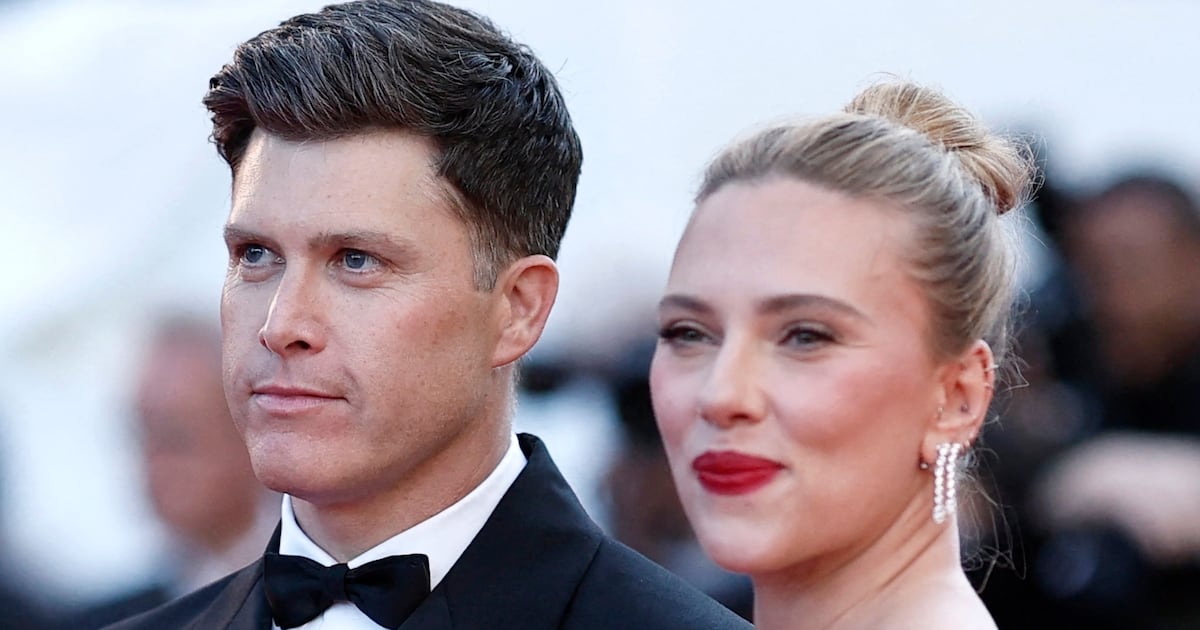
Colin Jost and Pete Davidson’s 2022 purchase of a decommissioned Staten Island Ferry has long been the butt of jokes.
On Thursday, the ship took its maiden voyage, with a free, one-night-only floating comedy club. And Jost said his wife, Black Widow actress Scarlett Johansson, is coming around to the idea.
“She would love to retire on this ferry, you know? If that’s what puts her over the edge, I’m hopeful,” he added, sarcastically.
Earlier this year, the “Weekend Update” anchor told the Smartless podcast about how he broke the news of the investment to Johansson over text: “Guess what? We own a ferry now.”
Jost said Johansson responded by saying, “We?”
The SNL comedians bought the ferry for $280,000, planning to transform it into a venue. For the past four and a half years, the boat has sat largely unused due to permitting delays.
“It is absolutely the dumbest and least thought-through purchase I’ve ever made in my life,” Jost told PEOPLE in 2024. “The way I justified it is for the amount of money we were putting into buying it, on just a basic square-footage level, is if you found the right place for it to be, you were essentially buying a building on its side that’s 65,000 square feet. So around New York, that is a very good price per square foot.”
Now, Davidson tells PEOPLE, “it’s been fun proving people wrong.”
“It will be on our joint gravestone that I think we’re committed to,” Jost added. “Like the people bullying me growing up, now I own the boat. Try pushing me into the bathroom here now!”
Entertainment
Zendaya Heads to an Art Gallery in a Prada Bubble Skirt and Biker Boots

2 min read
Maybe it’s her new pixie cut or maybe it’s the changing of the seasons, but Zendaya has been looking particularly cool as of late. From her lavender eyeshadow glam at the Prada Beauty pop-up to her custom crystal-covered Emmys gown (also Prada!), she’s been on a style streak—and it’s not done yet.
For her latest outing, the Euphoria star turned once again to Prada, this time for a grungy biker fit perfect for the transitional weather. Heading to a Los Angeles art gallery with Tom Holland, she was photographed wearing a black one-shoulder tank with a navy-blue midi skirt—crafted with a bubble silhouette, low-rise paper-bag waist, and oversize round buttons.
The piece’s raw hems added a touch of deconstructed edge, which paired nicely with the chunky Prada Fall 1999 moto boots below and the leather Ferragamo cut-out bag on her arm. Zendaya finished things off with silver studs and kept her glam minimal, letting her tousled pixie cut do all the talking.
Holland, on the other hand, went for something a bit preppier. Contrasting his wife’s black biker moment, he stepped out wearing a green-and-white plaid button-down and slouchy blue jeans, with white sneakers and one of his .
The outing came just days after Holland snuck into the Emmys to cheer on Zendaya, who was up for Outstanding Lead Actress in a Drama Series for her role as Rue Bennett in the final season of Euphoria. There, he certainly matched her energy, wearing a classic black Dior suit as she shined in her custom Prada gown. Get you a guy who can do both.
Entertainment
John Wilson’s movie The History of Concrete is a magic trick. He’s ready to reveal all.

For fans of the slippery, absurdist docuseries How to With John Wilson, the prospect of a feature-length installment is excitement enough. But while Wilson’s halting narration and sidewalk-level perspective are instantly recognizable, his debut feature, A History of Concrete, is more than just a supersized episode. It starts with Wilson struggling to find work after the end of his HBO series, pitching the idea for a movie about the world’s second-most-used substance to skeptical executives while the billboards for his show still hang in Times Square. Then, he has a brainstorm: What if it were a Hallmark movie? A Writers Guild seminar on how to write a Hallmark holiday movie—sample text: ’Twas the Date Before Christmas—leads him to the studio where many of them are shot, where he laconically absorbs pointers on how to replicate the tried-and-true formula. But then, in typical Wilson fashion, the movie starts to wander: One moment he’s investigating ancient Roman techniques for mixing concrete; the next he’s talking to a man who specialized in blasting the gum off New York sidewalks, or popping onto the set of Marty Supreme. (This may be the only low-budget documentary to feature cameos by Timothée Chalamet and Jacob Elordi.) Wilson has a fantastic eye for the eccentricities of big-city folk, the everyday weirdness that goes unnoticed as people hustle by with their eyes on their phones. But he’s also got thoughts about affordable housing and artificial intelligence, about the sustainability of art and urban community in a world that seems increasingly hostile to both.
Watching A History of Concrete is like walking down the street with a friend who’s interested in everyone and everything, and can’t stop talking about either. He’s fascinated with the chaotic density of cities—the way a stray gesture or odd bit of brickwork can be a gateway into a story real or imagined—and the things that both figuratively and literally hold those cities together. (For John Wilson, every week is infrastructure week.) His fluid, intuitive editing plunges us into a way of seeing the world that’s both new and utterly familiar, the way you might move through a city on a day when you remember to slow down and appreciate just what a rich and strange place it is.
With a neatly mortared wall behind him, Wilson sat down with Slate to talk about starting from scratch, being an accidental landlord, and his surprising relationship with Zohran Mamdani. Our conversation has been edited and condensed for clarity.
Sam Adams: When you were making How To, you would send camera crews out around New York City with lists of shots you were interested in capturing. But with A History of Concrete, you were largely on your own. Are you always shooting with future projects in mind, or are you just collecting images you like and hoping you’ll find a place for them eventually?
John Wilson: I never think about what context the material will ever be used in. It’s more just like, this beautiful thing in front of me is disappearing, I need to capture it before it does. You harvest enough stuff like that, and then you accidentally make a feature sometimes. I took a lot of care, even during the show, for it to feel unified, and I still shot as much myself as I humanly could, because no matter how much you instruct someone, it is still kind of hard to fully take every influence you’ve ever had and input it into another videographer. But I definitely was back to basics with this one. I shot 99 percent of it by myself. My friend Nelly, she had a few days where she went to go film different patterns of gum on the street and one or two other things. I was in such a bad mood when I started this project, because I had to rebuild this entire archive again from the ground floor. But I was just like, all right, well, the only thing I can do is just start. I would just go out and get some funny stuff, and then it’s like, Oh, I don’t want to ever lose this piece of footage, so now I need to build a movie around it.
When you say you had to rebuild your entire archive, is that because HBO owns anything you shot during How To, or is that something you do every time?
HBO owns the old footage. But it’s also something I do for each project. I mean, even in, let’s say, Season 2 of How To, I didn’t want to rely on my old stuff. I still wanted to try to build 100 percent new archive, because the old material, although some of it’s great, it does start to feel very stale to me. I’m constantly outrunning my own boredom with my own ideas and images, so much so that I often lose sight of the actual original title, in a way.
What makes a found image interesting to you?
There’s a few different things. I think an interesting image is something that feels like it’s grounded in reality, but also unexplainable in a certain way and also vague enough that you could project whatever kind of meaning you want onto it. Signage is obviously a fun thing to play with, because you can build an entire sentence out of words in public. I’ve worked as an editor professionally for most of my life, before the show, and I just wanted to do what I was never allowed to do in the work I was doing commercially.
There’s a moment late in the movie where you ask a character, “Do you think it’s the best thing to have trauma lead to a positive arc?” Which is a deliberate callback to the early scene where you’re learning how to write a Hallmark movie, so at that point in the process, you have enough of a sense of what the whole film is going to look like to be making connections as you’re shooting. At what point in the process does the overall structure start to coalesce for you?
The actual chronology in which I film a lot of this stuff would surprise you. I will usually talk about six or so different things with somebody during an interview, and I’ll hit each beat and then you’ll only see the one part sometimes. When you reduce it to just the parts that support the narrative, it almost feels like a conspiracy theory. But it’s through a lot of careful crafting.
It’s kind of mind-blowing when you make an offhand reference to DMX’s Christmas album early on, and then much later one of the characters turns out to have a direct connection to DMX. But you must have come across those things in the opposite order, and put in the early mention so it seems like a staggering coincidence when the two connect.
That’s the No. 1 thing that audiences have noticed over the rollout so far: “So do you know about DMX? Did you include the DMX part before you heard from the guy?” And, of course, the answer is no. I fit it in afterwards. But in the moment in that hotel scene when he reveals about the DMX stuff, I hope you’re not making that connection quite yet and that you are having a genuine kind of reaction to, like, “Oh my God, I can’t believe that this …”
I’ll admit you totally got me in the moment. It’s like a magic trick.
I was watching the DMX doc for research before that reveal, so it was just a matter of putting it in the movie. But there was kind of crazy synchronicity.
The History of Concrete wasn’t easy to get made, which we know because you include several Zoom calls with the people you’re pitching it to, and it goes over like a lead balloon. You blur some of their faces, but these are presumably people with substantial power in the industry. Did they know they were being recorded? And has there been any fallout from including them in the movie?
No. No. They were not aware, and that’s why we had to censor a lot of the footage. I tend not to think about the legal repercussions of whatever I’m doing when I’m in the middle of it. I’m more interested in capturing something unique. And we did get permission from my agent and the other people at UTA to put their images from the Zoom in there. But I don’t know. I understand that there’s some kind of breach there, but I also am just like, “What are you really worried about? All you’re doing is shooting down my idea.” If anything, this just makes me look pitiful. I do have a line somewhere in there that I don’t like to cross, but I think that riding on the razor’s edge of what’s OK and what’s not is where all of the best art and comedy lie.
This word gets overused when it comes to comedy, but it does feel genuinely dangerous. I felt like I might get in trouble just for watching it.
Right, exactly. I did not think that it was going to be controversial. It didn’t even occur to me that you can’t record someone on a Zoom. It didn’t occur to me that that was something you need to ask about. I have this kind of street-photographer mindset where I’m just like, I’m going to capture whatever I want. I don’t really care.
You manage the transitions between sections with such intuitive grace that it’s easy for audiences to go along for the ride, but sometimes I like to pause and try to remember the chain of events that led us to a certain place—like, we just went from the studio where Hallmark movies are shot to a race where people run around the same block in Queens 5,000 times. How did that happen? Do you like putting audiences in that position?
Yeah. I think it helps with the replay value when you go and try to figure out how you got from one place to another. But also, I had a cab driver at Sundance who ended up staying to watch the movie after I got out of the cab, and he really loved it. He was like, “It’s great, man. It’s like being on a lazy river. It doesn’t matter. You’re just going from one thing to the next.” I like that. I try not to make it so discordant that it makes absolutely no sense to you, but I spend a lot of time with the voiceover in transitional moments, trying to make sure that even if it’s a flimsy logic, my thought process is represented somewhere to help ease the shock of a new environment.
You stick out like a sore thumb in the Hallmark seminar to begin with, but if you know your previous work, it’s especially funny to see you in a seminar about how to structure a corny three-act romance. Did you learn anything from studying how those movies are made, either directly or in reaction against them?
Yeah. I learned that you make a lot of money if one of your scripts gets picked up by Hallmark. I understand why people do it as a career. I mean, I was shocked by a lot of it. I didn’t realize that you can’t mention Jesus or Christianity in any Hallmark movie. My favorite part was that you’re not allowed to interrupt a kiss with a phone call. Just basic stuff like that, where it’s like, what if you did? So that’s why I spent most of the movie embracing and betraying or subverting these Hallmark rules, in equal parts. Yeah.
You did an episode of How To focused on New York’s scaffolding problem, and Zohran Mamdani got you to make a video announcing his plan to deal with the problem. And now he’s dealing with the deterioration of the Brooklyn-Queens Expressway, which is something The History of Concrete deals with; it even looks like he used the same angle of the triple cantilever section in his announcement. So my question is: Which of your priorities would you like to foist on his administration next?
Exactly, I’m the shadow mayor. I really congratulate him for making this part of his agenda. I think it’s so cool. And especially the BQE: Nobody’s wanted to put their finger on that for decades, because once you do, it’s your responsibility. I don’t know what the real solution is there. It seems that’s a real twisted knot of NIMBY politics, and kind of freight politics, and the concrete industry has its thumb in there.
Not to mention the Robert Moses of it all.
Yeah, that whole legacy. I think it would be kind of funny if he decided to close it for repairs and then just never reopened it, just to see how the traffic redirects itself. We’ll see.
Maybe they should treat the BQE like a slumlord and accidentally burn it down. “Oh no, now we have to put in a park or a new rec center.”
I know, but it’s cool. Any kind of change resulting from such a silly project, at least on its surface, it makes me feel afraid that I’m going to make a movie about the wrong thing and then someone will get the wrong idea about something. I mean, it’s funny with the scaffolding. I made the scaffolding thing because I wanted less scaffolding around in a certain way, but now after this concrete movie, it’s just like, Oh no, everything’s falling apart.
You need to be very careful what you make a movie about next.
Well, I have a big idea about, I think, how to fix both of those problems, but we’ll see. I have my own Robert Moses vision for the city, but I am not going to debut it right now.
There are so many threads in the movie it took a second viewing for me to pull them all together, but one of the most prominent ones is about how to survive as an artist—how to make something that lasts. You deal with your own efforts to make a new movie, but also with getting offers to make adult-diaper commercials, and your unexpected career as a landlord, including the precise (and very reasonable) rent you charge your tenants. It’s something I often wish more artists were open about, but there’s a real stigma around admitting you do something else to pay your bills.
It doesn’t make any sense. I can’t believe that this isn’t a 101 introductory class in every single cinema undergrad program, because the stuff that I learned the most from growing up and throughout my whole life has just been the stuff that is really honest about how art is made, with specific facts and figures. That was one thing that I took from Susan Orlean when we were in the writer’s room together [for the second season of How To]. We were writing the episode about when I bought the building, how to invest in real estate. I was like, “I don’t know if I should put the price of the building. It makes me feel a bit exposed in certain ways.” And she was like, “You absolutely have to put the price of the building in there.” That’s one of the most important parts of this entire story. I don’t know if you’ve read her memoir that just came out, but it’s unbelievable. She really gets into the black box of the writing process and how she generates ideas, what she does in between, every hiccup she has, stuff that’s really plainly worded. That, I think, is the stuff that you need to hear, because people obscure certain parts of their lifestyle or artmaking process in a way that serves no one sometimes. I want to offer the same to anyone who’s struggling. The Hallmark instructor says that people who watch Hallmark movies don’t want to see people struggling financially, but I want to invert that.
You can make art without making money from it—even without asking people for it.
I really don’t care about the money in that way, with the work. It’s nice that it has come as a result of it, but it’s never been the thing that drives me. You can just draw a continuous line from when I started making this work until now, and that’s because I am just making it to make it. If the market or the industry finds value in that, cool. But if not, it’s going to be happening regardless.
The History of Concrete isn’t as specifically focused on New York City as How To was: You don’t say “Hey, New York” even once, and you move around quite a bit. But when you travel to Los Angeles, you remark on the city’s “pornographic” relationship to concrete, and how hostile the city is to pedestrians, which is really the point of view your work emanates from. Could you make something that wasn’t set in a city? Or in New York specifically?
I’ve always liked New York as the beginning of each new journey. I just feel comfortable here. I feel like I know the rules. I know when to cross the street. I know what’s going to piss someone off, usually. I tried doing it in Rome this time around and it was really tough. I don’t speak Italian.
And they apparently don’t know anything about concrete.
Not as much as you’d think they would. I do travel a lot within the work, and I usually spend the third act somewhere else. This time it was Long Island, and I have a great fondness for Long Island. I grew up there and I feel like a lot of Long Island is underrepresented, especially in documentary. I had a lot of fun just showing people what I knew there, like different monuments or whatever. I filmed this whole 20th reunion of mine that didn’t make into the movie. But I can get bored in any city and make something.
Is being bored a part of your process?
Yeah. When you’re bored, then it’s like, what am I going to do? And then you just start filming stuff.
That feels like a good note to end on. Everyone get bored and make something.
Yes. Come see the concrete movie. Get bored.

Actor reveals split-second decision that made 'Blair Witch Project' a classic
Michael C. Williams, star of “The Blair Witch Project”, reveals that an unscripted choice to kick a road map in...

Maine Democrat faces fierce competition in GOP Sen. Susan Collins
CNN’s Manu Raju reported from Maine where Democrats saw a great opportunity to remove Republican Senator Susan Collins amid…


Russia helps Iran, Houthis launch drone at Mecca & more | Experts on Iran
The week of the Iran War was marked by an airman who spoke out after being shot and saved, Houthis...


Boaters cling to tree after boat capsizes
Near Morris Bridge Park, two boaters found themselves stranded after their vessel capsized.


California warns of measles exposure in six counties from unvaccinated train passenger
California’s public health officials have warned of the possibility that measles could be spread to multiple counties following a passenger...


I’m an ENT surgeon
Some medical advice is heard in only one ear. Our favorite hot beverage is chugged, putting the tissue in our...


Canada PM Carney pokes fun at Trump's hand gestures during speech
During a speech about government priorities, Canadian Prime Minister Mark Carney drew laughter from the crowd as he imitated …


Coroner says Richard Branson’s wife died from preventable blood clot
NEWYou can now listen to Fox News articles! The death of Richard Branson’s wife, Lady Joan Branson, could have been...


Macklemore … Hero or Anti-Semite? ‘Two Angry Men’ Square Off
Mark Geragos, Harvey Levin, and Macklemore have fought over who is the villain. Harvey takes a hard line against Macklemore....


What we know and don't know about the US-Denmark deal over Greenland. #Greenland #US #BBCNews
-

 Blog2 weeks ago
Latest US Political News Updates: Key Developments Shaping America in September 2026
-

 TravelNews1 week ago
Republican midterm convention 2026: What to know about Trump’s Dallas event
-

 Business5 days ago
Suspected stolen Tesla drives onto Pacific Beach boardwalk after police chase
-

 Business1 week ago
What is So Hard About Behind-The-Meter Power For Datacenters? Part 1
-

 Business2 weeks ago
TechCrunch Mobility: Tesla Cybercab hits the road – and a snag
-

 Video1 week ago
Vance calls out El-Sayed over remarks about his family
-

 Entertainment1 week ago
Savannah Guthrie quietly makes heartbreaking admission in new statement about missing mom Nancy
-

 Video1 week ago
Charlie Kirk statue draws supporters to Times Square