Connect with us

LifestyleNews

‘Two things happen when you have a father who drinks’: Dhurandhar singer Jasmine Sandlas on ‘heartbreak’ from parents and her battle with unresolved pain; an expert weighs in

 ​

Dhurandhar singer Jasmine Sandlas speaks out about alcoholism (Source : Instagram/Gulabi queen)Singer Jasmine Sandlas has been enjoying the success of Dhurandhar, The Revenge. She worked on a music project composed by Shashwat Sasdev. She also shared a personal side of her life in a podcast interview with Ranveer Allahbadia. Childhood and discovering myself as a young girl. Growing up as a woman and as an artist. Eldest daughter. Child of immigrants. Punjabi. American. On my journey, I’ve seen and experienced a lot of things that weren’t easy. It wasn’t comfortable, was it? Let’s be honest sometimes. On one side, everything and traumas from family members. Everything. I used to be very mischievous. The quest for adventure. I used to run in the streets. I used to make mistakes in class and at school. I was a good student and a good child. But I had no interest in studies. Where is the fun? I used to ask myself. Where is my enjoyment?”Reflecting on when she had her first drink, Sandlas shared, “I think. I used to not drink. In America, the drinking age is 21. I didn’t start drinking until then. I was probably 22 or 23. I didn’t drink. I abstained because drinking was going on in my home. My father used to be a drinker. When you have a drinking father, two things can happen. Either you are an alcoholic. Or you say, “I can’t drink.” It’s the worst. I did both. Alcohol is bad. Alcohol is bad. It’s not good. She continued, “When you are really hit by life, you seek some kind of support. I regret some of the things I did in those 2-3 years… I was famous, I felt certain things, family dynamics were broken, my father had died, and I was very successful. I drank a lot more than I should have. I regret it. But it was important to me at the time. There is resentment because they broke my heart many times without knowing it. I love them but a child’s broken heart will remain broken. I did that all my life, just yearning and finding home.” ButStory continues below this adBut how do unresolved childhood experiences shape coping behaviours like substance use in adulthood? I did that my whole life, just searching for home.” ButStory continues below the adBut, how do unresolved experiences in childhood shape coping behaviors like substance abuse in adulthood? Neha Cadabam is a senior psychologist and executive Director at Cadabam’s Hospitals. She tells indianexpress.com: “Unresolved experiences in childhood often shape how individuals regulate stress and emotions in later life.” When emotional safety and stable attachment are missing during formative childhood, the brain tends towards emotional dysregulation or heightened vigilance. Clinically, this is not a random behavior, but an adaptive response which has continued, even if over time it has become maladaptive. Practical steps to build internal security and healthier support networksThe search for a feeling of home externally can often point to an internal gap. Cadabam explains, “Clinically, the focus shifts from strengthening external anchors to strengthening internal ones.” This includes developing self-awareness through reflective practices, establishing consistent routines that create predictability, and engaging in therapy to process unresolved emotional experiences.”Building healthier support systems also means cultivating relationships that are stable, nontransactional, and emotionally safe, rather than those driven by dependency or validation seeking. Cadabam concludes that this process helps people to stop seeking security from outside and start experiencing it inside.


Continue Reading

LifestyleNews

Fertility expert says, ‘IVF is oversold in India’; points out how sleep, diet, and stress impact sperm and eggs

 ​

Dr Priyanka Nair, a gynecologist and fertility expert, recently said that IVF in India was oversold. “As a fertility specialist, I can tell you that half of couples do not need IVF. All they need is 90-100 days of lifestyle changes. Dr Naik said that “Her hormones and cycles are all over the map because of stress and anxiety, and her bodies are inflamed.” No one even mentions or tells them about lifestyle changes.”DISCLAIMER : This article is based upon information that was obtained from the public domain or experts we spoke with. Consult your doctor before beginning any new routine. To verify, we asked Shruti Chandak a consultant obstetrician/gynecologist from KIMS Hospitals in Thane. Fertility treatment is most effective when it is done in a step-bystep manner. This begins with a thorough evaluation to identify any underlying issues. Lifestyle changes can make a significant difference to fertility in 60-90 days. Nutrition, physical activity and sleep levels, as well as stress levels, can affect both egg and sperm quality. Dr Chandak said that a focused period of 2 or 3 months of healthy behaviors can improve reproductive health, and in some cases increase the chances of natural pregnancy or improve treatment outcomes. It’s important to limit alcohol and avoid smoking. When is IVF recommended for you?IVF is recommended when other treatments have failed, such as blocked fallopian tube, severe male factor infertility or advanced maternal age. ‘Your ovaries can’t see your face’: Soha Ali Khan shares what a gynaecologist said when she contemplated freezing her eggs at 35What is the overall approach couples should take?Fertility care should be tailored to each individual and guided by medical advice.
View this post on Instagram
“A balanced and informed approach allows couples to make confident decisions on their fertility journey.” Couples can make informed decisions about their fertility journey with confidence when they take a balanced approach. Consult your doctor before beginning any new routine.


Continue Reading

LifestyleNews

‘Better to get off the train’: Hansika Motwanni breaks silence on her divorce and the ‘dark space’ only family saw; expert on dealing with scrutiny

 ​

Hansika Motwanni finally spoke out about her divorce with Sohael Khturiya. She chose to speak on her terms and address the noise surrounding her personal life. In a recent Hauterrfly interview, she made it clear to the public that speculations about her personal life are of little value to her. She said, “People wanted clickbait and they got it.” They wanted headlines and they got them. I will never clarify it because it does not matter to me. It’s fine. I have no regrets. It’s better to leave the train if it turns out you were on the wrong one than to suffer. My family has been a great support. I have no regrets. I am very happy with where I am.” She also spoke about her immediate family’s role during a difficult time, emphasizing the importance of emotional supports systems. “Both my brother and mother said, ‘If it’s not comfortable, then don’t do it.’ They have seen me in an extremely dark place. I am a very happy and jolly person. It was a little alarming for me to enter a dark place. They said, “Whatever you decide.” And to this day, no one knows the truth about what happened between us. I always say what happens between two individuals is only known by them. It is impossible for anyone else to comment or say anything about what happens between two people. “What are signs that it is better to ‘get of the train’ than continue to suffer emotional distress?” According Athul Raj, a counselling psychologist, indianexpress.com: “What I most often see in my practice is quiet resignation, not loud conflict. The body language of people who come in to see me tells a different story. They may say that everything is fine, but the words they use are not true. There is a feeling of fatigue, an emotional dullness. It is not a good idea to dismiss a relationship that consistently makes you feel smaller, more anxious or unnoticed as merely an adjustment. If you are constantly calculating your words, anticipating reaction, or avoiding conversation to keep things stable, then you are not being yourself in the relationship. You are managing the relationship. Over time, this takes a toll. The same hurt, same apologies and the same promises of doing better. When nothing fundamental changes, the psyche begins to register that it is a dead-end. The reason for staying becomes less about love, and more about the fear of leaving. Raj explains that boundaries are important when dealing with scrutiny surrounding personal relationships. In our social context everyone has an opinion, and feels entitled to an answer. A boundary can be as simple and straightforward as deciding what you won’t discuss, and sticking to that decision even if others are uncomfortable. It could mean limiting your access, saying less or stepping away from conversations that feel intrusive. Story continues below this advertisement. You don’t have to justify the end of something for it to be valid. You will be less likely to need to convince others when you are clear about what happened and why. It’s okay if not everyone agrees. Raj concludes that protecting your peace can sometimes mean allowing this distance.


Continue Reading

LifestyleNews

‘They don’t eliminate overthinking…’: 5 Japanese mindsets for a clearer head
 ​

Overthinking is almost second nature in a world where notifications are constant and mental clutter is everywhere. There’s no quick fix, but certain Japanese philosophies, practices, and techniques can help you to calm down, gain clarity, or quieten the noise inside your head. These philosophies encourage simplicity, acceptance, and presence. They don’t eliminate overthinking overnight, but they help you respond to your thoughts rather than getting trapped in them,” she explains.Here are five Japanese techniques that can help you manage an overactive mind more effectively.DISCLAIMER: This article is based on information from the public domain and/or the experts we spoke to. IkigaiAt the core of Ikigai, it is about having a purpose, a reason for getting up in the morning. “Concepts such as Ikigai give a sense direction to everyday life.” When your actions feel meaningful, there is less space for the mind to spiral into overthinking,” says Dr Shankar.Instead of constantly questioning your choices, aligning your day with what matters to you can create a sense of calm and focus, she adds.Wabi-SabiPerfectionism often fuels overthinking, endless loops of “what if” and “what could have been better.” Wabi-Sabi, the Japanese philosophy of embracing imperfection, offers a way out.Story continues below this ad”When you stop striving for perfection and begin to accept situations as they are, you naturally reduce mental resistance,” explains Dr Shankar. “This shift allows you to appreciate the present moment instead of overanalysing it.”ALSO READ | The Japanese swear by these 5 habits to live a long, healthy lifeHere’s how Ikigai calms an overthinking mind (Photo: Freepik)Shinrin-yokuAlso known as “forest bathing,” Shinrin-yoku encourages spending mindful time in nature, and its benefits are backed by science.”Shinrin-yoku has been shown to lower cortisol levels, reduce blood pressure, and ease anxiety,” says Dr Shankar. It regulates the nervous system and reduces cognitive overload. Story continues below this adEven a short walk in green spaces without distractions can help reset your state of mind, she says. It may seem unrelated, but it has a subtle but important role in mental health. Dr Shankar says that “Hara hachi ba promotes mindful eating, and prevents the sluggishness which often follows overeating.” “When your body feels lighter, your mind tends to feel clearer and less overwhelmed.”Kintsugi and OubaitoriKintsugi, the art of repairing broken pottery with gold, symbolises embracing flaws, while Oubaitori encourages individuals not to compare themselves with others. “These ideas reduce the self-criticism that is a major cause of intrusive thoughts and repetitive thinking,” explains Dr Shankar. “You might still have these thoughts, but with time you will become less reactive. That’s when real change occurs.”


Continue Reading

LifestyleNews

Weight loss drugs: Why experts worry about muscle loss instead of just fat

 ​

Weight-loss medication has quickly become a hot topic in discussions about obesity management and metabolism health. While the number on the weighing scale may go down, not all weight loss will be the same. Some of the weight loss may be from fat, while some may also be from lean muscles, which play a crucial role in strength and metabolism. This has led to a growing concern over how these drugs will affect body composition. This article is based solely on information that was obtained from public sources and/or experts. Consult your doctor before beginning any new routine. Factors such as diet, protein intake and resistance training can also affect how the body reacts to these medications. Dr (Prof) Raju Vasishya, senior orthopaedic consultant at Indraprastha Hospitals in New Delhi, told indianexpress.com that with modern weight-loss medications, such as Semaglutide and Tirzepatide, most weight loss is fat. However, a significant share of weight loss is lean mass, which includes muscle, water, and organ tissue. Clinical studies indicate that between 65-85% of fat is lost and 15-35% of lean mass, although individual variations are wide. Learn how weight loss medications affect your muscle mass. (Source: Freepik). “Age and hormonal status are also important, with older adults being more susceptible to muscle loss. These drugs suppress appetite, which can lead to a reduction in overall calorie intake and protein intake. This can unintentionally increase lean mass loss. The balance of lean mass loss is largely determined through protein intake, physical activity, particularly resistance training, baseline mass, and overall calorie deficit. Individuals who do not actively support muscle preservation through diet and exercise tend to lose a higher proportion of lean mass.”Do weight loss drugs accelerate muscle loss vs diet/exercise?”Weight-loss drugs do not inherently cause more muscle loss than traditional calorie restriction–the key driver is the calorie deficit itself,” says Dr Vaishya, adding that when people lose weight through diet alone, lean mass loss typically falls in a similar range (about 20-30%). “With medications such as Semaglutide and Tirzepatide the proportion of lean weight loss can appear higher in certain studies, but that is because the total weight loss is faster and greater, not because the drug directly breaks down muscle. In fact, when combined with structured exercise and adequate protein, muscle preservation can match–or even outperform–diet-only approaches,” suggests the expert.Compared to structured weight loss through diet and exercise, Dr Reddy stresses, where protein intake and resistance training are typically emphasised, medication-driven weight loss can sometimes be less controlled. If not managed carefully, this can lead to a higher proportion of lean body mass loss, especially in individuals who aren’t physically active. Dr Vaishya says, “The concern arises if patients rely on medication alone without lifestyle measures leading to a reduced protein intake and minimal training.” Drugs are best viewed not as selective drivers of muscle losses, but as amplifiers of weight-loss. The outcome is largely dependent on how they are used, and not just the pharmacology.Prioritise protein intake – generally 1.2-1.6g/kg/day (adjusted for age and kidney function)– to support muscle protein synthesizing.

-Incorporate resistance exercises (2-4 sessions/week), as this is the best way to signal your body to retain muscle when you are in a calorie deficit. Even simple strength exercises that are progressive can make a big difference.

Avoid rapid weight loss. A gradual pace will help preserve lean tissue.

-Maintaining adequate micronutrients and hydration (vitamin D, Calcium) is important. Regular monitoring of body composition can guide adjustments. In some cases, doctors may prescribe adjuncts such as protein supplements or tailored exercise prescriptions. The combination of pharmacotherapy, structured nutrition, and strength training can transform weight loss from a merely lighter weight into a healthier body composition,” concludes Vaishya. Consult your doctor before beginning any new routine.


Continue Reading

LifestyleNews

Gen Z men, fathers, and emotional silence: Why ‘I love you’ feels hard
 ​

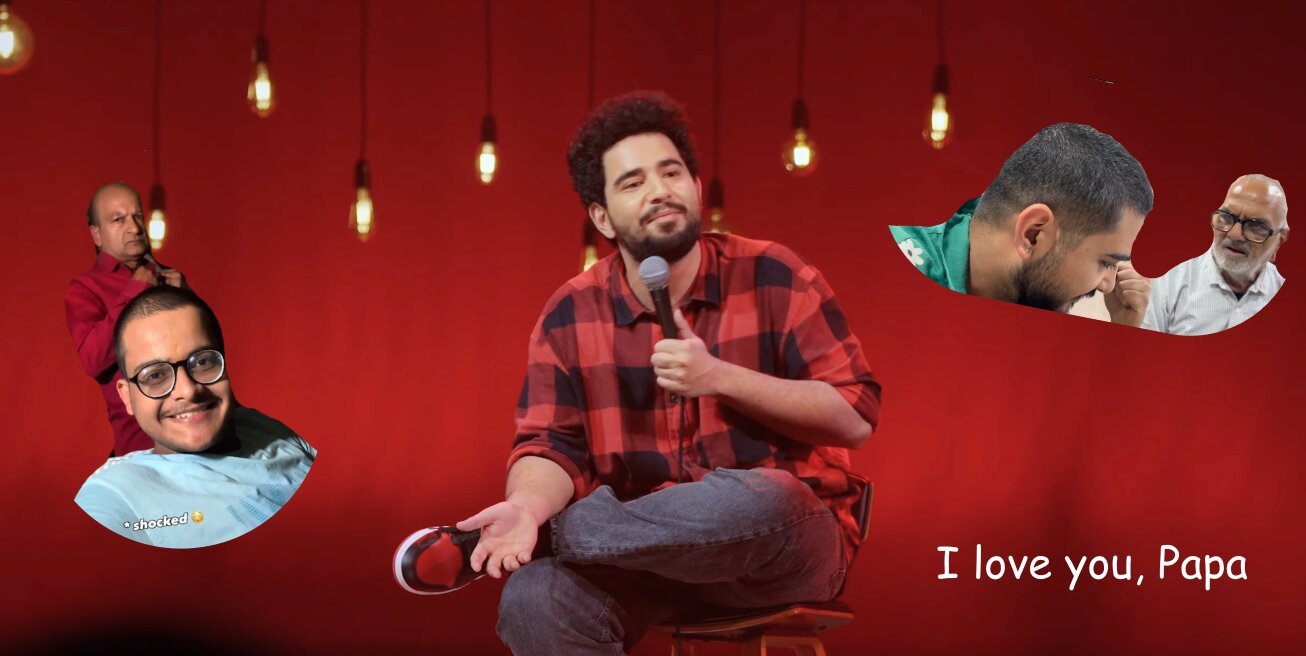
Since decades, the walls in the Indian home echo with a certain kind of silence. It’s not a silence born of lack of love but of a limited love vocabulary. It’s a silence that was born out of survival. Fathers who saw their emotions as luxuries, and sons who were taught their value was measured by “carrying”, rather than “feeling”. Although Gen Z men try to break this pattern, I found it difficult to get them to open up to me for this story. This hesitation was not an accident, but the story. Even though young men today use the language of therapy and self-awareness and document their journeys on social media to self-teach, there is a pause whenever the conversation turns inward. Words are not easy to come by. It’s not that feelings don’t exist but because they’ve never been given a language. However, when comedian Samay Raina talked about a fact so commonplace that most Indian men do not say “I love” to their fathers or vice versa, a number of men and women found it resonant. In Indian homes, affection is often expressed through sacrifice and responsibility. Fathers work long hours and wake up early, so that’s their language of affection. In the process, emotional expression is left out. This is why Samay’s Still Alive video was a cultural phenomenon. It was a cultural moment when he encouraged men to learn emotional intelligence and open up. In the Instagram videos that followed, Gen Z men awkwardly and hesitantly told their dads “I love you”. Many laughed off this. Some were met by confusion. Some were met with confusion. In almost every case something changed. Love was always there but not spoken. Anupam Dwivedi is a content creator who shares that in his family, love was always meant to remain silent. Growing up, I understood that you couldn’t express everything to your parents. He tells indianexpress.com that he was raised in a home where emotional restraint was not enforced, but simply understood. His father stressed that a man’s value is based on his actions and the service he provides without expecting anything in return. “Love is expressed by actions, not through words.”
View this post on Instagram
This belief shaped the relationship between him and his father. Even today, telling my father ‘I love’ feels awkward… very, very uncomfortable. Story continues below this advertisement. “I said it quickly… my heartbeat was incredibly fast before I said it because it was the first time. After I said it, however, I felt a sense peace. Anupam remembers being dismissed when he was a child. How Gen Z weddings swapped traditional grandeur for a dancing gorillaHowever, Anupam is incessantly trying to unlearn one habit that every Indian man is fed with: “Don’t cry or express.” “I am trying to be more expressive. I don’t want my tears to be held back anymore. I don’t like to pretend that I’m fine when I’m not. “The understood love of ‘desi’ households” For Sudhanshu Mishra a journalist the story captures a deeply embedded Indian family dynamic. The idea that love doesn’t need to be expressed in order to be real. Story continues below this ad. “For me, emotional expression has always been a given ….That i still hold ….. However, in general …… my father left home town when he was young, so he had and still does have a vulnerability factor. “Be strong and built” was the default setting,” he says. But even within this space, there were limits. “Saying it loud? It’s still a little awkward, but I can hug him when I feel that saying it out loud would be a bit cliche. In a desi family like ours, it’s more of an understood thing rather than something we say. The relationship is solid but actions are more important than words. “Respect takes up more space than love ….. because it’s often seen as the same meaning word,” Sudhanshu explains. He has tried to push these boundaries in small ways. “Not in a radical way, but here, there… trying more to open up, check in emotionally. Sometimes it works and sometimes it becomes ‘chhota mh badi baat’or ‘batameezi ‘. Garvit Joshi, an online content creator, believes that this shift is a matter of emotional awareness and self-assurance. “It wasn’t at all easy. I was afraid I would be scolded, or even slapped. He did slap me, but I knew he loved me deeply, and that was what mattered to me. Story continues below this advertisement. “I’m trying unlearn my habit of holding emotions back, especially when it comes to family. Garvit says that there is still a pressure to act in a certain manner as a man. However, I feel that our generation is slowly redefining this and making room for more authenticity.
View this post on Instagram
Ashutosh kapoor, an Indian content creator, experienced a different life when he lost his dad at a young, impressionable age. “My father passed away just as I finished my schooling. I remember that he listened to me without judging my personal issues. If I had the chance, I would tell him this. Ashutosh is trying to break the habit of ignoring his personal emotions because of societal or familial expectations. Reflecting on his understanding of masculinity, he believes that embracing a sense of purpose and emotional/mental/physical strength is crucial.”For most of my life, masculinity was what I saw on TV/SM or what men around me looked like,” he says. “I tried yoga and meditation, and I felt my masculinity was also about accepting and improving my flaws without blaming anyone or anything external. These experiences are systemic, generational and deeply conditioned. Arouba Kabir is a Bengaluru based mental health expert. She believes that emotional suppression in boys starts much earlier than people realize — usually around the age of five to seven during primary school. By adolescence boys have already learned that anger is acceptable. Pride is acceptable. Achievement is celebrated. Fear, sadness, insecurity and vulnerability are pushed to the background. “Around the age of five to seven, emotional narrowing begins… not through one incident, but hundreds of small moments,” she says. The rise of cleanfluencers in India: How content creators are redefining civic senseDr Munia Bhattacharya, senior consultant-clinical psychologist, Marengo Asia Hospitals, Gurgaon, puts it succinctly. “We did not raise emotionally weak men. We raised emotionally restricted men.” They are more comfortable with saying “I’m okay” or “I need assistance”, which was rare among older generations. There is also confusion. She explains that small, intentional changes in families can create a safer emotional space for men. She says that instead of asking boys about their accomplishments, it’s important to ask them how they feel. Instead of rushing to solve their problems, she suggests that you listen. And instead of only praising their toughness, she suggests that you also value honesty and transparency. She also says that the way women respond to men who are vulnerable, showing the same respect and affection, is important. The story continues below this adGeneration Z men face pressure. The pressure to be strong, stable and composed is still there. Most importantly, showing emotion is not a sign of weakness, but a way to unlearn and create a better life for themselves and their family.


Continue Reading

Latest News

UsaLocalNews1 hour ago

Illegal immigrant Israel Flores Ortiz gets 180 days for groping girls at Fairfax County Va. High School

​ NEWYou can now hear Fox News articles. Israel Flores Ortiz (18), an illegal alien, received a 180-day sentence on...

LifestyleNews1 hour ago

Fertility expert says, ‘IVF is oversold in India’; points out how sleep, diet, and stress impact sperm and eggs

 ​ Dr Priyanka Nair, a gynecologist and fertility expert, recently said that IVF in India was oversold. “As a fertility...

Entertainment1 hour ago

LaToya Jackson Reacts to ‘Michael’ Amid Bad Reviews

​ Many predict that the upcoming Michael Jackson biography, aptly named “Michael,” will be one of the most popular films...

India Top Stories Feeds1 hour ago

“Mallikarjun Kharge Brought Shame To Nation By Calling PM Modi A Terrorist”: Amit Shah

​   “Mallikarjun Kharge Brought Shame To Nation By Calling PM Modi A Terrorist”: Amit Shah    ​ 

BBC News World2 hours ago

Iran sees mass redundancies from war with US and Israel

​  ​ Iran has seen a mass of redundancies as Employers and government officials refer to this as “bala The impact...

India Top Stories Feeds2 hours ago

Woman Rejects Man’s Proposal. He Slits Her Son’s Throat, Stuffs Body In Blue Drum

​   Mathura Rajak, 45, entered the house at 10:30 AM when Shivraj Rajak was alone in his home.    ​ 

Video2 hours ago

Traveling Cancer Doctor Saves Lives

Rural Americans often face major barriers to cancer care. In Colorado, no licensed oncologists are based in the eastern third...

Tech2 hours ago

Stop Paying for a VPN: Firefox Just Built One Right Into Your Browser

​ Mozilla’s built in VPN provides an extra layer of security for your browser traffic, without the need for a...

Tech2 hours ago

Play One of the Best Games of 2025 Right Now on Xbox Game Pass

​ Vampire Crawlers is the sequel to the popular Vampire Survivors game.    

Sports2 hours ago

Championship clubs reject bringing in VAR next season

​ Image source: Getty ImagesByDale JohnsonFootball Issues Correspondent59 minutes ago395 CommentsChampionship Clubs have rejected the chance to introduce a video...

Trending News

Join Our Newsletter

Stay updated with breaking news and exclusive content.