
LifestyleNews
A Previously Unpublished Q&A

There are probably people who are still suspicious because of your age, that you are really writing the songs… but looking at which ones you wrote by yourself, no one can look at “Our Song” and doubt that you’re a songwriter.
Thank you. I’m actually really thrilled that that’s the song that was my first No. 1, because it kind of says something. I’ve always wanted that respect from the songwriting community in Nashville, and this year I was lucky enough to get the NSAI songwriter artist of the year award, which is voted on strictly by songwriters. And to get my first No. 1 with a song I wrote by myself, it really means a lot to me.
Being older, a lot of times I don’t connect with specificially quote-unquote teenage music…
No offense taken, it’s OK!
But all that’s to say, though I don’t always have a lot of nostalgia about being that age, there’s something about the sweet specificity of “Our Song” that I can listen and, for three minutes, at least, go, all right, maybe I do wish I was a teenager again.
Oh, that’s really sweet. Thank you. That was one of those songs that I wrote in 20 minutes, literally just sat down and wrote out the whole thing. You know, I never expect to win if I’m nominated for an award. I never expect to have a song go No. 1 if I put it out. I would never expect a song that I wrote by myself in 9th grade would make the album and then be a single and then be a No. 1.
You also wrote “The Outside” by yourself.
I was 12, yeah.
And there’s a song on your recent Christmas EP you wrote by yourself.
I wrote “Christmas Must Be Something More” when I was 13. I like to go back and look at the stuff I wrote when I was younger and include it, because there’s a place for that, and there’s a place for the vulnerability and the innocence in the songwriting. I wrote “The Outside” about not fitting in at school—about the scariest feeling I’ve ever felt, which is going to school and walking down the hall and looking at all those faces and not knowing who you’re gonna talk to that day. It’s scary when you’re 12. I mean, it’s scary at any age to go through that. And a lot of people ask me, how did you have the courage to walk up to record labels when you were 12 or 13 and kind of jump right into the music industry? It’s because I knew I could never feel the kind of rejection that I felt in like middle school. I could never feel that in the music industry, because they’re polite. If they’re gonna say no to you, at least they’re gonna be polite about it, at least. … First of all, I didn’t know any better. And second of all, I hadn’t had the most perfect social life in middle school, so I guess it got me ready for the real world, in a sense.
You mentioned that when I first interviewed you last spring, and at the time I wondered, why did she feel that way? Somebody would look at you and think you were one of the popular kids. But you were clearly precocious — did that separate you from your classmates?
I think what separated me was that on the weekends, all of the friends that I had were starting to party already — were going to parties, were starting to steal alcohol from their parents. And I just was never into that. I never was even tempted by it. What I was doing on weekends was going to singer/songwriter nights, and playing guitar for people, and sneaking into karaoke bars, and going to festivals and plugging in my guitar into little crackling amplifiers — that’s what I was doing. So I think that naturally separates you, if you’re not doing the same things other people are doing. You know, I wasn’t at soccer practice talking to them, and I wasn’t at the parties hanging out with them. So I think that that obviously was the split between me and them.
As you did a lot of singing, did you do it in your community, and find that it helped you forge relationships with people, or were you always off on your own doing it more privately?
I feel like I was a little bit more on my own doing it, because I was from a small town, and nobody really expects you to leave, especially before you graduate. That doesn’t really happen. So it was a very rare case, the fact that I left. And I actually went back a couple months ago and played a sold-out show in my hometown, and it was absolutely amazing. Ever since all this stuff has started happening, the people in Pennsylvaia been the most supportive people I’ve ever known. But I wouldn’t change a thing about growing up and not exactly fitting in. If I had been popular, I wouldn’t have wanted to leave, probably. It would have been harder, at least.
When did you actually move to Hendersonville from Pennsylvania?
I got to Hendersonville when I was in 8th grade, and it was the best place that I’d ever been. People all of a sudden didn’t look at me like I was weird because I played music, because that’s what all their dads did. But it’s far enough away from Music Row to where you’re not right on top of all the songwriters; you’re not right on top of all the publishing companies. It’s a 20-minute drive away, but you’re not right there. My family moved to Nashville because I was so obnoxious about wanting to go. When I was 10, and when I was younger than that, even, I would watch these biographies on Faith Hill or the Dixie Chicks or Shania Twain or LeAnn Rimes, and the thing I kept hearing was that they had to go to Nashville, and that’s when they made it big. And so I kept saying to my mom, “Please, I want to go to Nashville — that’s where I need to go, I need to be there.” And eventually she said “OK, we’ll take a trip there, we’ll see what happens. You can take your demo CD” that I recorded of karaoke songs, and I sound like a chipmunk — it’s pretty awesome. She’s like, “You can go and take a trip and knock on doors and see what happens.” So my mom and me and my little brother got on a plane and we went to Nashville when I was 11, and I knocked on doors up and down Music Row. My mom would wait in the car, and I would say, “Hi, I’m Taylor, I’m 11, I want a record deal. Call me.” That sort of thing. And nothing happened, of course. But I went back home with this feeling that I needed to be different, and it just motivated me even more, the fact that it wasn’t easy. That somehow was even more of a motivator to me, and more of a challenge, and I loved it. So that’s when I started playing guitar and writing my own music, and I said, that’s gonna be my thing. That’s what’s gonna make me different. So I spent the next couple years working on my craft and honing in on my skills and practicing guitar until my fingers bled, and writing songs every chance I got. And went back to Nashville, and moved there with my family. I was like, “You guys, I’m so serious about this.” And my parents have always encouraged me to do what I feel is my dream. I’m so blessed that my parents were willing to move across the country for that.
Were there any success indicators prior to the move? Did anyone encourage you so it didn’t seem like quite such a huge leap of faith?
I had been going to Nashville every couple of months, and I got a development deal with RCA on one of my trips, which… I mean, labels have so many artists under development.
[A boy steps up to the table: “Miss, can I take a picture with you?” She responds: “Of course. Does your mom have a camera? What’s your name, sweetheart?… He’s really cute…. Where was I?” She resumes.]
A development deal is kind of like a “we’ll see how it goes” kind of deal — “we’ll develop you for a year” — and then after a year they renegotiate and see if they want to sign you to a regular, real, full-on record deal. So I moved to town because of this development deal. Even though nothing was set in stone, I wanted to go. And because of that, I went in and I met with publishing companies, and I became the youngest person ever signed to Sony/ATV Publishing for my songwriting. I was 14. So my mom would pick me up from school and I would go downtown and write with songwriters all day after school, and then I would go back home and do my homework and do the same thing all over again the next day. I really was trying to get respect as a songwriter, too, and get myself known that way. The year came up with RCA, and they wanted to develop me for another year instead of sign me. I decided to walk and see my other options. And that doesn’t happen, because that’s a huge, awesome record label; they have all the stars on that record label. I just wanted to explore other options, and that’s when I met Scott Borchetta, who was then working at Universal. I thought, oh, awesome, I’m gonna get to deal with Universal! I get this call a couple of weeks later, after I do this showcase and Scott’s on board and rocking. I get this call and he goes, “I have good news and bad news. The good news is I want to sign you, and the bad news is I’m not gonna be with Universal Records any more.” Because he was leaving to start up this whole new record label.
If I recall correctly from our previous interview, you getting out of the development deal was partly because they wanted you to record outside material.
I think that probably had a lot to do with the fact that I was 14. And there had been no teenager that had worked out in country music since LeAnn Rimes, and that was 1996 when she came on. So it had been 10 years since any teenager had worked out in this industry, so a lot of people were afraid of that. So it didn’t work out. I’ll always be grateful to them for giving me that first leg up in the music industry. I will never say a bad thing about them. RCA Records and Joe Galante and Renee Bell were unbelievable, that they gave me that chance and signed me when I was 13. It just didn’t end up being the way that my career ended up going. What ended up happening was, I ended up signing with a record deal with a record label that didn’t even have a name or furniture. It had 10 employees, and it was a total leap of faith, but somehow it worked out. We had 10 employees at the record label, so my mom and I all came in, when they were releasing my first single, to stuff the CD singles into envelopes to send to radio. Because there were other people that were just having to do their jobs, and there weren’t enough people. We sat out on the floor and did it because there wasn’t furniture at the label yet.
So, to make a list of the odds that were stacked against you: (a) Being a woman, for starters, seems to count as a strike with the country radio audience. (b) The teen thing, as you said. (c) You are one of the first artists for a fresh label startup. (d) Using your own material was a bad thing to do, supposedly. It’s a pretty long list! It’s a tough time for new artists in any field of music, but in country, especially, Ashley Monroe and some other promising young female artists have been getting dropped from major labels…
Love Ashley.
Do you wonder whether anyone is learning anything from your success, or do they just still need, like, another Taylor Swift to come along to further prove something?
I hope people look at what’s happened with me, growing a fan base on MySpace, writing their own material. I hope that there are other artists like that, honestly. I want country music to be a first-rate music. In a perfect world. I would think no one’s saying “I hate country music.” I want country music to be as good as it can possibly be, and I want there to be a base of artists that bring people from everywhere to this format. And I think that it’s moving in that direction.
Something people aren’t even talking about that much with the success at radio is your album making the Soundscan top 10 for the year. I like to pride myself on seeing things coming, but I didn’t foresee that.
Trust me, I’m more shocked than all of us. The album is back to No. 1 again for the fifth week in a row. It just blows my mind, it really does. The album has been out for so long — over a year — and it’s just now having a top-selling week. [The No. 1 status she was referring to was on the country albums chart; on the overall Billboard 200 chart, it peaked at No. 5, and was her only album to fall short of No. 1.]
I don’t mean this to sound like a putdown at all, but you’ve achieved all this success and there are still a vast majority of people who haven’t heard of you.
That’s what is so exciting, and what keeps me going on a daily basis is the fact that I know nothing compared to what I’m gonna know a year from now. I know nothing. We haven’t tapped into half the people we’re gonna tap into, and I haven’t even been exposed to one-tenth of the people I want to be exposed to. The things that we have yet to do really just fuel me and make me so happy.
[The boy who asked for the autograph earlier returns. She says, “It was good to meet you, Tyler; give me a handshake. Good luck with your movie. You’re welcome.”]
You have success starting to happen at CHR [top 40 radio]. What does that mean to you? Carrie’s song (“Jesus, Take the Wheel”) broke the logjam (of crossover between country and pop), but it’s been a long time since that really happened.
Yeah, with the crossover stuff, it’s like, I didn’t see that coming either. I write country music and I didn’t see it crossing over. But when the idea was brought up by Universal Republic, I was like, yeah, I’m on board. I don’t look at it as crossover as much as I look at it as spillover. Not as much transferring myself from one place to another, but just there being the offshoot, and it just kind of spilled over into a different category. I’m so lucky that that has happened. I love it when I turn on a pop radio station and hear my song. It makes me so happy. Like we were talking about, those people are just now hearing my name for the first time.
You just got nominated for best new artist at the Grammys. You were at the announcement ceremony, and you had a big reaction when your name came up. Were you confident that was coming?
I was being optimistic, but you don’t know. I went in there not knowing. And they read off all the country nominations first, and I didn’t hear my name. And so I just thought, you know, it was cool to come out here — I always like being in L.A.; thank you for inviting me, that sort of thing. So I’m standing back there and not really even listening intently, as they were announcing the nominees for best new artist. And I remember just screaming and hugging everyone on the stage. It was so amazing.
I wonder how many people in Nashville were seeing you on TV for the Grammy nomination and how long it takes them to remember: “Holy crap, that’s that little girl who knocked on my door a few years ago.”
I’ve heard stories about how everyone’s been passed on in Nashville by somebody, and there’s always somebody who is like, “Oh gosh, I passed on that.” But I think they also know that nothing works without it being the exact circumstances. If one of the circumstances had been different — if I had been at a different label, and they wouldn’t have let me write my own music, and they wouldn’t have let me put music I wanted to put on the album, and they wouldn’t have put out singles that made this album — maybe I wouldn’t be here talking at this In-N-Out Burger fine dining location. It’s all circumstantial. It’s all what happens to add up and make certain things happen in that right order at the exact right time. And a lot of it’s timing. So I think that while people can say, “Wow, she was in my building, wow, she played that song for me that’s now No. 1,” I think everybody kind of knows that without the exact circumstances to produce this, it would have been different.
Everybody talks about who passed on the Beatles. It would be hard to be in that position, of being one of the A&R people who passed, because every day they meet so many singers who might be just kind of deluded but have the same confident attitude you had.
Mm-hm. A&R people have the hardest job, because sometimes they’ll believe in something that other people don’t believe in, and they go with their gut and it doesn’t work. And sometimes something that they don’t believe in ends up working. It’s hard to predict that. So I’m never gonna look back on people who didn’t sign me when I was 13 or 14 or 15. I’m not gonna look back on those people and go “Ha — check it out.” Because I wouldn’t be here if they hadn’t passed on me. We wouldn’t be where we are. I think you can be grateful for every single thing that happens. Whether it be a hard experience or rejection or whatever, you have to be grateful for it.
You are famous for your four-hour autograph sessions after shows. Are you ever at the end of one of those where you think, “Maybe we’re getting to the point where 10 minutes will be just fine”?
We just did one of those in Nashville the other night. We were literally there four and a half hours. And I feel like in those situations, if those people are willing to stand that long, I am too. And I don’t sit down. If people are willing to wait that long just to meet me, that’s a basic thing, in and of itself. But there are some times when we can’t do it, whether security won’t stay that long or whatever. My manager was talking to me the other day and he’s like, “It’s gonna have to come to a point where you say, I haven’t gotten too big, the crowds have.” But I’m gonna continue to do it as long as I can.
It’s probably safe to say you were always mature for your age, if not already the consummate pro. You were 16 when this process seriously started, but it’s been described as 16 going on 35 in terms of your professional know-how. You’ve been so grown up for so long — but do you ever have moments where you just think, “Oh my God, I can’t handle this, I’m still a kid”?
I think that no matter what, you’re gonna have those moments, in whatever career path you choose, where you feel like you’re not in control or you feel like it’s all too much, whether you’re getting ready to go to college, which is what I would be doing right now, or you’re picking what you want to do for the rest of your life, or you’re just starting out a new job. You’re gonna feel like you’re not in control. And yes, I have moments like that too. I’m a normal human being. Sometimes I feel like I need to just stop and take a second and not think about it. But then I take my five minutes and then I jump right back into it. Because at the end of the day, I want to be here for the next 20 years, and I can’t do that if I just escape it all and turn it off and pretend like I don’t have to worry about it and hire somebody to take care of it. If I want to be in charge of my own future, I have to be in charge of my career, and I have to be in charge of making decisions I don’t necessarily want to have to make.
A few years ago I was doing a story on a rising teenage star and, for better or worse, the headline called her “the anti-Britney.” People might think of you that way now, as someone who is appealing to a similar age group as some of the top pop stars but represents something totally opposite in some way, whether that’s music or attitude or lifestyle.
You know, being compared to Britney… I haven’t been hounded for the last couple years of my life. I haven’t been completely mobbed everywhere I go. I don’t know what that’s like. I imagine I would go crazy if every single thing I did, there were 30 photographers taking pictures of it. So I don’t know what that’s like, so I can’t ever speculate. But I don’t drink, no. I don’t do drugs, I don’t party, I don’t go out, really, at all — I’m kind of boring. I don’t know if that makes me the anti-Britney or just a different kind of person.
Some of your songs are specifically teenage in their concerns, and some are more universal about love. I think you said you were a freshman when you started to write “Tim McGraw” and you had a boyfriend who was a senior. You said last year you were too career-focused to have a relationship. If you stay single, are you gonna run out of material?
No, no. You want to hear my new career philosophy and my relationship philosophy? When I find someone who fascinates me as much as my career, I’m gonna go for it. I’m not opposed to dating. I just haven’t found the right person that I’m gonna date. But as far as running out of material: If you’ve been cheated on once, you never forget that feeling. And you never forget what it’s like to have someone break up with you. You never forget what it’s like to have somebody completely act in a way that you don’t understand, and you’re like, “What is going on with you?” If that happens to you once, it doesn’t need to happen again. You know what it’s like. So for me, if I have to go back to when I was 15 and felt something like that, I will. Or, you can write a song about a friendship or a business relationship that sounds so much like a breakup, you can’t even tell the difference. I’ve done stuff like that for my next album. I mean, there’s a song that I wrote with Colbie Caillat that is going on my next album (“Breathe”), and she’s gonna sing harmony on it. The song is not about a relationship or a breakup, but it really, really sounds like it is. And anyone who hears it will think that I wrote it about the most painful breakup of my life, when really I wrote it about losing a friend.
You don’t mean through death…
No no no, not through death, thank God.
When you sing songs like “Should Have Said No,” you do it with a lot of, well, vigor.
I wrote that right after I got cheated on, by the way. Bad cheater guy. Yeah, every lyric in that song is exactly how it happened. I got cheated on by this guy I was kind of dating — you know, when you’re like starting to date someone, and you’re not officially boyfriend-girlfriend yet, but you’re kind of going in that direction…
Every song feels unusually personal.
I think the unique thing about me is that I write everything and I don’t edit out names or details or personal details. I’m not afraid to let people in. I don’t have the highest or strongest voice in the music industry. But I write what I feel, and that’s pretty much all I can do.
A word that describes the approach of a lot of my favorite songwriters is “conversational.”
Thank you. You know what? That’s what I was trying to put my finger on, and that is how I would explain my singing style. It is very conversational. My singing style is catered to the songs that I write, and a lot of times the songs that I write are very conversational. So you totally hit the nail right on the head there. Say that instead of what I said — that it’s conversational! And pretend that I came up with it. Yeah, conversational. Especially with “Our Song” — totally conversational, probably the most conversational song I’ve ever put out, and it’s done the best of all of them.
As far as putting people’s names in songs, has anybody objected?
I kind of feel bad for guys a little bit, after I’ve written songs about them with their names in them and stuff, because they move on to different relationships, and their new girlfriends are always like smacking them in the car when the song comes on. But I think songwriting is the ultimate form of being able to make anything that happens to you in your life productive. If you get your heart broken, or if you get out of a bad relationship that was just a complete waste of your time and a waste of your emotions and waste of everything, you can write a song about it and it can become a benefit to your career. How sweet is that?
But you must’ve had some happy experiences with boys, to get “Tim McGraw” and “Our Song.”
Of course, of course. I had one cute little relationship.
All the happy songs came out of one relationship?
Yeah, “Tim McGraw” and “Our Song” are written about the same guy. And all the rest are written about various people. I think it’s funny, because it kind of sounds like I’ve dated a lot of people, if I could have written that many songs about guys. But you don’t have to date somebody to write a song about him. You don’t even have to know their name to write a song about somebody.
We were talking about “Teardrops on My Guitar” earlier when my tape recorder shut off. You were talking about Drew coming up the driveway.
As far as Drew coming up my driveway, I was on my way to go to a hockey game, and my dad came up to me out in the driveway and he said “Hey, there’s someone here to see you.” And it was Drew from “Teardrops on My Guitar.” And I was like, “Wow! Hi! You’re late.” I hadn’t talked to him in like three years, so it was kind of interesting seeing him again.
But you had seen his MySpace page in the meantime, right?
Yeah, his MySpace about me is “Hi, I’m Drew, and my one claim to fame is that I have a country song written about me.”
You said some of your songs are so personal, you didn’t have a lot that were cover-able, because you wrote so specifically. But you have written a song with Kellie Pickler that wasn’t for yourself. You enjoying the idea of moonlighting?
Oh yeah, it’s cool to jump into somebody else’s life. Just from stuff that Kellie had told me from being her friend about this ex-boyfriend relationship, I was able to look back to one of my old relationships, where he’s got a new girlfriend and the new girlfriend hates you, and that sort of thing. It’s a hilarious, amazing song that’s going on her next record (“The Best Days of Your Life”), and it feels so good to have one of your babies, one of your songs, going a different place. Possibly, I could have two songs on the chart, if Kellie releases hers and I release one of mine. That would be so cool. It is so hard, though, to give up something, because you never know where it’s gonna go. But being friends with Kellie, I hope that’s a No. 1 song for her.
You’ve had three songs become country hits off this album, which is a nice streak. I will say I was surprised you passed over “Picture to Burn,” which seems like a really obvious hit.
That’s coming next.
So you knew to save the feistier ones for later.
[She laughs.]
LifestyleNews
In Tennessee, a man’s murder and his wife’s death feed into the local legend of a “cursed” mansion
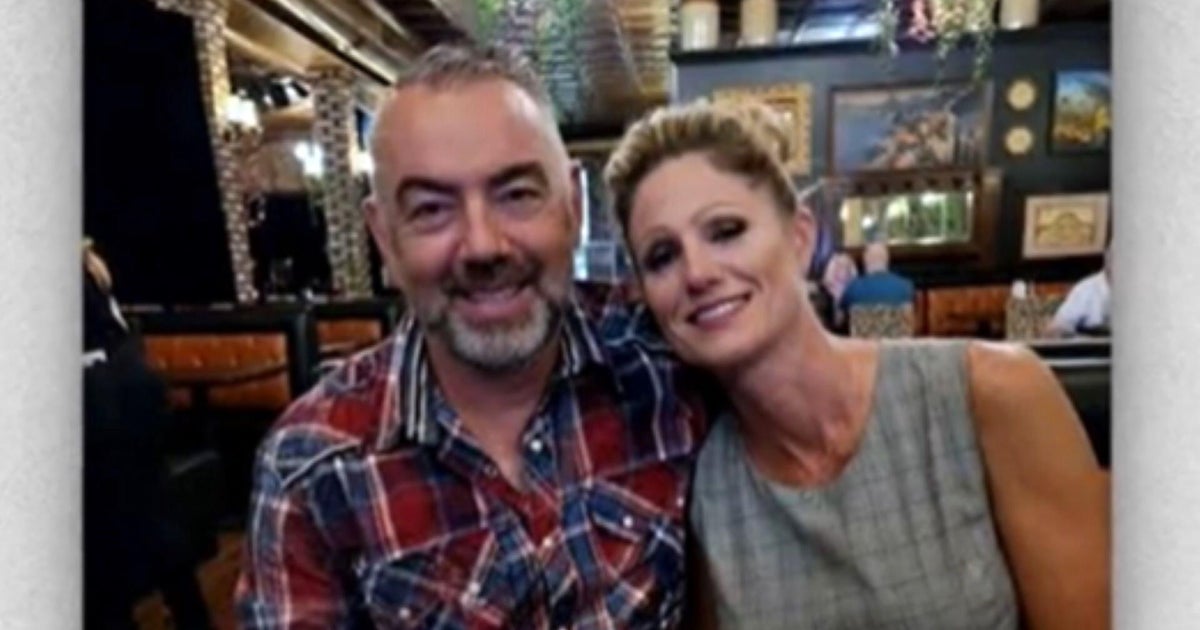
The lake country straddling the Kentucky-Tennessee border has a quiet, majestic beauty. But in September 2022, that vast landscape seemed to have swallowed up Mike Harding, a California transplant who disappeared without a trace.
JULIE HARDING (phone call): Hi Captain, this is Julie Harding with the California Highway Patrol …
Mike’s wife Julie Harding, a captain with the California Highway Patrol, began to place urgent phone calls to the Kentucky State Police from her home in Sacramento.
JULIE HARDING (phone call): I can’t get any information. And I just, I need your help with this … My concern right now … is where he is. Is he OK? … and what’s the status of this investigation?
The calls led her to a sheriff she knew — Brandon Boone of Clay County, Tennessee, whose office was spearheading the missing person’s case. But the answers were few and far between and Boone says Julie Harding grew frustrated.
Sheriff Brandon Boone: She got very angry with a couple of — of my people, uh, because we wouldn’t disclose certain information to her …
Within days, Julie was there in person on Sheriff Boone’s doorstep.
JULIE HARDING (bodycam): Hi.
SHERIFF BRANDON BOONE: How are ya?
JULIE HARDING: I’m good, how are you? Well …
In a moment recorded on a body camera, she immediately apologized for being rude.
JULIE HARDING (bodycam): Let me first apologize. My tone was inappropriate I was very irritated, umm, and I should have been more calm. My assumptions, umm, and my emotions in this, umm, killed my reasonableness so I apologize for how we spoke the other day.
OFFICER: Yes ma’am.
JULIE HARDING: OK. So, from now on, I, I hope it’s calm. I hope it’s cooperative. Umm, because all I want is Mike to come back in and go … I was in wherever fishing.
Boone sent her to a sheriff in Kentucky who had taken over the investigation.
SHERIFF BRANDON BOONE (bodycam): Cumberland County Sheriff’s Office has called us. They need you there.
JULIE HARDING: OK.
SHERIFF BRANDON BOONE: That’s all I can tell you.
JULIE HARDING: OK.
A grisly discovery
Just hours earlier, David Hammersley and his family were house hunting in nearby Burkesville, Kentucky. They went room to room at a vacant, three-building property — unaware of what lay ahead.
David Hammersley: … the rest of the party had gone to this building here …
Hammersley wandered into the garage and was surprised that there was a large pickup truck parked inside.
Peter Van Sant: The rest of the family has moved on to this cottage. What do you hear from the garage?
David Hammersley: Well, as they’re attempting to open the door, I hear this awful screech and, “Oh, it’s — it’s terrible. There’s something dead over here!”
Hammersley says his family figured some sort of animal must have wandered in and never got out. David walked over and stopped just inside the cottage’s front door.
David Hammersley: It was over 100 degrees at the time, I believe … and I was just attacked, if you will, by flies. … And the odor was just so overpowering.
What he then saw was far worse.
David Hammersley: I saw a man on the floor, his arm outstretched … obviously, dead from gunshot wounds … (sighs) Ah, sorry. … his life is gone under violent circumstances and just left there. It — it — it was devastating.
The dead body was Mike Harding, says prosecutor Ann Marie Gordon Anderson.
Ann Marie Gordon Anderson: It seemed like he had probably been there for a week, from September 19th [to] the 26th.
The Cumberland County Sheriff immediately called in the Kentucky State Police. Detective BJ Burton was assigned to lead the investigation. He learned that Mike Harding had been shot four times, twice in the torso and twice in the head.
Detective BJ Burton: It kind of looks like somebody that wants to be a professional hit man — but is not quite there.
Burton said the killer removed evidence from the scene, including the murder weapon and three shell casings. But the assassin left behind one distinctive shell casing; investigators determined it was from a Hornady Critical Defense bullet.
Back in Sacramento, Mike’s son Steven Harding, from Mike’s first marriage, was told his father had been murdered.
Peter Van Sant: And can you put into words the horror of this news for you?
Steven Harding: There’s really no words for it other than your best friend is gone (crying).
For Steven’s older sister Heather Cavalieri, also from Mike Harding’s first marriage, news of their father’s murder came from a friend.
Heather Cavalieri: I didn’t want to believe it, you know. I loved my dad … So, all of it’s just hard … it’s been hard. It’s been really hard.
At the crime scene, investigators were trying to figure out why Mike was at this seemingly random location. His cellphone was about to shed some light.
Detective BJ Burton: Once you start looking through the text messages and phone calls … it becomes very obvious early on that he was lured to the house.
The phone revealed texts from a realtor named James Fraser. He asked Mike — who owned an HVAC business — to check out the house.
Detective BJ Burton: He thought he was going there for … what he thought was a heating and air service call. … You see the text messages when Michael Harding is on his way there …
Around 4 p.m., Mike Harding texts James Fraser that he is “35 minutes out.” Fraser texts, “No worries.” Mike asks, “Is that good for you?” and Fraser tells him “Yes.” The final exchange Mike texts, “See ya soon.” Fraser replies “Perfect.”
While those texts gave investigators a solid timeline, the investigation hit a roadblock early on: they could not find a realtor named James Fraser.
Detective BJ Burton: So, it was probably just a made up name.
But they did have some potential leads. When investigators later contacted the phone company of the number used to text Mike Harding, they discovered that number came from a prepaid cellphone used only to arrange Mike’s murder.
Detective BJ Burton: It was pretty evident early on that this is a burner phone. …
Peter Van Sant: And for those who don’t know, what is a burner phone?
Detective BJ Burton: Somebody … goes and buys a burner phone, they’ll put in like John Doe, any town USA just they … think it’s untraceable at which to some degree it is.
And remember that pickup Hammersley saw in the garage? Burton said it was Mike Harding’s.
Detective BJ Burton: My thought is … whoever murdered him and then pulled the truck in the garage, there’s a very good chance that their DNA may also be in the truck.
Burton tried to call Mike’s wife, Julie, but she didn’t pick up. Burton had been told she was heading his way — to the Cumberland County Sheriff’s Office, so he waited there to give her the bad news face to face.
The local legend of the “cursed” mansion
Steven Harding: When you see your hero get taken from you … you know you’re not untouchable …
After delivering the devastating news about Mike Harding’s death to his children, Detective Burton was desperate to reach Mike’s wife Julie, who indicated she was on her way to a local sheriff’s office.
Det. BJ Burton: Myself and another detective waited there for some period of time. … She never showed up.
A few days later, Burton located her at a neighbor’s house in Celina.
Detective BJ Burton: I introduced myself to her, uh, you know, try to talk to her. …
She referred all questions to her lawyer, which Burton thought was unusual for someone in law enforcement and the spouse of a murder victim.
Detective BJ Burton: She didn’t want to talk to me …
Burton and his team began investigating the Harding’s personal lives. They learned the two met online in 2018. Julie, 44, and Mike, 48, had both been through divorces. They married in 2019 and within months, Burton says they bought that spectacular house in Celina where they planned to live after retirement.
Julie’s close friend, Kathy Rourke says Julie was over the moon in love with Mike.
Kathy Rourke: She thought she had something that she — she wanted more than anything else … A man to come home to, a man to hug her, to comfort her, to make her feel like a woman.
Kathy Rourke: … she was so proud to be married, she was so proud …
When she turned 50, Julie would be eligible to retire from the California Highway Patrol — an iconic agency known around the world.
Kathy Rourke: Wearing her uniform was the greatest joy in her life.
Detective BJ Burton: I think early on in their marriage … the decision was made … Mike would go ahead and move to the lake house in Celina, Tennessee, so he could get his HVAC service repair business started there.
Julie planned to join Mike full time when she retired. But she was a frequent visitor, and the couple made the house a home, complete with Julie’s dog Chippy the Chihuahua and Mike’s boxer Charlie.
Sgt. Brian Wittmer: The one thing that would always put a smile on Captain Julie Harding’s face were her dogs.
Julie and Mike Harding became friendly with the locals — including Sheriff Brandon Boone.
Sheriff Brandon Boone: … uh, very nice couple, talked about couldn’t wait to retire to get here full time.
Peter Van Sant: She seemed like a pleasant woman when you met her?
Sheriff Brandon Boone: Yes, she did. Very pleasant … They seemed like a, a wonderful couple together
Mike Harding’s children understood how their father felt about Julie but thought he was making a mistake.
Heather Cavalieri: I feel like he was blinded by love. He truly loved her … So, I thought he found his dream girl. But to me personally, I just, I didn’t like her.
Cavalieri says Julie Harding was arrogant and made her feel uncomfortable.
Peter Van Sant: Did the two of you ever go out and visit, uh, at the house in Tennessee?
Heather Cavalieri: No, I didn’t think that I would be welcome there.
Steven and Heather said they stayed away from the mansion, as did many locals. The house, Boone says, had a reputation for being cursed.
Sheriff Brandon Boone: There was a divorce that happened here that, that got pretty nasty. … We’ve had calls in the past of uh, gunshots that happened here that later ended up being a murder right in Burkesville. Uh, the gentleman who lived here shot the person up there.
Peter Van Sant: Now, is it true that a realtor actually brought some sort of spiritual person out here to try to purge the evil spirits from the house?
Sheriff Brandon Boone: Yes, that’s what the realtor advised me and told me — that he had, he had brought a guy here to uh, get the spirits to go away.
Peter Van Sant: And you’re serious?
Sheriff Brandon Boone: I’m serious.
And then there’s the legend of Dale Hollow Lake, which was created when the Army Corps of Engineers flooded a small town that became known as “the town that drowned.” Even today, the eerie foundations of the long-ago town are visible when the lake is low.
But Mike and Julie Harding ignored all the country rumors. And their long-distance marriage seemed to work.
Preston Cleary: Mike seemed pretty happy. He always bragged on her, how smart she was … he really cared about her. He’d do anything for her.
Sergeant Brian Wittmer worked side by side with Captain Julie Harding for several years.
Sgt. Brian Wittmer: They looked like a very cute couple.
But Wittmer said sometime in 2022 he noticed a change in Julie.
Sgt. Brian Wittmer: So for the first several years … I had never seen her consume any alcohol.
But then she began drinking.
Sgt. Brian Wittmer: … she was going to Napa Valley and having drinks, having wine, going to — to vineyards on weekend trips.
Wittmer said it was almost like someone flipped a switch.
Sgt. Brian Wittmer: … she was … hyper. Uh, she would talk a lot. She, um, was anxious.
Mike Harding’s friend Preston says that Mike also noticed the stark change in Julie’s behavior.
Preston Cleary: Mike was mad because she didn’t want to spend time with him …
Mike Harding revealed to Preston that he believed Julie Harding was cheating on him.
Peter Van Sant: Did Mike suspect there was another man in Julie’s life?
Preston Cleary: He, he did.
Mike Harding had noticed lingerie purchases in their Amazon account.
Preston Cleary: And she … had no plan to be here to see him.
Those Amazon purchases, coupled with Julie Harding’s drinking and the way she avoided spending time with Mike Harding, bruised his ego, Cleary says. But the biggest blow came when Julie told Mike she wanted to postpone her retirement for five years.
Preston Cleary: It was at that moment I seen a shift in their relationship and Mike … he had a different outlook toward her. … He was just crushed that she would choose to work five more years … he’s just like, this is, this isn’t going to work out.
Preston says Julie Harding filed for divorce in May 2022.
Preston Cleary: He was blinded. …he really, really loved her.
Sheriff Boone says the emotional turmoil took its toll on Mike Harding, who sensed Julie saw him as her enemy.
Peter Van Sant: Did you notice a change in Mike’s attitude? Did you notice kind of a paranoia?
Sheriff Brandon Boone: Oh, absolutely.
Mike Harding told Boone that someone had broken into his house one night while he was sleeping and he reported one of his guns had been stolen. After that, he made it a habit of wrapping chains with a padlock around his patio doors.
Sheriff Brandon Boone: And after seeing the locks and the chains around the door, you really think, whoa, you know, he was, he was afraid of something.
At the same time, Julie told friends and colleagues that she was afraid of Mike and feared he was engaged in some dangerous activities.
Sgt. Brian Wittmer: She said that Mike … was potentially dealing ghost guns, drugs … was taking money from her bank accounts.
Mike Harding feared his wife, say family and friends
In May 2022, soon after Julie Harding filed for a divorce, Mike Harding told friends and family that he feared for his safety.
Steven Harding: There was solid steel chains wrapped around my dad’s front door and as well as his back doors … he would do that so that no one would come in while he was sleeping. Or if it was Julie, the dogs aren’t going to bark if you know the person.
Peter Van Sant: And so you’re telling me that your father feared Julie?
Steven Harding: Yes.
Prosecutor Jesse Stockton.
Jesse Stockton: …he told his friends that … If he ever was murdered or disappeared or something nefarious happened to him, that they needed to make sure somebody looked at Julie Harding.
Mike Harding’s friend, Preston Cleary, knew Mike also was worried about his savings, and he gave Mike some advice about the pending divorce.
Preston Cleary: … whoever gets to the bank first, you know, that’s their money. So, Mike, if you want to be fair, you go take half the money out of the bank. He goes, “no.” … He goes, “I’m going to do this in court.”
Around the same time, Sgt. Brian Wittmer says Julie Harding called him to announce that she was going to raid the family funds.
Sgt. Brian Wittmer: She said that she was driving from Sacramento to Tennessee and she was going to withdraw money from her bank accounts before Mike Harding did.
At that point, Julie Harding was telling friends that Mike was involved with illegal weapons and narcotics.
Peter Van Sant: Did she think about turning in her own husband if he’s selling ghost guns and dealing drugs, for goodness sakes?
Sgt. Brian Wittmer: Well, that’s what you would expect from somebody … with her rank and her knowledge. And she would tell me that she had a friend working out in Tennessee law enforcement … that was potentially looking into things.
Peter Van Sant: Were you ever able to confirm that?
Sgt. Brian Wittmer: I was not.
Authorities say there is no evidence Mike Harding sold drugs or ghost guns or was involved in any other type of criminal activity.
Heather Cavalieri: I want people to know that he was a good man, he loved his family and he loved life. Any other narrative you hear is not the real narrative … We want the truth to be told, and that’s why we’re here.
Not long after telling Cleary he was not going to transfer any money out of the couple’s bank accounts, Mike Harding got a call from the bank.
Preston Cleary: The bank … had told him, “Julie Harding was just here, and she cleared out almost all your savings in your accounts” …
Julie Harding reportedly withdrew around $360,000 from various bank accounts, according to what Mike Harding told his divorce attorney. Julie’s friend Kathy Rourke says at least part of that money belonged to Julie.
Kathy Rourke: She didn’t need his permission.
Peter Van Sant: So she’s taking that money to do what with it?
Kathy Rourke: Bring it back here to California … She gave most of the money to her mom ’til she figured out what she was gonna do.
But Mike Harding’s son Steven says a lot of that money belonged to his father.
Steven Harding: My dad was a very smart, well-educated man. He was very good with stocks. … He was very good with his finances.
Peter Van Sant: In the days prior to his disappearing, he’d heard all this bad news. Money had been taken … There’s no reconciliation coming his way … How did that change him? …
Preston Cleary: It destroyed uh, the friend that I had … there was no more fishing for Mike … Mike was strictly business, trying to rebuild his life and get back to where he was.
And Mike Harding would rely on his HVAC business to rebuild his life — which is why friends say he responded so quickly to the call from the mysterious “James Fraser” asking him for a repair estimate at that empty house in Burkesville, Kentucky. Investigators strongly suspected there was a connection between Fraser and Julie Harding.
Det. BJ Burton: It was obvious that really the only main conflict he had going on in his life was this contentious divorce involving property and money with — with Julie Harding.
Peter Van Sant: In other words, if somebody had a motive, it was her.
Det. BJ Burton: Correct. Yes.
Burton says investigators soon learned that Julie Harding was in California at the time of Mike’s murder, but they suspected her just the same.
Det. BJ Burton: She contacted three different people involved in law enforcement during this time frame. And every one of them that she talked to … walked away with a feeling of suspicion that she was involved.
Lacking any cooperation from Julie Harding, Sheriff Boone, warrant in hand, led his armed deputies into the Harding mansion where Julie was staying after Mike’s death.
The deputies went room to room looking for clues.
No one was home, but the deputies found yellow Post-it notes that investigators say were handwritten by Julie Harding when Mike Harding was still alive. They read: “0 $ Here,” “0 $ here either,” and “Whatcha lookin 4?”
Detective BJ Burton: So there’s these little sticky notes when we did the search warrant down there that would say something like “no money here.” “Nope, no money here.”
Peter Van Sant: Taunting him.
Det. BJ Burton: Yeah, taunting.
Investigators began executing additional warrants — specifically for the call log of Julie Harding’s cellphone in the months before Mike’s murder. That’s when something caught Burton’s eye.
Det. BJ Burton: It jumps out that she’s calling this one number, that they’re talking almost every single day.
Peter Van Sant: … there were 194 calls made between her number and this other number, correct?
Det. BJ Burton: Yes, yes.
Peter Van Sant: That’s a lot of calls.
Det. BJ Burton: Yes.
Investigators traced that number to a man named Thomas O’Donnell, a former car salesman from Houston, Texas. He had recently relocated to the wine country of Napa, California — a place Julie Harding was known to visit.
Did Julie Harding hire a hit man to kill her husband?
After investigators discovered Julie Harding was talking incessantly to a man named Thomas O’Donnell, they explored that connection and learned the two likely met on a dating website that catered to self-described millionaires.
Prosecutor Jesse Stockton: … they had, uh, an extensive and significant relationship. Whether it was romantic or not, I cannot say, but they communicated with each other by phone for months …
For prosecutors Jesse Stockton and Ann Marie Gordon Anderson, the math did not add up. Two months of constant calls — 194 of them — stopped cold only days before Mike Harding was murdered.
Ann Marie Gordon Anderson: I think based on that … can probably speculate that there — there may have been some type of conversation … about what was going to happen.
Peter Van Sant: A conspiracy in other words.
Ann Marie Gordon Anderson: Conspiracy.
Investigators already knew the texts used to lure Mike Harding to his death came from a burner phone. They pulled the phone’s locational data from its service provider.
Detective BJ Burton: And the first thing you notice is … the phone is first turned on when it’s … in the Houston, Texas … area.
Houston, Texas—Thomas O’Donnell’s hometown. To investigators, that was too coincidental to be a coincidence.
Jesse Stockton: I don’t think Mister O’Donnell got out here by accident. … The only connection that he had to Michael Harding was through Julie Harding.
Investigators developed a theory that Julie Harding had paid Thomas O’Donnell to kill Mike Harding. And they thought it likely that O’Donnell was the fictional “James Fraser” who had lured Mike to that empty house. The next step in their investigation was securing the call log from O’Donnell’s personal cellphone.
Det. BJ Burton: When you start looking at the locational data from his personal phone and comparing it to the locational data with the burner phone, it — it matches up perfectly.
The FBI created maps that showed O’Donnell’s phone and the burner phone.
Ann Marie Gordon Anderson: … the red on the screen, it is the burner phone, that’s what it’s showing. Anything that you see that’s black, that is Thomas O’Donnell’s personal cellphone.
Investigators noted that the two phones were traveling in lockstep through the south in the weeks before Mike Harding’s murder.
Peter Van Sant: We know the burner phone is involved in the murder.
Ann Marie Gordon Anderson: That’s … it’s only purpose.
Background checks showed that, years earlier, O’Donnell had been arrested for stalking a girlfriend. He eventually received probation. But what really struck Detective Burton was how “irresponsible” O’Donnell was with money. He was no millionaire; O’Donnell appeared to be a man desperate for cash, Burton said.
Det. BJ Burton: It seems like his whole life, like he’s always just looking for the … next big thing that’s going to make him be able to afford the lifestyle that he wants to — to lead …
And Julie Harding, who admitted raiding the couple’s bank accounts, was loaded with cash after withdrawing hundreds of thousands of dollars from the couple’s bank accounts.
Peter Van Sant: Authorities think she took out that cash so she could pay Thomas O’Donnell to murder Michael.
Kathy Rourke: Absolutely not. That’s the most ludicrous thing. That’s what kills me about this whole story …
Peter Van Sant: Were you ever able to make a connection from all this cash that she took out and any sort of payment for Thomas O’Donnell?
Det. BJ Burton: No … it’s impossible to track. I mean if someone walks up and hands you a stack of cash … it’s untraceable …
But it wasn’t only money that Julie was after. Investigators say she wasn’t leaving Tennessee without Mike’s beloved dog Charlie.
Heather Cavalieri: I think she deemed Charlie hers. But that wasn’t her dog, that was my dad’s dog …
Police say Julie Harding was determined to get the dog back from a friend of Mike’s who’d been caring for Charlie since Mike went missing.
Steven Harding: … she knew I wanted the dog after we knew that my dad was dead.
But Julie Harding wasn’t in the giving mood, Mike Harding’s children say. Some two weeks after Mike’s body was found, Julie simply took Charlie for herself. She is captured on a Ring doorbell camera, boldly opening the front door and stealing Charlie from the friend who was taking care of him. Steven says he never saw Charlie again.
Steven Harding: I would have taken that dog in a heartbeat. I just, I feel like it would be better under my hands because I — I am my father. … I — I would have loved it like my dad did. I would protect it.
The friend who cared for the dog wanted to press charges against Julie Harding, but at that point, Burton says the focus was on processing evidence from the murder scene.
Prosecutor Jesse Stockton: … people from the Kentucky State Police lab come to the scene … and then they take a lot of swabs from Michael Harding’s truck because they also believe that whoever killed him moved his truck.
Peter Van Sant: Are they able to get a – a usable DNA sample?
Jesse Stockton: Yes …
That sample was found to be consistent with Thomas O’Donnell’s DNA.
Det. BJ Burton: So, we got to a point where there was just so much overwhelming locational data coupled with other evidence … where we felt like we had enough to make an arrest …
In early December 2022, two months after Mike Harding’s murder, investigators learned that O’Donnell was going to be at the Sacramento airport.
Det. BJ Burton: … most people aren’t going to fly or travel without having their phone on them. So, the thought was … we can catch him in the airport … we can also seize his phones at the same time.
Police searched O’Donnell’s truck and say they found one of Mike Harding’s guns. It was the same gun that had been stolen from Mike’s house. Also in the truck was a box of Hornady Critical Defense bullets, the same type of ammunition used in the murder.
Burton says there was not enough evidence to charge Julie Harding with murder but on the same day of O’Donnell’s arrest, Julie’s dognapping of Charlie came back to bite her. She was arrested and charged with criminal trespass.
Burton was hoping either Julie Harding or O’Donnell would flip on the other, but neither did. O’Donnell was held on the murder charges, while Julie was released on her own recognizance. The next day, Dec. 9, 2022, Julie’s superiors at the California Highway Patrol called her in Tennessee to inform her that her status as a peace officer was revoked.
Sgt. Brian Wittmer: She’s a normal citizen at that point.
Peter Van Sant: Does she have to turn in her badge and her gun?
Sgt. Brian Wittmer: Yes, she would have –
Peter Van Sant: She’s disarmed.
Sgt. Brian Wittmer: Correct.
Peter Van Sant: Once she got released, did she give you a call?
Sgt. Brian Wittmer: I did not hear from Captain Julie Harding that evening.
Kathy Rourke: I think she was losing control … I think that anybody that wants to stand in her shoes needs to go and let themselves be booked into jail as a woman and go through what she went through. That broke her in two.
Julie Harding, the once proud captain of her own fate, was alone with her own thoughts in her supposedly cursed home overlooking Dale Hollow Lake.
An eerie fog descends on the supposed “cursed” mansion
It’s the morning of Dec. 10, 2022. An armed deputy, wearing a body camera, makes his way toward the Harding house—shrouded in an eerie fog—searching for a potential killer.
DEPUTY (bodycam): Are you the mailman?
DAVID OGLETREE: I am.
Just minutes before, mail carrier David Ogletree and another man had made a tragic discovery — what looked like a body at the base of that distant tree. They called 911.
911 OPERATOR: What’s going on honey?
DAVID OGLETREE: OK, this, this is David Ogletree, I’m the mailman up here and we may have a body laying up here.
911 OPERATOR: OK … We’ll get you someone up there in just a second OK.
Peter Van Sant: Hey David.
David Ogletree: Hello, how are you?
Peter Van Sant: Peter Van Sant, “48 Hours” CBS News. Nice to meet you.
David Ogletree: Nice to meet you.
What Ogletree saw that day is burned into his memory.
David Ogletree: She was, she was laying right up here beside this tree here face down.
Blood can be seen around the woman’s body.
DEPUTY (bodycam): Until uh, we get her turned over and see if there’s a gun, this could be a murder.
Sheriff Boone arrived at the scene. When investigators rolled the body over, they saw that it was Julie Harding. Her right hand was gripping a gun. An investigator concluded she took her own life.
Investigators also saw a bag next to Julie. Inside, note to Mike, stained in blood, which read:
“I lived a good life until a year ago. Mike, you win! You got what you wanted, me in a coffin…”
Det. BJ Burton: It was just bizarre … almost like she was obsessed with somehow trying to get back at Michael Harding or —I don’t know, didn’t really understand it.
But Burton had a theory, and it involved Thomas O’Donnell.
Det. BJ Burton: She knows her co-conspirator has been arrested. … She’s been suspended in California Highway Patrol … she saw the writing on the wall, what the future looked like, and wasn’t going to stick around for it.
But what role did Julie Harding play in her husband’s death? Investigators hoped they’d learn something when Thomas O’Donnell agreed to talk.
DETECTIVE BJ BURTON (police interview): So let — let me ask you this. When or how — when did you first meet Julie or how do you know Julie?
THOMAS O’DONNELL: I don’t know, Julie.
DETECTIVE BJ BURTON: Julie Harding?
THOMAS O’DONNELL: Doesn’t ring a bell.
After 20 uneventful minutes, O’Donnell requested an attorney, immediately terminating the interview. Seven days later, he was indicted by a grand jury.
O’Donnell pleaded not guilty to the murder charge. Three years later, on April 27, 2026, he went on trial at the Cumberland County Justice Center in Burkesville, Kentucky for killing Mike Harding.
PROSECUTOR ANN MARIE GORDON ANDERSON (in court): This case is about the murder of Michael Harding.
PROSECUTOR ANN MARIE GORDON ANDERSON (in court): According to Julie Harding’s phone records, between July 1st and September the 8th, of ’22, there were over 100 phone calls between her and the defendant, Thomas O’Donnell.
Gordon Anderson said Julie and O’Donnell used those calls to meticulously plan Mike’s murder. Why? Julie realized she’d likely lose hundreds of thousands of dollars in a divorce, said Detective Burton.
Peter Van Sant: One possible solution for Julie in this financial war is to do what?
Det. BJ Burton: Get rid of him.
Prosecutors believe O’Donnell posed as a realtor to get a key to gain access to the property in Kentucky. They told jurors the data from the burner phone puts him at the scene of the crime. And believe it or not, O’Donnell’s attorneys agreed O’Donnell, they said, was at the scene of the crime. It was a new admission that caught the prosecutors off guard.
Remember, after his arrest, O’Donnell told investigators he did not know Julie. Now, his lawyers said he not only knew Julie, O’Donnell worked with her to lure Mike to that house in Kentucky, but he never pulled the trigger.
Prosecutor Ann Marie Gordon Anderson: I was really shocked … they point-blank just said he was at the scene, he opened the door, but he let someone else in.
That “someone else,” says defense attorney Sara Zeurcher was the real killer. The defense claimed a neighbor saw two men at the property the day Mike was murdered.
DEFENSE ATTORNEY SARA ZEURCHER (in court): A neighbor told police exactly what he saw on September the 19th. Two men at the scene.
Investigators could find no evidence to back up the neighbor’s account. The defense also criticized the investigation itself and pointed out its shortcomings. The burner phone prosecutors talked about was never recovered. Neither was the murder weapon. And there was no evidence that Julie paid O’Donnell to kill her husband.
DEFENSE ATTORNEY SARA ZEURCHER (in court): If this case were a mystery novel … you’ll never hear the final chapter that explains what actually happened because the Commonwealth doesn’t know.
After five days of testimony, O’Donnell decided not to testify. The jury needed just two hours to reach a verdict.
JUDGE DAVID WILLIAMS (in court): We, the jury, agree by a unanimous vote that defendant Thomas O’Donnell is guilty of the offense of murder.
Jesse Stockton: … for the family, they finally got justice for their father … all I can do is take satisfaction that the proper thing was done.
Julie Harding’s close friend, Kathy Rourke, says Julie played no role in the murder of Mike Harding.
Kathy Rourke: If you knew her, you would know that she would never do anything cowardly or anything illegal, let alone try to kill this guy.
Steven Harding: She was the true monster of all of this … she was the one that executed every move, other than physically pulling the trigger on my father.
Heather Cavalieri: My dad was the victim in this case, not Julie.
Steven Harding and Heather Cavalieri said the victory at trial, while satisfying, will never temper their sense of eternal loss.
Steven Harding: He died before my 30th birthday and 29 years isn’t enough. I mean, people think 29 years is a lot, but it’s not …
Heather Cavalieri: I was close with my dad for a long time. … Just not having a dad, you know, someone to call, like he was a jokester, you know. He was fun with my kids. (crying) … It’s hard not having him here.
Thomas O’Donnell was sentenced to life in prison with the possibility of parole after 20 years.
Produced by Paul LaRosa. Jordan Kinsey and Cindy Cesare are the development producers. Nancy Bautista is the associate producer. Wini Dini, Eric Modena and Greg Kaplan are the editors. Anthony Batson is the senior producer. Nancy Kramer is the executive story editor. Judy Tygard is the executive producer.
LifestyleNews
Battlefront 3 in Works

Videogame giant Electronic Arts, in its first major move since going private this summer, is restructuring its studios business — which will result in layoffs of about 3% of global workforce.
The updates to EA’s studios operations were outlined in a memo to EA employees Wednesday from Cam Weber, president and chief studios officer, and David Tinson, president and COO. “Over the past several months, we’ve taken a hard look at our business, how we operate, and what it will take to lead in this next era of interactive entertainment,” the execs said. (Read the full memo below.)
Among the big changes: Games studio BioWare is shutting down after EA decided to pull the plug on its development of a new “Mass Effect” title. The company will close BioWare’s Canadian office in Edmonton. “BioWare is a legendary studio that helped define the role-playing genre, and we do not take this decision lightly,” Weber and Tinson said.
EA last reported 14,500 employees, meaning the layoffs affect around 400 staffers.
In a social media post Wednesday, the BioWare team said: “For more than 30 years, BioWare has been more than a studio. It has been a home for storytellers, developers, and the players who brought our worlds to life. Baldur’s Gate. Neverwinter Nights. Star Wars: Knights of the Old Republic. Dragon Age. Mass Effect. Anthem. Now, after more than three decades of shared adventures, BioWare is closing and early development on the next Mass Effect project is ending.”
The message from BioWare continued: “There is nothing easy about writing those words. Our focus right now is on our incredibly talented team who put their hearts into these games, and supporting one another through this transition. What generations of BioWare built together is something to celebrate and remember. These games became so much more because you played them, debated your choices, fell in love with the characters, and made these worlds your own. From all of us at BioWare, thank you for being the most meaningful part of our story.”
In more upbeat news, EA’s Weber and Tinson touted first-person shooter “Battlefield 6” as “a great success, and we learned a lot from the launch and the live service.” Going forward, in addition to future “Battlefield” titles, the execs said “we’ll be bringing together our Respawn and DICE studios to collaborate on a future project.” While they did not identify the project, multiple sources confirmed that this is “Star Wars: Battlefront 3″ for Lucasfilm.
EA also will continue to “invest heavily” in the “Apex Legends” franchise over the next few years, with plans to introduce new gameplay modes in multiplayer, along with other new experiences.
Elsewhere in the action-adventure segment, EA remains committed delivering on “our two huge launches coming up,” the execs said: “Marvel’s Iron Man” and the next “Star Wars Jedi” game.
At EA Sports, there are two new projects in development that will be revealed over the next few months, including a new, “social-first open-world experience for our American Football team that we call ‘Project Gridiron,’” the execs said. The studio also is in pre-production to bring back fan-favorite boxing game “Fight Night” after a 15-year hiatus.
Finally, in the lifestyle category, “we’re focusing on the long-term potential” of “The Sims” and skateboarding title “Skate.”, the EA execs wrote. “We’re going to prioritize our efforts on ‘Project Evergreen’ for The Sims to give the team more time to reach the full potential and vision for the game, and to help make this possible, we’re pausing development on ‘Project Lotus,’” they said. For “Skate.”, EA is “making changes to the studio to have a more focused, smaller team to deliver on a very clear roadmap for our community that we believe will build a healthier and more sustainable business,” the execs wrote.
On Aug. 4, EA closed the announced private-equity deal with Saudi Arabia’s Public Investment Fund, Silver Lake and Jared Kushner’s Affinity Partners in an all-cash transaction valued at $55 billion.
Read the memo from Weber and Tinson:
Hi Team,
First, thank you.
Through every major moment we’ve faced as a company, your commitment to creating awesome games and experiences for our players continues to be impressive. Together, we’ve built epic worlds and global communities that are part of the lives of hundreds of millions of people.
Today, we’re the number one publisher in Western HD gaming. That’s an extraordinary position to lead from, and one we should be proud of. Yet our industry is changing quickly. Players have more choices than ever for their time and attention, competition is intensifying, and some of our biggest opportunities for growth are beyond the markets, platforms, and business models where EA has traditionally been the strongest.
That’s why, over the past several months, we’ve taken a hard look at our business, how we operate, and what it will take to lead in this next era of interactive entertainment. We’ve challenged assumptions, confronted hard realities, imagined new possibilities, and made deliberate choices in order to deliver exceptional experiences for our players and to drive sustained growth.
We believe our best creative work happens when we’re clear about what matters most for our players and give our teams the freedom to move quickly. So, we’re concentrating our teams, technology, and investment behind these three strategic priorities.
These priorities will bring clarity and focus to your work every day, and so will the way we work. We’ve spent time listening to teams about what’s working, what’s getting in the way, and what you need to do your best work. The feedback was consistent: you want clearer priorities, faster decisions, and teams that work more closely together. We’ve already begun simplifying how we work so we can spend more time creating and innovating for our players.
Our Portfolio Choices
Across our portfolio, we’re making deliberate choices to align talent and investments where we see the greatest opportunities for players and long-term growth.
In our Shooters business, Battlefield 6 was a great success, and we learned a lot from the launch and the live service. We’re going to take those learnings, balance our resources, and leverage the technology to deliver a shooter portfolio that unlocks growth. In addition to our future Battlefield titles, we’ll be bringing together our Respawn and DICE studios to collaborate on a future project that will help us achieve that ambition. We can’t wait to share more when the time comes. We’re also continuing to invest heavily in Apex over the next few years by introducing brand new gameplay modes in multiplayer, and other new experiences, to expand the universe.
Action-adventure is one of the most competitive and high-stakes genres in the industry, where every game needs our full weight behind it. We’re continuing to deliver on our two huge launches coming up with Marvel’s Iron Man and the next Star Wars Jedi game. Beyond that, we will concentrate our efforts on fewer simultaneous, large-scale projects, ensuring that every game we build in this space is fully set up for success.
As we focus on these larger opportunities, we’ve had a small team at BioWare working on early-development for Mass Effect. We’ve made the decision not to move forward with this development, which means we’re closing the studio and our Edmonton workspace. BioWare is a legendary studio that helped define the role-playing genre, and we do not take this decision lightly.
EA SPORTS continues to operate from a position of strength. We are fully committed and investing in the global growth of our FC franchise and across the full EA SPORTS portfolio. We have two new projects in development you’ll hear about over the next few months, including a brand-new, social-first open-world experience for our American Football team that we call “Project Gridiron,” and we are also in pre-production to bring back a beloved, fan-favorite in Fight Night, leveraging capabilities from our simulation fighting team.
In Lifestyle, we’re focusing on the long-term potential of The Sims and skate. We’re going to prioritize our efforts on “Project Evergreen” for The Sims to give the team more time to reach the full potential and vision for the game, and to help make this possible, we’re pausing development on “Project Lotus.” For skate., we’ve had a lot of success in bringing players into the game, and we need to create an experience that keeps them engaged over the long-term. To do that, we are making changes to the studio to have a more focused, smaller team to deliver on a very clear roadmap for our community that we believe will build a healthier and more sustainable business.
Building the EA We Believe In
The decisions we’re making in our priorities, how we work, and with our portfolio reflect our belief in EA’s future. Some open exciting new possibilities. Others are difficult, especially for the people and teams across the company who are directly affected. In those cases, we will support impacted employees in exploring other opportunities within EA, and we’re committed to treating impacted colleagues with care and respect.
We’re sure there will be questions about what these changes mean for individual teams and for EA more broadly. You can speak directly with your leaders to hear more on that, and we’ll make sure to spend time discussing our direction and the work ahead at our next Global Town Hall in November.
The past several months have strengthened our belief in what EA can become. We have extraordinary people, franchises that matter to millions of players, and opportunities to build experiences we’ve only begun to imagine.
Our responsibility is to make the choices, provide the clarity, and create the conditions for our teams to do their best work. We also want to give every game we choose to build its best chance to succeed for our players and fans around the world.
We look forward to building more great games and experiences together.
Thanks,
Cam & David
LifestyleNews
Amelia Earhart’s missing plane search at Nikumaroro finds no new clues

NEWYou can now listen to Fox News articles!
Researchers who embarked on a grueling journey to find Amelia Earhart’s missing plane have suffered a devastating setback.
Purdue University announced that the team had “found no conclusive evidence” to confirm the Taraia Object hypothesis — which suggested that wreckage from Earhart’s aircraft lay in a lagoon on the remote Pacific island of Nikumaroro.
The theory centered on the Taraia Object, a visual anomaly first spotted in satellite imagery in 2020 that researchers suspected could be wreckage of Earhart’s Lockheed Electra 10-E.
ARCHAEOLOGISTS UNCOVER UNEXPECTED TWIST IN SHIPWRECK MYSTERY AFTER CLUES DON’T ADD UP
But the university said the object was “likely a collection of large trees deposited along the peninsula’s sandspit.”
The university added, “By the time the team arrived at the site, a good portion of the debris had fragmented and washed away, leaving only a single Y-shaped segment — a fraction of the anomaly’s original size observed in imagery when the Taraia Object hypothesis was developed.”
The remaining fragment’s reflective surface was caused by a “carbonate veneer,” which researchers said had made the debris appear metallic.
“Other items found by the team were similarly coated with a shiny concretized amalgam of coral sand,” the university added.
HAUNTING CLUES EMERGE IN 7-YEAR FISHING BOAT MYSTERY AFTER WRECKAGE FOUND OFF ISLAND
Despite the setback, Rick Pettigrew, executive director of the Archaeological Legacy Institute (ALI) and leader of the expedition, said the team “remains in great spirits and proud of what was accomplished.”
“We accomplished our goal to determine what the Taraia Object was, and we’re deeply grateful to the private donors who shared our vision and made this journey possible,” he said in a statement.
CLICK HERE TO SIGN UP FOR OUR LIFESTYLE NEWSLETTER
Officials added that the expedition uncovered several artifacts, including a 30-inch steel tube, that could offer clues about how debris travels through the island’s lagoon and accumulates along the Taraia Peninsula.
The discoveries will undergo further study, though officials did not report finding any artifacts conclusively linked to Earhart’s missing aircraft.
CLICK HERE FOR MORE LIFESTYLE NEWS
Despite the disappointing development, researchers aren’t giving up on the theory that Earhart ended up on Nikumaroro.
“While the expedition did not uncover the ‘smoking gun’ connecting Earhart to Nikumaroro, the team reiterated its collective belief in the broader castaway hypothesis,” Purdue University added.
TEST YOURSELF WITH OUR LATEST LIFESTYLE QUIZ
Earhart vanished on July 2, 1937, while attempting to become the first woman to fly around the world.
The famed aviator and her navigator, Fred Noonan, disappeared while flying from Lae, New Guinea, to Howland Island during one of the final stretches of their journey.
CLICK HERE TO DOWNLOAD THE FOX NEWS APP
Earhart was just 39 years old when she vanished, leaving behind one of aviation history’s most enduring unsolved mysteries.
LifestyleNews
Ancient DNA new study narrows human migration to North America timeline

NEWYou can now listen to Fox News articles!
Researchers examining ancient DNA have narrowed down the timeline of early human migration into North America — shedding light on a question that’s puzzled scientists for decades.
The study, published online ahead of its appearance in the December 2026 issue of the journal Current Opinion in Genetics & Development, looked at previously published genetic and archaeological evidence to better understand when humans first arrived in the Americas.
Genetic evidence most strongly supports humans reaching the Americas between 14,000 and 20,000 years ago, the study suggests — with an arrival before 15,000 years ago considered likely.
CAVE DISCOVERY PUSHES BACK EVIDENCE OF HUMAN ANCESTORS USING FIRE TO 1.79M YEARS AGO
Previously, scientists thought the first humans arrived in North America roughly 13,500 years ago, a theory known as “Clovis First.”
Later archaeological discoveries have challenged that timeline, suggesting humans may have reached North America thousands of years earlier.
The researchers, led by Bethany Potter and Savannah Hay of the University of Kansas, reviewed existing ancient DNA and archaeological evidence, including 23,000-year-old human footprints found at White Sands National Park in New Mexico.
The footprints suggest humans may have inhabited North America earlier than the timeline supported by currently available genetic evidence.
DNA FROM THOMAS JEFFERSON’S HAIR DELIVERS COMPELLING NEW EVIDENCE IN CENTURIES-OLD PATERNITY MYSTERY
Such early populations could have belonged to genetic lineages that have not yet been sampled or that left no surviving descendants, the researchers said.
By comparing previously published genetic data from ancient human remains in Asia and the Americas, researchers examined shared ancestry to trace how early Indigenous populations split into distinct groups.
Some ancestral lineages diverged roughly 21,000 years ago, according to the review.
The researchers also highlighted evidence that ancestral Native American populations split into northern and southern groups roughly 15,500 years ago, likely south of the massive ice sheets that once covered much of North America.
CLICK HERE TO SIGN UP FOR OUR LIFESTYLE NEWSLETTER
That would mean their ancestors had already reached the continent before the split occurred.
“Genomic data show us that the dynamics of the peopling of the Americas were quite different — at one point, a small group of people must have entered the American continents completely devoid of other humans,” the researchers wrote.
TEST YOURSELF WITH OUR LATEST LIFESTYLE QUIZ
Still, the researchers acknowledged that questions remain about exactly when and where early populations diverged.
“The timing and geographic location of key divergence events mentioned above remain uncertain,” the authors wrote.
CLICK HERE FOR MORE LIFESTYLE NEWS
Ancient DNA has also played a key role in other recent archaeological discoveries.
Earlier this summer, researchers announced the discovery of ancient sheep pox virus DNA in the York Gospels, a 1,000-year-old manuscript written in England.
CLICK HERE TO DOWNLOAD THE FOX NEWS APP
LifestyleNews
Life Finally Gets Easier For 3 Zodiac Signs When The Moon Aligns With Neptune On October 19

Life is finally getting easier for three zodiac signs on October 19, 2026. When the Aquarius Moon aligns with Neptune in Aries, we are responsible for making that happen.
The world’s problems can easily overwhelm us, but we don’t have to let them. This cosmic alignment helps us see that this is actually within our control. It just takes a certain amount of detachment. You want it easier? Then walk away from the brain-drain of doomscrolling and the news. Choose to focus on the positive and see how much more enjoyable your life gets.
1. Taurus
Design: YourTango
You’re going to give yourself a healthy break on this day, Taurus, and it may just turn out to be a lifestyle choice. Who knows? That one’s up to you.
When the Aquarius Moon aligns with Neptune in Aries, you see that, in the end, it’s all up to where you place your attention. If you focus on how dreadful it all is, then dreadful it shall be. However, you can also choose to see that the world of ease and lightness is still there. In fact, it’s always there. When you focus on that, life gets a lot easier.
Advertisement
No one gets to rob you of your sacred inner space, so spend time there. Make it easy on yourself. Life is so much more enjoyable when you choose to think positively.
2. Libra
Design: YourTango
Advertisement
When the Aquarius Moon aligns with Neptune in Aries on Monday, you’re put in a position where you can ask for either more stress or less. Of course, you go with the obvious choice. It’d be silly not to.
You’re tired of always feeling like there’s a ten-ton weight on your shoulders. During this powerful transit, you come to realize that much of that burden is a choice, and now, it’s one you choose to deny. You are allowed to walk away from that which tries to drag you down.
Declining a burden is a good thing, as you owe no one your stress or your nervous system collapse. Live your life your way, Libra. Be you, all the way, through and through, and you’ll find that life becomes much easier.
Advertisement
3. Aquarius
Design: YourTango
On Monday, you find yourself doing something that feels inauthentic. While other people can fake it, you really have a hard time being anything but your truest self. It’s just not in your nature.
Lack of authenticity for you, Aquarius, is almost an obscene thing, and it repels you. You may feel as if you’ve been lassoed into living a life that isn’t what you want. On this day, when the Moon in your sign aligns with Neptune in Aries, you rebel. Good for you!
Advertisement
This is when you take back your life and start owning your uniqueness and originality once again. You are not playing their game anymore. You want to be free, and so you set yourself free. For you, it’s that easy. Nicely done!
Ruby Miranda interprets I Ching, Tarot, Runes, and Astrology. She gives private readings and has worked as an intuitive reader for over 20 years.


How Artificial Intelligence Is Changing Everyday Life in 2026: Benefits, Risks, and the Future Ahead
Artificial intelligence (AI) is transforming how people work, learn, communicate, and make decisions. From AI-powered assistants and smart devices to...


Israel Election Live Updates: Polls Open as Netanyahu Faces Challenge Led by Eisenkot
Mr. Netanyahu is seeking re-election at the helm of a coalition of nationalists and ultra-Orthodox Jews — the most far-right...


Brewers ride ridiculous, record-setting eight-run inning to dominant 3-0 World Series lead over Rays
The Milwaukee Brewers moved one step closer to their first ever World Series title on Monday night, taking a 3-0...
World Series 2026: Brewers on cusp of first title after dismantling Rays in historic rally to take 3-0 lead
It will take an unprecedented comeback to stop the Milwaukee Brewers from winning their first World Series title. After Monday,...


Eric Bauza, actor who voiced Bugs Bunny, Daffy Duck and other cartoon characters, dies at 46
Eric Bauza, the Emmy-winning actor who voiced iconic “Looney Tunes” characters Bugs Bunny and Daffy Duck, died on Sunday, according...


Jay-Z to Perform at 2027 Super Bowl Halftime Show
Jay-Z is slated to perform at the Apple Music Super Bowl LXI Halftime Show, taking place on Feb. 14, 2027,...


Aaron Sorkin on Directing Doubts, ‘The West Wing’ and ‘A Few Good Men’
“I was my second-choice to direct it,” Aaron Sorkin candidly admitted as we sat down last week at the the...


Eagles vs. Cowboys score: Dallas routs rival Philadelphia on ‘MNF’
Updating Live (25) See New Posts Pinned Link copied Cowboys win! Cowboys leave Philly with a 38-21 win. The Cowboys...


Neil Young Sues Trump Committee for $10 million Over Song Use at Rally
Rock legend Neil Young has slapped a Trump fundraising committee with a $10 million lawsuit over the use of his...


Dollar General overcharged millions at checkout for years, FTC and 20 states allege
The Federal Trade Commission and 20 states on Monday sued Dollar General, accusing the budget retailer of charging customers more...
-

 HealthNews2 weeks ago
Dementia risk more than quadruples among adults with common disorder
-

 Business1 week ago
‘Black Monday’ fears intensify as prediction markets shrug off 2026 crash
-
Sports2 weeks ago
Brewers take 2-1 win over Dodgers to kick off NLCS
-
Food2 weeks ago
Powerball winning numbers, results for Saturday, Oct. 10, 2026: No jackpot winner
-

 Business2 weeks ago
McDonald’s chicken and beverage growth faces rivals
-
 Entertainment2 weeks ago
Collin Gosselin discusses alleged abuse by mom Kate Gosselin
-

 HealthNews2 weeks ago
The ancient Iranian fruit scientists think may help heart failure
-

 Entertainment2 weeks ago
Netflix, Derek Cianfrance Adapting Gary Paulsen’s Book