
Business
All lanes open after deadly crash in Durham creates severe delays on I-40, I-885 near RDU
A busy stretch of Interstate 40 East near Raleigh-Durham International Airport reopened Friday morning several hours after Durham police found a woman who was hit by multiple unknown vehicles.
Durham police said they responded to a call about a pedestrian being hit on I-40 near Davis Drive around 1:30 a.m. When they arrived, they found the woman dead and said she had been hit multiple times by unknown vehicles.
The eastbound lanes of I-40 were closed for a mile from Exit 280 at Davis Drive to Exit 281 to South Miami Boulevard. The severe delays extended onto Interstate 885 as well.
At 8 a.m., a lane had reopened on I-40 and traffic was flowing again. All lanes on I-40 reopened by 8:30 a.m.
Hours before the morning commute, WRAL Breaking News Tracker arrived before 4 a.m. to find multiple officers blocking the interstate for an investigation. Police would not let reporters near the scene.
WRAL’s Shaun Gallagher arrived at 6 a.m. as the backup worsened. According to Gallagher, the miles of backups on the road resembled 8:30 a.m. rush hour instead of the usual 6 a.m. traffic.
Sky 5 flew over the delays at 7:15 a.m., showing miles and miles of traffic.
Police said they cannot release any other information about the investigation at this time.
Business
Fed meeting today: Live updates
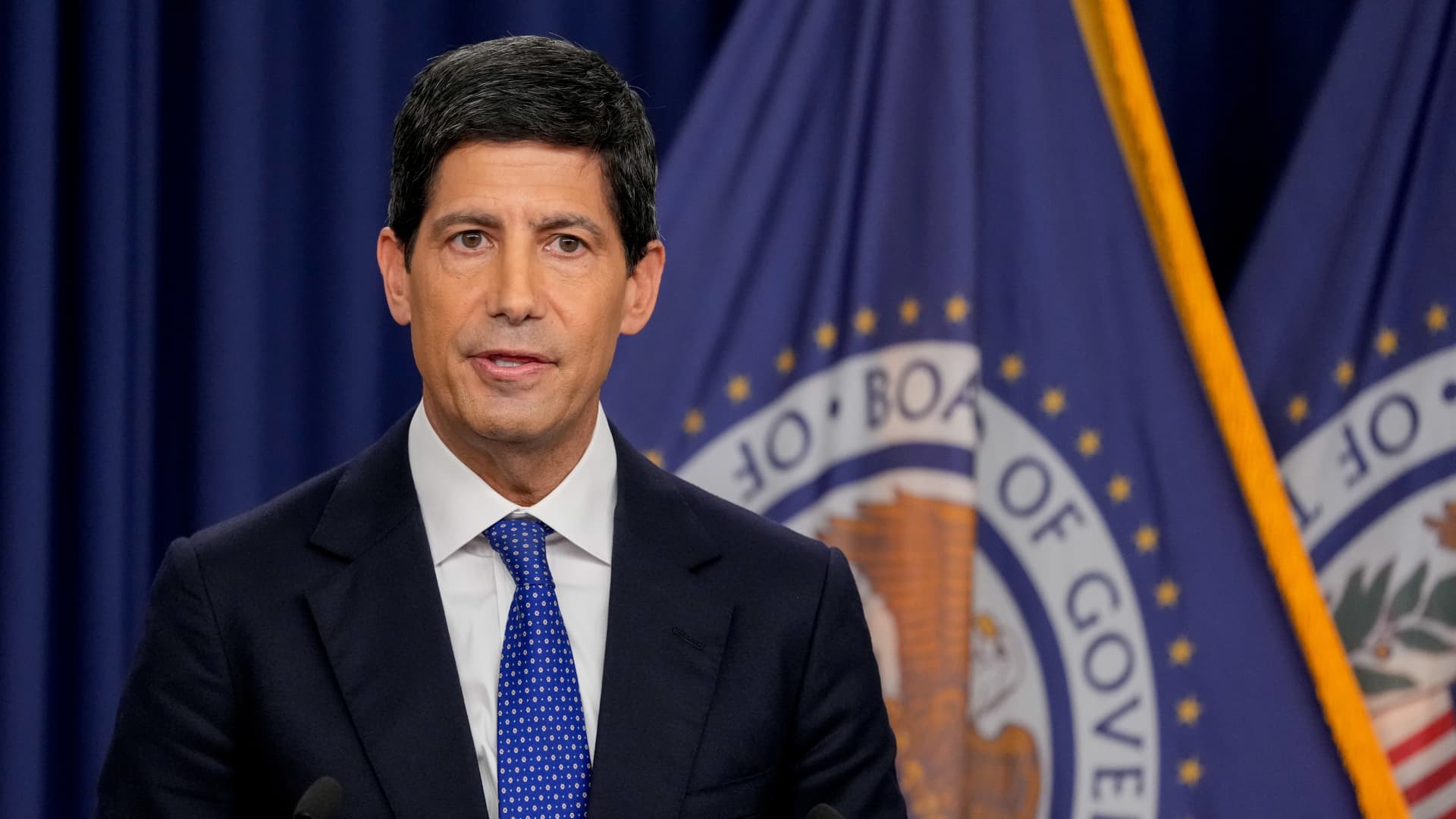
The Federal Reserve’s interest rate decision Wednesday likely will be short on suspense, with markets expecting the central bank to stay on hold even with inflation tracking well above target.
Markets are pricing in less than a 10% chance that the rate-setting Federal Open Market Committee follows up its quarter-percentage-point hike in September with another increase, according to the CME Group’s FedWatch tool.
Assuming that sentiment is correct, it will leave the Fed’s benchmark interest rate in a range between 3.75% and 4% — and shift investor attention to Fed Chairman Kevin Warsh and whatever clues he chooses to provide in his post-meeting news conference.
Traders expect the Fed to follow up the October skip with a hike at its next meeting in December.
With no updates to the Fed’s “dot plot” of rate forecasts or the Summary of Economic Projections on tap for this meeting, there will be less detail about where officials see current conditions and the future path of monetary policy.
Some observers do think there could be dissents from the decision to hold. Regional Presidents Beth Hammack of Cleveland and Lorie Logan of Dallas are potential no votes, as is Neel Kashkari of Minneapolis. Each chose to vote against a hold in July.
Business
Amazon relaxes push for AI use as Anthropic reveals shocking stats

An Amazon memo published Tuesday encouraged its software engineers to stop “tokenmaxxing” and start being more judicious about how they are using AI to accomplish tasks this week.
The memo, circulated within Amazon last month but made public on Tuesday, argued that AI token usage and code generation are “deeply flawed” metrics for measuring productivity.
“We believe that it is best to measure, and be measured by, long-term outcomes,” the company wrote.
“We’re just seeing the beginning of AI’s effect on software engineering,” the company wrote. “While we have a vision for what the future looks like, there’s a lot that’s still emerging. We are certain that whatever future best practices are, AI will be at the center of software engineering practice.”
Major companies have struggled to square the massive cost of AI usage while the benefits of using the technology are often hard to measure at a large scale.
Artificial intelligence giant Anthropic’s IPO filing is drawing scrutiny over what it leaves out about the potential impact of AI on American workers, despite the company’s repeated warnings that the technology could disrupt white-collar employment.
Axios senior AI reporter Madison Mills pointed out Tuesday that Anthropic’s filing with the Securities and Exchange Commission discusses the reputational and regulatory risks associated with concerns about AI replacing workers but does not explicitly address whether widespread job losses could hurt its own business.
“For all the warnings about AI replacing knowledge workers, Anthropic’s IPO filing barely addresses job displacement, and says nothing about what mass unemployment could mean for its own business,” Mills wrote on X.
Mills noted that the word “jobs” appears just five times in the filing, with three references focused on how public concerns about AI’s impact on employment could damage Anthropic’s reputation, invite regulation or slow adoption of its technology.
The company estimates that knowledge work represents more than $40 trillion in global economic value, positioning AI as a tool to boost productivity and economic growth rather than projecting how widespread adoption could affect employment.
Fox News’ Stephen Sorace contributed to this report.
The apparent omission is notable given Anthropic’s own research into workplace disruption. In a report published earlier this month, the company found that its share of junior technical hires had declined as AI agents increasingly took over coding and other tasks.
Anthropic is expanding its agreement with the federal government’s General Services Administration, granting federal users a 40% discount on many of its services.
The discount applies to Claude Enterprise, Claude for Government, the Claude API, and “every product surface, including when agencies buy from us directly today and through cloud providers in the coming months.”
The discount also extends to state, local, tribal and territorial governments. Anthropic says.
“We are also launching a dedicated program to help agencies implement and make the most of their Claude use. These programs are commonly leveraged by our private sector customers and we’re looking forward to bringing those best practices to our public sector partners in the coming weeks,” Anthropic wrote.
“Approximately 500 US federal, state, and local government organizations now use Claude. Weekly Claude for Government active users are up about eightfold since February, and usage across federal civilian agencies has grown about 20-fold in a year. Those organizations run some of the most important systems in the country, usually on tight budgets and with long procurement cycles. This agreement is built to support that work, so they can apply Claude to hard problems without a large upfront commitment,” it added.
Anthropic released a study on Tuesday finding that a large majority of professional statistical analysts deferred to AI when crunching data and presented the AI’s judgement as their own.
The study tasked 50 professional analysts with using Claude code to scrutinize a farming cooperative and recommend whether an advisory service it was running was effective and should be expanded.
The analysts were required to make four choices between two reasonable options during the process, but Anthropic did not inform them that the Claude code they were using would be biased in favor of one of those options based on a coin flip.
“The agent was told to make the best honest case for its lean, to change its mind if the evidence demanded it, and never to mislead,” Anthropic wrote.
“Across the four analytical choices, analysts went with their agent’s lean 86% of the time. If the agent’s input made no difference, we’d expect about 50%. When analysts had already expressed their own preference before the agent weighed in, they switched away from it 60% of the time if the agent disagreed, compared to 6% if it agreed,” it continued.
“Afterward, when asked to explain their choices, 77% of analysts used the agents’ own arguments—sometimes word for word—but only 15% credited the agent as the source of those arguments. Analysts who followed the agents’ recommendations closely were about as confident in their final recommendation as the rest, and roughly as likely to call it the product of their own judgment,” Anthropic added.
Business
GE Vernova Orders Soar. Earnings Reveal That AI Power Demand Remains Red Hot.
You are now leaving Barron’s website
By clicking on the “Proceed” button below, you will be redirected to a third-party website owned and operated by Hong Kong Tiimoot Information Technology Co., Limited. (“HKT”), which is located in Hong Kong. That website operates independently from Barron’s and Barron’s does not control the website. The privacy practices of HKT are subject to its Privacy Statement, so please read it closely. We are not responsible for HKT’s privacy or other data-related practices.
Business
Inside Amazon’s Robot Warehouse: How Automation Is Changing Jobs
Amazon warehouse workers used to spend much of their days walking, pushing carts through long aisles to manually retrieve customer orders from shelves.
Today, hundreds of “Hercules” robots do this instead, carrying towering yellow storage pods filled with inventory to employee workstations.
“I’d walk like 10 miles a day on average,” said Mohammed Khan, who started as an entry-level picker 12 years ago and is now a senior manager at an Amazon warehouse in Tracy, California.
Amazon’s robots “cut down all that walking time,” he told Business Insider during a recent tour of the facility.
This site is ground zero for a wave of automation that’s beginning to wash over the industry. The warehouse and logistics sectors have been powerful sources of job growth since Amazon kicked off the e-commerce revolution 30 years ago, as Business Insider’s award-winning Warehouse Nation series revealed in 2022.
If robots automate many warehouse tasks, this powerful engine of job growth could grind to a halt, wiping out thousands of positions and countless opportunities for future workers.
Amazon says employees are being retrained to do more valuable work, such as managing and maintaining robots. Will these new jobs be enough to cover what might be lost? Or could we actually end up with more or better jobs?
Business Insider went looking for answers inside the giant facility in Tracy, a city in California’s Central Valley where suburban neighborhoods give way to open farmland.
“Autonomous to an extent”
Across 1.4 million square feet — the equivalent of 23 football fields — robots with names like Hercules, Robin, Cardinal, Pegasus, and Proteus move inventory and sort packages. But they don’t run the warehouse alone. Human workers still pick and pack orders, load trucks, and intervene when automated systems fail.
Jobs have not disappeared, but they’re changing. Machines increasingly handle work that once required employees to walk miles and lift boxes, while workers monitor and troubleshoot them. The Tracy site employs more than 3,000, up from roughly 1,000 when it opened in 2023, an Amazon spokesperson told Business Insider.
“They’re autonomous to an extent,” Khan said of his robot counterparts. “They still need a lot of help and maintenance and oversight.”
An Amazon spokesperson said rising customer demand drove the facility’s workforce growth and that robots help workers process more packages safely and efficiently rather than simply replacing them.
Amazon’s more automated, next-generation fulfillment centers are about 25% more productive and cut order-processing time by as much as 25%. And these sites support roughly 30% more skilled jobs in areas including reliability, maintenance, and engineering.
The “Quarterback” watches robots
One of the workers now doing that kind of job is Briana Brager.
She joined Amazon about two years ago as an entry-level employee after spending years caring for her family. She had no prior experience in a traditional workplace.
Today, she’s a process assistant who helps oversee the warehouse’s robotic systems. When a chute jams or a robot stops working, she coordinates the response to keep packages moving.
“The robots do a lot, but we still have to maintain them,” she said.
Brager began as a picker before moving into a specialized role supporting robotic-floor operations. She got two weeks of intensive training, followed by additional job shadowing, to learn how to work safely around the equipment. Her current job is less physically demanding than her previous one, she said.
Her role is informally known as the “quarterback” position. She monitors fleets of robots and dispatches employees when a machine needs intervention.
“We call the shots,” Brager said.
Meet Robin
At the Tracy warehouse, humans and robots move orders together from storage to the loading dock. Employees stow individual items in fabric inventory pods, which Hercules robots carry to pick stations. Workers retrieve the items, then pack and label them.
Robin, a large robotic arm, picks finished packages off a conveyor and places them on small Pegasus mobile robots. Pegasus carries the packages to staging areas alongside other orders headed to the same destination. Cardinal then loads the sorted orders into carts, and Proteus ferries the carts toward outbound trucks.
Khan, the warehouse manager, said workers performed Robin’s task manually until a few years ago. They handled packages one at a time, checked them for damage, scanned them, and fed them into the sorting system. He estimated that one Robin can perform roughly the work of two to seven people doing that process manually.
Amazon said that when it introduces systems such as Robin, employees take on other work at the site, including operating robots, clearing jams, monitoring the robotic floor and quality control, and maintenance engineering.
Robots move the carts, too
Proteus offers a clear example of how these new warehouse jobs are taking shape. Amazon brought the robots to Tracy last year.
Unlike Hercules, which operates in fenced-off areas, Proteus can move through spaces shared with people. There are roughly 200 of the robots at the Tracy facility, Amazon said.
Before Proteus arrived, workers manually pushed carts filled with packages to the loading dock. Now the robots pick up full carts, carry them to staging areas near the dock, and retrieve empty carts for the return trip.
Some employees who once moved those carts now work as “ground-floor monitors,” Amazon said. Instead of spending their shifts moving packages, they respond when a Proteus reports a fault. If the problem is simple, they can reset the robot; otherwise, human maintenance staff take over.
Some workers trained in these jobs have gone on to Amazon’s mechatronics apprenticeship program, which can lead to more technical maintenance work.
When automation hits the “jackpot”
For all the robots moving through the Tracy warehouse, people remain essential when automation breaks down.
Amazon calls one such destination the “jackpot.” When an item loses its routing information while moving through the facility, the automated system sends it to this area, which works a bit like a lost-and-found for packages.
Here, a human worker must determine where the wayward package belongs and return it to the correct flow. “It will require manual intervention,” an Amazon representative said.
Other situations require human judgment, too. Products can fall from storage pods and inventory can be damaged or mislabeled. Packing individual products into boxes and loading them onto delivery vehicles are tasks that also remain heavily dependent on people.
This helps explain why even a highly automated Amazon warehouse still employs thousands of workers. The company said it needs people for new packing stations as well as roles across the facility that keep operations running safely and efficiently.
Current and future Tetris
By the time packages get to the loading dock at the Tracy facility, the robots are gone. At least for now.
A person loads each trailer. Amazon uses equipment that extends into the trailer and adjusts to a worker’s height, reducing bending and back-and-forth walking. But workers still arrange the packages themselves, trying to fill the trailer to use as much of the space as possible.
“It’s a lot of Tetris,” one Amazon representative said.
Amazon is already exploring how to automate this task, though. As Business Insider previously reported, Project Tetromino aims to use AI and robotics to automate sorting and vehicle loading at delivery stations, where the work has long remained stubbornly manual.
But that vision remains a work in progress. Amazon’s machines can carry shelves, sort packages, stack boxes, and move carts around people. Workers still pack orders, load trailers, perform quality checks, handle hiccups and exceptions, and keep the machines running when they fail.
For Amazon, the immediate payoff is not necessarily a warehouse with fewer people, but one where the same workforce can accomplish more. Tracy employs roughly the same number of people as a nearby Amazon facility with fewer robots, company officials said, but the Tracy location processes more volume.
Khan compared the technology to something far less futuristic: a calculator.
The robots streamline work that once consumed employees’ time without necessarily eliminating the work itself, he said. “It’s not that the amount of work has changed,” he said. “It’s how we approach it.”
Asked whether robots could eventually replace more jobs, including his own, Khan did not try to predict the future.
“Who knows? That’s not in our purview right now,” he said. “But I would say roles are evolving, and that’s the cool aspect about it.”
Business
Trump Faces His Second Midterm as President Next Week. If The Historical Pattern Holds It Will Kick Off The Best Market Year Of His Second Term.

Voters go to the polls on Nov. 3 for President Trump’s second midterm election as president. With a week to go, prediction markets see Democrats as favored to sweep Congress. For stock investors, the more useful history covers what has typically happened after the votes are counted.
According to Opening Bell Daily, since 1950, the year after a midterm (year three of the four-year presidential cycle) has been the S&P 500’s strongest year by a wide margin. The index has averaged a 17.2% calendar-year price gain in year three. Opening Bell Daily found that year one averaged 8.4%, midterm years averaged 4.6% and year four, the election year, averaged 8.1%.
The losses in year three have also been small. The S&P 500 fell in only two pre-election years, 2011 and 2015, each by less than 1%. Opening Bell Daily names 1995 as the best year three, up 34.1%, and puts the 2023 gain at 24.2%.
How a Typical Year Three Stacks Up Against Trump’s Second Term
For Trump’s years, we used the SPDR S&P 500 ETF Trust (NYSEARCA:SPY) as a stand-in for the S&P 500, measuring calendar-year price return from one year-end close to the next. That matches the price-gain basis behind the averages above.
In 2025, his best full year of this term so far, SPY rose 16.35%. A typical year three would come in slightly ahead of that result. This year is still in progress: SPY is up 12.83% year to date as of noon Oct. 27, and two months remain. Against 2028, his final year, the comparison rests on the historical pattern alone, and the year-three average sits far higher than the year-four average.
His first term followed the script. In his first-term year three, SPY gained 28.79%, ahead of the 16.16% gain in 2020. His first midterm offers a lesson in patience: the S&P 500 fell 9.0% from Election Day to Dec. 31, 2018, yet stood 11.7% higher a year after that vote.
A Second Yardstick: The 12 Months After the Vote
A different window, starting on Election Day rather than Jan. 1, tells a similar story. Opening Bell Daily found the S&P 500 rose in the 12 months after all 19 midterm elections since 1950. The average gain is at 15.1% and the median at 14.5%. Opening Bell Daily lists the best stretch at 33.2% after 1954 and the worst at 1.1% after 1986.
Truist Financial (NYSE:TFC | TFC Price Prediction) chief strategist Keith Lerner, in research cited by Yahoo Finance, found every midterm year since 1946 was followed by a positive one-year return averaging 14.4%, with the best at 34% in 1954, matching OBD. The near term has tended positive: Opening Bell Daily reports the fourth quarter of midterm years has averaged a 6.6% gain, finishing higher in 16 of 19 cases.
Why 2027 Could Break the Pattern
Nineteen midterms make a small sample, and the outcomes vary widely. Opening Bell Daily notes that only 11 of 19 midterm years since 1950 finished higher. They also found midterm years averaged a 17.5% peak-to-trough drop, compared with 11.2% to 13.3% in other years. This year’s deepest decline through Oct. 16 was 9.1%.
Morgan Stanley (NYSE:MS) strategists said, “The type of majority matters more than which party wins from an equity market perspective.” The background also looks tougher than average. The 10-year Treasury yield stood at 5.00% on Oct. 23, and University of Michigan consumer sentiment fell to 48.1 in September. The VIX closed at 18.39 on Oct. 26, within its normal range. Stocks have also already posted double-digit gains this year.
What Ordinary Investors Can Take From the Cycle
The presidential cycle is an average of past outcomes, and it describes correlation rather than cause. Earnings, rates and valuations drive returns, with elections and presidents playing a smaller role. If the pattern holds, 2027 would be the best market year of Trump’s second term. If it fails, investors who rearranged portfolios around one election would carry the cost.
The sounder approach is a long-term plan that can absorb a rough patch around the vote. In the coming weeks, keep an eye on the Nov. 3 results, the size and shape of any new majority, and whether the 10-year yield holds near 5%.


Fed meeting today: Live updates
The Federal Reserve’s interest rate decision Wednesday likely will be short on suspense, with markets expecting the central bank to...


Amazon relaxes push for AI use as Anthropic reveals shocking stats
An Amazon memo published Tuesday encouraged its software engineers to stop “tokenmaxxing” and start being more judicious about how they...


Film buffs love it. Trump and Tom Hanks hosted it. Can TCM survive a Hollywood mega-merger?
I have made many attempts to lessen the existential disaster we call Tuesday – tacos, trivia – but lately only...


How to stop a ‘what if’ anxiety spiral before it takes over
You may know the spiral well: It starts off as a single worry, such as how tonight’s date will go,...


Who left ‘Dancing With the Stars’ last night? Two celebrities sent home in double elimination.
Season 35 of Dancing With the Stars is heating up — and the competition is narrowing as more celebrities are...
GE Vernova Orders Soar. Earnings Reveal That AI Power Demand Remains Red Hot.
You are now leaving Barron’s website By clicking on the “Proceed” button below, you will be redirected to a third-party...


Touchscreen MacBook Pro to Debut Today With These 5 Features
Some reports have suggested the new high-end MacBook Pro models that Apple is expected to announce today might not be...
Inside Amazon’s Robot Warehouse: How Automation Is Changing Jobs
Amazon warehouse workers used to spend much of their days walking, pushing carts through long aisles to manually retrieve customer...


Trump Faces His Second Midterm as President Next Week. If The Historical Pattern Holds It Will Kick Off The Best Market Year Of His Second Term.
Voters go to the polls on Nov. 3 for President Trump’s second midterm election as president. With a week to...


Dozens killed in high-speed train collision in central Spain
At least 30 people were killed when two high-speed trains collided in Spain on Wednesday, the second deadly accident in...
-
 Business1 week ago
‘Black Monday’ fears intensify as prediction markets shrug off 2026 crash
-
Business2 weeks ago
Why BlackRock is suddenly more bearish on stocks
-
Business2 weeks ago
AI Agent Company Decagon Held Early M&A Talks With ServiceNow, Others
-

 Business2 weeks ago
Dow Jones Futures: Stock Market Holds Up As Meta, AMD Lead Buys; ASML, CPI Inflation Due
-

 Business2 weeks ago
CPI inflation report September 2026
-

 HealthNews2 weeks ago
Carefree panty liners face lawsuit over dangerous carcinogenic claim
-
 Food2 weeks ago
Wall Street Sees Inflation Easing Even With Oil Above $90
-

 Business2 weeks ago
Endeavor Health, Rush University System for Health to merge