
Tech
Did Elizabeth Holmes and Billy Evans get paid for their documentary?
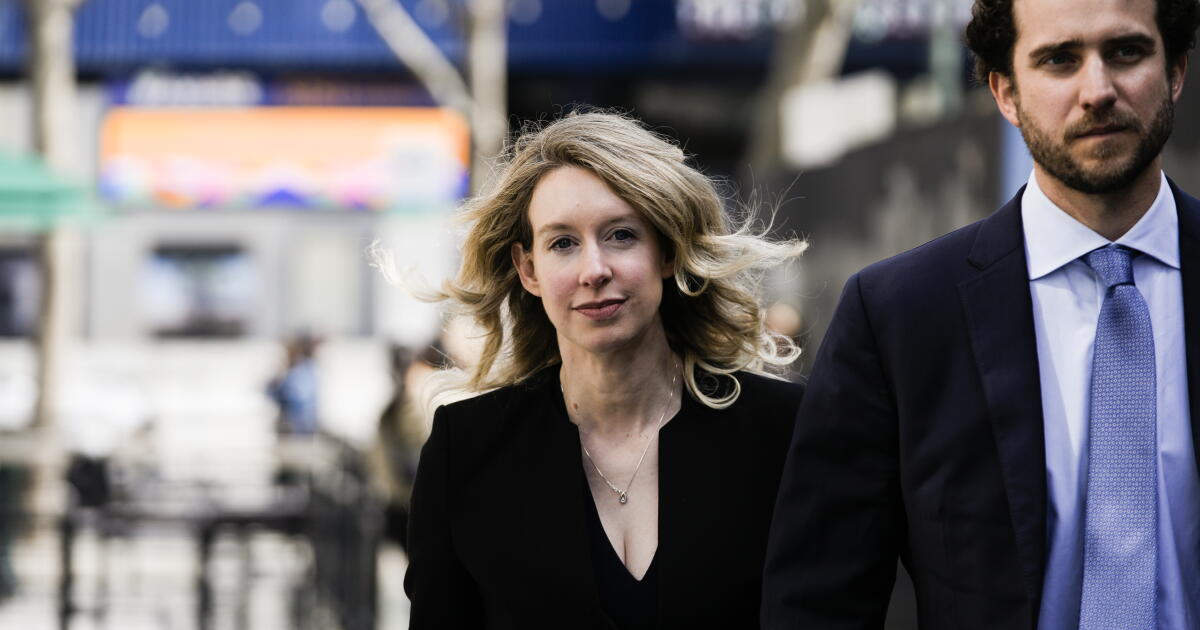
Elizabeth Holmes was once celebrated as the world’s youngest self-made female billionaire, with an estimated fortune of $4.5 billion. Today, the disgraced Theranos founder is serving a federal prison sentence for defrauding investors and owes hundreds of millions of dollars in restitution.
Suffice it to say, she has a complicated relationship with money.
That tension runs through “You Can See Everything,” Nathan Fielder and Lance Oppenheim’s hit documentary about Holmes and her longtime partner, Billy Evans, an heir to a wealthy San Diego hotel family.
In the nearly three-hour, wildly unpredictable film, a reenactment staged by Fielder depicts Evans pushing for a share of the documentary’s profits, sparking a dispute with the filmmakers over whether paying their subjects would compromise the project’s integrity. Holmes, meanwhile, maintains that money has never been her primary motivation. As Fielder probes the couple’s finances, he struggles to determine how much Holmes knows about Evans’ dealings — and where their financial interests begin and end.
Here’s what “You Can See Everything” reveals about Holmes and Evans’ finances, and what it leaves unanswered. Warning: Major spoilers ahead.
Did Holmes and Evans get paid to participate in the documentary?
No. But for a time, compensation was on the table.
The film was financed by A24, which gave Fielder and Oppenheim unusual freedom to pursue the project without any deadline or obligation to turn what they captured into a finished film. As Fielder recalled during a Q&A following the film’s secret premiere at the Telluride Film Festival in September, the studio told them that if nothing came of it, “you can just throw everything away.”
In one of the film’s pivotal sequences, Fielder stages a reenactment, based on his recollections, of a meeting with Evans, Holmes, Oppenheim and two A24 executives. Amanda Seyfried, who won an Emmy for portraying Holmes in Hulu’s “The Dropout,” plays her again, while Christopher Abbott takes on the role of Evans. After Holmes leaves to check on the couple’s children, Evans raises the question of compensation.
“I do know that there is potential for this movie to also make a lot of money,” Evans says. “And I feel strongly that if this movie were to make money, that we should be entitled to some of it.”
Fielder objects, arguing that payment could cast doubt on the couple’s motives and suggest they had influence over the finished film. Evans insists that compensation is nonnegotiable.
According to Fielder, A24 ultimately agreed to a profit-sharing arrangement, though the documentary doesn’t disclose its terms.
But shortly before entering prison, Holmes tells Fielder on camera, “Obviously I’m not making any money or having any economic interest in this whatsoever.” Fielder is left wondering whether she’s genuinely unaware of the deal Evans negotiated or merely pretending not to know.
The real Evans later acknowledges withholding some details from Holmes, explaining that she had enough on her mind.
In the end, a title card reveals that Evans decided to forgo compensation.
Is it unusual for documentary subjects to get paid?
Generally, yes — at least in documentaries that follow traditional journalistic standards.
Paying subjects can create conflicts of interest, raising questions about their motives and credibility. Those concerns are particularly acute with someone like Holmes, who was convicted of defrauding investors through an elaborate web of deception.
“The optics are terrible,” Fielder warns Evans.
Evans counters that documentary subjects have been paid before, citing reports of a lucrative Netflix deal involving Prince Harry and Meghan Markle. Oppenheim dismisses the comparison, saying their series isn’t a conventional documentary.
The distinction isn’t always clear-cut. In 2019, competing documentaries about the disastrous Fyre Festival took different approaches to paying its disgraced organizer, Billy McFarland. The filmmakers behind Hulu’s “Fyre Fraud” acknowledged paying him for footage and other rights. But Chris Smith, director of Netflix’s “Fyre,” refused McFarland’s demand for payment, arguing that it would be unethical for him to profit after defrauding so many people.
Fielder says he considered abandoning the project rather than accepting Evans’ demands. Instead, he decided the negotiations might reveal something about how Holmes and Evans operate.
As Fielder later confides to Seyfried, “Either this is fully sincere and she actually has no clue about the deal Billy made, or she honestly might be the most manipulative person that’s ever lived.”
How much money does Holmes owe?
A lot.
In 2023, a federal judge ordered Holmes and former Theranos President Ramesh “Sunny” Balwani to pay more than $452 million in restitution to investors and companies defrauded by Theranos. The two are jointly responsible for the judgment, meaning the same losses cannot be collected twice. A federal appeals court upheld the order in 2025.
Holmes has maintained that she has little money left. In a court appearance shown in the documentary, she insists, “I don’t have any money,” explaining she is deeply in debt from legal fees associated with her criminal case.
During Fielder’s prison visit, as reenacted in the film, she tells him, “I don’t have the option to care about money. I owe hundreds of millions of dollars of restitution. Every dollar I make, they take from me.”
Would any profits from the documentary have gone toward Holmes’ restitution?
Not necessarily.
Although Holmes and Evans have two children together and refer to each other as husband and wife, Holmes told People in 2025 that they were not legally married. Evans isn’t personally responsible for her restitution debt simply because they’re a couple.
The government can seek payment from assets belonging to Holmes, but the documentary doesn’t disclose who would have received money under the proposed profit-sharing deal or whether Holmes would have had any financial interest in it. So it’s unclear whether any proceeds could have gone toward her restitution.
The proposed profit-sharing arrangement could have been lucrative. “You Can See Everything” grossed $15.6 million in its opening weekend and more than $20 million in its first five days. Those figures represent ticket sales, not profits, but illustrate the potential value of such an arrangement. And with the film still expanding into more theaters and generating strong buzz, its box-office haul is poised to grow further.
How are Holmes and Evans supporting themselves?
The documentary doesn’t fully answer that question either.
Before Holmes entered prison, the couple lived with their two children — son William, now 5, and daughter Invicta, 3 — in a luxurious rented home near the beach in Del Mar, north of San Diego. Evans comes from a wealthy family whose hotel business includes the Bahia Resort Hotel, the Catamaran Resort Hotel and Spa and the Lodge at Torrey Pines. But in an Oct. 1 statement, Evans Hotels said he is neither an employee nor a shareholder in the company.
In the film, Fielder asks Evans whether Holmes might have been attracted to his family’s money. Evans grows visibly uncomfortable and shuts down the conversation when Fielder presses him about the extent of the family’s wealth.
Evans also has a biotech start-up, Haemanthus, which is developing laser-based technology to analyze biological samples, an undertaking with echoes of Holmes’ failed blood-testing company. According to Wired, the company has reported raising as much as $20 million in funding but has yet to release a product.
How much Evans personally earns from the venture — or whether his family helps support the couple — remains unclear.
In a later scene, Seyfried asks Evans who’s bringing in money while Holmes is in prison. He says she earns 30 cents an hour at the federal prison in Texas where she’s serving her sentence.
And what about his own income?
Tech
Global stock markets rise as investors continue to bet on AI
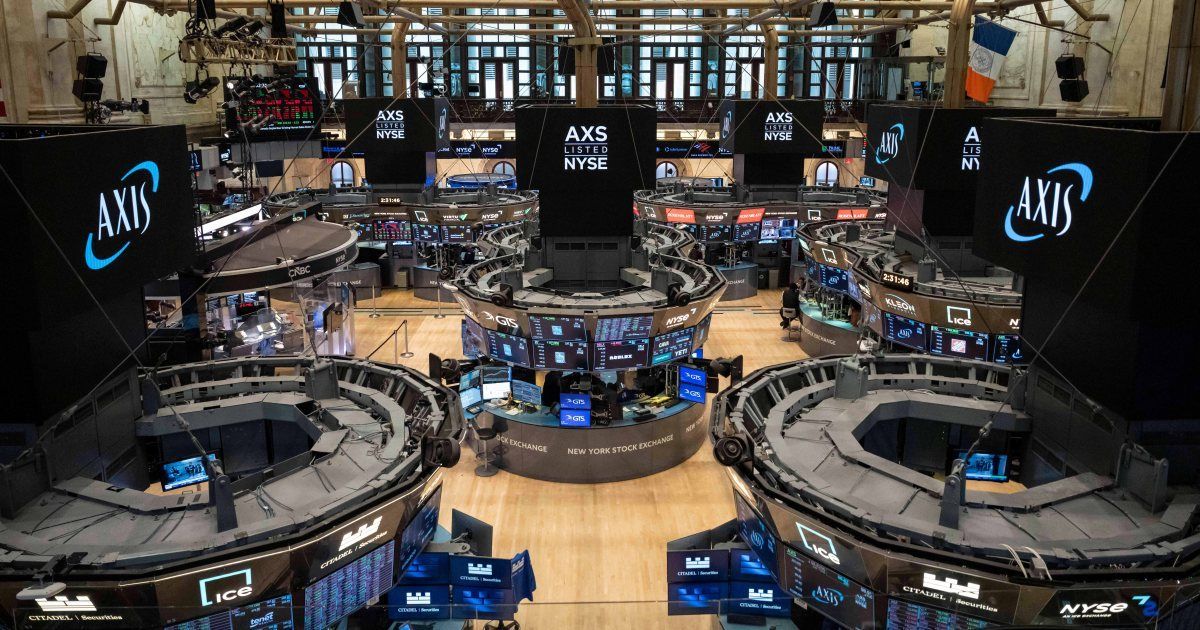
Global stock markets have climbed as investors continue to bet on bright prospects for the tech giants driving the AI boom.
In the United States, all three major stock indexes rose on Tuesday, led by the tech-heavy Nasdaq Composite, which gained 1.18 percent.
Recommended Stories
list of 4 items
list 1 of 4A bad day for Ben-Gvir as he addresses his supporters
list 2 of 4President Lula calls Bolsonaro’s Brazil exit ‘shameful’
list 3 of 4Gaza’s women filmmakers turn pain into cinema as new academy launches
list 4 of 4‘This is America’: US envoy scolds Cuban diplomat at UN
end of list
The benchmark S&P 500 rose 0.6 percent, while the narrower Dow Jones Industrial Average edged up 0.03 percent.
Five of the “Magnificent Seven” tech stocks rose, led by Tesla, up 4.04 percent.
Amazon gained 1.61 percent, while Apple and Alphabet gained 0.93 percent and 0.9 percent, respectively.
Nvidia, the world’s most valuable public company, rose almost 1 percent after announcing a $3bn investment in Meta’s equity offering.
Meta fell 1.64 percent, while Microsoft fell 0.24 percent.
Other big movers in tech included CoreWeave, Western Digital and Advanced Micro Devices, which gained 7.94 percent, 6.95 percent and 5.45 percent, respectively.
Asia Pacific markets rally
Asian stock markets followed Wall Street’s gains on Wednesday.
South Korea’s KOSPI led the pack, with the benchmark index closing up 6.63 percent.
The surge came as South Korea’s SK Hynix, one of the world’s top three memory chip makers, announced blockbuster third-quarter results, with operating profit soaring about 630 percent year-on-year to 83.33 trillion won ($62.4bn).
SK Hynix’s South Korea-listed shares soared 10.89 percent following the results.
In Japan, the benchmark Nikkei 225 ended the day up 1.08 percent, while the TAIEX in Taiwan climbed 2.04 percent.
In Hong Kong, the Hang Seng Index was up 0.33 percent shortly before market closing.
“A rally in a host of AI-related stocks including neocloud group CoreWeave, data storage specialist Western Digital and IT solutions provider Super Micro Computing implies that investors aren’t over the AI craze just yet,” Dan Coatsworth, head of markets at AJ Bell in London, told Al Jazeera.
“These types of stocks have become a litmus test for the mood of the market. They typically fall when investors are worried that the AI story might be running out of steam, and they rise when animal spirits are running high around the technological revolution,” Coatsworth said.
“The big unknown is whether this is the start of a new AI stock rally, or just a relief bounce after a period where investors were starting to question how long positive momentum could be sustained,” he added.
Investors are eagerly anticipating upcoming earnings reports from chief tech players as they try to gauge whether their huge investments in AI will pay dividends.
Microsoft and Alphabet report their latest results on Wednesday, followed by Amazon on Thursday and Apple on Monday.
On Monday, AI giant Anthropic filed paperwork for its hotly anticipated IPO, reporting a net loss of $80.7bn in the first half of 2026 on $16.3bn in revenue.
Tech firms have poured hundreds of billions of dollars each into AI infrastructure, prompting debate over whether a speculative market bubble could be forming similar to the one that preceded the 2000 dot-com crash.
Global AI investment is forecast to hit $2.7 trillion in 2026 and $3.6 trillion in 2027, according to Gartner, a technology insights company.
Oil prices, which have been elevated since the start of the US-Israel war on Iran, rose nearly 2 percent percent amid the ongoing conflict in the Middle East, including hostilities between Saudi Arabia and Yemen’s Iran-aligned Houthis.
Futures for Brent crude, the global benchmark, topped $116 a barrel, up more than 60 percent from before the war began.
Tech
DeepMind unveils Genie 4 world model promising more realistic physics and humans

Last year, Google DeepMind sent gaming stocks tumbling with the reveal of its Genie 3 world model. Since then, world models have become a major focus of AI labs around the world, but Google isn’t resting on its laurels. Researchers have been hard at work on an updated model that improves on Genie 3 in almost every way. And if you pay Google enough money, you might actually get to use Genie 4 before too long.
It’s easy to look at the output of Genie 4 and see a video game, which is why Genie 3 caused so much consternation in the gaming industry. DeepMind doesn’t think about it that way, though. According to Google, world models are a key element in the march toward artificial general intelligence (AGI). A world model creates a virtual world, but it doesn’t require pre-rendering environments or programming interactive elements. You simply tell the model what you want, and it generates the experience frame by frame in real time as you explore it.
DeepMind says this technology could create infinite training environments for physical robots or unlock new avenues of rapid prototyping for creative fields. Of course, that requires the model to accurately simulate what you want. Genie 4 has several improvements that make its simulations more useful, and that’s thanks in part to Google’s updated Gemini models.
When you prompt a world into existence in Genie 4, it leverages Gemini 3.8 Flash as a guiding agent to break down goals and evaluate each output frame. This helps keep the simulation on track, letting you move through varying environments without losing the original context. However, DeepMind notes that Genie 4 worlds still only remain consistent for a couple of minutes before they forget how things started.
Like Genie 3, the new version supports changing the parameters midstream. You can change the weather, add elements, or move the camera, and Gemini will help steer the simulation with each update. This is similar to the way reasoning models generate additional internal prompts to zero in on the right output tokens.
The physics in AI-generated video can sometimes look a bit unnatural, but DeepMind says Genie 4 has reached a new level of realism. Genie 4 can apparently do a better job with elements like aerodynamics and collisions, which makes the simulations more useful and visually appealing. People appearing in these simulations should also look less uncanny, with more natural movement and responses to the changing environment.
Genie 4 is also the first DeepMind world model with native audio. Videos will have ambient background sounds, and you can specify audio elements in your prompt. The biggest leap, if it works, is the addition of human speech. DeepMind promises that Genie 4 will be able to create interactive dialog that adapts as you change the simulation. Realistic speech in standard AI video was a major shift in realism, and now a similar revolution may be coming to Google’s world models.
Your very own world
DeepMind is careful to point out that world models are still an active area of research—Genie 3 never expanded beyond the very limited Project Genie web experience. However, the team has been working with a small group of trusted testers to build toward a wider release for Genie 4. Access will start expanding soon, but there’s no specific timeline yet. It won’t be cheap, though.
Google plans to roll out Genie 4 for developers via the Gemini API and AI Studio, but pricing isn’t yet available. Consumers will be able to get access, but it will roll out in phases with Google’s most expensive AI Ultra plans, which start at $100 per month. Google may expand access to AI Pro and AI Plus plans eventually. This will still be handled through Project Genie, which will limit how much you can do with Genie. There’s a waitlist for users who are interested in getting early access.
Tech
Photos show Ukraine’s Starlink was throttled during Russian strike that killed 5 in park

Kharkiv, Ukraine – Yulia Spichak, a 34 year-old makeup artist in Ukraine’s eastern Kharkiv region, dropped her son off at an English-language lesson on Oct. 19 and sat down in a nearby park to send a selfie to her sister, Alina. Seconds later, a Russian drone slammed into the park, killing Spichak and four others, including a 1-year-old girl.
The attack came six days after Elon Musk’s SpaceX throttled Ukraine’s access to Starlink, which Ukraine has been using to coordinate its defenses against Russian attacks and for some of its offensive operations. In a post on X, Musk accused Ukraine of violating Starlink’s terms of service by also using it for attacks on Russia.
Ukrainian officials told CBS News that the restrictions imposed without advance notice affected ground-based air defense radars and drone interceptors, hindering the military’s ability to stop incoming Russian strikes.
“It’s an essential part of the air defense infrastructure,” Vadym Ivchenko, a Ukrainian member of parliament on the National Security, Defense and Intelligence Committee, told CBS News Monday. “I couldn’t say that all other air defenses stopped working, no. But this part is quite essential for the defense of civilians in Ukraine.”
CBS News obtained photographs that show Ukraine’s ground-based air defense radars’ Starlink connectivity dropping to .1 megabytes per second on Oct. 19, the day of the Kharkiv drone attack. That would not be enough to load a webpage, let alone power air defense radars, according to a source familiar with the technology who requested anonymity because he was not permitted to comment on the matter.
On Saturday, Ukrainian officials confirmed that Starlink’s access had been restored across the country, with Musk admitting that SpaceX had throttled connectivity.
“Using Starlink, a civilian commercial service, for offensive drone strikes to kill people has never been allowed, nor should it be,” Musk wrote on X. “Ukraine military violated Starlink terms of service and used it for offensive drone strikes to kill people. That loophole was closed last week.”
Ukrainian officials have also complained of connectivity problems with Starshield, SpaceX’s military-grade network, which runs on the same constellation of satellites as Starlink and serves as the backbone of Ukraine’s drone operations. But Musk said the U.S. government controlled whatever changes happened with Starshield. SpaceX did not respond to a request for comment, and the White House referred CBS News to President Trump’s comments last week, during which he told reporters that he did not order the Starlink restrictions in Ukraine.
Alina Spichak, the sister of Yulia, the make-up artist who died in the strike in Kharkiv, revisited the park where she died with CBS News on Sunday. She said the Geran-4 Russian jet-powered drone that killed her sister arrived so quickly the victims didn’t hear it coming.
“I understand that everyone has their own lives and nobody wants to look at these horrors. But I believe that the whole world has to know what is happening in Ukraine, that there is a war here and we are being attacked,” Alina Spichak said. “I really hope that it will end soon.”
Tech
iPhone 18e Could Get Two Key Upgrades While Keeping 60Hz Display

Apple’s upcoming iPhone 18e model will retain a 60Hz display but could gain an upgraded front-facing camera, according to the leaker known as “Digital Chat Station.”
In a new post on Weibo, the leaker said that the device will feature a 6.12-inch OLED display using low-temperature polycrystalline silicon (LTPS) technology, the A20 chip, and a single 48-megapixel rear camera. They were less definitive about the front-facing camera, saying it could be upgraded to 24 megapixels.
The specifications suggest that the iPhone 18e will offer no major display or rear camera hardware upgrades over the previous two generations. Both the iPhone 16e and iPhone 17e feature approximately 6.1-inch OLED displays with a 60Hz refresh rate and a single 48-megapixel rear camera. The post does not detail the rear camera’s sensor or lens, so smaller hardware changes remain possible.
The A20 chip would represent a more significant upgrade. Like the A20 Pro chip in the iPhone 18 Pro, the A20 is expected to use a 2nm manufacturing process, bringing notable performance and power efficiency improvements over the iPhone 17e’s 3nm A19 chip. It would also bring the device into line with the upcoming standard iPhone 18, which is expected to use the same chip.
The front-facing camera claim is less clear. Digital Chat Station specified 24 megapixels, although it is unclear whether this refers to a new camera or is a mistaken reference to the 18-megapixel Center Stage camera introduced with the iPhone 17 lineup. A 24-megapixel camera was widely rumored before those devices launched. Either resolution would represent an upgrade over the 12-megapixel front camera used by the iPhone 16e and iPhone 17e.
Digital Chat Station previously claimed that the iPhone 18e would retain a 60Hz LTPS display. An earlier report from Korea suggested that an LTPO display capable of supporting 120Hz ProMotion could reach the entry-level iPhone with the “iPhone 19e” in 2028.
The iPhone 18e is expected to launch in spring 2027, alongside the standard iPhone 18 and iPhone Air 2.
Related Roundup: iPhone 17e
Tech
Wall Street banks, Blackstone line up $63 billion to finance Broadcom AI chips for Anthropic
Broadcom is providing “residual value support” to lenders, who are providing first lien loans or senior debt, effectively providing a significant guarantee in the financing structure.
Sign up here.
The latest deal highlights the growing role of banks and alternative asset managers in financing the infrastructure needed to support rising demand for AI computing capacity.
Anthropic filed for a potentially record-breaking IPO on Monday, even as disclosures of steep losses and security concerns threatened to test investor appetite for the AI heavyweight.
The size of the first lien loans or senior debt is about $43.5 billion, according to two sources familiar with the matter, or 69% of total financing.
Blackstone will provide the committed portion of the second-lien financing – which ranks below senior debt – while Bank of America, Citigroup and Morgan Stanley are arranging the first-lien financing, the statement said.
Chipmakers have provided guarantees in the past to absorb potential declines in the value of the assets, such as advanced chips and data infrastructure.
The release did not disclose the breakdown of the loans, while Broadcom did not respond to a request for comment.
Rising AI demand is driving massive investment in computing infrastructure as technology companies race to secure capacity for increasingly complex workloads.
Bank of America, Citi and Morgan Stanley are arranging the first-lien financing.
Deliveries are expected to begin in 2027 as part of a previously announced strategic compute capacity agreement involving Broadcom, the companies said.
Apollo and Blackstone had agreed to finance a $35 billion expansion of Anthropic’s AI computing capacity under a prior agreement with Broadcom. Broadcom’s backstop in that deal was up to $29 billion, it said in a filing.
While Moody’s described Broadcom as one of the strongest large technology companies, it warned that the risk would increase if multiple transactions were undertaken over a short period to meet the sizable funding needs of frontier AI labs.
Reporting by Aditya Soni and Prakhar Srivastava in Bengaluru and Saeed Azhar in New York; Editing by Pooja Desai and Lincoln Feast.
Our Standards: The Thomson Reuters Trust Principles., opens new tab
Prakhar Srivastava covers U.S. finance, including banks, card companies, payment firms, insurers, exchanges and asset managers. He also writes on IPOs and venture capital. Previously, he worked on Reuters’ Global Pictures Desk and holds a degree in Political Science from the University of Delhi.
Saeed Azhar is a Reuters financial journalist and part of the U.S. banking team, which covers Wall Street’s biggest banks. He focuses on Goldman Sachs and Bank of America, and also writes about regional banks. Before moving to New York in July 2022, he led the finance team in the Middle East from Dubai, and also worked in Singapore, covering Southeast Asia finance.


US cruise ship ends global voyage due to fuel costs; 200 passengers lose their homes
PHNOM PENH, Cambodia — A U.S. cruise ship on a residential world voyage suspended its operations in Cambodia due to...


Heidi Fleiss’ Showdown With Nevada Officials Erupts Over Prized Parrots
Former Hollywood madam Heidi Fleiss is fighting Nevada officials in court over her precious parrots … TMZ has learned. Heidi...
Val Chmerkovskiy back on ‘DWTS,’ Carrie Ann Inaba compliments him
After a one-week suspension from “Dancing with the Stars,” pro dancer Val Chmerkovskiy returned to the ballroom Tuesday, Oct. 27,...


Tampa Bay comes back in the 12th inning to extend the World Series, holding off Brewers’ championship dreams
The Tampa Bay Rays gave the Milwaukee Brewers a dose of their own medicine in Game 4 to avoid getting...

Global stock markets rise as investors continue to bet on AI
Global stock markets have climbed as investors continue to bet on bright prospects for the tech giants driving the AI...


Anthony Edwards Needs Knee Surgery, Could Miss Two Months
9:38 pm: Edwards will have surgery on Thursday and the club will then have a clearer timeline for his recovery,...

Jessa Duggar Says She and Husband Ben Seewald Are Expecting Baby Number 7
NEED TO KNOW Jessa Duggar Seewald is “expecting again!” The TLC star and her husband Ben Seewald appeared on Wednesday’s...


might be huge waste of money: study
Time to shelve that standing desk. New research suggests ergonomic upgrades for the office — from specialized chairs, desks and...


Who Goes Home On Halloween?
SPOILER ALERT! This post contains details from this week’s episode of Dancing with the Stars. It’s one of the buzziest...


Report: Stephanie Vaquer ‘Out Indefinitely’ – Fightful
Reported details on the absence of Stephanie Vaquer. On Saturday, Stephanie Vaquer announced that she was cleared from her ankle...
-

 HealthNews2 weeks ago
Dementia risk more than quadruples among adults with common disorder
-

 Business1 week ago
‘Black Monday’ fears intensify as prediction markets shrug off 2026 crash
-

 Business2 weeks ago
McDonald’s chicken and beverage growth faces rivals
-

 Entertainment2 weeks ago
Collin Gosselin discusses alleged abuse by mom Kate Gosselin
-
Business2 weeks ago
Why BlackRock is suddenly more bearish on stocks
-

 Business2 weeks ago
Getty Images to File for Bankruptcy, Go Private In Restructuring Deal
-

 Entertainment2 weeks ago
Netflix, Derek Cianfrance Adapting Gary Paulsen’s Book
-

 Business2 weeks ago
UnitedHealth Group (UNH) earnings Q3 2026