
PM office canada
U.S.-Canada trade talks collapse, setting new 50% tariffs in motion
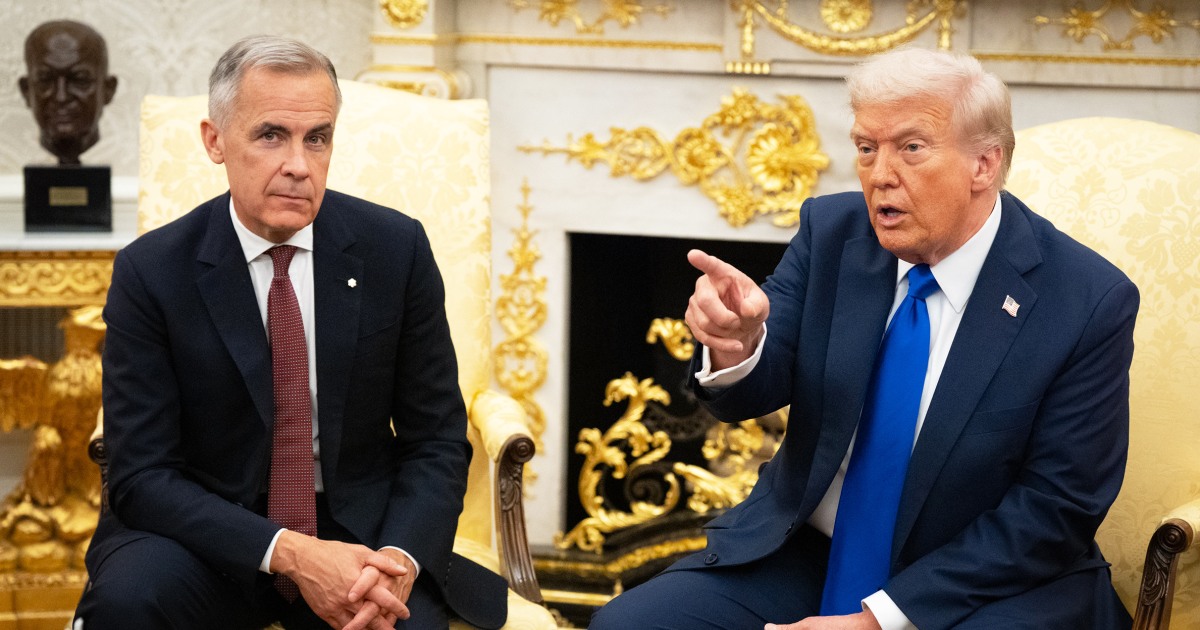
Trade talks with Canada collapsed late Friday night, setting in motion steep 50% tariffs on a wide swath of Canadian goods. The duties went into effect at the stroke of midnight.
After weeks of talks, Canadian Prime Minister Mark Carney announced that while important progress had been made, “that progress has not been enough to meet our objectives for Canadians.”
“As a result, this evening, I have decided to suspend trade negotiations with the U.S. and have directed Canada’s negotiators to return to Ottawa,” Carney said in an emailed statement minutes before the deadline.
The tariffs impact about $20 billion worth of U.S. imports from Canada, according to the U.S. Trade Representative’s office. The import taxes will hit everything from hockey sticks, to some building materials, liquors and certain kinds of clothing.
Carney says Canada will immediately retaliate against the U.S. “Canada will match those tariffs dollar for dollar to protect our workers and businesses,” he said.
The failure by American and Canadian trade negotiators to reach a deal came after nearly two weeks of furious talks. It was also a dramatic reversal from Tuesday, when Trump paused the tariffs for three days, writing on social media that the two sides “have a DEAL!”
Officials on both sides had seemed optimistic about a deal up until the very last moment. On Thursday, the Canadian minister responsible for U.S. trade relations met with U.S. Trade Representative Jamieson Greer for several hours.
“We’re very close, we continue to make progress and we’re going to stay here and do the work that is necessary until we get to that point,” Dominic LeBlanc told reporters as he left Greer’s office late Thursday.
Canadian negotiators met again with their U.S. counterparts on Friday and talks stretched until the final hours of the day. Officials remained at the U.S. Trade Representative’s office past 10:30pm E.T. Friday. But ultimately, the two sides were unable to reach a compromise.
In his statement, Carney said “last-minute changes in the U.S. proposed terms were unfair, uneconomic, and called into question the reliability of any deal.”
“We have recognised from the beginning that America has changed, and that we will not return to our old relationship,” Carney said. “Canada has what the world wants. And we will not allow any nation to determine our future.”
Greer said in a statement early Saturday that Canada “declined to finalize the trade deal under the terms agreed earlier this week.”
“Despite the U.S. offer to Canada to receive the best treatment of any major exporter to our market, new demands and walk backs of other commitments by Canada have upended the careful balance reached in the past days,” he said.
Greer said that a point of contention was Canada continuing to maintain its retaliation against the United States “including, among other things, flat-out prohibitions on certain American goods and services.” Those bans, introduced by Canada’s provinces on the sale of American alcohol, were introduced in 2025 in retaliation for earlier waves of Trump’s tariffs on Canada.
As talks wore on this week, the government of Carney faced some pushback from premiers of Canada’s provinces back home.
Manitoba premier Wab Kinew said the Canadian federal government should “fight” Trump.
A particular sticking point was a request from Carney to the provincial premiers to lift their bans on American alcohol sales.
Quebec premier Christine Fréchette said Thursday that she was still “analyzing” the request, CBC reported. Other premiers, such as Ontario’s Doug Ford — who leads the country’s most populous region — did not make any public remarks on Thursday or earlier Friday.
However, Ford wrote on X after Carney’s announcement, “The prime minister has my full support for a strong response—tariff for tariff, dollar for dollar.” Ford said Canada “needs to stand together more united than ever before.”
The prime minister had previously said Trump’s threatened tariffs would amount to a “direct violation” of the United States-Mexico-Canada Agreement, which Trump had negotiated and signed during his first term.
The U.S. Chamber of Commerce warned in a statement this week that “higher tariffs would damage both economies, drive up costs for U.S. families, further disrupt critical supply chains, and risk the 13 million American jobs that depend on” the North American trade pact.
After Carney’s announcement on Friday, the Canadian Chamber of Commerce, seemed to agree, calling it “a body blow to North American competitiveness in this self-defeating trade saga.”
“Americans will see their costs go up, and Canadians will see customers, investment and small businesses disappear,” said Candace Laing, president & CEO of the Canadian Chamber of Commerce.
The new tariffs were imposed under presidential authority granted by Section 338 of the Tariff Act of 1930, which has never been deployed before.
The law allows the White House to implement duties of up to 50% on any foreign trade partner that “discriminates” against U.S. commerce.
Nonetheless, the new Canada tariffs are all but certain to be challenged in court.
Canadian officials had been hoping to convince the White House to drop the Section 338 tariffs entirely. In addition to that goal, they had also been looking for a lower tariff rate on industrial products such as steel and aluminum that were imposed under Section 232 of the Trade Act, CBC News and Bloomberg have reported.
On Wednesday, Bloomberg reported that American negotiators had agreed to lower the current tariffs on cars and metals from 25% to 15%.
In his statement early Saturday, Greer said that the U.S. had offered “significant tariff reductions on steel, aluminum, autos, and lumber,” without providing specifics. “This is a missed opportunity for Canada to partner with the United States,” he said.
Spokespeople for Canadian officials involved in the talks have repeatedly declined to provide additional details about the negotiations to NBC News.
But Greer previously said that the new 50% duties on Canada were effectively payback for Ottawa’s retaliation against prior tranches of Trump’s tariffs.
“The policy basis for those duties are related to measures that Canada took against the United States,” Greer said last week. “So I’ve got two countries in the world that have retaliated against the United States for trade measures: the People’s Republic of China and Canada. That’s not the kind of company you really want to be running in.”
Last year, Trump briefly responded to China’s retaliation by raising tariffs into the triple digits. Talks between Treasury Secretary Scott Bessent and China’s vice premier over months eventually diffused the tensions and tariffs were lowered.
PM office canada
William Watson: Carney not signing trade deal was good, war talk wasn’t
Content
Winston Churchill was a master of both war and peace. Churchill, who was well-versed in both, never engaged Donald Trump, the notoriously bad-faith negotiator, with a jaw-jaw.
This content is reserved for subscribers
Get the latest news from around the world, including local and national stories.
Conrad Black and Barbara Kay among others have contributed exclusive articles. Special edition NP Platformed, First Reading and virtual events.
National Post offers unlimited online access.
National Post ePaper is an electronic version of the printed edition that you can view, comment and share on.
New York Times Crossword and other daily puzzles.
Support the local media
Subscribe to our Newsletter for more articles
Get the latest news from around the world, including local and national stories.
Conrad Black and Barbara Kay among others have contributed exclusive articles. Special edition NP Platformed, First Reading and virtual events.
National Post offers unlimited online access.
National Post ePaper is an electronic version of the printed edition that you can view, comment and share on.
New York Times Crossword and other daily puzzles.
Support the local media
Register / Sign in to Unlock More Articles
Sign up or create an account to continue reading.
One account allows you to access articles across Canada.
Comment and share your opinions.
Get additional articles each month.
Subscribe to email alerts from your favorite authors.
This article is free to read. Register now to unlock it.
Sign up or create an account to continue reading.
One account allows you to access articles across Canada
Comment and share your opinions
Get additional items per month
Subscribe to email newsletters from Authors You Love
Register or Sign in
Email Address
You can also find out more about
Content
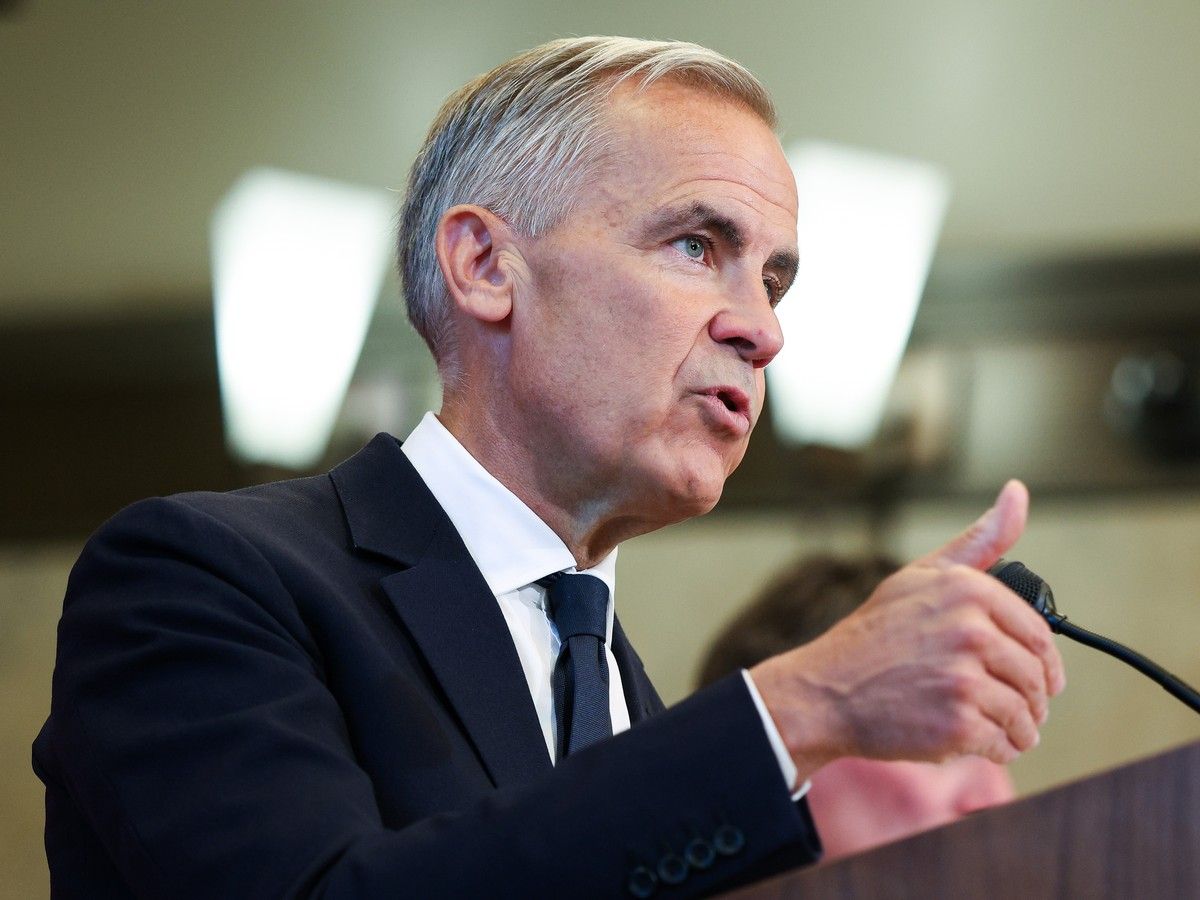
Christopher Nardi, a reporter for the National Post, asked at the conclusion of the news conference held by Prime Minister Mark Carney on Saturday if we are now engaged in a war over trade with the United States. Carney replied, “We got attacked. You’re in war when you are attacked.” Carney replied, “We were attacked.” We are therefore at war with our largest trading partner. Carney made a casual, candid comment that led to numerous news stories about his comments. It is likely to have caught the attention of the White House. It is important to take firm action. It’s good to avoid signing bad deals. Teasing a megalomaniac with a hair trigger is not ok.
Content
Video Recommended
This video could not be loaded. We are sorry.
Refresh your browser or
Click here to view more videos by our team.
William Watson: Carney’s refusal to sign a trade agreement was a good thing, but war talk is not.
This video could not be loaded. We are sorry.
Refresh your browser or
Click here to view more videos by our team.
Content
Content
It was perfect. The Prime Minister’s Opening Speech, read from a teleprompter, in a monotone that was a bit less depressing and a French that had improved a tiny bit since he took over, had been fine. At least, half of the speech was fine. First 10 minutes were devoted to the failure of negotiations, with an intensity that matched the urgency. Second 10 minutes rehashed the positive things that the federal government had done or announced since taking office in order to build Canada Strong and to make Canada more resilient and independent from the U.S. Carney was portrayed as Trump’s defiant opponent, not his whisperer.
Content
It is good to be more connected. Prime Minister Justin Trudeau praised our free trade agreement, which was negotiated with United Arab Emirates in only 47 days. (This suggests that it is not comprehensive or deep). In 2025, our exports were US$2billion. That’s just a fraction of the US$409billion of US exports we made to the U.S. To equal the U.S.’s economic power, we will need to add 200 UAEs.
Content
Content
Since Canada’s inception, there have been trade disputes with Americans. In fact, it’s been even longer. In 1866, one year prior to Confederation and the beginning of the United States, they terminated our first free trade agreement. Since then, there have been many disagreements, which can be frustrating, as well as major achievements in policy, such the Auto Pact and Canada-U.S. Free Trade and NAFTA.
Content
Continue reading
Content
No one is a purist when it comes to trade. Carney’s right, the U.S. started this trade round. We were attacked. There was no way to hide it. President Trump said repeatedly that he wanted to “reshore” the steel, aluminium and automotive industries. We clearly hold the moral high-ground in this battle.
Content
The U.S. complains that only we and China have responded to their tariff-blitzkrieg. This speaks highly of China and us, and badly of the other countries that were forced into bad agreements.
PM office canada
No deal was better than this deal. Mark Carney was right to call Donald Trump’s bluff
“America wants to tariff everybody on everything.”
Prime Minister Mark Carney said that on Saturday morning. It was an aside within a larger point, but it speaks volumes. It’s the alpha and omega of where we are, and how we got here.
It’s a short but comprehensive explanation for the breakdown of trade talks between Canada and the United States.
It also sums up what Canada has been facing since the fall of 2024, when U.S. President Donald Trump invited the previous prime minister to dine at Mar-a-Lago, and informed him that, along with meatloaf, we were on the menu.
Last week, there was a widespread fear that the Carney government would fail to secure a deal to avoid the latest volley of U.S. tariffs. But as the days passed and a deal appeared imminent, a different concern came to the fore: that Ottawa was about to sign a bad deal.
The fear was that the federal government was on the verge of locking in major concessions, in return for nothing much. And the wolf, having threatened to blow our house down unless we opened the door, would pocket our concessions – and be back in no time, demanding more.
Mr. Trump’s tactics over the past month were his latest take on an established approach. He threatened to hit Canada with 50 per cent tariffs on roughly $28-billion of Canadian exports unless Canada came to the table.
Retaliatory tariffs could be dangerous for both Canada and U.S., trade experts warn
Agree to some of my violations of the United States-Mexico-Canada Agreement, or I’ll violate it even more.
Let me punch you, or I’ll punch you even more.
The Carney government ultimately decided to call Mr. Trump’s bluff, in the hope that doing so can pave the way to a less-bad outcome.
There will be short-term pain. There may be long-term pain.
But there is no zero-pain, all-gain option on the table. Mr. Trump has never offered a return to tariff-free trade between our two countries. That’s not what he’s after.
The talks were about how much higher U.S. tariffs would go, relative to the pre-2025 status quo of near-zero tariffs, and what Canada would give and get in return.
The Trump administration has imposed trade arrangements on all trading partners that are worse than those that existed prior to 2025. Washington told countries to choose between being hit with higher tariffs, or even higher tariffs. It gave them a choice between Bad and Badder – and told them to pay a ransom if they wanted to be hit with merely Bad.
Previous U.S. administrations believed in the possibility of mutual benefits. They of course wanted America to be great, powerful and successful. They weren’t running a charity. But they believed that both sides could win if trade was free, or at least freer.
In dealing with Canada, Washington operated on the assumption that lower tariffs between two wealthy, advanced and highly integrated economies would deliver a win-win. Barriers became the exception; free trade became the rule.
The result was a series of trade agreements stretching back decades, and a relationship where nearly all goods crossed the border tariff-free.
Since the 1965 Auto Pact, our two economies have been increasingly integrated. We make things together, with the automobile sector the best-known example. There are no purely American-made or Canadian-made cars; there are North American cars. The industry is more efficient and productive, and more internationally competitive, because of free trade. It’s win-win.
That is not the Trump administration’s vision.
Mr. Trump and his crew have repeatedly said that they don’t want to import cars, steel or other manufactured goods from Canada. From everything we know of U.S. demands over the past year and a half, and the past few weeks, it’s clear that Mr. Trump’s words are not just rhetoric. These are policy goals.
But here’s the thing: negotiations weren’t taking place in a legal vacuum. The continental trade table is not a tabula rasa. We have the USMCA – a binding treaty, signed by three countries and ratified by the U.S. Congress.
As Mr. Carney put it on Saturday, “we have a deal, we have side letters… all those are being violated, day in and day out.”
The PM has repeatedly said that, even with everything Mr. Trump has done, Canada has the best trade arrangement with the U.S., with the lowest average tariffs.
That’s true. It’s also not true.
Because Washington has until now respected many provisions of the USMCA, the average tariff on Canadian exports to the U.S. is lower than those of other countries. However, the average U.S. tariff on Canadian exports is also considerably higher than under the old North American Free Trade Agreement, or the letter of the USMCA. It’s higher than before Mr. Trump returned to office.
Premiers present united front behind Carney, but divisions emerge on next steps
Calling this the world’s “best” trade access to the U.S. is a politic way to describe things. But it’s really the world’s least unfavourable U.S. trade arrangement. It’s the least bad, compared to the pre-Trump status quo.
The past month of Canada-U.S. negotiations were about how much more unfavourable of a trade relationship we could be forced to accept. The White House was pushing to see how much higher a tariff barrier Canada would agree to, relative to pre-2025, and what we’d concede to avoid even worse.
What comes next?
If you’ve been reading and watching U.S. news media this summer, you’ll have noticed that the trade war on Canada simply didn’t exist until Friday night.
Calling Mr. Trump’s bluff has pushed the matter onto the front page and the top of the news hour. This is an opportunity.
Our best path of persuasion is at the back door of the White House – through pressure brought by American businesses, American politicians and American voters.
That pressure will be induced by Canadian counter-tariffs, which should be levied in the hope of encouraging Americans to speak up, and Washington to back down.
But we have another weapon.
Mr. Trump’s occasional attempts to characterize Canadians as “nasty” doesn’t conform to Americans’ perception. We’re the country that polls have historically shown Americans have the most positive feelings toward. They will scratch their heads at this declaration of trade war.
Talk-show monologues will mock the president for picking a fight with the nicest people on earth.
Opinion: Canada didn’t chicken out. We did the right thing
The message Canada needs to send is that we still want to be that best friend, best neighbour and best trading partner. We need to get our spokespeople on U.S. airwaves once again, particularly those who can speak to swing voters open to swinging against Mr. Trump.
Get Doug Ford back on U.S. TV. And call on Manitoba Premier Wab Kinew; he will receive a friendly hearing from many Republicans.
The pitch is that Canada wants to keep the relationship, which goes back generations and includes shared sacrifice on the field of battle. Americans won’t understand why Mr. Trump is so intent on severing our partnership, and neither do we.
If you’ve lost Canada, do you have any friends left?
To have any hope of changing the behaviour of the U.S. government, we have to appeal to Americans and American business.
We also have to be prepared for the U.S. ship of state to stay the course.
PM office canada
HIV rate climbs as uncertainty rises about future of dedicated Community Action Fund
Advocates are concerned about the future funding of one of Canada’s few federal tools for prevention and treatment as the number of HIV infections continues to rise. Ottawa is trying to cut its budget by 15% and fears that the funds could be consolidated with others.
In the fiscal year 2016-17, the HIV and Hepatitis C Community Action Fund replaced the AIDS Community Action Program. In 2021 the current fund, which received an investment of $26.4 million annually, as well as the Harm Reduction Fund, that receives $7 million per year and supports HIV mitigation, held their final funding round. Successful projects will then be funded by federal funds between 2022 to 2027.
The webpage that describes the initiatives does not provide any information on whether or how they will be continued.
Michael Kwag is the executive director of the Community-Based Research Centre. He said that his organization has received funding from the federal government’s 2021 round and the Public Health Agency of Canada offers organizations the opportunity to apply for additional funding up until 2028.
Kwag’s organization conducts health research on people with different genders and sexualities. “Our concerns have grown in the past year, because the folks from PHAC are really uncommitted about the future of the funding program after March 2028,” Kwag said. Now would be the right time to start preparing project proposals for next cycle.
The Community-Based Research Centre will receive $2,2 million between 2022-2027 for an initiative to improve access and take-up of STBBI services by certain populations. It also received $2,14-million in a project that is being developed with other organisations.
Kwag, as well as Jody Jollimore (executive director of CATIE, an organization that provides information on HIV and hepatitis C amongst other topics), are concerned about the possibility of the Community Action Fund being combined with existing funds.
Both point out language from the federal budget for 2025, explaining how PHAC is going to meet its 15 percent spending reduction target as part of Prime Mark Carney (Nepean Ont. )’s plan. Comprehensive expenditure review: “PHAC’s program delivery will be streamlined by consolidating grant and contribution programs into larger fund. These new funds, which will have a smaller overall budget once the temporary funding is over, will still be able to make a greater impact by focusing on core federal priorities in public health that are at the heart of PHAC’s mandate. They will also support delivery partners who can demonstrate clear, measurable outcomes that align with their objectives and leverage increased program flexibility.
Jollimore asked about the possible change of fund. Will we have to compete against public vaccination programmes and other things? How would it look?
CATIE was awarded $4.1 million from the Community Action Fund for 2025-2026. This money allowed them to provide training to more than 11000 frontline workers, volunteers and create 233 information resources. They also delivered more than 800,000.00 print publications in support of prevention, screening and treatment programs throughout Canada.
Jollimore stated that he had also heard the staff of Health Minister Marjorie Michel (Papineau QC) use similar language in discussing the fund. Staff use similar language to that in the budget.
The language used in both the budget and the meetings I had with policy advisors of the Minister was very clear. They discussed ideas. There hasn’t been a decision. There are certainly ideas on how the Community Action Fund can be more agile and responsive to government priorities,” Jollimore stated.
The Hill Times asked Health Canada if the Community Action Fund was to be combined into other funding instruments and if funding for the fund, or harm reduction funds would be increased.
Mark Johnson, spokesperson for Health Canada in an emailed reply to the budget message of 2025, reaffirmed that “a modernization process” will be undertaken to “consolidate existing programs to broader funding sources to improve impact and efficiency.” The work of this project will include continued support to community-based organisations, in recognition of their vital role as part Canada’s response on public health.
The statement did not name any specific funds but said “decisions about funding approaches including timing and format for any possible solicitation processes have yet to be finalized.” It also stated that the Department will continue working with its partners.
Johnson, in response to a query about federal initiatives for HIV treatment and prevention, pointed out a $21 million funding envelope each year for the Canadian Institutes of Health Research’s HIV/AIDS STBBI Research Initiative. This initiative “strongly emphasizes community-based approach” and a three-year-old digital advertisement campaign encouraging visitors to a website of the government called “Your Sexual Health Matters.”
Kwag and Jollimore both said that they had not yet met Michel, but they were interested to discuss the matter directly with him.
Kwag stated that he had requested a discussion with Michel, and it has yet to be granted. However, he will meet with a policy advisor in Michel’s Office, as well as PHAC President Nancy Hamzawi, soon. He said he is also trying to have this discussion with Women and Gender Equality Minister Rechie Valdez’s (Mississauga–Streetsville, Ont.) He said he is also trying to have this discussion with Women and Gender Equality Minister Rechie Valdez’s (Mississauga–Streetsville, Ont.) office.
Between 2022 and 24 there will be a 22.8 percent increase in new HIV cases
There is uncertainty over the direction federal HIV funding will take, as PHAC’s latest report published in the last month shows that new HIV infections are continuing to increase. Canada’s Progress Toward Ending the HIV-Epidemic is a brief report that states the number of new HIV infections will increase by 22.8% from the estimated 2,050 in 2022.
This is a higher rate than that of the 2024 report which estimated new HIV infections at 1,848 in 2022, compared to 1,610 estimated for 2020.
Manitoba’s increase was so severe–325 new cases by 2025, compared to 90 in 2019, that the province declared it a health emergency in May.
Jollimore stated that the COVID-19 Pandemic was a major factor in the rise of national statistics as the public’s health priorities were shifted towards the pandemic.
During this time, many clinics closed down or were repurposed. Testing was hard to come by. He said it was hard to schedule appointments for treatment or PrEP.
Kwag says the increased rates of HIV are not surprising, given the stagnant funding from the federal government, but they are frustrating, because Canada is equipped with the medical resources, both prevention and treatment.
UNAIDS’ international target of Canada meeting its targets is at risk due to the increasing number infected Canadians. UNAIDS’ program to end AIDS asks signatories including Canada to achieve the following targets by 2030. 95 percent of HIV-positive people are being diagnosed. 95 percent of those diagnosed are on treatment. 95 cents of those receiving treatment also have a reduced viral load.
According to data released by PHAC last month, 91 percent of HIV-positive people were diagnosed. 86 percent of these individuals were being treated, and 96 cents of the patients who were on treatment had a reduced viral load.
Johnson, from Health Canada, said that Canada is “committed to the global goal of eliminating HIV and STBBIs” as public health issues by 2030.
Jollimore likes to point out that the statistics on this page are for Canadians.
If you are looking at this as an equity issue you could say that the Canadians who have been affected by HIV deserve more attention. It’s the most disadvantaged Canadians and we must do more. Over the life of an individual, each new infection costs $1.44 million in health care. “When you look at the latest estimates, it’s more than $3 billion in health-care costs just for one new infection in a year,” Jollimore stated.
Senator Cormier: More public education and awareness is needed
The report, which was presented last October by Independent Sen. Rene Cormier of New Brunswick, a staunch advocate for improved HIV responses and a lifelong HIV activist. The report, Toward Fair and Equitable Public Health : Ending HIV and STBBIs is a summary of a Cormier-led inquiry and contains recommendations by Cormier and his fellow Senators.
Cormier, in an interview with The Hill Times emphasized the importance of more sexual education for students. He also urged federal health officials to increase their communication to help reduce stigma surrounding HIV.
I’m from [the gay] community. People from my generation were present when HIV/AIDS was first introduced. The young think it’s our problem, or that they don’t have it. “It couldn’t have happened to them,” Cormier stated.
Cormier, who said he didn’t wish to target any specific group, noted that HIV affects a variety of populations including Blacks, Indigenous Peoples and women.
PHAC statistics for 2026, which don’t give much information in terms of demography, state that 50.4% of Canada’s estimated 70.900 HIV-positive people are homosexual, bisexual or men who had sex with another man. Over one-quarter–27.5%–are female, while 12.6% are injecting drug users. The brief report published last month was a preview for a comprehensive document that a spokesperson from Health Canada told The Hill Times would be released by the end of this year.
A press release on the Manitoba public emergency shows how epidemics can differ between regions. It states that the Manitoba risk factors are different than the national trend, as more than 50% of the cases in Manitoba belong to women, while the majority of newly diagnosed cases occur in women under 40 years of age, increasing the risks of perinatal infections. Indigenous Peoples were also disproportionately affected, according to the release.
Cormier says that there should be a greater public awareness of the fact “that undetectable (HIV) is not transmittable”. He repeats this statement in all his public speeches.
Cormier wants to see the federal government provide more money for Canadians, international groups and researchers working on this issue. He also would like research done, particularly for data which can explain the rise in rates.
Budget 2025, the Carney government’s spending review revealed that funding for global health would be reduced. According to The Canadian Press, the Liberals in Ottawa made a “first-ever” cut of funding for an international program aimed at fighting infectious disease. The Global Fund to Fight AIDS Tuberculosis & Malaria, a program that received this year $190 million less than Canada’s pledge of $1.022 billion in 2022, was the recipient.
Kwag, without mentioning names or expressing any opinion on the matter, said that “many”, MPs and Senators are in favor of the effort to lower HIV rates because they understand how vital it is.
Kwag stated that he was optimistic about reaching out to the Minister of Health and the Prime Minster’s Office with the help of more people. “This is something they can do to show their commitment before they make other budgetary decisions,” he said.
tsanci@hilltimes.com
The Hill Times
PM office canada
Ontario Premier Doug Ford silent on request to restock American alcohol
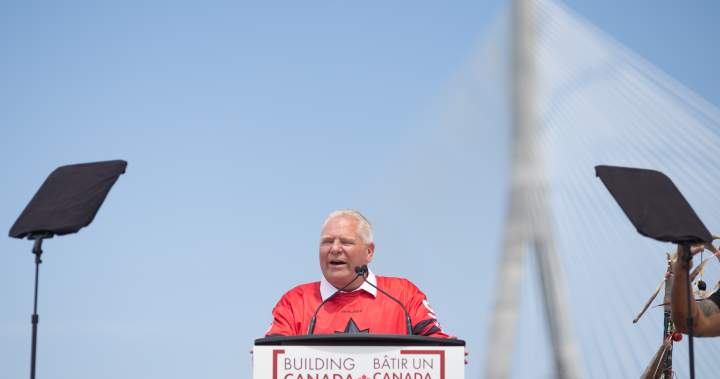
Ontario Premier Doug Ford has remained silent as the deadline to conclude a deal between Canada and the United States approaches. He also refused to comment on tariffs or a demand to replenish American liquor in provincial alcohol stores.
Ontario, under Ford’s leadership, was the first Canadian province to ban American alcohol from sale in response to tariffs imposed by President Donald Trump of the United States in March 2025.
Ford, who removed alcohol from the LCBO over a year before, has been a fierce advocate of the booze prohibition, arguing that it was an effective retaliation to the American tariffs.
The LCBO has said repeatedly that it will not put American liquor back on provincial shelves until the tariffs imposed last year have been removed.
In a recent social media post, Ontario’s premier said that he would not “back down” from the alcohol ban.
We won’t give up. Ford wrote in a post dated July 8, “The fastest way to bring U.S. alcoholic beverages back to Ontario is to have the U.S. drop their illegal tariffs against Canada.”
The boycott has been a source of irritation for Trump in the trade arena.
When he announced new tariffs against Canada, the president called them a discriminatory measure. The announcement was delayed to Saturday as both parties work towards a deal.
Other premiers say that as trade negotiations progress, Prime Minister Mark Carney asked them to replenish American alcohol.
Ford is silent.
Global News has not received any response to questions sent by Global News. Since Aug. 13 when he spoke in Guelph about data centers, he hasn’t held a press conference.
Ford, who was vocal in the past about the Canadian tariff policies and the alcohol ban, has now remained silent.
In retaliation to the Trump tariffs, American liquor was removed from Ontario’s shelves on March 4, 2025.
Before the ban, Ontario imported approximately $965,000,000 worth of alcohol from the U.S. This meant that approximately $2 million of U.S.-made products had either expired, or would expire within the next few weeks.
According to the government most of these products included wine, beer and ready-to drink beverages.
Ford told U.S. officials that American alcohol will be sold once CUSMA (Canada-U.S.Mexico-Trade Agreement) is renewed.
Ford said to reporters in Washington, D.C., on the 9th of June, when he met with U.S. government officials.
It’s going be good.” “It’s going be great.”
Files from Global News journalists Adriana Fallico, and Uday Raa
PM office canada
Proposed U.S.-Canada trade deal would introduce steel quota with lower 25% tariff, sources say
Latest:
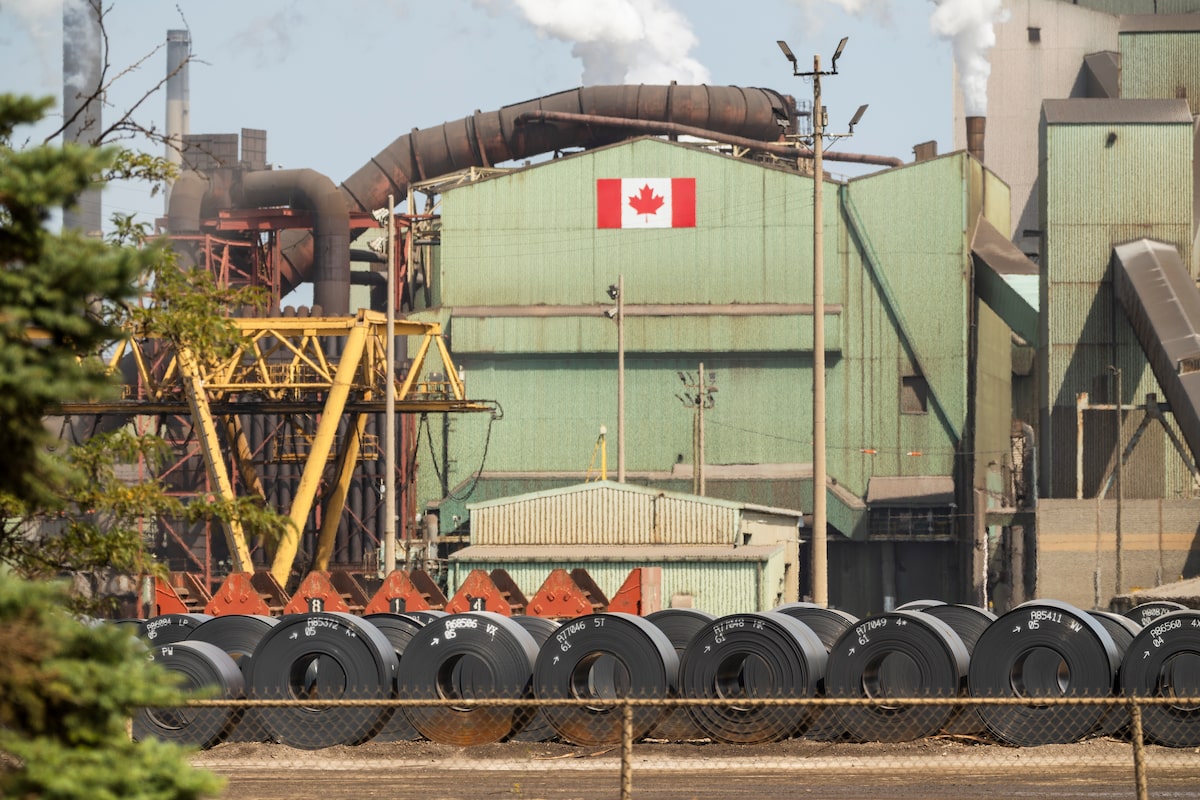
Sources say that the proposed deal will lower steel tariffs by 25% under a new system of rate-quotas; any shipments over this quota are subject to a tariff of 50%.
The Globe reported that the deal would include a 15% lower tariff on cars.
Negotiators from Canada and the United States will meet in Washington, D.C. on Friday to try to reach an agreement.
According to sources familiar with the talks, the prospective deal between Ottawa and Washington will introduce a tariff system on Canadian steel exports. The tariffs would be 25 percent on shipments within the quotas and 50 percent on exports over the quotas.
A steel executive said that the deal would include a tariff-rate quota for steel, which allows four million tonnes of steel to ship to the U.S. each year at a 25 percent tariff. Steel exports after the first 4 million tonnes will be charged a 50% tariff, which is what Canadian steel exporters are currently paying under Section 232 tariffs.
Other industry sources have confirmed the 25 percent tariff proposal. According to the steel executive, Canada would remove its entire counter-tariff on U.S. Steel and restrict further imports from other countries.
The Globe and Mail does not name the sources because they are not allowed to discuss these negotiations publicly.
Canada also negotiates the conditions of the aluminum trade with the goal of reducing the tariffs.
The negotiations are still ongoing. Things could change. Dominic LeBlanc and Janice Charette, chief negotiator for Canada-U.S. business, met Jamieson Greer, U.S. Representative of Trade, in Washington, on Friday. This was just hours before the deadline set by the U.S. to finalize the terms of the trade agreement.
Marc-Andre Blanchard arrived shortly after midday at the office of Mr. Greer, near White House. They did not answer questions regarding the status of the negotiations, or the date that the deal’s contents would be released.
If there is no agreement, Donald Trump of the United States has warned that he will impose new tariffs worth 50 percent on additional Canadian exports valued at US$20 billion by midnight.
This lower steel tariff within the quota is a welcome relief for Canadian steel mills who have suffered from Mr. Trump’s aggressive tariffs in the last year.
Ottawa was hoping for a better outcome, but it’s not what happened. When the two sides discussed possible relief measures for the steel industry last fall, sources in the industry said that they were looking at a TRQ with a 10 to 15 percent tariff within the quota.
Autos are the other main sector that is being discussed. According to The Globe and Mail, the U.S. agreed to reduce tariffs for Canadian autos from 25% to 15%.
Sec. There is an exemption from tariffs under Sec. Both sides are arguing over whether the tariff carve out should be extended to Canadian-made parts.
According to auto experts, if only the U.S. carve-out is included, the effective average tariff on Canadian cars will be approximately 7.5 percent. This rate, however, remains too high for the Canadian automotive sector to remain viable over the long term. The effective tariff rate will be lower if a Canadian carve-out was included.
The auto industry will decline if the government imposes a 15% tariff on cars.
Canada also wants the U.S. lower tariffs for Canadian furniture and lumber. It’s not clear if either sector will be getting relief. According to industry sources, up until Thursday the U.S. was reluctant to include lumber in the agreement.
They are not named by The Globe and Mail as they weren’t authorized to publicly speak about the negotiations.
As a condition for the reduction of Sec. In exchange for lowering Sec.
Carney asked the premiers of each province to replenish U.S. alcoholic beverages and remove procurement restrictions for U.S. firms. Washington also asked Canada to end retaliatory duties on U.S. cars and to start allocating dairy quotas for retailers in order to let more U.S. cheddar cross the border.
The Globe reported that U.S. negotiators also brought up several security and defence issues in Canada. According to the Trump administration, Canada has been asked by Washington for the right of refusal in purchasing Canadian minerals. It also wants Canada to complete its purchase of F-35 jets and buy U.S. equipment, as well as join the Golden Dome system of missile defence.
Uncertainty surrounded whether or not any of these items would appear in the agreement currently being negotiated, or if they were to be held for future phases of negotiations.
Carney will likely have a hard time selling the proposed deal in which Canada would be asked to accept Trump’s tariffs, and make many concessions, for the sake of not seeing tariffs go even higher.
Wab Kinew, the Premier of Manitoba, has already criticized Mr. Carney for his “elbows-up” attitude to Trump’s tariffs, threats, and annexation.
Mr. Kinew cautioned that making concessions puts Canada at a disadvantage ahead of an overhaul planned for the U.S. Mexico-Canada Agreement in late this year or early 2019.
Manitoba Premier John Swanson says that he’s reluctantly willing to return U.S. alcohol to the province as part of trade agreement, but hopes Canadians will not buy it. Before making any decisions, Mr. Kinew said he was still waiting on key details. This includes the final rates of tariffs.
On Thursday, Mr. Kinew said to reporters: “I wonder if we were willing to surrender some of our leverage by accepting that Trump’s tariffs will be here for ever.” If we continued to push, I believe that we would get even more.
Editor’s Note: U.S. Alcohol may be hard to swallow
It will take the cooperation of Kinew, and all other premiers to get this deal done. They will need to lift their alcohol bans in the United States. B.C. Premier Christy Clark and Ontario Premier Doug Ford have not yet announced their plans. Premier David Eby, who along with Mr. Kinew have been most vocal critics of President Trump, has not yet said what he will do. Christine Frechette, Premier of Quebec has stated that she’s still making a decision.
The Conservative leader Pierre Poilievre stated that Mr. Carney had promised during the previous election campaign to be “elbows-up” and negotiate a fair trade agreement with the United States.
“Mr. Carney: Keep your promise. Fight to save Canada. Do not accept a poor deal. “We expect you to deliver on your promise,” he told a Kitchener news conference. We are worried about the rumours that Carney may be prepared to accept unfair tariffs, which would put our business at a disadvantage.
Brandan Rowe provided an updated via e-mail to the members of the Advisory Committee on Canada – U.S. Economic Relations late on Friday morning, according to a source in industry.
It stated that the Canadian negotiators had reached a high-intensity moment of the conversation, but it did not give any details about the discussions, or outline a schedule for further updates.
The Globe does not identify the source, as it was not authorized to publicly comment on this matter.
Carney warned about economic coercion. Now Trump is testing him
Mark Carney, Canada’s Prime Minister at the time, drew attention to himself and Canada by warning middle-power countries that they...


NYPD probes fresh video of people climbing out of Manhattan manhole
New York Police are now investigating an incident in which three individuals emerged from a Manhattan manhole, after months of...


Kroy Biermann steps out for first time since teen son KJ’s sexual assault arrest
This story contains graphic content. Kroy Biermann has been spotted in public for the first since Kim Zolciak and Kroy...


Raquel Lee alleges sexual assault on Disney Channel set in lawsuit
Raquel Lee, a former child actress, has filed a lawsuit alleging sexual abuse against an ex-Disney employee who, she says,...


‘Appalling’: Mark Ruffalo denies antisemitism charge from Paramount Skydance over merger criticism
Mark Ruffalo has retaliated against Paramount Skydance, which branded his comments about the merger as antisemitic. Ruffalo called this accusation...


‘The Challenge’ star Tyler Duckworth laid to rest in private funeral
Tyler Duckworth, star of “The Challenge”, was buried in a private service at the weekend. On Saturday, the Augustana Lutheran...


Tyler Duckworth Honored at Memorial Service, Friends Share Emotional Photos
Tyler Duckworth’s family gathered to honor the life of the reality star on Saturday. Johnny Bananas gives fans an inside...


Thousands in northwest Indiana still without power nearly two weeks after storm
After severe storms that swept through northwest Indiana nearly two weeks ago, more than 20,000 residents are still without electricity....


Poop transplants could help insomniacs sleep better
Do not take a crap. The “poop pill” is an innovative treatment that could potentially cure a variety of ailments....


Melissa Gilbert On Child Actor Protections After Hayden Panettiere Death
Melissa Gilbert, the newest to demand better protections of child actors following the death Hayden Panettiere is calling for better...
-

 Business7 days ago
Elon Musk and Jensen Huang’s New Partnership Could Create the Next Era of Technology
-

 LifestyleNews2 weeks ago
Has science finally made up its mind about coffee’s health benefits?
-

 HealthNews6 days ago
Hospitals say they found a tool to help reduce childbirth risks: wristbands
-

 Food6 days ago
What kids of parents on GLP-1s are learning about food and bodies
-

 Entertainment1 week ago
Star Wars: Smuggler’s Gambit Lets You Keep Helping Hondo Ohnaka in Fortnite After You Leave Disneyland
-

 HealthNews6 days ago
We Helped Create A $4 Million Gene Therapy For Our Son. Then We Had To Decide If We Should Give It To Him.
-

 HealthNews6 days ago
The water in your cup of coffee is about 125 millilitres, but the water behind it is closer to 140 litres – nearly all of it associated with growing the beans long before anyone boiled a kettle
-

 Entertainment6 days ago
The End Of Oak Street’s Box Office Proves One Thing About Dinosaur Movies