
Sports
DEA Joins Investigation

ABC News reports that the Drug Enforcement Administration is now involved in investigating Hayden Panettiere’s death.
According to TMZ, the DEA has joined forces with South Carolina’s Greenville Police Department as well as its local coroner’s office.
Panettiere died Sunday night at age 36. Official cause of death is still unknown. The official cause of death has not yet been determined.
Online tributes poured in after the news of Panettiere’s death. Jack Coleman shared a touching tribute to Panettiere on Instagram on Wednesday. He played her father in “Heroes”.
“I’m heartbroken. Coleman wrote, “I couldn’t even begin to express my feelings until now. They will be insufficient.” I’ve been in love with Hayden ever since the first day of the pilot episode of Heroes, 20 years ago. She introduced herself to me by calling out ‘daddy,’ then wrapped her arms around my neck. She called me daddio from that moment on. Haydini was her name, as she was a magician.
Christy Carlson Romano of Disney Channel, who voiced Kim Possible’s titular teenage spy and played Ren Stevens in “Even Stevens,” also shared on Wednesday a tribute to Panettiere. She compared childhood fame trauma to Chronic Traumatic Emephalopathy (CTE), which is a brain disorder caused by repeated head hits.
She wrote: “The world doesn’t know what to do with the former child actors.” We are kids when people want to protect us. Professionals when they wish to make money from us. And spoiled stars when we show signs of both. Early fame can be compared to CTE. As a diagnostic tool. To think about repeated impacts. Now we have a language to describe youth sports, including helmets and protocols. Parents are also concerned about concussions. We have no words to describe what can happen when adult pressures, stress, criticism, or rejection become part of the fabric of childhood.
Sports
St. Louis Cardinals vs. Cincinnati Reds Results, Stats, and Recap

CINCINNATI, OHIO (AP) Cincinnati’s Dane Myers dropped a ball in the ninth inning with only two outs. This opened the floodgates for a six run inning that gave the St. Louis Cardinals a win of 10-9 over the Cincinnati Reds.
Reds led 5-4 going into ninth inning, but things went downhill in final inning. St. Louis took a lead of 6-5 after Masyn winn and Jose Fermin both scored off Myers’ mistake. Alec Burleson scored another run with his single, and an unassisted walk added another for a final score of 8-5. Fermin singled in two additional runs for a 10-5 score.
It was not over yet.
Sal Stewart added two runs, making it 10-8. Eugenio Saurez singled in Matt McLain for Cincinnati. St. Louis reliever Riley O’Brien, with two outs and the bases fully loaded, walked Tyler Stephenson. This allowed Elly De la Cruz to score to bring the game to one run. Matt McLain then lined out for the final out of the wild contest.
McLain’s second grand slam of his career capped a six-run sixth and gave Cincinnati a 5-4 lead.
Jordan Walker’s three-run blast and another RBI on the ground gave the Cardinals a 4-0 early lead. Walker’s 26th and second home runs in the last two games were his 26th, 27th and 28th. Stewart temporarily shared the lead in major league RBI with him, but Stewart’s RBI of two more after Stewart’s bottom-of-the-9th single gave him 96 for the year.
Michael McGreevy, the Cardinals starter, was excellent through the first five innings. However, he struggled during the sixth inning, when he gave up an RBI and left the game loaded with bases. Ryan Stanek (2-2) relieved McGreevy and gave up an RBI to JJ Bladay, as well as a grand slam by McLain.
Peter Strzelecki (1-0) pitched two innings without scoring to win the game for St. Louis.
Eugenio suarez made his 1,000th career run.
The Cardinals now sit 2 1/2 games back of the wildcard spot. The Reds are now seven games away from the wildcard.
The Next Step
Cardinals will start the weekend series against Phillies. Both teams did not announce their starters.
Reds: Begin a 3-game series at Arizona on Friday. The Reds will be led by LHP Nick Lodolo (3-3, 4.52 ERA). Diamondbacks LHP Eduardo Rodriguez (13-4, 2.71 ERA).
Sports
IndyCar driver Graham Rahal reflects on opportunity to compete at Freedom 250 Grand Prix: ‘Iconic moment’
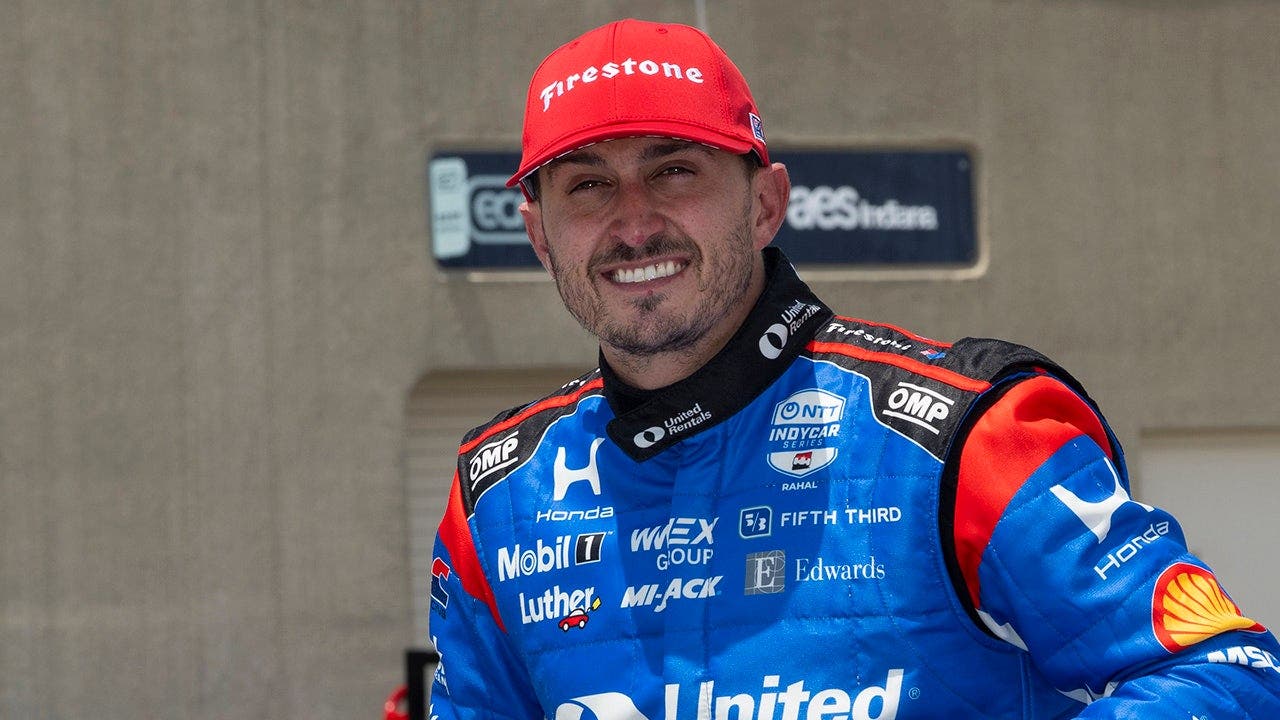
On Sunday, at the Freedom Grand Prix 250, Graham Rahal is one of the approximately two dozen drivers that will speed through the streets in Washington, D.C.
Rahal spoke about the chance to participate in this race at the same time as the United States celebrates its anniversary. Rahal was one of the speakers at Thursday’s IndyCar Grand Prix Media Preview.
ZERO BS. Just Dakich. Take the DON’T AT ME podcast on the road. Download NOW.
Rahal stated that this was a momentous occasion for him as an American. This sport has a strong international flavor in many respects. As a child growing up in America, you quickly learn the importance of these names. It means a great deal to be here and have red, white, and blue painted on my car. I’m also grateful for all the friends, family, and military personnel that will attend.
Rahal was eager to race.
Sign up to receive the latest sports news
“We’re excited. “We’re excited.
I’ve held myself back just a bit. “The energy I have inside is more than what you’re going to see.”
IndyCar’s first practice begins at 9 am on Saturday. ET. Second session starts at 1. The second session begins at 1 p.m. ET, and the qualifying round starts at 5.30 p.m. ET. ET.
CLICK HERE TO DOWNLOAD FOX NEWS APP
Sports
Could D.C. IndyCar race damage art on the National Mall? : NPR
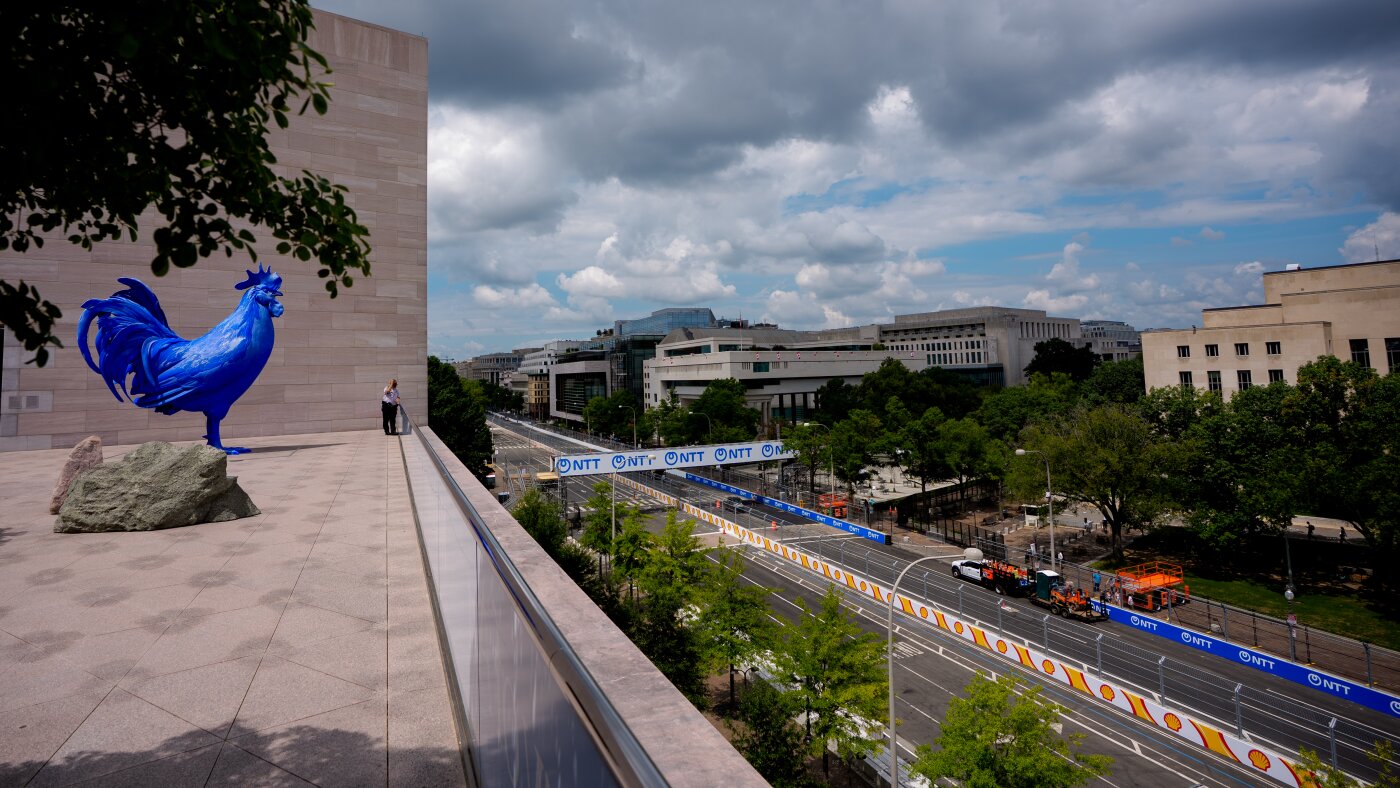
This weekend, more than a dozen IndyCar racers will compete in the Freedom 250 Grand Prix, which celebrates the nation’s 100th birthday.
Practices, qualifying and warmups are all part of the two-day race, which culminates in a 250-mile race Sunday afternoon. The cars will be flying around the 1.7 mile track, which is irregularly shaped and has a speed of up to 180mph.
On the way, you will pass cultural institutions such as the National Gallery of Art and National Archives Building, and Smithsonian National Air and Space and Hirshhorn museums.
This has led to questions regarding the security of artifacts and artworks within. They could be affected by the vibrations of cars speeding past.
Some of the outdoor sculptures at The National Gallery of Art’s sculpture garden, which is located along this course, have been boarded.
Chris Abanavas, the spokeswoman for the organization, told NPR via email that they “conducted a comprehensive vibration study, and on the basis of the results, we implemented a series of measures in order to ensure the security of our employees, visitors, collections, and facilities throughout the race.”
The National Archives and Records Administration and the Smithsonian Institution did not respond to NPR questions regarding preparations and concerns. The White House, IndyCar and Penske Entertainment Corp. are the race organizers. They say that they have taken all necessary precautions to avoid any damages.
Davis Ingle, White House spokesperson told NPR via email that Penske and the White House had followed all protocols in order to make this race as safe and secure for visitors.
IndyCar officials cite the successes of races that have taken place in sensitive locations, such as Detroit’s Belle Isle Park and one that passes directly by the Dali Museum of St. Petersburg in Florida. Beth Bell is the chief marketing officer at The Dali Museum and told NPR the museum, which was built to survive a Category 5-hurricane, has “remain[ed] safe and secure through the history of the event.”
In a NPR statement, IndyCar spokeswoman Alex Damron said: “We do not expect any impacts on structures around the circuit due to the race, given the excellent track record we’ve established and our thorough preparation for the event. We worked closely with local and federal authorities.”
The National Mall, however, isn’t like other places. There are usually speed limits of 25 miles per hour. This race has not been run there (apart from the centuries-old races that were favored by presidents in early America). The organizers only had a little over a year to prepare for the race.
Mary Okin, an art historian at NPR said: “If we raced cars for several hours…we might risk preventing future generations from having access to the extraordinary artworks.”
Okin works as the Assistant Director at Living New Deal. This organization documents art from New Deal era and other public works. She has been a staunch advocate of one particular landmark on the route, the Wilbur J. Cohen Federal Building (formerly the Social Security Administration Building). The building is a historic landmark, both because of its interior murals and for the architecture.
Okin was concerned about the possibility of damage to buildings or artifacts caused by the vibrations from the course construction, the race, and worst case scenarios such as fires and falling debris. She wrote this in late July, when she sent a letter to the National Park Service, which issued the permits for the race.
Okin claims that, more broadly, the process of planning and permitting did not sufficiently explore this question or prepare to these possibilities.
Okin stated that the fact that the government insists on going around and by major art collections, regardless of whether they are damaged or not, is absurd and shows a disregard for the American public’s property.
NPR asked questions regarding safety concerns and the process. The White House, the Department of the Interior or Transportation did not respond.
Okin views the race as a part of an overall pattern where the Trump Administration disregards historic preservation to pursue anniversary celebrations or construction projects. It is also working on permanently weakening protections of historic sites across the nation.
What stops the government from mistreating the cultural heritage of the nation in the same way? She asked.
It was less than one year before the race.
The turnaround time for the event was not ideal, even organizers admit.
Bud Denker is the chairperson of Freedom 250 Grand Prix. “I had only seven months to prepare this event, instead of two and a half years,” he said. It’s been tough.
Denker is the president of Penske Corporation, the parent company of Penske Entertainment. He told NPR he had come up with the idea of a D.C. race last year over a beer after a board meeting.
After failing to get support from Congress for a track around the Capitol, President Trump issued an executive order late in January authorizing a route around the National Mall. Denker, who has lived in D.C. intermittently since then, is still there.
He said, “I love this city. I love its vibe. I love history. I love all the people that I have met.” We are planning the biggest celebration we have ever seen in this summer.
In addition to building the pit lane, the race course and the viewing structures, the preparation includes erecting fences and closing roads, as well as temporarily welding hundreds of manhole cover covers along the route. Denker said that Penske will cover all costs, except for security. This is covered by both federal and district funds.
Denker has been working closely with Smithsonian National Gallery of Art and National Archives and they have provided him with information about noise levels, peak particle speeds, and vibrations.
Decker said that IndyCars weigh only 1,750 pounds – lighter than buses or passenger cars.
He said, “There is no vibration.” Our decibel levels were lower than a siren I heard on the streets for months.
Okin asked repeatedly for the National Park Service’s commitment to install vibration monitors before the race. She nor NPR received a reply to this question.
Leila Savage, an expert in vibrations and their impact on artwork at the Rijksmuseum, Amsterdam, believes that vibratory monitors could provide some objectivity.
Her statement said that measuring and documenting exactly the impact of the race can help museums to define — and then communicate — their vibratory threshold for future events. It would also be an important addition to all the documentation about each object.
She said: “I think our colleagues will be grateful if, in 200-years, we can produce a report saying, ‘This race happened and the levels were this.’ Because maybe the items will have some wear in 200 years. I believe they’ll appreciate that we measured it in 2026.”
What to do when you can’t quantify the risk?
Museums are increasingly concerned about the impact of noise, whether it’s from construction sites or nearby vehicles.
The objects do not care if it is a singing or a racing next to them. Sauvage said that you can feel the vibrations. He is also working on a doctorate in aerospace engineering.
Sauvage explained that the primary risk from vibrations is cumulative damage. For example, a crack can deepen over time or a part of a sculpture could come loose and fall off. Risk assessments and monitoring are important.
The conservators know the works that are most vulnerable, because they have spent years studying every aspect of them. They also know the areas in the museum closest to vibration sources (in this instance the racecars). Sauvage stated that the most straightforward and effective solution to the problem is to relocate the art at risk to another part of the museum.
She said that the museums in Washington D.C. are under constant surveillance. It could be because the collection is arranged in the museum that it’s okay.
Okin asked the National Park Service about mitigation measures. He suggested specifics, including installing temporary sound barriers such as weatherproof panels and curtains (or freestanding ones), having a conservator oversee the murals of the Cohen Building during the race, and “an express commitment to repair any adverse effects.”
NPR’s review of the National Park Service email response this week to Okin does not address these suggestions. The National Park Service says that its permit process didn’t identify the Cohen Building as part of “areas of potential impacts” and, ultimately, found no adverse effects. NPS directed NPR’s questions about the event to organizers.
Okin said to NPR the General Services Administration (which manages the Cohen Building, unlike the museums on the racetrack) told her that it would conduct post-race evaluations, but didn’t specify exactly what they would include.
The General Services Administration responded to NPR’s request for comments by saying that it had “reviewed the proposed route in terms of potential impacts on our assets nearby and found no concerns.”
Sauvage believes that conservators at museums will be looking closely to determine if there were any damages after the race on Sunday. She said the biggest warning sign would be damage to the building itself, as “that’s the protective layer.”
Okin reaffirms that she hopes there will be no damage.
She said, “But I do hope the government will be honest about it. They should take the necessary steps to correct the situation and make things right for the American people.”
Sports
What to know about this weekend’s IndyCar race on the streets of the nation’s capital
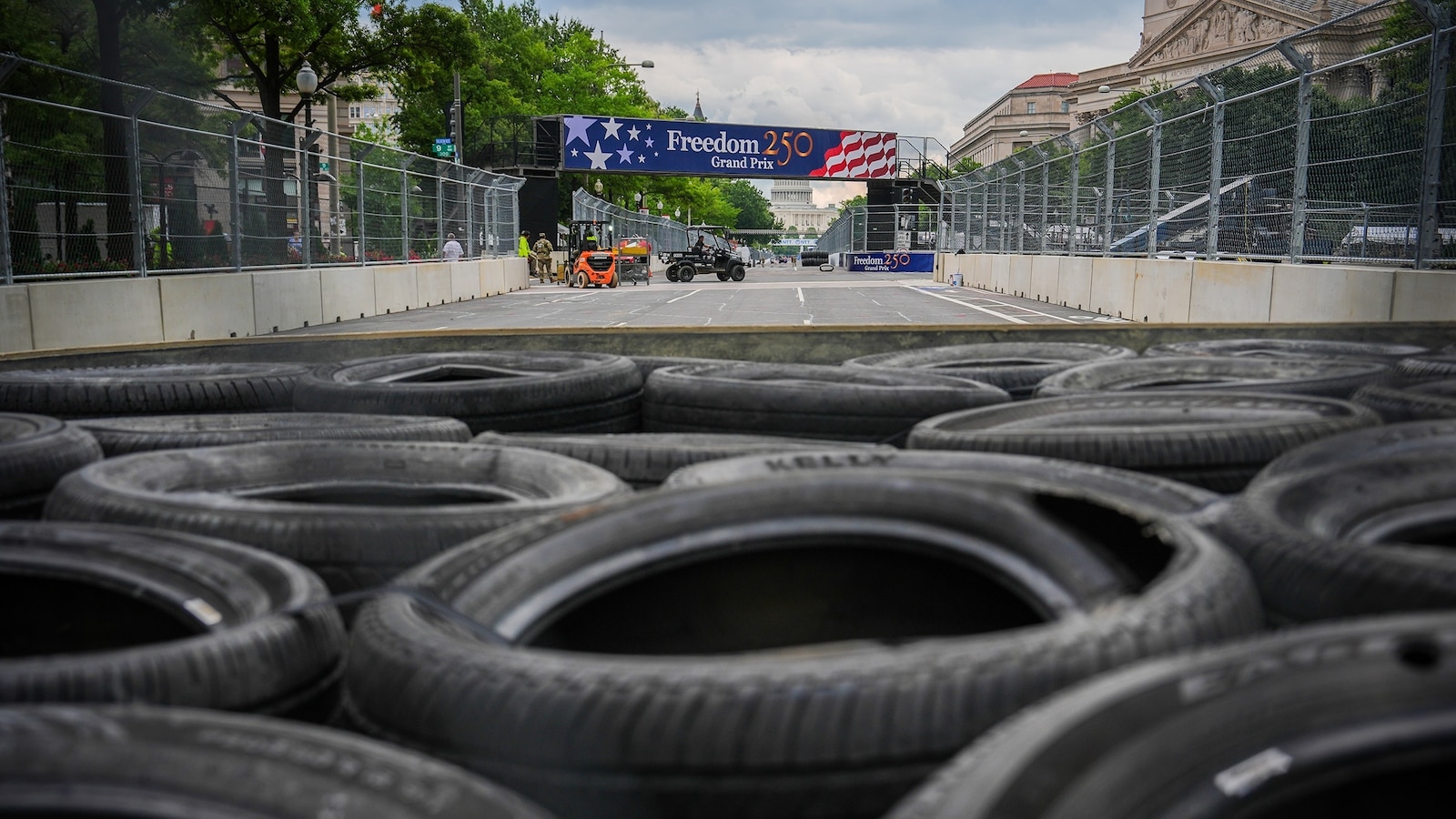
Start your engines. This weekend, President Donald Trump will transform the streets surrounding the National Mall, in Washington, D.C., into a motorsports Mecca, the IndyCar.
IndyCars zoom along a 1,66-mile course against some of America’s most famous buildings. Main straightaways are Pennsylvania Avenue and Independence Avenue where race car drivers rev their cars at speeds up to seven times the speed limit.
It is estimated that the 250-mile race will take approximately 3 hours and be shown live by Fox.
Over the weekend, many streets in the National Mall area will be closed. Concrete guardrails and fencing along the racecourse have also been installed to safeguard fans and their property. There are a number of bridges and dividers that allow spectators to see the race.
The organizers of the race said that they had also resurfaced roads used as the track, and welded over 200 manhole cover shut so they wouldn’t fly off during the event.
Trump will host the Freedom 250 Grand Prix in celebration of America’s 250th anniversary. This event will be run by the Freedom 250 Grand Prix Organization, who stated on their website that they are “supported” by a number of key partners including IndyCar’s “promotional partnership with Monumental Sports & Entertainment.”
The race has not been without controversy. The race is not without controversy. A group of preservationists has expressed concern that the vibrations could cause damage to priceless frescoes in one of the historical buildings along the course.
On Saturday, the two-day event will begin with practice runs and a qualifying race for NTT IndyCar Series.
On Sunday, the main event, Freedom 250 Grand Prix Washington, D.C., will begin at around 1:10. The race will begin at 3rd Street, in front of U.S. Capitol Building.
This race will be unlike any other. “This will be the most watched race ever,” Trump stated in July when he invited top IndyCar racers to the White House.
Each day, the event will draw approximately 140,000 people. A lottery has given away about 100,000 tickets for free.
Felix Rosenqvist – the winner of 2026’s Indianapolis 500 – is expected to be among the participants.
Trump issued an executive order Jan. 30 paving the way for this race. He wrote that the event would “showcase our capital’s majesty in celebration of America’s 250th Anniversary of Independence.”
Trump stated in July that “you’ll see cars performing at levels they have never seen before. Cars will be racing at speeds of more than 190mph and sometimes even faster than this, along Pennsylvania Avenue.”
The twin turbocharged V-6 race car engines are able to reach such high speeds, and their torque is so powerful that it has a concerned group of historical preservationists.
Living New Deal, a nonpartisan and nonprofit organization that preserves the history of Franklin Delano Roosevelt’s economic, political and social reforms is concerned about this race.
Mary Okin is the assistant director for the Living New Deal. She told ABC News her group was particularly concerned that the vibrations of the racecars would damage the frescoes that adorn the Wilbur J. Cohen Building’s entrance.
Okin stated that the Cohen Building was the original home of the Social Security Administration and is an important part of the New Deal legacy. It contains frescoes created by the famed artist Seymour Fogel in the 1940s on the walls at the lobby entrance.
Okin stated that the entrance to the Cohen Building is located near one of seven corners on Grand Prix Race Course.
Okin, in an email she sent to U.S. General Services Administration’s (GSA), the company that manages the Cohen Building last month, wrote: “We have become aware of the substantial risk for adverse events due to vibrational impacts with sound waves exceeding 130 dB.”
What protective measures will be put in place before the race, to prevent vibrations, car parts flying and any other collision or high-speed impacts from damaging this national treasure? Okin wrote.
Okin reported that she had received an email from the GSA stating it would be conducting a damage assessment post-race of the Cohen Building.
Okin, ABC News: “To me everything here is problematic.” “Car racing can take place anywhere. It’s not the best place for it. What is the reason for this? “This would never happen under another administration.”
A GSA spokesperson told ABC News that in a Wednesday statement, the agency had reviewed the course for “potential impact on nearby assets” and found no cause for concern.
The GSA spokesperson stated that “Like many other Americans, the GSA fully supports the patriotic festivities happening in the Nation’s Capital, including Freedom250 Grand Prix”.
ABC News asked Freedom 250 Grand Prix organizers about the event and was directed to the National Parks Service who issued permits.
In a press release, a spokesperson from the Freedom 250 Grand Prix stated that IndyCar “has tremendous respect for the historical and structural structures” on the racetrack.
The statement stated that “INDYCAR successfully hosts races in downtown street circuits of urban areas since decades.” The statement said: “With the excellent track record we have and the thorough preparations we’ve done for this event we don’t anticipate any impacts on the surrounding structures as a result the race activity of the Freedom 250 Grand Prix.”
Along with the race track, you will also find several major museums, such as the National Archives and the National Museum for the American Indian. The Smithsonian Air and Space Museum and the National Gallery of Art are all nearby.
Chris Abanavas told ABC News, as a representative of the National Gallery of Art in preparation for Freedom 250 Grand Prix: “The gallery has conducted an extensive vibration study.”
Abanavas stated in a press release that, based on results from the study, they “have implemented a series of measures” to guarantee the safety of their staff, guests, collections, and facilities throughout the race.
Abanavas said, “While I cannot reveal the details, it is clear that we have taken these measures out of an abundance of caution.”
Sports
Falcons, Colts joint training camp practices: How Atlanta performed on Day 1

WESTFIELD, Ind. It’s hard to believe that I was sunburned on Indiana.
In the past decade, I have attended dozens of Falcons’ training camps in Flowery Branch. I never got a sunburn. Even today, I wore sunscreen. Before I hit the field, I applied sunscreen again. My face has about the same color as the Falcons’ red uniforms from last week’s loss in preseason.
Except for my sunburn, it was a great day to watch practice. It was also an exciting one for the Falcons. After practice, we spoke with TuaTagovailoa and Chris Lindstrom to get their take on the day, how they felt, and whether they were ready for the new season.
You can find out everything about:
Kevin Stefanski will be speaking tomorrow
We all thought Stefanski was going to talk before practice, but we misunderstood the time. Keenan Allan, Colts’ newest WR spoke the first. Stefanski will speak before Thursday’s training — around 2:15 pm, but this could change. On Thursday, practice will begin at 3 pm.
It’s not a huge deal. Stefanski speaks to the media on a regular basis, but head coaches are not required to do so every day.
The practice was high-energy and fast-paced
The way this joint session was run impressed me. Grand Park Sports Complex, where the Colts train, in Westfield, Indiana, is a massive and beautiful facility. Two full-sized football pitches are arranged end-to-end. This makes it difficult to watch everything.
Before running their individual drills, the Falcons ran through their usual warm-up. Atlanta and Indianapolis then ran various team drills, ranging from in-game situations to special teams. It was difficult to stay on top of things because I kept walking between the fields. Some observations
Michael Penix Jr. did not take part in the team drills as was expected. Tua was the one to get most of the reps for first team, but Cooper Rush and Jack Strand were also given a lot.
Tua had a not so spectacular day. Tua fumbled, took some sacks and threw an interception to Colts cornerback Justin Walley. Tua also had some good moments — like a pass from Drake London to London, who blew the Colts’ defender assigned to cover him out of existence. London did it, not Tua. As I wait for the start of the season, I will just hope that we can see improvements. I find it hard to imagine him not starting the Steelers in Week 1. Tua is smart, and he’s very committed to getting things right. I hope that he succeeds.
The high level of energy at the practice was something I spoke about. Jeff Ulbrich, the defensive coordinator, was energizing his players before practice officially began.
Atlanta’s tight ends and receivers look to be an issue for the defenses in 2014… provided that whoever is throwing them the football can do it effectively. Tua said after the practice that a quarterback can make his life easier if he has players like Drake London, who is 6’4″, and Kyle Pitts, who is 6’6″, to whom he can throw the ball.
Bijan Robinson is as dominant as ever. Defenses will always have to deal with him.
Charlie Woerner is one of my favorite tight ends. He’s known as a great blocking tight end but is putting his all into each receiving rep. He played like it was his fate if he did not make the 53-man final roster.
Nick Folk smashed kicks into the ground during special team drills. He played very consistently today.
Kendal was a good player on defense. The rookie is very impressive.
Daniel Jones was really good. He went 15/15 against the Falcons’ defense.
I watched AJ Terrell being beaten on a snap and then rebounding with perfect execution the next snap. The players seemed to be focused on getting the best out of the joint practice. Terrell mentioned that the level of energy was high. I felt like there was a great energy shift, and it’s nice to be able go against someone else.
Here’s my live reporting for today.
Star
Falcoholic
Welcome to Day One of the Falcons Colts Joint Practices!
It’s done! Stefanski will address the media before practice begins at 3 pm. ET. Commentaries will be my usual place to report on the news.
Grand Park Sports Campus is located about 40 minutes or so north of Indianapolis. The facility is huge, and I had no idea where to park. It turned out that the first two lots I used were being reserved for a LIV Golf event being held at this property. This is how large this place really is.
It’s all good, I got there in time. I’ll keep you all updated.
Read 17 responses to Rec 6CommentsThin Stroke Icon Comment Bubble
You can find all my reports in The Falcoholic Feed. What do you think of today’s session? And what would you like to see on Thursday?


Jason Sudeikis says it was a ‘joy’ for former cast member’s real-life sister to join Ted Lasso
Jason Sudeikis, star of Ted Lasso’s latest episode, has expressed his “joy” at having Cristo Fernandez (the real sister of...


Chris Hansen Says A24 Wouldn’t Screen Pattinson’s ‘Primetime’
Chris Hansen was not able to sit down for “Primetime,” the latest A24 film. Robert Pattinson plays Lance Oppenheim in...

Even if U.S. alcohol returns to provincial shelves, will Canadians buy it?
If a deal is struck with the United States, American liquor could return to Canadian stores. However, that doesn’t mean...


Recap: Pro Farmer Crop Tour concludes with sweep across Minnesota and Iowa
Minnesota stood out among the Corn Belt’s largely disappointing corn yield and pod counts during Thursday’s 2026 Pro Farmer Crop...

Cincinnati Reds’ 67th loss comes in stunning fashion: A routine fly ball on the last strike
CINCINNATI – The Cincinnati Reds lost 67 out of 128 games in this season. But Thursday’s loss of 10-9 to...


Earth, Wind & Fire’s John Paris Woke Up From Coma, Needs 2 Surgeries
John Paris still has a long way to go in his recovery, which will involve 2 major operations. This is...


‘Yellowstone’ creator Taylor Sheridan’s $330M ranch purchase led to new deal with Paramount
Taylor Sheridan had decided to retire and kick back before buying a ranch in Texas. The 56-year old writer-director discussed...
Netflix’s Anime NYC Line Up Is Ridiculously Stacked
When a streaming service announces a new season of anime, it usually takes a shotgun strategy, in which quantity is...


‘Wild N’ Out’ Moving Away From In-Studio Format, Will Film Live Tour
Nick Cannon is taking his hilarious “Wild N’ Out Tour” on the road, full time. We’ve heard that they’ve abandoned...


Ariana Grande Slams Trump For Using Her Song In Anti
Ariana Grande, who is wrapping up her Eternal Sunshine Tour and has just finished her tour, is the latest celebrity...
-

 Business4 days ago
Elon Musk and Jensen Huang’s New Partnership Could Create the Next Era of Technology
-

 LifestyleNews1 week ago
Has science finally made up its mind about coffee’s health benefits?
-

 Business2 weeks ago
Vandalized fiber lines cause Verizon service outage for thousands of SoCal customers
-

 HealthNews4 days ago
Hospitals say they found a tool to help reduce childbirth risks: wristbands
-

 Entertainment5 days ago
Star Wars: Smuggler’s Gambit Lets You Keep Helping Hondo Ohnaka in Fortnite After You Leave Disneyland
-
 HealthNews4 days ago
We Helped Create A $4 Million Gene Therapy For Our Son. Then We Had To Decide If We Should Give It To Him.
-

 HealthNews4 days ago
The water in your cup of coffee is about 125 millilitres, but the water behind it is closer to 140 litres – nearly all of it associated with growing the beans long before anyone boiled a kettle
-

 Food4 days ago
What kids of parents on GLP-1s are learning about food and bodies