
Business
‘Calif. is particularly vulnerable’

California regulators have approved this new standard to replace car tires. They say it will increase efficiency and reduce costs for drivers at the pump. However, they will force them to pay more.
Harrison Reilly, a spokesperson for the California Energy Commission, said in an email that the California Energy Commission had approved the standard on Monday, after six years’ review and “collecting technical advice from tire manufactures”.
Advertisement
Continue below the ad
The regulation, called the Replacement Tire Efficiency Program (RTEP), will come into effect in 2029. The CEC estimates that a set of tires for a typical vehicle will cost $26 more. There are several exceptions to the regulation, such as motorcycle tires and winter all-season performance tires.
The regulators maintain that more fuel-efficient tires can save motorists money at the gas pump. The cost to meet the minimum standard is minimal: just a few dollars for each tire. Fuel savings will pay back this additional expense in a couple of months, explained Reilly.
Tire manufacturers have overwhelmingly supported the regulation, particularly Michelin and Bridgestone who gave testimony during rulemaking. Discount Tire, California’s largest tire retailer, also supported the measure.
Become a friend. GET OUR AD-FREE APP.
Our new app offers ad free reading, maps curated by us and much more.
GET IT NOW
Others in the industry, however, worry that the regulation was poorly conceived. Tracey Norberg is the executive vice-president and general attorney of the United States Tire Manufacturers Association. She expressed concern about the ability of the state to close loopholes such as import tires.
Advertisement
Continue below the ad
Norberg stated during Monday’s hearing that “competitiveness” is a major concern in this industry. We see low-cost tire importers who cut corners with safety and performance. California, I will say, is particularly susceptible.
CEC believes that regulation will benefit all drivers. The CEC found in its analysis that the new standard is expected to save Californians $1 billion annually on fuel.
Business
Recap: Pro Farmer Crop Tour concludes with sweep across Minnesota and Iowa

Minnesota stood out among the Corn Belt’s largely disappointing corn yield and pod counts during Thursday’s 2026 Pro Farmer Crop Tour. Minnesota’s yield of corn was a solid 199.01 bushels/acre. This is 8.7% higher than the average for three years. In August, the USDA predicted that Minnesota’s yield of corn would fall by 1.5% to 197 bushels from last year’s record-breaking 201 bushels.
Minnesota’s potential soybean crop was impressive. A pod count of 1,257.80 per 3’x3′ square is up by 0.8% over last year, and 15.4% higher than the average for three years. USDA predicted that the average yield of Minnesota soybeans would fall by 8.7%, to 48 bushels per acre. This is down from 52.5 bushels last year. The soybean number is notable because it’s the only one of all seven crops sampled in the Crop Tour that showed an increase from last year. The Tour’s tone was established early, with Ohio and Indiana corn yields declining from the previous year in stark contrast to USDA forecasts of higher yields. The USDA’s August forecast showed a 0.9% decrease in corn production in Illinois, but the Illinois yield dropped by nearly 8% from that of the 2025 Tour. This was a significant drop, and helped boost corn futures. On Thursday, the December contract ended above $5, the highest since May.
After a lackluster showing in Western Iowa, Thursday’s results showed that eastern and central Iowa had improved their estimates. State’s average yield of corn was 193.98 bushels/acre. This is down by 2.2% from the previous year, but 1.4% higher than three-year average. USDA predicts Iowa corn production will reach a new record of 216 bushels in 2018, up 2.9% over 2025. In a 3-by-3-foot square, the average number of soybean pods was 1,362.93, a decrease of 1.6% on 2025 Tour but an increase in 5.2% over three years. USDA predicts Iowa soybean yields to drop to 62 bushels an acre. This is a 2.4% decrease.
Iowa’s good results, and Minnesota’s strong showing, will not likely be enough to offset the concerns in other parts of the Midwest, especially around corn. The soybean crop could be strong this year if the weather is cooperative, given the soil moisture that has been left after the recent rains. However, drying temperatures and seasonally warm conditions would help areas in the Corn Belt inundated by the recent rainfall.
We will be releasing our Pro Farmer estimates for corn and soya beans at 1:30 pm CT, Friday.
Scouts in Minnesota find that the crop is more varied than they expected.
Chip Flory is the Western Tour Leader and has provided a preliminary route report.
Which counties have you visited?
MINNESOTA – Brow, Watonwan Blue Earth Faribault Waseca
Range of corn yield: 158-257 bu. per acre
Average corn yield: 198.7 bu. per acre
Soybean pod count range in 3’x3′ square: 856 to 1,235
Soybean pod count average in 3’x3′ square: 1,267.86
Share a few thoughts about your journey:
It is not as uniform in MN as I thought. We were traveling across Minnesota. The grain length is still an issue, and it’s probably what causes the low yield. Even corn would benefit from some rain. The heat, dryness and heat have probably caused the denting of most crops. On the Crop Tour I had lunch with an experienced certified crop adviser in the region. He said that there was a huge difference between corn grown on corn and beans.
In Minnesota, it is a bit different. On the Tour, the first three day we saw nothing but grain. In some fields there are areas with yellow spots, and others that look like they’ve been drowned. This is because the crops haven’t received enough water. Some of the bean fields may be showing signs of disease.
Brent Judisch is a Western Tour Consultant who has prepared a preliminary route report.
Which counties have you visited?
MINNESOTA – Martin, Watonwan, Blue Earth, Freeborn, Waseca counties
Range of corn yield: 119-223
Average corn yield: 194.3
Soybean pod count range in 3’x3′ square: 816 to 1,474
Soybean pod count average in 3’x3′ square: 1,157
Share a couple of (one-to-three) observations from your trip:
The corn samples were down by 2% compared to 2025. They also showed a decrease of 1% in ear counts and 1% in ear length, but the kernels were still pretty similar. The crop is very healthy, no diseases have been noticed. We did find two anomalies – corn planted 15 inches apart. We can’t seem to get the ear count and length right. The most likely cause is heavy rains following planting. I also think that there were too many warm nights in the pollination period to reduce the yield. The crop has been rated as strong by our team all day. There is enough moisture on the ground to push it to its finish. We’re seeing full dent, which I thought was a bit further along.
The soybean samples were 6% lower than the route we will be taking in 2025. In terms of weeds, the overall crop was very clean. The disease is very minimal and there’s little white mold. Iron Chlorosis has probably been seen, mostly around hog barns, which are fertile, but all fields have performed well. There are no storm damages or other issues. It just keeps underperforming.
The eastern Iowa leg scouts have found a better crop of corn and beans, although there are more samples that have sudden death or white mold on soybeans.
Lane Akre is the eastern Tour leader and has provided a preliminary route report.
Which counties have you visited?
IOWA – Grundy, Butler, Bremer, Chickasaw, Floyd, Mitchell
Range of corn yield: 157-249 bu. per acre
Average corn yield: 203 bu. per acre
Soybean pod count range in 3’x3′ square: 672 to 2,054
Soybean pod count average in 3’x3′ square: 1,438.8
Share a couple of (one-to-three) observations from your trip:
Today we saw the most corn that we have seen in a week. Starting north, we worked our way northwest from Cedar Falls. We found the corn we were looking for north of Highway 20. Also, it was the maturest crop that we have seen. About half of the milk line has been reached. The weather has been unusually dry and it gets even drier when we move north. There have been no major storms or diseases to mention.
There has not been much disease pressure. Today we sampled an incredibly good looking bean crop. You can’t imagine the crop being any better.
Kyle Wendland is the eastern Tour consultant and has prepared a preliminary route report.
Which counties have you visited?
IOWA: Linn, Delaware, Fayette, Bremer, Chickasaw, Howard, Mitchell
Per acre yield: between 153 and 235 bu. per acre
Average yield of corn: 200.7 bu. per acre
Soybean pod count range in 3’x3′ square: 590.4 to 1,523
Soybean pod count average in 3’x3′ square: 1,170.5
Share a few thoughts about your journey:
Our route this morning started just north of Cedar Rapids. The fields were wet with dew, and both our second and third samples had significant hail damage. A man told us that the hail had fallen on his farm about a month ago. Many of the ears were bruised and some had greensnap in them. Based on the distances between fields, I’d assume that the damage we saw was caused by two different storms. We’re seeing a lower disease pressure on corn as we move north. This morning, yields were disappointing. Ironically, we met another route who was sitting on a 160-bu. One sample was below 100 bu. per acre, maybe due to lacking fertilizer. We’ve also seen better kernel and ear depths.
We’ve also seen more white mold than we have in previous days. The white mold is also more prevalent than in the past days. This may be because the plant-damaging spores are only released by the plants in June, but the recent rains have accelerated their infection. Today, we passed by my hometown and saw a completely different bean crop than what it looked like when we left for Crop Tour. The diseases had really affected plant health.
Pro Farmer Crop Tour found that Illinois corn yields dropped by more than 7 percent compared to last year and three years ago. This disappointed those expecting better news when scouts reached the Corn Belt. The preliminary western Iowa results also were not very impressive, and this helped the corn futures rally. December was now above $5 for the first since May.
The December corn price ended at $5.031/2, an increase of 5 1/2 cents.
After reaching a high of three weeks, November soybeans dropped 3/4 cent. The number of soybean pods was also down compared to the previous year, but still above the average for the past three years. This leaves the crop in good shape if the weather cooperates during the coming weeks.
The September price of soft red winter grain increased by 2 1/2 cents, to $6.82 1/4.
Cotton for December lost one cent to 88.34.
The price of October Live Cattle increased by 77.5 cents, to $218. While the September Feeder cattle dropped 20 cents at $329.925.
The October Lean-Hot Futures dropped $1.275, to $80.225.
After the Bell provides a complete rundown on Thursday’s market action.
It is not a secret how the Pro Farmer Crop Tour samples are selected. It can be used to sample your fields. How to sample your own fields:
Corn
After walking past the rows of corn, take 25 steps into each field.
Then, at the 35th rate, count the number of ears on each 30″ row that will produce grain.
Pick the 5th, 8th and 11th ear from one of these rows. The randomness of the sampling is ensured by this method.
Each ear should be measured for the grain length (inches, rounded up to 1/4″).
* Count how many rows of oat kernels are around each ear.
The width of the rows should be recorded in this field.
Calculate the yield by multiplying the number of average ears per row X the length of the grain in each ear, x the number of rows of average kernels. Divide the total amount by the row width.
Example: 50 ears divided by 6.5′ and 16.7 rows of kernels / 30′ rows equals 180.9.
The yield for this spot on the field is 180.9 bu. per acre.
Soybeans
Pick a representative area in each soybean field:
* Count all plants on a plot by measuring a section of 3′ in one line. Select three randomly chosen plants. Calculate the average pod count per plant by counting all pods from the three randomly selected plants.
The average number pods per plant is multiplied by the total number of plants on the plot. Divide that number by 36 and multiply by the row width.
Example: (14 plants x 32 pods/plant x 36)/15″ rows = 1,075.2 pods in a 3’x3′ square
Compare your results to what we find on Tour and send your finding to editors@profarmer.com.
The number of soybean pods in Illinois and Western Iowa was lower than last year, but higher than the average for three years. The end of the growing season may be favorable, resulting in solid crops.
Lane Akre, eastern tour leader and Pro Farmer economist Lane Akre said that the Illinois results were dominated by soybean potential. The potential is definitely there. The pod count is high enough and the crop has the necessary moisture to be successful. It will be interesting to see the final results, but we’ll also have to wait and see. The top of the plans could turn out to be very robust. We might even get more pods than in the past two years.
Illinois had an average pod number of 1,430.37 per 3’X3″ square. This is down 3.3% compared to 2025, but 2.9% higher than the average over three years. Last week, the USDA projected that Illinois’ average soybean yield would be 67 bushels/acre. This is up 7.2% compared to 62.5 bushels in last year.
Chip Flory of the Tour’s Western leg noted that while pod counts were down on last year’s average, they were still above three-year medians. The count in District 1 was 6.6% higher than the average. District 4, 1.9%, and District 7, 14 % above. This is a great bean crop that has a lot potential for western Iowa.
The Tour will stop at the following locations on Wednesday. It has enough moisture to fill the pods. If you give it enough rain, and extend the time for pod filling by a couple of days, this western Iowa bean crop could become a good one.”
The Tour state corn yields have not been impressive. Illinois produced an average of 184.219 bushels/acre on Wednesday, 7.7% less than the 2025 average and 7.5% lower than the average over three years. USDA forecast last week that the yield would fall by 0.9% to 212 bushels an acre. Lane Akre of Pro Farmer Economics, which is in charge of eastern tour, said during the results presentation on Wednesday that this state’s Tour was the lowest ever. This comes as corn yields fell in Ohio and Indiana from the Tour level of last year, contrary to USDA’s expectations for higher yields by August 1. It was a shock to see the weak performance of the eastern Corn belt, and disappointing for those who expected the area would compensate for corn that had been drought-stressed in the west Corn Belt.
Scouts in the West surveyed 3 crop districts of western Iowa on Wednesday. They found that corn yields were down from the previous year, but soybean pod count was up. The rest of Iowa will be covered by scouts on Thursday. These initial results indicate that “we will need to make a significant effort in the middle part of Iowa and eastern parts of the State.” Chip Flory is the leader of the Western leg. USDA predicted Iowa’s corn average yield would rise from 210 bushels to 216 bushels this year.
Business
Jalapeño salmonella outbreak grows to 431 cases across 32 states
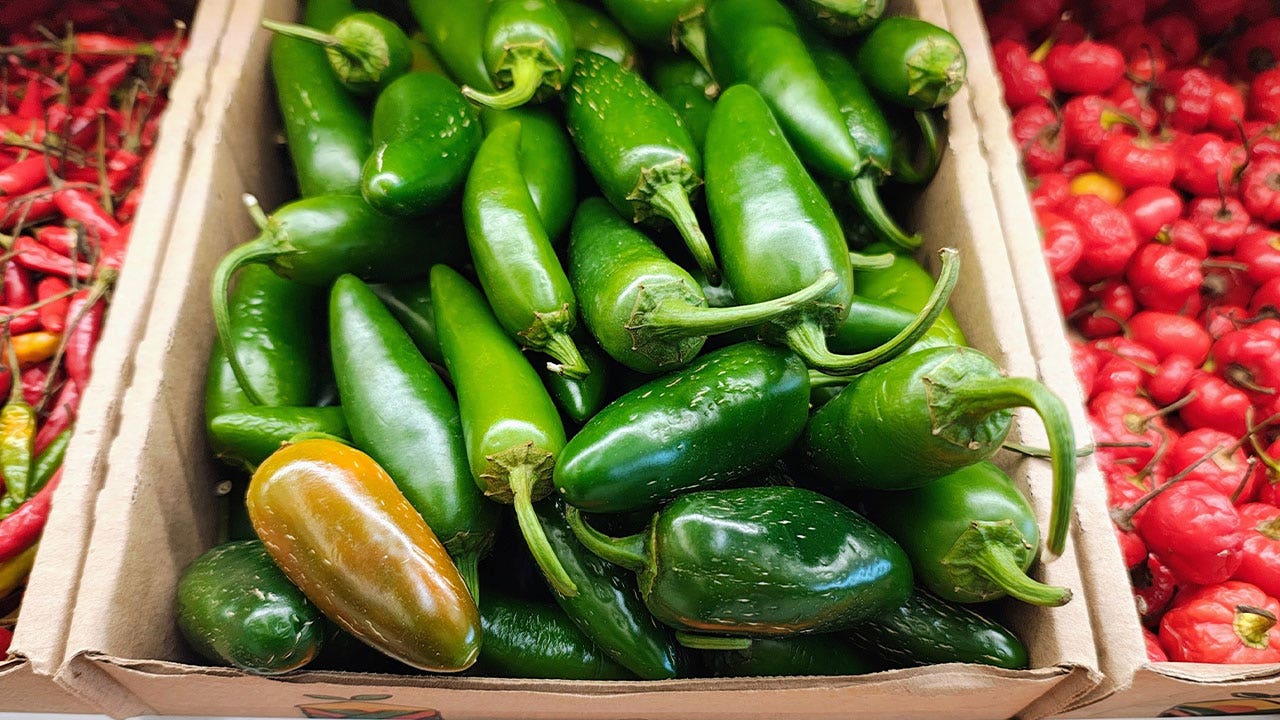
According to federal officials, a multistate outbreak of salmonella linked to jalapeno fresh peppers sickened and hospitalized 431 people in 32 states.
Since the outbreak began earlier in this month, when there were 345 illnesses and 36 hospitalizations spread across 27 states, these latest numbers represent an increase by 86 cases.
There have not been any reported deaths.
Health officials in the federal government say that the number of confirmed cases is likely to be higher than what has been reported, because mild illnesses often heal without requiring medical attention or testing. It can take up to several weeks for recent illnesses to be connected to an outbreak.
As the JALAPENO SALMONELLA outbreak sickens 345, 18 PREPARED FOODS ARE UNDER ALERT.
Coast Citrus Distributors, a company that distributes jalapenos in the U.S., has confirmed this outbreak. These peppers have caused major retailers to recall prepared food and ready-to eat products.
Ninety-one percent of 224 individuals interviewed in the course of this investigation said that they had eaten at a Mexican restaurant prior to becoming ill. Health officials in the federal government have linked 28 clusters of illness to eight different states.
According to the Food and Drug Administration, Chipotle Mexican Grill and Qdoba imported jalapenos from the Sinaloa farmer linked to outbreak by Coast Citrus Distributors.
Chipotle has stopped serving jalapenos at all of its restaurants since July 20, when it switched suppliers. Qdoba has stopped serving jalapeno peppers in all its restaurants since July 28.
SALMONELLA OUTBREAK LINKED TO JALAPENOS SPREADS TO MULTIPLE STATES, DOZENS HOSPITALIZED
According to the FDA, the chain restaurants have taken steps that ensure there are no ongoing risks for consumers who dine at their establishments.
The sick people range from one to 85. The illnesses began between the dates of June 19 to August 2, and meals related to the investigation at restaurants were consumed between June 14 and June 16.
A growing number of products containing jalapenos affected by the outbreak have been recalled.
NatureBest Precut & Produce voluntarily recalled some NatureBest and H.E.B products including pico de galo, soup, stuffed mushroom, and diced Jalapenos on August 8. These products were sold in retail stores throughout Texas and Louisiana between July 3 and August 5.
A MASSIVE RECALLS IS COMMANDED AFTER DOG FOOD IS LINKED WITH NEARLY 200 REPORTS ABOUT POTENTIAL LOSS OF VISION IN CANINES
The FDA has also recalled products distributed by Hardie’s Fresh Foods as well as Taylor Fresh Foods.
A public alert was issued in response to the outbreak, which affected at least 18 meat and poultry ready-to-eat products that contained recalled jalapenos. These products include wraps, salads, and bowls that are sold by major retailers such as Walmart, Kroger and H-E-B. They also include Tom Thumb and Wawa.
The federal regulators had previously stated that there was no evidence of illness directly linked to the meat and poultry products.
According to FDA, Coast Citrus Distributors has agreed to stop importing the jalapenos and recall any remaining product implicated in the outbreak.
CLICK HERE TO GET FOX BUSINESS ON THE GO
Salmonella causes diarrhea, stomach pain, and fever. Symptoms usually begin six to six days following infection. Most people will recover in four to seven day without any treatment.
Business
Starbucks lays off 200 corporate workers as part of Brian Niccol’s turnaround plan

Starbucks has laid off more than 200 employees as part of its turnaround strategy, which began under Brian Niccol’s leadership two years ago.
On Thursday, the coffee giant published an official notice of layoffs under the WARN Act. It clarified plans to eliminate over 200 corporate positions after previously revealing plans to decrease the workforce in the corporation by approximately 300.
WARN indicated in its filing that approximately 120 employee separations were associated with employees from the support team focused on developing and designing coffeehouses, who refused the offer to move from Seattle, Washington to Nashville, Tennessee.
Additional, approximately 104 of the cuts result from organizational changes as a result of restructuring plans that were detailed in May.
The first time in 2 years, STARBUCKS has returned to growth with its TURN-AROUND PLAN.
First separations are expected to begin on Oct. 19 2026. All will be completed by November 1, 2026.
Starbucks said that the changes in the organization will not affect the coffeehouse strategy. It is continuing to develop its third place concept, which aims at uplifting and developing coffeehouses.
Starbucks says that the filing is the final component in the remaining changes to its organizational structure announced back in May, so it can concentrate on improving its customer experience and the experiences of both its employees and partners as well as its customers.
As part of a reorganization strategy, STARBUCKS will close stores and cut jobs.
SBUX CORP., 103.99 $ -0.99 $ -0.94%
It is building an office for 2,000 people in Nashville, Tennessee. The new regional office will cost $100 million. However, the company’s headquarters remain in Seattle.
Niccol, the third CEO of Starbucks within a period of two years, took over the helm in September 2024. He immediately put in place a plan for the coffeehouses to increase business.
STARBUCKS’ CEO SAYS THE COFFEE CHAIN IS AHEAD OF SCHEDULE’ IN MAJOR TURNAROUND EFFORT AFTER ONE MONTH
Plan includes efforts to redesign the interior to encourage people to stay longer, as well as “personal touches” like putting names on cups or serving drinks in mugs.
The company is also trying to improve staffing in stores, streamline mobile orders and let customers choose their own condiments. It has committed to having drinks ready within four minutes.
GET FOX BUSINESS ON THE GO BY CLICKING HERE
Starbucks closed some stores that were underperforming and eliminated 900 roles as non-retail partners. It also frozen many positions during its restructuring.
Business
Trump hosts White House crypto summit to advance CLARITY Act bill
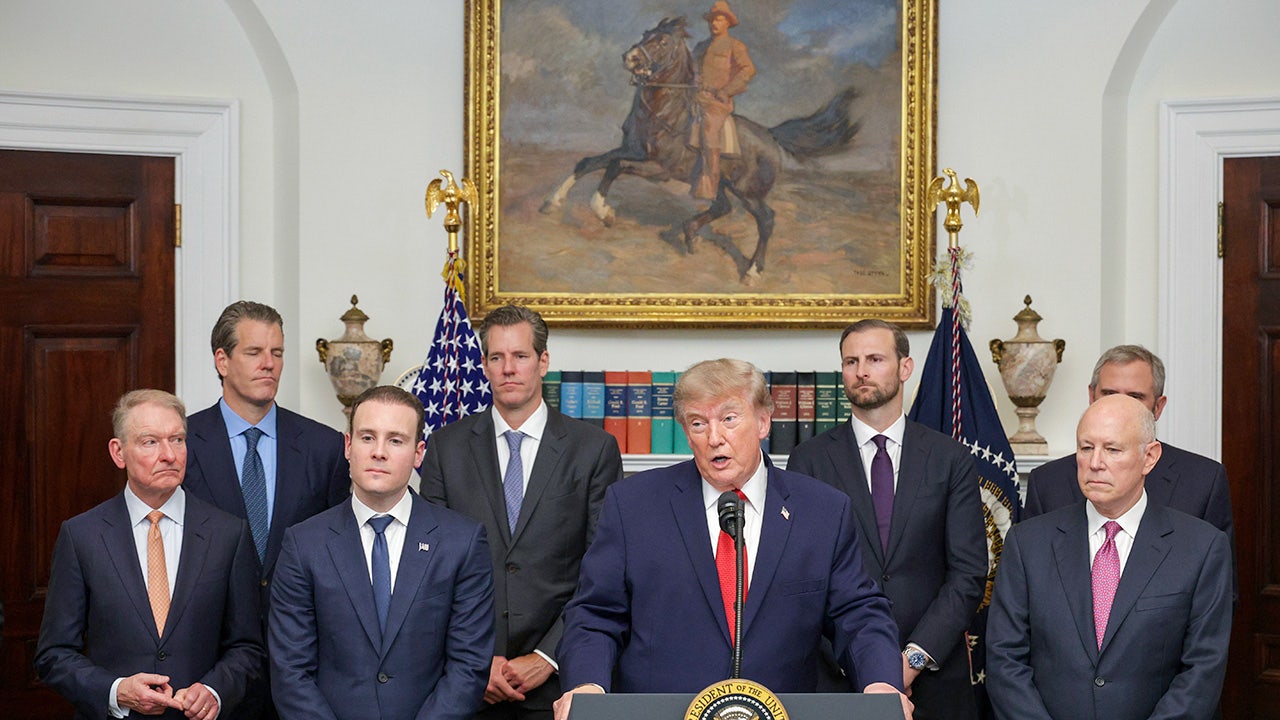
The White House hosted President Donald Trump, top financial regulators and key figures from the crypto and digital asset industries on Wednesday. A major legislative goal for both the Administration and these industries is nearing completion.
Cody Carbone attended the event and told FOX Business in an interview that “the main takeaway” was the fact that the U.S. will not slow down its goal of becoming the cryptocurrency capital of the globe.
Carbone noted that the CLARITY act, the legislation in front of us was discussed a great deal, as well as the desire to see it through. The bill has bipartisan support, he said, adding that Trump had indicated that he hoped to sign the law into effect in September.
He said: “It’s very obvious from President Trump’s remarks and discussion that the U.S. Government and Trump Administration aren’t going to necessarily wait for legislation.” The White House has given this White House the authority and mandate for the SEC and CFTC to act very quickly.
As the senate vote approaches, COINBASE’S CEO says that a crypto bill could transform US financial system.
The CLARITY Act will establish legal definitions of digital assets, tokens and digital commodities, and create mandates to regulatory agencies such as the SEC, CFTC and others, in order to ensure that the industry is regulated without any overlap or contradiction.
The bill’s biggest benefit is its durability. “People need to know that the CLARITY act will create a regulatory framework which isn’t just here to stay for the next few decades,” Carbone explained. He added that it would give builders, platforms, and issuers certainty regarding regulatory compliance.
He said, “It will give institutional and retail investors greater consumer protections as well as more disclosures.” The market reacts instantly when you set clear rules, as we did with the GENIUS Act. In the U.S., the stablecoins market almost doubled in one year after the GENIUS Act. Clarity will be able to do the same for the remainder of the market.”
The currency regulator gives preliminary approval to TRUMP’s World Liberty Crypto Venture
In mid-September the Senate will begin its procedural review of the CLARITY act. The upper chamber has scheduled a 3-week session, followed by a long recess from October to November’s midterm election.
There is tremendous motivation to do this, especially in the run-up to the elections. Not only from the Administration as we witnessed [Wednesday], there are also Republicans and Democrats who have been working hard to accomplish the task. After September, it’s just too difficult to pass legislation. Carbone explained that after the recess in October, the elections and the lame-duck period follow.
We don’t wish to take any chances. Now is the right time. “We’ve never come closer to passing a bill on market structure.”
ANDREW CUOMO WARNS CONGRESS IT IS RUNNING OUT TIME FOR BLOCKCHAIN RESTRICTIONS, SAYING FAMILIES COULD SLAVE ON FEES
Carbone stated that if CLARITY Act stalls out in September without a path to progress, attention will likely shift towards agencies such as the SEC and CFTC. Carbone noted that SEC chairman Paul Atkins, and CFTC chairman Michael Selig had indicated their intention to implement the majority of the CLARITY Act’s provisions via the regulatory process.
They all want CLARITY to be done just as we do. If CLARITY fails to pass in the next 6 weeks — which we hope it does not — I’d imagine that the SEC, and the CFTC, will be even more aggressive very soon, “he added.
Participants included representatives of traditional financial sectors, such as exchanges. The theme was American technological innovation, encompassing not only digital assets, blockchain, but also AI.
Carbone commented, “It was quite remarkable hearing the president say that the U.S. is not only the crypto-capital of the world but also the envy of all of humanity on innovation.” It’s amazing.
GET FOX BUSINESS ON THE GO BY CLICKING HERE
Carbone, a former federal prosecutor, said that the new legislation was “a breath of fresh, almost like a relief.” He added that, while “there may be a little disappointment with where this legislation is right now,” he believes that “this administration will not let up.”
They’re doing everything they can to ensure that U.S. Entrepreneurs and U.S. Investors feel comfortable. That they are able to continue building wealth in America, as well as investing in new products.
Business
Hollywood Divided Amid Threats To Leave

Paramount‘s pending acquisition of Warner Bros Discovery has evoked a range of emotion in Hollywood, mainly fear among creatives at the planned merger of two more major studios. But now that uncertainty is tinged with panic after CEO David Ellison threatened to relocate his Los Angeles-based company to Tennessee, Texas or Georgia.
Separately, the risks of both companies floating in limbo for the better part of a year as an antitrust suit by 12 state attorneys general wends its way to a March 2027 trial date has started to sink in.
So key guilds, trade groups and exhibitors as well as politicians are now urging Paramount and California Attorney General Rob Bonta to settle, even as many remain opposed to the merger, with a stream of sometimes confusing statements suggesting concessions to make the deal more palatable. But those proposed concessions are “behavioral,” Bonta has said. Promises, even in writing, aren’t the “structural” remedies, like asset sales, needed to preserve competition in markets the lawsuit claims are at risk.
“None of the noise from various constituencies makes Bonta’s case any weaker. It may pressure him to come to the table, but not to settle unless he feels that the competition in the market today will remain there afterwards,” said attorney Abiel Garcia, who began his career at the California DOJ as a deputy AG. He thinks the antitrust case is solid, “Not an easy win, but a good case. Ellison can’t do anything now except get Bonta to the table.”
Paramount had requested a November trial; the AGs asked for April. The judge set a March 2 start. “I think they [AGs] were looking at this in terms of what do we need to make sure our case is built as soundly as it can be,” said Garcia. “But the date had unintended consequences — the industry stepping in to say we can’t wait that long.”
Though both sides have agreed to the court-required mediation process, there are no formal settlement talks underway.
Roving eye
Speculation about a move to Nashville, where Ellison used to own a home, emerged earlier this summer and in August after he told Paramount’s leadership team that he would start the process of exiting California on October 1 absent settlement talks. Office headquarters could go first, followed by a slower move of studio staff and executives. The historic Melrose lot would likely be sold.
The date is timed to the October 1 trigger of a so-called ticking fee Paramount agreed to in the WBD deal – an onerous per-share payout that comes to about $7 million a day, or $650 million a quarter, until the deal closes. If the merger collapses altogether, Paramount would instead be on the hook for a $7 billion termination fee to WBD. The David Zaslav-led company has a contractual right to walk away as of June 4, 2027.
Bonta has called the threat to relocate “blackmail.” The Paramount camp denies that, insisting they’d prefer, of course, to stay in California but could save a boatload of money elsewhere, and that they don’t feel supported by their home state.
Taking him at his word, Nashville is a global music hub where Oracle, run by David Ellison‘s father Larry Ellison, has announced plans to expand. It’s building a massive campus for a world headquarters in the city’s East Bank area near the Cumberland River, a major area of new development.
Sony and other music labels and publishers large and small, adjacent business and countless musicians and artists have a large presence in there, as do agencies, and Paramount’s CMT (Country Music Television).
Tennesse’s core film and TV production incentive is a 25% rebate on eligible expenses in the state, with uplifts possible, on a minimum spend of $500,000.
“We aren’t big on red tape or fine print; there’s no per project cap, and this is not a first-come, first-served program,” says the website of the Tennessee Entertainment Commission. The state has no individual income tax on wages or salaries.
Projects shot there include films The Green Mile, Walk the Line, Hustle & Flow, Hannah Montana: The Movie, Robert Altman’s Nashville and the popular ABC/CMT drama of the same name starring the late Hayden Panettiere. Also shooting there is 9-1-1 Nashville and the Prime Video series Scarpetta starring Nicole Kidman, where Nashville stands in for Alexandria, VA.
Asked for comment, the Tennessee Department of Economic and Community Development said only: “Paramount is a globally recognized company and well-respected brand. While we cannot comment on specifics, TNECD remains committed to working with companies across a wide range of industries that are exploring opportunities to invest and grow in Tennessee.”
In July, when the state first came up as a potential new home for Par, Gov. Bill Lee jumped in on X, saying: “Tennessee is a place where innovation & creativity thrive. Paramount has played an important role in shaping American culture, & we’d welcome the opportunity to see the next chapter of that story unfold in the Volunteer State.”
Georgia and Texas are both better known filming destinations. The Peach State in particular has supercharged its incentives, infrastructure and crew base dramatically over the past decade to rival California and New York as a major U.S. hub.
Georgia’s Department of Economic Development was mum on a Paramount move. “We don’t comment on speculation or private correspondence. However, as a major film production hub with long-term relationships with our industry partners, we welcome any such conversations.”
As for Texas, it is fast up-and-coming and has been successful bringing in production. A newly sweetened incentive package just took hold this summer, nudged along by native Matthew McConaughey who was a frequent presence at the State House in Austin during deliberations. Soundstages have been popping up as well, from Taylor Sheridan’s SGS Studios in Fort Worth, the largest in the state, to The Chosen‘s film campus in Midlothian. There is activity in buzzy Austin (home of SXSW), Dallas, Houston and San Antonio.
“Texas offers the best business climate in America,” said Gov. Greg Abbott’s press secretary Andrew Mahaleris in a statement. “The state has no corporate income tax and no personal income tax. Paramount already maintains major production facilities in Texas and has filmed numerous successful productions in Texas over the years. Companies that leave high-tax, high-regulation states like California will find opportunity and success here.”
The New York Post reported that Austin’s Bluebonnet Business Center, a big commercial development, is a possible location. Deadline understands that particular site is not under consideration for the company’s potential move.
“I’ve said this before, and I firmly believe it: the future of film is Texas. We have the space, major city centers, incredible workforce, a pro-business environment, and now the long-term incentive investment created by our state leadership to prove it,” Chase Musslewhite, co-founder of Media For Texas, a nonprofit that’s been front and center in the state’s production push, tells Deadline.
“What’s really exciting is the chance for major industry partners to seize this opportunity too. Texans have always had a strong independent spirit, but we also welcome anyone who wants to invest in our communities and build the future of this industry together. From the perspective of the Texas film community, our doors are wide open.”
Generally speaking, a handful of southern states are considered particularly good places to do business, while California is regularly slammed by executives across industries for high taxes, regulation and cost of living. Nashville, Atlanta, Charlotte and Dallas took the top four spots in trade pub SiteSelection’s 2026 annual survey of leading national site consultants on which cities they favor for corporate headquarters projects.
As it did in 2025, California received the most votes for the Worst Business Climate in America.
A survey by another publication, AreaDevelopment, for 2025 saw Georgia, Texas and Tennessee at No. 1, No. 3 and No. 6 among the top 10 states for doing business.
That said, every industry has unique needs and a crew base is essential to film and TV production. SiteSelection respondents cited a skilled workforce, cost of living, incentives, quality of life and worker training programs the key elements when considering locations.
Hollywood reacts
The reaction from filmmakers and reps to a Paramount transplant runs the gamut. After all, production has been fanning out across the country for years as more and more states add or boost incentives. Markets are dotted by new state-of-art studio complexes.
“At its worse, this is yet another example of politics leveraging our business for their own agenda,” said producer Marty Bowen, whose Temple Hill has a deal on the Melrose lot. “Our business is contracting and no longer a competition between studios. It’s a competition for eyeballs and we’re losing to digital media,” the Smile producer warned. “If the state doesn’t allow the merger, then they’ll need to figure out how to hold onto the industry because it’s already shown that is doesn’t need California.
“It’s sad to say but it’s true, Temple Hill has made over 50 movies and only one has been shot in L.A.”
Some producers are fed up with living in Hollywood, with homelessness, crime in the hills and Mayor Karen Bass’ unpopular handling of the horrific 2025 fires. “Just look at the people who voted for Spencer Pratt in the last mayoral run-off — it’s eyebrow-raising,” said one. “A move to Austin or Nashville would be welcome.”
Bass is the latest pol to urge a deal at a press conference Thursday, advising “all parties to come to the table” at a news conference Thursday. Xavier Becerra, the Democratic nominee to become the next governor of California, recently weighed in saying, “You get way more done in the conference room than you do in the courtroom.” Current Gov. Gavin Newson has reportedly urged Bonta to seek an out-of-court settlement.
“We’re already making movies outside of Hollywood,” adds another. “Why would this make a difference?”
Some consider Paramount’s rumblings “a totally empty threat. It was said at a meeting with senior executives? It felt so planted… No one is moving out of Hollywood,” said one Hollywood insider.
A prolific producer in town fears that “the more David pokes the AGs, the harder it gets for him.”
Bonta, appearing on CNBC Thursday, was defiant when asked about the mounting industry pressure to settle.
“I don’t care what people think, I care about the law,” he said. “If they really want to engage in structural remedies, keeping different corporate entities separate … we are open to those conversations and happy to have them.”
He called the trial date “lightning speed when it comes to litigation. My Meta case took three years to get to court.” A landmark trial against Mark Zuckerberg’s social media giant claiming it deliberately tries to hook young users and lies about it, started Tuesday. It was brought by AGs from California, Colorado, Kentucky and New Jersey.
On Paramount’s threat to leave the state, he said: “I called it blackmail. I still call it blackmail. … They’re saying if you dare enforce the law against us … we will pick up our ball and leave. And they’re trying to say, don’t sue us. Drop this case. Do what we want. Allow us to merge unlawfully. We’re not going do that. We’re never going do that.”
A handful of producers on the Paramount lot say they’d likely keep an office in L.A. should the mountain-top logo studio head out of state. Writers rooms in addition to meet-ups with talent and agents still occur in person in L.A., not to mention it’s common for talent from overseas to make the rounds of the lots; Zoom culture has ebbed post-Covid for many.
“I don’t want to see the studio leave, but I understand that David needs to do what he needs to do, just like I would,” one blockbuster Paramount producer said.
“Look, we want to keep them here,” Top Gun franchise producer Jerry Bruckheimer told Deadline recently at D23. “It’s unfortunate that it’s got this kind of political circle around it, which is a shame, and hopefully they work it all out: they stay here, and the business gets healthier.”
Bruckheimer has been a vocal supporter of Ellison and Paramount’s pursuit of Warner Bros, noting the CEO’s promise of 30 films annually. He declined to sign a petition against the merger supported by over 3,000 industry insiders.
Asked about that at a CinemaCon panel this past spring, Bruckheimer said, “You can sign all the petitions you want, but [the merger is] already being approved by European countries. It’s happening. So there’s not much we can do about it other than take David at his word that he’s going to make 30 movies [a year], and that would be fantastic.”
Bonta and others have called that 30-movie-a-year promise less than meets the eye, missing specifics and hard to enforce.
The Paramount-WBD deal has, in fact, been approved by the EU, as well the UK, the U.S. Department of Justice and every other international regulatory body. Ellison anticipated the merger would close in the current third quarter and the deal had an air of inevitability until the AGs sued five weeks ago, especially after the federal judge in District Court in Northern California agreed to a temporary restraining order based on the AGs argument around wide-release movies, one of three markets addressed in the suit.
Below-The-Line Workers most at risk
The threat to move Paramount sent shockwaves through the rest of Hollywood, riling up state and local politicians, union leaders and Ellison’s fellow studio executives, who have been campaigning to bring production jobs back to California for years.
DGA and IATSE leadership were among the first to plead with Ellison and Bonta to find a path toward a deal, or, at the very least, move up the trial date.
The truth of the matter is, while Paramount leaving California would be an inconvenience for top talent and executives (who already travel plenty for jobs as production hubs crop up across the world), it would devastate rank-and-file workers, especially below the line, who are responsible for the state’s deep well of production infrastructure and skill. Production is still declining in most of the state, even after the mega-infusion to the Film & TV Tax Credit Program last year, which is also now in jeopardy due to a revision to the state tax code that limits corporations’ ability to decrease their tax liability in a given year. Lawmakers have until the end of the legislative session August 31 to find a solution for that.
It makes sense that the DGA and IATSE would be two of the unions to push for a quicker solution, given that many of their members are among those will be most impacted by any outcome. IATSE represents many below-the-line crew, and in addition to directors the DGA represents BTL professionals including assistant directors and unit production managers.
Below-the-line crew are typically hired locally at a higher rate than top actors, directors or even writers. Some territories even require a percentage of the production team to be local hires, and those requirements are often met via the crew.
Insiders at the unions tell Deadline that leadership at the DGA and IATSE still fundamentally oppose the merger, but they fear a prolonged fight will leave any independent version of Warner Bros worse for wear — if there is even an outcome that includes an independent WB at the end of all this — should the March 2027 trial date stand.
Both studios are still independently operating as the merger fight continues. Paramount alone just secured billions in California tax credits for local productions including the Clueless reboot. However, prolonged uncertainty on the fate of two major film and television studios would undoubtedly play a role in business decisions going forward.
Production sources tell Deadline that leadership across both studios are considering the ongoing battle, and the financial toll it could take, when making decisions not only on production location but also on future development at large.
The WGA is one guild still planted fiercely in the no-deal camp, not surprising since it’s got a parallel lawsuit to block the merger that’s advancing in tandem with the AGs’ case but focused on jobs and industry impact rather than antitrust.
“By threatening to leave the state because it doesn’t want the government to enforce the law, Paramount further proves the danger of its outsized power over the industry and what that will mean for writers and the creative community,” the writers guild told Deadline.
Guilds and others in the industry have called out Ellison for publicly championing Hollywood and local jobs back when Skydance acquired Paramount and after unveiling the WBD merger, only to now talk about decamping entirely.
“My promise to you is to build a stronger Hollywood, by keeping both of these legacy studios operating separately, thereby preserving and potentially increasing jobs,” Ellison wrote in a March letter to California lawmakers Sen. Adam Schiff and Rep. Laura Friedman who had asked him how the merger would impact the state.
“The Los Angeles area provides some of the most talented and well-trained film and television workers in the world, and it is my expectation that the commitments I have made will preserve and expand good-paying film and television jobs in the area,” Ellison wrote.
He wasn’t specific and the combined company’s $6 billion cost saving target plus the large debt load it would carry post-merger has fueled fears of major layoffs.
In a report this week, the L.A. County Department of Economic Opportunity warned that if the deal goes through (and the merged studios stay in L.A.), about 4,500 film and TV jobs in the county could be lost over the three-year period when the companies combine operations.
It sees a potential overall loss of 15,567 corporate roles that overlap across both companies, with 6,099 shared, and 2,495 jobs specifically in Los Angeles County. Plus, it noted the impact on 2,661 indirect jobs at small businesses that support production — prop houses, printers, transportation companies, and other vendors – and 3,204 other less direct jobs at restaurants, retailers and service providers.
Wall Street is one constituency that’s been relatively muted on the drama.
“While the press is focused on Ellison’s threat to move Paramount out of California, we are more interested in the $500+ million question,” wrote Lightshed Partners analyst Rich Greenfield. That’s a number Ellison mentioned to leadership. The total savings over time would likely be much more.
“If relocating a film and TV studio to Texas or Tennessee really saves that much per year,” Greenfield wondered, “why hasn’t every major studio already done it? And if the economics are that compelling, does this merger battle end up being the thing that finally breaks Hollywood’s geographic lock on the entertainment industry?”


Jason Sudeikis says it was a ‘joy’ for former cast member’s real-life sister to join Ted Lasso
Jason Sudeikis, star of Ted Lasso’s latest episode, has expressed his “joy” at having Cristo Fernandez (the real sister of...


Chris Hansen Says A24 Wouldn’t Screen Pattinson’s ‘Primetime’
Chris Hansen was not able to sit down for “Primetime,” the latest A24 film. Robert Pattinson plays Lance Oppenheim in...


Even if U.S. alcohol returns to provincial shelves, will Canadians buy it?
If a deal is struck with the United States, American liquor could return to Canadian stores. However, that doesn’t mean...


Recap: Pro Farmer Crop Tour concludes with sweep across Minnesota and Iowa
Minnesota stood out among the Corn Belt’s largely disappointing corn yield and pod counts during Thursday’s 2026 Pro Farmer Crop...


Cincinnati Reds’ 67th loss comes in stunning fashion: A routine fly ball on the last strike
CINCINNATI – The Cincinnati Reds lost 67 out of 128 games in this season. But Thursday’s loss of 10-9 to...


Earth, Wind & Fire’s John Paris Woke Up From Coma, Needs 2 Surgeries
John Paris still has a long way to go in his recovery, which will involve 2 major operations. This is...


‘Yellowstone’ creator Taylor Sheridan’s $330M ranch purchase led to new deal with Paramount
Taylor Sheridan had decided to retire and kick back before buying a ranch in Texas. The 56-year old writer-director discussed...
Netflix’s Anime NYC Line Up Is Ridiculously Stacked
When a streaming service announces a new season of anime, it usually takes a shotgun strategy, in which quantity is...


‘Wild N’ Out’ Moving Away From In-Studio Format, Will Film Live Tour
Nick Cannon is taking his hilarious “Wild N’ Out Tour” on the road, full time. We’ve heard that they’ve abandoned...


Ariana Grande Slams Trump For Using Her Song In Anti
Ariana Grande, who is wrapping up her Eternal Sunshine Tour and has just finished her tour, is the latest celebrity...
-

 Business4 days ago
Elon Musk and Jensen Huang’s New Partnership Could Create the Next Era of Technology
-

 LifestyleNews1 week ago
Has science finally made up its mind about coffee’s health benefits?
-

 Business2 weeks ago
Vandalized fiber lines cause Verizon service outage for thousands of SoCal customers
-

 HealthNews4 days ago
Hospitals say they found a tool to help reduce childbirth risks: wristbands
-

 Entertainment5 days ago
Star Wars: Smuggler’s Gambit Lets You Keep Helping Hondo Ohnaka in Fortnite After You Leave Disneyland
-

 HealthNews4 days ago
We Helped Create A $4 Million Gene Therapy For Our Son. Then We Had To Decide If We Should Give It To Him.
-

 HealthNews4 days ago
The water in your cup of coffee is about 125 millilitres, but the water behind it is closer to 140 litres – nearly all of it associated with growing the beans long before anyone boiled a kettle
-

 Food4 days ago
What kids of parents on GLP-1s are learning about food and bodies