Food
Blouge Is Our Summer Wine Crush

The word is out on blouge, says Meri Lugo, the managing partner of Domestique, a natural wine shop in Washington, D.C. One of our regulars recently told us that blouge is going to be his wine of the summer.
A subcategory of chillable reds, blouge wines are made by cofermenting red and white wine gres. The resulting bottles are lighter, brighter, and lower in alcohol than heavyweights such as Cabernet Sauvignon or Barolo. Blouge tends to be relatively affordable, too. You can drink it unaccompanied or alongside a range of foods including cheeseboards, tinned fish, spicy noodles, and pretty much anything that comes off the grill at a cookout.
Don’t be misled by the goofy-sounding name. A portmanteau of the French words for white (blanc) and red (rouge), blouge isn’t some market-researched contrivance. The style has been around for generations and is poised to withstand historic economic, ecological, and social headwinds.
Seasons change and fashion is fleeting, but blouge is in it for the long haul.
It’s important to remember that it’s part of traditional winemaking practices, says Jenny Lefcourt, owner and president of New York-based importer Jenny & François Selections. Even if you find the name gimmicky, she says, blouge harkens back to something that’s always been.
In previous eras, gre growers would cultivate an array of varieties in the same plot. Some would use their fruit to make field blends like palhete, Portugal’s answer to blouge, with roots dating to the 12th century.
In more recent millenia—and right up to the present—winemakers in France’s Southern Rhône either blend or coferment red and white gres to maintain balanced fruit, acidity, and tannins in world-famous wines like Châteauneuf-du-Pe. Most Champagne and Chianti bottles contain a blend of red and white wines, too.
Cofermenting entails some degree of variability, so blouge winemaking is particularly suited to the unpredictability of modern climates. You have to be adtable if you’re dependent on the weather for how you’re making your living, Lefcourt says.
For instance, let’s say that you’re making wine in the south of France, and your red wine gres ripen way too quickly. If you coferment them with high-acid, lower-alcohol white gres, you might be able to keep the wine fresh and not-too-boozy.
The resulting blouge bottles align with all sorts of trending topics, including consumer preferences for young, low-alcohol wines served cold and with little fanfare.
Sales speak for themselves: In 2023, Aubert & Mathieu, a label in France’s Languedoc, introduced a blouge wine called Boogie Woogie. Last year, the winery sold 20,000 bottles, a 40% increase over 2024, cofounder Anthony Aubert told The Economist.
There are social factors at work, too. La vie en blouge occupies a sweet spot at the intersection of cool and proachable that can be hard to find in the wine world.
It injects a bit of playfulness and irreverence in a space that can feel really intimidating and rules-laden, says Lugo. To have this made-up word that denotes something delicious and fun and whimsical, people are just drawn to it.
After all, wine is comically complicated. If you want to sip something crisp and restorative after a long day, it’s a lot easier to say Do you have any blouge-style wines? than to navigate intricate geogrhic classification systems or naming conventions. Like rosé and orange wine, blouge is a category unto itself.
It connotes or communicates a vibe, a mood, a feeling about a wine that can be really effective, versus ‘I’m looking for a co-ferment of a red and white,’ says Lugo. With all the drama outside the bar and bottle shop, what could be more refreshing than that?
Food
The Best Healthy Meal Delivery Services for Easy Feel-Good Food
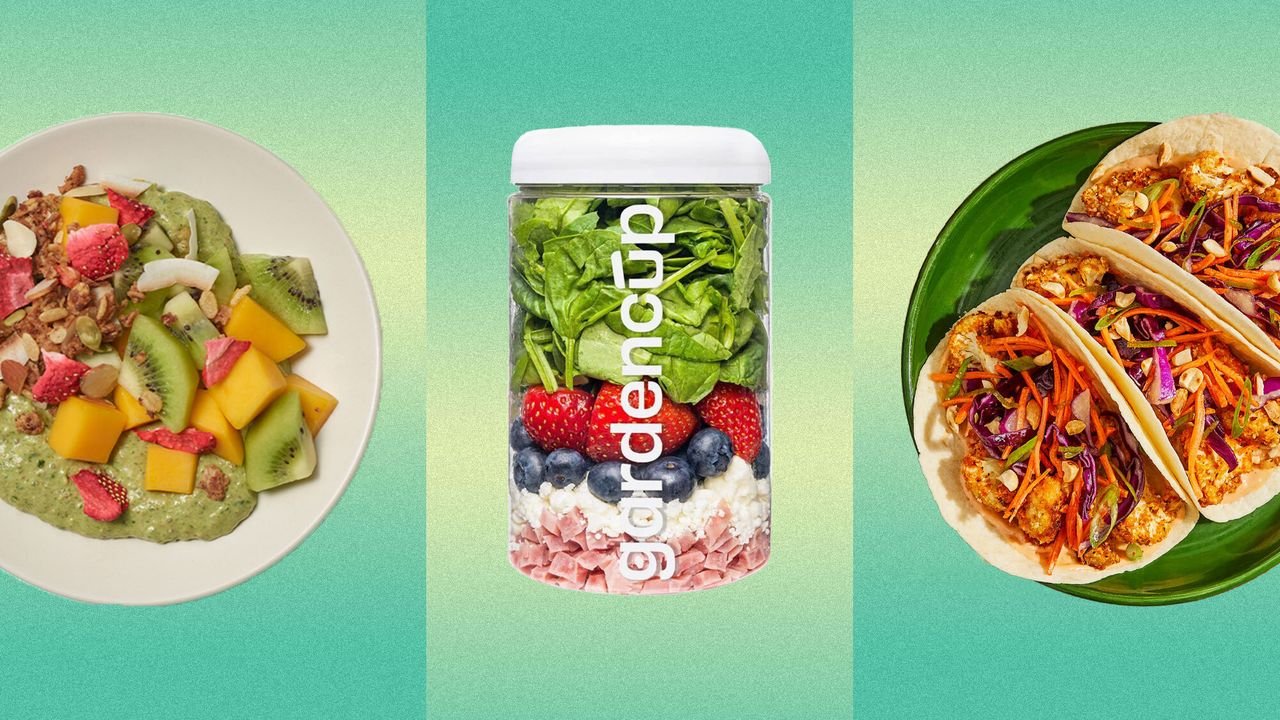
I love a lavish restaurant meal or a decadent dinner party spread. But when I’m cooking at home for myself, I gravitate toward meals that make me feel good. I guess you could call them healthy—a word that means different things to different people, but to me, it suggests something balanced, packed with vegetables and protein, and that doesn’t leave me bloated or in need of a n.
The problem? Cooking that kind of food is easier said than done—especially on a weeknight. The solution? Meal kits.
The best healthy meal delivery services
- Best healthy meal kit with the most variety: Sunbasket
- Best prepared healthy meal delivery service: Factor
- Best for plant-based eaters: Purple Carrot
- Best prepared meals for wellness-heads: Sakara
- Best for a busy lifestyle: Hungryroot
- Best organic healthy meal kit: Green Chef
Meal delivery services are the ticket to easy, feel-good food because they take the guesswork out of both planning and cooking. But not all of them live up to their healthy promises without sacrificing flavor or variety. That’s why we’ve rounded up the best healthy meal delivery services, both kits and prepared, based on years of hands-on testing.
Scroll down for our top picks, read more about how we tested these kits, and get a registered dietitian’s take on what to look for when shopping for meal kits with healthy eating in mind.
In this article
New in this update: After testing several new services over the past year, we’ve added Hungryroot to our list of best healthy meal kits.
Best healthy meal kit with the most variety: Sunbasket
Tester: Alaina Chou, commerce writer
About Sunbasket: Sunbasket follows the blueprint of most kit-style meal delivery services, but it sets itself art by focusing on high-quality, certified organic produce. The company offers both traditional meal kits as well as ready-made options.
I preciated how easy it was to filter recipes by dietary restriction (e.g., Paleo, Gluten-Free, etc.), nutrition (e.g., High Protein, Low Added Sugar, etc.), excluded ingredients (dairy-free, soy-free, etc.), and cook time—a plus if you have specific goals in mind, be they upping your protein or saving time.
The meals themselves were easy to make, relatively produce-heavy, and quite tasty. Portion sizes were generally plenty big, and I liked that the service got me cooking dishes and using specific ingredients that weren’t previously in my repertoire.
What we’d leave: In testing, I found that recipes tended to take 5–15 minutes longer to make than the stated times. But my main callout with Sunbasket is that it reserves the right to sw ingredients that were intended to be organic for nonorganic subs based on availability, which did hpen to me on multiple occasions. As someone who isn’t married to eating organic produce only, I didn’t really mind this, but it’s something to be aware of—especially given you’re paying the same price regardless.
Sunbasket also offers heat-and-eat meals, but the one I tried—a chicken-and-dumplings riff with gnocchi—was a bit of a miss.
| Type of meal delivery service | Meal kits, prepared meals, and groceries |
| Plan options | 3, 4, or 5 meals per week (2–4 servings per meal) |
| Average meal price | $15 per serving |
| Shipping fee | $11 per order (free for first 4 shipments) |
| Meal types | Breakfast, lunch, dinner, snacks, dessert, extra proteins, juices |
Pros
- Good variety of recipe options
- Meals feel fresh and produce-forward
Cons
- Organic ingredients may be substituted with nonorganic
- Price can add up, depending on your selections
Read our full review of Sunbasket here.
Best prepared healthy meal delivery service: Factor
Testers: Alaina Chou, commerce writer, and Lizzy Briskin, contributor
About Factor: Factor offers entirely premade, heat-and-eat meals that require just a short trip to the microwave. The brand positions its meals as nutritious, dietitian-proved, and designed to support your wellness goals.
What we loved: I tested the service for two weeks and was pleasantly surprised. The dishes were well-seasoned and flavorful for microwave meals, and as someone who is trying to prioritize protein in her diet at the moment, I preciated how easy Factor made it to do just that. Because the meals are completely premade and labeled with nutritional information, they’re a great option for anyone with hyper-specific macro goals or dietary preferences in mind.
Some favorites from my two weeks of testing were the Green Chile Chicken and Homestyle Turkey and Gravy. The meals tend to follow a protein plus vegetable plus starch format, which, while a bit repetitive after weeks of testing, meant they all felt balanced. Vegetable portions in particular felt generous—not always a given in the world of meal delivery services.
Factor recently partnered with the plant-based meal delivery brand, Sakara (one of our other favorite healthy meal delivery services), to develop a line of nutrient-dense, protein-packed salads. The salads, which get their protein either from chicken or plant-based options like chickpeas, tofu, or edamame, are substantial and tasty. Contributor Lizzy Briskin tested the Factor x Sakara salads for a week, reporting that the lettuce, which can often become sad and limp in prepared salads, was crisp and green. I was especially impressed with the tender and flavorful chicken breast, which came well seasoned and cut into satisfying bite-size pieces.
What we’d leave: While Factor meals are well executed for microwave meals, they are still, at the end of the day, microwave meals. After two weeks of eating six meals a week, I was ready for something home-cooked. With that in mind, this would be a great service to mix in with a few nights of actual cooking.
I found that some of the vegetable sides were both repetitive and a bit waterlogged after their trips to the microwave—though not egregiously so.
| Type of meal delivery service | Prepared meals |
| Plan options | 6, 8, 10, 12, 14, or 18 meals per week |
| Average meal price | $12.50–$15, depending on plan size |
| Shipping fee | $11; Free for first order |
| Meal types | Breakfast, lunch, dinner, smoothies, extra proteins, juices |
Pros
- Easy and fast to prepare
- Meals feel balanced
- Generally tasty
Cons
- Sides can feel repetitive
- Some dishes are less successful than others
- Portion sizes might feel small for some
Read our full review of Factor here.
Best for plant-based eaters: Purple Carrot
Tester: Alaina Chou
About Purple Carrot: Purple Carrot is an entirely plant-based meal delivery service that offers both meal kits and ready-to-eat meals. Over the past few years, multiple BA contributors have tested the service for several weeks. Every tester came to the same conclusion: This is an excellent meal delivery service for vegans and non-vegans alike.
What we loved: Most meals are a mix of fresh produce and packaged ingredients—think vegan cheeses, precooked grains, and premade sauces. I loved how neatly each kit was preportioned for its respective recipe, so I could easily grab everything I needed from the fridge when cooking at my boyfriend’s place.
Purple Carrot squashed my outdated perception of what vegan food could be. Around 20 meal kit recipes are available each week, and the variety of dish types and cuisines made it hard to narrow down my choices. The instructions were straightforward, and each meal was balanced, well composed, and packed with flavor. Standouts included the Winter Squash Soup spiced with togarashi and served over quinoa-speckled rice, the light and refreshing Zaru Soba, and the BBQ Burnt Ends made from mushroom-based protein that could’ve fooled me into thinking it was meat. Many recipes introduced me to new ingredients or techniques I’ll continue using, like crumbling extra-firm tofu into stir-fries instead of cubing it.
What we’d leave: When I placed my first order on the delivery cutoff date, over half the meal kit options were sold out—so I’d recommend selecting meals well in advance. Both weeks I tested Purple Carrot, I received emails a few days before delivery saying one of my selected items wasn’t available because the ingredients didn’t meet our quality standards. Those meals were replaced with alternatives I had no say in, and both times I ended up with dishes I never would’ve chosen (a premade meze platter instead of a falafel bowl, and a 60-minute pesto risotto). This hpened consistently enough that I suspect it’s fairly common, and I’m unsure whether replacements would align with specific dietary preferences noted at sign-up.
While none of the recipes were particularly difficult, they could’ve been more streamlined. The Winter Squash Soup, for example, required three cooking vessels instead of two because the bok choy had to be roasted separately. It’s also worth noting that some prep steps (chopping garlic, crumbling tofu) pear in the ingredient list rather than the instructions, so give recipes a thorough read before you start cooking.
| Type of meal delivery service | Meal kits, prepared meals, and groceries |
| Plan options | 2 or 4 servings per meal |
| Average meal price | $11–$13.25 for Meal Kits, $5.99–$15.99 for Ready-to-Eat |
| Shipping fee | $12; Free on orders $100-plus |
| Meal types | Breakfasts, lunches, dinners, grocery |
Pros
- Healthy meals that are quick, easy, and genuinely delicious
- Costs significantly less than regular takeout
- Offers a range of difficulty levels, including fully prepared options
Cons
- Requires you to read the recipe carefully
- Entirely vegan menu may not peal to all eaters
Read our full review of Purple Carrot here.
Best prepared meals for wellness-heads: Sakara
Testers: Emma Lerruque, associate director of cooking; Carina Finn, former commerce editor; and Alaina Chou
About Sakara: Sakara is a wellness-focused meal delivery and supplement brand with two nutrition program offerings: its Signature Nutrition Program and its Level II Detox. Meals are entirely plant-based, dairy-free, and gluten-free. They’re also an aesthetically-minded wellness head’s dream: Think rainbow-hued salads, veggie-laden soups, and protein-rich breakfast parfaits crowned with granola.
What we loved: We’ve extensively tested both of Sakara’s nutrition programs and think the Signature Program is the way to go if you’re looking for something to subscribe to long-term. Both associate director of cooking Emma Lerruque and contributor Carina Finn praised Sakara’s balanced, thoughtfully designed meals. The salads in particular were a highlight for Lerruque: They’re generously portioned, so you have enough fuel to power you through the afternoon, and they’re thoughtfully designed with a range of textures and colors. Just about every dressing I wished I had a full bottle of to keep in the fridge for future meals.
As someone who puts condiments on my condiments, I expected to feel the need to doctor things up to make them taste better, but everything was already packed with flavor. The dishes ranged from Indian-ish (‘clarity curry’ soup with naan) to Mexican-ish (a lavender ‘cheez’ quesadilla with broccoli pesto), and there was enough range that I didn’t get bored, Finn writes.
What we’d leave: This is not necessarily a negative, but breakfasts tend to be sweet—something to be aware of if you’re a savory breakfast person. But the main downside to Sakara is the price. At $140 to $465 per week (per person!), depending on your plan, it’s the priciest option on this list. But if you’re someone who prioritizes wellness and sees food as a source of nourishment and healing, you’ll like what you get. It’s also a great option for people who are gluten-free or vegan, Lerruque writes.
| Type of meal delivery service | Prepared meals |
| Plan options | Breakfast, lunch, and dinner or lunch and dinner, 3 or 5 days per week |
| Average meal price | $140–$465 per week depending on your plan |
| Shipping fee | None |
| Meal types | Breakfast, lunch, dinner |
Pros
- Healthy, nourishing meals
- pealing to vegetarian, vegan, gluten-free eaters
- Curated menu means all the planning is taken care of for you
Cons
- Premium price point might not fit into a lot of people’s budgets
- Most breakfast options skew sweet, which may not suit savory fans
Read our full review of Sakara here.
Best for a busy lifestyle: Hungryroot
Tester: Olivia Tarantino, senior commerce editor
About Hungryroot: If you hate grocery shopping or meal prepping, Hungryroot is the healthy meal delivery service for you. It’s more of an AI-powered grocery delivery service than a meal kit, but if you choose to add recipes to your weekly order, your box will include a recipe card with suggestions for how to easily combine the grocery items into quick and easy meals.
What we loved: Hungryroot’s flexibility is its biggest strength. Unlike services with limited weekly menus, you can select from recipe kits (like Southwest Chopped Salad with Beyond Patties and Cheddar or Craveable Chorizo Street Corn Grain Bowl), prepared meals (microwave-friendly bowls, soups, sandwiches, and salads), and grocery items à la carte (snacks, yogurt, juices, bread, and more). Your plan determines how many credits you receive each week, and you redeem those credits for whatever you want; meal kits typically cost around 11 credits, while snacks run one to three credits. That means you can load up on as many healthy items as you like.
The flexibility extends to timing, too. If I couldn’t cook one night, I wasn’t frantically worrying about my meal kit expiring before I could get to it, Tarantino notes. Because most of the ‘recipes’ are basically collections of grocery ingredients, you’re free to use them for whatever you want.
What we’d leave: The credit system takes some getting used to. You use credit rather than dollar values, and each item has an assigned credit value—it’s not immediately intuitive, though you can reduce or roll over unused credits to the following week, Tarantino says.
Because Hungryroot functions as a grocery store with endless recipe-building possibilities, scrolling through all the options can be time-consuming. Tarantino found herself spending over 30 minutes selecting meals, even with filtering options. If that doesn’t peal to you, Hungryroot’s AI quiz will learn your preferences and automatically fill your cart with suggestions each week.
| Type of meal delivery service | Meal kits, prepared meals, and groceries |
| Plan options | Although you can order a set number of meals (with a minimum of 2 per order), Hungryroot mostly works by assigning individual grocery items and recipes a credit value, which you can then distribute how you’d like |
| Average meal price | $9–$11, depending on plan size |
| Shipping fee | $7 for orders under $70; Free for orders $70-plus |
| Meal types | Breakfast, lunch, dinner, snacks, dessert, fruit, drinks, supplements |
Pros
- Lots of variety/grocery items
- Kid-friendly snacks
- Super-easy recipes
- You can add items to your never list if you hate them
Cons
- Like all meal kits, there’s a hefty amount of packaging to deal with
- Selecting your groceries is labor-intensive
Read our full review of Hungryroot here.
Best organic healthy meal kit: Green Chef
Testers: Erin Bunch, contributor; Joe Sevier, senior SEO editor
About Green Chef: Green Chef is the first CCOF-certified organic meal kit delivery service, which means it’s committed to sourcing organic fresh produce and eggs, as well as providing organic beef, chicken, and wild-caught seafood as an option. While the company acknowledges that it reserves the right to replace a given ingredient with a high-quality conventional option if the organic option doesn’t meet its quality standards, this is not a common occurrence, according to our testers.
What we loved: Senior SEO editor Joe Sevier praised Green Chef for its generally tasty meals, writing, This was the best packaged kit I’ve ever reviewed. Contributor Erin Bunch preciated the ease of cooking thanks to premade sauces, herb blends, and thoughtfully written recipes that were easy to follow: Even the steak dinner, which had the most plates and pans to juggle, was sequenced so intuitively that every step flowed naturally into the next: I reused the same pan for the steak and the pan sauce, then used another for the carrots and cauliflower, she said in her review.
Green Chef also offers a free one-on-one nutrition coaching session with your first box. While neither of our testers took advantage of this, it’s a great option to have for people with specific health goals.
What we’d leave: The recipe offerings tended to be pretty formulaic, consisting of a protein, a veggie, and a carb or starch. Bunch noted that Green Chef is pretty pricey, which is to be expected for a meal kit that positions itself as premium. She also noted that while the recipes were easy to follow, they still asked me to, you know, cook, so if you want something you can set-and-forget, this isn’t it.
| Type of meal delivery service | Meal kit |
| Plan options | 6, 12, or 18 meals per week |
| Average meal price | $13 |
| Shipping fee | $11 per order |
| Meal types | Lunch, dinner |
Pros
- Simple recipes with tasty results
- Easy-to-follow instructions with step-by-step photos
- High-quality meat, seafood, and produce
- Vegetarian meals are creative and satisfying (lots of beans, nuts, seeds, dairy and higher protein veggies, and offered some (but not a lot) of tofu or tempeh options)
Cons
- Produce options can feel repetitive and out of season
- Would have liked to see more Protein Packed vegetarian or vegan meals, and some more tofu or tempeh options
Read our full review of Green Chef here.
How we tested these meal delivery services
We continually test and retest meal delivery services throughout the year to ensure we’re getting multiple perspectives on each brand, and that we’re always keeping up to date with the latest quality levels and menu offerings. Each time we test, we try to subscribe to multiple weeks of the service to get a true sense for how well it integrates into our lives and how sustainable it is to eat for an extended period of time. We evaluate food delivery services based on the following criteria:
Food
Some of Vermonts Best Farm-to-Table Dining Can Be Found at This 8-Room Hotel

Many people expect Vermont dining to be all mle syrup and cheddar, says Combs (and to note, there is an adorable Vermont Country Store just a few steps from the hotel that supplies both in abundance). We celebrate our local roots but also do steak tartare prepared tableside, offer full caviar service, and have a monthly chef’s tasting menu in our Wine Cellar private dining room. We offer traditional French-inspired cuisine but it never feels out of place here because the hospitality is entirely Vermont. Warm, personable, unpretentious.
When you order, opt for a blend of produce-heavy dishes (speaking from experience, the Daily Vegetable should never be skipped) and French classics like perfectly-executed steak au poivre, chicken liver mousse, celeriac remoulade, and of course that tableside steak tartare. The wine pairings are also excellent, earning the restaurant a Wine Spectator Award of Excellence for two years running.
Pro tip: Make the most of your surroundings by ordering room service at least once. The menu is a pared-down version of what you’ll find in the restaurant but also includes bottles of wine, which you can enjoy by the fireplace, in bed, on your private balcony if your room has one, in the bathtub (my personal pick), or even with a picnic packed to-go.
Julie Bidwell, courtesy The Weston
Last month,the Weston also unveiled a brand new culinary project: The Green Cat, part bakery, part cafe, part gourmet grocer, part culinary classroom. Helmed by pastry chef Mary Pisanelli, it features a rotating menu of sweet and savory offerings and a robust bread program with 11 different varieties on daily rotation. Don’t miss the mini sourdough boule flights or the signature Fat Cat bialy filled with seasonal delicacies. Produce from the farm is on sale at the grocer counter and woven throughout the menu—including a Green Cat tea blend curated from farm-grown herbs. And then there’s the Demonstration Kitchen, an immersive classroom tucked behind the bakery where guests can master techniques like laminating croissants under Pisanelli’s instruction.
On my trip to Weston, I was struck by the fact that it hit every mark: luxurious accommodations, plenty of nature (try Emerald Lake Loop for a gentle stroll and a swim), a very good massage, and truly excellent food. I came back to my trash-lined street in Brooklyn wondering what I always wonder: Do I really want to live here?
But that’s the beauty of a great weekend getaway. It’s always just a car ride away.
Food
9 Types of Melons to Try This Summer

Watermelon, cantaloupe, and honeydew are easy to find at grocery stores year-round. But during summer, farmers markets and roadside stands start filling up with other types of melons—varieties with floral aromas, honey-sweet flesh, and textures that range from crisp and refreshing to soft and almost custardy. Many belong to the muskmelon family, which also includes cantaloupe and honeydew, though each one has its own distinct flavor and personality.
Some are perfect for eating ice-cold in thick wedges over the kitchen sink; others pair especially well with salty cheese, cured meat, fresh herbs, chiles, or citrus. And while all of them make excellent snacks, most can also be swped into recipes calling for cantaloupe or honeydew. Here are a few of our favorite melon varieties to hunt down this summer.
Charentais Melon
Also known as: Cavaillon melon, French cantaloupe
Honeyed, tender Charentais is a small, spherical melon with greenish-gray ribbing, slight netting (like a cantaloupe with stripes), and deep orange flesh. It’s sometimes called a true cantaloupe since the American cantaloupe is closely related, but actually different type of muskmelon. The flavor is floral with warm spice notes, and intensely fragrant when fully ripe.
Try it: Go sweet with granita or savory with a chilled summer soup.
Canary Melon
Food
After Testing 31 Toasters, I Found a Winner for Every Shade of Toast Lover

What makes a good toaster
- Build quality: A toaster should feel sturdy, with no wobbling, flimsy levers, or loose buttons. Beyond the body itself, I paid attention to the lift lever and any knobs or dials. Thoughtful construction shows up in the details.
- Large item cacity: A good toaster should handle more than standard sandwich bread. The best ones can accommodate a variety of sizes and shes, lowering each piece fully and toasting it evenly all the way through.
- Browning range: There should be a clear, consistent gradient from barely toasted to deeply browned, with a noticeable difference between each setting. If the lightest and darkest settings look the same, that’s a problem.
- Defrost without over-toasting: A defrost function is only useful if it works. Too many toasters spit out frozen waffles that are burnt on the outside, cold in the middle, or just soggy. The best ones thaw and toast in a single cycle, producing results that are warm, crisp, and cooked through.
- Intuitive settings: Toasters don’t need to be complicated. The best models keep controls straightforward with clear knobs, simple buttons, and no unnecessary features getting in the way of good toast.
Other toasters we liked
Martha Stewart 2-Slice Toaster
This toaster from Martha Stewart’s brand-new line of countertop pliances performed well in my most recent round of testing. The sleek touchscreen interface includes a whopping 10 different browning settings, which is impressive (if perhs a tad excessive) and means this toaster is a good option for anyone who wants ultra-precise control over exactly how golden their carbs are. I ultimately felt that the Beautiful toaster accomplished a similar look, feel, and performance quality at a lower price point, but I’d still recommend the Martha toaster if it peals to you.
Smeg 2-Slice Toaster
Not only does the Smeg look nice, it’s also a dream to use—glossy cherry red exterior, chrome lever, and intuitive control knob that satisfyingly clicks into place as you select your toasting preferences. While it toasts evenly on all temperature settings, we did notice it runs a little hot and slices could come out darker than expected or even burnt. But we did like the generously sized slots, which could fit hunks of sourdough, and the slide-out crumb tray that makes cleanup a breeze. Overall it’s a great toaster, but an expensive one. We found other models to be better values. Still, we’d recommend this in a heartbeat to anyone who prioritizes style in their kitchen pliances.
Breville Die-Cast Toaster
Breville Die-Cast Toaster
The two-slice version of our favorite four-slice toaster, the Breville Die-Cast, looks sleek, works like a dream, and has the hefty price tag to go with it. Unlike some models, the Die-Cast has no lever, only buttons. You adjust your setting, press a button, and watch your slice get magically lowered away and pushed back up for your enjoyment when it’s done. The design is also friendly for small spaces—all the controls are on the short side of the toaster instead of the wide side. This makes it easier to nestle in a small spot in your kitchen. Still, the Die-Cast’s a good $60 more than the ‘A Bit More,’ which might push it out of your price range.
Oster Jelly Bean
Oster Jelly Bean 2-Slice Toaster
Haden Dorset 2-Slice Toaster
Haden Dorset 2-Slice Toaster
I was charmed by the retro design of this toaster from Haden. Its simple interface is intuitive to use but has everything you need to get the job done: a dial for switching between the six browning levels, and Defrost, Bagel, and Cancel buttons. I didn’t feel it was able to achieve quite as evenly browned results as our top pick, and I thought the different shade settings lacked a bit of variety from each other (especially the middle ones). This toaster also struggled with thicker bread options—its slots were barely wide enough to fit a halved bagel, and the bagel got stuck instead of popping out after toasting. That said, if you’re drawn to this Haden aesthetically, it’s not a bad option.
Toasters we don’t recommend
For one reason or another, these toasters didn’t earn our seal of proval.
The KitchenAid toasts bread pretty evenly, but it doesn’t include a defrost option. We would’ve overlooked this—especially considering it seemed to make frozen waffles just fine using the regular toaster function—except that the one other setting it had for bagels didn’t work well at all.
The four-slice version of our favorite two-slice toaster, the Breville Long Slot toaster is designed to fit slices from much wider loaves of bread. Nice idea, right? Well, the longer length meant there was a g in the heating elements that left a pale strip in the middle of out bread.
The Cool Touch Toaster offers a lot of curb peal. It’s a sleek black with nondescript buttons (they’re labeled with icons instead of words), but the high-quality look didn’t translate to high performance. Even on the highest setting, the Zwilling produced, at best, a mid-level of browning.
This toaster from Alessi garnered quite a few compliments from our officemates who spotted it perched on a desk before testing, which makes sense: It’s quite the looker. Unfortunately, it produced nearly identical pieces of toast at settings 3–6 and failed to produce anything browner than what we’d expect from a middle heat setting. It failed spectacularly at toasting bagels, unable to brown them in the slightest even at the highest setting.
We liked how the CPT-142 ctured a range of browning with the different toasting levels—which is more than other models can say—but it performed weakly when defrosting waffles.
While this KitchenAid model certainly looks nice with its bulbous retro she and vintage-inspired control panel, it weighed a ton. We disqualified it before testing because we could hardly lift it onto the counter.
In addition to the nice motorized lift and lower function we liked in the Breville, the Tineco adds some other techy features. Instead of buttons and a lever, you select all of your toasting preferences using a small touchscreen that juts out from the front of the machine. It toasted evenly, especially on the darker settings. It did a particularly good job toasting all the way to the edges of the bread. However, despite all its technology, the Tineco didn’t do well with frozen waffles. Even using the defrost mode on the highest setting only still yielded pale and soggy results. If you don’t have kids and aren’t plating up Eggos on the regular, that might be okay, but they’re common enough demands for toasters that we don’t feel the Tineco is versatile enough.
Everything about the Cuisinart felt flimsy—it wobbled on the counter, the lever squeaked, and we sometimes got worried the loose control knobs would pull right off. The toasting power was also one of the weakest of all the models.
Just unboxing this toaster and moving it to the counter caused plenty of loud rattles, so if you want a sturdy stainless-steel toaster, the plastic Hamilton Beach will probably dispoint. The heating elements also seemed weak. Other models offered more power and range in browning.
The Hamilton Beach Cool Wall felt flimsy. While light weight isn’t always an indicator of poor performance, we felt like each piece on this model was one toast away from falling art.
The Black+Decker only worked on the highest heat settings, leaving pale, lightly golden waffles, bagels, and bread slices on any mid-range settings. While it did toast more evenly on those higher settings, we couldn’t get past the lack of range.
The highest heat setting on the Krups toasters yielded the type of browning you’d expect from one of the mid-heat settings—this was especially noticeable on the bagels. The defrost setting by comparison felt disproportionately powerful, burning waffles to a crisp on the highest setting.
We liked the idea of the Dash toaster, with its clear window that allows you to peek inside your toaster. That window seemed to fix one of the shortcomings of almost all pop-up toasters in that it lets you monitor the progress of your bread to make sure it never burns. Unfortunately that window revealed a toaster that produced incredibly inconsistent results.
Bella claims this toaster will fit anywhere, and it very well may be right. It’s incredibly thin, which would be ideal for kitchens that are tight on counter space. But while we liked its inoffensive modern design and simple interface, it toasted bread unevenly and there was not enough variation between browning levels, nor enough browning even on the highest setting. Its slim design also meant its slots were a touch too narrow to comfortably fit hefty bagels.
Each Dualit toaster is hand-assembled in England and fully repairable—which is why we were very dispointed when it practically disqualified itself by our second test. In the white bread test, we noticed very uneven browning on each slice. Then, when it came time for the bagel test, we couldn’t even fit the bagels in the slots. We also disliked the fact that you have to use a lever to manually lower and raise bread out of the toaster and that there’s no sound when your toast is done.
This 4-slice model from Haden failed to impress us for a few reasons. For one, its middle settings turned out quite pale, and it was unable to achieve a suitable level of browning on a bagel, even at the highest setting. But the main thing we disliked about this toaster was the interface: It’s got a mix of buttons, plus a small digital screen, that displays the browning level, but that screen is impossible to read unless you’re looking at it straight on (so if your toaster is at counter height, you have to stoop down).
This toaster performed okay in our testing, but we wished there was more variation in browning levels between some of the settings. Our biggest gripe was that it took longer to toast anything than most other models we’ve tested. For the price ($120 when we received it), we just don’t think it’s worth that.
White bread toasted using the first four browning settings of the CPT-122 looked practically identical—and by that I mean that they were all so pale, you could barely tell they’d been toasted. The slots on this toaster were also a bit too narrow to accommodate thick slices of sourdough without risk of it getting stuck. I was also unimpressed by the Bagel setting on this toaster: Bagel settings are meant to brown the cut side of the bagel while leaving the outside relatively soft, but this was not the case with this model. Instead, it seemed to toast both sides of the bagel somewhat evenly.
Like the CPT-122, the first several settings of the CPT-180P1 churned out white bread that was quite pale, and even the darkest setting failed to produce the deeply browned (nearly burnt) toast I was looking for on the highest setting. This model also faced similar issues with its Bagel setting as the CPT-122.
The GE toaster was inconsistent with its browning levels, producing browner bread on setting 3 than it did on setting 4. It also failed to display the wide range in browning cability I was looking for, and the bagel got stuck on its way out after its toast cycle.
What does the bagel function actually do?
Almost every toaster you can buy comes with a little button labeled bagel, but lots of people don’t know what hpens if you push it. Because bagels are thicker than bread, they need to get toasted slightly differently than regular toast. Enter the bagel setting. This button will increase the temperature on the heating elements in the middle of the toaster—the ones working on the cut side of the bagel—while maintaining the constant temperature on the outside elements. This then gives you the perfectly toasted bagel with a firm but not burnt exterior and a nice crisp inside to spread your cream cheese across.
Your other everyday countertop needs
Additional reporting by n Wahn