
Food
What is esophagitis?
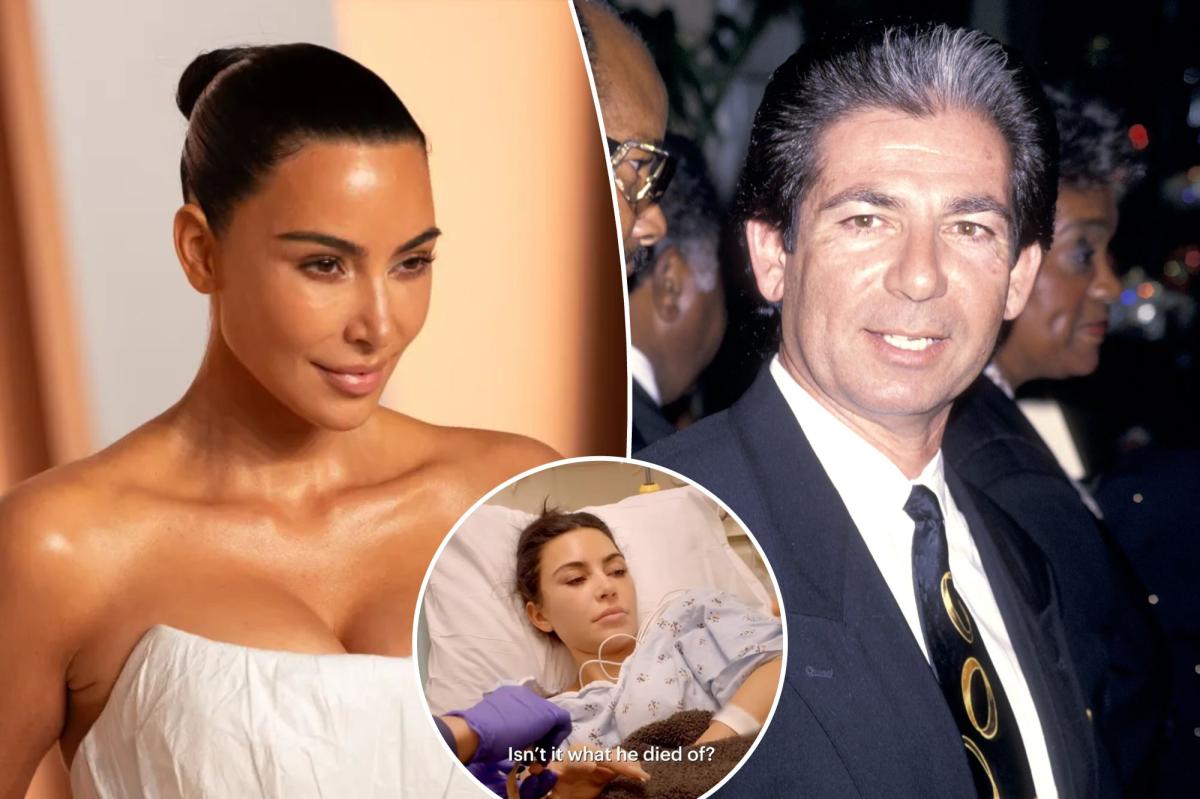
Kim Kardashian’s latest health scare has her family rattled.
In a trailer for “The Kardashians” Season 8 dropped in Friday, the Skims founder, 45, revealed that she has “something called esophagitis.”
The promo shows Kim lying in what appears to be a hospital bed, dressed in a gown, as a voice offscreen asks, “Didn’t your father… isn’t it what he died of?”
The teaser then cuts to her mother, Kris Jenner, fighting back tears in a confessional. “I can’t; it makes me want to cry,” she admitted.
But don’t mistake the drama for a death sentence.
While Kim’s diagnosis may have a connection to the esophageal cancer that killed her father at just 59, the risk of the reality TV star’s condition developing into the disease is small.
The news comes about a year after Kim revealed that an MRI scan had detected a “little aneurysm” in her brain, which doctors theorized was likely fueled by stress. She later reassured fans that she was fine, telling “Good Morning America,” “Everything works out.”
Here’s what you need to know about Kim’s latest health revelation.
What is esophagitis?
It’s inflammation in the esophagus, the muscular tube that carries food from your mouth down to your stomach, according to the Cleveland Clinic.
Common symptoms include heartburn, difficulty or pain when swallowing, a sore throat, the feeling that something is stuck in your throat, mouth sores, nausea and vomiting. In severe cases, it can also cause bleeding.
What causes esophagitis?
There are a few different culprits.
One of the most common causes is gastroesophageal reflux disease, or GERD, in which stomach acid repeatedly backs up into the esophagus, according to Harvard Health.
Certain medications can also irritate the esophagus and lead to drug-induced esophagitis. These include commonly used drugs like aspirin, doxycycline, iron supplements, nonsteroidal anti-inflammatory drugs and some osteoporosis medications.
Infections can cause esophagitis as well, though this is more common in people with weakened immune systems.
Then there’s eosinophilic esophagitis, or EoE, a rare chronic condition in which white blood cells called eosinophils build up in the esophagus, causing inflammation and damage.
How is esophagitis related to esophageal cancer?
Over time, chronic inflammation can lead to complications like Barrett’s esophagus, per the Mayo Clinic.
This condition strikes when stomach acid regularly flows back into the lower esophagus, often because of GERD. The ongoing exposure can damage the normal lining of the esophagus. As the body tries to repair that damage, the usual cells lining the esophagus can be replaced by cells that look more like those found in the intestines.
Barrett’s esophagus can increase the chance of developing esophageal cancer, although the risk remains low. For this reason, doctors may recommend regular monitoring to look for early cell changes and, if necessary, remove abnormal tissue before it develops into cancer.
How is esophagitis treated?
Fortunately, the esophagus can heal once the cause of the irritation is identified and addressed.
Treatment may include medications, such as those that help control acid reflux, reduce inflammation or treat fungal or viral infections.
Lifestyle changes may also help, including avoiding foods and drinks that trigger acid reflux or switching medications that irritate the esophagus.
Kim has yet to reveal publicly what type of esophagitis she has or what caused the inflammation. More details are expected to emerge when the new season of “The Kardashians” premieres on Hulu October 8.
It is unclear whether her father, Robert Kardashian, had been diagnosed with esophagitis or Barrett’s esophagus before he died of esophageal cancer in 2003 at age 59.
Food
Paramount, California settlement talks accelerate, bringing Warner Bros. merger closer to finish line

After a bitter standoff, Paramount Skydance and California Atty. Gen. Rob Bonta have made progress in settlement talks that could push Hollywood’s massive merger over the finish line, according to people familiar with the matter.
The two sides have quietly been negotiating a truce to end the antitrust lawsuit brought by Bonta and 11 other Democratic state attorneys general — a legal volley that has threatened to derail Paramount’s $111-billion takeover of Warner Bros. Discovery.
It’s not clear how close to a resolution the two parties are, but talks in recent days have been constructive, one of the knowledgeable sources said late Friday. Bonta is leading the talks on behalf of California as well as New York, Colorado and Nevada, which are also enlisted in the antitrust fight.
Paramount Chief Executive David Ellison is highly motivated to end the court battle with Bonta before Oct. 1, when his company will be obligated to make a higher payout — an extra $7 million a day — to Warner Bros. Discovery shareholders on top of the $81 billion the company has already agreed to pay.
For weeks, Ellison and his team have been ratcheting up political heat on Bonta to abandon his lawsuit, including threatening to pull Paramount out of Hollywood — a scenario that has rattled state and local lawmakers who desperately want to bring film jobs back to Los Angeles, not lose thousands more.
Paramount declined to comment.
A spokesperson for Bonta’s office said in a statement: “Potential settlement talks are confidential. We cannot confirm or deny whether settlement talks are occurring or their alleged substance.”
The merger of two legendary giants would reshape the entertainment industry, bringing together HBO, CBS, CNN, Comedy Central, Food Network and the Warner Bros. and Paramount film and TV studios.
Both sides have incentives to settle.
Ellison, who has leaned on his family’s connections to President Trump and Washington Republicans, would like to avoid taking on more debt for the already highly leveraged deal. Already, Paramount is prepared to take on $80 billion in debt to finance the Warner Bros. buyout.
Ellison also is eager to close the transaction and take the reins at Warner Bros. before the midterm elections, which could see one or both houses of Congress tip to Democrats.
The merger has been unpopular in Hollywood because the combination of two similar companies is expected to erase at least 4,500 jobs, according to a recent report from Los Angeles County’s Department of Economic Opportunity.
Deal opponents on Saturday urged Bonta to stand firm. The Block the Merger group, which includes 1st Amendment advocates and Hollywood celebrities, including Jane Fonda and Mark Ruffalo, called on Bonta and the 11 other attorneys general to hold out for major concessions.
“The rumored ‘deal’ to usher the Paramount-Warner Bros. merger forward is an insult to everyone who has stood up against this harmful transaction and to the hundreds of thousands of workers, journalists, and consumers who will be hurt if it goes forward,” the group said in a statement.
“Let’s be very clear: an agreement based on unenforceable concessions is a win only for David Ellison. It is an L for everyone else,” the group said.
Bonta is facing a divided constituency: fellow politicians and industry leaders who want to hash out a resolution to end the contentious dispute and, on the other side, vocal progressives who are staunchly opposed to an Ellison takeover. The 11 other state attorneys must ultimately agree to any potential settlement, and for now, the coalition has not reached a consensus, according to two people close to the situation.
Bonta has been on a winning streak with favorable rulings against the Trump administration and social media giant Meta, and he doesn’t want to overplay his hand or risk having his coalition of state attorneys fall apart.
A parade of political leaders, including Gov. Gavin Newsom, Los Angeles Mayor Karen Bass and Xavier Becerra, the Democratic nominee for governor, has urged Bonta and Ellison to settle the antitrust rather than stoke the tensions until a trial, which has been scheduled for March 2.
Earlier this week, the two sides agreed to sit down for court-mandated settlement talks in mid-October. The parties had been set to negotiate in late August, but Bonta pulled the plug on those sessions, accusing Paramount of leaking misinformation and “playing games.”
The Wall Street Journal first reported the two sides were in advanced settlement talks. The newspaper said the parties have discussed compromises, including agreeing to keep Paramount Pictures and Warner Bros. film studios separate for a period of time rather than immediately collapsing them into one unit.
The parties have reportedly discussed requiring Paramount to sell some cable channels, such as Comedy Central. But Ellison needs the cash flow from those networks to make his deal economics work.
Warner Bros. Discovery stock jumped 8% to $30 a share in post-market trading Friday after news of the settlement negotiations. Paramount climbed more than 7% to nearly $11 a share.
Bonta has repeatedly said he was open to a settlement, and he has previously insisted that Paramount sell assets rather than simply rely on short-term commitments to win the favor of theater owners and the state attorneys general.
Bonta has said that Ellison’s pledge for the two studios to release 30 films a year wasn’t enough to end the legal wrangling because prosecutors often are powerless to enforce conditions after a deal closes.
On Thursday, Paramount received the Federal Communications Commission’s blessing to bring in Middle Eastern royal families as significant stakeholders of the combined company. The agency, led by Trump appointee Brendan Carr, needed to give its nod so that Paramount-Warner could exceed foreign ownership restrictions for broadcast license holders. The law requires foreign investors to have less than a 25% stake, but the Ellison deal will allow foreigners to hold nearly 50% of the merged company.
Food
The new lines of southern Lebanon

The U.N. peacekeepers’ armored vehicle moves slowly along the de facto border in southern Lebanon, not because of the terrain or the threat of shelling and drones, but because every mile means relearning a landscape profoundly transformed by war.
UNIFIL — the United Nations Interim Force in Lebanon — has been monitoring this area since 1978, when it was created to verify Israel’s troop withdrawal after its first occupation of Lebanon.
The U.N. expanded UNIFIL’s mandate 20 years ago to include monitoring adherence to a ceasefire in fighting between Israel and Lebanon’s Iran-backed Hezbollah – the militant group created in 1982 to counter a second Israeli invasion.
Almost half a century later, the peacekeeping force’s mandate will expire at the end of the year and due to U.S. and Israeli opposition, will not be renewed. There is still no durable ceasefire.
An agreement in June between Israel and Lebanon has brought only a fragile pause to a conflict that the Lebanese government says has killed more than 4,300 people, displaced more than 1.2 million and redrawn the geography of southern Lebanon since it began in March, when Hezbollah fired rockets at Israel. Israel says 39 soldiers and a military contractor, plus two civilians, have been killed in Hezbollah attacks since then. Seven U.N. peacekeepers have also been killed since the war began this year, according to UNIFIL.
The “blue line” — now marked by blue metal barriers — was the demarcation line drawn up by the U.N. for another Israeli withdrawal in 2000, after 18 years of occupation in southern Lebanon. Now marked by blue plastic barriers, it has served as a de facto border between two countries which has never formally agreed on boundaries.
Today, it remains on the map, but no longer fully describes the reality on the ground.
Months of bombardment have blurred the old boundaries. New lines of control and restriction have emerged, changing how people move, work and return home. After months of restrictions, UNIFIL has reopened access to parts of its eastern sector that Israel’s military presence had placed off limits.
“Today, for the first time in several months, we are heading into the eastern sector. It is an opportunity for us,” says Sgt. Audric of the French UNIFIL battalion. French military policy in Lebanon prohibits identifying soldiers by first names for security reasons. “Since the negotiations began, we have been able to reopen this sector and finally regain our freedom of movement following the ceasefire.”
The reopening comes as the implementation of U.N. Security Council Resolution 1701, adopted in 2006 to end the war between Israel and Hezbollah and establish a security framework for southern Lebanon, faces renewed challenges. At the same time, UNIFIL, first deployed in 1978, could come to an end after nearly five decades. Its original mandate was to restore security, oversee Israel’s withdrawal and help re-establish Lebanese state authority in the south.
Yellow line
Israel has established what it calls a buffer zone marked by what it refers to as the yellow line, a strip of land five miles wide in some places where Israeli forces continue to occupy Lebanon. It says the purpose of the zone is to prevent Hezbollah from firing rockets into northern Israel. Israel has barred Lebanese civilians from accessing their own land along the border and has demolished civilian homes and infrastructure in many of the border towns.
“The yellow line does not exist for us, but we have to mark it on the map so that we can visualize it,” says Lt. Col. Sebastián Dorado Santos, UNIFIL’s Spanish public information officer.
“It has disrupted normal life. Many civilians are unable to go to work or carry out their daily activities. The harvest season is approaching, but they cannot access their fields.”
Beyond the line, the physical scars of the conflict are visible everywhere. Roads have been reduced to rough tracks, marked by the passage of Israeli tanks. Houses that once sheltered families have been reduced to concrete and rubble. In some places, Israeli flags fly above the ruins.
A succession of emptied and flattened villages marks the route between the sectors: Houla, Odaisseh, Kafr Kila and the open structure of Fatima’s Gate, a former crossing between Israel and Lebanon closed by Israeli forces after they withdrew in 2000.
For local civilians, these are not abstract lines on a map. They separate homes from farmland, communities from workplaces and families from the places where they built their lives. The restricted area covers approximately 6% of Lebanon’s territory, reviving memories of Israel’s 18-year occupation of southern Lebanon, which ended in 2000.
Access remains largely prohibited, although just a few miles from the most heavily destroyed areas, some Christian villages remain inhabited, although isolated and with limited access to basic services.
Humanitarian convoys bring food, medicine and other essential supplies. Their presence, however, carries a symbolic weight.
“When they see us, they know they are not alone,” says Father Hani Tawk, coordinator of a network of Catholic organizations.
Many residents remain caught between a border they do not control, a limited state presence and an occupation with no clear end in sight, Tawk adds.
For local authorities, access to farm land is one of the most pressing concerns.
“Agriculture remains the main source of income and an essential driver of local development,” says Mari’s mayor, Salman Abou al-Ola. Farmers need to reach their fields and harvest their crops.”
The restrictions are also cutting communities off from basic services.
After months of suspension because of fighting, UNIFIL has resumed some of its non-military activities, providing basic medical assistance in areas where access remains severely restricted.
“There are no doctors here, and humanitarian assistance is insufficient. We are living like in a prison,” says Fayez Al Khaled, a Syrian resident of Ain al-Arab being treated by a visiting Spanish doctor.
The main road to Nabatieh remains closed. When Khaled’s mother became ill, he says, there was no adequate medical care available.
“This area is characterized by a lack of employment opportunities and, more recently, intense fires,” says Maj. Jesús Fernández Manchado with the Spanish UNIFIL contingent. He says they suspended their activities in March and only recently resumed them.
The Lebanese government has accused Israel of deliberately setting wildfires in forested and agricultural areas to ensure villagers do not return. The Israeli military has refused to comment on the charges.
“The yellow line affects all our activities because it represents a new reality on the ground,” Manchado says. “For civilians, it means separating homes from their land. For us, it is neither recognized, marked, nor demarcated.”
But the yellow line is not the only development reshaping southern Lebanon’s border. A new system of “pilot zones” has also emerged — pinpointing areas where Israeli forces and Hezbollah fighters are meant to withdraw, with Lebanese armed forces replacing them.
In the town of Zawtar al-Gharbieh, the consequences of that shifting geography are visible inside people’s homes. Ihsan Yaghi looks over what remains of her house on a visit from Beirut’s southern suburbs, where she has been displaced. Yaghi, who has six daughters and a retired husband, returned after hearing that Israeli forces had withdrawn from the village at the end of July. She waited for a week on it’s outskirts for clearance from the Lebanese Armed Forces before finally entering.
Inside the town, evidence of the occupation was still visible. A line of Israeli tanks stood positioned behind the houses.
Just a few meters away, another house had been used as a temporary shelter by Israeli soldiers. Cans, water containers, mattresses and crosses – seeming evidence of the home’s former Christian occupants — lay scattered across a dirty room. Drawings that included a Star of David covered the walls — apparent traces left by the soldiers who had stayed there.
Mahasen Fakih had been displaced to the Chouf region and returned to Zawtar a few days ago, and returned to find her home destroyed. There is still no electricity or running water in the town.
“The explosions don’t stop throughout the night, especially from Ali al-Taher. I can barely sleep,” she says, referring to a mountain landmark where Israel has been fighting to dislodge Hezbollah fighters.
Across southern Lebanon, thousands of people are trying to return to homes that no longer exist.
The blue line remains where it was drawn. But on the ground, a new geography has taken shape, marked by the constant hum of drones, restricted zones, abandoned villages, destroyed roads and fields their owners can no longer reach. Daily airstrikes are a reminder that, for those living here, the war is not over.
Food
Cuba’s power grid collapses again, leaving millions without electricity for at least 6th time this year
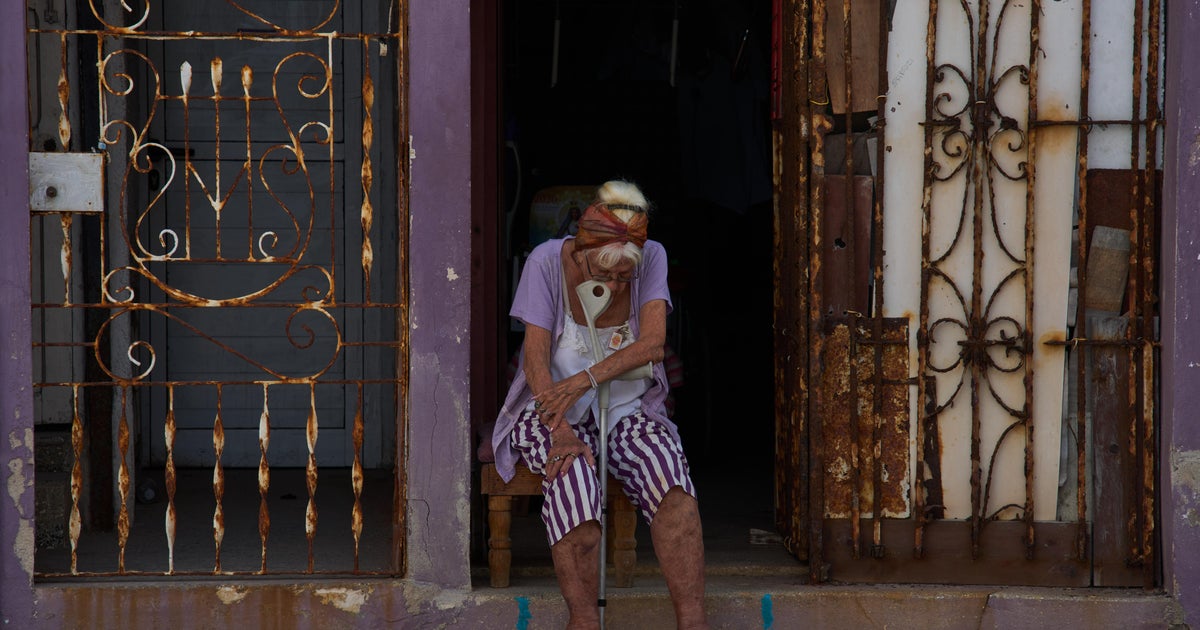
Cuba’s power grid collapsed once again on Friday, leaving millions of people across the island without electricity for at least the sixth time since President Trump cut off fuel to the island in January.
The Ministry of Energy and Mines announced the islandwide power outage on its official X account and added that officials had begun “activating service-restoration protocols.”
“No one can stand these constant blackouts. There isn’t enough food, there’s no water, there’s no electricity — you have no idea,” Mercedes Rodriguez, a 60-year-old worker in Havana, told The Associated Press as she waited for public transportation to return home. “The country is in such a sad state, and there are no words for what we’re going through.”
According to Cuban authorities, a failure reportedly occurred in transmission lines in the western part of the country, causing the system to collapse in that area — as far as Matanzas province — and the eastern section of the island was subsequently disconnected.
The official newspaper Granma reported “unstable” weather conditions further aggravated the grid’s situation.
By dusk, power had been restored to 5% of users in Havana, which has a total of about 862,000 customers, according to official data. Small power-distribution “micro-islands” were being established in the provinces of Camagüey, Pinar del Río and Granma. Some systems serving hospitals and other emergency facilities were being reactivated.
Abilén Marrero, a homemaker, sat resignedly at the entrance to her building in central Havana on Friday.
“Maybe it’ll come back this afternoon or tomorrow—there’s no way to know. We just have to wait,” she said.
Power grid collapses have become increasingly common over the past two years because of the severe economic crisis gripping the island. They have worsened since January, after the United States imposed an energy blockade aimed at forcing a change in Cuba’s political system. Mr. Trump signed an executive order that would impose tariffs on countries that sell or provide oil to Cuba.
The restrictions prevent Cuba from importing the fuel needed to operate its thermoelectric power plants, as well as replacement parts required to maintain infrastructure that in many cases has become obsolete. Just one tanker of fuel has been delivered since, by a Russian tanker in March.
The two most recent nationwide blackouts occurred in early August, following others in July and March, as well as several regional outages.
Even when the national power grid is working, Cubans regularly endure outages lasting more than 30 consecutive hours. Ernesto Soberón Guzman, the Cuban ambassador to the United Nations, called the outages a “collective punishment” in a conversation with CBS News last month.
The blackouts have had a significant impact on the population and, combined with the energy embargo, have led to transportation limitations, reduced work hours and flight cancellations, in addition to serious public health consequences.
The power outages also affect basic activities such as cooking, water supply and internet and telephone service.
The Trump administration has also quietly examined a range of options for possible military action against the island, CBS News previously reported. Officials stressed that military briefings, which discussed options including an Army-led air assault, were not an indication that President Trump or the Pentagon have decided to carry out an operation.
Secretary of State Marco Rubio has emphasized the U.S. prefers a diplomatic option for a transition to a new government led by technocrats and willing to make economic reforms, but that process has stalled despite the pressure from the Trump administration.
Food
‘Confusion in the immune system’: How allergies can develop later in life
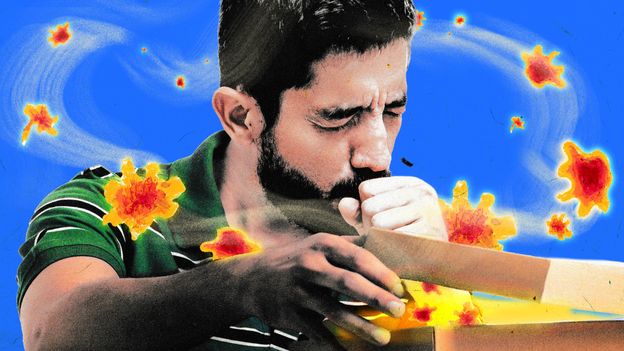
We often think of allergies as the result of an unlucky hand dealt in childhood, or even before birth. But “any person, at any point in their life, can develop a new allergy”, says allergist Kelly Colas.
Allergies can rear their ugly heads at any time in life – sometimes well into adulthood. These issues emerge seemingly from nowhere. But as researchers learn more, they are identifying a number of strange and surprising ways to “catch” new allergies – from tick bites to hormonal swings.
The Covid ‘on switch’
Some people are born with a genetic predisposition to allergy. But “it’s not all genetics,” says Ruchi Gupta, director of the Center for Food Allergy and Asthma Research at Northwestern University in Illinois. Often, “something is turning it on.”
One such “on switch” is Covid-19, which can leave its stamp on the immune system in the form of new allergies.
A 2026 study found that catching Covid-19 is associated with a significantly higher risk of developing allergic rhinitis (more commonly known as hay fever) and asthma.
The immune system can run wild during a case of Covid-19
“Infection increased the risk, and vaccination decreased the risk,” explains Philip Curman, a co-author of the study and a dermatologist at the Karolinska Institutet in Sweden. The immune system can run wild during a case of COVID-19, cranking up inflammation – including a type known to be related to allergic disease, Curman explains.
Respiratory syncytial virus (RSV) – a common childhood illness – and rhinovirus, a cold-causing virus, seem capable of similar effects, at least in children, previous studies show. Developing allergies in the wake of these illnesses is sometimes collateral damage – a physiologic example of being in the wrong place at the wrong time, Gupta explains.
“If your body sees a type of food or an environmental allergen coming in when your immune system is already overwhelmed [by fighting off a virus],” she says, “your immune system’s like, ‘Okay what is this now? Just get rid of everything’.”
Confusion in the immune system
Ironically, the treatments used to address some common illnesses may similarly have unintended effects. Antibiotic use, for example, has been linked to a subsequent risk of allergies.
Gupta, who has studied factors that may trigger allergies, says this could be because antibiotics disrupt the delicate balance of the gut microbiome, the massive colony of bacteria that live in the human gastrointestinal tract.
Scientists still have a lot to learn about the gut microbiome, but it seems to play a role in myriad aspects of our health – including immune system function. Disrupting the microbiome, Gupta says, may lead to “confusion in the immune system,” causing what should be harmless substances to be filed under threats that need neutralising.
Pregnancy is another seismic disruption to the immune system, and one that can have unexpected effects on allergies, says Colas, who is an allergist at the University of Washington specialising in allergy management during pregnancy.
About a third of women with pre-existing environmental allergies find that they get worse after conceiving, Colas says. There’s also a phenomenon known as “pregnancy rhinitis,” which is when a pregnant person who has never had allergies before develops all the telltale symptoms, like sneezing, congestion and runny nose.
Pregnancy rhinitis probably isn’t a true allergy, but rather a temporary condition that results in allergy-like symptoms, Colas says. (One key point of differentiation? Symptoms usually disappear after delivery rather than lasting forever.) Why it happens is “really poorly understood”, Colas says, but it seems related to hormonal fluctuations. The female reproductive hormones oestrogen and progesterone, after all, are well known to interact with the immune system.
Research also suggests women may experience new allergies after they hit menopause, another time of great hormonal change. “These hormones can do just about anything,” Colas says.
Allergies hiding in the weeds
The bite of a lone star tick, an arachnid native to North America but spreading to new parts of the world as the climate warms, can be another surprising allergy trigger – specifically, causing reactions to red meat.
After a decadent dinner of lamb chops and French wine during a 2007 trip to London, Thomas Platts-Mills headed back to his hotel for a good night’s rest. But then, he says, “I woke up at 2:30 in the morning. By 3:00, I was covered in hives.”
Platts-Mills, a professor of medicine and microbiology at the University of Virginia in the US, was uniquely qualified to understand this strange sequence of events. At the time of his trip, Platts-Mills’ lab was deep in the weeds of a medical mystery.
His team was trying to understand why a string of patients in the US had developed allergies to red meat after years of omnivorous dining.
By then, Platts-Mills had a hypothesis: these bizarre allergies seemed to follow tick bites. His own case helped seal the deal. Platts-Mills had been covered with, and bitten by, larval ticks after hiking months earlier. Subsequent blood tests showed high levels of allergy-related antibodies. And now, his lamb dinner had him breaking out in hives.
Platts-Mills’ unfortunate reaction helped his team define what’s today known as alpha-gal syndrome.
Ticks can carry in their saliva a sugar molecule called alpha-gal, which is produced naturally by most mammals, including those we eat. Humans, however, “lost the ability about 10 million years ago,” Platts-Mills explains.
That means, when a person is exposed to alpha-gal through a tick bite, their immune system may see it as a threat and respond accordingly. “Everything non-primate is your enemy,” Platts-Mills says. When that person encounters alpha-gal again – perhaps while enjoying a juicy hamburger – they may develop allergic symptoms including hives, swelling and gastrointestinal discomfort.
Diagnoses of alpha-gal syndrome are rapidly becoming more common in the US as lone star ticks spread to new parts of the country, well beyond their original home in the Southeast. More than 90,000 people were diagnosed from 2017 to 2022 alone, according to government data.
Is there a cure for sudden-onset allergies?
While pregnancy rhinitis usually goes away once the baby comes, many people who develop sudden-onset allergies aren’t so lucky. Whether it emerges after an illness, a tick bite or seemingly out of nowhere, a new allergy may be permanent.
Whether you’re allergic to pollen or peanuts, dust or dogs, the same general process is to blame. Allergies happen when the body responds to what should be a benign substance as if it’s a dangerous foreign invader and pumps out antibodies, a type of immune protein. When the immune system fires up, you’re left with symptoms like runny nose, itchy eyes – or, in serious cases, even life-threatening anaphylaxis.
“Your immune system has recognised [a substance] as bad and created antibodies to whatever that is,” Gupta explains. “Now, every time your body comes into contact with it, it goes on attack.”
In cases where later-in-life allergies have a likely cause, such as inflammation related to an illness or gut microbiome changes after a course of antibiotics, there are clues about how to potentially prevent or reverse the damage, at least in part. Gupta, for example, recommends that people taking antibiotics also consume probiotics, prebiotics, yoghurt and fermented foods, all of which can help support the health and diversity of the gut microbiome.
• The 1950s blunder causing mass allergies in Japan
• Nine tips for beating seasonal allergies
• Are we close to a hay fever cure?
Preventing inflammation from raging out of control during a viral illness could also feasibly stop downstream consequences like allergies, Curman says. “Could we affect the development of these secondary disorders, like asthma, with early treatment?” he asks. That’s an open question, but one worth investigating further, he says.
Immune-modulating drugs, in general, are promising for novice and veteran allergy sufferers alike. Xolair, a drug that has been used for decades to treat asthma and has more recently proven effective at taming food allergy reactions, works by targeting the immune system, blocking it from mounting an overly aggressive response that could become dangerous or fatal.
Researchers are also studying other ways to retrain the immune system to overcome allergies. These experimental approaches include vaccines that may teach the system to respond to allergens in a more restrained way – just as vaccines prepare the body to fight off viruses without going haywire – and a single-dose treatment that aims to directly supply the body with allergen-blocking antibodies.
As of now, there’s no surefire way to reverse a new allergy, Gupta says. But the future looks bright. “I’ve been studying food allergies for 20 years,” she says, “and it’s just such an exciting time to see so much progress.”
—
For trusted insights on health and wellbeing, sign up to the Health Fix newsletter by senior health correspondent Melissa Hogenboom who also writes the Live Well For Longer and Six Steps to Calm courses.
For more science, technology, environment and health stories from the BBC, follow us on Facebook and Instagram.
Food
The Lizzie Borden Story’ Compares to Real Life
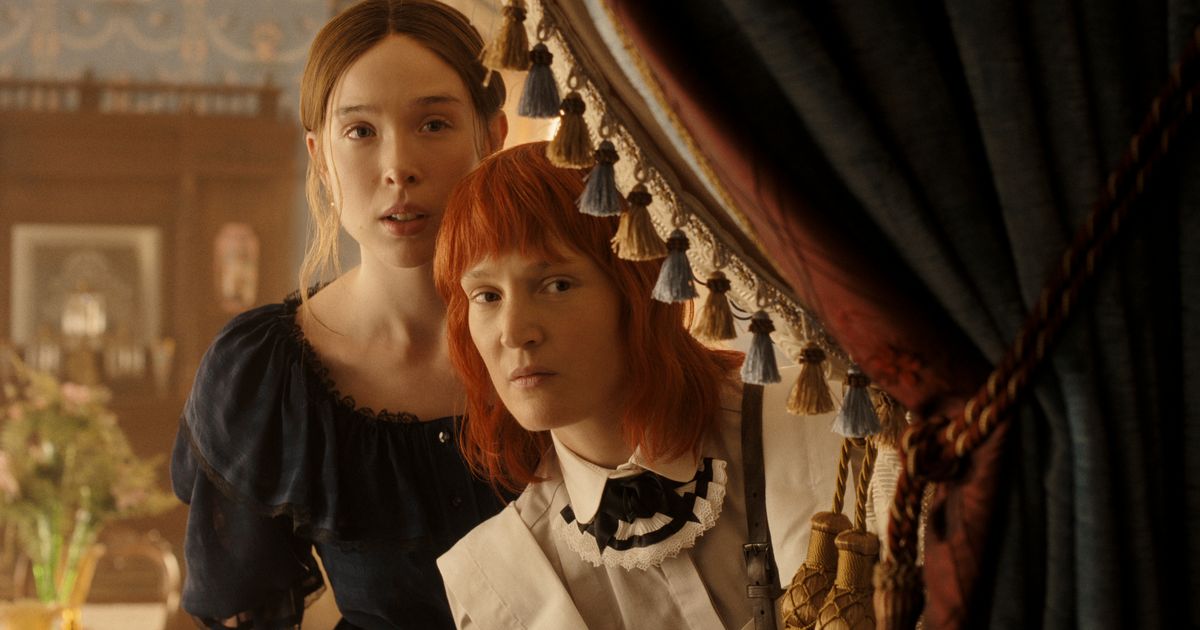
In the fourth installment of their true-crime anthology series, Monster: The Lizzie Borden Story, co-creators Ryan Murphy and Ian Brennan skirt the usual problem. In previous seasons depicting infamous American murderers Ed Gein, Jeffrey Dahmer, and the Menendez brothers, their, uh, creative interpretation of the facts prompted backlash from victims’ families and sparked debate over the ethics of true crime. Maybe Murphy and Brennan finally listened, or maybe they were looking for an opportunity to go wild; either way, the release from moral accountability that comes with tackling a 134-year-old unsolved mystery breathes new life into the anthology. If it weren’t for the inclusion of the Aileen Wuornos subplot, they might have even gotten away scot-free.
It’s only fitting that Lizzie Borden, the first female monster in the series, should be the subject to untether the series from historical fact — she has been speculated about for over a century. From the very first sequence, Monster accepts Lizzie as the murderer of Andrew and Abby Borden, her father and stepmother, when in fact her monsterhood is up for debate: She was tried and acquitted of the murders. When the Bordens were found brutally axed in their home in Fall River, Massachusetts, on August 4, 1892, their deaths were literally a locked-door mystery: The house’s doors were all locked, and the only people home were Lizzie and the housemaid, Bridget Sullivan. The family had been sick with food poisoning the day before, which they got from a mutton stew, not a cardamom-spiced, poisonous oyster soup.
Lizzie testified to being in the barn when the murders happened while Bridget was washing the windows, but it was hard to explain how they could have not heard or seen any sign of a double ax-murder in the house. Over time, writers offered up fictions to fill in the gaps of the story. In 1984, the author Evan Hunter wrote a novel called Lizzie that proposed a pet theory: Lizzie and Bridget were romantically involved, Andrew and Abby found out, and the rest was history. That’s just one example of how Lizzie came to be regarded as a woman who snapped under the pressure of Victorian misogyny. The Lizzie Borden story takes this appealing notion and runs with it. Murphy called the show “a fantasia of women vs. the system”; what he and Brennan put forth is a world of acerbic, knowing women with righteous reason to be angry. Lizzie’s arc doubles as a coming-of-age story: Young, virginal, and naïve, Lizzie is sharpened into a murderess and driven to escape her domestic prison, no matter the cost.
Was that really what motivated her to kill her parents, if she did at all? Who knows! As the prosecution repeatedly reminded the jury during Lizzie’s sensational 13-day trial, it wasn’t their duty to provide a motive (cue the writers). Using Cara Robertson’s minutely researched, authoritative 2019 book, The Trial of Lizzie Borden, as our guide, let’s map out what we do know about the real Lizzie Borden and the people she may or may not have whacked.
Lizzie Borden (Ella Beatty)
Lizzie Andrew Borden, born in 1860, was the youngest of two daughters by Andrew Borden and Sarah Borden (née Morse), who died when Lizzie was only 3 years old. As the daughter of a prominent businessman, Lizzie enjoyed a position of relative status in Fall River: She attended the “society church,” volunteered at Sunday school, and was a member of the Women’s Christian Temperance Union. In other words, she led a buttoned-up, good-Yankee-girl life. But, as Robertson writes, “there is little evidence that she found these activities satisfying.” Lizzie resented her father’s insistence on living below his means; when he bought a house for Abby, relations between stepmother and stepdaughter soured for good. Lizzie snapped at anyone who referred to Abby as her “mother.”
Unlike Monster’s young, ethereal Lizzie, a keeper of doves and cherry blossoms, the real Lizzie was 32 years old at the time of the murders and described by a friend as “a monument of straightforwardness.” At her trial, her stoic demeanor and shifting testimonies were nearly her ruin. As in Monster, Lizzie blamed some of her story inconsistencies on the morphine she’d been administered as a sedative. But she didn’t have to lie that much: The mere fact of who she was — a white, wealthy woman who went to church — was enough to plant the seed of doubt in the jury. They simply didn’t believe a woman like her could wield a hatchet, all evidence notwithstanding. According to Robertson, the verdict did come together as quickly as is shown in Monster: The judges held out for an hour and a half, out of respect for the district attorney.
When I read that Max Winkler — who directed many of the season’s episodes — told Vanity Fair that the men in charge of the show were “idiots” with a “deeply limited” “understanding of hymens and periods,” I worried about what Monster would purport to say about women. But in fact, menstruation played a role in the Borden case. Despite widespread belief that a woman’s period could lead to criminal behavior, the very notion of menstruation was such an uncomfortable topic for Victorian men that neither prosecution nor defense manipulated the fact that Lizzie had been on her period the day of the murder. Instead, it was used to explain why blood-soaked cloths were found in the cellar. In Monster, Bridget tells Lizzie that her “heavy menses” represent “freedom, because it means no man’s seed has taken hold.” To help with the cramping, Bridget prescribes a hand-cranked vibrator and an orgasm — excuse me, a hysterical paroxysm.
Lizzie died in 1927, shortly before turning 67, in Fall River. She was shunned out of society, never married, and was not a suffragist, not as far as I can tell.
Bridget “Maggie” Sullivan (Vicky Krieps)
The Lizzie Borden Story’s sharpest diversion from historical fact is its portrait of Bridget Sullivan as an older, irresistible, tie-wearing feminist with a mullet, come to teach Lizzie the ways of liberated women. To justify Vicky Krieps’s inalienable Central Europeanness, she is given a background as a half-German, half-Irish globe-trotter with deep esoteric knowledge of “the domestic arts”; Abby hires her after she washes off the period stain Lizzie had left on her fainting couch, a skill that comes in handy later.
In truth, Bridget was a shy 26-year-old Irish immigrant. She was treated with such indifference by the Bordens that, with the exception of Abby, no one bothered to learn her name, calling her by the name of their last servant, Maggie, instead. Robertson writes that Bridget told authorities that if “things didn’t go in the [Borden] house as they should” — referring to the tension between the Borden daughters and their parents — she stayed in the family’s service “out of loyalty to Abby Borden, whom she termed ‘a lovely woman.’” Her story never changed: On the morning of the murders, after she was done washing the windows, she went to lie down in her room with a headache and some nausea. She was woken by Lizzie after the discovery of Andrew’s body and went to get the doctor. After she testified to this sequence of events at the inquest, Bridget gathered her things from the Borden house and never had anything to do with the family again. Other than the fact that two people getting ax-murdered didn’t rouse her from her nap, there wasn’t anything suspicious about Bridget; not that there weren’t plenty of people ready to pin the crimes on her.
According to Robertson, “Irish immigrants alone composed over a third of those arrested between 1889 and 1893.” An influx of immigrants — particularly Irish Catholic, Portuguese, and French Canadian — was drawn to Fall River’s robust textile industry over the course of the 19th century; many young women ended up in domestic service. Prevailing xenophobic notions of the time would have insisted on Bridget’s culpability, particularly when Irish women were seen as more likely to be able to swing an ax than leisurely ladies like Lizzie. But there was no evidence pointing to Bridget and no apparent motive (Lizzie, at least, had been at odds with her parents about money).
Though The Lizzie Borden Story positions her as Lizzie’s feminist Virgil, Bridget’s first instinct is to kill the Bordens with poison, which was then considered to be the feminine murder weapon. One of Monster’s most interesting narrative moves is to shift the power dynamics between Bridget and Lizzie as their murderous plans get underway. For all of her radicalism, she is more sensitive than Lizzie, more humane; but the show could have done with 50 percent fewer Traitors-like uncloaking moments revealing her return. We get it!
After Lizzie’s acquittal, Bridget moved to a small town in Montana. She married John Sullivan, a fellow Irishman of no relation, in 1905; they had no children. She died in 1948 at 82. Whether she ever purchased a Chattanooga medical massager, we’ll never know.
Andrew Borden (Charlie Hunnam)
In The Lizzie Borden Story, Andrew is depicted as a pathetic, desperate man who abuses women and “adjusts” the corpses he fits, come hell or high water, into his custom-made caskets. Lamenting his heirlessness and still grieving the loss of his first wife, Andrew is nearly “driven insane” by the “stench of estrogen” that “chokes the air” he breathes. Still, the estrogen all but overpowers him: It’s Andrew’s passivity in the face of Abby’s cruelty that turns Lizzie from innocent virgin to murderess, though in his view, he should get a trophy for surviving a house full of women.
Andrew was notorious for his tight-fistedness, despite his wealth. In Monster, he refuses to lend money to his brother-in-law John Morse because his “moral code” won’t permit it. In real life, Andrew’s frugality drove a wedge between him and his daughters. He descended from a prominent family but had to make his own fortune; his side of the family line was the less rich one, and even after he amassed his wealth, he was never as rich as his cousin. After getting his start in cabinetmaking, Andrew invested all over Fall River, most consequentially in the real-estate business. Despite his dedication to making money, he was uninterested in all the stuff that came with having money: He preferred to keep himself out of “society” and refused to live on “the Hill,” Fall River’s elite enclave.
In 1887, after Abby’s father died, Andrew bought out Abby’s stepmother’s share of her father’s house, so her sister could live there rent-free. The Borden daughters felt it was unfair that Abby should have a house under her name and they shouldn’t. Andrew transferred some property to them, but it was too late; things got so tense in the family that they barely spoke to one another. In a precursor to the crime that would take Andrew’s life, in 1891, the Borden house was robbed in the middle of the day. Emma, Lizzie, and Bridget claimed not to have heard or seen anything (the house was apparently soundproof and sightproof). Abby’s jewelry was ransacked along with cash and gold from Andrew’s desk. From then on, maybe suspecting his daughters of foul play, Andrew kept the doors to his room locked — both the one that opened out into the stairs and the one connecting his room to Lizzie’s.
Even then, Lizzie’s trial revealed that the father and daughter were close. He never wore a wedding band but was buried wearing a thin gold ring (reimagined as a signet in the show) that Lizzie had given him as a gift. After his death, rumors circulated that he had been preparing to make a new will. If it was really made, it was never found.
Abby Borden (Rebecca Hall)
Though popular culture has zeroed in on Lizzie as the feminist symbol, Abby was just as much a casualty of 19th-century misogyny as her stepdaughter; according to Robertson, her death was seen as “the lesser tragedy,” a view that is shared by Monster’s Lizzie, who sort of regrets murdering her father but thinks her stepmother had it coming.
In real life, Abby’s own stepmother described her as a “‘close-mouthed’ woman who could ‘bear a great deal and say nothing,” maybe subtly hinting at the powerlessness of Abby’s position: She had little say over household affairs, a distant husband, and hostile stepdaughters. Monster recasts Abby, played with wonderful mischief by Rebecca Hall, as a bitter woman on the brink. Or, as she writes in her journal during a Betty Friedan–like epiphany, a woman who has realized that “this” — the joyless marriage, the imprisonment of her domestic life, the narrowness of experience — “is not enough.”
The Lizzie Borden Story lifts Abby out of mythological passivity and puts her at the center of events, perhaps most significantly by having her kill Lizzie’s pet doves. This birdicide appears time and again in retellings of the Borden case, but usually the act is carried out by Andrew (at her inquest, Lizzie testified that Andrew killed some pigeons with an ax but didn’t say anything about them being pets). In Monster’s interpretation, Abby’s cruel mistreatment of Lizzie is a sublimation of her own discontent with her infertility and with having been put in a maternal position she didn’t ask for. In truth, Abby struggled to find her footing with her stepdaughters when she married Andrew at a spinsterly 37 years old. Emma, at 14, rejected a new maternal figure instinctively; for her part, Lizzie was just 3 years old, and by all accounts only began referring to Abby as “Mrs. Borden,” rather than “mother,” after the property dispute.
On the day of the murders, Lizzie claimed that Abby had received a note from a friend in the morning and gone out. Bridget testified that the last she saw of Abby was when she instructed her to wash the windows. After the discovery of Andrew’s body, Bridget was the only one to show concern for Abby’s whereabouts and was the one who found her body upstairs in the guest room. The note, if it really existed, was never found.
Emma Borden (Billie Lourd)
Emma appears in The Lizzie Borden Story as an absent, shrewd older sister who would rather be a spinster than be “hog-tied to one man for the rest of [her] life.” She tells the suitorless Lizzie that men are only after their family fortune, of which she intends to take the lion’s share. The show presents Emma as a woman who knows how to manipulate her “feminine power” to her advantage, but in fact it was Emma’s conservatism that eventually estranged the sisters.
After the murders, Emma stuck by Lizzie’s side. Older by nine years, she seems to have been keen to take up the maternal role that Abby “usurped” when their mother died — the promise she made at her mother’s deathbed to “protect” her little sister, one that Monster’s Emma evokes often, was true. Court reporters described her as “a prim, little, old-fashioned New England maiden.” At trial, she explained why, a week after the murders, Lizzie burned a blue dress, telling the jury that she had herself encouraged her sister to do so: The dress was old, worn out, and stained with paint, simple as that.
On the day of the murders, Emma was visiting friends in another town. After Lizzie’s real-life acquittal, the Borden sisters bought a house called Maplecroft on the Hill, the wealthy neighborhood where they had long wanted to live. There Lizzie threw parties for the actress Nance O’Neil and her theater company, which Emma thought were indecent. Her pastor advised her to move out, and, in 1905, she took his suggestion and never spoke to her sister again. Emma died in 1927, only ten days after Lizzie.
John Morse (Joey Pollari)
John Morse is a minor character in The Lizzie Borden Story, but in the real-life case, he loomed large. Here, he shows up to request a loan from Andrew — when denied, he tries extortion, which also fails — and to deliver Abby from sexual frustration. Other than Lizzie and Bridget, Andrew was the only person in the Borden circle to raise suspicion. He was Lizzie’s maternal uncle, a horse trader who lived out West and was, according to a newspaper account of the time, “regarded by his neighbors as a very eccentric and peculiar man.” According to Robertson, a local newspaper received a tip from an unnamed member of the Borden family that Lizzie and John were too close, but there was no evidence to back up the rumor. In fact, though John arrived on August 3, Lizzie saw him only after the murders on the following afternoon. On the morning of August 4, John had breakfast with Andrew and Abby and went about his business. His alibi was airtight and not very interesting.
Nance O’Neil (Jessica Barden)
In Monster, Lizzie meets the tragedienne Nance O’Neil when Bridget takes her to a theater production in town. Later, Nance coaches Lizzie in acting innocent for the trial — she suggests Lizzie faint at the sight of her late parents’ skulls, a moment that, in real life, restored the femininity that had been put into question by Lizzie’s steeliness. In truth, Nance didn’t come into Lizzie’s life until 1904, after Lizzie had rebranded as “Lizbeth” and started attending the theater in Boston. Nance made her name in New York, where she appeared in numerous theater productions — some of her most notorious roles included Hedda Gabler and Lady Macbeth. For a few years, Lizzie and Nance nurtured a closeness that was suspicious to Fall River society and to Emma especially. According to Robertson, Lizzie lent Nance and/or her theater company money on at least two occasions.
Jessica Barden has a ball playing a mercurial, theatrical Nance who gets nauseous at the sight of her peas touching her carrots touching her mashed potatoes. Sometime after Lizzie and Emma’s estrangement, Nance and Lizzie also drifted apart, and, in 1916, Nance married fellow actor Alfred Hickman. They had no children. Nance died in 1965, at 90 years old; her New York Times obituary did not mention her association with Lizzie.
Elizabeth Báthory (Vicky Krieps)
The first text Bridget assigns to Lizzie in her Feminism 101 course is the story of Elizabeth Báthory, who is often thought of as history’s most notorious female killer. Báthory, who was later given the epithet the Countess of Blood, lived in a region of 17th-century Hungary that is now Slovakia, where she is rumored to have killed over 600 young women and bathed in their blood to maintain her youth, hence the Dracula-inspiring allegations. Báthory descended from a noble family that ruled Transylvania. After coming under suspicion for the disappearances of noble young women (the previous disappearances of peasant and servant girls didn’t stir up quite as much agitation), Báthory was imprisoned in her own castle, where she died in 1614; the servants that were claimed to be her accomplices were executed. These days, Báthory’s guilt is debated by scholars; some believe that she was the target of a political conspiracy helmed by the king of Hungary, Matthias II, who owed Báthory a debt.
It’s not Báthory’s first rodeo in the Murphyverse: In American Horror Story: Hotel, she provides loose inspiration for Lady Gaga’s character Elizabeth Johnson, a.k.a. the Countess, a vampire/ghost/hotelier. Here, she is given a backstory as a victim of sexual abuse and made into an imperfect example of unbridled female rage: Báthory took out her anger on other, more vulnerable women. Despite the lavish visuals of the series’ foray into medieval Hungary, the connection between Báthory and Lizzie is thin at best, mostly coming off as an excuse for Murphy to write in his own obsessions into the show.
Aileen Wuornos (Sarah Paulson)
I was very curious to see how Aileen Wuornos would be introduced into The Lizzie Borden Story, because the association between the two women seemed so … random. To be fair, Murphy and his team are always finding ways of fitting Wuornos in; she also appeared in AHS: Hotel, also as a ghost.
Aileen — who was most famously portrayed by Charlize Theron in an Oscar-winning performance in the film Monster, go figure — killed seven men between 1989 and 1990. She received a death sentence for the murder of Richard Malloy and was executed by lethal injection in 2002. A sex worker who suffered a disturbingly abusive upbringing, Aileen claimed that she was acting in self-defense when she killed Malloy (who was a convicted sex offender), though much later, in Nick Broomfield’s documentary Aileen: Life and Death of a Serial Killer, she walked back that statement.
Here, Aileen is glibly presented as a Lizzie Borden fan. She introduces herself as Lizzie to a man who picks her up on the side of the highway and imagines herself ax-chopping the guy’s penis after he sexually abuses her; later, she stays with her girlfriend Shelby (Jessie Lee) at the actually real Lizzie Borden Bed & Breakfast. Shelby reads to Aileen about Lizzie, much in the same way Bridget reads to Lizzie about Elizabeth Báthory. Aileen interprets Lizzie’s story as an aspirational text, a “warning” that women will not sit back in passivity as the world mistreats them. The inclusion of Aileen’s story is not only random, like Báthory’s, but it also indulges Monster’s ghoulish instincts. The show can’t help itself from exploiting one more tragic story. We learn nothing about Lizzie Borden, or about her world, from having her ghost listen to Aileen’s very sad and violent, very real-life story. It’s the show’s lowest point; the re-creations of her trial testimony and execution are abhorrent.
Bertha Manchester (Linda Reiter)
In episode three, Lizzie and Bridget perform what amounts to a dry run of their ax-murdering plan on the cruel Bertha Manchester, a neighbor in whose house Bridget is sent to work nights after she poisons the Bordens with oysters. Bertha whips Bridget for inspiring uncomfortable feelings in her. Lizzie takes up the ax while Bridget freezes at the sight of Bertha’s gut spilling all over the floor, which causes some tension between the two protagonists. The murder happens at night; the next morning, despite Abby’s quickness to accuse Bridget of the crime, the police take an immigrant into custody.
In real life, Bertha Manchester was also ax-murdered in Fall River, though not until May 1893, nearly a year after the Borden murders. The similarities between her death and the Bordens’ provoked suspicion that a serial killer had come to town; it was about the time that Jack the Ripper had been terrorizing London, which led some to wonder if a copycat had come to Massachusetts. A Portuguese farmhand confessed to and was arrested for Bertha’s murder, a fact that is alluded to by Bertha’s xenophobic rant in Monster.


B/R’s 2026 College Football Winners and Losers from Week 3
At risk of being prisoners of the moment, there is a very real possibility that we will never forget Week...


Ed Sheeran says situation in Gaza is ‘catastrophic and unjustifiable’ as he opens solo concert
PHILADELPHIA — Ed Sheeran opened a solo concert Saturday with comments about Gaza after controversy swirled around his tour and...


Ed Sheeran fans weigh in on controversy ahead of Philadelphia show
Ed Sheeran performed Saturday night for the first time since Macklemore was dropped from the tour's US dates following his...


'I'm so, so sorry': Ed Sheeran speaks out at concert
Before performing any music, Ed Sheeran took the stage Saturday night in Philadelphia to apologize and address Macklemore …

Ed Sheeran admits 'mistakes' as he addresses Macklemore controversy. #BBCNews


Concert Protested
Ed Sheeran addressed the ongoing controversy surrounding the removal of Macklemore from his Loop Tour during Saturday’s stop in Philadelphia...


Frankie Muniz reunites with estranged wife Paige Price after concerning Instagram post
Frankie Muniz took to Instagram Saturday with a wholesome family-themed upload after admitting he’d hit “rock bottom” in a previous...


How a bus collision in LA set off a chain of events that killed five people
“The helicopter just crashed!” a voice in the crowd yelled, drawing eyes away from the splayed-out wreckage of a bus...


UFC 331 results: Joshua Van outclasses Alexandre Pantoja to retain flyweight title
Updating Live (36) Pinned Link copied Joshua Van def. Alexandre Pantoja via unanimous decision (49-46, 49-47, 50-45) The scorecards were...
College football scores, live updates: Ole Miss leading Lane Kiffin, LSU in second half
You may have heard that LSU is facing Ole Miss in Lane Kiffin’s return to Oxford on Saturday night. It’s...
-

 Blog2 weeks ago
Latest US Political News Updates: Key Developments Shaping America in September 2026
-

 TravelNews2 weeks ago
Republican midterm convention 2026: What to know about Trump’s Dallas event
-

 Business5 days ago
Suspected stolen Tesla drives onto Pacific Beach boardwalk after police chase
-

 Business1 week ago
What is So Hard About Behind-The-Meter Power For Datacenters? Part 1
-

 Business2 weeks ago
TechCrunch Mobility: Tesla Cybercab hits the road – and a snag
-

 Video1 week ago
Vance calls out El-Sayed over remarks about his family
-

 Video1 week ago
Charlie Kirk statue draws supporters to Times Square
-

 Entertainment1 week ago
Savannah Guthrie quietly makes heartbreaking admission in new statement about missing mom Nancy