
Business
Rivian (RIVN) Q2 2026 earnings

Rivian Automotive reduced its 2026 spending plans and slightly narrowed its previously forecasted losses this year as the company reported second-quarter results Thursday.
The revised guidance now includes adjusted losses between $1.8 billion and $2 billion, down from $1.8 billion to $2.1 billion, and capital expenditures of $1.7 billion to $1.8 billion, down from $1.95 billion and $2.05 billion. It reconfirmed a previously raised delivery target of 65,000 to 70,000 vehicles to customers.
Rivian said the $250 million reduction in capital spending at the mid-point was enabled by “project efficiencies and timing of spend,” which the automaker previously increased to allow for added investments in new technologies such as its hands-free driving system.
Here’s how Rivian performed in the second quarter, compared with average estimates compiled by LSEG:
Loss per share: 47 cents adjusted vs. a loss of 63 cents expected
Revenue: $1.66 billion vs. $1.51 billion expected
The company’s gross profit, which is closely watched by investors, was $179 million compared to a loss of $206 million a year earlier. That included a $36 million loss for its automotive segment and a $215 million profit for its software and services division.
Rivian’s second-quarter revenue included $1.14 billion from automotive and $515 million from software and services. The results were slightly higher than its pre-released second-quarter revenue expectations of between $1.55 billion and $1.65 billion that were released last month in conjunction with disclosing a public offering of 75 million shares of its Class A common stock.
Automotive revenue increased 23% year-over-year, primarily due to a 14% increase in vehicle deliveries and a $103 million increase in revenues related to regulatory credits, the company said.
Rivian’s net loss attributable to common stockholders during the second quarter was $837 million, or 63 cents a share, a $278 million, or 34 cent per share, improvement compared with the second quarter of 2025.
Rivian previously said the raised delivery guidance was driven by higher deliveries during the second quarter of its electric delivery van and flagship R1 products.
The company also started delivering its midsize R2 SUV during the quarter. It’s ramping up production of that vehicle at its sole production plant in Normal, Illinois, which has capacity to produce 160,000 of the vehicles annually.
“Incredibly excited with R2 now getting into customers’ hands, and the overall feedback and response to the product has just been outstanding,” Rivian CEO RJ Scaringe told CNBC’s Phil LeBeau on Thursday. “And so, of course, that’s a major step for us on our path to profitability.”
Scaringe has said Rivian will reach profitability this year on a per-unit production basis with the R2, a smaller and less expensive sibling to its current luxury R1s SUV. But he said the company needs more scale than the 160,000 units already planned for the vehicle at its current plant in Normal, Illinois, to achieve profitability.
Rivian on Thursday reconfirmed its cash, cash equivalents and short-term investments balance was an estimated $5.3 billion, up from $4.8 billion to end the first quarter.
The company said later this year it expects to receive $1 billion in non-recourse debt financing from its software deal with Volkswagen Group and an additional $250 million equity investment from a separate partnership with Uber .
Business
New York files $36 billion lawsuit against Kalshi, alleging it’s running an “illegal gambling operation”
In courts across the nation, sports betting continues to be a hot topic. The nine Justices of the U.S. Supreme Court will surely decide the matter after thousands of attorneys have earned enough to purchase a third house.
It’s a never-ending battle over state rights. The Supreme Court opened the wager by determining that gambling is gambling. bet! bet! The 50 states will be handling the issue of floodgates for 2018. This is without federal interference. The federal government regulates prediction markets. These markets can offer gambling-like activities in every state.
New York’s attorney general Letitia J. James is suing Kalshi, accusing him of running an illegal gambling operation. She wants a financial penalty at least $36 billion based on how much money Kalshi made by offering sports betting, and $100,000 for every instance where he tried to provide unlicensed wagering.
No one would believe it if they told you that betting on sports is not gambling. It is a question of whether or not the federal approval of sports prediction markets violates state rights to determine whether they will permit their citizens to wager on sporting events.
Ironic to say the least. The Supreme Court decided that it was federal overreach to prohibit states from offering sports gambling. The federal government could be going too far by allowing sports betting.
New York’s case, and others similar to it, will go on until the Supreme Court decides whether or not sports-related betting markets are gambling. They certainly are. And whether the federal governments has the right to implement gambling-based predictions markets in all fifty states even if some (or many) don’t like them.
Business
Customer sparks massive debate about tipping kitchen staff

It’s enough.
It’s clear that the tipping culture has gone out of control in America. No matter whether it is a $7 cup of coffee at a fancy restaurant or an expensive bill, everyone extends their hands to ask for a tip.
Everyone seems to have an idea about this hot topic, even one customer that felt it was a little too much when asked to tip the kitchen staff in a deli.
@HistorianUSA1 shared the original video on X, where more than 60,000 people chimed into debate about this topic.
The stranger, in his vehicle, tells how he, on a trip, stopped at Schlotzsky’s for a pizza sandwich. He hasn’t visited the chain in 10 to 15 years.
“I thought I would go into there and order [on] that little credit card thing, [which] asked you if want to tip [the kitchen crew] before you get your orders. “So I was thinking, if I didn’t tip the crew will I get a booger-sandwich?” He asks honestly to the camera.
I don’t like that. The clip under 60 seconds ends. “Why do we tip when we are not served in fear of something being done to our food?”
The X user started the conversation by writing, above the video: “Tipping Culture is Completely Out of Control.” Guy goes to a deli and orders a sandwich that he’s not had for 15 years… but the machine tells him he must tip before getting his food.
“No server. Table service is not available. You can tip us, or you could get a booger-sandwich. Why do we tip people that aren’t serving us? It’s no longer hospitality, it’s just a rip-off. The customer should not be held responsible for the risks and the loss. “Absolute nonsense.”
The thread was quickly populated by almost 200 participants.
It should be against the law for pay machines to ask for tips. The question should only be visible, but it shouldn’t be mandatory to answer. Asking for donations to round up should also be prohibited. “Donation is voluntary, not an order,” wrote one.
I have cancelled orders exactly in this situation. Someone else commented, “Food quality is dependent on the tip I leave. This is an unfair shakedown.”
Another said: “Businesses who refuse to pay a wage that is livable don’t deserve your patronage.”
Another wrote: “My rule says that if I’m required to get up and follow an order, then I don’t tip.”
Business
Flight attendants at Canada’s WestJet go on strike in dispute over pay

NEW YORK – Flight attendants at WestJet Canada, the second largest airline in Canada, went on a strike over pay Sunday.
On its Facebook page, the Canadian Union of Public Employees (CUPE), which represents 4,400 members of the airline’s cabin crew, has announced the strike. WestJet announced the strike on its Facebook page and cancelled more than 300 flights by early Sunday morning, disrupting travel plans across Canada during a 3-day holiday weekend.
The dispute centered around how the flight attendants were to be compensated for work performed on the ground. While the union claimed that some of this work was unpaid, the company insisted its employees were compensated. They cited a system where staff are paid on a credit hour basis rather than hourly.
Alexis von Hoensbroech is the CEO of WestJet Group. “We proposed a proposal which would have established a new standard in Canada for the cabin crew, making WestJet Canada’s only airline that offers an hourly wage covering time both before and after flight, as well as a two-digit increase in wages in the first year, amongst other priorities raised by the union,” said von Hoensbroech. It was not accepted.
Alia Hussain is the president of the union that represents cabin crew. She said that negotiators tried “until the last minute” to reach a fair agreement that recognized the importance of cabin crews’ work.
Hussain stated that the offer from WestJet was not enough.
Both parties said that they are willing to continue negotiations in order to come to an agreement.
WestJet said that it would contact people who reserved directly with them via email, while those who booked through a travel agent or third-party platform should reach out to them. WestJet will contact those who made reservations directly with the airline via email. Those who booked through travel agents or third-party platforms should also reach out.
Flights operated by WestJet Encore on Q400 aircraft, and code-share flights conducted by partners of the airline, are not affected.
Flight attendants from Air Canada, Canada’s biggest carrier, left more than 100,000 passengers stranded during the peak season of travel last summer due to a partial strike over groundwork. The strike lasted for three days until the two sides reached an agreement.
___
Jim Morris, a Vancouver-based writer for the Associated Press, contributed this report.
Business
6 Car Brands Bringing Back The Body-On Frame SUV

Three words, “sport utility vehicle”, might not be the best way to describe the term. It is important to note that the SUV umbrella covers a broad range of vehicles, from the subcompact Subaru Crosstrek, which is basically a Subaru Impreza Hatchback fitted with a lifting kit, up to the huge, truck-based Chevrolet Suburban.
The biggest difference in the SUV segment is between unibody SUVs that are based on cars and body-on frame SUVs, which look more like trucks. There is no correct or incorrect answer to the debate between unibody and body-on frame SUVs, since each has their own advantages and disadvantages. Unibody SUVs are generally more fuel-efficient, have a better driving experience, and cost less. Body-on-frame models excel at off-road capabilities and towing.
The popularity of unibody SUVs is soaring amongst mainstream buyers. Models like the Toyota RAV4 or Honda CR-V are dominating the sales charts in America. However, there’s also a lot of interest for more truck-like, traditional SUVs. Several automakers are bringing back body-on frame models that were popular in the past, or expanding their lineups to include new body-onframe SUVs. We’ve listed five big models to watch.
Toyota has an impressive body-on frame SUV line-up in North America, including the 4Runner Land Cruiser and Sequoia. The company has a loyal following for each model, and recently introduced a body-on frame SUV that is sure to appeal to American enthusiasts of 4×4. The Land Cruiser FJ is a new entry-level Land Cruiser with a retro design and streamlined body-on frame.
The Land Cruiser FJ has a very simple engine, a 2.7-liter four-cylinder naturally aspirated unit. The Land Cruiser FJ is likely to seem weak compared with Toyota’s 4×4 models for the American market, all of which have hybrid and turbocharged engines. There are those, however, who will appreciate the FJ’s no-frills, simple drivetrain.
Toyota claims that its Land Cruiser FJ model is not suitable for the American market. However, the retro-styled FJ Cruiser was sold in America in the early 2000s and became an instant cult favorite. The Land Cruiser FJ may be forbidden to Americans but the new retro Toyota off-roader with body-on frame construction is worth celebrating.
Hyundai, unlike the other brands on this list has not been building SUVs with body-on frame for a very long time. Hyundai’s unibody Santa Cruz truck is probably the toughest vehicle it has ever made. Hyundai is working on a new body-on frame platform to try and change this.
Hyundai presented a concept SUV called Boulder at the New York International Auto Show in 2026, which previews its direction. Hyundai will build and engineer its first body-on frame platform in America. Hyundai claims that the first vehicle to be built on this platform is a midsized pickup, which will reach the market in 2030.
Hyundai claims that the Boulder Concept only represents a design exercise, but it suggests a new adventurous 4×4 model, with its eyes on 4x4s such as the Ford Bronco and Jeep Wrangler. Hyundai has been making great strides over the past few years. A move into body-on frame SUVs and trucks, which are highly competitive in nature, will be its biggest step yet.
General Motors is yet to confirm the existence of a body-on frame SUV. The brands listed above have either hinted or officially announced new models, while General Motors still has not confirmed if it will be releasing a body-onframe vehicle. The idea of adding an rugged mid-sized SUV to the GMC lineup (and possibly the Chevrolet as well) makes sense. Industry reports indicate that General Motors has been working on a GMC Jimmy.
The lack of a tough SUV rival to Ford Broncos, Jeep Wranglers, or Toyota 4Runners in GM’s lineup has always seemed odd. The GMC Canyon pickup and Chevy Colorado SUV are already capable of being a mid-size body-on frame SUV. General Motors had plans to build a new GMC Jimmy, but they were scrapped to concentrate on EVs. The Jimmy project has been brought back to the table now that regulations have changed.
It is only natural to ask if the Chevrolet version will be available as well. In the past, the Chevrolet Blazer has always been the Bowtie version of the GMC Jimmy. Chevy is now using its storied Blazer brand on crossovers and EVs. It would need to either use a different nameplate or shift the branding for the purported Jimmy.
Nissan, one of the largest automakers, is a leader in the development of new body-on frame vehicles. The company plans five body-onframe models, built by American manufacturers, for the Nissan and Infiniti brand, each with V6 engines or hybrid V6 powertrains. One of these new models is a body-on frame version of Nissan Pathfinder. This will bring the SUV to its roots. It will probably be sold along with the unibody Pathfinder.
Nissan confirmed that a brand new Nissan Xterra is coming. This model will appeal to 4×4 fans and weekend adventures. Nissan discontinued the original Xterra in 2015. It was one of most iconic SUVs from the ’90s to the 00s.
Nissan will launch the new Xterra at the end of 2028. Infiniti has not confirmed details of its new body-on frame SUVs. However, it is expected that they will be more upmarket versions than the next-generation Pathfinder or Xterra. The new platform is expected to be used by the next-generation Nissan Frontier mid-sized pickup truck, as well as the two new SUVs.
Mitsubishi has been a disappointment in recent years, not least because its car lineup is so far behind its 1980s-90s peak. Mitsubishi, the brand once known for its 3000GT and Lancer Evolution models, now offers only generic crossover SUVs in America.
Mitsubishi recently raised eyebrows by announcing its plans to launch a brand-new Pajero in the fall of 2026. Pajero is one of Japan’s legendary SUVs. It was previously sold in North America as Mitsubishi Montero and has a history that includes twelve victories at the Dakar Rally. Mitsubishi claims that the Pajero is a tough flagship SUV, which will use the same body-on frame platform as the Triton truck.
Mitsubishi will return to the mid-sized truck segment in America with a model that is based on Nissan Frontier’s next generation. The new Pajero or Montero may also be sold in the United States, but it remains to see. The new Pajero may also have no relation to Nissan’s next-generation body-on frame models. Mitsubishi could benefit from a body-on frame SUV and a pickup truck.
Business
Raising Cane’s to open 7 new restaurants. See locations

Raising Cane’s celebrates 30 years in August. This year the company will be celebrating the anniversary with the opening of seven new stores and some re-openings.
Company plans to build seven new locations, two of which will be in Georgia and eastern North Carolina. According to USA Today, the company also intends to open four renovated locations.
Restaurant said that it was concentrating on its growth.
Pensacola News Journal, part of USA TODAY Network, and Augusta Chronicle reported that the chicken finger franchise opened in Pensacola on June 16, and in Albany on July 21, respectively. The company held a lucky 20 drawing at the Albany Georgia opening where 20 people won free food every year.
Raising Cane website states that the company’s first store opened on August 28th, 1996. The company is known for their chicken fingers, and Cane’s Sauce. It describes the sauce as being “thick and tangy”, and is made of multiple spices.
Raising Cane’s released a statement saying that August is an important month as it marks the 30th anniversary of its first restaurant, which opened in 1996. Every opening, whether it’s in a new market like Rocky Mount or Statesboro, to welcoming back customers to newly renovated Restaurants represents Raising Cane’s commitment to the future.
Raising Cane’s is reopening and opening new locations. Here’s the latest information.
Raising Cane’s to reopen in August
Raising Cane’s revealed to USA TODAY that this month, the company plans seven new openings as well as four reopenings at locations which have undergone renovations.
Included in this are:
Open Doors
Michigan – 26245 Novi Road (Aug. 3).
North Carolina – 1010 N. Wesleyan Blvd., Rocky Mount (Aug. 3)
California – 400 North Moorpark Road Thousand Oaks (Aug. 10)
California – 16940 Slover Ave., Fontana (Aug. 17)
New Jersey – 801 W. Edgar Road, Linden (Aug. 17)
Alabama – McFarland Boulevard, 1241 E., Tuscaloosa (Aug. 24)
Georgia – 24087 US-80, Statesboro (Aug. 24)
Re-openings
Texas – 1045 Texas Ave. College Station (12 Aug.)
Kentucky – 2555 Nicholasville Road, Lexington (Aug. 17)
Nevada – 7550 S. Las Vegas Blvd., Las Vegas (Aug. 17)
Ohio – 1320 N. Hamilton Road, Gahanna (Aug. 24)
Contributors: Brittany Misencik of the Pensacola News Journal and Miguel Legoas of Augusta Chronicle
Saleen Martin works as a trending reporter for USA TODAY. Saleen Martin is a reporter for USA TODAY’s trending team. She hails from Norfolk, Virginia (the 757). Email her at sdmartin@usatoday.com.


Broadway’s ‘Hadestown’ Parts Ways With Actor Following Online Controversy
The producers of Broadway’s Hadestown, Mara Isaacs (Mara Isaacs), Dale Franzen (Hunter Arnold), and Tom Kirdahy announced this week a...


‘Hadestown’ Parts Ways With Actor Geno Segers After Online Outrage
Geno Segers has been removed from the Broadway production of Hadestown due to online backlash over his social media posts....


WWE legend Torrie Wilson nearly retired from posting sexy photos after a call from a so-called friend
Torrie Wilson, who turned 50 last summer, showed that her fastball was still intact. WWE Legend Torrie Wilson has led...


Vincent Pastore, ‘The Sopranos’ star, dies at 80
Vincent Pastore has passed away. He was known as the actor who played Salvatore Bonpensiero in “The Sopranos”. He was...


‘Wonder Man’ Co-Creator Reacts After Marvel Series Canceled
Andrew Guest, the showrunner of “Wonder Man”, and his co-creator took to TikTok to express their gratitude to fans as...


My husband’s downstairs situation is not fun for me. There’s an easy fix-that he won’t let me do.
How to Do It, Slate’s sexual advice column. Have a question? Here’s where you can send your question to Stoya...


‘Wonder Man’ Showrunner “Clears Up” Rumors About Cancellation
Andrew Guest offers some clarifications to the confusion that Wonder Man fans feel following its abrupt cancellation. The co-creator, showrunner...
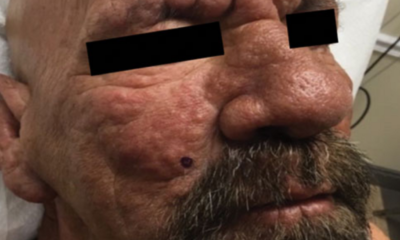

Florida leprosy cases reached a record. See where cases are being reported
Florida’s database of modern diseases shows that the number of cases Hansen’s Disease, also known as Leprosy in Florida, increased...


Idaho fast food restaurant shooting leaves 3 dead and 7 injured, city spokesman says
BOISE (AP) – Three people died and seven others were wounded, including some in critical condition, during a shooting that...
New York files $36 billion lawsuit against Kalshi, alleging it’s running an “illegal gambling operation”
In courts across the nation, sports betting continues to be a hot topic. The nine Justices of the U.S. Supreme...
-
 Entertainment2 weeks ago
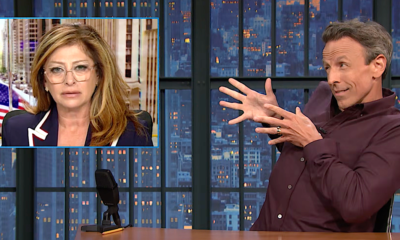
Seth Meyers Gives Trump Supporters The Uncensored Truth About The President
-

 HealthNews2 weeks ago
‘Gamechanger’ drug for deadly disease rising in Calif can help sickest
-

 HealthNews2 weeks ago
Her date sent her a voice memo. It started a viral debate about sex
-

 Entertainment2 weeks ago
Ed Harris says he was ready to leave Dutton Ranch after feeling misled about his role
-

 Tech1 week ago
Trump jokes about tariffs on lettuce and smoke
-

 Business1 week ago
OpenAI president shares concerns about how powerful AI is becoming
-

 Business7 days ago
Elon Musk drops wild 5-year prediction about AI and humanity
-

 HealthNews2 weeks ago
Doctors Say These Simple Daily Habits Can Help Lower Your Blood Pressure