
Business
Dick’s Sporting Goods (DKS) earnings Q2 2026
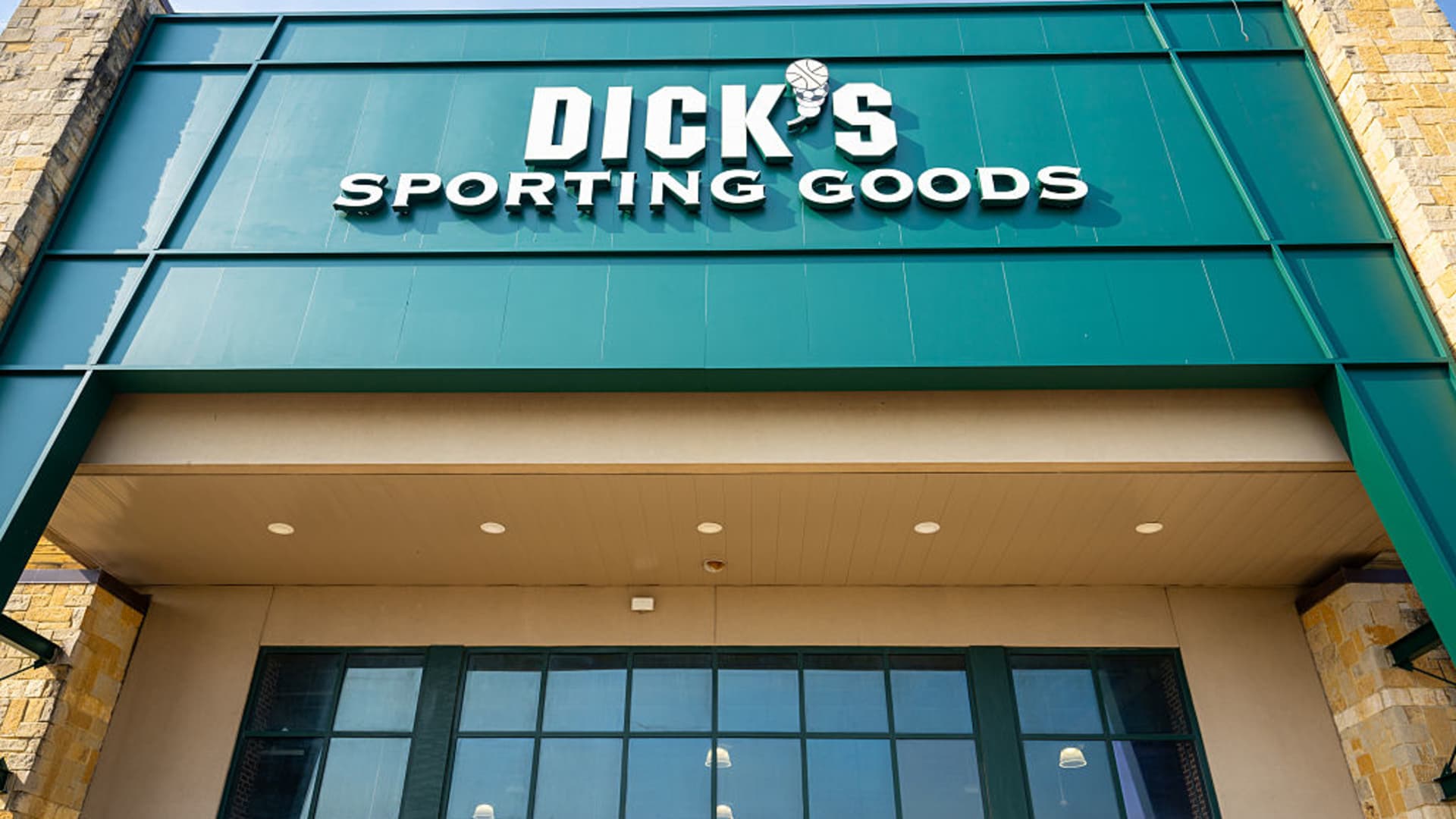
Dick’s Sporting Goods reported on Tuesday that its quarterly revenue missed Wall Street’s expectations. It also lowered the outlook for Foot Locker, citing a challenging athletic apparel and footwear marketplace.
Dick’s said that its stores had a 4.9% growth in comparable sales for the third quarter, driven by ‘wide-based growth’ across all categories and the World Cup.
Dick’s, however, said Foot Locker’s comparable sales declined by 3.6%. This led the company to change its forecast for Foot Locker to an outlook of flat or down 2%. The company still anticipates Dick’s to grow by between 2.5% to 4%. However, the overall outlook of net sales for the fiscal year has been lowered from a range between $22.1 billion to $22.4 billion down to a variety between $21.9 billion to $22.2 billion.
It lowered the company’s outlook for consolidated operating profit from an earlier range between $1.69 and $1.81 Billion to a range between $1.45 to $1.55 Billion.
According to a survey by LSEG, here’s what Wall Street expected of Dick’s in its second quarter:
Earnings Per Share: $3.53, adjusted. Not immediately apparent if this was comparable with the expected $3.76
Revenue: $5.59 Billion versus $5.65 Billion expected
Dick’s net profit for the quarter ended August 1 was $315 millions, or $3.50 a share. This is down from $4.71 a share or $381 million the previous year. Dick’s, after adjusting for special items such as its Foot Locker purchase, reported $3.53 a share.
The sales rose from $3.65 to $5.59 Billion in the previous period.
Lauren Hobart, CEO of Foot Locker said that while they were taking a cautious approach to the remainder of the year. They remained confident about the DICK’S business and the long-term potential of Foot Locker.
The company said that it also received $59 millions in refunds of tariffs and interest during the third quarter.
Dick’s has been working to turn around Foot Locker which had previously affected the bottom line of the company. Dick’s is refining Foot Locker’s growth strategy, particularly at a moment when sportswear sales are booming.
Business
Tire manufacturer says new California rules will increase prices
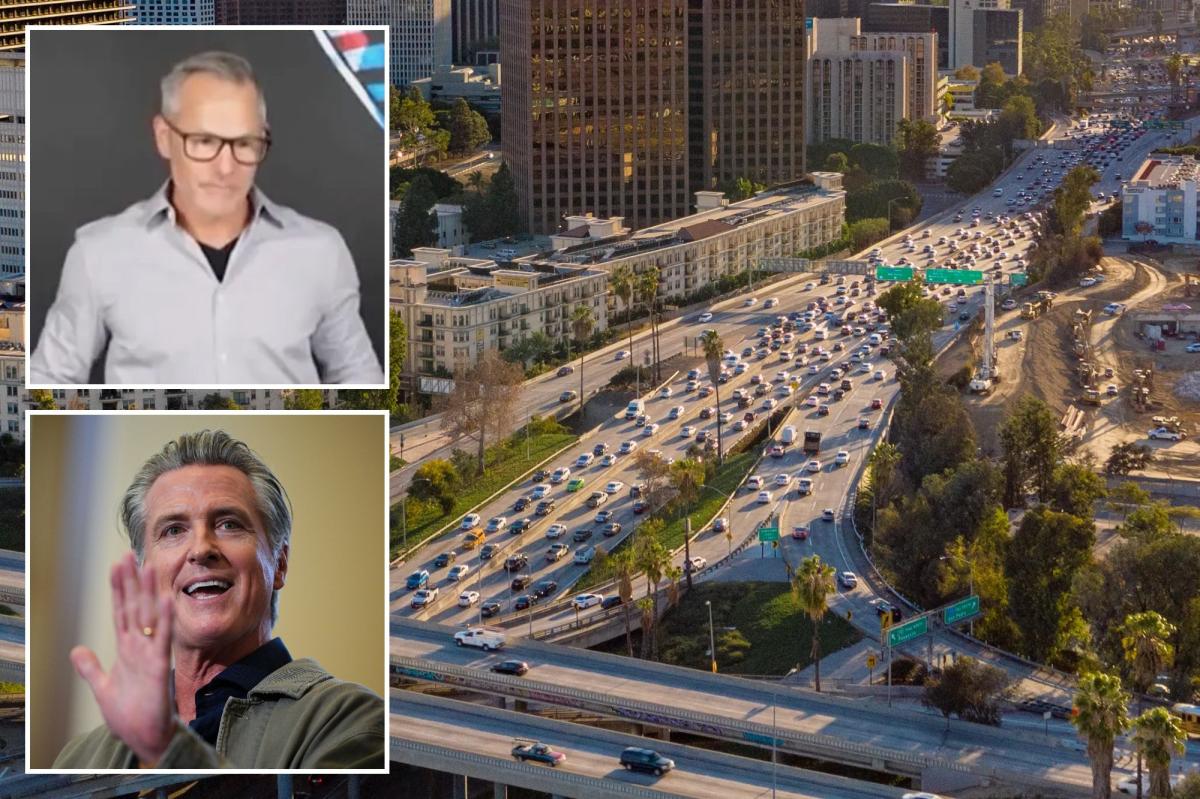
Tire producers have ripped into Gavin Newsom’s new regulations, warning that they would cause price hikes and ruin the market.
Darren Thomas, North America’s President and CEO of Dunlop Tires, said that the manufacturing costs will increase. This will then be passed onto customers.
The new regulations of the Governor also prompted concerns over safety, durability and potential environmental dangers.
Last week, the California Energy Commission approved plans to phase out replacement tires which do not meet the energy efficiency standards. This could wipe out up to 70% of the current market.
Regulations target the “rolling resistance” of a rubber tire, or how much power it takes to move a road tire.
A lower resistance in cars means they use less gasoline or electricity, and have better mileage. Democrats claim this will make driving more affordable.
Tire prices will likely increase by up to 157%, according to Tire Industry Association.
The difference between the cost of four tires and $300 for a vehicle could be as high as $300.
Will prices rise? They will increase. Costs will increase. How much will it increase? No one knows. Will there be fuel savings in the future? Thomas replied, “In theory.”
Dunlop Tire officials said Californian drivers could already save money on tires and improve their performance by simply keeping them properly inflated.
When you try to regulate something that you do not understand or care about much, it usually leads to bad policies. Thomas stated that this is probably the situation we are in.
California Energy Commission’s estimates suggest that the drastic measure could save Californians up to $1 Billion a Year on gasoline.
Thomas said that drivers would feel the effects more than brands of a larger size like his. He said, “We all can do it tomorrow.” Will it meet your needs for your car and driving? “The answer is No.”
The standard, he said, could lower carbon emissions. However, he called it “overreaching” and suggested that education might be more beneficial than the mandate.
The rules, he warned, could also create monopolies and disadvantage small manufacturers.
Newsom defended new tire regulations for efficiency, calling them “good choices.” Dunlop has expressed concerns about the regulation.
Michelin, Bridgestone and Goodyear are all divided on California’s Replacement Tire Efficiency Program.
The rules have been criticized by politicians and lawmakers on both sides of the aisle as yet another example of California’s overreach in terms of regulation.
Spencer Pratt, a former Los Angeles mayoral contender, called the new regulations “scams” which could increase costs for motorists.
James Gallagher, Republican Rep. of California from the Republican Party also condemned the policy. He argued that California is using the high price of gas to justify rules that may make tires costlier.
The Tire Industry Association has estimated that the average price of tires could increase from $81 up to $157 under new rules. This could cost a driver hundreds of dollars if they replace all four tires.
Some critics have also asked if the requirements for efficiency could impact tire performance such as grip, durability, and resistance to punctures.
Californian drivers are already facing some of the highest transport costs in the country, which is a burden for the 30 million Californian drivers.
Business
Video appears to show San Francisco train driver asleep before 2 empty trains crash

SAN FRANCISCO – A video shows a train driver falling asleep just moments before a crash on July 31, involving two Muni empty trains. San Francisco Municipal Transportation Agency said the initial determination was that operator fatigue caused the accident.
Video obtained by NorCal Bodycam, shared with ABC7 Bay Area seems to show an operator sleeping before a train collides into another ahead. The glass on the windows is shattered.
On the morning of 31 July, the collision took place near 47th Avenue Wawona Street north of San Francisco Zoo. Both trains had no passengers on board at the time.
The SFMTA released a press release stating that no injuries were reported in this collision.
This type of accident is unacceptable. The formal investigation is still ongoing. However, the vehicle and infrastructure problems have already been eliminated. Therefore, the first determination of this incident was operator fatigue.
This isn’t the first incident where a Muni driver has fallen asleep at the wheel of a train.
A driver appeared to be dozing off in September as the train reached 50 mph. The operator was then woken up. It was morning rush hour, so the train was packed with commuters. Some passengers were thrown out of their seat or forward.
SFMTA stated that its investigation into this incident determined “operator exhaustion” as the root cause. After the incident, SFMTA said that it launched an immediate campaign to educate people about fatigue.
Investigations into the collision of July 31 continue.
Business
Everyone Wants a Paramount Settlement. Look Under the Hood
In the Paramount Warner Bros. case, twelve state attorneys general, directors’ unions and theater owners disagreed on nearly everything. Discovery Case All agree that a settlement would be preferable. Together, the Directors Guild and IATSE urged David Ellison and Attorney General Rob Bonta to seek a settlement. Cinema United, the theater owners’ group that opposed this merger, is now seeking a settlement with enforceable protections. After receiving guarantees on the theatrical release and output, three of the largest exhibitor groups have approved this deal. Politicians, such as Gov. Gavin Newsom and his likely successor Xavier Becerra, as well as L.A. mayor Karen Bass have all joined the protest.
I share it. I understand the impulse. Another year in limbo is not good for anyone. Warner Bros. Discovery and not Paramount. And certainly not writers, directors and crews.
What is my position? You should remember that I’ve written publicly against this merger over half a dozen different times. This article focuses on numbers, not conclusions. Numbers do not care about what I say.
Why is there no settlement yet? We should put the antitrust lawsuit aside. Personality, politics and litigation strategies are the easy answers. The real explanation, for most of the support from the public, I believe, is more dull than all of these. Most people who are calling for an agreement haven’t looked at the economics. Short version: The acquisition’s funding depends on saving that protections would prevent.
The public is largely focused on what Paramount could promise. This includes a minimum of films for the theater, minimum window, production to continue in California, protection of employment, and commitments regarding licensing. Negotiations are possible on these topics. A promise only has value if the person making it can afford to keep it. The discussion must move away from the surface to the core of the transaction.
Parties describe an acquisition with a value of about $111 billion. After the financing, combined company would have more than $80-billion in debt with roughly $3-billion in free cash flow per year. The company is committed to reaching investment-grade metrics in a couple of years, and it has a target synergy goal exceeding $6 billion. I’ve prepared a detailed study of the capital structure, and what it might look like under different scenarios. It is not my intention to dictate what anyone should conclude. The purpose is not to tell anyone what conclusions they should draw.
What I say, and especially what I don’t say, is something I will be very careful of. It isn’t a matter of if David Ellison truly intends to invest in more content and make additional films. It is not in doubt that David Ellison would love to make all the films and invest in content. It is a question of whether or not the company after closing can afford to handle all that while also servicing the debt, integrating the two huge businesses, realizing the synergies it assumes in its financing, funding streaming and deleveraging according to schedule. The constraint isn’t intention. Money may be the constraint.
Think about what the settlement will accomplish. States are only interested in structural remedies; companies that have been integrated cannot be dismantled. Let’s put aside the question of a remedy: Everyone wants to be protected from reduced production, job losses, and increased prices. Both the Directors Guild and IATSE are concerned about Hollywood’s operations and their theatrical output. Writers Guild objections are more fundamental. Combining two of the largest employers for writers will reduce competition in writing services, a clear antitrust argument. Exhibitionists want films. Workers want jobs. Creditors expect debt repayment. Investors want a return. All objectives are reasonable and all claim the same cash flow.
The combined company will have less cash left to fund additional films and series or pay payroll. These obligations are expensive if a settlement demands that Paramount run two truly independent production companies, maintain employment and ensure output. If Paramount still has to find billions of synergies for its leverage model to work, then the obvious question is: Where are the savings? It is impossible to promise billions of savings by combining companies, and at the same, guarantee that little would change afterward. This contradiction is at the heart of settlement discussions, and it cannot be avoided by any amount of good will.
Second, the chorus did not address employment. As if synergies were a financial entry, they are often discussed. It’s not. Synergies can be benign, such as using one license of software instead of two or leasing a single headquarters. Some synergies are benign: one software license instead of two, one headquarters lease. Any settlement advocate should ask which types of cuts add up to $6 billion for two companies who have spent years on cutting. The fewer projects means fewer directors, writers, actors, post-production staff, crew, and other workers. These losses go beyond just the payroll for the two companies to vendors and smaller businesses.
Los Angeles County has identified tens of thousands exposed positions. Based on County frameworks and precedents, my analysis places the level of exposure much higher. Paramount is of the opposite opinion. It argues that jobs are already being lost in this industry and that two smaller companies would be better able to protect them than a single, stronger company.
This is part I and II of my analysis, and the CVL Economic reports commissioned by the L.A. County. I am showing this work so that an interested reader may dig deeper and decide what the data supports. My assumptions can be challenged by reasonable people and they may reach different conclusions. They should consider the facts before making a decision.
Some supporters of settlements have been offered or negotiated specific consideration. Paramount offered written commitments to the biggest exhibitors on production and window sizes. It’s not wrong; the purpose of industry associations is to represent a particular constituency. Protecting one group does not solve the economics of a transaction, and many people who publicly advocate a settlement did not receive any protection. The dispute is all they want to end. The car is in their eyes. They’ve never looked underneath the car.
This is just a tiny example of the results you can find by looking. Paramount’s most concrete offer is to write down for AMC and Regal, as well as other theater chains, that they will be releasing at least 30 movies a year. This promise could come with penalties. This sounds like protection. According to Rentrak, Warner Bros. will release 19 films in 2027 and Paramount 16, according to the Rentrak calendar. Before any merger, the two studios have already planned 35 films as competitors. It is not an addition. This is five films lower than the baseline. The merged company can reduce the slate for 2027 from 35 to 30, and still be fully compliant with what has been described as salvation. The protection should not be measured by zero, but rather against the situation that would have existed without the merger.
The same is true for 2028: both studios have already dated 22 films, but slates so far in the future are still being filled out. On the current trajectory, they would surpass 30 no matter who owned Warner Bros. Three years is the term offered, and it expires roughly at the time of integration. The pledge is not insincere because of this. The point is that the pledge and the guarantee are two different things, and you can only tell which you have by using the math.
This test also applies to a part of what the deal promises. Paramount claims that the merger of Paramount+ with HBO Max will create a streaming service with enough scale to compete against Netflix, Disney and Amazon. Look at the numbers behind this claim. Netflix told its investors that it would spend $20 billion in content by 2026, and intended to increase this amount. Disney is expecting to spend $24 Billion on entertainment and sports. Amazon doesn’t disclose its exact figure but it is estimated to be around $20 billion.
On the one hand, we have these facts. The other side shows the Paramount debt, cashflow, and deleveraging figures. These two numbers raise a simple question: What would it cost to compete at this level each year? And can the balance sheet support that while servicing debt, funding both theatrical studios and honouring any settlement requirements? You don’t need to know what I believe; instead, I suggest that you look at the arguments from both sides before recommending a settlement or trial. This is something that each reader should do using links to analyses or other reliable sources. This question is at the heart of the promise made by streaming, but the discussion has not included it.
Take it for granted that Paramount has the right to be so confident, and all claims are rejected by regulators. Further, assume that the management is doing a good job and that the efficiency gains are true. With the litigation, however, does not go away the settlement issue. The debt is still there. Interest expense is still there. Synergy is still required, as well as the math behind job loss. What is the cash available to you after taxes, interest and capital expenses? How quickly must leverage drop? What percentage of synergy targets requires the elimination of jobs and expenditures? The question most important for any agreement is: How much money can be raised to cover the guarantee that protects workers, exhibitor, and the competition? This is not an ideological question. These are math questions.
This is the reason why there has been so much difficulty between the parties. States cannot accept that promises will disappear when the conditions are difficult. WGA can’t abandon their concerns about employment because Paramount has promised more production. Paramount can’t make unrestricted guarantees, or they will undermine the assumptions that underlie the purchase. Behind it all is enforcement. What happens if, later on, the company says that deteriorating circumstances make compliance impossible? For a settlement to be meaningful, it must include measurable obligations and a real time frame, as well as independent verification. It should also have consequences that are severe enough so that the company will comply over if they do not.
This means that the promise must be backed up by funds that exist before the breach. Escrowding, pledged or funded guarantees, equity, and less debt are all examples. All of these mechanisms are available and they all change the economics, so it’s not surprising that none have been used. Then, each of these protections will be evaluated against the same stressed balance sheet. This is what everyone is trying square.
Paramount could own both businesses without integrating. This is safer, because the combined companies cannot be separated. This is something I don’t think Paramount will agree to, but many people who are against the deal would support it.
Ich sage nicht, dass die Befürworters of settlements are in the wrong. What I’m suggesting is something much simpler. Understand what must be resolved before taking a stance. Do not listen to public relations campaigns, including mine. Let’s put aside the arguments against antitrust for now. You can reach your conclusions by reading the articles linked to here or elsewhere. It is not the goal to close a transaction that allows an acquisition. It is important that the deal continues to work after its closing. A settlement that truly protects the industry is better than months of litigation.
This deal may appear to be the responsibility of management, which it actually is. If you want to know what the company will have to do, then look at how much it would cost. The company must find savings of $6 billion while maintaining the studios apart enough to meet the settlement. This means giving up a lot to achieve those savings. The studio must find $6 billion of savings while keeping the two studios separate enough to satisfy the settlement, which means sacrificing much of what drives those savings.
From whatever is left, the company will have to pay enough money to keep 30 movies in cinemas each year, fund sports rights, and compete with Netflix. This would be without any layoffs. David Ellison has a lot of numbers to play with. I’ve spent many months trying to get the figures to work. You should show the numbers to all parties involved, the court and anyone else who is weighing the deal. It’s not about promising that it will work, but rather the math that allows it to. It may not be a secret that no settlement has been reached. The answer is right there on the balance sheets.
Joseph M. Singer was a former Investment Banker. He has worked as a slate film financier and producer for the past 30 years. Former Universal studio executive, Singer is also the founder of Elixir Media. He has been the managing principal/CEO for a firm that is specialized in M&A. He has also worked as a financier and producer consultant with most major studios. Singer is involved with over 120 studio movies and has a deal ongoing with one of the majors.
Business
Panda Express guest stunned as employee stands on fryer while cleaning

Video has been released purporting to show a Panda Express worker stepping on food as they prepared meals while cleaning the frying station.
Paul Elisha Finger who recorded the video told Storyful he had “noticed that gentleman jump on top of the fryer which the lady just put in food” while he was visiting a Panda Express in Milwaukee, Wisconsin in early July.
According to Finger, the worker “then started spraying and wiping the chemical [while] standing directly over the food.”
Storyful: “I couldn’t believe my own eyes,” said Finger.
A POPULAR BEER BRANCH TO REDUCE 220 JOB AS A RESULT OF PRODUCTION CHANGES
FOX Business reached out to Panda Express in order to get a comment.
Video shows female worker reaching into the legs of a cleaner to place a bowl full of food in one of the fryers, while the male employee was apparently cleaning the exhaust area of fryer station.
DOZENS SICK IN MULTIPLE STATES FROM ALFALFA SPROUTS AND COLI-SALMONELLA EMERGENCY
Panda Express claims on its website to serve a food that is “a flavorful blend of Chinese regional cooking and techniques with bold American flavors.”
CLICK HERE FOR MORE FOX BUSINESS INFORMATION
Panda Express is the largest Asian chain in America. It has revolutionized American Chinese food. Panda Restaurant Group, Inc., a family-owned company founded in 1983, has become a culinary leader, seamlessly blending authentic Chinese tastes with American taste. Panda Express, with over 2,600 restaurants worldwide has been a major player in bringing American Chinese food to millions of people around the globe.
Business
Trump’s 50% Auto Tariffs On Canada Are Going To Ravage Jobs And Profits On Both Sides Of The Border
Hello! The Morning Shift is your one-stop shop for the latest automotive news from all over the globe. Here you will find all the important news that is shaping how Americans drive.
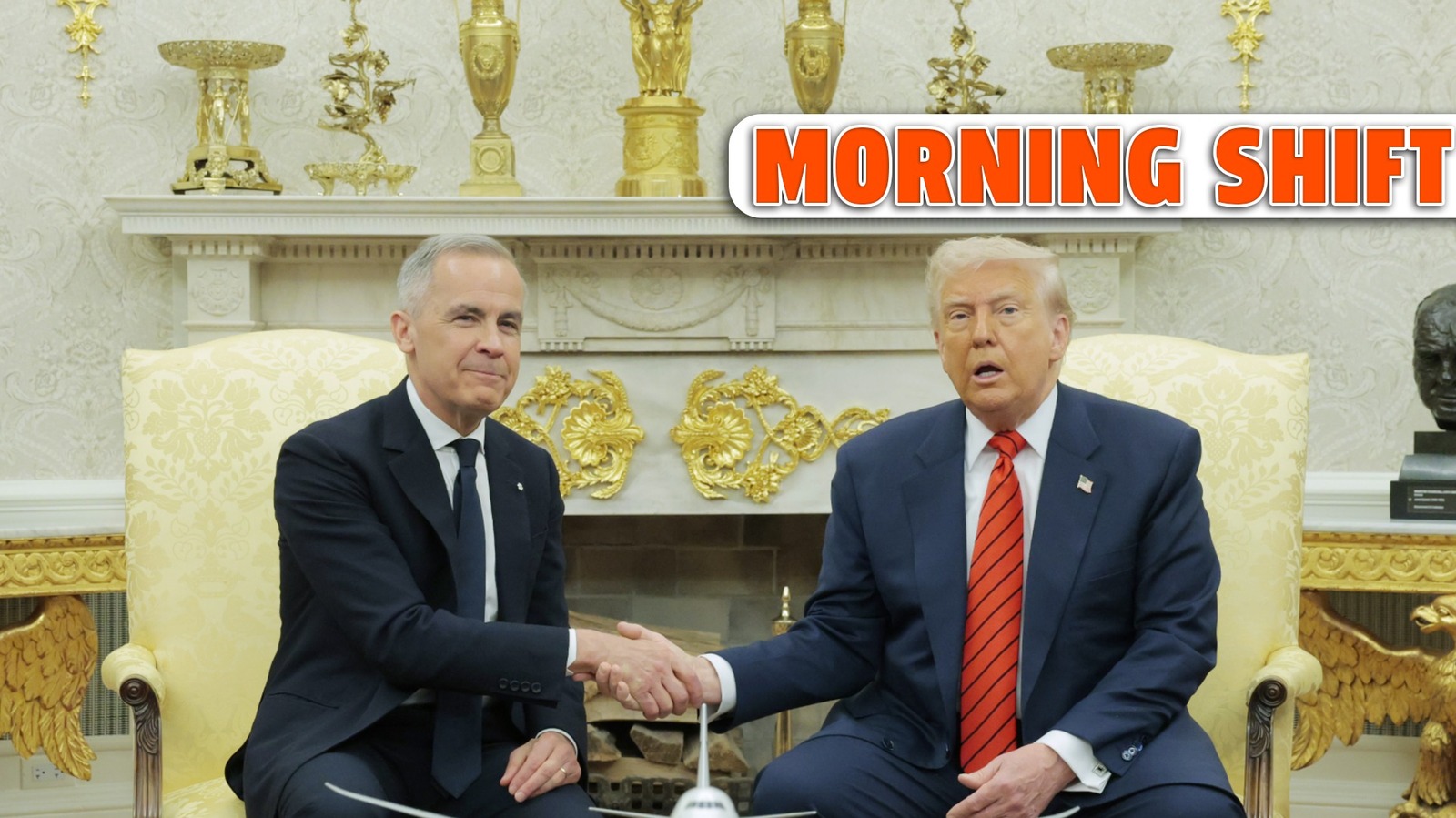
This morning, the Canadian PM Mark Carney said that they will only return to the negotiation table if the U.S. shows the “right attitude.” Volkswagen’s chief executive was booed for his plans to cut jobs during an all-company meeting. Porsche has a big bet on AI.
Sign up here for Jalopnik’s Morning Shift free newsletter to receive a daily summary of auto news.
The numbers tell a very different story. President Trump might think that the newly escalated U.S.-Canada trade war will help the U.S. economy and our automotive industry. The latest Trump scheme could further undermine the competitiveness and integration of the North American automotive industry. This could threaten jobs in both the United States and Canada, as well as automaker profits.
Canada promised to defend its assembly plants and suppliers when Trump announced that he would increase U.S. auto tariffs by 50% on Canadian exports starting January 1. The worst part of this disaster, or at least its most recent phase, began late last week after Washington and Ottawa appeared ready to sign a deal ending a nearly year-and a half-long trade conflict. The deal fell through in the last hours, when it came to the subject of auto and medium-and-heavy-duty truck parts.
This tit for tat war has already had a devastating effect on automakers as well as buyers. A new upsurge in the trade war would be more damaging to both. Automotive News:
Flavio volpe, CEO, Automotive Parts Manufacturers’ Association, stated that the North American automotive sector will continue to fight against U.S. tariffs on parts.
He wrote in social media that “a threatened U.S. duty on Canadian auto components will be paid for by U.S. assembly.” Without those parts, all auto assembly in the U.S. will cease.
The auto union Unifor which represents the hourly employees at Detroit Three in Canada said Trump’s newest intimidation tactic fails to acknowledge that workers will be hurt on both sides.
Lana Payne, President of Unifor Canada, said that Canada could not accept the bad deal proposed by Trump’s administration.
[…]
Like Premier Doug Ford, Carney said that he did the right thing by walking away from an unfavorable deal, which would have hurt both autoworkers and those in Ontario as well as south of the Border.
[…]
The question is, “Do we continue to buy American cars?”
The Big Three automakers are pressing for a solution between two North American nations, especially since the U.S. Mexico Canada Agreement remains in limbo at best, and at worst, dead.
Pacific Manufacturing Association of Canada, which represents Honda and Toyota in North America automotive, called for efforts to be re-started to restore free trade.
PMAC CEO Brendan Sweeney said to Automotive News Canada the possibility of additional tariffs on Jan. 1, is “a very long time away.” PMAC’s focus is on progressing on tariffs in this fall.
The same message was sent by the automaker groups of the United States.
Matt Blunt is the president of the American Automotive Policy Council which represents the Detroit Three.
Jennifer Safavian CEO of Autos Drive America who represents foreign automakers, stated that the two governments should work together to finalize an interim agreement.
The escalating tensions will continue to hurt the auto industry in both the U.S.A. and Canada. We are disappointed the two countries were unable to come to an agreement.
A 50% tariff is hard to predict. Over the first year that the tariffs in place were implemented, Canadian car production dropped by 15%. Ford, GM Honda, Toyota, Stellantis, all of whom have Ontario plants, are responsible for a large number of vehicles and jobs.
It doesn’t seem likely that the U.S. will reach a trade agreement with Canada anytime soon. Mark Carney, the Prime Minister of Canada said that his country will only negotiate with Trump after its attitude has changed and they stop treating Canada as a subordinate (I am sure the whole 51st State thing does not help). Automotive News:
Carney said to reporters in this city that “when the Americans come first to the table with the correct attitude towards our industries, and a real partnership, we will of course be there to negotiate.”
We will not accept an attitude that Canada was a subsidiary to the United States and that Canadian industries would be at a disadvantage compared to American ones.
And that is before we get into the limitations on our ability do sign deals with Canada, as the rest of world desires. “And that’s even before you get to the cultural issues.”
[…]
[Trump] posted a second tweet threatening Canadian Energy flowing through the United States.
Remember, most of Canada’s Electricity, Oil, and Gas is shipped through the U.S.A. It’s time to get these clowns ‘in line’, or the consequences will be much worse for Canada. Trump tweeted.
Trump repeated previous allegations that Canada had “ripped” off the U.S. for years and reiterated his claim that the U.S. doesn’t need anything from Canada.
They feel entitled and yet WE DO NOT NEED CANADA. THEY NEED US! Trump tweeted.
Trump fails to acknowledge that Canada supplies the U.S. with the majority of its energy imports, 90% of potash used in fertilizers, as well as a third the uranium for nuclear power plants.
Trump claimed that Canada was dependent on the U.S. to the tune of 95% for its exports. However, in fact, in 2025, that figure was 72% and, in the first half of 2026 it was 68%. The facts don’t give a damn about what you feel.
You’ve probably heard someone boo you. What about a crowd of fewer than 100 people? What about a big crowd? What about 10,000? If you’ve done that, those 10,000 people could be employees of yours who dislike you.
On August 25, they all attended the headquarters of the automaker as CEO Peter Blume urged employees to “pull” together behind a restructuring proposal that may end up costing almost 50,000 jobs. Blume’s plan has not yet been approved by the supervisory board of the automaker, which is dominated by the Lower Saxony state and labor.
They may not be booing but rather saying “BOO-m!” From Reuters
Two sources said that workers gathered outside Wolfsburg’s packed event with banners, signs and some were forced to view the proceedings via a livestream.
[…]
Our plan for the Future is the biggest transformation programme ever undertaken by our company. “To make this happen everyone must pull together right now,” said he in Wolfsburg Hall 11, his first stop during a planned Volkswagen plant tour this week.
According to one source, his speech was met by boos. According to another source, banners carried slogans like “Our jobs aren’t your balance sheet adjustments”, and “Respect cannot be negotiated”.
Daniela Cavallo, the Volkswagen union leader, spoke on behalf of her workers, saying that German factories are “an integral component” of Volkswagen, and reiterating the opposition she has to factory closures.
Our trust in the executive board of this company, in particular in Oliver Blume as its CEO, is damaged. “Not yet beyond repair but still damaged,” she stated, according to the excerpts from her speech that were shared with the workers council.
Volkswagen, which is struggling to make money in Europe and has a high level of overcapacity, also faces a squeeze from aggressive Chinese competitors rushing into Europe, declining profits in China, and U.S. Tariff costs in the billions.
Blume said in his address to the workers – excerpts from which have been shared with the public – that the 50,000 cuts of jobs were calculated on the basis of a hypothetical benchmark, to align Volkswagen’s cost structure to its competitors. Blume also stated that there had not been any decision made on the closure of factories, which he referred to as “the last and most costly resort”.
He had previously stated that the German plant overcapacity could be addressed by looking at the Chinese market or Volkswagen models, which are not currently available in Europe.
VW has not yet announced any breakthroughs in their proposal, but the plant at Osnabrueck is expected to cease production as soon as next year. The plant will be the first to shut down, since four other plants have no plan beyond 2030.
Yes, I would definitely boo.


Please Tell Me Red Wine Is Good For Me
Time for your weekly edition of the Defector Funbag. Got something on your mind? Email the Funbag. You can also...

U.S. tariffs are ‘manageable,’ says Scotiabank CEO
TORONTO — As Canadian businesses grapple with the latest flare up in U.S. trade tensions, executives at Scotiabank still see...
A 15-Year-Old’s Cannabis ‘Scromiting’ Got So Bad His Brain Started Shutting Down
Cannabinoid hyperemesis syndrome (CHS)—a condition linked to frequent cannabis use that causes constant bouts of vomiting—is a nightmare to endure....


Issa Rae Pilot Order Set At HBO For ‘Untitled Male Friendship Show’
HBO’s Peabody Award winning comedy Insecure creator Issa Rahe has created a half-hour comedy called Untitled Male Friendship Show. The...


Harry Styles Reveals the Surprisingly Deep Reason He Takes a Shower Immediately After Every Show
Harry Styles, who is preparing to perform for thousands of American women on the United States segment of his Together,...


Tire manufacturer says new California rules will increase prices
Tire producers have ripped into Gavin Newsom’s new regulations, warning that they would cause price hikes and ruin the market....


‘Coyote Vs. Acme’ Sets A Rotten Tomatoes Review Score Record
There are few films that have had a saga quite like Coyote vs. Acme, the previously shelved Looney Tunes live-action/animation...


Video appears to show San Francisco train driver asleep before 2 empty trains crash
SAN FRANCISCO – A video shows a train driver falling asleep just moments before a crash on July 31, involving...

Everyone Wants a Paramount Settlement. Look Under the Hood
In the Paramount Warner Bros. case, twelve state attorneys general, directors’ unions and theater owners disagreed on nearly everything. Discovery...


Panda Express guest stunned as employee stands on fryer while cleaning
Video has been released purporting to show a Panda Express worker stepping on food as they prepared meals while cleaning...
-

 Business1 week ago
Elon Musk and Jensen Huang’s New Partnership Could Create the Next Era of Technology
-

 HealthNews1 week ago
Hospitals say they found a tool to help reduce childbirth risks: wristbands
-

 Food1 week ago
What kids of parents on GLP-1s are learning about food and bodies
-

 HealthNews1 week ago
The water in your cup of coffee is about 125 millilitres, but the water behind it is closer to 140 litres – nearly all of it associated with growing the beans long before anyone boiled a kettle
-

 HealthNews1 week ago
We Helped Create A $4 Million Gene Therapy For Our Son. Then We Had To Decide If We Should Give It To Him.
-

 Entertainment1 week ago
Star Wars: Smuggler’s Gambit Lets You Keep Helping Hondo Ohnaka in Fortnite After You Leave Disneyland
-

 Entertainment7 days ago
Brand New Day’ Fastest To Cross $800M U.S.
-

 TravelNews1 week ago
Trump Fumes At CNN Reporter Who Asked About Natalie Harp