
PM office canada
U.S. tariffs are ‘manageable,’ says Scotiabank CEO

TORONTO — As Canadian businesses grapple with the latest flare up in U.S. trade tensions, executives at Scotiabank still see the trade situation as “manageable” for the domestic economy
“The fundamentals in Canada are pretty good, if you look at the job growth numbers, if you look at the fiscal capacity on the back of oil prices, and if you look at some of the activity that’s starting because of the prime minister’s agenda, you actually have a backdrop that’s pretty good,” Scotiabank chief executive Scott Thomson said on the bank’s third-quarter earnings call on Tuesday.
U.S. President Donald Trump imposed 50 per cent tariffs on about $28 billion worth of Canadian products over the weekend after trade talks collapsed.
Latest updates on company news here
The federal government, meanwhile, announced Tuesday its own suite of retaliatory dollar-for-dollar tariffs on American goods, which are set to take effect Sept. 8. That includes upping tariffs on American steel and aluminum products from 25 to 50 per cent and imposing other levies on clothing, appliances, dairy products and more.
Thomson said the new U.S. tariffs affect about five per cent of Canada’s exports and will have a small impact on gross domestic product.
“This obviously creates uncertainty, but with the current tariffs it’s manageable,” he said on the conference call, which occurred before the federal government’s counter-tariff and support measures announcement.
“We should use this as a country, use this moment to accelerate further the prime minister’s agenda, removing interprovincial trade barriers, reducing the timing of approvals, getting big things done and continuing to diversify trade, while also continuing the great trade relationship we have with the U.S.”
Prime Minister Mark Carney’s economic agenda includes plans to invest in infrastructure to boost trade, while diversifying away from the U.S. The strategy has also involved setting up a major projects office to speed up reviews of nation-building projects and boosting the country’s defence capabilities.
Thomson sees potential growth across infrastructure, pipelines and defence. He added that the evolving relationship with the U.S. presents a chance to focus on small business and commercial clients.
“I do see the opportunity for more capital to be deployed, frankly across all of our business,” Thomson said.
Scotiabank reported a third-quarter profit of $2.95 billion, up from $2.53 billion a year ago.
The bank said Tuesday the profit amounted to $2.27 per diluted share for the quarter ended July 31, up from $1.84 per diluted share in the same quarter last year.
On an adjusted basis, Scotiabank says it earned $2.28 per diluted share in its latest quarter, up from an adjusted profit of $1.88 per diluted share a year earlier.
Revenue for the quarter totalled $10.54 billion in its third quarter, up from $9.49 billion in the same quarter last year.
Analysts on average had expected an adjusted profit of $2.10 per share and $9.99 billion in revenue, according to LSEG Data & Analytics.
Stay up to top of Canada’s biggest banks with BNN Bloomberg’s Big Banks Tracker
Scotiabank’s provision for credit losses for the quarter amounted to $1.08 billion, up from $1.04 billion a year ago.
“Q3 was a record quarter for the bank, as all business lines reported strong results and we exceeded our medium-term objectives in the period,” Thomson said in a statement.
“In particular, we exceeded our 14 per cent return on equity target this quarter, highlighting the improvements that we have made across the bank to increase margins and fee income.”
John Aiken, an analyst at Jefferies, said in a note to investors that Scotia’s third quarter was an “impressive beat against expectations.”
“That said, much of the heavy lifting was done by a surprisingly strong capital markets performance. Consequently, while we anticipate that Scotia’s results will be viewed positively by the market, we do not expect that the full eight per cent beat will be automatically priced into its valuation,” the note reads.
Trade War coverage on BNNBloomberg.ca
Scotiabank said its Canadian banking business earned a profit attributable to equity holders of $1.07 billion, up from $958 million a year ago, boosted by higher revenues, partly offset by higher non-interest expenses and provision for credit losses.
The bank’s international banking operations earned $725 million attributable to equity holders, up from $670 million in the same quarter last year.
Scotiabank’s global wealth management business earned $515 million attributable to equity holders, up from $417 million a year ago, while its global banking and markets business earned $647 million in its latest quarter, up from $473 million in the same quarter last year.
—
Daniel Johnson, The Canadian Press
PM office canada
B.C. Conservative Leader Kerry-Lynne Findlay slams ‘selfish’ MLAs who left the party
B.C. Conservative Leader Kerry-Lynne Findlay insists her caucus is united in the goal of beating the NDP, despite the latest blow that saw a second MLA leave in as many weeks.
Findlay warned that Ian Paton and Peter Milobar’s plan to start a new political party could split votes.
“I don’t think these decisions of both [Ian] and Peter are being made with the best interests of British Columbians in mind,” Findlay told CBC News. “They’re quite selfish.”
Paton said he was concerned that Findlay was “purging” MLAs and staff from key caucus leadership roles in order to appoint loyalists. Paton endorsed Milobar in his unsuccessful bid to lead the party. Both are former B.C. Liberal MLAs.
Paton, the MLA for Delta South and formerly the party’s agriculture critic, said Monday that the new party he will launch with Milobar will provide an alternative to anyone turned off by the direction the party is headed under Findlay.
Milobar warned of more departures, saying there are other dissatisfied MLAs who “may or may not choose to follow the same path.”
Findlay brushed that off and insisted that centrists and former B.C. Liberals have a home in her party.
“I’ve said from the very beginning it doesn’t matter if you’ve voted NDP or Liberal or United or Socred back in the day or for us, there is a place for you here,” she said.
Findlay said vote splitting is a concern for parties across the political spectrum.
“A centrist could take as many seats from the NDP, even more perhaps, than the Conservative party,” she said.
“I am going to lead a united party to present as a government in waiting.”
Paton and two other Conservative MLAs — Lynne Block and Rosalyn Bird — said last month that they turned down a request by Findlay, who won the B.C. Conservative leadership race in May and does not hold a seat in the B.C. Legislature, to resign their seats so Findlay could run in a byelection.
Paton alleged Monday he was offered a job as a political adviser on agriculture in exchange for stepping down. Findlay disputed that.
“No, that’s absolutely untrue. What our conversation was, was that would he consider stepping aside. He was very keen to still be involved in agriculture,” Findlay said.
“So what we said to him was if you were to step aside, if you were no longer an MLA and no longer in caucus, we would be open to talking to you about playing some sort of advisory role in the agriculture space. But nothing was specified and it was certainly clear it was no type of enticement. Clearly it wasn’t since he decided against it.”
Reann Gasper announced Saturday she would step aside so that Findlay can run in a byelection in Abbotsford-Mission.
On Monday, Findlay announced that Gasper will be the caucus deputy chief of staff.
A date for the byelection has not yet been set. Premier David Eby has six months to call a byelection.
In a wide-ranging interview in the B.C. Conservative office in downtown Vancouver, Findlay said her party is the only one that can resolve the “major issues” created by the NDP government, including “the shutting down of resources” and “the collapse of the trade talks with the United States.”
Prime Minister Mark Carney walked away from a trade deal with the Trump administration late Friday night, citing terms that would “destroy” big Canadian industries including the auto, steel and aluminum sectors.
Findlay said there could be “serious economic consequences” from Carney’s decision.
“You always have to be willing to go back to the table and make whatever deal makes sense.
“Of course you never want to give away too much. Of course we want it to be pro-B.C., pro-Canadian. But you also don’t walk away forever.”
Findlay focused her criticism on Eby’s tariff strategy, saying his “contrarian” position has made him “irrelevant” in Canada’s trade discussions.
“I was distressed that our premier wasn’t more involved.”
Findlay said when Carney briefed the premiers on the trade talks on Wednesday, Eby was the only premier not on the call.
The premier’s office said Eby was on vacation with his family in an area with poor cellphone reception, which is why deputy premier Niki Sharma took the call instead.
Asked if her party would be ready if Eby were to call a snap election, Findlay said: “Absolutely. Looking forward to it.”
PM office canada
How Canadian content on streaming platforms became a trade issue with the U.S.
It’s not just dairy products, auto parts or natural resources that are at the center of Canada-US trade disputes. Netflix’s homepage is also a factor.
According to The Globe and Mail citing an official government source, U.S. negotiators have demanded that Canada remove the requirement for American streaming services to promote Canadian-language content.
The Liberal federal government declined.
Mark Carney, Prime Minister, said that he was not willing to compromise our culture, our French language protection, or our sovereignty. This came after the collapse of trade negotiations.
This is just the latest demand in an ongoing dispute between the Canadian Government and American streaming companies and the U.S. Federal government. How did we arrive at this point?
Stream Canadian
Ottawa requires broadcasters for many years to support and promote Canadian content. This goes back as far as song quotas on AM radio.
The Broadcasting Act was passed by the federal government in 1991. According to the law, “the Canadian Broadcasting System shall be owned and controlled effectively by Canadians.” The Canadian Broadcasting System should also “serve as a safeguard, enrichment and strengthening of the cultural, social, and economic fabric in Canada.”
The rise in popularity of streaming services such as Netflix and Spotify, along with Amazon Prime, YouTube and Amazon Prime, has raised concerns about Cancon rules and the broadcasting industry. Cancon rules and regulations did not require video and audio streaming platforms to promote and support Cancon. However, their radio and TV counterparts had.
In order to correct the imbalances, the former Trudeau Government introduced a Bill in 2022, which was called the Online Streaming Act.
Canadian broadcasters invested and brought us incredible Canadian shows that many of us enjoy. A 2022 news release stated that we are updating laws to ensure online streamers contribute equally and fairly.
From the beginning, the legislation caused controversy. The government, supporters, and critics all argued that the law was necessary to evolve Canada’s laws on media in this digital age. However, opponents feared it would be an overreach, and a way of regulating the internet.
The legislation was fiercely opposed by American digital media and streamers.
Canadian Radio-television and Telecommunications Commission, Canada’s broadcast regulator (CRTC), was delegated a lot of the interpretation, including the amount that streamers will have to pay to Cancon.
It has taken a lot of time and confusion to get streaming companies pay.
The CRTC has decided that by 2024 online streaming services who have revenues over $25,000,000 will be required to contribute 5% of their Canadian revenue towards the Canadian broadcasting network, including local news and programming in French and Indigenous languages, as well as the Canadian radio and TV system.
Netflix, Disney Plus and other streaming giants have filed court cases. A Federal Court of Appeal Judge said that they wouldn’t be required to pay until the court had heard their case.
Despite that, the CRTC in May this year announced it would raise the payment to 15% of the revenue of online broadcasters.
Motion Picture Association, a U.S. organization that represents Netflix, Paramount Pictures and Prime Video as well as Walt Disney Studios, wasn’t happy with the decision and called it a violation of trade.
The Motion Picture Association (MPA) strongly condemned the CRTC’s decision to impose unheard of, discriminatory, and unnecessary investment obligations for American streaming services that operate in Canada.
This burdensome framework targets the global streamers unfairly with requirements which directly violate Canada’s obligations under the Canada-United States-Mexico Agreement.
Few weeks later the government instructed the CRTC that it should reconsider the proposed increase. Carney and the government expressed their concern about the increase in prices.
Ottawa said that it will also issue a policy directive for the CRTC to adapt the way the Online Streaming Act is implemented.
MPA welcomed this move while many Canadian organizations in the cultural sector asked that the government keep it.
A court document from the Attorney General’s Office dated 17 July stated that the government intended to completely eliminate these payments and replace them by taxpayer funded.
In June 2025 the Canadian government will abolish the Digital Services Tax (DST), a tax that was imposed on large companies, both domestic and foreign, for certain revenues earned by engaging with online users. This move was attributed to trade talks with the U.S. by the government.
The money is not everything
The current funding dispute may not even be the issue.
Online Streaming Act requires streaming services, as well as French and Indigenous language programming to provide Canadians with easier access to Canadian content. This fall, the CRTC plans to begin a consultation about how it can best achieve this.
Michael Geist is a professor of law at the University of Ottawa, and Canada’s Research Chair for Internet and E-commerce Law. He writes in his blog that it is interesting to see the Government back down from its position on payment, while still stating the Canadian culture as non-negotiable.
He said that the government is “open” to cutting mandatory payments for news and culture, but “not moving away from its power to regulate and promote culture,” in an online post.
If true, this represents a major shift in the way that cultural policies have been formulated.
It’s not just the Online Streaming Act that has Americans on edge.
Bill 109 was introduced by the Quebec government last year. It is titled, “An Act affirming Quebec’s cultural sovereignty and enacting an Act respecting discoverability of French language cultural content within the digital environment.” This bill requires streaming giants, such as Netflix, to make French-language programming more accessible and available to their users. The bill became law on December 20, 2025.
Why is it that the American government has become so involved in this issue, to the point where it may cause a problem in future trade talks?
Mariane Bourcheix Laporte, postdoctoral scholar in McMaster’s department of communication arts and studies, in Hamilton, suggested that it might be about the power.
Bourcheix Laporte said that the Americans had a strong policy to push American content around the globe since World War II.
This has been an American strategy — soft power strategy — in parallel with their military strategy and political alliance strategies.
PM office canada
French has become a sticking point in the Canada-US trade dispute. Here’s why
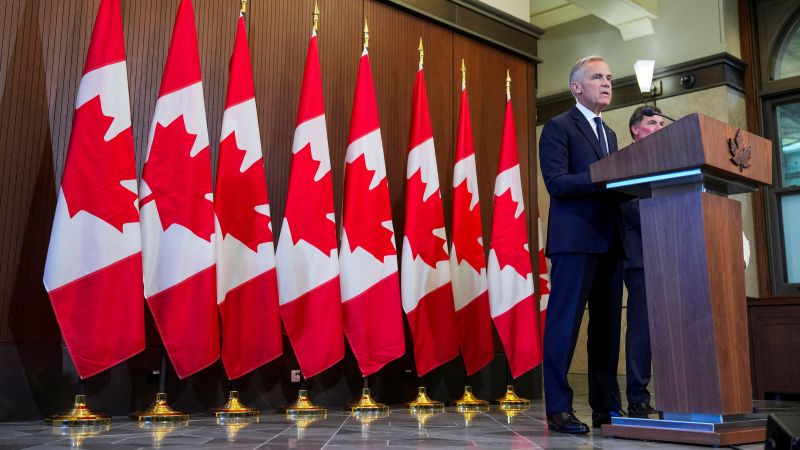
A key issue that has further heightened tensions between longtime friends, the United States of America and Canada following last week’s collapsed talks is the French language laws.
Canada is a bi-lingual country with laws that protect both its official languages, English and French. The first language of approximately one fifth of Canada’s population, which includes nearly 85% in the primarily Francophone Province of Quebec, is English.
The laws require that product labels be in English and French and US streaming platforms support and promote Canadian (including Indigenous, French Canadian and French Canadian) content to audiences North of the Border.
The US has long viewed Canada’s requirements as a barrier to trade, but Ottawa is generally against them. Prime Minister Mark Carney broke with a deal that he claimed included threats to the French language and culture.
Carney told reporters on Monday that Canada would not “accept” a proposed agreement that would weaken French language protections. He also said that the US “will not get what they asked for.”
Carney’s decisions and comments, which he made about the importance of protecting French culture as a part of Canada’s identity are widely supported by many Canadians.
The US Trade Representative Jamieson Greer had called Ottawa’s concerns over French on Monday a “funny fake story”. However, Prime Minister Justin Trudeau denied that the matter was something to be laughed at, saying “there is an enormous gap between our view and the US point of view.”
Carney, speaking in French, said at a Levis, Quebec, news conference that “For Americans French, Francophone, and Canadian cultures are irritations.”
He said: “This is a right here in Quebec and Canada.” A group of journalists applauded.
In a Truth Social posting on Monday, President Donald Trump did not address the French question directly but re-invented old attacks against Canada. He called the country entitled and “among the most difficult Nations in the World” to deal with.
Carney has said that he would match the tariffs “dollar for dollar” if negotiations failed on Friday. The measures will take place on September 8th.
The importance of language rights to Canadian identity
The right to speak a language has been enshrined in the constitution of Canada for many decades. This is especially important to Quebec which has struggled to preserve its unique linguistic and culture identity within an English-dominated North America.
This has sometimes put the province in conflict with the rest Canada. Quebec held two referendums on the question of whether it should secede. The most recent was in 1995, when the “no’ side narrowly won the vote by just 1.16 percent.
The language laws cover everything, from the right of Canadians to receive official services in two languages to the requirement for haircare companies to display French and English “shampooings” on their bottles.
This means that US businesses looking to expand their business into Canada will face additional barriers, as they are required to redesign packaging and pay for extra production costs.
Stewart Prest is a lecturer at the Department of Political Science, University of British Columbia. He said that asking Canada to relax these rules “is not a reasonable demand of the Canadian Government in a Trade Negotiation” and Canada “has no choice but to refuse”.
People in Canada speak French. He said that not everyone in Canada speaks English and many people enjoy dabbling with French. It’s not that different from asking France to ease its requirements for packaging.
Montreal service workers are known to welcome customers by saying “Bonjour Hi.”
It would be detrimental for Carney to give in to Trump on a matter so important to Canadian identity. This is according to Stephanie Chouinard. She’s an associate professor at the Royal Military College of Queen’s University, Kingston, Ontario.
She said that the issue is especially acute in Quebec, where separatist Parti Quebecois polls are surging.
Chouinard noted that the party leader had recently stated he’d delay any possible referendum on independence until Trump ends his term. However, Chouinard warned that any concessions on language laws would “stoke separatist sentiment” within the province.
Washington at odds
Quebec’s strict nationalist policy has been implemented in the last few years, including the controversial Bill 96 language law, which includes more strict requirements for French to be used on appliances, products, packaging, and signs.
This legislation is included in the list of 2025 global trade barriers that the Office of the US Trade Representative compiles annually.
US officials have also voiced concerns over Canada’s Online Streaming Act which mandates that online music and video services such as Spotify and Netflix invest and promote Canadian content.
Washington has also expressed opposition to another streaming law, Bill 109. This regulation was passed by Quebec in December last year and requires streaming platforms, including Netflix, to give priority French-language programming. The US included the measure in their trade estimation report for March as a possible trade barrier.
Greer said in an interview on CNBC that the US doesn’t have a problem with French but with what he termed a “discriminatory” tax on American businesses.
“I love the Quebecois and that they speak French. He said that he did not like the fact that Canada’s federal governments forces American tech firms to give away a portion of their profits to competitors.
The dispute has raised concerns among many Canadians about the interference of America in Canada’s nationality.
Christine Frechette, Premier of Quebec said Carney had made the correct decision by walking away from the negotiation table.
Frechette, CBC News’ newsgathering partner, said at a press conference that “our culture and language are central to our identities, so it is essential to keep them off the negotiating table.”
We will not change, even if we face different tariffs. “We will remain as we are.”
PM office canada
Carney unveils $11B in funding to make 6 icebreakers in Quebec
The Prime Minister Mark Carney announced that the Federal Government will invest $11.3 billion in the shipbuilding industry of Quebec to construct six new icebreakers.
Carney said it was the “largest contract” in shipbuilding history of the province.
These new vessels will replace the Coast Guard’s aged heavy and medium icebreakers. This is a fulfillment of a 2019 promise.
We will be moving fast. “The first ships will arrive five years from now, while the fleet as a whole will not be ready until five more years,” Carney stated.
They will be working in the Arctic, in the Arctic, in the Arctic, in the Arctic, in the Arctic, in the Arctic, in the Arctic, in the Arctic, in summer.
Carney announced the news alongside Quebec Premier Christine Frechette, at the Chantier Davie Shipyard, Levis, Que. The six vessels will be built there.
Frechette who will soon be heading into an election campaign in the province called it a good day for Levis.
The contract, she said, will create jobs for welders, technicians and other skilled workers.
Carney stated that the contract would support 5,000 construction jobs.
Carney’s Office said that the vessels will be constructed with Canadian steel and fall under “Buy Canadian”, the government’s procurement policy.
It comes days after the collapse of trade negotiations with the United States, as well as new tariff threats by President Donald Trump against Canadian industries.
Ottawa has announced that it will award a contract worth $19.6 million to Davie in 2024 under its national shipbuilding strategy for the design of six Polar Class 3 Icebreakers.
By 2045, the coast guard will have a new fleet of more than 88 vessels. This is part of the National Shipbuilding Strategy.
PM office canada
Claudia Sheinbaum stays on the sidelines of Canada-U.S. trade war
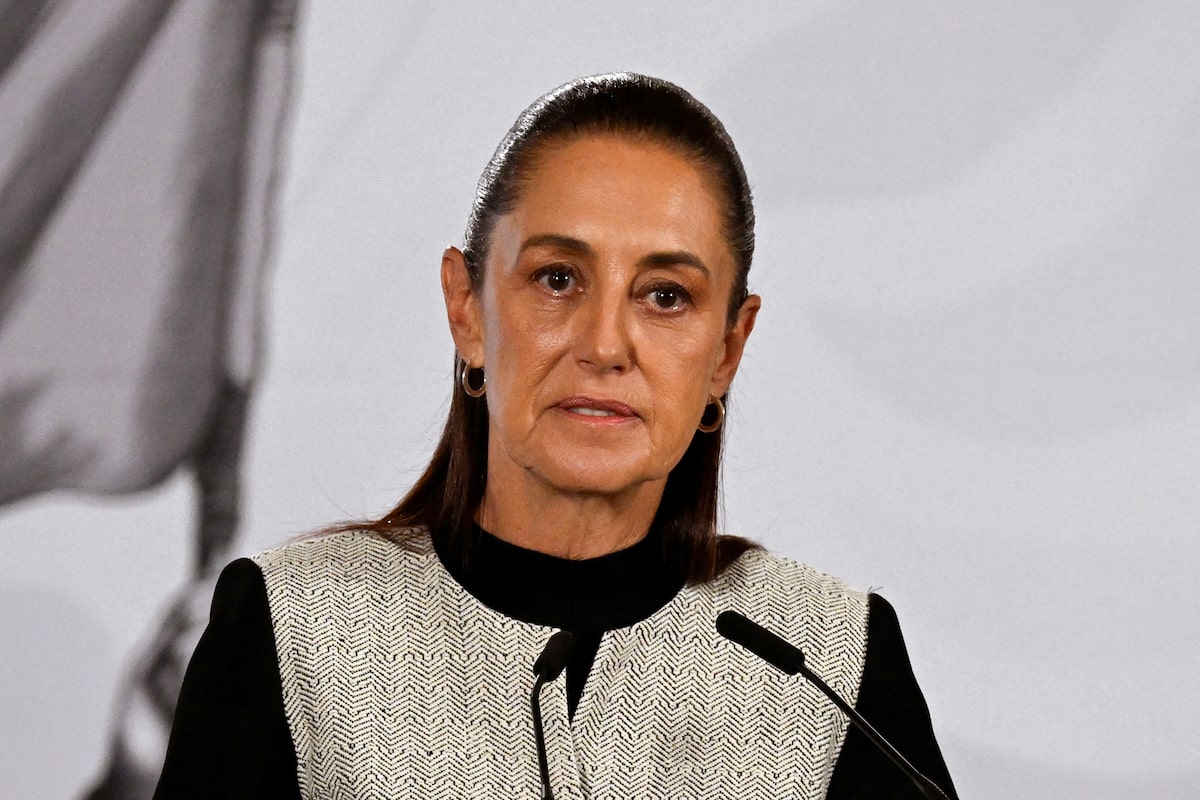
Claudia Sheinbaum, the Mexican president, is downplaying the dispute over trade between Canada and the United States. She describes the failure of the talks as “a disagreement” while remaining optimistic that Mexico can reach a deal with Canada on tariffs.
Sheinbaum, at the Monday press conference she held, said, “I would not want to call this a rupture.” This was the first public statement Sheinbaum made about the suspension of Canada-U.S. Trade Negotiations, which had been overshadowed by the domestic politics in Mexico.
She continued by referring to the misunderstanding that occurred during the discussions about the tariff increase that the U.S. imposed on Canada. Then she shifted her focus on comments made on the phone call that Carney had with Carney last Thursday. When I spoke it seemed that everything would be settled because we need to watch things.
Carney says Trump’s tariff threats are not surprising and that a trade agreement is still possible
Carney’s Investment Summit cast in shadow by trade war
She said that Mexico was paying close attention to these talks, and that the point-person for Mexico on the trade issue, Economy Secretary Marcelo Ebrard would be staying in Washington.
We hope to come to an agreement with America. This agreement must guarantee what? From each country’s point of view, the wellbeing of Mexico and that of the United States. We’ll see what happens this week. “I’m confident that an agreement will be reached.”
Canada-U.S. negotiations collapsed on Friday evening when Carney pulled Canadian negotiators before a U.S. deadline to impose tariffs of 50 percent on Canadian products worth $28 billion. This was reportedly due to the U.S. making last-minute requests that Ottawa found unacceptable.
Trump responded by pledging to increase tariffs from 25% to 50% on Canadian cars as of January 1, 2027. He has also added auto parts into the list of levies.
Mexico, according to analysts, closely followed the discussions with an interest in rules of origin for the automotive industry. U.S. negotiators offered Canada a 15 percent tariff reduction on Canadian cars in exchange for Canada accepting a set of conditions. Mexico’s auto industry would have a hard time accepting tariffs higher than 12.5%, according to an insider familiar with the sector.
The Globe and Mail does not identify the source, because he wasn’t authorized to publicly speak about negotiations.
Analysts say that a Canada-U.S. agreement would have served as a model for Mexico-U.S. negotiations.
Andrew Coyne : The U.S. doesn’t negotiate trade with Canada. It’s a rip-off
Campbell Clark: Trade cold war turns hot suddenly
Mexico held three rounds to discuss the United States, Mexico and Canada Agreement. Washington is set to host a fourth round of talks in early September.
Mexico and the United States have one of the best trade relations in the world, according to Ms. Sheinbaum.
Sheinbaum made major concessions on non-trade matters to the Trump Administration in order to maintain the U.S. Border open for Mexican exports.
Mexico’s administration has scrapped the conciliatory policy of her predecessor, “hugs not bullets”, regarding the drug cartels. The country has also settled its water debts and stopped shipping oil to Cuba, as well as establishing a dragnet in the southern states, to prevent migrants from heading towards the U.S.
Experts warn that a trade war between Canada and the U.S. could have a negative impact on defence relations.
Sheinbaum also avoided the appearance of a united front against Trump with Ottawa.
Arturo Sarukhan is a former Mexican Ambassador to Washington. He said that, “To insert herself in the Canada dispute even rhetorically cuts against all of what has protected Mexico’s file up until now,” he added. It’s not about letting Canada’s crisis be hers.
Mexico said that it wanted to maintain a trilateral accord between three North American nations. Sarukhan stated that “it behaves, in reality, as though Mexico’s destiny is completely decoupled” from Canada. Both things cannot be true.
The Morena Party, which is in power at the moment, has a strong nationalist bent but has largely resorted to Sheinbaum for its dealings with Donald Trump. The U.S. indictment of 10 Morena leaders, including the Governor Ruben Rocha-Moya, has raised the Morena base. Rocha Moya returned unexpectedly to his office on Friday after a leave-of-absence, but then resigned less than three days later when Ms. Sheinbaum refused her approval.
Brenda Estefan is a professor of geopolitics at IPADE Business School. She said that she “walks on eggshells” when speaking about USMCA. She knows, regardless of her ideology background, that Mexico is extremely vulnerable to the U.S.


Please Tell Me Red Wine Is Good For Me
Time for your weekly edition of the Defector Funbag. Got something on your mind? Email the Funbag. You can also...


U.S. tariffs are ‘manageable,’ says Scotiabank CEO
TORONTO — As Canadian businesses grapple with the latest flare up in U.S. trade tensions, executives at Scotiabank still see...
A 15-Year-Old’s Cannabis ‘Scromiting’ Got So Bad His Brain Started Shutting Down
Cannabinoid hyperemesis syndrome (CHS)—a condition linked to frequent cannabis use that causes constant bouts of vomiting—is a nightmare to endure....


Issa Rae Pilot Order Set At HBO For ‘Untitled Male Friendship Show’
HBO’s Peabody Award winning comedy Insecure creator Issa Rahe has created a half-hour comedy called Untitled Male Friendship Show. The...


Harry Styles Reveals the Surprisingly Deep Reason He Takes a Shower Immediately After Every Show
Harry Styles, who is preparing to perform for thousands of American women on the United States segment of his Together,...


Tire manufacturer says new California rules will increase prices
Tire producers have ripped into Gavin Newsom’s new regulations, warning that they would cause price hikes and ruin the market....


‘Coyote Vs. Acme’ Sets A Rotten Tomatoes Review Score Record
There are few films that have had a saga quite like Coyote vs. Acme, the previously shelved Looney Tunes live-action/animation...


Video appears to show San Francisco train driver asleep before 2 empty trains crash
SAN FRANCISCO – A video shows a train driver falling asleep just moments before a crash on July 31, involving...


Everyone Wants a Paramount Settlement. Look Under the Hood
In the Paramount Warner Bros. case, twelve state attorneys general, directors’ unions and theater owners disagreed on nearly everything. Discovery...


Panda Express guest stunned as employee stands on fryer while cleaning
Video has been released purporting to show a Panda Express worker stepping on food as they prepared meals while cleaning...
-

 Business1 week ago
Elon Musk and Jensen Huang’s New Partnership Could Create the Next Era of Technology
-

 HealthNews1 week ago
Hospitals say they found a tool to help reduce childbirth risks: wristbands
-

 Food1 week ago
What kids of parents on GLP-1s are learning about food and bodies
-

 HealthNews1 week ago
The water in your cup of coffee is about 125 millilitres, but the water behind it is closer to 140 litres – nearly all of it associated with growing the beans long before anyone boiled a kettle
-

 HealthNews1 week ago
We Helped Create A $4 Million Gene Therapy For Our Son. Then We Had To Decide If We Should Give It To Him.
-

 Entertainment1 week ago
Star Wars: Smuggler’s Gambit Lets You Keep Helping Hondo Ohnaka in Fortnite After You Leave Disneyland
-

 Entertainment7 days ago
Brand New Day’ Fastest To Cross $800M U.S.
-

 TravelNews1 week ago
Trump Fumes At CNN Reporter Who Asked About Natalie Harp