
HealthNews
What is lipedema?

Soraya said that her legs “looked weird” when she was a child.
The girls looked very different to the other students in high school. They hurt, a lot.
The 33-year old recalled, “I would run a lot with my father back then and would spend days in bed because I’d hurt. He would believe it was an explanation.”
She was unable to understand, despite her active lifestyle, why she had so many problems with her legs as time went by.
“I always believed that it was my fault.” Nodrab: “I always believed I did something wrong.”
Two years later, she was finally diagnosed with lipedema – a condition where fat accumulates in the lower part of her body. Doja Cat, as well as content creators such Nodrab have been sharing their experiences online.
Nodrab says she first heard about her condition on TikTok, where someone had shared a similar experience.
She showed me her legs and I thought, “Oh my god, she’s got the same legs that I have!” Nodrab recalled, saying that a doctor confirmed it later.
What is lipedema?
Lipedema can affect mobility, comfort, and quality of life. Dr. Thomas Su is an Artlipo cosmetic surgeon who treats lipedema.
He explained that lipedema behaves differently from ordinary fat.
Even when patients reduce weight, affected areas don’t always respond in the same manner. He said that their legs and arms are still disproportionately large. The tissue is often painful and bruises easily. It may also feel nodular or firm under the skin.
Nodrab also says that her legs bruise easily and are heavy.
She struggles to keep pace with the speed of her friends in spin classes or when running.
At some point, they went super fast. This is impossible. She said that the weight of her legs was too much for her.
Su says that as the condition progresses, patients may also feel swelling, reduced mobility, and have difficulty performing daily activities.
Cleveland Clinic estimates that one in seventy-two people has lipedema. However, this figure is likely low because it goes undiagnosed, or gets misdiagnosed, as obesity. The Cleveland Clinic adds that another global estimate states 11% of women have lipedema. It also notes the rareness of the condition in men. A physical examination, a review of medical records and some scans can be used to diagnose lipedema.
Nodrab received her official diagnosis soon after starting weightlifting.
I could define my back and arms just a bit. She said that she couldn’t even see her legs, after going down one or two sizes. I thought, This is weird. “My legs don’t really change at all.”
The pain persists. She explained that after leg exercises or walking they hurt “a lot”.
Su said he hears the same stories every day from his patients.
He said: “These people have spent many years trying to lose weight, and they’ve tried every program, diet, exercise, or workout that was available, but their arms or legs never changed like the rest of the body.” Many have blamed themselves for years, believing they weren’t working hard enough. In reality, they lived with medical conditions they hadn’t even heard of.
What is the treatment for lipdema?
Su explained that treatment depends on the symptoms of a patient and their stage of illness.
Su explained that conservative treatments, such as lymphatic drainage and compression garments and low-impact exercises, can reduce swelling and ease pain. However, they cannot remove diseased fat nor stop its progression.
He explained that patients who have more severe symptoms or advanced diseases can choose to undergo a specialized surgery for lipedema.
Many patients like Nodrab are unable to undergo surgery due to financial constraints or other factors.
Cleveland Clinic states that while treatments are helpful, there is no cure at this time for lipedema.
The condition is not fatal but can cause difficulty walking and secondary lymphedema, a blocking of the lymphatic system, as well as foot, knee, joint, or ankle issues.
Su also added that there is an “emotional load” which often gets less attention.
He said that many patients have spent years hearing their symptoms were their fault, or they just needed more discipline. This frustration, which is repeated, can cause anxiety, depression and social withdrawal. It may also lead to a lack of confidence.
Doja Cat: the significance of representation
Nodrab’s diagnosis provided her with the answer she had been searching for, but it also made her reconsider her situation.
She said, “I felt as if my life was a mess because I set so many fitness goals.” I was thinking that the more you exercise, the better your body will be. If I walk more, then I will get the body that I desire. Now, I’m not so sure. “Even if I worked super hard, my dream will not come true.”
Her Instagram account, which she uses to share her experiences and life with her nearly 24,000 fans, was inspired by these challenges.
Nodrab, who has been hiding her legs for most of her life, wants other women to follow her example.
I want women to embrace their bodies. You can still show off your legs. “You can still live.”
Doja Cat shared a TikTok earlier this year about how she believes she may have lipedema. This video received 1.8 millions likes, and 15,8 million views. Some creators made videos to express how important the video was for them.
The user @liftinlucy, who posted the video on an app and received nearly 5,000,000 views as well as 360,000 likes, said: “Doja cat saying she believes she has lipedema healed me something… finally our condition is getting noticed.”
Nodrab added that Doja Cat’s post made her “really happy,” adding that “the singer has a large audience so more people will hear about it.”
There is still a need for more education.
Lipedema, says Su, is often overlooked or misunderstood by health professionals because they weren’t trained to recognise it.
He explained that despite the fact there is more research today, many doctors are still unaware of it, or mistakenly think it to be lymphedema, obesity or cellulite.
Nodrab is grateful for her legs despite their challenges. She hopes that more people will be aware and understand.
She said, “At night, at the end of my day, I’m still able to walk, run, bike and lift.” They don’t appear the way I would like. “They hurt, but they still have my legs.”
HealthNews
Please Tell Me Red Wine Is Good For Me

Time for your weekly edition of the Defector Funbag. Got something on your mind? Email the Funbag. You can also read Drew over at SFGATE, and buy Drew’s books while you’re at it. Today, we’re talking about Tommy John, Tony Romo, babies at the movies, and more.
Your letters:
DP:
I feel like I am constantly seeing conflicting news articles regarding red wine. As someone who enjoys red wine, I am not sure whether I am killing myself slowly or prolonging my life indefinitely. So which is it? Which is the fake news?
I have a personal connection to the whole “red wine makes you live longer!” urban legend, because it was this 60 Minutes story from 17 years ago that gave me the idea to write The Postmortal. It’s a great segment if you’re in the mood to remember 60 Minutes as it once was, with the late Morley Safer looking tickled at the idea that resveratrol—a chemical in red wine—could help make human beings live forever.
Spoiler alert: It cannot. Fast-forward to now and you can buy resveratrol supplements pretty much anywhere. You should still ingest the chemical naturally, and even then, it won’t make you immortal. Resveratrol has some mild health benefits, but they’re the same kind of benefits that you’ll get from eating your fruits and veggies on a regular basis. As such, you might be safe drinking one glass of wine a day, but “safe” is pretty much where the miracle ends. Because red wine has alcohol in it, and alcohol has been a proven toxin since the dawn of humanity. Also, do note the one-glass limit that keeps wine safe. That RDA may be feasible in Europe, where people have heard of moderation. But we don’t do moderation here in America. One glass of red wine is what Americans have before they start really drinking.
I haven’t had alcohol in nearly eight years, and the only form of it I truly miss is a nice cabernet. There are plenty of near beers out there that taste as good as the real thing, but all de-alcoholized red wine is shit. I have very little hope that BIG SCIENCE will able to put out a convincing red anytime soon. A good red wine is far too complex a thing to replicate without one of its foremost ingredients.
So please, do have a glass of the real stuff on me. It won’t help you live longer, but aging isn’t a contest. You don’t win anything by dying at 84 instead of 81, and a life without pleasure isn’t a life worth living at all.
(Morley Safer died at 84, by the way.)
Ben:
I just got back from an incredible vacation camping with the family in the Sleeping Bear Dunes National Lakeshore in northern Michigan. I got a new pair of sunglasses before the trip that came with croakies that were very convenient for our adventures, and really made me look like the summer camp counselor I was in my youth. I loved it! Now I’m back to my life as a suburban midwestern dad and while I think the croakies looked good, I’m worried it’ll look stupid when I’m not on a camping vacation. How long can I keep wearing these before I look like an asshole?
You’re a dad, yeah? And you’re worried that rocking a pair of croakies will make you look uncool? That ship sailed the moment your wife gave birth, amigo. Wear those croakies with pride, because pride is all you have left now.
You’ll need them, too. I know this firsthand because I have unwittingly started an annual tradition of losing my sunglasses at the beach. I go into the surf with my shades on, get my shit ruined by a wave, and POOF! Shades gone. One time we were swimming around in a bay in St. John, and my kids were like, “You’re gonna lose your sunglasses, Dad.” And I was like, “We’re not even swimming in the open ocean. It’s fine.” Ten minutes later, I was shade-less and my kids were laughing at me. Again. Like I said, it’s tradition now. That’s why I only wear cheap sunglasses into the ocean. Had to lose a $75 pair to learn that lesson. Yes, I know I’m dumb.
To mitigate the problem, my wife bought me a pair of croakies, which worked as intended the first time I brought them along on a trip. I have since failed to remember to pack them on every subsequent vacation. This is why I lost another pair of sunglasses in Cape Cod a month ago. Had to buy a new pair at the beach shack for $26. Not a bad price, all things considered.
The point is: Wear your croakies.
Brian:
I have a request for you. Can you do a quick remembrance of Tommy John, who recently passed (he was very much a guy)? My father and I would often remember Tommy John, especially his three-error game, which we watched on WPIX back in the day.
I cannot, because I’m a little too young to remember the man’s prime. He was still a name-brand pitcher when I first started watching baseball back in the late ’80s, but he was in the twilight of his career by then and ESPN wasn’t ESPN yet, so I have no memory of watching Tommy John play or doing anything cool. I only know him as the surgery guy, same as I only really know Lou Gehrig as the disease guy. One a day a ballplayer will die tragically and have death itself named in his honor—Jose Altuve Syndrome or what have you. It’s not the worst legacy a person can leave behind.
However, I don’t wanna move on from Brian’s request without first recognizing Tommy John’s ability to rock a dad hat, as seen here:
MAGA hats have kinda ruined the whole dad-hat phenomenon, but let’s take a moment to savor the more innocent times when a dad hat was just a dad hat. For maximum dorkiness, a seasoned dad bends the brim only slightly, and then rests the hat on top of his head. He never pulls the hat down onto his head, he simply places on his hair and assumes that’s all he has to do in order to look sharp and keep the dang sun out of his eyes.
As you can see, Tommy John’s hat game was on point. He could have been an abusive Little League coach with a hat game like that. He will be missed, I assume.
Jordan:
I’m 43 (I think my age group is referred to as Xennials) and am hoping for some insight from the parent of a Zoomer. Why is Backrooms so terrifying to Gen Z? As someone who grew up with campy ‘70s/‘80s horror (Halloween, Nightmare on Elm St , etc.) and more recent franchises like Insidious and Conjuring, I don’t find anything particularly scary about liminal spaces. Unsettling? Sure. Horrifying? I just don’t see it. If you ask my younger cousins (late-teens to early-20s) and their friends, they’ll tell you it’s the most spine-chilling thing they’ve ever seen but they can’t specifically tell me why. Can you demystify this one for me?
I liked Backrooms a lot, mostly because it was so different from most of the dogshit studio fare I have take in on a regular basis. I don’t remember being all that frightened by the movie, probably because I’m 49. When you’re younger, scary movies are scarier. When you’re an old man who has literally watched other people die, and nearly died yourself, you can shrug off jump scares a bit more easily. So that’s one part of the equation.
The other part is that Backrooms depicts a world where you’re stuck inside of an anodyne office space indefinitely. (Unless you leave. I dunno why the filmmakers made it so easy for characters to leave the backrooms … good thing it was the kind of horror movie where all of them were too dumb to heed me screaming DON’T GO BACK IN THERE at the screen.) If you’ve ever worked in a cubicle farm, you know it’s a very specific and dull form of hell. Zoomers have either intuited that fact from their parents, or have had the displeasure of being stuck in a cubicle job themselves. They’re also growing up in an America whose power brokers are hellbent on keeping employees trapped in said cubicle farms forever, so I can go the Full Critic on you and say that Backrooms has an existentially frightening element to it underneath the whole “cannibalistic animatronic pirate” shit.
But that’s overanalyzing it. Zoomers are probably just terrified of being trapped somewhere forever without their phones.
Paul:
The possibility of CBS firing Tony Romo is crazy right? He’s the best color commentator in the NFL. Are they paying him too much money? Maybe CBS thinks so, but it’s market rate. Drinking and driving is bad, and no one should do it. But Romo made the same mistake millions of football fans do every Sunday in the fall, in part because CBS and the NFL try to straddle the gray area between promotion, and ignoring, excessive/irresponsible alcohol consumption. Romo should pay his debt to society and go back to work, the way every other NFL fan does when they make this mistake. Or am I missing something?
I think you’re in the minority in loving Romo on the mic there, Paul. I’m one of the few people left who still enjoys when he does games, but that’s exclusively because Romo is so excited for some football, and because he provides a necessary emotional contrast to human tie clip Jim Nantz.
But even I know that Romo quit watching tape two years into the job, preferring to fill the air with all manner of grunts, squeals, gasps, and “I DON’T KNOW HERE, JIM!” This was the work of someone who sounded drunk in the booth, and may very well have been. Again, I don’t really mind that; Harry Caray spent his entire career drunk in the booth and it was magical. However, CBS doesn’t wanna pay $30 million a year to someone who barely gives a shit about preparation. That’s why J.J. Watt will almost certainly take over Romo’s job for good at some point this season. Watt’s good on the mic, and hasn’t released a DUI workout tape to the general public yet. If he yoinks the A booth and Romo never comes back, I can deal with that. So can most people.
HALFTIME!
Craig:
I went to see The Odyssey in iMax the other day with two of my daughters. I was very excited about this. One of my daughters went to our reserved seats in the theater, while the other stayed with me to order concessions. While at the concessions counter, my daughter texted me from the theater to let me know that there was a baby in our row. My first instinct was to get a refund and go home. Instead, I took a deep breath and decided to go with the flow. It turns out the baby slept through most of the movie and, when she was awake, one of her parents took her to the lobby (which was mildly distracting). Leaving all of this aside, who in their right mind brings a baby to a nearly three-hour, R-rated, iMax, loud as hell movie??? What is happening to us?
Brother, you’re talking to a guy who saw someone bring their kid to a screening of Natural Born Killers back in 1994. Not a baby, but a kid old enough to know what they were looking at on the screen. I was an 18-year-old asswipe at the time and even I thought that was fucked up. Didn’t help that Natural Born Killers wasn’t a very good movie, but I digress. Parents will take their kids anyplace if they can burn some clock and avoid shelling out for a babysitter. It has always been thus.
Bringing a tiny baby to a movie is a little bit different, because babies can’t process what’s happening on the screen. All they see/hear is static, which counterintuitively acts as a soothing agent. White noise mimics the sound of living inside your mother’s womb. That’s why a lot of parents keep a white noise machine in the nursery. It’s also why a lot of movie theaters have special Mommy Matinees open to parents with babies. I probably would have taken one of our kids to a showing like that back in the day.
But not The Odyssey. That movie has a truly bullshit R rating, but it IS long and louder than a fucking Blue Angels exhibition. You’ll blow out both of Junior’s eardrums if you take them to that flick, and you should probably rock some earplugs of your own. Someone please buy Chris Nolan some hearing aids already.
Noe:
I’ve been meaning to write in to ask you about cochlear implants, so it was cool to see you talk about it last week. Would you mind telling us more about how they are day-to-day? You wear a hearing aid on the other side so can you compare the two? I have worn hearing aids since I was 13 and have talked to numerous audiologists and ENTs, but they can’t tell me firsthand what it actually FEELS like to use an implant. Can you wear a hat? Can you lay your head sideways without piercing feedback? What are the quirks and features?
You can wear a hat over a cochlear implant, although you have to be careful when you take the hat off and/or adjust it on your head. A cochlear implant sticks to your melon via the power of magnets (how do they work?!), so a wrong move can knock it off. Of course, you’ll know something is amiss because you’ll stop hearing out of the processor once it’s been dislodged.
Otherwise, I basically never notice my processor when it’s affixed to my head. I don’t wear hats regularly, and I never wear my processor when I’m lying down (you don’t have to wear it to bed, because you don’t need all your hearing when you’re asleep). I’m always up and about when I’m wearing it, which means it stays in place and feeds me sound all day long. Takes a few days at first, if that, to get used to wearing one. But it’s no different from a hearing aid in that regard.
One last boring note: my implant processor is a MED-EL Rondo, which has no earpiece. I just wear it on the side of my head and trust the magnet to do its job. Many other cochlear implant processors include an earpiece to help keep them in place. But the earpiece has no functional value beyond that, so I’m not gonna stick something in my ear all day long if I don’t have to.
Ben:
What is your most unexpected celebrity encounter, like running into Glenn Danzig getting cat litter at the pet store?
When I was young, my dad worked for an airline and so we always flew for free, so long as we were willing to be on the standby list. Oftentimes that meant we ended up in first class on domestic flights, which is why I’m such a coddled little boy. Anyway, one day we get an upgrade and the rest of the first-class cabin is packed with almost nothing but WWF wrestlers on their way to an event. The Undertaker sat across from me. Viscera sat in front of me, next to some generic businessman, and I overheard that businessman asking Viscera what he did for a living. That was amusing.
I also sat behind Macho Man Randy Savage on another flight once. Pretty sure that one was in coach. Lemme tell you somethin’ Gene Okerlund, the Macho Man doesn’t like riding in coach class, oh yeah that’s right.
Barry:
With so much interleague play and the universal Designated Hitter, there isn’t any diff between leagues at all now. So why have leagues? Just declare MLB the MLB and take the top ten teams into the post-season?
This question isn’t that far off from demanding that the NFL/NBA playoffs do away with their playoff seeding by conferences/divisions and just set the bracket according to win/loss records and nothing else. I’ve always said that owners will never go for this, because owners like their division titles, plus the rivalries they can foster.
I’m not that far from agreeing with them. Even with the universal DH, I still prefer the American League and the National League to be wholly separate. I don’t like interleague play, even though it’s been around for a while now. I like it when every team has a set rotation of regional opponents, and I like it when the playoffs feature matchups I might not see at all during the regular season. It preserves, in part, the origins of these championship affairs, when conferences really were separate leagues entirely. Also, I’ve been watching sports for so long now that I really do have my own brand image for every conference and division, even if they’re more a construct of my imagination than anything actually distinctive. I’m a creature of habit. Most sports fans are.
That said, no South division team in the NFL should ever get to host a playoff game. I’m not THAT much of a romantic. Fuck those loser teams.
Lexa:
Across all pro and college sports, what is the best conference name? I loved the GLWHA (Great Lakes Women’s Hockey Association), but the most fun to say is NESCAC (New England Small College Athletic Conference). Dark horse to NEWHA, the New England Women’s Hockey Alliance because Alliances seem cooler. Who you got?
The SWAC, mostly because I like saying “swack.” It’s like a perfect combination of swag and smack. I guess you could also glean “wack” from that portmanteau, but no conference that Steve McNair played in could ever truly be described as wack.
I also liked the Pac-10’s name back when it existed, because it reminded me of Pac-Man. ABABABABABABABA.
Ian:
I’m in my 40s and know a few people who have died unexpectedly after a “brief illness.” Is it wrong of me to want obits to say exactly what killed someone young? Just as like community awareness? I’m also a musician and know a few people who have died of drug overdoses but their families never indicated that. I feel like this is stuff people need to know happens and can affect anyone. Am I being selfish or snoop-y?
Oh, I always wanna know why people died. That’s just basic curiosity, as far as I’m concerned. It can also prove to be valuable information, like how the deaths of Tom Petty and Prince helped raise awareness of the opioid crisis still ravaging the country. But obits are usually written by the surviving family members, who aren’t always wild about making the cause of death public. That’s their right, and I know when my curiosity crosses over into nosiness. So I defer to common courtesy in such instances. Will I still read every last detail of Hayden Panettiere’s final hours when some sleazebag publishes them? No comment.
Email of the week!
Brian:
My house recently burned down in the wildfires that tore through Spokane on Aug. 1. Our life since has been a chaotic blur, as you can imagine. Evacuations, staying with family and at hotels, trying to figure out what to do next, navigating insurance, and so on.
This past Sunday, we finally get into the long-term rental we’ll live in while we try to rebuild. Over the ensuing couple of days, we haul in some basic furniture, set up the TV & internet, stock the fridge, and chip away at all sorts of random administrative tasks.
On Tuesday, I get home from work, we order some pizza, the kids are playing happily upstairs, and everything is feeling somewhat calm and normal for the first time in two weeks. What a relief. I sit down on the couch and realize I haven’t watched a Mariners game since the fires, and haven’t even checked scores during that time, which is weird because we’re normally big fans. Baseball just got pushed off to the side.
Turn on the game, pizza at the ready. They lose 22-0 to the Brewers.
Go M’s.
Go M’s.
HealthNews
A 15-Year-Old’s Cannabis ‘Scromiting’ Got So Bad His Brain Started Shutting Down
Cannabinoid hyperemesis syndrome (CHS)—a condition linked to frequent cannabis use that causes constant bouts of vomiting—is a nightmare to endure. A report out this week shows how CHS can sometimes also become life-threatening.
Doctors at Augusta University in Georgia detailed an especially frightening case of CHS in a 15-year-old boy. The condition likely led him to develop an acute neurological disorder triggered by a severe vitamin deficiency, one that left him barely able to walk, talk, and see. Fortunately, doctors were able to treat the boy in time, and he ultimately made a full recovery.
“To our knowledge, this represents one of the earliest reported pediatric cases of Wernicke encephalopathy associated with CHS,” the authors wrote in their paper, published Monday in the Cureus Journal of Medical Science.
The growing horrors of ‘scromiting’
People with CHS will experience cyclical periods of intense cramps, nausea, and vomiting. These episodes are often so excruciating that people will scream out in pain as they’re vomiting, which has led people to nickname the condition “scromiting.”
Scientists don’t know why it happens, but we know the risk of CHS is greater in people who use cannabis for a long period of time. The incidence of CHS also seems to be rising over time, likely due to greater cannabis use among Americans, the higher THC potency of products today, and better awareness (it’s only last year that CHS was even formally recognized with a distinct diagnostic code). A report earlier this month from the U.S. Centers for Disease Control and Prevention shows that emergency room visits for CHS have continued to increase this year, particularly among younger people, some as young as 15.
A rarely seen complication
This latest report involved a 15-year-old who first visited doctors after several days of unrelenting nausea, vomiting, and headache, which soon led to a diagnosis of CHS. He returned weeks later in much worse shape, having lost around 25 pounds of weight. Tests found he had dangerously low levels of sodium in his blood and signs of worsening liver damage, and he was admitted to the hospital.
Upon admission, the boy had slurred speech, mild confusion, and episodes of unresponsiveness, the doctors wrote. And though they treated some of his initial issues, his mental and physical state continued to deteriorate as he stayed mostly bedbound and wasn’t able to walk normally. Soon after, his eyes began to move involuntarily from side to side (a condition called horizontal nystagmus), and he developed blurred vision.
Brain tests, including an MRI, yielded no specific answers. But given his neurological symptoms and preceding CHS, the doctors suspected that he had Wernicke encephalopathy, an acute brain disorder caused by a deficiency in thiamine, also known as vitamin B1. This nutrient helps convert food into energy and is especially important for brain and heart function. If not treated promptly, Wernicke encephalopathy can cause permanent, even fatal, brain damage; it can also cause a dementia-like disorder called Korsakoff syndrome.
The doctors decided to treat the boy with supplemental thiamine while they waited for test results. Within a day of treatment, his neurological symptoms began to improve, and the results confirmed his deficiency, essentially confirming their suspected diagnosis as well. He eventually improved well enough to be discharged from the hospital.
Lessons to be learned
The chronic vomiting caused by CHS can certainly lead to nutritional problems like rapid weight loss and vitamin deficiencies. Yet Wernicke encephalopathy is usually linked to chronic alcohol misuse, not CHS. Stranger still, this is only the second reported case of this condition linked to someone with CHS so young, according to the authors, and perhaps the first ever case that wasn’t clearly identified with an MRI scan.
Unusual as this turn of events might be, the increasing prevalence of CHS, especially in younger people, could make these sorts of cases more common, the authors warn, and doctors should be aware of the possibility of this neurological condition emerging in teens with CHS and be willing to treat it proactively.
“As adolescent THC use continues to rise, clinicians should maintain a low threshold for empiric thiamine supplementation in adolescents with prolonged CHS and any new neurologic findings, regardless of imaging results,” they wrote.
As for the boy, he agreed to stop taking cannabis, after which his CHS stopped. And at his last check-up with his primary care doctor, he appeared to be fully back to normal health.
HealthNews
Summer COVID Surge? As Cases Rise, See 2026 Quarantine Guidelines, Symptoms to Watch
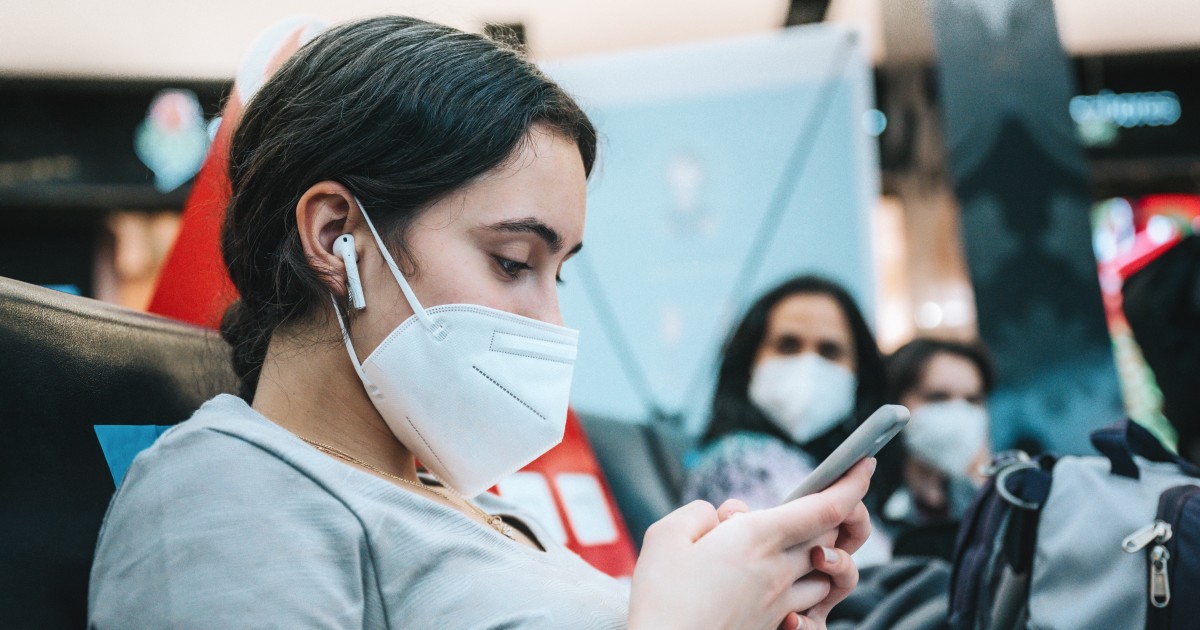
While foodborne pathogens are in the limelight, another virus that is highly contagious has been spreading across the country: Coronavirus. The United States is experiencing a COVID-19 outbreak in the late summer. Cases are increasing across nearly all states.
According to the U.S. Centers for Disease Control and Prevention, cases have been increasing or are likely to increase in 47 States as of August 19.
The CDC states that COVID is not widespread. The CDC says that rates in all parts of the nation are rapidly increasing, particularly those located in the South or West.
According to CDC data, Texas has the highest COVID levels in its wastewater.
A school district located in South Texas had to close for two full days due to COVID spreading rapidly within its district. San Perlita ISD closed all campuses on Aug. 25 and 26 to “protect health and safety”. This was announced in a Monday notice.
Experts say that the current surge is not surprising. SARS-CoV-2 can be spread all year round, but has developed a distinct seasonal pattern since the outbreak began in the U.S.
Every year, we’ve seen two waves. “We’ve had two waves (every year).” Dr. William Schaffner is an infectious diseases specialist at Vanderbilt University Medical Center and a professor.
Data show that COVID also crept up while the nation was focusing on a huge outbreak of cyclospora in October.
The respiratory virus is spreading, even though it may not have been on the minds of many Americans. This just happens to be back-to school season.
Are we facing another COVID outbreak in the U.S. and what will be its peak number of cases? What do we know?
The 2026 Summer COVID-19 is a Surge
Experts say that the U.S. has begun to experience a COVID-19 late summer wave. Experts say that “the national data are beginning to increase, but not in a significant way,” Schaffner.
The CDC reports that according to its latest analysis of wastewater, COVID levels are “very low”. This is as of August 15, 2015.
The latest data, from Stanford University’s infectious disease surveillance program WastewaterSCAN shows that SARS-CoV-2 is present in wastewater at a “high” level nationwide. This activity has also shown a marked increase in the past 21 days.
Since late June, we’ve seen a steady rise in the number of cases across (the U.S.). Amanda Bidwell is the WastewaterSCAN scientific program manager. She tells TODAY.com that SARS-CoV-2 levels are 106% higher in August than they were in July 2026.
The West and South have currently the largest concentrations. California and Texas have reported the largest increase in cases.
According to a report released on August 17 by the Pandemic Monitoring Collaborative, there are active COVID epidemics in at least 15 U.S. states and territories.
Michael Hoerger Ph.D. is an assistant professor of Tulane University School of Medicine and the PMC’s leader.
Experts say that this current wave is less intense than previous ones. The U.S. saw a summer surge in 2025 that was fueled by Stratus, and lasted through the fall.
Bidwell says, “We’re seeing lower SARS CoV-2 levels than we did at this point last year.”
CDC statistics show that during the week of Aug. 13th, nearly 5% (or a total of 5,000) COVID-19 test results were positive. At the same point last year the rate for weekly tests was above 9%.
Uncertainty surrounds the severity of this wave or its peak. Hoerger says that transmission is expected to peak around the first week of September. The regional distribution could also change.
Experts note that only time will tell. The U.S. is still in peak vacation mode and many children are returning to school soon. This will create opportunities for this virus to spread.
We need to exercise extreme caution. “We’re only halfway through August,” Schaffner says.
What COVID-19 variants are spreading?
Bidwell says that the current COVID is a mix of variants.
According to the latest CDC data, the dominant strain, XFG.1.1 accounted for 22-40% of all cases reported in the U.S. during the month.
Dr. Albert Ko of the Yale School of Public Health’s Department of Public Health and Epidemiology, told TODAY.com that XFG was a highly infectious recombinant strain. It had surpassed Nimbus variant (NB.1.8.1) last summer.
It’s within the same family as past omicron variations (from) last year. So it isn’t a huge jump. Ko says that this is probably the reason we haven’t seen a huge peak in sales for summer.
CDC statistics show that the BA.3.2, aka Cicada variant is responsible for about 15% of all cases. This heavily mutant strain was first discovered earlier this year, and spread rapidly around the world. Experts note that Cicada is not a big hit in the U.S.
Hoerger says that while there haven’t yet been any major changes or mutations in the most recent variants of the virus, it may evolve further in the future.
Ko: “Just because we don’t see a new COVID variant does not mean that it won’t cause serious disease.”
COVID 2026 Symptoms
COVID-19 strains that are causing the current summer outbreak have similar symptoms to other omicrons. They usually manifest within 2-14 days after exposure.
According to the CDC:
Cough
Itchy throat
Congestion
Fatigue
Fever
Chills
Breathing problems
Headache
Nausea and vomiting
Diarrhea
Testing is essential because the symptoms of COVID, and those of other respiratory viruses that are common, are similar.
The CDC suggests that if you have a negative result from a rapid antigen at-home test, you should take another test within 48 hours. This will ensure you’re not infected.
According to Schaffner, most people are able to recover on their own from COVID-19, although some groups may be at greater risk for severe illness or hospitalization.
This includes adults older than 65 years, infants and individuals with weak immunity systems.
Antivirals can reduce the severity of symptoms and their duration if taken as soon as possible.
The COVID quarantine guidelines for 2026
The CDC advises that if you are sick with COVID-19 you should stay home until you recover.
The CDC states that you can resume your usual activities after your symptoms improve and your fever has been gone for 24 hours without any medication.
Experts recommend that you practice social distance, particularly from immune-compromised relatives, while recovering. They also suggest wearing an N95 or KN95 well fitted respirator.
The new COVID-19 booster is available.
The COVID-19 vaccination has undergone a re-formulation in recent years to better target new strains that circulate during the autumn.
NBC News previously reported that the U.S. Food and Drug Administration voted earlier this year to recommend an updated COVID vaccination for 2026-2027 targeting the XFG variation.
The new shots cover the ‘predicted’ circulating images this winter and fall, says Schaffner.
Experts expect the 2026-2027 COVID vaccinations to be available in September.
Hoerger says that if the process of approval is delayed, it could take a while.
The CDC changed its COVID-19 vaccination guidelines last year from a recommendation for all ages to a model of shared clinical decision making.
Ko says that you need to talk first with your health care provider. This could be a nurse or doctor.
According to the CDC, COVID vaccination protects against severe illnesses, hospitalization, and even death. Hoerger says that it can lower the chance of long-term COVID.
Most medical experts advise that anyone who qualifies get the new COVID booster in this fall. Schaffner says that it’s important to vaccinate high-risk populations and pregnant women.
At this stage, we have all been exposed to COVID multiple times, and our immunity is building. Ko says that getting the vaccine, particularly before winter comes along can be beneficial.
HealthNews
America’s Broken Health Care System Disrupts Patient Care
LoadingError – LOading
One of my patients asked me a question a week before she had her surgery.
Her recovery from opioid abuse lasted more than one and a quarter years. We met weekly when she entered my program. With time and a remarkable amount of discipline, we began to visit each other monthly. Buprenorphine had helped her rebuild her life. She was able to return to her job, reconnect with her faith, fight for her children at family court and gain stability.
The money she earned was all hers.
She was now doing another important thing: fixing her damaged teeth that had been neglected and abused for years. Her dentist asked who was going to manage the pain for her after multiple extractions. She was undergoing a medication assisted treatment program.
Advertisement
We planned ahead. We prepared ahead. We decided to temporarily change her medications and safely manage her pain.
We made a plan.
The operation itself was successful. It was Friday afternoon. Her pain became worse within a few hours. As we discussed, we prescribed additional medications immediately. What happened next was not related to medicine.
She was taking buprenorphine, so the pharmacy marked her prescription. The insurance company triggered an authorization prior to the prescription being filled. Another red flag was raised by the state’s prescription monitoring system.
Advertisement
The patient’s plan, which was carefully crafted by her, her doctor, and her dental office, is suddenly met with layers of bureaucracy, delays, and suspicion.
The medication was not available to her.
She was in excruciating pain by the time she arrived at an emergency department that night. He called from the waiting area. He asked, “Why?” I still can hear his voice. “What could we have changed?” I didn’t have an answer.
A woman, who spent the last year and a quarter rebuilding her own life, was in pain for 12 hours. Not because nobody had planned, or because they didn’t care, but simply because the plan began to fall apart once it left the original room.
Advertisement
She told me a story that I am still thinking about.
I’ve been working too hard to get this.
When everything began to unravel: “I believed we had a strategy.”
We did. It’s still painful. It was my belief that anticipating her needs would help me protect her.
It’s not right.
Long time I thought that moments such as this one were just isolated incidents. A delayed refill. A missed discharge instruction. The specialist transfer did not run smoothly. The more I practice the more I understand that this type of situation is common.
Since then, I’ve seen versions of this pattern when patients are discharged from hospital, have delayed refills or change specialists, and in countless other situations where a good medical decision does not work out as expected.
The quietest and most depressing reality in American healthcare is the fact that it’s not enough.
Each day, patients and doctors make informed decisions. These decisions may lose their force somewhere along the way, whether it’s between the doctor’s office, pharmacy, hospital, insurer or next handoff.
Advertisement
Not everyone is indifferent or reckless. It’s often because the parts of the system are doing what they were designed to: check, assess, regulate, and protect. From the perspective of the patient, it can seem incredibly similar.
I already told them this.
Didn’t you already do that?
Why am I starting all over?
It is almost absurd to see a medical practice repeated in a way that we have done.
It is also about helping those decisions survive in the real world. “It is not only about making good decisions, but also helping them survive in the real world.”
We expect that once a decision has been made in most areas of our lives, it will be carried out. Patients often discover something strange in health care: even the best plan can need to repeatedly be defended.
Advertisement
This repetition can be frustrating.
It can be painful.
It can cost people more than money, such as their dignity, trust or momentum.
The next thing that happened is what I remember most.
Was I nervous when she returned for another follow-up? I was worried she’d blame me. I felt like I had let her down. I hadn’t anticipated well enough. Her plan was not safe from the obstacles that awaited it.
She thanked me instead.
She said she appreciated my call. She thanked her for calling. She said she was grateful that I helped her.
It was actually harder.
Although I couldn’t say, “Thank you” for my suffering in gratitude I thought it should have been handled differently.
Advertisement
She thanked me for helping to navigate her through a mistake I thought we could have prevented better.
The moment I saw him changed my life.
Still, I am deeply concerned about the diagnosis, treatment of patients and how to do things right. Now I am also more concerned about the patients’ experiences after leaving my office.
What could be the cause of this problem?
Which paperwork can delay the process?
What assumptions could cause us to reopen an already thoughtfully made decision?
Making the right decisions is just one part of your job.
As I see it, continuity of treatment is becoming more and more important.
It means clinicians can anticipate handoff errors better, particularly during high-friction situations like hospital discharge, surgery or medication changes. Patients should ask one last question: “What might interrupt my plan and whom do I contact if that happens?”
Advertisement
Some of the worst failures I have seen in my career aren’t bad decisions. Patients are constantly forced to prove that they made the right decision.
Holland Haynie is the Chief Medical Officer of a rural Missouri federally-qualified health center. He practices as a family doctor. He explores the gap between what medical decision-makers do and the reality of the patient’s experience. He focuses his work on rural healthcare and hidden burdens that patients experience when navigating the modern system. He has published in STAT and MedPage Today as well as The Hill and Modern Healthcare.
Have you got a personal story that you would like to be published on HuffPost.com? Learn what we are looking for and then send your pitch to pitch@huffpost.com.
HealthNews
2 people die from measles in Pennsylvania
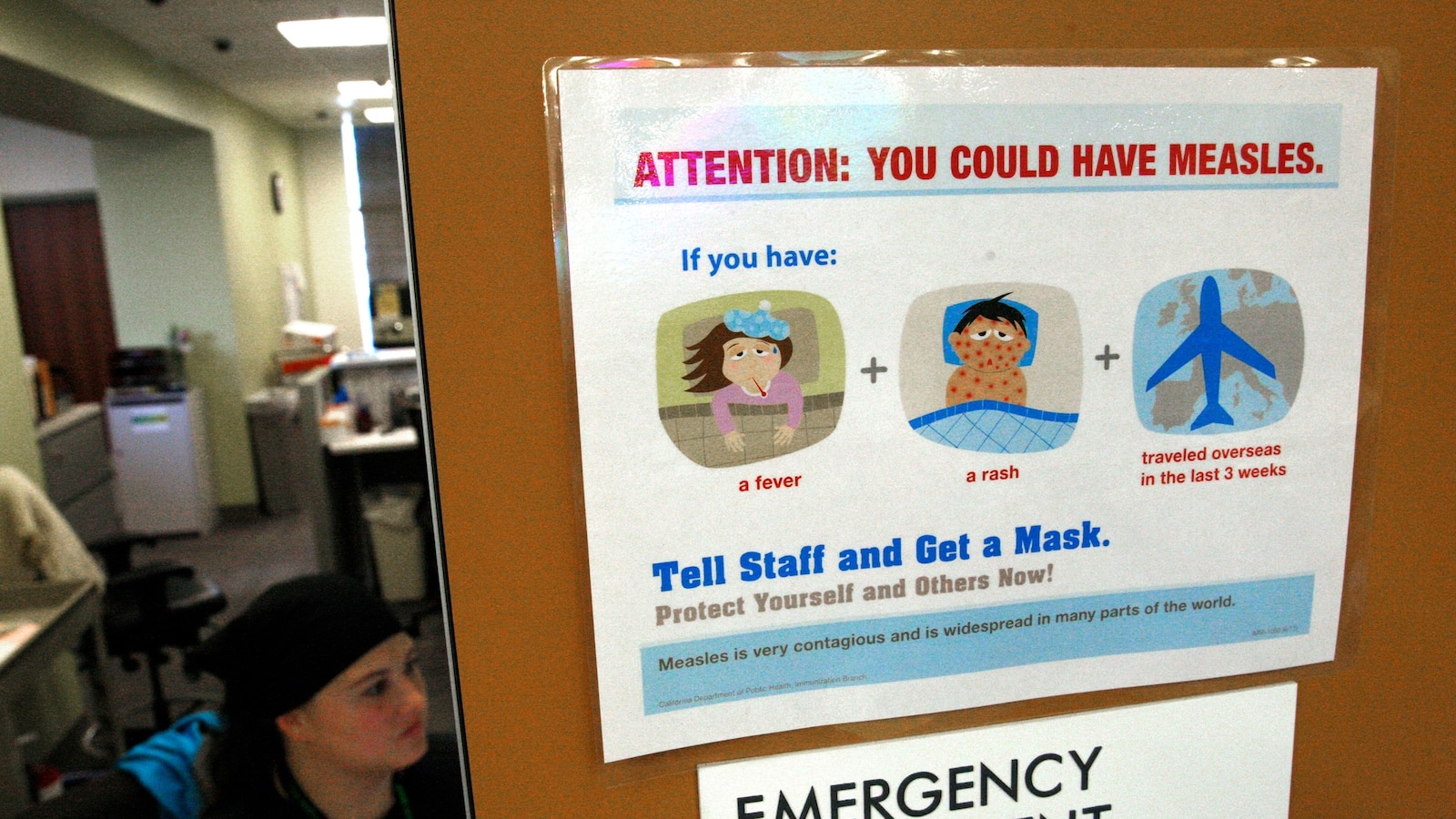
The state’s health department announced Tuesday that two people died from measles in Pennsylvania. The two people who died were not vaccinated.
According to the Pennsylvania Department of Health these are the first measles-related deaths in Pennsylvania in over 35 years and also the first reported deaths in America this year.
In a press release, Dr. Debra Bogen, secretary of state for health in the state, expressed her deepest sympathy to the families who were facing such a tragic loss. Because measles has been largely eradicated in Massachusetts for over three decades, many people don’t know what it is and are unaware of its potential severity.
According to the Centers for Disease Control and Prevention, in late July the U.S. reported the highest number of measles confirmed cases since last year.
CDC statistics show that the 2,289 cases recorded in 2010 was the most since more than 30 year. The 2,777 cases is the highest total since 1991.


Please Tell Me Red Wine Is Good For Me
Time for your weekly edition of the Defector Funbag. Got something on your mind? Email the Funbag. You can also...


U.S. tariffs are ‘manageable,’ says Scotiabank CEO
TORONTO — As Canadian businesses grapple with the latest flare up in U.S. trade tensions, executives at Scotiabank still see...
A 15-Year-Old’s Cannabis ‘Scromiting’ Got So Bad His Brain Started Shutting Down
Cannabinoid hyperemesis syndrome (CHS)—a condition linked to frequent cannabis use that causes constant bouts of vomiting—is a nightmare to endure....


Issa Rae Pilot Order Set At HBO For ‘Untitled Male Friendship Show’
HBO’s Peabody Award winning comedy Insecure creator Issa Rahe has created a half-hour comedy called Untitled Male Friendship Show. The...


Harry Styles Reveals the Surprisingly Deep Reason He Takes a Shower Immediately After Every Show
Harry Styles, who is preparing to perform for thousands of American women on the United States segment of his Together,...


Tire manufacturer says new California rules will increase prices
Tire producers have ripped into Gavin Newsom’s new regulations, warning that they would cause price hikes and ruin the market....


‘Coyote Vs. Acme’ Sets A Rotten Tomatoes Review Score Record
There are few films that have had a saga quite like Coyote vs. Acme, the previously shelved Looney Tunes live-action/animation...


Video appears to show San Francisco train driver asleep before 2 empty trains crash
SAN FRANCISCO – A video shows a train driver falling asleep just moments before a crash on July 31, involving...


Everyone Wants a Paramount Settlement. Look Under the Hood
In the Paramount Warner Bros. case, twelve state attorneys general, directors’ unions and theater owners disagreed on nearly everything. Discovery...


Panda Express guest stunned as employee stands on fryer while cleaning
Video has been released purporting to show a Panda Express worker stepping on food as they prepared meals while cleaning...
-

 Business1 week ago
Elon Musk and Jensen Huang’s New Partnership Could Create the Next Era of Technology
-

 HealthNews1 week ago
Hospitals say they found a tool to help reduce childbirth risks: wristbands
-

 Food1 week ago
What kids of parents on GLP-1s are learning about food and bodies
-

 HealthNews1 week ago
The water in your cup of coffee is about 125 millilitres, but the water behind it is closer to 140 litres – nearly all of it associated with growing the beans long before anyone boiled a kettle
-
 HealthNews1 week ago
We Helped Create A $4 Million Gene Therapy For Our Son. Then We Had To Decide If We Should Give It To Him.
-

 Entertainment1 week ago
Star Wars: Smuggler’s Gambit Lets You Keep Helping Hondo Ohnaka in Fortnite After You Leave Disneyland
-

 Entertainment7 days ago
Brand New Day’ Fastest To Cross $800M U.S.
-

 TravelNews1 week ago
Trump Fumes At CNN Reporter Who Asked About Natalie Harp