

Business
Microsoft CEO Warns That AI Winners Could Hollow ‘Entire Industries’
AI models are hoovering up corporate knowledge, and that’s leaving one big loser, says Satya Nadella.
In an article posted on X on Sunday, the Microsoft CEO warned of a future in which a handful of AI providers capture most economic value while industries lose ownership of their knowledge.
“The last thing any of us want is a world where every company across every sector is ceding value to a few models that eat everything they see,” Nadella wrote. “There is no societal permission for an AI future that hollows out entire industries.”
Nadella compared the AI era to globalization, warning against repeating that dynamic.
“Think about what happened in the first phase of globalization, where entire industrial economies were hollowed out by outsourcing,” he wrote. “The GDP numbers looked fine on the surface, but the displacement was real and the consequences are still being felt.”
Instead, he advocated for a broad AI ecosystem in which companies keep control of their learning systems, which he said would enable innovation and retain employee expertise.
Nadella’s post echoed concerns other Big Tech CEOs have been raising this year.
In a February podcast, Snowflake CEO Sridhar Ramaswamy said that the biggest software companies are at risk of being reduced to mere data sources.
“The big model makers want to create a world in which all of the data for all of the enterprises is easily available to them,” Ramaswamy said. “Everything else, the world, is just a dumb data pipe that feeds into that big brain.”
Ramaswamy added that Snowflake needs to operate with a “fear” that people would stop using AI agents developed by software companies and instead want an all-inclusive agent that has data from Snowflake and everywhere else.
In a January LinkedIn post, Box CEO Aaron Levie said that AI models can perform high-level knowledge work across nearly every profession, from law to strategy and scientific research.
“The question that we will have to wrestle with is, in a world where everyone has access to the same expert intelligence, how does a company differentiate?” Levie wrote. He said that context would be the answer.
Business
Private jet makes emergency landing at Mather Airport in Sacramento County

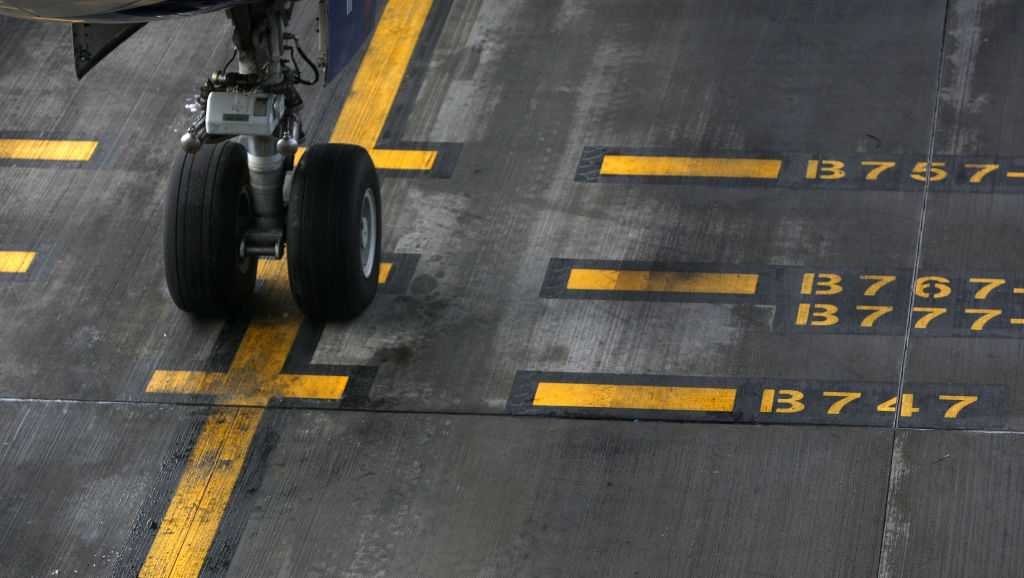
A private jet flying from Modesto to Monterey made an emergency landing at Mather Airport in Sacramento County after a landing gear warning light was activated. Flight radar data shows the plane took off from Modesto’s airport around 10 a.m. It reached Monterey but aborted its landing due to the warning light. The pilot flew to Mather Airport, made one pass over the runway while emergency crews got into position, and safely landed the plane at approximately 11:15 a.m. The two people aboard the plane were unhurt.See more coverage of top California stories here | Download our app | Subscribe to our morning newsletter | Find us on YouTube here and subscribe to our channel
A private jet flying from Modesto to Monterey made an emergency landing at Mather Airport in Sacramento County after a landing gear warning light was activated.
Flight radar data shows the plane took off from Modesto’s airport around 10 a.m. It reached Monterey but aborted its landing due to the warning light.
Advertisement
The pilot flew to Mather Airport, made one pass over the runway while emergency crews got into position, and safely landed the plane at approximately 11:15 a.m.
The two people aboard the plane were unhurt.
See more coverage of top California stories here | Download our app | Subscribe to our morning newsletter | Find us on YouTube here and subscribe to our channel
Business
Crude oil prices drop on news of Iran deal : NPR

Stay up to date with our Up First newsletter, sent every weekday morning.
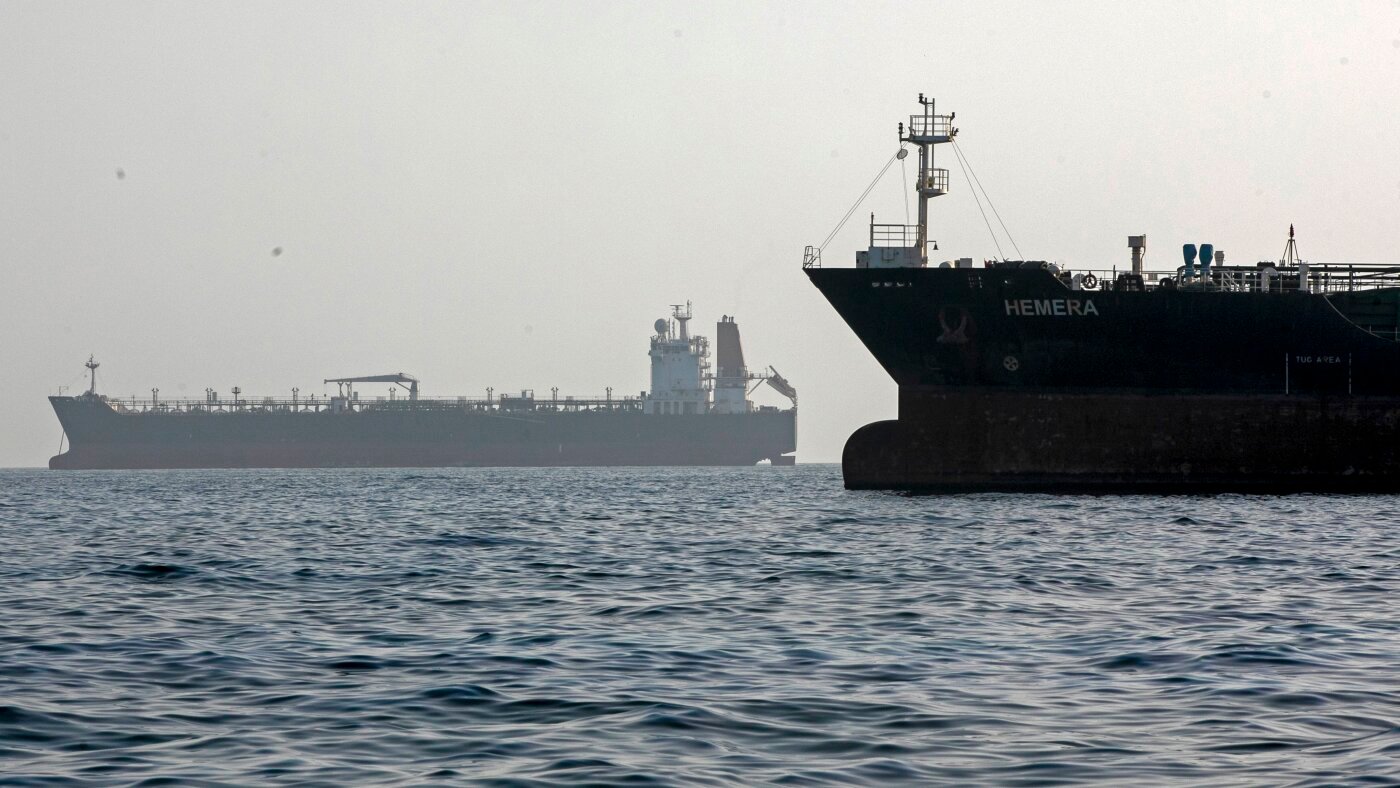
Crude oil prices sank on Sunday night after President Trump posted on social media that a deal to end the war with Iran was “complete.”
Oil futures markets promptly dropped 4%, after markets reopened for trading following their typical weekend break. Prices had already fallen significantly on Thursday and Friday in anticipation of a deal, bringing the per-barrel price of crude Sunday night down 12% from where it had been in the middle of last week.
Brent crude, the global benchmark, is now below $84 a barrel, and West Texas Intermediate, the U.S. benchmark, beneath $81. At one point in this conflict, global oil prices had touched $126 a barrel. They remain elevated compared to pre-war prices, which were in the $60s, but are now cheaper than they have been at any point since the very first days of this conflict.
Trump’s initial post on Sunday evening said he was authorizing “the toll free opening of the Strait of Hormuz,” and directed ships to “start your engines.” Before the war, approximately 20% of the world’s oil and liquefied natural gas passed through that waterway, and the disruption of traffic has caused the greatest oil supply shock in history.
In a follow-up post, Trump later said that the strait would reopen “upon the signing of the Deal on Friday, for purposes of mine removal.”
Throughout this conflict, oil prices have repeatedly fallen on headlines promising an imminent deal to reopen the strait; however, they’ve never dropped this low. Significantly, Pakistan’s Prime Minister Shehbaz Sharif, who has played a central role negotiating between the U.S. and Iran, has confirmed that a deal has been reached.
A rapid reopening of the strait would ease pressure on the world’s oil consumers, particularly in Asia and Europe. However, it would not mean an immediate return to pre-war oil supply levels and prices.
“It could be months before things return to something like the way things were before the war, at least as far as flows out of the Strait of Hormuz go,” says Kevin Book, a managing director at Clearview Energy Partners, an independent research firm. That’s because some oil and natural gas production fields and refineries have been taken offline, or damaged in the conflict. “The facilities that have been shut down, some of them can start fairly quickly. Others may take months.”
Transit takes time, too. Ships also need to move in and out of the strait, and from there around the world.
And over the past few months, the world has tapped into its stockpiles of oil in order to make up for missing supplies; refilling those inventories could keep upward pressure on oil prices for months.
Before the war began, the world had been oversupplied with oil, which was keeping prices low. Book says it’s not clear whether returning to “normal” will mean returning to that status quo.
“It’s not obvious that we’ll be in a surplus any time soon,” he says.
Business
Oil and gas supplies could take months to return to normal after Iran deal, energy experts say
NEW YORK (AP) — High oil and gasoline prices and energy supply problems won’t be solved overnight, despite an agreement to end the Iran war and open the Strait of Hormuz announced Sunday.
It will likely take months before energy companies can resume operations to the point of meeting the world’s demand, according to energy experts. The slow pace of the process of shipping and refining crude oil, and doubts about the security of traveling through the strait mean the effect won’t be seen immediately, they said.
Ships loaded with crude oil have been stranded in the Persian Gulf for more than three months, unable to safely travel through the waterway, through which about a fifth of the world’s oil and gasoline supplies typically traveled before the war began.
“It’s going to take time for people to feel comfortable and for insurance to be in place … particularly to get people on the ground to restart some of these assets,” said Daniel Evans, global head of fuels and refining research at S&P Global Energy.
Still, oil prices slipped early Monday after the deal was announced.
Brent crude, the international standard, was down $3.45 at $83.89 per barrel. U.S. benchmark crude oil lost $4.03 to $80.85 per barrel.
Those prices are still well above the roughly $70 per barrel where oil was trading before the war started.
As the higher prices unwind, ships that have been stranded will have to exit the strait, and then new tankers will have to come in to be loaded, Evans said.
“To bring a ship in, you need to be confident that you’ve got a big enough window of safety to bring it in, load it and move it out,” he added.
Oil tankers also move slowly, he explained. It takes months to travel from the strait to distant countries, deliver the crude oil to a refinery for processing and then arrive at its final destination.
In addition, some producers in the Middle East paused extracting oil from the ground, known as a shut-in, when they ran out of storage space. Restarting those operations can be a slow process.
Countries such as Saudi Arabia and United Arab Emirates, where there are alternate pipelines or routes besides the Strait of Hormuz to deliver oil, may be among the quickest to resume production, said Alan Gelder, senior vice president of refining, chemicals and oil markets at Wood Mackenzie, an analytics firm.
“But places like Iraq could be much more challenged because they’ve had a much bigger shut-in, their fields are more difficult … it may well take about a year before they get back,” he said.
Investment in the energy system, which can take years to see the results, ground to a halt after the strait’s closure, Gelder said. So it will take time for this capital to restart.
Countries that shut in oil production won’t want to restart until they know there is a stable, durable strait, and that a ceasefire will last more than 30 or 60 days, said Daniel Sternoff, senior fellow at the Center on Global Energy Policy at Columbia University.
“We don’t know what open means or what the speed of evacuation of trapped material is going to be,” he said.
Business
Jim Cramer gives Elon Musk’s SpaceX a ringing endorsement after last week’s IPO

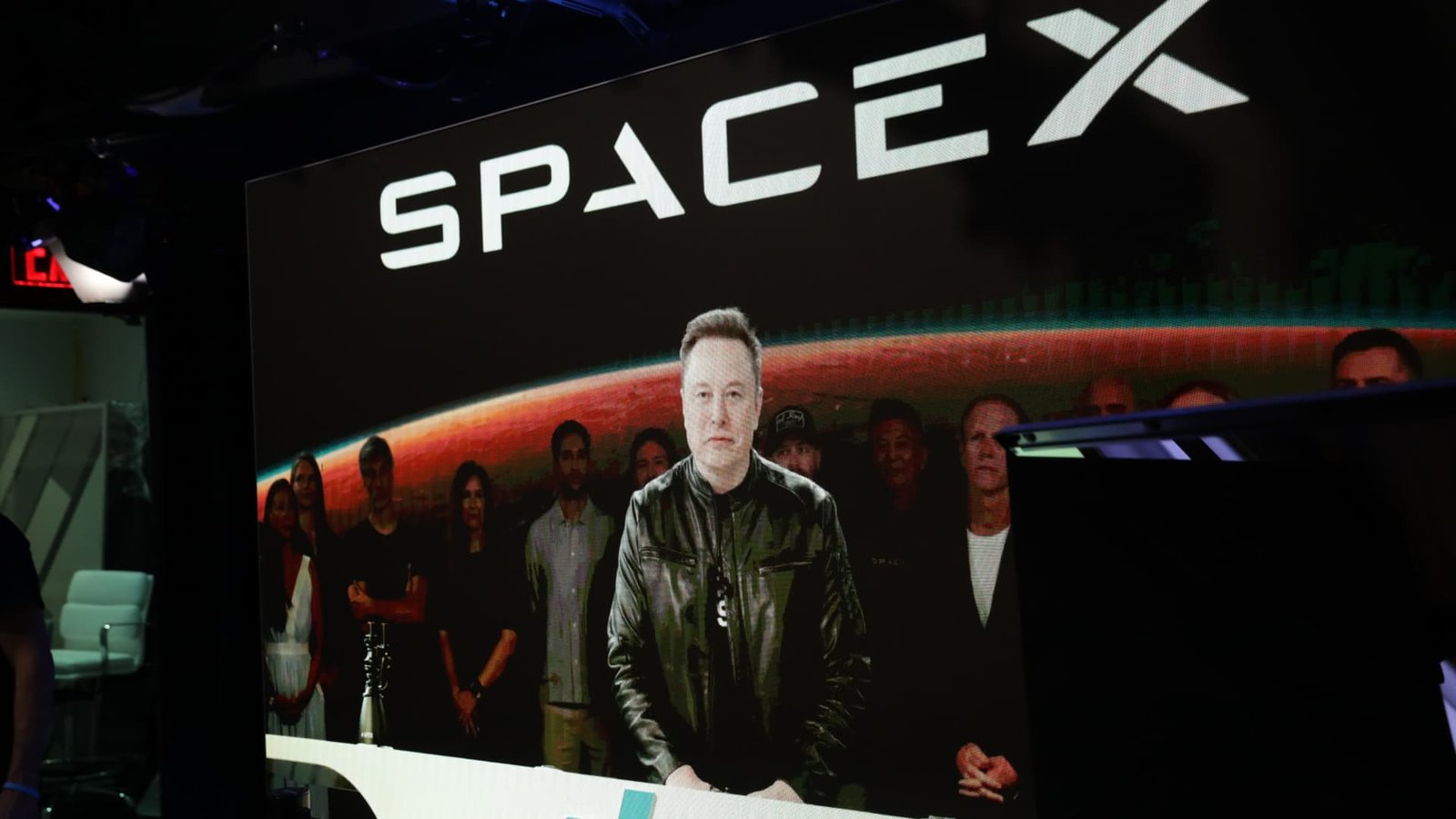
Years ago, when Tesla went public, I said, “sell, sell, sell,” because I could not see a path to profitability. It was June 2010, and Tesla was a car company — plain and simple. While exciting — I know, because I test drove one early — I was not able to get my head around it. Nine years later, I felt Tesla was morphing into so much more, and I went positive. We caught 96% of the move up. It was one of my best calls. However, Elon Musk never forgave me and endorsed the “tiresome” contraindicator slapstick that has dogged me for years. Even two years ago, I heard that he didn’t want to say hello to me because of that “sell” call. In some ways, I wish I had been willing to be wrong or to change my tune to something very positive. I am true to myself, though, which often makes for misery. I would have liked the dialogue my colleagues have with Musk. Yes, I am jealous and petty, good qualities of a competitive journalist. No, I couldn’t go positive, because I have had the same mission from when I started TheStreet.com in 1995. Total transparency. I was afraid of being wrong, of course. I wasn’t. No matter. It’s too late. It was sure good for readers and watchers, though. That’s really all that matters. I preface this weekend’s column with that story because I wanted you to know that this time around, I am all in. This time around, there is so much more to SpaceX than just a dish company or a satellite launcher, or even an X, which was part of the xAI operation that Musk bought in February. I view SpaceX as a company with some of the greatest optionality of any newly public entity. Every single division is on the come. I love my Starlink, and it costs $100 less, and it is much faster than the cable and wireless company that preceded it. I think that it could be the word processor to the typewriter, and the price of the stock of Comcast , which was CNBC’s parent company before we were spun off into Versant , certainly says that’s a good bet. I don’t know how much it will cost to blow out Starlink so hundreds of millions of people can get it, but how can you turn down a superior product for one-third the price? High-speed data is, as they say in a much hackneyed phrase, table stakes. I cannot, in my admittedly little brain, see how you beat better, faster, cheaper — except perhaps where city buildings block reception. Somehow, I can see every building being wired, though. The lack of a competitive instinct from any of the cable carriers is unfathomable, very similar to Smith Corona Marchant, which filed for reorganization in 1995. It was the gold standard. It makes labels now, and thermal paper. I wish the company had gotten into cybersecurity, buying a Fastly , or an Akamai , or a Cloudflare , when it still had currency. Too late now. It is precisely because it failed to diversify that Starlink can run the global table. Right now, Starlink said it has 12 million subscribers . There are 325 million Netflix subscribers. If it can manufacture disks fast enough and put up enough satellites — maybe it has already? Then, you can see an easy path to those subs. You want to save $100 a month and get better service — the going rate right now. I think everyone who takes Netflix will do it. I wouldn’t be surprised if Netflix offered it as some sort of deal. We hear a lot about how Nvidia is on the run because of the chips made by its rivals. The rap has certainly stunted the price of the stock. However, it doesn’t jibe with the facts. Alphabet ‘s Google, for example, pays SpaceX $920 million a month for compute. Anthropic pays SpaceX $1.25 billion per month to rent compute. I do not know how much compute is left. I do know that these contracts are extremely profitable. No one ever talks about anyone making money off of Nvidia’s fastest graphics processing units (GPUs). I don’t get it. Those two contracts alone are gigantic, and the Colossus data center, as it is called, might be added for more compute — added with Nvidia. Yes, Musk, too, wants to make his own GPUs, and that story haunts the price of Nvidia stock, too. Maybe one day we will hear about how Musk chose Nvidia over Google’s own chips. The hilarious thing is that so did Google. Can X, formerly Twitter, mean more than it does, a townsquare, or whatever B.S. the previous owners talked about? Yes. Musk can revive direct messages (DM) and make it the safest way to get in touch with your bank. He can use the reams of data he has to come up with programs that work with Meta Platforms ‘ Instagram. We know it was worth a great deal for these reasons, but nothing has really been done. and it’s been handled in a pedestrian fashion. I am sure anyone who worked there will say great things. I know it could be worth more than it is. The creme de la creme is SpaceX’s satellite business. It improves with each iteration. There’s a ton of commerce that’s associated with rockets and satellites, and most of it goes through SpaceX. I know that Musk’s dream of data centers in space seems fanciful, but not if it starts small and works its way larger, with plenty of easy visits to fix them. Those who have put them up are in agreement that it might be easier than you think. I am not going to count it out. I once had a tussle with Musk about how all of our power one day would come from a giant solar field in the northwest of Colorado, something that was supposed to be completed a decade ago. He had a field day when I claimed it couldn’t be done, and I started talking about how the grid wouldn’t support it. This moment was when he infamously called me a hologram and nothing more. That stung. Joined the lash marks. It’s not just data centers, of course. Space stations that work, rockets that crack the barrier of speed, they will all accrue to shareholders. Maybe Musk uses the currency to buy Tesla and become the first true 21st-century conglomerate. That would concentrate everything and end the notion that one is favored over the other. I like that. It also allows Tesla to be able to compete with self-driving and robots under SpaceX’s name. I believe in my friend tech journalist Joanna Stern when she writes in her book, “I Am Not a Robot,” that they aren’t yet ready for prime time. When they are, though, look out, it’s a real bonanza for whoever gets robots right. No need to think that we have to fall prey to the Chinese. Musk is in pole position to get us there. Oh, and don’t forget, the $60 billion call on startup Cursor, the outfit that many young entrepreneurs “write on” to get the best results. I think it will turn out to be worth far more than $60 billion. The press was its usual caustic self this weekend, filled with talk about delusional investors who will have a hard lesson to learn. The articles all read like my dismissal. They could be right. This company, though, is so much bigger and better than Tesla that you have to wonder whether these articles are written by ChatGPT or Claude. Now, none of this would have mattered to me if the underwriters used the tried and untrue path of the typical underwriting, starting at a manufactured low price. Cerebras raised its launch price three times. Figma only once. But both stoked the public, and that stoking backfired. The deals went off too high, brought in more momentum players, and then caused all aftermarket buyers to be in the red. The SpaceX IPO had a fixed price and was handled methodically and superbly. The underwriters, Goldman Sachs and Morgan Stanley , divvied out the stock in a way that kept flippers at bay and made almost everyone a winner. I don’t think the upward drift is over, given that inclusion into the Nasdaq 100 awaits. Lots of funds are benchmarked to the Nasdaq 100. I know the key decision makers on the deal besides Musk. They knew that whoever does the best job stands to get OpenAI and Anthropic when they come public, as well as Microsoft , Amazon , and Meta if they need more capital — as Alphabet did. I couldn’t be more thrilled. Whether it be the orders of Musk or the organization of the competing teams, it was a pleasure to watch this kind of professionalism. Sure, you may argue that Musk insisted on this. But don’t you think the others will, too? And, aren’t you surprised at how much money is around? I know Anthropic, in its holier-than-thou set of press releases, can be extravagant in its claims to be a fabulous cybersecurity company. It didn’t matter to them that insurance companies won’t agree to protect anyone who uses the same company as their cybersecurity layer. It has to be a different company. That kept fortunes on the table for many a follower. What matters to me is that SpaceX was the most ambitious of all the deals. It will now be the template. Claude creator Anthropic is conceivably the most lucrative of the three. It might be making money. Sure, I am worried about OpenAI, which is behind ChatGPT, but I am not worried if it is the last deal of its size, because if it fails, it can be ostracized as a wasteful, profligate outlier that won’t mean all that much. I know it is hard to believe how much has changed in a week. We have a peace deal between the U.S. and Iran at hand that could take oil much lower, which already started to happen Sunday evening. The drop in oil supported U.S. stock futures . Crude will go lower than the bears say because there has been some fill-in by countries and companies that didn’t know they had all that much capacity. There will be gigantic works projects, true rebuilds by rich countries that can afford them. At the same time, I can see inflation coming down quickly and bond prices going for a terrific run higher, which means lower yields by their inverse relationship, accompanied by a Federal Reserve chief on a mission to make things more affordable. Kevin Warsh will preside over this first Fed meeting as chairman in the week ahead. I am not saying we don’t have problems. We can’t keep riding the same old semiconductor winners. We do need Apple and Nvidia to step up, and Microsoft to give us proof of life. If we do, though, the summer rally will be here, and the thicket we’ve gone through will be known as the one where the machetes of Goldman and Morgan Stanley were unsheathed. It could have been a horrible week. Instead, it was saved by Musk. He’s a good savior. (Jim Cramer’s Charitable Trust is long GOOGL, META, GS, NVDA, MSFT, AMZN, APPL. See here for a full list of the stocks.) As a subscriber to the CNBC Investing Club with Jim Cramer, you will receive a trade alert before Jim makes a trade. Jim waits 45 minutes after sending a trade alert before buying or selling a stock in his charitable trust’s portfolio. If Jim has talked about a stock on CNBC TV, he waits 72 hours after issuing the trade alert before executing the trade. THE ABOVE INVESTING CLUB INFORMATION IS SUBJECT TO OUR TERMS AND CONDITIONS AND PRIVACY POLICY , TOGETHER WITH OUR DISCLAIMER . NO FIDUCIARY OBLIGATION OR DUTY EXISTS, OR IS CREATED, BY VIRTUE OF YOUR RECEIPT OF ANY INFORMATION PROVIDED IN CONNECTION WITH THE INVESTING CLUB. NO SPECIFIC OUTCOME OR PROFIT IS GUARANTEED.
Business
Around 200 Stanford students walk out as Google CEO takes stage

For college commencement speakers this year, mentioning how artificial intelligence is changing the job market or the world in general has been a surefire way to get booed. So when Google CEO Sundar Pichai took Stanford University’s graduation stage Sunday morning as the keynote speaker, it was notable he didn’t mention AI at all.
Though the booming technology may seem like a natural fit for graduates of the prestigious university located in the heart of Silicon Valley, Pichai instead spoke about his own life experience. Still, the soft-spoken chief executive didn’t completely escape some backlash.
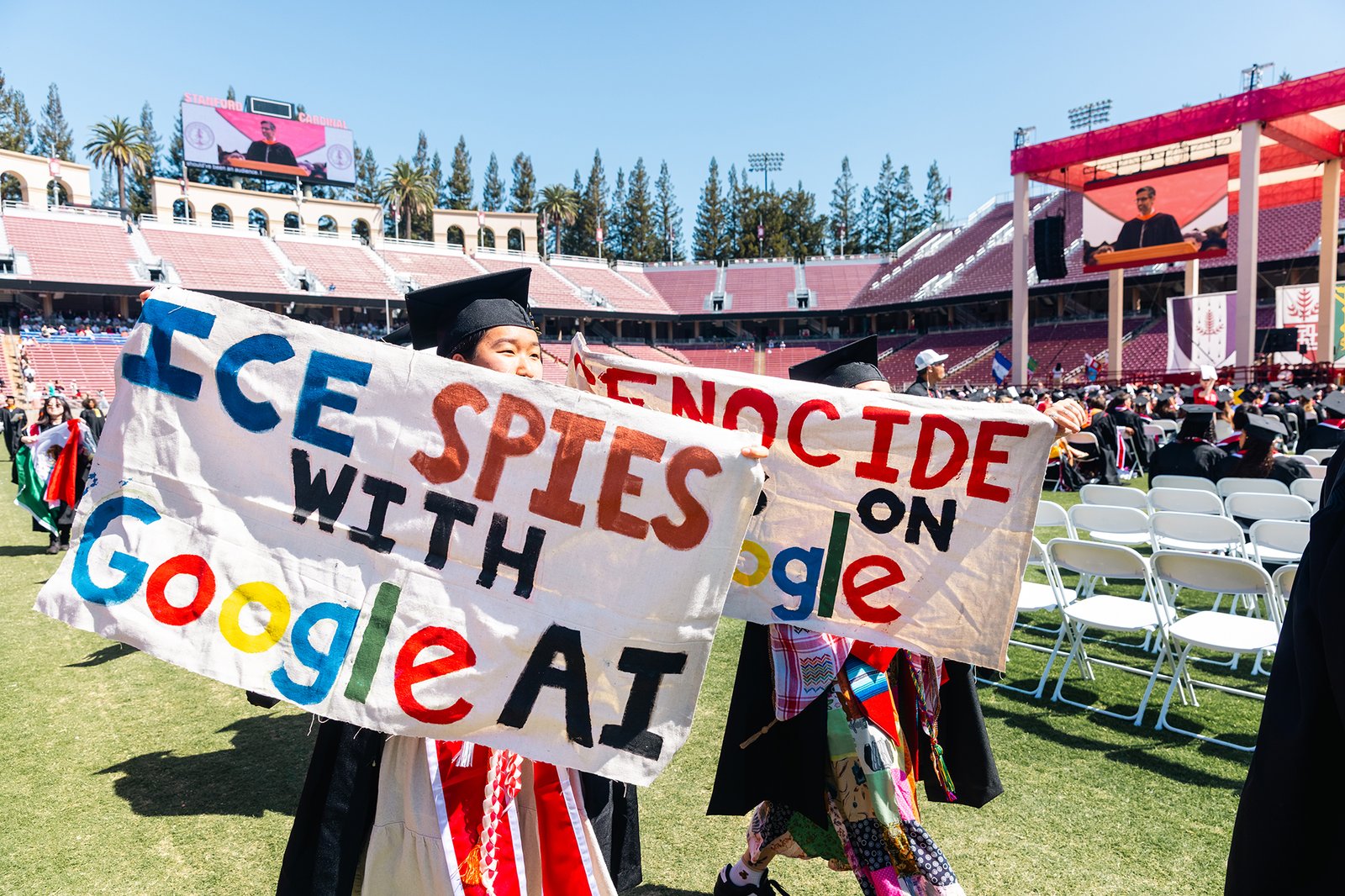
Around 200 students walked out as Pichai took the stage, and smaller groups in the audience waved banners, blew whistles and waved Palestinian flags before also leaving mid-speech. Pro-Palestinian protesters condemned the company’s ties with the Israeli government, particularly its controversial $1.2 trillion cloud-computing deal with the country in 2021, known as Project Nimbus. The walkouts follow other Stanford commencements over the last three years where students have demonstrated in response to Israel’s war in Gaza and the university’s crackdown on pro-Palestinian demonstrations on campus.
For at least the second year in a row, students walking out on Pichai hosted their own “People’s Commencement.” This year’s event featured activist Mahmoud Khalil as its keynote speaker. U.S. Immigration and Customs Enforcement arrested and detained Khalil for more than 100 days last year, threatening his deportation over his pro-Palestinian activism on Columbia University’s campus in 2024.
After the demonstrations quieted down, Pichai was largely well-received. Stories of his own failures and triumphs from his earlier years, like immigrating to California, dropping his doctorate in favor of a master’s degree, and struggles when he started at Google were greeted with scattered laughter and applause.
One of Pichai’s predecessors, former Google CEO Eric Schmidt, wasn’t received as warmly when he spoke at the University of Arizona commencement last month. Graduates booed when Schmidt said that “AI is going to touch everything,” even “if you don’t care about science.”
In a recent New York Times “Hard Fork” appearance, interviewers asked Pichai what his “boo strategy” would be in light of Schmidt’s snafu. But Pichai took themes of technological advancement in a different route, focusing more broadly on accessibility, including an anecdote about rural women in India using smartphones to learn new trades.


Storms trigger flash flooding in Texas
Slow-moving thunderstorms and torrential rain hit Waco, Texas. Rain rates neared four inches an hour in some areas.

Live updates: US-Iran war, Trump and Tehran reach agreement as G7 summit starts
If things go as planned and the US and Iran sign an agreement aimed at ending hostilities on Friday, negotiators...


US President Donald Trump celebrated his 80th birthday on Sunday. #BBCNews


When will the UK social media ban for under-16s come into place? #BBCNews
Subscribe to our channel here: https://bbc.in/bbcnews For the latest news download the BBC News app or visit BBC.com/news …


Britain unveils sweeping ban on social media for under-16s
British Prime Minister Keir Starmer has announced a sweeping ban on social media use for those under 16, joining other...


Twelve killed in Missouri plane crash
A pilot and 11 passengers were killed after a skydiving plane crashed at a western Missouri airport, authorities said. The...


Keir Starmer: UK ban doesn't mean that no child will log on to social media ever again. #BBCNews


Ex-NBA Star Dwight Howard Claims Estranged Wife Tricked Him into Marriage
Former NBA Star Dwight Howard says his wife is a master of lies and manipulation … and alleges she tricked...


Under-16s to be banned from social media, UK PM announces. #Shorts #BBCNews
Subscribe to our channel here: https://bbc.in/bbcnews For the latest news download the BBC News app or visit BBC.com/news …
Tentative deal on ending the Iran war sends stocks soaring while oil prices fall
BANGKOK (AP) — World share prices soared Monday after a tentative deal was announced on ending the Iran war and...
-

 LifestyleNews2 weeks ago
120 minutes of strength training per week may help extend lifespan
-

 Politics4 days ago
What to know about the stabbing that set off fiery riots in Northern Ireland
-
 Business2 days ago
How much of Musk’s wealth comes from government help? Virtually all of it
-

 Video3 days ago
Download fans say what they love about the festival. #DownloadFestival #BBCNews
-

 Video3 days ago
Why SpaceX IPO isn't about space. #SpaceX #ElonMusk #BBCNews
-

 HealthNews3 days ago
The people of Okinawa, Japan only eat until they are about 80 percent full, then stop — and the practice has been linked in multiple peer-reviewed studies to lower rates of cardiovascular disease, slo
-

 TravelNews3 days ago
My Paternal Instinct Should’ve Warned Me About Netflix’s Maternal Instinct
-
 Food2 days ago
Pope Leo’s plane was grounded. Then the King of Spain stepped in to help