

Business
Jim Cramer gives Elon Musk’s SpaceX a ringing endorsement after last week’s IPO

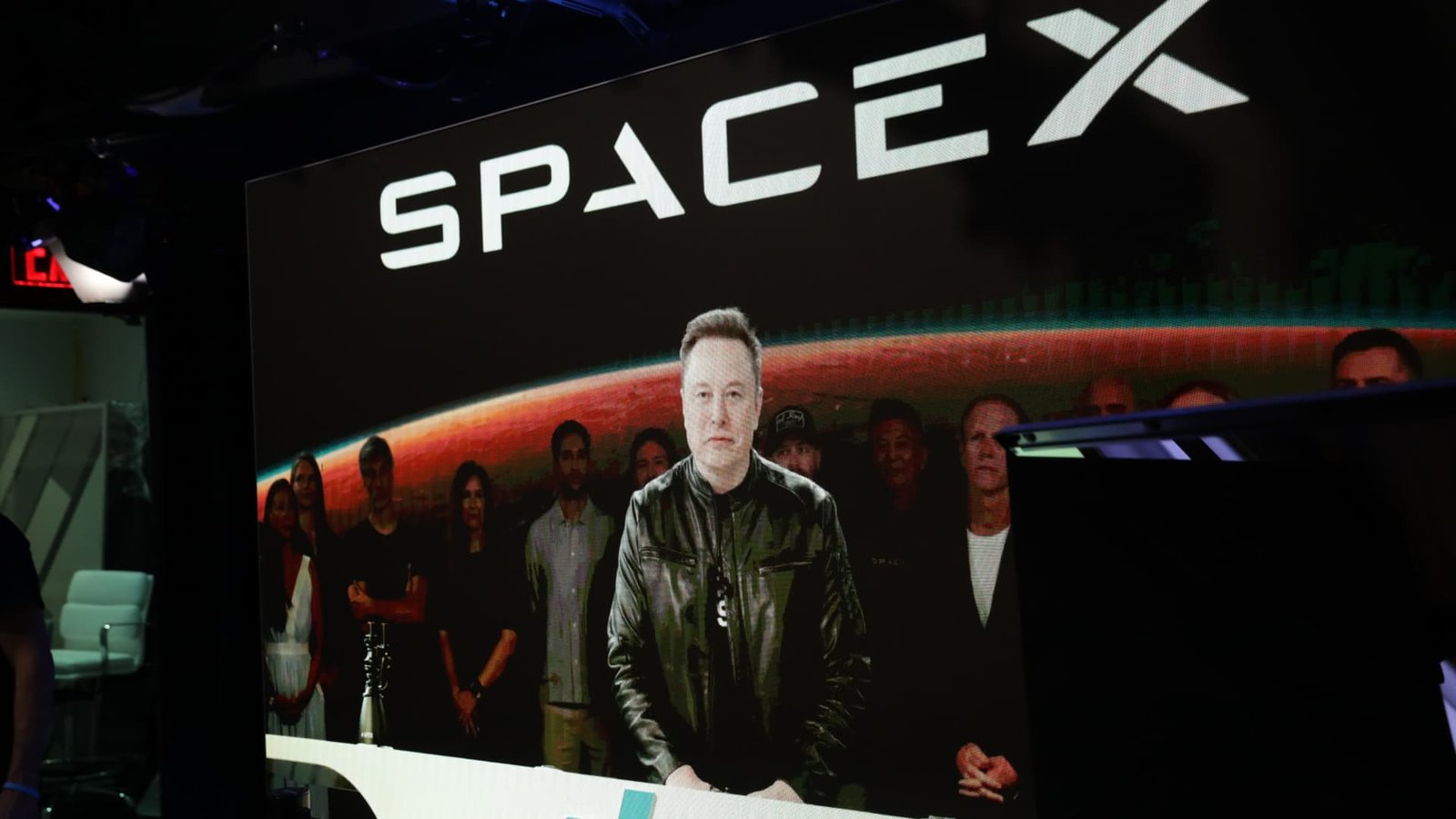
Years ago, when Tesla went public, I said, “sell, sell, sell,” because I could not see a path to profitability. It was June 2010, and Tesla was a car company — plain and simple. While exciting — I know, because I test drove one early — I was not able to get my head around it. Nine years later, I felt Tesla was morphing into so much more, and I went positive. We caught 96% of the move up. It was one of my best calls. However, Elon Musk never forgave me and endorsed the “tiresome” contraindicator slapstick that has dogged me for years. Even two years ago, I heard that he didn’t want to say hello to me because of that “sell” call. In some ways, I wish I had been willing to be wrong or to change my tune to something very positive. I am true to myself, though, which often makes for misery. I would have liked the dialogue my colleagues have with Musk. Yes, I am jealous and petty, good qualities of a competitive journalist. No, I couldn’t go positive, because I have had the same mission from when I started TheStreet.com in 1995. Total transparency. I was afraid of being wrong, of course. I wasn’t. No matter. It’s too late. It was sure good for readers and watchers, though. That’s really all that matters. I preface this weekend’s column with that story because I wanted you to know that this time around, I am all in. This time around, there is so much more to SpaceX than just a dish company or a satellite launcher, or even an X, which was part of the xAI operation that Musk bought in February. I view SpaceX as a company with some of the greatest optionality of any newly public entity. Every single division is on the come. I love my Starlink, and it costs $100 less, and it is much faster than the cable and wireless company that preceded it. I think that it could be the word processor to the typewriter, and the price of the stock of Comcast , which was CNBC’s parent company before we were spun off into Versant , certainly says that’s a good bet. I don’t know how much it will cost to blow out Starlink so hundreds of millions of people can get it, but how can you turn down a superior product for one-third the price? High-speed data is, as they say in a much hackneyed phrase, table stakes. I cannot, in my admittedly little brain, see how you beat better, faster, cheaper — except perhaps where city buildings block reception. Somehow, I can see every building being wired, though. The lack of a competitive instinct from any of the cable carriers is unfathomable, very similar to Smith Corona Marchant, which filed for reorganization in 1995. It was the gold standard. It makes labels now, and thermal paper. I wish the company had gotten into cybersecurity, buying a Fastly , or an Akamai , or a Cloudflare , when it still had currency. Too late now. It is precisely because it failed to diversify that Starlink can run the global table. Right now, Starlink said it has 12 million subscribers . There are 325 million Netflix subscribers. If it can manufacture disks fast enough and put up enough satellites — maybe it has already? Then, you can see an easy path to those subs. You want to save $100 a month and get better service — the going rate right now. I think everyone who takes Netflix will do it. I wouldn’t be surprised if Netflix offered it as some sort of deal. We hear a lot about how Nvidia is on the run because of the chips made by its rivals. The rap has certainly stunted the price of the stock. However, it doesn’t jibe with the facts. Alphabet ‘s Google, for example, pays SpaceX $920 million a month for compute. Anthropic pays SpaceX $1.25 billion per month to rent compute. I do not know how much compute is left. I do know that these contracts are extremely profitable. No one ever talks about anyone making money off of Nvidia’s fastest graphics processing units (GPUs). I don’t get it. Those two contracts alone are gigantic, and the Colossus data center, as it is called, might be added for more compute — added with Nvidia. Yes, Musk, too, wants to make his own GPUs, and that story haunts the price of Nvidia stock, too. Maybe one day we will hear about how Musk chose Nvidia over Google’s own chips. The hilarious thing is that so did Google. Can X, formerly Twitter, mean more than it does, a townsquare, or whatever B.S. the previous owners talked about? Yes. Musk can revive direct messages (DM) and make it the safest way to get in touch with your bank. He can use the reams of data he has to come up with programs that work with Meta Platforms ‘ Instagram. We know it was worth a great deal for these reasons, but nothing has really been done. and it’s been handled in a pedestrian fashion. I am sure anyone who worked there will say great things. I know it could be worth more than it is. The creme de la creme is SpaceX’s satellite business. It improves with each iteration. There’s a ton of commerce that’s associated with rockets and satellites, and most of it goes through SpaceX. I know that Musk’s dream of data centers in space seems fanciful, but not if it starts small and works its way larger, with plenty of easy visits to fix them. Those who have put them up are in agreement that it might be easier than you think. I am not going to count it out. I once had a tussle with Musk about how all of our power one day would come from a giant solar field in the northwest of Colorado, something that was supposed to be completed a decade ago. He had a field day when I claimed it couldn’t be done, and I started talking about how the grid wouldn’t support it. This moment was when he infamously called me a hologram and nothing more. That stung. Joined the lash marks. It’s not just data centers, of course. Space stations that work, rockets that crack the barrier of speed, they will all accrue to shareholders. Maybe Musk uses the currency to buy Tesla and become the first true 21st-century conglomerate. That would concentrate everything and end the notion that one is favored over the other. I like that. It also allows Tesla to be able to compete with self-driving and robots under SpaceX’s name. I believe in my friend tech journalist Joanna Stern when she writes in her book, “I Am Not a Robot,” that they aren’t yet ready for prime time. When they are, though, look out, it’s a real bonanza for whoever gets robots right. No need to think that we have to fall prey to the Chinese. Musk is in pole position to get us there. Oh, and don’t forget, the $60 billion call on startup Cursor, the outfit that many young entrepreneurs “write on” to get the best results. I think it will turn out to be worth far more than $60 billion. The press was its usual caustic self this weekend, filled with talk about delusional investors who will have a hard lesson to learn. The articles all read like my dismissal. They could be right. This company, though, is so much bigger and better than Tesla that you have to wonder whether these articles are written by ChatGPT or Claude. Now, none of this would have mattered to me if the underwriters used the tried and untrue path of the typical underwriting, starting at a manufactured low price. Cerebras raised its launch price three times. Figma only once. But both stoked the public, and that stoking backfired. The deals went off too high, brought in more momentum players, and then caused all aftermarket buyers to be in the red. The SpaceX IPO had a fixed price and was handled methodically and superbly. The underwriters, Goldman Sachs and Morgan Stanley , divvied out the stock in a way that kept flippers at bay and made almost everyone a winner. I don’t think the upward drift is over, given that inclusion into the Nasdaq 100 awaits. Lots of funds are benchmarked to the Nasdaq 100. I know the key decision makers on the deal besides Musk. They knew that whoever does the best job stands to get OpenAI and Anthropic when they come public, as well as Microsoft , Amazon , and Meta if they need more capital — as Alphabet did. I couldn’t be more thrilled. Whether it be the orders of Musk or the organization of the competing teams, it was a pleasure to watch this kind of professionalism. Sure, you may argue that Musk insisted on this. But don’t you think the others will, too? And, aren’t you surprised at how much money is around? I know Anthropic, in its holier-than-thou set of press releases, can be extravagant in its claims to be a fabulous cybersecurity company. It didn’t matter to them that insurance companies won’t agree to protect anyone who uses the same company as their cybersecurity layer. It has to be a different company. That kept fortunes on the table for many a follower. What matters to me is that SpaceX was the most ambitious of all the deals. It will now be the template. Claude creator Anthropic is conceivably the most lucrative of the three. It might be making money. Sure, I am worried about OpenAI, which is behind ChatGPT, but I am not worried if it is the last deal of its size, because if it fails, it can be ostracized as a wasteful, profligate outlier that won’t mean all that much. I know it is hard to believe how much has changed in a week. We have a peace deal between the U.S. and Iran at hand that could take oil much lower, which already started to happen Sunday evening. The drop in oil supported U.S. stock futures . Crude will go lower than the bears say because there has been some fill-in by countries and companies that didn’t know they had all that much capacity. There will be gigantic works projects, true rebuilds by rich countries that can afford them. At the same time, I can see inflation coming down quickly and bond prices going for a terrific run higher, which means lower yields by their inverse relationship, accompanied by a Federal Reserve chief on a mission to make things more affordable. Kevin Warsh will preside over this first Fed meeting as chairman in the week ahead. I am not saying we don’t have problems. We can’t keep riding the same old semiconductor winners. We do need Apple and Nvidia to step up, and Microsoft to give us proof of life. If we do, though, the summer rally will be here, and the thicket we’ve gone through will be known as the one where the machetes of Goldman and Morgan Stanley were unsheathed. It could have been a horrible week. Instead, it was saved by Musk. He’s a good savior. (Jim Cramer’s Charitable Trust is long GOOGL, META, GS, NVDA, MSFT, AMZN, APPL. See here for a full list of the stocks.) As a subscriber to the CNBC Investing Club with Jim Cramer, you will receive a trade alert before Jim makes a trade. Jim waits 45 minutes after sending a trade alert before buying or selling a stock in his charitable trust’s portfolio. If Jim has talked about a stock on CNBC TV, he waits 72 hours after issuing the trade alert before executing the trade. THE ABOVE INVESTING CLUB INFORMATION IS SUBJECT TO OUR TERMS AND CONDITIONS AND PRIVACY POLICY , TOGETHER WITH OUR DISCLAIMER . NO FIDUCIARY OBLIGATION OR DUTY EXISTS, OR IS CREATED, BY VIRTUE OF YOUR RECEIPT OF ANY INFORMATION PROVIDED IN CONNECTION WITH THE INVESTING CLUB. NO SPECIFIC OUTCOME OR PROFIT IS GUARANTEED.
Business
Starbucks Korea to give mandatory history training to all employees
SEOUL, South Korea (AP) — Starbucks’ South Korean operation said Monday it will close all of its stores nationwide early on June 22 for mandatory history and social sensitivity training as it reels from backlash following a marketing campaign that was widely perceived as mocking victims of a brutal military crackdown on pro-democracy protesters in 1980.
Shinsegae Group, which owns a 67.5% stake in Starbucks Korea, said group executives and employees at Starbucks Korea’s headquarters will attend training led by history and sociology professors on Wednesday. All Starbucks stores nationwide will close at 3 p.m. next Monday so employees can watch a recording of the session, Shinsegae said in a statement.
The coffee chain triggered an uproar when it attempted to promote a series of stainless-steel tumblers it called “SS Tank” by declaring May 18 to be “Tank Day.” The date marks the anniversary of the 1980 pro-democracy uprising in the southern city of Gwangju. It was violently suppressed by Seoul’s military government at the time, which deployed troops, tanks and helicopters, leaving hundreds dead or injured.
The campaign further fueled outrage by using the slogan “Thwack it on the table!” which many read as a reference to a notorious 1987 police statement that attempted to cover up the torture death of student activist Park Jong-chol. Authorities had falsely said Park died after investigators “hit the desk with a thwack.”
With the promotion sparking immediate backlash, Shinsegae canceled it within hours and fired the chief executive of Starbucks Korea. Shinsegae Chairman Chung Yong-jin later issued a nationally televised apology as police opened an investigation following complaints from relatives of the victims of the Gwangju crackdown. Chung will undergo separate training with the chief executives of Shinsegae affiliates on June 24.
Shinsegae said the decision to close all Starbucks stores early for the first time since the chain’s 1999 launch in South Korea and require companywide training shows “how seriously it views the marketing controversy and its determination to prevent a recurrence.”
The crackdown in Gwangju came months after General Chun Doo-hwan seized power in a coup in late 1979. Government records show about 200 people died in Gwangju, but activists say the true death toll was much higher. Chun’s government also imprisoned tens of thousands, saying it was rooting out social evils.
Public anger over Chun’s dictatorship led to massive nationwide protests in 1987, forcing him to accept a constitutional revision introducing direct presidential elections, which is widely seen as the start of South Korea’s transition to democracy.
Business
Meet Gwynne Shotwell, the $2B engineer-turned-COO who runs SpaceX in platform heels

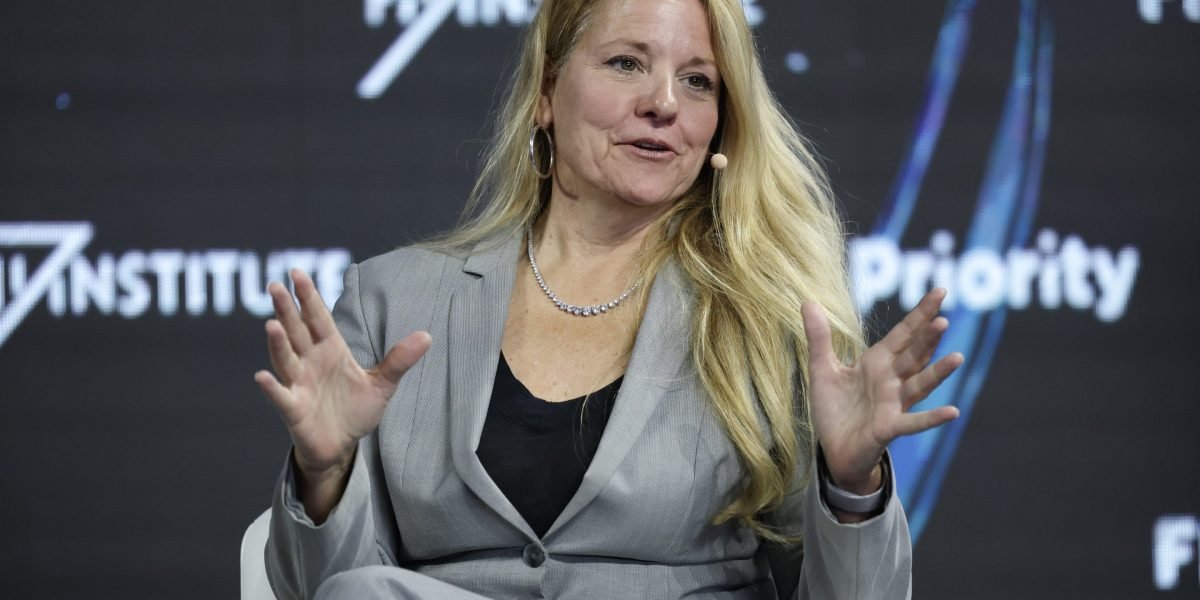
It dates back to September 2008. Shotwell was in a Glasgow hotel bathroom, with the shower running so her husband could sleep, while on the phone with her team to price SpaceX’s bid for a $1.6 billion NASA resupply contract. At the same time, the company’s fourth Falcon 1 launch, which Elon Musk believed was the last one the company could afford before going bankrupt, counted down half a world away.
The rocket reached orbit. Shotwell told Stanford Business School’s View from the Top podcast that she ran down the hotel hallway “in my yoga pants and jammy top,” knocking on her team’s doors, and they “kind of” broke into the hotel bar at two in the morning to drink warm champagne. Ever since, she writes “Scotland” on two sticky notes and puts one in each shoe on launch days, so she is always, technically, in Scotland, and has that moonshot mindset.
Eighteen years later, that woman with paper in her shoes became a billionaire, owning 12.6 million shares of the most valuable company ever to go public. Based on Friday’s closing price, that means her stake is worth more than $2 billion.
The cheerleader who fell in love with an engineer’s shoes
Shoes, as it happens, helped guide Shotwell to where she is now. Shotwell was born in 1963, the middle of three daughters of a brain surgeon and an artist, and raised in Libertyville, Illinois. She watched the Apollo 11 landing at age five and found it boring. At Libertyville High she was a cheerleader and varsity basketball player who finished at the top of her class. But she had no idea what she wanted to do until her mother dragged her—destination undisclosed, because she wouldn’t have gone—to a Society of Women Engineers panel at the Illinois Institute of Technology.
She said the conference bored her until she saw one fabulous woman engineer. “Her shoes were marvelous, her bag matched, and she just made mechanical engineering accessible to me,” Shotwell told Marie Clarie in 2017. “I left that event saying, ‘Okay, I’ll be a mechanical engineer,’ because I thought she was cool.”
What followed was a bit less glamorous. At Northwestern, she was one of three women in an engineering class of 36. She happened to interview at IBM on the day the space shuttle Challenger exploded; shaken, she didn’t get the offer, and went into Chrysler’s management training program instead. Unsatisfied, she went back for a master’s in applied math, then spent a decade at the Aerospace Corporation in El Segundo, Calif., doing thermal analysis, followed by four years running the space systems division at Microcosm, a low-cost rocketry shop.
Then in 2002, she had lunch with a former colleague who’d jumped to a startup called SpaceX. The colleague gave her a tour afterward, and Shotwell talked to Elon Musk for three or four minutes. “I wasn’t looking for a job. I didn’t have a résumé,” she said. But that afternoon, SpaceX called and asked her to apply to run business development.
After a month of hesitation that ended while pulled over on an LA freeway, she became employee No. 11, leaving a stable job where she held a 3% stake.
“I called him on the phone and I said, ‘[I’m] an idiot,’” she recalled at Stanford. Musk laughed and said, “Welcome to the team.”
She had made up her mind at that point that if SpaceX failed, she was done with the industry entirely: “I’d rather sell real estate or be a barista.”
She is still not the “central casting” engineer. She likes wearing black skinny jeans, platform heels and Chardonnay. She reads Outlander novels to fall asleep and has been prepping her 1,000-acre Texas ranch to one day become a vineyard. “I drink a lot of wine,” she joked to Marie Claire. “Actually, reading is probably the thing that calms me the most.”
“I need more data than Elon”
Her job is one that requires inordinate calm. Functionally, the task is converting Musk’s pie-in-the-sky ambitions into practical deadlines. “I need more data than Elon does to make a decision,” she said at Stanford.
The company has a tendency to hit its targets but not its deadlines, a trait she defends without apology: “We fail on timeline, but that feels like the right fail to make.” Musk’s own version, which she repeated to investors on CNBC ahead of the IPO, goes something like, “We make the impossible, we just make it late.”
Now, that doctrine is up to investors to decide. SpaceX’s prospectus promises the world and beyond; AI data centers in orbit by 2028, a Starship that turns around “like an airplane,” and a million-person Mars colony.
When CNBC’s Morgan Brennan asked when to expect that colony, Shotwell guessed 2035, then immediately qualified that she’s “so bad at predicting timelines.”
She asked retail investors to cut the company some slack, adding that she doesn’t want to focus on earnings because “What we’re doing is very futuristic.”
That might work in the short run. But as OpenAI and Anthropic also make their public debuts and swallow oxygen from the capital markets, investors will weigh SpaceX’s version of the future versus the other companies’ lofty goals. Since SpaceX absorbed xAI, it has taken on $29 billion in debt, making it a deeply unprofitable company. The company went “from those penurious Falcon 9 Dragon days to the more expensive capital-intensive Starship, and then to AI, because it is next-level expensive,” Shotwell said.
But the company is used to burning cash. After all, that was the story of its first decades; failed launch after failed launch, enough that Shotwell understands failures as an asset. “If a launch goes perfectly, all you’ve learned is that that launch vehicle on that day worked,” she told investors. “When you have failure, you actually get this treasure trove of data.”
Shotwell embodies the hedge against “key-man risk.” During Musk’s June 2025 feud with President Donald Trump—when Musk threatened to decommission the Dragon capsule—she quietly assured NASA the tensions would boil over.
She has defended him on even more personal levels. Against her press team’s advice, she sent a companywide letter after harassment allegations surfaced in 2022: “I don’t believe he could have done what he was accused of. But he is imperfect. I’m imperfect.”
She argued Musk is “probably the best CEO in history, in my opinion, humble opinion,” and that the supermajority-voting control he holds is correct. Pressed on succession, she allowed only that “the company would not collapse obviously without Elon, but it would by no means be the same.”
But her own ambitions are more modest than Mars. Given a Starship and anywhere to go, she’d pick the moon. After all, Mars takes six months to get to, and “I don’t like to camp.”
Business
Private jet makes emergency landing at Mather Airport in Sacramento County

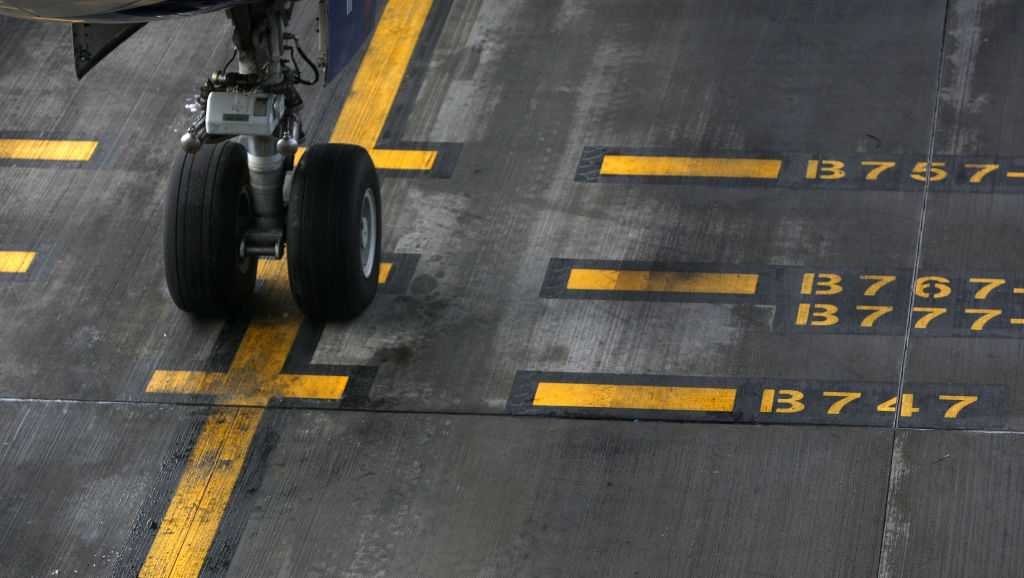
A private jet flying from Modesto to Monterey made an emergency landing at Mather Airport in Sacramento County after a landing gear warning light was activated. Flight radar data shows the plane took off from Modesto’s airport around 10 a.m. It reached Monterey but aborted its landing due to the warning light. The pilot flew to Mather Airport, made one pass over the runway while emergency crews got into position, and safely landed the plane at approximately 11:15 a.m. The two people aboard the plane were unhurt.See more coverage of top California stories here | Download our app | Subscribe to our morning newsletter | Find us on YouTube here and subscribe to our channel
A private jet flying from Modesto to Monterey made an emergency landing at Mather Airport in Sacramento County after a landing gear warning light was activated.
Flight radar data shows the plane took off from Modesto’s airport around 10 a.m. It reached Monterey but aborted its landing due to the warning light.
Advertisement
The pilot flew to Mather Airport, made one pass over the runway while emergency crews got into position, and safely landed the plane at approximately 11:15 a.m.
The two people aboard the plane were unhurt.
See more coverage of top California stories here | Download our app | Subscribe to our morning newsletter | Find us on YouTube here and subscribe to our channel
Business
Microsoft CEO Warns That AI Winners Could Hollow ‘Entire Industries’
AI models are hoovering up corporate knowledge, and that’s leaving one big loser, says Satya Nadella.
In an article posted on X on Sunday, the Microsoft CEO warned of a future in which a handful of AI providers capture most economic value while industries lose ownership of their knowledge.
“The last thing any of us want is a world where every company across every sector is ceding value to a few models that eat everything they see,” Nadella wrote. “There is no societal permission for an AI future that hollows out entire industries.”
Nadella compared the AI era to globalization, warning against repeating that dynamic.
“Think about what happened in the first phase of globalization, where entire industrial economies were hollowed out by outsourcing,” he wrote. “The GDP numbers looked fine on the surface, but the displacement was real and the consequences are still being felt.”
Instead, he advocated for a broad AI ecosystem in which companies keep control of their learning systems, which he said would enable innovation and retain employee expertise.
Nadella’s post echoed concerns other Big Tech CEOs have been raising this year.
In a February podcast, Snowflake CEO Sridhar Ramaswamy said that the biggest software companies are at risk of being reduced to mere data sources.
“The big model makers want to create a world in which all of the data for all of the enterprises is easily available to them,” Ramaswamy said. “Everything else, the world, is just a dumb data pipe that feeds into that big brain.”
Ramaswamy added that Snowflake needs to operate with a “fear” that people would stop using AI agents developed by software companies and instead want an all-inclusive agent that has data from Snowflake and everywhere else.
In a January LinkedIn post, Box CEO Aaron Levie said that AI models can perform high-level knowledge work across nearly every profession, from law to strategy and scientific research.
“The question that we will have to wrestle with is, in a world where everyone has access to the same expert intelligence, how does a company differentiate?” Levie wrote. He said that context would be the answer.
Business
Crude oil prices drop on news of Iran deal : NPR

Stay up to date with our Up First newsletter, sent every weekday morning.
Crude oil prices sank on Sunday night after President Trump posted on social media that a deal to end the war with Iran was “complete.”
Oil futures markets promptly dropped 4%, after markets reopened for trading following their typical weekend break. Prices had already fallen significantly on Thursday and Friday in anticipation of a deal, bringing the per-barrel price of crude Sunday night down 12% from where it had been in the middle of last week.
Brent crude, the global benchmark, is now below $84 a barrel, and West Texas Intermediate, the U.S. benchmark, beneath $81. At one point in this conflict, global oil prices had touched $126 a barrel. They remain elevated compared to pre-war prices, which were in the $60s, but are now cheaper than they have been at any point since the very first days of this conflict.
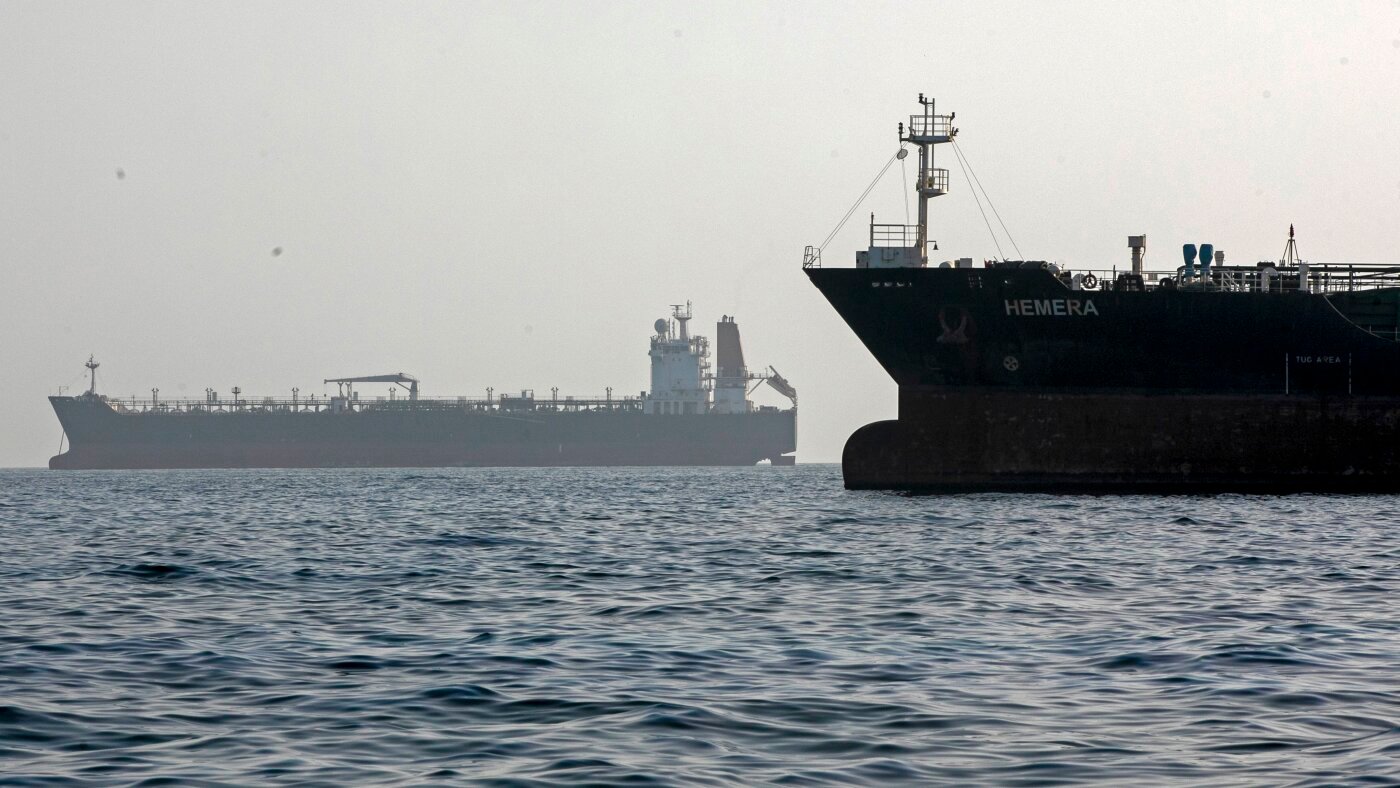
Trump’s initial post on Sunday evening said he was authorizing “the toll free opening of the Strait of Hormuz,” and directed ships to “start your engines.” Before the war, approximately 20% of the world’s oil and liquefied natural gas passed through that waterway, and the disruption of traffic has caused the greatest oil supply shock in history.
In a follow-up post, Trump later said that the strait would reopen “upon the signing of the Deal on Friday, for purposes of mine removal.”
Throughout this conflict, oil prices have repeatedly fallen on headlines promising an imminent deal to reopen the strait; however, they’ve never dropped this low. Significantly, Pakistan’s Prime Minister Shehbaz Sharif, who has played a central role negotiating between the U.S. and Iran, has confirmed that a deal has been reached.
A rapid reopening of the strait would ease pressure on the world’s oil consumers, particularly in Asia and Europe. However, it would not mean an immediate return to pre-war oil supply levels and prices.
“It could be months before things return to something like the way things were before the war, at least as far as flows out of the Strait of Hormuz go,” says Kevin Book, a managing director at Clearview Energy Partners, an independent research firm. That’s because some oil and natural gas production fields and refineries have been taken offline, or damaged in the conflict. “The facilities that have been shut down, some of them can start fairly quickly. Others may take months.”
Transit takes time, too. Ships also need to move in and out of the strait, and from there around the world.
And over the past few months, the world has tapped into its stockpiles of oil in order to make up for missing supplies; refilling those inventories could keep upward pressure on oil prices for months.
Before the war began, the world had been oversupplied with oil, which was keeping prices low. Book says it’s not clear whether returning to “normal” will mean returning to that status quo.
“It’s not obvious that we’ll be in a surplus any time soon,” he says.


Camel milk is big money for rural China
China and Mongolia hold some of the world's largest populations of Bactrian camels, and their increasingly popular milk has …


Stanford grads walk out of Google CEO’s commencement speech
Stanford students walked out of Google CEO Sundar Pichai's commencement speech and joined a separate "People's …


US cannot ‘bully or bomb to solutions’ on Iran, former US President Barack Obama says. #BBCNews


Donald Trump says Strait of Hormuz will be reopened as part of US-Iran deal | BBC News
The US and Iran have agreed a deal to end the war, which mediator Pakistan said will be signed on...

Nico Rosberg hails ‘legendary moment of F1’ as Lewis Hamilton ‘climbs to greatness again’ with maiden Ferrari win
Nico Rosberg has described Lewis Hamilton’s breakthrough Ferrari triumph at the Barcelona-Catalunya Grand Prix as “a legendary moment” for the...


Historic Kyiv monastery on fire after Russian attack
A prominent Ukrainian monastery complex in the heart of Kyiv is on fire following a massive and deadly Russian attack...


Brazil woman dies after rope-jumping instructors fail to attach cord
A woman has died in what appears to be a tragic extreme sports accident in Brazil. Three men have been...


Trump and thousands of others watch UFC fight on White House lawn. #UFC #DonaldTrump #BBCNews
Starmer announces UK social media ban for teens
LONDON (AP) — Britain will ban children under 16 from using a range of social media apps including Snapchat, TikTok...


Storms trigger flash flooding in Texas
Slow-moving thunderstorms and torrential rain hit Waco, Texas. Rain rates neared four inches an hour in some areas.
-

 LifestyleNews2 weeks ago
120 minutes of strength training per week may help extend lifespan
-

 Politics4 days ago
What to know about the stabbing that set off fiery riots in Northern Ireland
-
 Business2 days ago
How much of Musk’s wealth comes from government help? Virtually all of it
-
 Video3 days ago
Download fans say what they love about the festival. #DownloadFestival #BBCNews
-

 Video3 days ago
Why SpaceX IPO isn't about space. #SpaceX #ElonMusk #BBCNews
-

 HealthNews3 days ago
The people of Okinawa, Japan only eat until they are about 80 percent full, then stop — and the practice has been linked in multiple peer-reviewed studies to lower rates of cardiovascular disease, slo
-

 TravelNews3 days ago
My Paternal Instinct Should’ve Warned Me About Netflix’s Maternal Instinct
-
 Food2 days ago
Pope Leo’s plane was grounded. Then the King of Spain stepped in to help