
Politics
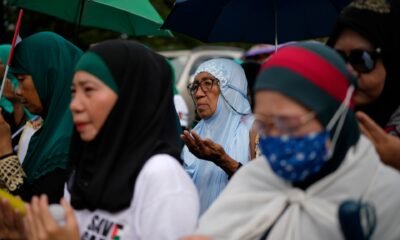
The Iran war is dividing Muslims in the Philippines
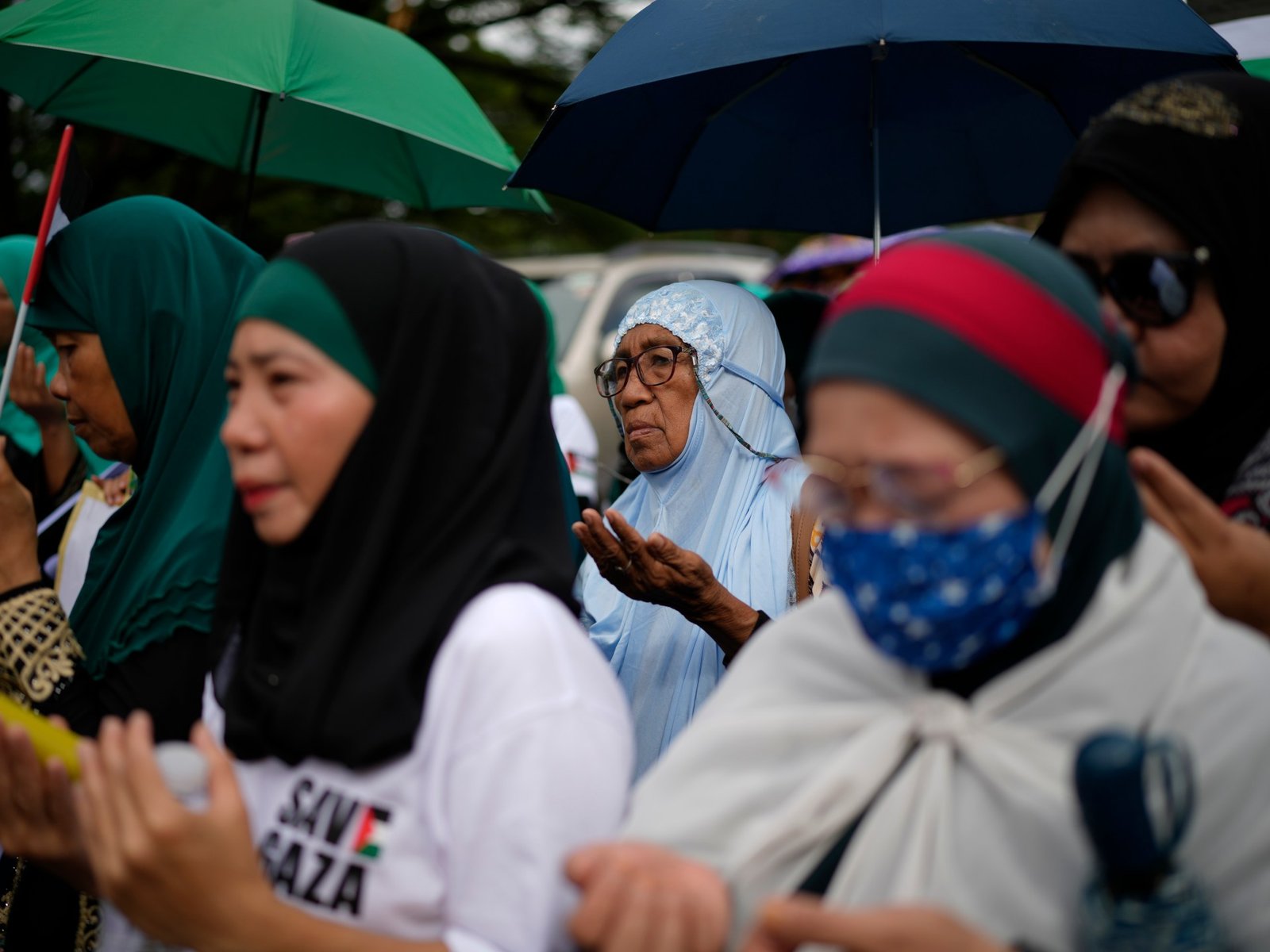
The US-Israeli war on Iran and the closure of the Strait of Hormuz have had a seismic effect across the world. In Southeast Asia, economies have been paralysed due to shortages of oil, liquified petroleum gas and other essential products usually exported through the strait.
The Philippines was the first country to declare a state of emergency as a result, but that has done little to alleviate shortages. The country has seen repeated protests against the spike in prices.
But the impact of the Iran war has not been confined to the socioeconomic sphere. The conflict has also affected Muslim communities in the country, particularly in the Bangsamoro Autonomous Region. It has deepened polarisation among local Islamic scholars, threatening community cohesion.
When the war began, reactions on social media and in public were swift. Broadly, two camps emerged. One camp supported Iran’s retaliatory actions against the United States and its targeting of bases in neighbouring countries. For example, one member of the Muslim community wrote in a social media post that Muslims’ prayers for Gaza were being answered through Iran’s force and retaliation against Israel; another wrote that Tehran is instrumental in restoring the shattered respect and dignity of Muslims.
The other camp opposed Iran, pointing out that it is a Shia nation and therefore hostile to Sunni communities. A scholar from this camp shared the view that the Shia are akin to Zionists, describing the former as a subtle enemy and the latter as a visible one.
This dynamic of clashing perspectives is nothing new among Bangsamoro’s Islamic scholars. An increasingly visible pattern of division emerged after the Abraham Accords established diplomatic relations between Israel and several Arab nations. Such disagreement on a geopolitical issue in the Middle East had never been seen before. This also led to a divide on the Palestinian issue.
It is important to note here that the Philippines has had a long history of solidarity with Palestine. Demonstrations organised by both Muslim and non-Muslim activists, from the local to the national level, have hpened regularly.
However, after the normalisation process, there were unprecedented statements from some Bangsamoro scholars presenting mobilisation for Palestine as an Iranian plot. They argued that the Palestinian resistance movement was an ally of Iran and therefore were deviants and a political tool of Shia power.
When Hamas carried out an attack on Israel on October 7, 2023, the narrative clash deepened. Some scholars echoed Western media and pro-Zionist narratives. They presented the attack as a singular event and ignored the decades-long oppression of the Palestinians by the colonial regime of Israel. The other camp supported Palestinian resistance.
Although Islamic scholars are involved in this clash of narratives, this is not a mere theological debate but a manifestation of the entanglement of politics and religion.
In a postcolonial era, it is normal for politics and religion to be intertwined in various ways. However, in the Bangsamoro context, where central authority remains fragile, external forces and dominant politico-theological frameworks from Arab countries are increasingly being imported into local discourse.
This is largely because some scholars, who are aligned with an anti-Iran position, were educated in certain Gulf countries. This dynamic is affecting the local context, reflecting a typical tendency in which students trained in authoritarian-leaning educational systems reproduce ideologies aligned with that state upon returning to their countries of origin.
This continuing saga has internal significant consequences.
First, the entanglement of religion and politics as practised by Muslim scholars with massive social media followings creates an indirect assumption among their followers that these scholars hold reliable authority in the domain of geopolitics, even if they may not.
This contradicts the Quranic principle of seeking advice from the people of the message, ahl al dhikr. The principle points to the distributive nature of knowledge: that no human being has the sole authority of all-encompassing knowledge.
Second, this clash has led to deepening polarisation among Muslim scholars in a region navigating a fragile post-conflict transition. Since the 1970s, Muslims in the southern Philippines have struggled and fought for self-determination, and they are now navigating a complex situation that demands a strong and unified identity. This polarisation weakens the formation of a cohesive identity in an already fragile political context.
Third, some scholars take an extreme view towards their opposing side, labelling them as deviants. This kind of thinking may lead to radicalisation.
To address this situation, there are several considerations that must be made.
First, differences in the discursive domain must be dealt with on ethical grounds, not by lambasting others with whom we disagree just because they differ from you in political opinion. It is wrong to label someone as deviant for holding a different political opinion.
Second, when addressing the Palestinian question and the US-Israeli wars in the Middle East, it is important to remember our own background. Bangsamoro has a historical legacy of fighting systems of oppression and injustice. Remaining committed to our humanity means opposing injustice elsewhere in the world.
Third, divisive discourse on foreign issues could damage community cohesion and the critical thinking needed for a future of unity and self-determination.
Muslim communities in Bangsamoro should not fall for divisive narratives and ground their beliefs in Islam and in their own history and identity.
The views expressed in this article are the author’s own and do not necessarily reflect Al Jazeera’s editorial stance.
Politics
Maratha activist Jarange-Patil begins indefinite hunger strike under scorching sun
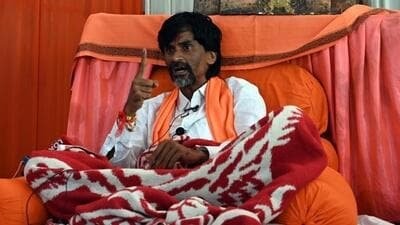
Maratha activist Manoj Jarange-Patil on Saturday began an indefinite hunger strike under the scorching sun without any shade in Antarwali Sarati village in Jalna district, despite ongoing talks with the Maharashtra government over his demands and a written assurance late Friday night that they would consider them.
Water resources minister Radhakrishna Vikhe-Patil reached Antarwali Sarati to persuade Jarange-Patil to call off the protest. However, the first round of talks failed to produce a breakthrough, as the government sought more time to implement key demands. Jarange-Patil chose to sit in an open field under the scorching sun with food and water despite the minister’s insistence that he move his agitation to a sheltered place.
The Maratha activist is unhpy with the government over delays in the assurances and promises made during a hunger strike held at Mumbai’s Azad Maidan last year.
His key demands include implementing the Hyderabad Gazetteer (1909) and Satara Gazetteer to facilitate the issuance of Kunbi certificates to Marathas under the Other Backward Classes (OBC) category, creating a dedicated ministry for the Maratha community similar to the OBC welfare department, and issuing caste validity certificates as Kunbi for the Maratha community, among others.
The state government must issue a government resolution (GR) for implementing the Satara Gazette and grant caste certificates and validity certificates to eligible plicants from the Maratha community. If these are not granted, action should be taken against the concerned officials, demanded Jarange-Patil.
It was the second meeting between the Maratha activist and the minister since Friday, as the state government intensified efforts to persuade Jarange-Patil to withdraw his agitation.
On Saturday, Vikhe-Patil, who also heads the cabinet sub-committee on Maratha reservation, handed over to Jarange-Patil a draft of the action the government has initiated on his charter of demands.
Vikhe-Patil, sitting with him, tried to persuade him to move his protest to a sheltered place for the time being. The government is making all the efforts to fulfil all the demands made by Jarange-Patil, he said, seeking more time for the formation of a dedicated ministry in the state government for the Maratha community.
However, he expressed reservations about issuing a GR for implementing the Satara Gazetteer, saying it could lead to legal challenges. Legal experts have asked the government to proceed with caution, as the GR issued for the Hyderabad Gazetteer’s implementation has already been challenged in court, Vikhe-Patil said at Antarwali Sarati.
Politics
Louisiana lawmakers pass congressional map favouring Republicans
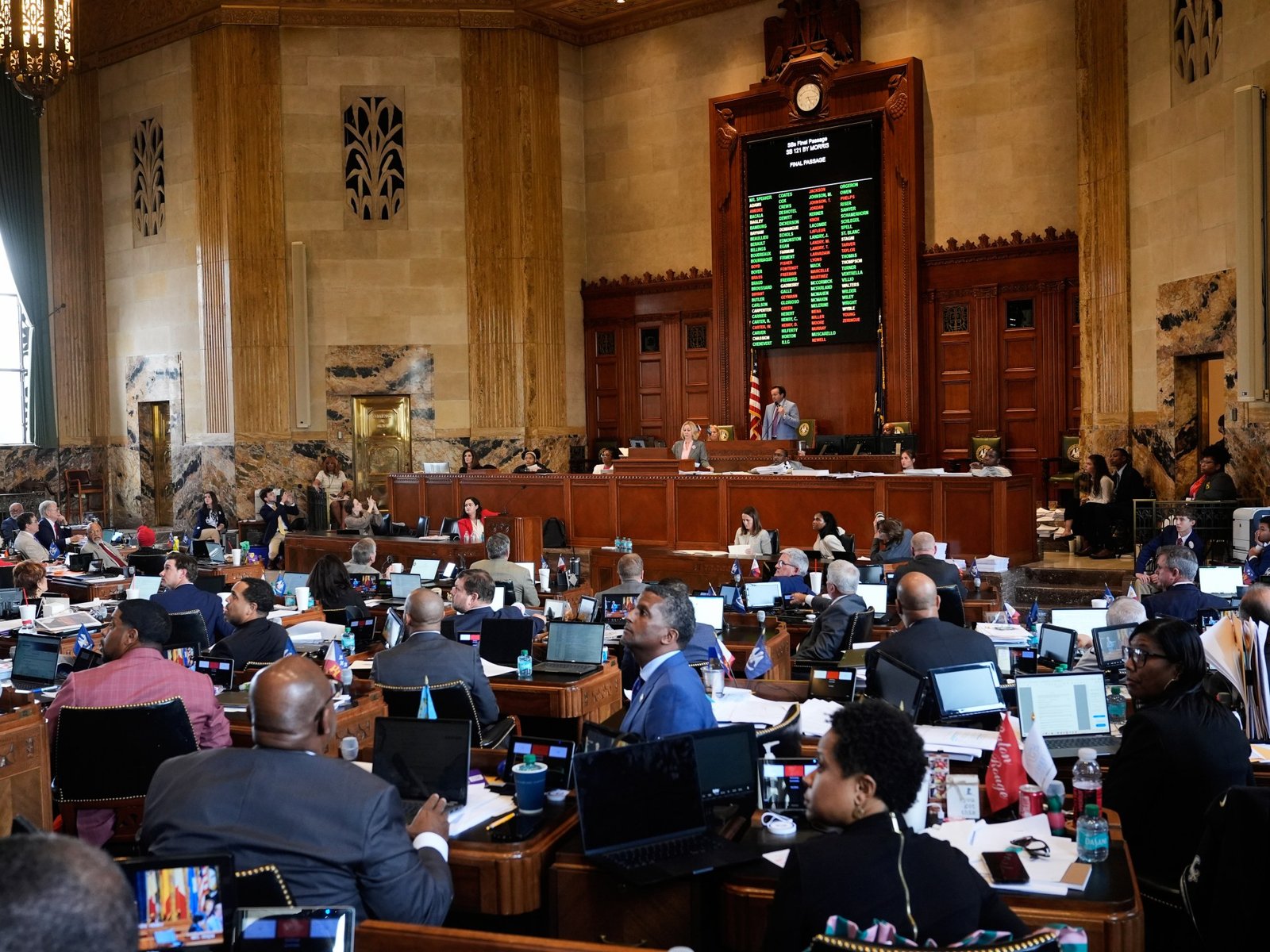
Louisiana lawmakers have passed a new m of congressional districts designed to help Republicans pick up a seat in the United States House of Representatives.
But to do so, the m eliminates one of the state’s two majority-Black districts, both of which are represented by Democrats.
Recommended Stories
list of 3 itemsend of list
proval in Louisiana’s legislature came on Friday. It follows an ril decision from the US Supreme Court striking down Louisiana’s current m as an illegal racial gerrymander because it was drawn to include two majority-Black districts.
That ruling, in the case Louisiana v Callais, weakened the landmark 1965 federal Voting Rights Act, meant to prevent discrimination against minorities at the ballot box.
It also intensified a national redistricting battle fuelled by President Donald Trump’s efforts to protect the Republicans’ slim House majority in the midterm elections. Louisiana is one of several Southern states now redrawing their ms to help Republicans.
Louisiana Republicans had considered drawing a m giving the party a shot at winning all six of the state’s US House seats. But that would have required adding more registered Democrats to Republican-held districts, which could have potentially backfired with Republican losses.
Republicans currently hold four of Louisiana’s six congressional seats, and they are slated to pick up a fifth with the newly passed m.
It was proved on Friday by the Louisiana state Senate in a 28-to-10 vote.
‘Vicious race to the bottom’
Republican Governor Jeff Landry is expected to sign the new m into law, even as threats of more litigation emerged Friday.
A half-hour Senate floor debate revolved around Democrats contending that the proposed m is racially gerrymandered to squeeze more Black voters, who tend to be registered Democrats, into a single district.
Democratic state Senator Royce Duplessis pointed out that some fellow Southern states, such as South Carolina, had refused to redraw their ms in the middle of an election year.
He warned that Louisiana is participating in a vicious, vicious race to the bottom by participating in the redistricting push.
The bill’s sponsor, Republican state Senator Jay Morris, repeatedly insisted that party affiliation, not race, drove the new district boundaries.
I purposely put more Democrats into District 2 to make the remaining districts better performing for Republicans, Morris said at one point.
Morris said he instructed the m demogrhers to avoid including any data on race or including those statistics in information shared with lawmakers before the vote.
Democratic state Senator Sam Jenkins told Morris, I think it’s a racially gerrymandered district that’s going to get us into a lot of trouble here.
Agree to disagree, Morris told Jenkins.
More litigation expected in Louisiana
Louisiana is currently using a m ordered by a lower court in 2024 to comply with the Voting Rights Act. It includes a second district with a majority-Black population.
That m, however, was challenged in court, and the Supreme Court responded on ril 30 by striking it down as an illegal racial gerrymander.
Landry has postponed the state’s closed US House primary slated for May 16 to allow for the new congressional m to be implemented.
He later signed a law making the US primary open and shifted the date to November 3 to allow time for Republican lawmakers to draw and pass a new m. All candidates, regardless of party affiliation, will be on the ballot for voters in their district.
The proposed m redraws a district currently represented by Democratic Representative Cleo Fields, clustering it around predominantly white communities in the Baton Rouge area and southern Louisiana.
It also adds part of Baton Rouge to a heavily Democratic, majority-Black district based in New Orleans, represented by Democratic Representative Troy Carter.
More lawsuits are expected over the new m.
Democrats say the proposed m could draw a legal challenge over racial gerrymandering, and the American Civil Liberties Union (ACLU) of Louisiana suggested Friday that it could sue, calling the m a racial gerrymander hiding behind the thin veneer of partisanship.
This fight is just beginning, the ACLU branch added.
Meanwhile, the victorious plaintiffs in the US Supreme Court’s decision criticised the legislature’s m for leaving a majority-Black district in place.
Nationwide battle over district lines
In the weeks following the Supreme Court’s decision, other Republican-controlled Southern states have seized upon the weakened federal Voting Rights Act to redraw their own congressional districts.
So far, Republicans are winning the nationwide redistricting contest, passing more partisan ms to gain House seats than Democrats.
But that doesn’t necessarily mean they will win in the narrowly divided US House in November.
Republicans think they could gain as many as 15 seats from their redistricting efforts so far, while Democrats think they could gain six seats from new districts in California and Utah.
Meanwhile, a court decision in Wisconsin on Friday could give Democrats a new avenue to pick up seats in 2028.
The liberal-controlled Wisconsin Supreme Court said it would hear an peal of a case filed by a bipartisancoalition of business executivesthat seeks to redraw the state’s Republican-friendly congressional districts. Republicans hold six of the state’s eight House seats, but only two are considered competitive.
A three-judge panel dismissed the case in ril. Those who filed the lawsuit weren’t seeking a ruling in time for the 2026 election. Instead, they asked the state Supreme Court to send the case back to the lower court for a trial on their claims, which would likely not take place until 2027.
Politics
Institutional deliveries in India up from 88.6% in 2019-2020 to 90.6% in 2023-24: Survey

New Delhi, Institutional deliveries in India have increased from 88.6 per cent in 2019-2021 to 90.6 per cent in 2023-24, moving closer towards universal coverage, according to the National Family Health Survey -6 released on Friday.
Institutional deliveries refer to the process of giving birth in a licensed healthcare facility under the supervision of professionals. This practice drastically reduces maternal and neonatal mortality by providing access to emergency obstetric care, hygienic conditions and specialised medical equipment.
According to NFHS-6 data for 2023-24, 95.9 per cent of pregnant women received antenatal care , while those receiving ANC in the first trimester increased from 70 per cent to 76.2 per cent.
Mothers receiving at least four ANC visits also increased from 58.5 per cent to 65.2 per cent, reflecting stronger continuity of maternal healthcare services.
The NFHS-6 was conducted during 2023-24 by the Ministry of Health and Family Welfare with the International Institute for Population Sciences , Mumbai, as the nodal agency.
Covering nearly 6.79 lakh households across 715 districts, the survey provides vital evidence on population, health, nutrition and family welfare indicators, and supports evidence-based planning and programme implementation up to the district level.
Institutional deliveries increased from 88.6 per cent in 2019-2021 to 90.6 per cent in 2023-24, moving India closer towards universal coverage, the data showed.
It also showed that caesarean deliveries increased from 21.5 per cent to 27.2 per cent.
While C-section deliveries at private facilities increased from 47.4 per cent in NFHS-5 to 54.1 per cent, those at public health facilities increased from 14.3 per cent to 16.9 per cent.
Births attended by health personnel increased from 89.4 per cent to 91.3 per cent. Postnatal care for newborns by doctor, nurse, lady health visitor , auxiliary nurse midwife , midwife and other health personnel within two days of delivery improved from 79.1 per cent to 85.3 per cent, the data showed.
Maternal nutrition indicators also showed notable improvement.
Mothers consuming iron folic acid supplements for 100 days or more during pregnancy increased from 44.1 per cent to 54.9 per cent, while those consuming supplements for 180 days or more rose from 26.0 per cent to 37.8 per cent.
“These gains reflect strengthened public health infrastructure and improved access to maternal and child healthcare services across the country, driven by focused implementation of initiatives such as Janani Suraksha Yojana , Janani Shishu Suraksha Karyakram , Pradhan Mantri Surakshit Matritva Abhiyan, Surakshit Matritva Aashwasan , Facility-Based New-born Care, Home-Based New-born Care, and Pradhan Mantri Matru Vandana Yojana ,” the health ministry said.
These programmes have enhanced antenatal and postnatal care coverage, ensured quality care during pregnancy and childbirth, and promoted safe motherhood and child health practices, it said.
This article was generated from an automated news agency feed without modifications to text.
Politics
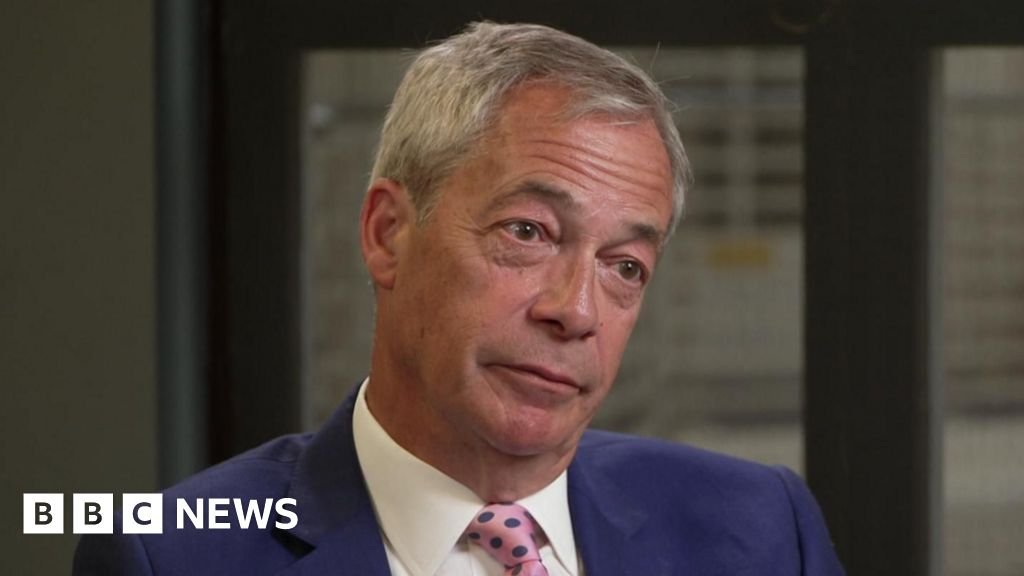
Labour reports Nigel Farages alleged Russian phone hack to police
Politics
Firefighters work to free riders stuck atop a rollercoaster in Texas

Firefighters work to free riders stuck atop a rollercoaster in Texas
Firefighters worked to free riders stranded 30.4 metres in the air after a rollercoaster malfunctioned and their car became stuck at Pleasure Pier amusement park in Galveston, Texas. No injuries were immediately reported.
Published On 29 May 2026


Four men trapped inside a flooded cave in Laos for 10 days have been freed. #BBCNews


Atlas Air Worldwide Announces Strategic Investment in Air Atlanta
Atlas Air Worldwide (Atlas) today announced it has signed a Share Purchase Agreement to acquire a 49% minority equity stake...

The Iran war is dividing Muslims in the Philippines
The US-Israeli war on Iran and the closure of the Strait of Hormuz have had a seismic effect across the...


Palace was handed Andrew's controversial envoy emails six years ago | BBC News
Buckingham Palace was handed emails six years ago that would have shown that Andrew Mountbatten-Windsor was sharing …


For 66 years, Valerie Smith kept a bomb in her garden #BBCNews


Debate: Trump buys Dell stock before a $9.7B Pentagon contract
President Trump faces allegations as companies he invests in land major government contracts. The CNN NewsNight panel …

Spain has a different immigration policy than the U.S. They wanted to go to the United States but couldn’t get the two loans needed. So they decided to start a new life. Subscribe to read the story without ads
Receive unlimited access to adfree articles and exclusive material. “We thought it was God’s will that we weren’t able to...


Four more villagers rescued from flooded Laos cave
Videos show the dramatic moments as four Laos villagers emerge from the flooded cave after being trapped for more than...


Rescue diver recounts dramatic Laos cave mission
CNN's Erin Burnett speaks to diver Josh Richards about the risky mission to save villagers trapped in a flooded cave...


Demand for Indian mangoes soar as cargo fees rise | BBC News
Entrepreneurs in New Jersey are making it big importing mangoes from India. Yakin Shah and Bharat Kumar Parasana import …
-

 Politics1 week ago
Trump-critic Thomas Massie loses Kentucky primary to AIPAC-backed Gallrein
-

 Entertainment2 weeks ago
‘SNL’ Veteran Calls Out Elon Musk Over Lupita Nyong’o Remarks
-

 Entertainment2 weeks ago
Adam Driver and Kenneth Lonergan Reunite For ‘Tomorrow Is a Drag’
-
Entertainment2 weeks ago
Picturehouse Entertainment acquires UK rights to A Town In Nova Scotia
-
Tech2 weeks ago
Today's NYT Mini Crossword Answers for Monday, May 18
-

 Food2 weeks ago
Juneteenth Foods: 23 Recipes for a Cookout Celebration
-

 Tech2 weeks ago
If Your iPhone Battery’s Draining Faster After iOS 26.5, Don’t Panic
-
HealthNews1 week ago
Max Healthcare plans to build 712-bed facility for Rs 1,400 cr in Lucknow. When announcing the company’s fourth-quarter, FY26 results, Max Healthcare said that “the board approved an expenditure of Rs 1,400 crore to construct a 712 bed greenfield hospital in Shaheed Path, Lucknow.” The facility is expected to be completed in FY30, and Max hopes to meet the increasing demand for healthcare in Uttar Pradesh. Max Healthcare, whose market capitalisation surpassed Rs 1 lakh crore last year, is expanding its operations into non-metro areas. As part of its growth strategy, the company will be focusing on both brownfield and greenfield projects to reach its target of 10,000 beds in FY2030.