

Tech
Live updates: US-Iran war, Trump and Tehran reach agreement as G7 summit starts

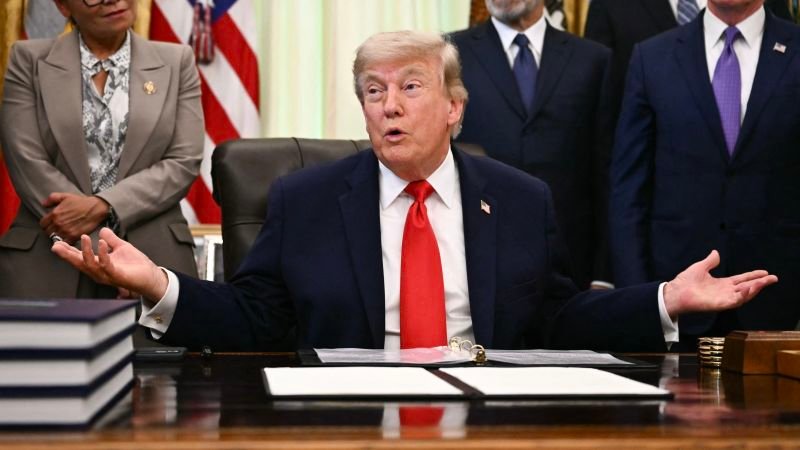
If things go as planned and the US and Iran sign an agreement aimed at ending hostilities on Friday, negotiators from the two bitter rivals will face the complex task of untangling half a century of deep-seated problems against a backdrop of suspicion, hostility and broken trust – all in 60 days.
It’s likely that this two-month window would need to be extended. The issues remain highly complex and could require specialists with profound technical expertise across military strategy, international law, economic sanctions, and nuclear technology.
Negotiators will need to reach agreements on demining the Strait of Hormuz, the legality and implementation of sanctions waivers, the destination of frozen Iranian assets, monitoring and restricting Iran’s nuclear program in cooperation with the UN’s atomic watchdog, limits on uranium enrichment, and extracting highly enriched uranium buried in Iranian soil.
Beyond regional mediators, who have proven apt at brokering peace agreements, Washington and Tehran may also need to set aside their differences with other major powers like European nations, China, and Russia, to use their specialized expertise and technical capabilities required to resolve these issues.
All of this has to unfold against the backdrop of fierce pressure opposing a deal from key allies like Israel to hardline factions in Iran and even critics in Washington.
And unlike the 2015 nuclear agreement, which took nearly two years of meticulous negotiations by the Obama administration and five other major powers (backed by teams of nuclear experts and Iran analysts) – this time the shadow of a devastating war looms large, one that claimed the life of Iran’s most revered leader, Ayatollah Ali Khamenei.
More importantly, both sides must shape an agreement that, from the outset, appears fundamentally different from the 2015 deal to persuade the American president that it is markedly superior to its predecessor, which he has repeatedly branded “one of the worst deals ever made.”
A leading maritime and shipping analyst said that while markets have rallied after the announcement of the agreement on the reopening of the Strait of Hormuz, the “industry’s optimism remains tempered.”
Richard Meade, editor-in-chief of Lloyd’s List, a top maritime news and analysis outlet, said that the maritime sector is “treating the news with something closer to wary disbelief than celebration.”
Meade said that to get a sense of how the maritime industry is feeling about the news, one only needs to look at the insurers, whom he calls the “industry’s barometer of real risk” to see that the situation remains murky.
Oil prices have fallen to their lowest levels in more than three months after the United States and Iran said they had reached an agreement to reopen the vital Strait of Hormuz.
Brent crude, the global oil benchmark, fell 4.9% to $83.05 a barrel, having settled Sunday at its lowest level since March 5, the first week of US-Israeli airstrikes against Iran. West Texas Intermediate, the US crude benchmark, slid 5.4% to $80.30 a barrel. Both have fallen around $10 over the past week.
The United States and Iran said Sunday they have reached an agreement, due to be signed Friday in Switzerland, to end hostilities. The full text has not yet been published, but President Donald Trump said the US would lift its blockade of Iranian ports and that the Strait of Hormuz would reopen without tolls.
However, crude prices remain around $10 a barrel higher than they were before the war. And the oil market still has significant work ahead to return flows from the Middle East and through the strait to normal.
Read more here.
Political pundits are largely seeing the US-Ir an agreement as the start of a series of more complicated negotiations to come. Here is what they are saying:
Ben Radd, Senior Fellow at UCLA Burkle Center for International Relations
The agreement has not addressed three major concerns: Iran’s nuclear enrichment program, its ballistic missile threat and proxy militant groups in the region, he said.
He also said the memorandum has failed to factor in Israel’s fear that Iran-backed Hezbollah will remain a threat across the border.
Behnam Ben Taleblu, Senior Director of Foundation for Defense of Democracies’ Iran Program
He likened the agreement to an “entry ticket” to a more complex situation for the US and Iran to navigate.
Taleblu also said even if negotiations go well, it will still take time for the Strait of Hormuz to be reopened. CNN previously reported that Iran laid mines in the strait, according to people familiar with US intelligence reporting.
Alex Plitsas, Director of Counter Terrorism Program at Atlantic Council
The unresolved conflict between Israel and Iran-backed militant group Hezbollah could become a “major flashpoint”, he said.
Israeli Prime Minister Benjamin Netanyahu has not yet publicly commented on the US-Iran agreement, but reactions from pro-government commentators reveal mounting frustration and disappointment with Washington and the Trump administration.
Yinon Magal, a leading presenter on the pro-Netanyahu Channel 14, wrote on X that US President Donald Trump “came out a loser” and called Vice President JD Vance “a scumbag.”
Magal, who has defined himself in the past as “a pipeline” for Netanyahu’s messaging, accused the president’s envoys Jared Kushner and Steve Witkoff of influencing the president under Qatari pressure. Magal said on social media that “Qatar bought (them) with a great deal of money” as he accused them of having “sold out their brothers in Israel.”
Qatari negotiators were in Tehran for negotiations on Sunday, before the agreement was announced.
“We’re left alone,” Magal concluded.
An Israeli source told CNN that Netanyahu has also privately blamed Kushner and Witkoff for creating a wedge between the two leaders. According to the source, Netanyahu believes they were influenced by “Qatar, which, fearing Iran, pushed positions that widened gaps between Jerusalem and Washington.”
Shimon Riklin, another commentator on Channel 14, said on social media “Trump is making America weaker than ever.” Meanwhile, Amit Segal, a prominent right-wing political analyst with Israel’s Channel 12, quoted Henry Kissinger on social media when he said, “It may be dangerous to be America’s enemy, but to be America’s friend is fatal.”
The hostility towards Trump sharply contrasts with the praise the American president had received from right-wing figures at the outset of the Iran war, when Trump and Netanyahu displayed a united front.
In recent weeks, as Trump moved to end hostilities, tensions surfaced and escalated in a series of public spats over negotiations with Iran and the terms of the ceasefire with Hezbollah in Lebanon.
Israeli Defense Minister Israel Katz said on Monday that Israeli forces will not withdraw from southern Lebanon as part of the US-Iran ceasefire understandings, and that the position has been conveyed to President Donald Trump.
“Israel opposes any withdrawal of IDF forces from Lebanon, despite existing and expected pressure,” Katz said in a statement, tacitly acknowledging that Lebanon is part of the US-Iran agreement.
In his first public remarks since Trump announced an agreement with Iran, Katz said Israel’s policy is to maintain an indefinite military presence in “security zones” in Lebanon, Syria, and Gaza “in order to defend Israel’s borders and communities from jihadist elements.” He described holding territory and maintaining such zones as “the central lesson” of October 7, 2023.
Katz said that Prime Minister Benjamin Netanyahu had communicated Israel’s position directly to Trump, and that he himself reiterated it in a call on Sunday with US Defense Secretary Pete Hegseth.
“We will not compromise on Israel’s supreme security interests or the protection of our citizens, and we will not withdraw from the security zones,” Katz said. He added that “if Iran attacks Israel over developments in Lebanon, we will strike with full force and clearly demonstrate the disparity in power.”
Israeli politicians from across the political spectrum have criticized the agreement between the US and Iran.
Iran and mediator Pakistan have said the agreement, expected to be signed on Friday, included an immediate end to fighting on all fronts, including in Lebanon. Israeli forces have been fighting Iran-backed Hezbollah in Lebanon and earlier on Sunday before the agreement was announced, it attacked the capital Beirut.
Itamar Ben Gvir: Israel’s far-right national security minister said “Trump’s agreement does not bind us.” In a post on X, Ben Gvir said “Israel is not subordinate to the United States,” adding that Israel is “not partners to this agreement” and “must not settle for anything less than the dismantling of Hezbollah.”
Yair Golan: The leader of Israel’s left-wing Democrats party and retired Israeli general shared a similar message, saying on X that the agreement “was made over Israel’s head” and “throws a lifeline to the murderous regime in Tehran.” He also criticized Israeli Prime Minister Benjamin Netanyahu as “weak, ill, isolated, and without influence.”
European Union Commission President Ursula von der Leyen welcomed the agreement reached by the United States and Iran, and said that the agreement “should allow for the immediate reopening of the Strait of Hormuz.”
“Freedom of navigation must be restored toll-free. This is essential for regional stability and the global economy,” she said in a statement Monday.
She also said there was a need to look at different supply routes and “diversify away from the bottleneck of Hormuz” and that this would be discussed at the G7 meeting starting today in France.
EU foreign affairs chief Kaja Kallas also welcomed the agreement and said EU foreign ministers will discuss how the organisation can be be involved in the next steps.
“I have spoken to my Iranian and Gulf counterparts in recent days, and today, EU Foreign Ministers will discuss how the EU can be closely involved in the next phase,” she said on X.
President Donald Trump has previously made a few main guarantees about a deal to end the war he started with Iran:
It will ensure that Iran can never have a nuclear weapon
Trump’s deal will be better than President Barack Obama’s
Trump addressed that second point in a post on his social media platform Sunday.
It is impossible to make a direct comparison at this moment since the Trump memo announced Sunday is not a long-term nuclear deal, but rather an agreement to halt the war.
Under Obama, the US was part of an international coalition that reached an agreement with Iran to limit its nuclear program. International monitors verified that Iran was complying, and Iran was able to tap its oil wealth.
Trump tore that deal up during his first term. Iran subsequently also withdrew from the agreement, then kickstarted its enrichment of uranium.
Trump’s apparent new agreement is very different. This one would stop hostilities between the countries and reopen the Strait of Hormuz. The US will reportedly stop its blockade of Iranian ports and Iran will allow shipping traffic through the strait.
A longer-term deal to contain Iran’s nuclear ambitions will likely still have to be negotiated.
Trump has frequently complained that Obama’s deal included the transport of cash from the US to Iran. That was actually the settlement of a long-term dispute over arms Iran bought from the US before the Islamic revolution.
It remains to be seen what financial elements are included in Trump’s agreement.
The US and Iran have reached an agreement, but there are discrepancies in their statements and much that we don’t know as the full text has not yet been released.
The differing accounts underscore a significant gap between how the US and Iran are describing the next steps in negotiations.
Here’s what both sides have said on key issues:
Strait of Hormuz: President Donald said the Strait of Hormuz would reopen following the expected signing of the agreement on Friday and it would ultimately ensure that the waterway is “permanently toll free.” A US official said the US military received a directive to lift the US blockade of Iranian ports on Friday after the MOU with Iran is signed. Iran, meanwhile, said the agreement included the immediate lifting of the US blockade. Iran’s official Islamic Republic of Iran News Network said the draft agreement included reopening the strait within 30 days “under Iranian arrangements.”
Lebanon conflict: Pakistan’s Prime Minister Shehbaz Sharif said both sides had “declared the immediate and permanent termination of military operations on all fronts, including in Lebanon.” Similarly, Iran’s deputy foreign minister Kazem Gharibabadi said the agreement will include a “permanent and immediate end to the war on all fronts including Lebanon.” Trump did not include Lebanon in his Sunday remarks. Israel, which launched an airstrike in Beirut earlier on Sunday before the announcement, has not yet commented on the agreement.
Frozen funds: Gharibabadi said the 60-day negotiations between Tehran and Washington after Friday’s signing of the agreement will hinge on the US meeting several obligations, including the release of billions of dollars in frozen Iranian funds. But a US official rejected the claim, saying: “This is completely not true. This is a pay for performance deal and no frozen funds will be released without the Iranians implementing their commitments.”
US officials were concerned the prospective agreement with Iran was on the brink of collapse after Israel targeted Hezbollah in Beirut’s southern suburbs, leading to hurried attempts to preserve the framework, according to sources.
Going back and forth with Qatari officials, who had been in Tehran to try to get the agreement completed, US officials sought to prevent further conflict, the sources said.
Vice President JD Vance told Fox News on Sunday that the US saw “evidence that the Iranians were going to launch a large number of missiles at the Israelis.”
Officials said the Israeli attack in Lebanon helped propel the final negotiations.
A US official told CNN President Donald Trump was enraged by the Israeli strikes and used expletives in a call with Prime Minister Benjamin Netanyahu.
He also used expletives in a call with CNN political and global affairs analyst and Axios reporter Barak Ravid, slamming Netanyahu’s actions.
Trump told The New York Times that Israel stands to benefit from the agreement and called Netanyahu “a very difficult guy.”
Trump had grown increasingly frustrated with Netanyahu in recent weeks, as the Israeli leader continued attacking Lebanon — strikes that repeatedly put the US-Iran peace talks in jeopardy.
Israel has not yet commented on the agreement.
World leaders are welcoming the agreement reached by the United States and Iran that is expected to take effect on Friday.
Pakistani Prime Minister Shehbaz Sharif said the agreement is set to be signed by both parties on Friday in Geneva, Switzerland, upon the conclusion of the annual Group of Seven Nations (G7) summit in nearby Évians-les-Bains, France. Iran’s deputy foreign minister has also said further talks will take place in Switzerland after a formal signing ceremony on Friday.
As reported earlier by CNN, Qatari Prime Minister Mohammed bin Abdulrahman bin Jassim al-Thani – who emerged throughout the war as a skilled mediator and diplomat – expressed his hope for all parties to engage “in a positive and constructive spirit that will help consolidate this progress and build upon it”. British Prime Minister Keir Starmer called the progress an “important step”.
Here are some more reactions from around the world:
Secretary-General of the United Nations António Guterres expressed his “deep appreciation” to several mediating nations, including Pakistan, Turkey, and Saudi Arabia, calling the agreement in an X post “a critical step towards the peaceful settlement of the conflict.”
French President Emmanuel Macron called for a “swift and full implementation” of the memorandum in a post on X, while also notably singling out French support “to the determined efforts of the Lebanese authorities to restore state sovereignty,” as Lebanese involvement in the conflict remains a key sticking point to any ceasefire agreement.
Turkish President Recep Tayyip Erdoğan welcomed the framework agreement, but emphasized “the importance of refraining from rhetoric, provocations and actions that could escalate tensions, and of remaining vigilant against possible acts of sabotage until the day the signatures are affixed,” according to Turkish state-run Anadolu Agency.
Australian Prime Minister Anthony Albanese and Foreign Minister Penny Wong encouraged all parties “to use this opportunity to pursue a durable and lasting peace through dialogue and diplomacy,” while maintaining that Iran should also seize the opportunity to “address longstanding concerns about its nuclear program and the threat it poses to international security.”
Japan’s Prime Minister Sanae Takaichi said on X she hoped the agreement will ensure “free and safe navigation in the Strait of Hormuz” and that “a final agreement on issues such as Iran’s nuclear program will be reached as soon as possible.”
Italy’s Prime Minister Giorgia Meloni said on X that the country is ready, “together with the other partners… to contribute to an international naval presence” for the reopening of the Strait of Hormuz.
German Chancellor Friedrich Merz congratulated the US and Iran, saying on X that the agreement will “pave the way towards a reinvigorated global economy and a more secure Middle East.”
Chinese Foreign Ministry spokesperson Lin Jian said his country welcomes the agreement, adding China hopes that the Strait of Hormuz “can resume opening as soon as possible.”
CNN’s Jerome Taylor and Julian Silva-Forbes contributed to this report
Tech
Starmer announces UK social media ban for teens
LONDON (AP) — Britain will ban children under 16 from using a range of social media apps including Snapchat, TikTok and YouTube to protect young people from harmful content and excessive screen time, Prime Minister Keir Starmer said Monday,
Starmer told a news conference that he will fight back if technology companies resist the move, and acknowledged some teens would try to find their way around a ban. But he said he is “not prepared to compromise on the safety and happiness of our children.”
“Every parent can see it with their own eyes. Social media is making children unhappy,” said Starmer, who has two teenage children. “I’ve heard first hand from families crying out for change and we will do right by them.”
The move, expected to take effect early next year, makes the U.K. part of a growing global movement to tighten online safety for children. Australia, Canada, Brazil and Indonesia have introduced legislation or announced age-based restrictions or requirements for children’s access to social media. France, Spain, Denmark, Thailand and South Korea are among others studying or developing similar approaches.
The U.K. plans to follow the same model for a social media ban as Australia, which last year became the first country to bar under-16s from holding social media accounts. Platforms that fail to take reasonable steps to exclude children younger than 16 could be punished with multimillion-dollar fines.
The U.K. said its ban will apply to platforms including Snapchat, TikTok, YouTube, Instagram, Facebook and X, but not YouTube Kids or messaging services like WhatsApp and Signal. Starmer stressed that enforcement action will target tech companies, not children.
The prime minister also said he will go further than Australia’s measures.
He said the government will act to prevent strangers from contacting children on gaming and livestreaming platforms. Authorities are also considering additional measures including overnight curfews and breaks in infinite scrolling for those under 18. More details are expected next month.
Starmer’s announcement met with mixed reactions
The decision follows a public comment period in which the government got 116,000 responses from parents, the tech industry and children. The number of responses was second only to one seeking input about same-sex marriage in 2012.
The vast majority of respondents — more than 90% — wanted an under-16 ban, the government said.
Esther Ghey, whose 16-year-old daughter Brianna was killed in 2023 by two teenagers who had accessed harmful content online, said the ban would “potentially save so many children’s lives,” but had to be accompanied by other measures.
NSPCC, a leading children’s charity, praised the government’s ambition but urged authorities to ensure platforms roll out “robust age checks” and effectively enforce the policy.
Others are more skeptical.
Critics including the Open Rights Group have expressed concerns about age verification companies and how users’ private data is protected.
Reacting on Monday, a spokesperson for YouTube warned that a blanket social media restriction could “push kids out of such curated, supervised, beneficial experiences and towards anonymous, less-safe services.”
Starmer acknowledged the challenges, but said success for the ban would mean “a massive drop off of children on social media” and “a cultural change, a sense that actually you can grow up differently.”
Starmer, elected just under two years ago, is under pressure to step down from members of his own party over what they see as poor leadership and could face a leadership challenge in the coming days or weeks. He is seeking to bring in consequential measures that can serve as a legacy.
The U.S. has opposed the move
The ban could further inflame tensions with the U.S., which has warned that regulations should be narrow and not violate free speech protections, according to a statement from the U.S. Embassy in London. It said it was also concerned that regulations would place greater burdens on American technology companies.
Starmer said he expected to discuss the issue with U.S. President Donald Trump and other world leaders at a Group of Seven summit in France that starts Monday.
“I honestly think that across world leaders, there has always been a recognition that leaders have to take steps to protect children,” he said. “I don’t think that’s controversial. There will always be arguments as to exactly what the limits of that are and what rules should be in place, but I don’t see that as a problem.”
Jon Crowcroft, a communications systems professor at the University of Cambridge, said people supporting social bans are well-meaning but probably misguided, and changes could prevent children from accessing sites they need.
“There is a real risk this will drive some users to worse sites and policing devices is close to impossible technically,” Crowcroft said. “Policing platforms is far easier, if only regulators would bother.”
___
Associated Press writer Jill Lawless contributed to this story.
Tech
Tentative deal on ending the Iran war sends stocks soaring while oil prices fall
BANGKOK (AP) — World share prices soared Monday after a tentative deal was announced on ending the Iran war and reopening the Strait of Hormuz, while oil prices fell more than $4 a barrel.
The future for the S&P 500 was up 1.2% and that for the Dow Jones Industrial Average gained 1%, auguring likely early gains for Wall Street.
In early European trading, Germany’s DAX advanced 1.7% to 25,066.48, while the CAC 40 in Paris also added 1.7% to 8,410.36.
Britain’s FTSE 100 gained 0.8% to 10,553.18.
After repeated false starts, investors were betting that this time, the war might end. U.S. President Donald Trump confirmed the initial agreement and authorized an end to the U.S. naval blockade of Iranian ports.
Iran confirmed it but signaled that implementation would not start until a signing that Pakistan said would be held Friday in Switzerland. Broader negotiations on issues like Iran’s nuclear program are expected to continue over the next 60 days.
In early trading Monday, the price of Brent crude oil, the international standard, fell $4.08 to $83.25 per barrel. U.S. benchmark crude lost $4.51 to $80.37 per barrel.
It may take months for oil prices to stabilize after the disruptions from the war caused them to surge, pushing costs up for gasoline and many other products. Energy experts said shipping and insurance companies will want to be confident the pact will hold, ensuring that oil and gas supplies will flow freely enough for the world’s needs to be met.
“The reopening of Hormuz is a relief valve, not a full peace dividend. The market can remove some crude panic, but it still has to price the gap between a headline, a signature, and a regime that actually complies,” Stephen Innes of SPI Asset Management said in a report.
Still, the news was a huge relief for markets that have been roiled since the conflict began in late February.
Stocks rallied in Asia, where Tokyo’s Nikkei 225 gained 5% to 69,317.50 as the benchmark logged another record high.
Buying was heaviest for technology shares, especially those related to artificial intelligence. The boom in AI has been driving gains in Japan, where the benchmark has gained more than 80% in the last year.
“This is great news,” said Takashi Hiroki, chief strategist at Monex. “Buying by foreign investors is leading the market with expectations of easing tensions around the situation in the Middle East. Then the decline in New York crude oil futures is supporting this positive market.”
The Kospi in Seoul surged 5.2% to 8,545.98.
In Hong Kong, the Hang Seng gained 0.6% to 24,864.13, while the Shanghai Composite index was up 1.6% to 4,096.47.
Australia’s S&P/ASX 200 advanced 1.3% to 8,922.90. Taiwan’s Taiex was up 2.8%, and the Sensex in India rose 1.2%.
On Friday, U.S. stocks advanced as Musk’s SpaceX soared in its highly anticipated debut on Wall Street.
The strong start suggested plenty of demand still exists among investors for AI after SpaceX stock leaped 19.2% in its first day of trading. That gave Elon Musk’s rocket company a total value of $2.1 trillion, making it bigger than Exxon Mobil, Bank of America and Coca-Cola combined. In addition to building rockets, SpaceX also owns the artificial intelligence company xAI.
The S&P 500 added 0.5% to close out its 10th winning week in the last 11. The Dow industrials climbed 353 points, or 0.7%, and the Nasdaq composite gained 0.3%.
This week will bring interest rate decisions from the Federal Reserve and Bank of England, on Thursday. On Tuesday, the Bank of Japan is due to announce its monetary policy updates. It is widely expected to raise its benchmark interest rate to 1% from the current 0.75%.
That would be the highest rate in more than 30 years.
In other dealings early Monday, the dollar slipped to 160.17 Japanese yen from 160.12 yen late Friday. The euro climbed to $1.1608 from $1.1578.
___
Senior producer Mayuko Ono in Tokyo contributed to this report.
Tech
A warning from Amazon reportedly led the White House to shut down Anthropic’s Mythos model

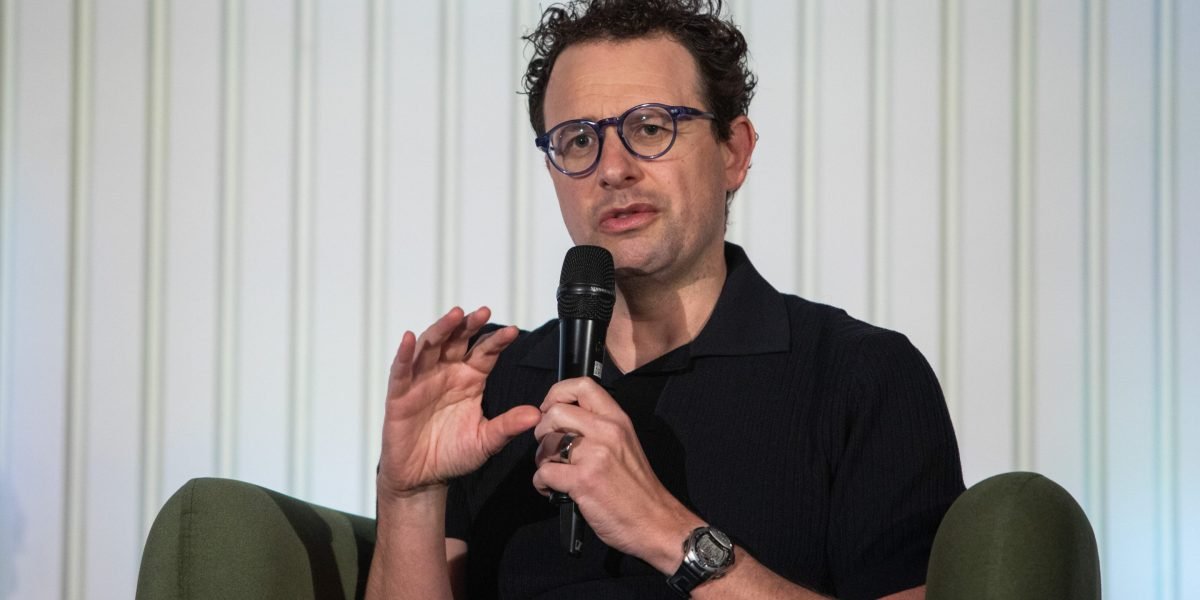
According to multiple media reports, Jassy first raised concerns about the model with senior administration officials on Thursday after Amazon researchers used a series of prompts to get the Mythos-class model to provide information about cyberattacks that was supposed to be restricted.
It is unclear if Amazon was testing Fable for vulnerabilities in response to a White House request or if the company conducted the tests completely of its own accord. Politico quoted an unnamed source familiar with Amazon’s discussions as saying the government asked Amazon for feedback on the new Anthropic model.
An Amazonspokesperson previously told Fortune: “As a leading cloud provider that serves a large number of private and public sector customers, it’s not uncommon for governments to seek our counsel on potential security risks. When they occur, we don’t share the details of these discussions.”
Semafor also reported, citing unnamed sources, that the U.S. government suspected that a Chinese-linked group had already used the jailbreak Amazon discovered. But the publication said it was unclear how the government had arrived at this suspicion or what evidence they had to support it. And an Anthropic spokesperson told the publication that the White House did not raise Chinese access to Mythos in its conversations with the company, and that Anthropic prohibits access to its products from within China.
What followed were several calls between Anthropic CEO Dario Amodei and senior administration officials, according to Politico, during which Amodei argued the security bypass found by Amazon was narrow rather than a full jailbreak of the model’s safeguards.
A source familiar with Anthropic told Fortune the company was given 90 minutes to pull its newest model and was given no previous communication of a national security threat.
Still, by Friday evening, the Commerce Department had stepped in to use national security export controls to bar Anthropic from distributing Fable 5 and its underlying model, Mythos 5, to foreign nationals, a category that includes people outside the U.S. as well as non-citizens working inside the country, including employees within Anthropic. Given the scope, the AI lab said it had no option but to disable both models for all users.
Now, according to the person familiar with Anthropic, senior technical staff are in DC to meet with White House officials.
The move marks the first time the U.S. government has used export controls to halt access to a commercial AI model already widely used by the public. The unprecedented step has sparked concern from politicians around the world and intensified calls for sovereign AI, the idea that countries should control the AI models, infrastructure, and data that underpin critical technology, rather than depend on systems that can be restricted or withdrawn by a foreign government.
Critics have described the export controls as government overreach. AI policy expert Dean Ball, who briefly served in the Trump administration, said on X that he could not tell whether the move amounted to “lawfare against Anthropic in particular or extreme national-security hawkery,” adding that it was “simply cartoonish.” Ben Murphy, a non-resident fellow at the Institute for Progress, said the directive marked “another step on the balkanization of technology,” warning it could discourage AI labs from being transparent with the government about AI models in the future.
The decision to use export controls could also reshape how the government treats future AI releases more broadly, potentially signaling more government oversight into how powerful new AI models are rolled out. An administration official told Axios that the government does not view other models on the market as posing the same national security risk because they do not exceed the capability level Mythos has reached, and that any future model crossing that threshold would need to go through the government before release.
The episode also escalates a months-long standoff between Anthropic and the Trump administration, which earlier this year designated the company a “supply chain risk” for Pentagon contractors after Anthropic declined to accept contract terms allowing its models to be used for “all lawful purposes.” Anthropic cited concerns over autonomous weapons and mass domestic surveillance and is contesting that designation in court.
An escalating standoff
On Friday, Anthropic said in a blog post that US national security authorities had not identified specific concerns, but that the company understood the government believed it had become aware of a method of bypassing, or jailbreaking, Fable 5.
However, over the weekend, White House AI adviser David Sacks offered his own account of the standoff. In a post on X, Sacks said a highly credible, trusted partner of both Anthropic and the government had identified a jailbreak in Fable 5’s guardrails and that the administration asked Amodei to fix the issue or withdraw the model. According to Sacks, Amodei refused, leading the administration to issue the export control reluctantly. Sacks added that the administration hopes Anthropic will remediate the issue so that Fable can return to general release as soon as possible, and pushed back on suggestions that the move was connected to the earlier Pentagon dispute.
Sacks previously served as the administration’s AI and crypto czar and has repeatedly clashed with Anthropic, accusing the company of regulatory capture tactics rooted in what he has called fear-mongering about AI risk.
Senior White House officials also told Politico that the export controls were a last resort after officials spent hours asking Anthropic to work with them. The publication also reported that Treasury Secretary Scott Bessent told Amodei directly during one call that he was making a bad decision.
‘A wake-up call’ for Europe
The fallout of the decision has reverberated beyond Washington, sparking reactions from politicians around the world. In Europe, the shutdown has reignited calls for what officials describe as sovereign AI, the idea that countries should control the AI models, computing infrastructure, and data that underpin critical technology, rather than depending on systems that can be restricted or withdrawn by foreign governments.
Former French prime minister Édouard Philippe said the episode showed that AI is now critical infrastructure as essential as electricity or the internet, and that infrastructure controlled by others is infrastructure that others can unplug. Bruno Retailleau, a French 2027 presidential candidate, said the move should serve as a “wake-up call,” arguing that a nation that depends on others for its technology is a nation that can be unplugged overnight.
In the UK, MP Al Carns said British hospitals, companies, and researchers had been using Fable 5 before it was switched off, framing the episode as part of a broader pattern of lost technological leadership. Tom Tugendhat, a former UK security minister and MP, similarly argued that the incident shows sovereignty is now more about “code than cannons,” and criticized the UK’s regulatory approach for prioritizing safety over building competitive AI capacity.
For many politicians, the ban made clear how dependent European governments and companies have become on a small number of U.S. AI labs, and how quickly that dependence can become a political liability when access is disrupted, even temporarily.
Tech
Early results on “Swiss Brexit” indicate defeat of measure that would cap population at 10 million

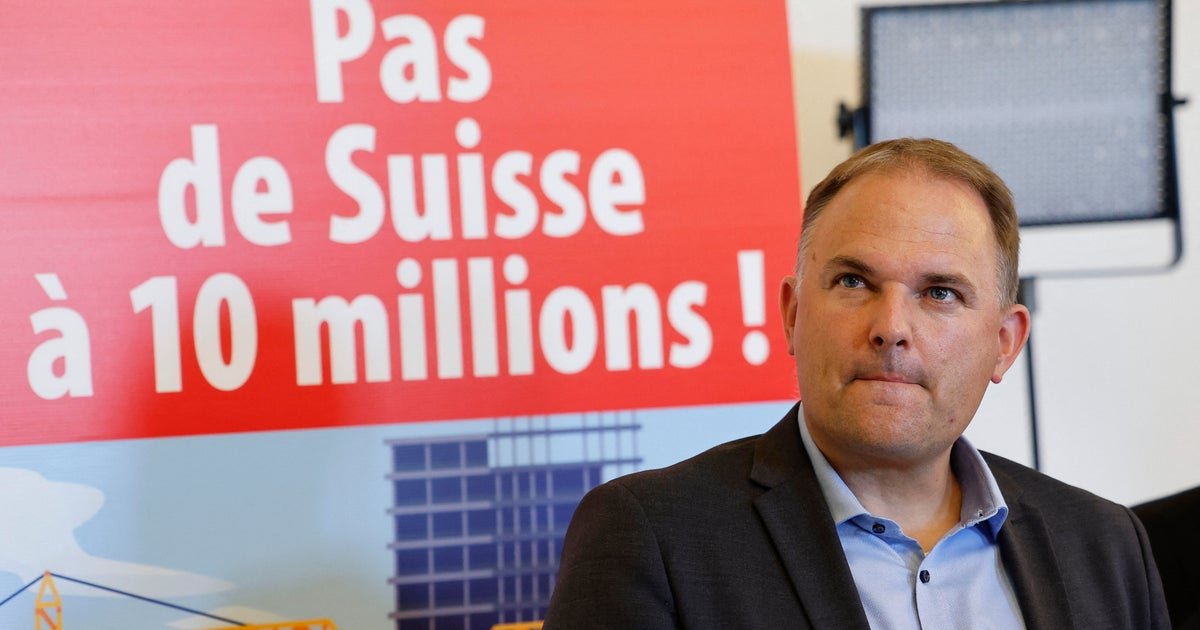
Voters in Switzerland have cast their final ballots on Sunday on an initiative championed by the top right-wing party to cap the rich Alpine country’s population at 10 million. Early results showed Swiss voters were leaning against it.
The populist Swiss People’s Party, which has the most seats in parliament, has stirred up and fostered anti-migration sentiment over the years, notably about an influx of workers from the neighboring European Union.
Some have dubbed the proposal a “Swiss Brexit” because it could jeopardize Switzerland’s deep ties to the European Union anchored by deals that foster economic growth, cultural ties and cross-border travel, among other things. Switzerland is not one of the EU’s 27 member states, but it is all but surrounded by four of them
Recent polling from the gfs.bern agency suggested that it could be a close contest.
Preliminary results shared by the federal government showed that nearly 53% of voters rejected the proposal, with nationwide turnout exceeding 57%. Results were still pending from many of Switzerland’s 26 cantons.
The number of people living in Switzerland has soared by nearly one-quarter over the last generation, and foreigners today make up nearly one-third of the population.
Critics say the boom in migration has brought foreign labor and skills to sectors such as healthcare, finance, pharmaceuticals, and technology.
The right-wing party put forward the “sustainability initiative” measure, saying Swiss infrastructure, housing, social programs, natural resources and way of life have been strained by the spike in demographic growth.
The federal government, Parliament and EconomieSuisse, a major business association, oppose the idea.
In Geneva, Switzerland’s second-largest city and a hub of U.N. institutions and humanitarian groups, early results showed about two-thirds of voters in the region opposed the measure.
Geneva will be hosting the G7 economic summit this week, welcoming U.S. President Trump among other world leaders.
Maria Lalu, a former diplomatic mission worker from the Philippines who arrived in Switzerland in the early 1980s, said she supported the proposal. “I have nothing against immigration. I also am a stranger,” she said after casting her vote, adding that she wants immigration to be more orderly.
Schoolteacher Natascha Robert said she voted against the bid, expressing concern that approval could hurt Switzerland’s relationship with the EU. She also said Switzerland’s growing diversity is an asset.
“I think people always have something to bring us,” she said outside a polling station in the central Paquis neighborhood, emphasizing that she was born in Switzerland to two Swiss parents. “Does that mean that we have more foreigners, I feel less Swiss? Really, not.”
Swiss democracy gives voters a direct say in policymaking through referendums typically held four times a year. Most ballots are cast through the mail, and in-person voting ends at noon local time on Sunday.
A “yes” vote would require the Swiss government to take action to cap the population by 2050.
If the population reaches 9.5 million before then, the government would be forced to restrict asylum, family reunification and residency permits, and may have to scrap Switzerland’s EU deal on the free movement of people.
The Organization for Economic Cooperation and Development has reported that Switzerland had a foreign-born population of 32% as of 2024, behind only Luxembourg and Australia among the group’s 38 member countries.
International migration has long been a sensitive issue in Europe, as nations grapple with an aging population and increasing anti-foreigner sentiment. While that sentiment in other European countries centers on migrants from the developing world, most foreigners in Switzerland are Europeans.
Since Switzerland and the EU eased restrictions on citizens living and working across their borders in 2002, the Swiss population has grown by 23%, to 9.1 million as of the end of last year. Economic output has also increased, up 24% over the same period, government data show.
Swiss voters have repeatedly tackled the immigration issue over the last half-century. Only one such referendum — “Against mass immigration” in 2014 — narrowly passed, after campaigners stoked fears about overpopulation and rising numbers of Muslims in the country.
While many countries have limits on immigration, none has ever voted to limit its population, Swiss experts say.
Tech
‘It’s euphoria’: New York City celebrates Knicks’ NBA title win after 53-year wait

Marvita Davis, 70, was a teenager in Harlem the last time the New York Knicks won a championship, in 1973.
“I was like, Oh, I like this game. I can get into this game,” recalled Davis, who went on to play basketball at Northeastern University.
She maintained her love of hoops – even though she had knee and hip replacements and can no longer play – and her love of the Knicks, despite their more than a half-century of futility. “I will support all my hometown teams, regardless of how bad they are,” said Davis, a retired computer programmer.
On Saturday night, that longstanding fanhood paid off when the Knicks finally won an NBA title again by defeating the San Antonio Spurs in five games.
Davis watched as the game was projected onto a screen on the front lawn of her apartment building with other residents in the Clinton Hill neighborhood of Brooklyn. Others watched from bars in the East Village and fire escapes in the West Village and erupted as the clock hit zero.
“It’s euphoria,” Davis said.
That was the feeling throughout all five boroughs. Car horns, fireworks, “Let’s go Knicks” chants and Jay-Z’s Empire State Of Mind and Frank Sinatra’s Theme From New York, New York filled the streets, subways and bars until well after midnight. (Some shouted an expletive directed at Spurs star Victor Wembanyama too.)
“The city is alive, man, like never before,” said Nick Pineda, a 47-year Bronx resident who works in information technology and watched the game at Habana Outpost, a Brooklyn restaurant that also projected the game outdoors.
Firefighters drove through the city holding a Knicks blanket. Even bus drivers got some love from residents.
“B-52! B-52! B-52!” fans who filled sidewalks in Brooklyn chanted as a bus rolled past.
Predictably, as after most championships – even ones less than a half-century in the making – some fans climbed atop traffic lights and a police car.
Rashid Taylor, a 51-year-old Brooklyn native, said Jalen Brunson was the driver that guided them to the victory.
“They got the champion, fearless leader just taking them through all the fire,” Taylor said of Brunson, who scored 45 points in the Game 5 win. “This team is just heart and soul and passion and not backing down.”
There is only more celebration ahead. Mayor Zohran Mamdani announced a ticker tape parade on 18 June, and said city hall will present the team the keys to the city – a symbolic gesture to recognize New York’s notable citizens.


Camel milk is big money for rural China
China and Mongolia hold some of the world's largest populations of Bactrian camels, and their increasingly popular milk has …


Stanford grads walk out of Google CEO’s commencement speech
Stanford students walked out of Google CEO Sundar Pichai's commencement speech and joined a separate "People's …


US cannot ‘bully or bomb to solutions’ on Iran, former US President Barack Obama says. #BBCNews


Donald Trump says Strait of Hormuz will be reopened as part of US-Iran deal | BBC News
The US and Iran have agreed a deal to end the war, which mediator Pakistan said will be signed on...

Nico Rosberg hails ‘legendary moment of F1’ as Lewis Hamilton ‘climbs to greatness again’ with maiden Ferrari win
Nico Rosberg has described Lewis Hamilton’s breakthrough Ferrari triumph at the Barcelona-Catalunya Grand Prix as “a legendary moment” for the...


Historic Kyiv monastery on fire after Russian attack
A prominent Ukrainian monastery complex in the heart of Kyiv is on fire following a massive and deadly Russian attack...


Brazil woman dies after rope-jumping instructors fail to attach cord
A woman has died in what appears to be a tragic extreme sports accident in Brazil. Three men have been...


Trump and thousands of others watch UFC fight on White House lawn. #UFC #DonaldTrump #BBCNews
Starmer announces UK social media ban for teens
LONDON (AP) — Britain will ban children under 16 from using a range of social media apps including Snapchat, TikTok...


Storms trigger flash flooding in Texas
Slow-moving thunderstorms and torrential rain hit Waco, Texas. Rain rates neared four inches an hour in some areas.
-

 LifestyleNews2 weeks ago
120 minutes of strength training per week may help extend lifespan
-

 Politics4 days ago
What to know about the stabbing that set off fiery riots in Northern Ireland
-

 Business2 days ago
How much of Musk’s wealth comes from government help? Virtually all of it
-

 Video3 days ago
Download fans say what they love about the festival. #DownloadFestival #BBCNews
-

 Video3 days ago
Why SpaceX IPO isn't about space. #SpaceX #ElonMusk #BBCNews
-

 HealthNews3 days ago
The people of Okinawa, Japan only eat until they are about 80 percent full, then stop — and the practice has been linked in multiple peer-reviewed studies to lower rates of cardiovascular disease, slo
-

 TravelNews3 days ago
My Paternal Instinct Should’ve Warned Me About Netflix’s Maternal Instinct
-
 Food2 days ago
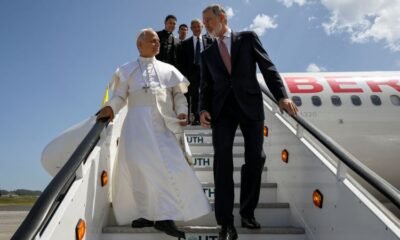
Pope Leo’s plane was grounded. Then the King of Spain stepped in to help