

Business
Meet Gwynne Shotwell, the $2B engineer-turned-COO who runs SpaceX in platform heels

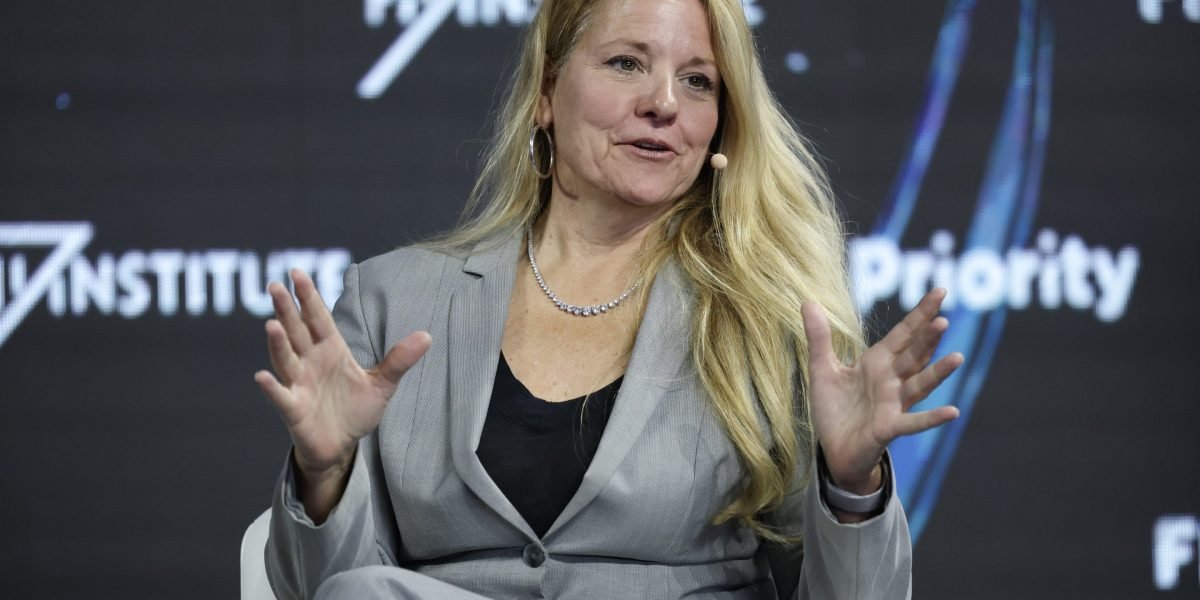
It dates back to September 2008. Shotwell was in a Glasgow hotel bathroom, with the shower running so her husband could sleep, while on the phone with her team to price SpaceX’s bid for a $1.6 billion NASA resupply contract. At the same time, the company’s fourth Falcon 1 launch, which Elon Musk believed was the last one the company could afford before going bankrupt, counted down half a world away.
The rocket reached orbit. Shotwell told Stanford Business School’s View from the Top podcast that she ran down the hotel hallway “in my yoga pants and jammy top,” knocking on her team’s doors, and they “kind of” broke into the hotel bar at two in the morning to drink warm champagne. Ever since, she writes “Scotland” on two sticky notes and puts one in each shoe on launch days, so she is always, technically, in Scotland, and has that moonshot mindset.
Eighteen years later, that woman with paper in her shoes became a billionaire, owning 12.6 million shares of the most valuable company ever to go public. Based on Friday’s closing price, that means her stake is worth more than $2 billion.
The cheerleader who fell in love with an engineer’s shoes
Shoes, as it happens, helped guide Shotwell to where she is now. Shotwell was born in 1963, the middle of three daughters of a brain surgeon and an artist, and raised in Libertyville, Illinois. She watched the Apollo 11 landing at age five and found it boring. At Libertyville High she was a cheerleader and varsity basketball player who finished at the top of her class. But she had no idea what she wanted to do until her mother dragged her—destination undisclosed, because she wouldn’t have gone—to a Society of Women Engineers panel at the Illinois Institute of Technology.
She said the conference bored her until she saw one fabulous woman engineer. “Her shoes were marvelous, her bag matched, and she just made mechanical engineering accessible to me,” Shotwell told Marie Clarie in 2017. “I left that event saying, ‘Okay, I’ll be a mechanical engineer,’ because I thought she was cool.”
What followed was a bit less glamorous. At Northwestern, she was one of three women in an engineering class of 36. She happened to interview at IBM on the day the space shuttle Challenger exploded; shaken, she didn’t get the offer, and went into Chrysler’s management training program instead. Unsatisfied, she went back for a master’s in applied math, then spent a decade at the Aerospace Corporation in El Segundo, Calif., doing thermal analysis, followed by four years running the space systems division at Microcosm, a low-cost rocketry shop.
Then in 2002, she had lunch with a former colleague who’d jumped to a startup called SpaceX. The colleague gave her a tour afterward, and Shotwell talked to Elon Musk for three or four minutes. “I wasn’t looking for a job. I didn’t have a résumé,” she said. But that afternoon, SpaceX called and asked her to apply to run business development.
After a month of hesitation that ended while pulled over on an LA freeway, she became employee No. 11, leaving a stable job where she held a 3% stake.
“I called him on the phone and I said, ‘[I’m] an idiot,’” she recalled at Stanford. Musk laughed and said, “Welcome to the team.”
She had made up her mind at that point that if SpaceX failed, she was done with the industry entirely: “I’d rather sell real estate or be a barista.”
She is still not the “central casting” engineer. She likes wearing black skinny jeans, platform heels and Chardonnay. She reads Outlander novels to fall asleep and has been prepping her 1,000-acre Texas ranch to one day become a vineyard. “I drink a lot of wine,” she joked to Marie Claire. “Actually, reading is probably the thing that calms me the most.”
“I need more data than Elon”
Her job is one that requires inordinate calm. Functionally, the task is converting Musk’s pie-in-the-sky ambitions into practical deadlines. “I need more data than Elon does to make a decision,” she said at Stanford.
The company has a tendency to hit its targets but not its deadlines, a trait she defends without apology: “We fail on timeline, but that feels like the right fail to make.” Musk’s own version, which she repeated to investors on CNBC ahead of the IPO, goes something like, “We make the impossible, we just make it late.”
Now, that doctrine is up to investors to decide. SpaceX’s prospectus promises the world and beyond; AI data centers in orbit by 2028, a Starship that turns around “like an airplane,” and a million-person Mars colony.
When CNBC’s Morgan Brennan asked when to expect that colony, Shotwell guessed 2035, then immediately qualified that she’s “so bad at predicting timelines.”
She asked retail investors to cut the company some slack, adding that she doesn’t want to focus on earnings because “What we’re doing is very futuristic.”
That might work in the short run. But as OpenAI and Anthropic also make their public debuts and swallow oxygen from the capital markets, investors will weigh SpaceX’s version of the future versus the other companies’ lofty goals. Since SpaceX absorbed xAI, it has taken on $29 billion in debt, making it a deeply unprofitable company. The company went “from those penurious Falcon 9 Dragon days to the more expensive capital-intensive Starship, and then to AI, because it is next-level expensive,” Shotwell said.
But the company is used to burning cash. After all, that was the story of its first decades; failed launch after failed launch, enough that Shotwell understands failures as an asset. “If a launch goes perfectly, all you’ve learned is that that launch vehicle on that day worked,” she told investors. “When you have failure, you actually get this treasure trove of data.”
Shotwell embodies the hedge against “key-man risk.” During Musk’s June 2025 feud with President Donald Trump—when Musk threatened to decommission the Dragon capsule—she quietly assured NASA the tensions would boil over.
She has defended him on even more personal levels. Against her press team’s advice, she sent a companywide letter after harassment allegations surfaced in 2022: “I don’t believe he could have done what he was accused of. But he is imperfect. I’m imperfect.”
She argued Musk is “probably the best CEO in history, in my opinion, humble opinion,” and that the supermajority-voting control he holds is correct. Pressed on succession, she allowed only that “the company would not collapse obviously without Elon, but it would by no means be the same.”
But her own ambitions are more modest than Mars. Given a Starship and anywhere to go, she’d pick the moon. After all, Mars takes six months to get to, and “I don’t like to camp.”
Business
Fox to buy Roku in $22 billion deal to accelerate shift to digital


Fox Corp is buying Roku in a cash-and-stock deal valued at about $22 billion in a bet that pairing its sports and news programming with a top TV streaming platform will strengthen its position as audiences shift online.
The deal, announced on Monday, gives the cable TV-reliant Fox direct access to Roku’s large installed base of more than 100 million streaming households, helping it better sell targeted ads and reduce reliance on traditional distribution.
Fox will acquire Roku for $160 per share, representing a premium of 11.4% to Roku’s last close.
Shares of Fox were down 8% in premarket trade, while Roku’s shares were halted.
Roku is one of the first companies to bring streaming platforms like Netflix and YouTube to television through connected devices and smart TVs.
Its business is largely driven by advertising and subscription revenue from streaming apps on its platform. Advertising is the largest component, with revenue of $613 million in the first quarter, up 27% year-on-year.
Fox already operates Tubi, while Roku runs The Roku Channel, and a combination of the two platforms could create a clear leader in streaming, with a meaningful share of total TV viewing, JP Morgan analysts said on Sunday.
Reuters reported on Friday that Roku is exploring its strategic options, including a full sale of the firm, amid interest from companies seeking access to its vast streaming audience and advertising platform.
The combined company will become the third-largest player in U.S. television by share of viewing, the companies said.
The deal is expected to close in the first half of calendar year 2027.
Upon closing, existing Fox shareholders are expected to own about 73% of the combined company and Roku shareholders about 27%.
Business
Zhipu Shares Surge 33% After JPMorgan Picks Company as AI Winner


Shares of Chinese AI model maker Zhipu surged after JPMorgan Chase & Co. raised the stock’s price target and picked it as a winner against close rival MiniMax.
Zhipu, which trades as Knowledge Atlas Technology JSC, jumped 33% on Monday, one of its biggest surges since a successful initial public offering in Hong Kong to kick off the year. Alongside MiniMax, whose market debut came a day after Zhipu in January, the company is at the forefront of a wave of Chinese startups developing artificial intelligence tools to rival the best from the US.
Business
Starbucks Korea to give mandatory history training to all employees
SEOUL, South Korea (AP) — Starbucks’ South Korean operation said Monday it will close all of its stores nationwide early on June 22 for mandatory history and social sensitivity training as it reels from backlash following a marketing campaign that was widely perceived as mocking victims of a brutal military crackdown on pro-democracy protesters in 1980.
Shinsegae Group, which owns a 67.5% stake in Starbucks Korea, said group executives and employees at Starbucks Korea’s headquarters will attend training led by history and sociology professors on Wednesday. All Starbucks stores nationwide will close at 3 p.m. next Monday so employees can watch a recording of the session, Shinsegae said in a statement.
The coffee chain triggered an uproar when it attempted to promote a series of stainless-steel tumblers it called “SS Tank” by declaring May 18 to be “Tank Day.” The date marks the anniversary of the 1980 pro-democracy uprising in the southern city of Gwangju. It was violently suppressed by Seoul’s military government at the time, which deployed troops, tanks and helicopters, leaving hundreds dead or injured.
The campaign further fueled outrage by using the slogan “Thwack it on the table!” which many read as a reference to a notorious 1987 police statement that attempted to cover up the torture death of student activist Park Jong-chol. Authorities had falsely said Park died after investigators “hit the desk with a thwack.”
With the promotion sparking immediate backlash, Shinsegae canceled it within hours and fired the chief executive of Starbucks Korea. Shinsegae Chairman Chung Yong-jin later issued a nationally televised apology as police opened an investigation following complaints from relatives of the victims of the Gwangju crackdown. Chung will undergo separate training with the chief executives of Shinsegae affiliates on June 24.
Shinsegae said the decision to close all Starbucks stores early for the first time since the chain’s 1999 launch in South Korea and require companywide training shows “how seriously it views the marketing controversy and its determination to prevent a recurrence.”
The crackdown in Gwangju came months after General Chun Doo-hwan seized power in a coup in late 1979. Government records show about 200 people died in Gwangju, but activists say the true death toll was much higher. Chun’s government also imprisoned tens of thousands, saying it was rooting out social evils.
Public anger over Chun’s dictatorship led to massive nationwide protests in 1987, forcing him to accept a constitutional revision introducing direct presidential elections, which is widely seen as the start of South Korea’s transition to democracy.
Business
SpaceX is coming to your 401(k) – maybe


SpaceX, Elon Musk’s massive space-exploration-slash-AI company, went public last week in a record-breaking IPO. But even if you’re not buying yet, you could still see the company’s stock in your 401(k) soon via a number of avenues.
And if you’re on the other side and want to avoid shares of the company that made Musk the world’s first trillionaire, there are things you should look out for, including potential funds to avoid.
As a publicly traded company, SpaceX is eligible to be included in some benchmark stock market indexes if it meets certain criteria. Many funds commonly held in 401(k)s and other accounts track different indexes. As a result, when SpaceX gets into some of those indexes, funds you already own might buy the shares as well.
That could happen in as little as a few days or weeks.
In May, the Nasdaq adjusted its rules to allow for the faster inclusion of mega IPOs like SpaceX into the Nasdaq 100, shortening the window to 15 days from three months before eligibility for inclusion.
FTSE Russell, another index provider, also adjusted its rules for quicker inclusion. SpaceX could be eligible to be included in indexes offered by CRSP, another benchmark provider, after five trading days.
However, S&P Dow Jones Indices, which manages the S&P 500, said on June 4 it wouldn’t follow suit for its benchmark index. That means SpaceX won’t be eligible to be included in the popular S&P 500 for at least a year. Tesla (TSLA), for comparison, went public in 2010 and did not join the S&P 500 until 2020.
But don’t expect exposure through index funds to boost or hurt your account just yet.
SpaceX’s weight in indexes is set to be based on the number of shares made public. The company went public with less than 5% of its shares immediately available, meaning its weight in indexes would be relatively small to begin with.
Because there’s only a limited number of SpaceX shares available, “the stock’s performance shouldn’t meaningfully affect the direction of major indices that hold it,” said Mike Dickson, head of research and quantitative strategies at Horizon Investments.
SpaceX’s $2 trillion valuation puts it in the top 10 largest publicly traded US companies. Despite the enormous headline numbers, its weighting in benchmark indexes like the Vanguard Total Market Index will start much smaller, according to Rodney Comegys, CIO at Vanguard Capital Management.
“No matter which index we’re talking about, the mega IPOs will enter the benchmarks as relatively modest weights,” Comegys said.
SpaceX exposure in other portfolios
While SpaceX will be fast-tracked into some indexes that are popular choices in retirement accounts, there are also other methods for getting access in standard brokerage accounts.
There are also a number of new exchange-traded funds that are planning to launch to build on the hype around the SpaceX IPO. Those could give more weight to SpaceX.
There are 21 ETFs related to SpaceX that have filed for listing, noted Kaush Amin, head of private market investments at US Bank Asset Management.
ProShares has filed to launch an Ultra SpaceX ETF, targeting double the daily returns of the company’s shares. That means double the gains on a day in the green, but double the losses on a day in the red.
The ETFs targeting double SpaceX’s returns, “speaks to the ‘meme stock’ hype around the name,” Amin said.
Keeping it simple
Investors who hope to limit exposure to SpaceX are best off just sticking to basic investing principles and ignoring the single-stock volatility, experts told CNN.
“Broadly diversify, never worry about one company, own the entire market,” said Comegys at Vanguard. “Keep your costs low, diversify and invest for a long period of time.”
The S&P 500, one of the most popular choices for passive investors, won’t have exposure to SpaceX for at least a year.
And of course, if you want specific exposure to SpaceX, you can also do things the old-fashioned way — by buying and selling shares of SpaceX directly.
Business
They’re uninsured after Obamacare became too costly. And they’re far from alone.

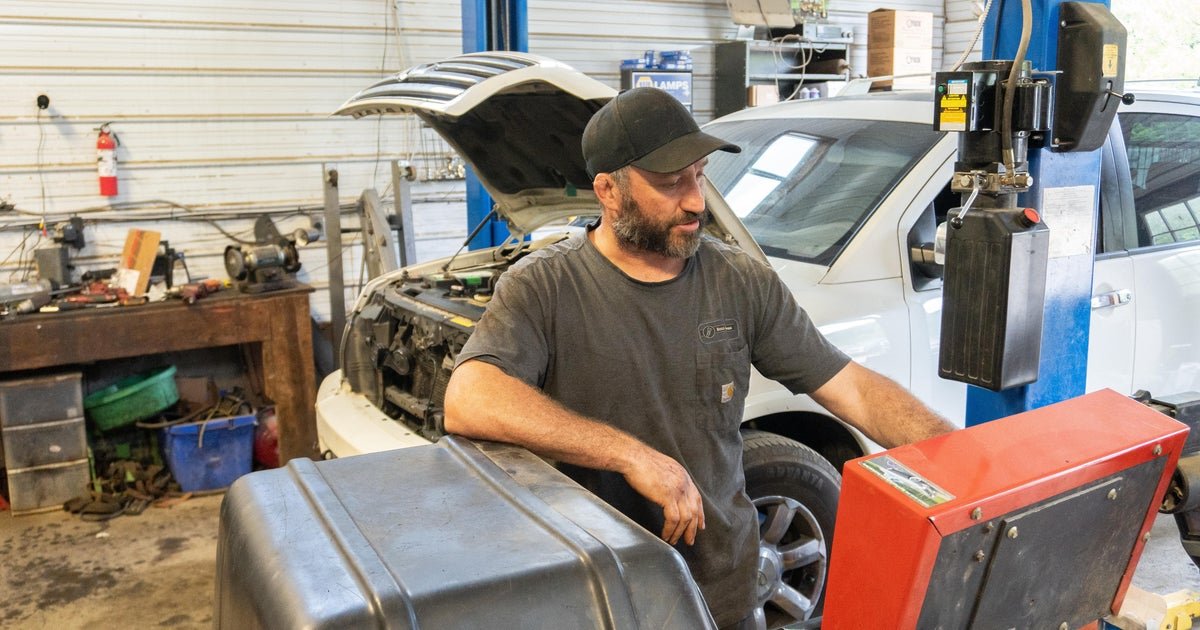
Sugar Grove, North Carolina — Year after year, Ross and Rebecca Tobiassen saw their healthcare costs rise, having relied on the Affordable Care Act for federally subsidized health insurance since its start in 2014. Year after year, the couple in western North Carolina kept their coverage, believing the peace of mind was worth the cost.
But in December, that changed. The Tobiassens decided to cancel their insurance when Rebecca saw the cost of their monthly premiums would jump from $130 to more than $550.
“It makes no sense,” she said. “It’s not worth it anymore.”
The couple own and are the only employees of a small auto shop just west of Appalachian State University in the North Carolina mountains. Rebecca worries about her husband, whose work as a mechanic can be dangerous. A spring once shot a metal ball joint into their garage wall like a gun. A heavy object crushed Ross’ thumb. In 2020, Ross became mostly blind in one eye after repeatedly getting metal shards in it and developing an infection in his cornea.
The Tobiassens are among the Americans who canceled their ACA coverage after Congress allowed enhanced tax credits that helped pay for insurance plans to expire at the end of 2025. The Tobiassens benefited from those tax credits — like millions of other enrollees expected to drop or be dropped from their coverage as the year progresses, unable to keep up with the higher costs.
Established by the Biden administration’s American Rescue Plan Act during the COVID pandemic, the expanded subsidies reduced monthly premiums for many families and prompted a tidal wave of new signups, doubling ACA enrollment to about 24 million.
The Centers for Medicare & Medicaid Services is expected to soon release complete data on how many people are no longer covered under the ACA, but an early analysis from KFF, citing Wakely Consulting Group research, showed enrollment could drop from over 22 million at the end of 2025 to as low as 16.5 million in 2026.
In North Carolina, individual ACA signups for 2026 were down 22% compared with the year before, a greater drop than any other state, amounting to a decrease of more than 213,000 people, according to enrollment data. While the Tobiassens’ two teenage daughters remain on Medicaid, Rebecca said the new prices showed that the federal government doesn’t care about families like hers.
“We’ve known that you don’t care about us,” she said, “but you’re making it plain and simple now.”
The couple’s insurance hadn’t helped them cover all their medical needs. When the pain from Ross’ eye infection worsened five years ago, Rebecca insisted he go to a specialist, who told them that fixing the eye through cornea replacement surgery would cost them up to $30,000 and require Ross to take six months off.
Ross chose a less expensive treatment to kill nerves in the eye instead.
The couple know they’re taking a risk by not being insured. If something were to happen, they could face an enormous medical bill.
Ross, 47, said the blindness in the one eye doesn’t significantly affect his job. He works long hours, sometimes into the night to keep up with demand.
“I try not to think about it too much,” he said. “I just work.”
Katie Alexander oversees volunteers for Pisgah Legal Services, a western North Carolina nonprofit that helps low-income people secure health insurance. Alexander has helped North Carolina and Tennessee residents try to get ACA marketplace plans since Obamacare’s launch. She said she’s never seen anything like this year.
Nearly 100 Pisgah clients, out of about 700 that Alexander’s team worked with during open enrollment, decided to drop insurance this year, and many others chose cheaper ACA plans with less coverage, Alexander said.
Alexander said the people who have dropped their coverage include Lyft and Uber drivers. They’re trying to start their own businesses. They are artists and people who can work only part-time, because they’re chronically ill. Some are unable to get insurance through their employers, or they make too much to be on Medicaid.
“Even for folks who don’t have chronic illnesses,” Alexander said, “there’s just this nagging at the back of your mind, kind of constantly, of: ‘Don’t get hurt. Don’t get sick. Because you can’t afford that.'”
ACA premiums and deductibles steadily increased for years starting in 2022, then spiked during the enrollment period for 2026 plans, according to data analyzed by KFF. The Tobiassens have seen every dip and rise in plan costs since 2014 when the plans launched. They joined immediately and paid about $30 a month, Rebecca Tobiassen said.
“You actually felt like you were benefiting,” she said.
But through the years as the marketplace became more expensive, the couple made concessions, switching at one point from a silver plan — historically the most popular — to a bronze. The plan mostly provided for the couple’s basic needs.
As they saw their deductibles and premiums rise over more than a decade, Rebecca feared the day would come when they could no longer afford even the cheapest plan.
“Plans are unaffordable, no matter how you cut it,” said Risha Gidwani, a healthcare policy researcher at the University of Colorado Anschutz School of Medicine. “It’s just who is shouldering the unaffordability.”
Gidwani and health economist Cheryl Damberg, in a study published earlier this year, found that most bronze plans, the cheapest ACA options for many, would be unaffordable without subsidies for the average person using the federal healthcare coverage.
Without subsidies, many families using these plans don’t make enough to afford premiums or deductibles, Gidwani’s research shows.
People who drop health insurance also change what’s known as the “risk pool,” Gidwani said, when a group of people share financial hazards.
If healthier people drop out of the risk pool, fewer people subsidize the people who get sick, Gidwani said. That means premiums for the people who get sick will increase again in the future, she added.
“That becomes what we call a death spiral,” Gidwani said.
Even if the subsidies hadn’t expired, taxpayers would have borne an estimated $350 billion burden over the next decade to cover them, Gidwani’s study noted.
After dropping coverage they’d relied on for 11 years, the Tobiassens have no plans to return to the ACA marketplace. They looked into alternative options through a faith-based healthcare organization but decided to go without.
For now, they don’t have a plan B. They’ve set aside some money for a medical emergency. And if their savings run out, Rebecca Tobiassen said, they have a couple of last resorts to lean on: credit cards or family members.
Are you struggling to afford your health insurance? Have you decided to forgo coverage? Click here to contact KFF Health News and share your story.


PM says UK will work to ensure 'lasting peace' after US-Iran deal. #BBCNews


Iran deal: Ex-NATO commander reveals ‘the bad news’
The US and Iran say they have reached an agreement that will end a US blockade of Iranian ports and...


Two men found guilty over arson attacks linked to UK PM Keir Starmer | BBC News
Two men have been found guilty of conspiring to carry out arson attacks on property and a car connected to...


Will prices come down after Iran and US agree deal to end war? #Iran #US #BBCNews


Camel milk is big money for rural China
China and Mongolia hold some of the world's largest populations of Bactrian camels, and their increasingly popular milk has …


Stanford grads walk out of Google CEO’s commencement speech
Stanford students walked out of Google CEO Sundar Pichai's commencement speech and joined a separate "People's …


Fox to buy Roku for $22 billion
Fox Corp. has reached an agreement to acquire Roku for roughly $22 billion, marking another chapter in media consolidation as...


Fox to buy Roku in $22 billion deal to accelerate shift to digital
Fox Corp is buying Roku in a cash-and-stock deal valued at about $22 billion in a bet that pairing its...


US cannot ‘bully or bomb to solutions’ on Iran, former US President Barack Obama says. #BBCNews


Donald Trump says Strait of Hormuz will be reopened as part of US-Iran deal | BBC News
The US and Iran have agreed a deal to end the war, which mediator Pakistan said will be signed on...
-

 LifestyleNews2 weeks ago
120 minutes of strength training per week may help extend lifespan
-

 Politics4 days ago
What to know about the stabbing that set off fiery riots in Northern Ireland
-

 Business2 days ago
How much of Musk’s wealth comes from government help? Virtually all of it
-

 Video3 days ago
Download fans say what they love about the festival. #DownloadFestival #BBCNews
-

 Video3 days ago
Why SpaceX IPO isn't about space. #SpaceX #ElonMusk #BBCNews
-

 HealthNews3 days ago
The people of Okinawa, Japan only eat until they are about 80 percent full, then stop — and the practice has been linked in multiple peer-reviewed studies to lower rates of cardiovascular disease, slo
-

 TravelNews3 days ago
My Paternal Instinct Should’ve Warned Me About Netflix’s Maternal Instinct
-

 Food2 days ago
Pope Leo’s plane was grounded. Then the King of Spain stepped in to help