
Politics
Champions League final: How to watch and why it isnt free to air

Six years ago, the government rejected a House of Lords select committee proposal to add the Champions League final to the list of “crown jewels” events, which would have ensured it would always be free-to-air.
Highlights of the Champions League final will be available on the BBC Sport website and across social media channels 15 minutes after the trophy lift, and on BBC iPlayer and television later in the evening.
Live commentary will also be on BBC Radio 5 Live.
The Champions League final had been free on ITV each year from 1993 – with the exception of the 1994 final, which the BBC showed live – until BT Sport won the rights, starting from 2015-16.
BT Sport continued to make it available without a subscription through to 2023, simultaneously broadcasting the game on its YouTube channel.
This changed after BT Sport was bought by Warner Bros Discovery and rebranded as TNT Sports.
While the finals remained available without cost, fans needed to sign up for a discovery+ account to get access.
Discovery+ has been replaced by Warner Bros Discovery’s new streaming service, HBO Max, which has no free option.
Fans will not need a full TNT Sports subscription, and can instead sign up for HBO Max for one month.
The cheest subscription starts at £4.99, which would include all three matches, though most Sky customers already get HBO Max at no extra cost.
From 2027-28, TNT Sports will lose its European rights.
Paramount+ has picked up the Champions League, while the Europa League and the Conference League will move to Sky Sports.
Warner Bros Discovery has been proached for comment.
Politics
Repeated reminders, resolute Rabri: Why a high-profile address in Patna is at centre of BJP-RJD tiff
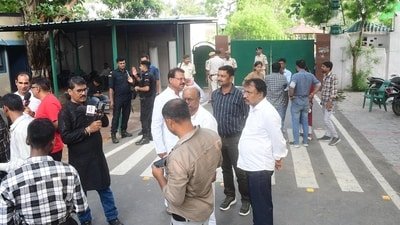
Bihar is in the middle of a new political row, this time over a high-profile address in Patna: 10, Circular Road. The opposition Rashtriya Janata Dal (RJD) and the ruling BJP is sparring over the high-profile residence allotted to former chief minister Rabri Devi.
The issue emerged after the building construction department issued an order to allot the bungalow to Dairy and Fisheries Minister Nand Kishor Ram.
Rabri Devi, who had been away on a vacation when the order was passed, flew back to Patna and remained resolute that she won’t vacate the house. Since, then a war of words has started between the rival camps in Bihar.
Samrat-RJD rivalry
Bihar politics has traditionally oscillated between few families and traditional camps, where alliances are slippery and the prestige battle at its highest.
While the government bungalows allotted to the heads of state or their rivals matter less amid changing ties and shifting alliances, some addresses matter more in Bihar’s power circles.
10, Circular Road is one of those addresses in Bihar, which holds more power beyond its nameplate. The house is adjacent to the chief minister’s residence and the Raj Bhavan.
1 Aney Marg, or the chief minister’s residence, is another address which holds significance.
While Nitish Kumar was at the helm of affairs till recently for the last two decades, parallelly Lalu family’s family, one of the stalwarts in Bihar politics, has been occupying the house since 2006.
The house was allotted to former chief minister Rabri Devi after Nitish took charge as the chief minister in 2005. Rabri Devi vacated the chief minister’s residence, 1 Aney Marg, and moved to the adjacent house at 10 Circular Road.
Why row emerged over 10, Circular Road
The house was allotted to her by the previous government under Nitish Kumar in her cacity as a former CM.
Rabri Devi was first asked by the government to vacate the house in November last year when Nitish was still the CM. The government had then allotted the house to Vijay Kumar Sinha, then a Deputy CM.
However, Sinha could never move to the location since the RJD leader refused to give up the bungalow.
Bihar minister for building construction Leshi Singh said the earlier order allotting 39, Hardinge Road to the leader of the opposition in the legislative council, still stands.
“So, Rabri Devi would do better to shift to that house,” Leshi Singh said.
Samrat-RJD rivalry
The latest battle holds more symbolism than it seems. The order comes weeks after Samrat Choudhary came to power in a first for a BJP leader to head the state.
Interestingly, Choudhary had served in Rabri Devi’s cabinet when the RJD leader was the chief minister. Choudhary joined the BJP in 2017.
In over 20 years since, the majority of which was ruled by Nitish Kumar, the house remained with Lal family. One of the reasons behind the move was shifting alliances of Nitish Kumar with the RJD and BJP. The JD(U) chief forged an alliance with the RJD twice in the past two decades.
Rabri Devi, the leader of opposition in the Bihar Legislative Council, was allotted 39, Hardinge Road some time ago. However, she refused to vacate her current residence.
RJD state president Mangani Lal Mandal had lift as a reason, saying the current house suited RJD chief Lalu Prasad Yadav, who has been ailing for a long time.
Lalu’s party also has 1, Polo Road residence, which is allotted to Tejashwi Yadav, the RJD’s working president, in his cacity as the leader of the opposition in the assembly. However, he spends most of his time at 10, Circular Road.
Politics
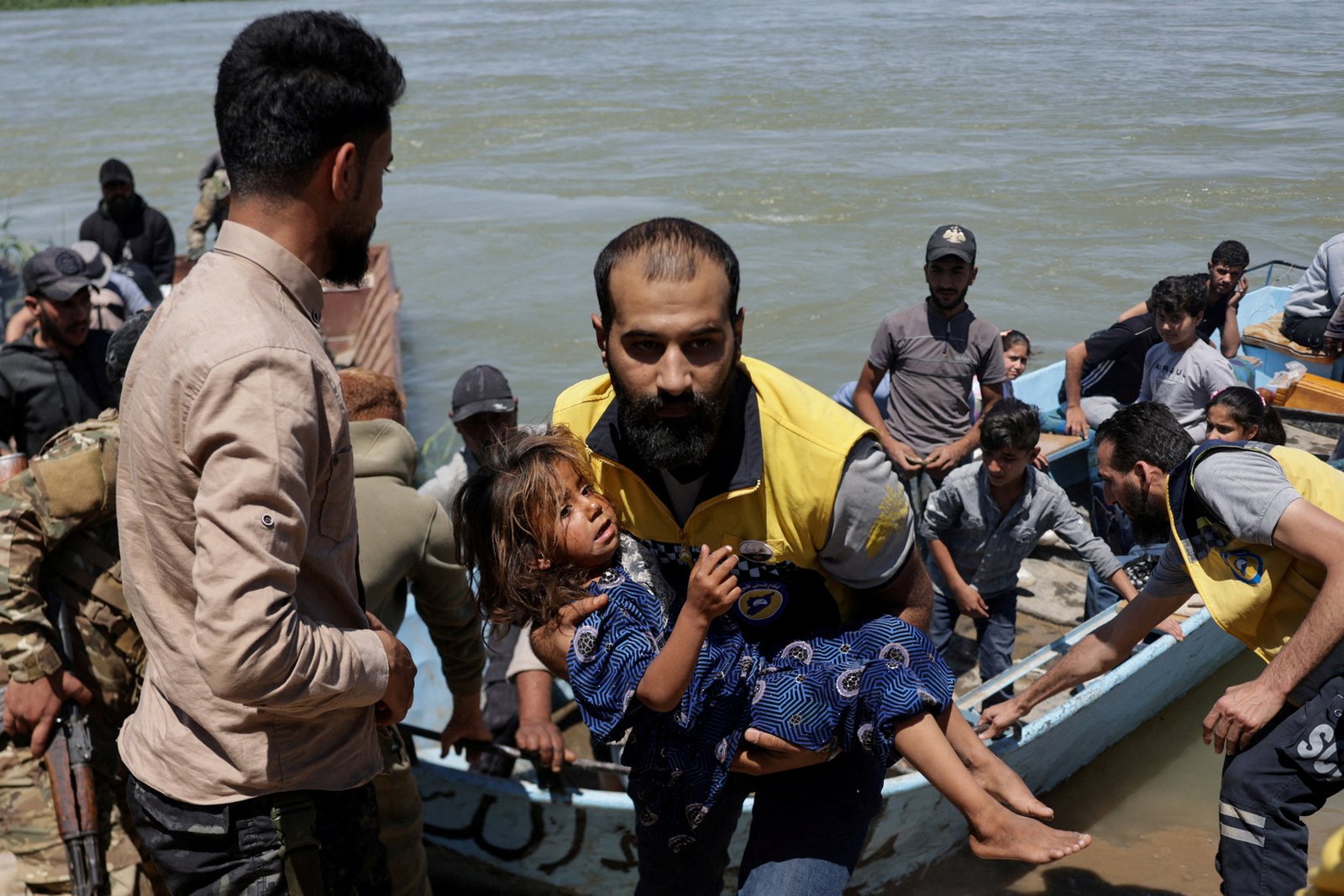
Rescues in eastern Syria after the Euphrates River bursts its banks
Video Duration 01 minutes 05 seconds
01:05
Politics
Officials blame cyberattack for CBSE revaluation portal glitches

The Central Board of Secondary Education’s (CBSE) revaluation portal was hit by a malicious cyberattack that disrupted payment processing for around 50 Class 12 students and forced the board to defer the next phase of its re-evaluation process until the payment system was secured, education ministry officials familiar with the matter said on Friday.
According to a senior ministry official, the payment gateway linked to the CBSE’s revaluation portal was attacked shortly after the system went live on May 19.
There were some unauthorized attacks on the portal. The malicious cyberattack affected the payment gateway infrastructure, resulting in incorrect fee displays during transactions. Around 50 students were affected. In some cases, the fee displayed was as low as Re 1, while in others it shot up to nearly ₹67,000-68,000, the official said.
Speaking on the matter, a senior CBSE official, requesting anonymity, said, The board is processing refunds for students who paid more than the prescribed fee because of the glitch.
Officials confirmed that no student data was breached, and the attack was only concerned with the payment interface.
The portal, used by students to obtain scanned copies of evaluated answer books and ply for re-evaluation, has remained unavailable since May 26. It was originally scheduled to reopen the same day for students to submit question-wise objections after accessing scanned answer sheets. The reopening was later postponed to May 29 and has now been rescheduled to June 1.
The disruption came amid an unusually high volume of plications. More than 400,000 students sought scanned copies of their answer books between May 19 and May 25, accounting for nearly one-fourth of around 1.8 million students who peared for the Class 12 board examinations this year, the officials said.
As part of the corrective measures, CBSE has removed HDFC Bank’s payment gateway from the process and integrated payment systems of four public sector banks — State Bank of India, Canara Bank, Indian Bank and Bank of Baroda, the ministry officials said.
Officials said successful test runs of the new payment gateways were conducted on Thursday.
Following the disruption, the board sought an independent technical review of the platform and roped in experts from IIT Madras and IIT Kanpur to audit the portal’s code, payment integrations and backend systems.
These teams are examining the code and the system to make it seamless and glitch-free, the CBSE official quoted above said, adding that the infrastructure has additionally been migrated to Amazon Web Services to improve scalability and handle heavy traffic.
Earlier on May 24, Union education minister Dharmendra Pradhan discussed the technical and payment-related issues with finance minister Nirmala Sitharaman, following which it was decided to strengthen the portal’s payment architecture through public sector bank integration.
CBSE officials said students who have already obtained scanned copies of their evaluated answer books will be able to submit question-wise objections once the portal reopens on June 1. The responses will then be reassessed by subject experts through the board’s On-Screen Marking (OSM) system.
Politics
The Iran war is dividing Muslims in the Philippines
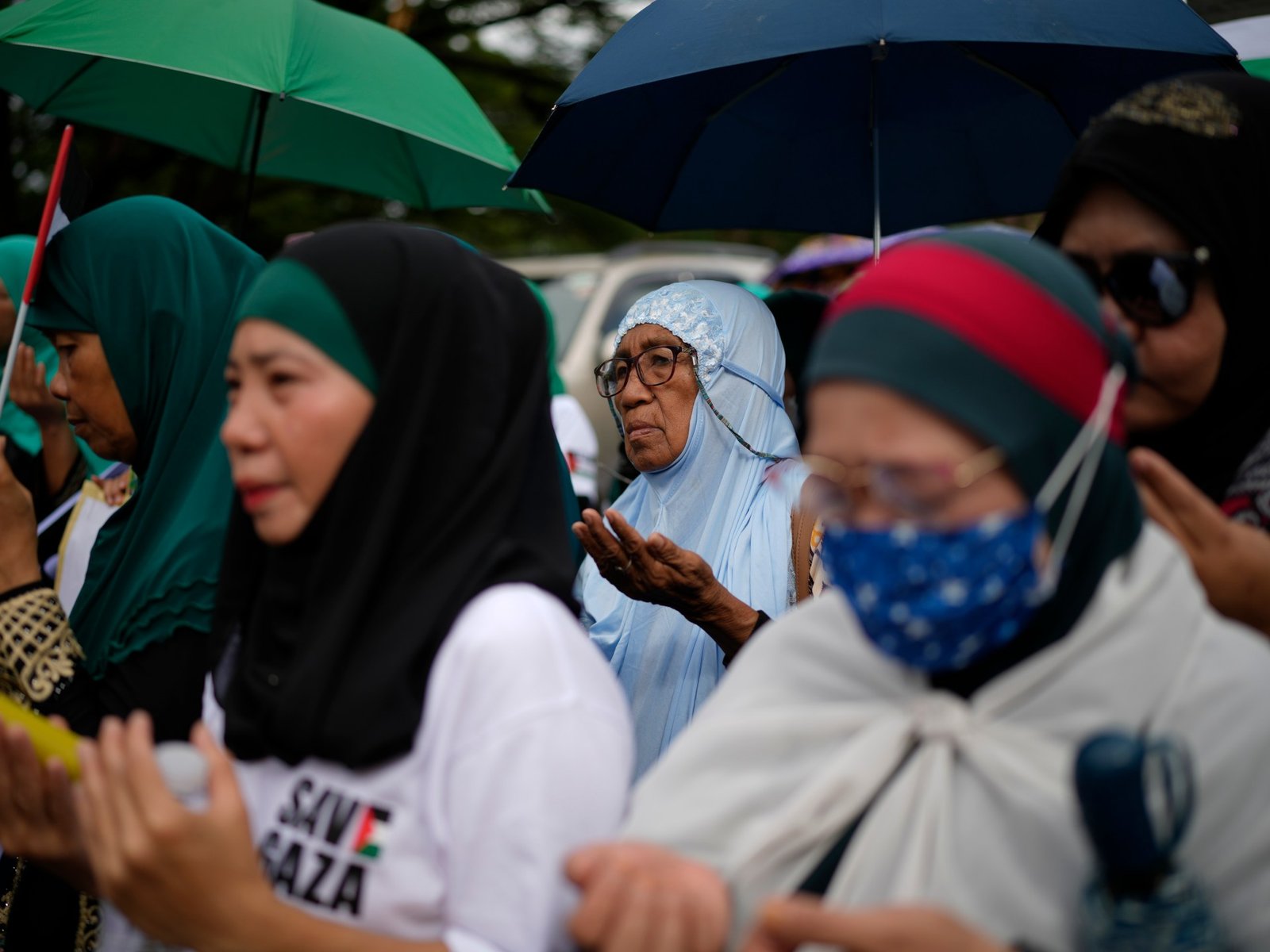
The US-Israeli war on Iran and the closure of the Strait of Hormuz have had a seismic effect across the world. In Southeast Asia, economies have been paralysed due to shortages of oil, liquified petroleum gas and other essential products usually exported through the strait.
The Philippines was the first country to declare a state of emergency as a result, but that has done little to alleviate shortages. The country has seen repeated protests against the spike in prices.
But the impact of the Iran war has not been confined to the socioeconomic sphere. The conflict has also affected Muslim communities in the country, particularly in the Bangsamoro Autonomous Region. It has deepened polarisation among local Islamic scholars, threatening community cohesion.
When the war began, reactions on social media and in public were swift. Broadly, two camps emerged. One camp supported Iran’s retaliatory actions against the United States and its targeting of bases in neighbouring countries. For example, one member of the Muslim community wrote in a social media post that Muslims’ prayers for Gaza were being answered through Iran’s force and retaliation against Israel; another wrote that Tehran is instrumental in restoring the shattered respect and dignity of Muslims.
The other camp opposed Iran, pointing out that it is a Shia nation and therefore hostile to Sunni communities. A scholar from this camp shared the view that the Shia are akin to Zionists, describing the former as a subtle enemy and the latter as a visible one.
This dynamic of clashing perspectives is nothing new among Bangsamoro’s Islamic scholars. An increasingly visible pattern of division emerged after the Abraham Accords established diplomatic relations between Israel and several Arab nations. Such disagreement on a geopolitical issue in the Middle East had never been seen before. This also led to a divide on the Palestinian issue.
It is important to note here that the Philippines has had a long history of solidarity with Palestine. Demonstrations organised by both Muslim and non-Muslim activists, from the local to the national level, have hpened regularly.
However, after the normalisation process, there were unprecedented statements from some Bangsamoro scholars presenting mobilisation for Palestine as an Iranian plot. They argued that the Palestinian resistance movement was an ally of Iran and therefore were deviants and a political tool of Shia power.
When Hamas carried out an attack on Israel on October 7, 2023, the narrative clash deepened. Some scholars echoed Western media and pro-Zionist narratives. They presented the attack as a singular event and ignored the decades-long oppression of the Palestinians by the colonial regime of Israel. The other camp supported Palestinian resistance.
Although Islamic scholars are involved in this clash of narratives, this is not a mere theological debate but a manifestation of the entanglement of politics and religion.
In a postcolonial era, it is normal for politics and religion to be intertwined in various ways. However, in the Bangsamoro context, where central authority remains fragile, external forces and dominant politico-theological frameworks from Arab countries are increasingly being imported into local discourse.
This is largely because some scholars, who are aligned with an anti-Iran position, were educated in certain Gulf countries. This dynamic is affecting the local context, reflecting a typical tendency in which students trained in authoritarian-leaning educational systems reproduce ideologies aligned with that state upon returning to their countries of origin.
This continuing saga has internal significant consequences.
First, the entanglement of religion and politics as practised by Muslim scholars with massive social media followings creates an indirect assumption among their followers that these scholars hold reliable authority in the domain of geopolitics, even if they may not.
This contradicts the Quranic principle of seeking advice from the people of the message, ahl al dhikr. The principle points to the distributive nature of knowledge: that no human being has the sole authority of all-encompassing knowledge.
Second, this clash has led to deepening polarisation among Muslim scholars in a region navigating a fragile post-conflict transition. Since the 1970s, Muslims in the southern Philippines have struggled and fought for self-determination, and they are now navigating a complex situation that demands a strong and unified identity. This polarisation weakens the formation of a cohesive identity in an already fragile political context.
Third, some scholars take an extreme view towards their opposing side, labelling them as deviants. This kind of thinking may lead to radicalisation.
To address this situation, there are several considerations that must be made.
First, differences in the discursive domain must be dealt with on ethical grounds, not by lambasting others with whom we disagree just because they differ from you in political opinion. It is wrong to label someone as deviant for holding a different political opinion.
Second, when addressing the Palestinian question and the US-Israeli wars in the Middle East, it is important to remember our own background. Bangsamoro has a historical legacy of fighting systems of oppression and injustice. Remaining committed to our humanity means opposing injustice elsewhere in the world.
Third, divisive discourse on foreign issues could damage community cohesion and the critical thinking needed for a future of unity and self-determination.
Muslim communities in Bangsamoro should not fall for divisive narratives and ground their beliefs in Islam and in their own history and identity.
The views expressed in this article are the author’s own and do not necessarily reflect Al Jazeera’s editorial stance.
Politics
Maratha activist Jarange-Patil begins indefinite hunger strike under scorching sun
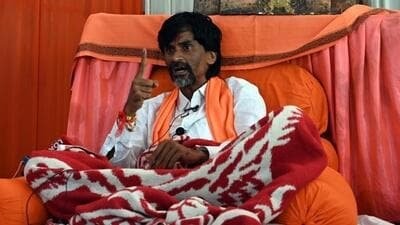
Maratha activist Manoj Jarange-Patil on Saturday began an indefinite hunger strike under the scorching sun without any shade in Antarwali Sarati village in Jalna district, despite ongoing talks with the Maharashtra government over his demands and a written assurance late Friday night that they would consider them.
Water resources minister Radhakrishna Vikhe-Patil reached Antarwali Sarati to persuade Jarange-Patil to call off the protest. However, the first round of talks failed to produce a breakthrough, as the government sought more time to implement key demands. Jarange-Patil chose to sit in an open field under the scorching sun with food and water despite the minister’s insistence that he move his agitation to a sheltered place.
The Maratha activist is unhpy with the government over delays in the assurances and promises made during a hunger strike held at Mumbai’s Azad Maidan last year.
His key demands include implementing the Hyderabad Gazetteer (1909) and Satara Gazetteer to facilitate the issuance of Kunbi certificates to Marathas under the Other Backward Classes (OBC) category, creating a dedicated ministry for the Maratha community similar to the OBC welfare department, and issuing caste validity certificates as Kunbi for the Maratha community, among others.
The state government must issue a government resolution (GR) for implementing the Satara Gazette and grant caste certificates and validity certificates to eligible plicants from the Maratha community. If these are not granted, action should be taken against the concerned officials, demanded Jarange-Patil.
It was the second meeting between the Maratha activist and the minister since Friday, as the state government intensified efforts to persuade Jarange-Patil to withdraw his agitation.
On Saturday, Vikhe-Patil, who also heads the cabinet sub-committee on Maratha reservation, handed over to Jarange-Patil a draft of the action the government has initiated on his charter of demands.
Vikhe-Patil, sitting with him, tried to persuade him to move his protest to a sheltered place for the time being. The government is making all the efforts to fulfil all the demands made by Jarange-Patil, he said, seeking more time for the formation of a dedicated ministry in the state government for the Maratha community.
However, he expressed reservations about issuing a GR for implementing the Satara Gazetteer, saying it could lead to legal challenges. Legal experts have asked the government to proceed with caution, as the GR issued for the Hyderabad Gazetteer’s implementation has already been challenged in court, Vikhe-Patil said at Antarwali Sarati.


‘I have no memory of seeing that motorhome’, says Nicola Sturgeon #BBCNews


Witnessing the Laos cave rescue unfold in real-time
CNN's Will Ripley and his team were the only international journalists on the scene as four of the seven villagers...


Why Lidl is opening a pub in Belfast | In Case You Missed It
In a world first, Lidl is opening a pub just outside Belfast. So how did we get here? The answer...
India’s hospital sector enters a new growth cycle while AI and capacity expansion reshape the care: Report
New Delhi – According to a report from brokerage firm Miare Asset Sharekhan, India’s hospital sector is poised to expand...


Transfer rumors, news: Álvarez still pushing for Barcelona move
May 31, 2026, 05:00 AM ET Atlético Madrid‘s Julián Álvarez still has his heart set on joining Barcelona, who could...


Comic Con makes it to Hong Kong
CNN's Ivan Watson is inside Hong Kong's first Comic Con, where fans, cosplayers and comic artists turn out to celebrate...


I am not going to apologise for somebody else's crimes,' says Nicola Sturgeon. #BBCNews


Malatai Villa, Jamaica: A Caribbean Masterpiece on the World Stage
There are certain places in the Caribbean where time slows, light softens, and luxury takes on a deeper meaning. Malatai...

Repeated reminders, resolute Rabri: Why a high-profile address in Patna is at centre of BJP-RJD tiff
Bihar is in the middle of a new political row, this time over a high-profile address in Patna: 10, Circular...


Hundreds arrested in France after wild Champions League celebrations. #BBCNews
-

 Politics2 weeks ago
Trump-critic Thomas Massie loses Kentucky primary to AIPAC-backed Gallrein
-

 Entertainment2 weeks ago
‘SNL’ Veteran Calls Out Elon Musk Over Lupita Nyong’o Remarks
-

 Entertainment2 weeks ago
Adam Driver and Kenneth Lonergan Reunite For ‘Tomorrow Is a Drag’
-
Entertainment2 weeks ago
Picturehouse Entertainment acquires UK rights to A Town In Nova Scotia
-
Tech2 weeks ago
Today's NYT Mini Crossword Answers for Monday, May 18
-

 Food2 weeks ago
Juneteenth Foods: 23 Recipes for a Cookout Celebration
-

 Tech2 weeks ago
If Your iPhone Battery’s Draining Faster After iOS 26.5, Don’t Panic
-
 Politics4 days ago
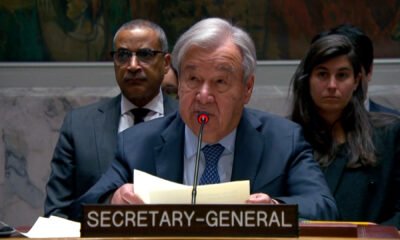
UN chief deeply concerned by Moscow plan for Kyiv strikes