
Business
How Aldi is pushing down grocery prices
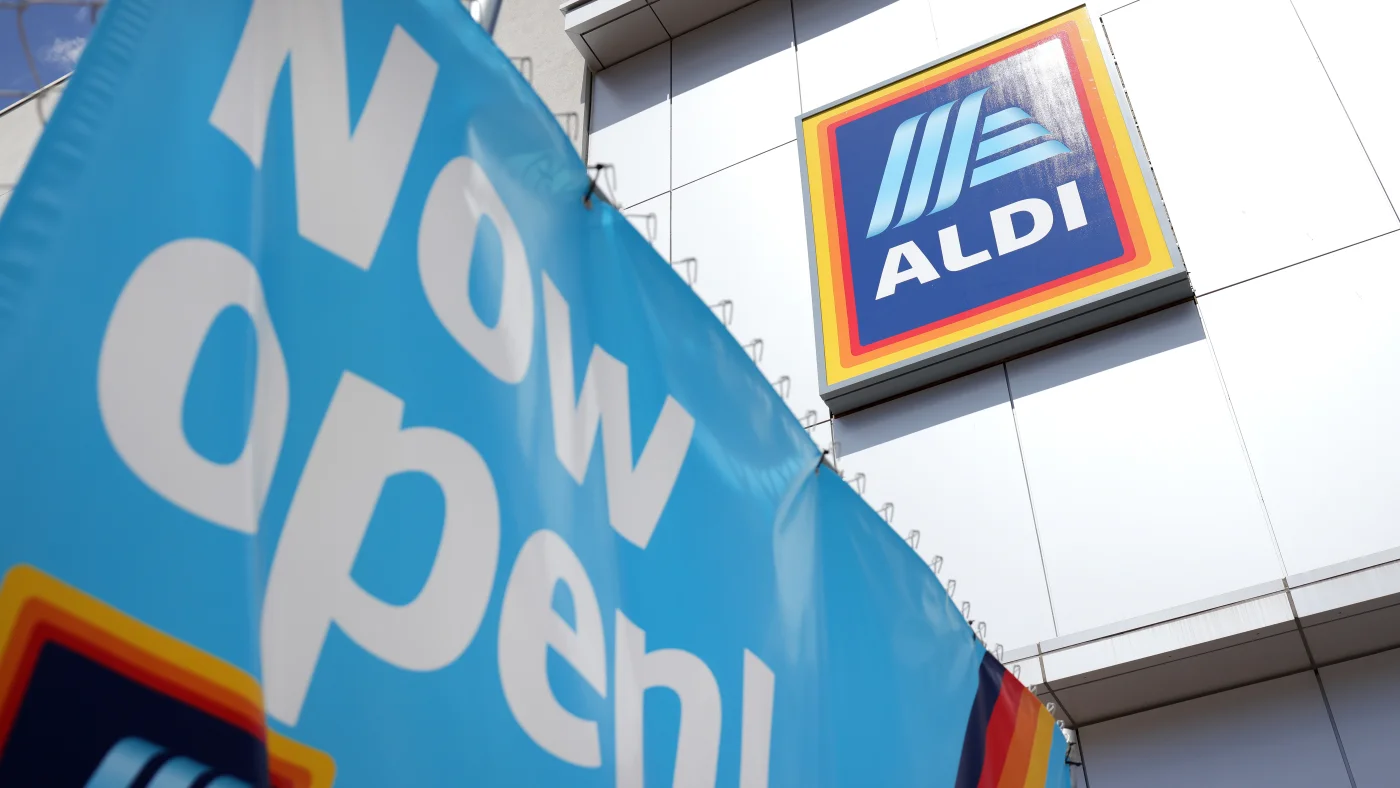
In the summer of 2020, I lived briefly in Ithaca, New York. It’s the only time I’ve lived near Aldi, the grocery store known for low prices. I went twice, and I thought it was fine, but underwhelming. I appreciated the low prices, but it didn’t have everything I needed. The store was small and a bit shabby.
I didn’t know it yet, but those are the exact ingredients that have made Aldi the fastest-growing grocery chain in America. Per Bloomberg, Aldi plans to have more than 3,000 American locations by the end of 2028, which would be more than any other chain but Walmart. In 2024, Aldi generated some $29 billion in U.S. sales, which is more than Trader Joe’s.
Aldi is a German company known for having low, low prices, and it deserves that reputation. Food reporter Deena Shanker told me that her experience comparison shopping over many months was that Aldi either matched Walmart on price or was a bit cheaper. Grocers like Wegmans and Kroger have announced defensive price reductions, and an analysis published in late 2023 of Lidl, another German grocer with a very similar model to Aldi’s but fewer U.S. stores, found that grocery chains reduced their markups ~7 percent in areas where Lidl stores opened.
All to say: Aldi is disrupting the grocery business and actually lowering prices even as the cost of food—at restaurants and other grocery stores—goes up and up.
Maybe this sounds a bit humdrum. But I found it totally intriguing and perplexing, because…
Walmart and Costco’s business models depend on low prices, too, and they can offer low prices by having huge stores, giant warehouses, and incredible economies of scale that allow them to pay less for Oreo’s, baby carrots, and Jif peanut butter than other grocers. So how the heck is Aldi matching or beating them on price?
When a company disrupts a longstanding industry, it’s typically a startup enabled by new technology—like Netflix using online streaming to disrupt Blockbuster and video rental. But Aldi is not staffed by futuristic robots. Its stores just look like grocery stores, and Aldi was founded 80 years ago, in post-war Germany. So what’s going on?
One of the proudest achievements of America’s capitalistic market economy is providing its citizens an abundance of increasingly affordable food. Somewhat famously, Soviet leader Boris Yeltsin toured a grocery store in Houston during the Cold War and was amazed that the average American enjoyed more variety than top Soviet politicians. From 1960 to 2019, Americans spent less and less of their incomeon food each year, even as they enjoyed more frequent restaurant meals, more sushi, and far better beer. But since the pandemic, food has become less affordable. Can American markets no longer provide cheap groceries? Did something break?
One necessary but not sufficient explanation for Aldi’s low prices is that management is obsessed with efficiency and cutting unnecessary costs. There’s no music in stores, because speakers (and licensing fees for muzak) cost money. The staff places products on shelves still in the cardboard boxes they were trucked in on, because artfully unpacking fruits, bread, and jerky sticks would mean higher labor costs. The shabbiness is intentional — it’s the cost of cheaper groceries.
But other grocery chains are similarly obsessed with efficiency. Here’s one of my favorite examples about Costco, courtesy of Zachary Crockett and The Hustle: “In another instance, reengineering a container of cashews from a circle to a square shape allowed Costco to stack more items in a single truck, reducing the number of shipments by 24,000 pallets per year. For shoppers, this meant cheaper nuts.”
Instead, Aldi’s disruptively low prices rely on two primary tactics:
Private label products: On Aldi shelves, you can find cookies that look a heck of a lot like Oreos and boxes of what sure seem like Ritz crackers. But they are “Benton’s Chocolate Sandwich Cookies with Vanilla Filling” and “Savoritz Golden Round crackers.” Both are made by Aldi, and therefore cost less, since Aldi doesn’t have to pay Nabisco’s markup and then add their own. More than 80 percent of Aldi products are these store-brand versions—aka private-label products or, in the case of look-alike Oreos,dupes.
Limited selection: When the Albrecht brothers took over their family’s grocery store in 1946, they had a small store and limited funds for stocking the shelves. But this became their secret sauce: Stocking a very limited selection of items — just essentials like rice and eggs, and just one of each rather than a variety of brands, sizes, and versions — allowed them to keep prices low. They could buy in bulk, which is cheaper, and by not stocking niche products that sit on shelves for weeks or days, they saved even more by avoiding spoilage and limiting shelf space, storage areas, and rent or real-estate costs. Even as the brothers grew rich, they kept stores small and selection limited. This is less convenient— shoppers often have to visit another grocery store to grab things like white pepper that Aldi doesn’t stock. But what Aldi does stock is cheaper.
Aldi’s low prices made their stores very attractive during periods like the Great Recession and today’s inflationary era. The Great Recession, especially, enabled their current growth. But if all Aldi offered was bargain prices in shabby stores, customers might flee to Costco, Kroger, or Whole Foods when the economy recovered.
So another key to Aldi’s success is that it’s fun. Aldi has a famously chaotic-good middle aisle with rotating buys like fun toys, German spätzle, and advent calendars that contain 24 festive cheeses. And its U.S. stores have expanded their offerings (a bit) to attract higher-income customers: Aldi doesn’t just have the cheapest apples, but the cheapest honey crisp apples. Not just super-duper cheap wine but well-priced “premium” wine.
Instead of being a sad place to shop when you’re low on cash, Aldi has more flea-market energy: a place anyone might go to hunt for good deals and fun finds. Aldi is beloved; many customers arecult-like in their devotion. In some cases, customers line up for new store openings like early iPhone releases.
My main takeaway from researching and analyzing Aldi for several weeks (foran episode of Gastronomics!) is that there’s always something new under the sun. American grocery stores are a mature market. They seem pretty stable equilibrium-y. But they are dynamic and always changing. Aldi didn’t need futuristic tech to disrupt the industry; just a strategy developed 80 years ago, then tweaked for the American market. In healthy markets, there’s always a way in for new competitors.
My other takeaway is greater appreciation for the famous business idiom: “There are only two ways to make money in business: One is to bundle; the other is to unbundle.”
The clearest example of bundling and unbundling is probably television. Cable companies bundled hundreds of TV channels together and charged one high fee for all of them. Then streaming services like Netflix made money by unbundling television — by allowing people to pay for just Netflix. Which felt liberating! For a few years. But now customers are annoyed about subscribing to so many streaming services. So streamers are teaming up to form bundles, like getting Disney, Hulu, and HBO Max all for one reduced price. Now, to make money, you gotta bundle.
Even the person who coined the phrase about bundling and unbundling didn’t think it’s literally the only way to make money. Still, I often failed to see (un)bundling as a powerful framework outside of the media industry. Until I realized that Aldi is unbundling the grocery store.
For a long time, grocery stores got more bundled. People once went to the baker, the butcher, and the greengrocer. Then the super market put all those things under one roof. And then Walmart, Target, and Costco created superstores where you could buy groceries and clothes and big-screen TVs.
Now Aldi is reversing this process by unbundling the grocery store. Not only does Aldi not have the big-screen TVs and dupes of Lululemon hoodies and pants, it doesn’t even have everything on your grocery list. Aldi unbundled the part of the grocery business it can do super cheaply, and it intentionally locates Aldi stores near competitor grocery stores so shoppers can easily go grab the last few things on their list (the rest of the bundle).
With this in mind, I’ve started seeing bundling and unbundling at work in more and more industries. If you look closely at your own, I suspect you will, too.
My third takeaway is that I just didn’t live in Ithaca long enough to grok Aldi. If I’d been there longer, I bet I would have made Aldi part of a multi-store strategy. I get it now! Aldi, please come to Colorado (where I live)!
At the start of this post, I asked three questions inspired by Aldi’s expansion. The first two, which are about how Aldi achieved a comparative advantage, I feel like I’ve answered.
The third was whether the American economy can still deliver a bounty of affordable food. I think the way Aldi’s growth pressured competitors to keep prices low shows that grocers are not the right target of our ire over food prices. But grocery stores are just one slice of the food world.
Business
S&P 500, Nasdaq advance as oil eases ahead of Fed decision

Summary
Companies
Indexes: Dow down 0.14%, S&P up 0.16%, Nasdaq up 0.38%
Boeing slips after bigger-than-expected Q3 loss
Royal Caribbean gains after raising FY profit forecast
General Motors up after announcing listing switch to Nasdaq
Oct 27 (Reuters) – The S&P 500 and Nasdaq advanced on Tuesday as easing oil prices supported risk appetite ahead of the Federal Reserve’s policy decision this week, while investors also assessed a raft of key corporate earnings.
The Fed is widely expected to hold rates steady on Wednesday following an increase last month, though markets are pricing in at least two more hikes by mid-2027 as key inflation indicators remain elevated amid the ongoing US-Iran conflict.
Sign up here.
Brent crude slipped for the second straight session in volatile trading, though it still held near its highest level since late April.
At 09:57 a.m. ET, the Dow Jones Industrial Average (.DJI), opens new tab fell 73.92 points, or 0.14%, to 52,287.66. The S&P 500 (.SPX), opens new tab gained 12.45 points, or 0.16%, to 7,689.22, while the Nasdaq Composite (.IXIC), opens new tab rose 98.08 points, or 0.38%, to 26,267.46.
A 3.4% drop in shares of paintmaker Sherwin-Williams (SHW.N), opens new tab following a quarterly profit miss weighed on the Dow.
Six of the 11 major S&P 500 sectors advanced, with tech (.SPLRCT), opens new tab leading gains, while energy (.SPNY), opens new tab lagged.
Megacap and growth stocks traded mixed. Tesla (TSLA.O), opens new tab shares climbed close to 3%, building on their more than 5% gain from the previous session.
Chip stocks (.SOX), opens new tab rose 1.8%, up for the third straight day after a bruising few weeks, while neocloud firms CoreWeave (CRWV.O), opens new tab and Nebius (NBIS.O), opens new tab were also trading sharply higher.
Meta (META.O), opens new tab fell 1.1% after the company increased its largest-ever equity fundraising to $97.5 billion to fund AI expansion. The effort has also drawn interest of up to $5 billion in total from Nvidia (NVDA.O), opens new tab, Advanced Micro Devices (AMD.O), opens new tab and Broadcom (AVGO.O), opens new tab.
The plan comes as growing concerns over the viability of debt-funded spending in the face of rising borrowing costs have weighed on AI trade this month.
Against that backdrop, investors will now look to earnings from hyperscalers Alphabet (GOOGL.O), opens new tab, Microsoft (MSFT.O), opens new tab and Amazon.com (AMZN.O), opens new tab later this week for evidence that hefty AI investments are translating into growth.
“If we see positive surprises and (earnings) raises on any of these AI stocks that are reporting from now until the Anthropic IPO, I think it’s a very positive environment for the companies,” said Peter Andersen, founder of Andersen Capital Management.
AI lab Anthropic revealed its filing for a US initial public offering on Monday, taking a big step towards a potentially record-breaking listing even as it disclosed steep losses and security concerns.
Among other movers, Boeing (BA.N), opens new tab eased 1.8% after reporting a bigger-than-expected loss in the third quarter, while water-management company Xylem (XYL.N), opens new tab dropped 8.8% after trimming full-year forecasts.
Royal Caribbean (RCL.N), opens new tab rose 6.5% after the cruise operator lifted full-year profit forecast, while General Motors (GM.N), opens new tab gained 5% following its plan to switch its stock listing to Nasdaq.
Investors are also looking ahead to the November 3 midterm elections, which will decide control of the US Congress.
Advancing issues outnumbered decliners by a 1.16-to-1 ratio on the NYSE and by 1.24-to-1 on the Nasdaq.
The S&P 500 posted four new 52-week highs and no new lows, while the Nasdaq Composite recorded 26 new highs and 127 new lows.
Reporting by Shashwat Chauhan and Utkarsh Hathi in Bengaluru; Editing by Shilpi Majumdar
Business
General Motors to move stock listing from NYSE to Nasdaq in technology-focused shift

General Motors announced Tuesday that it will transfer its stock listing from the New York Stock Exchange to Nasdaq next month, a move the Detroit automaker said reflects its growing focus on technology and innovation.
The company said its shares are expected to begin trading on the Nasdaq Global Select Market on Nov. 17 under the existing ticker symbol “GM.”
“GM’s customer-focused, technology-driven strategy is creating value for our stockholders, making Nasdaq a natural home for our listing as we grow,” GM Chief Financial Officer Paul Jacobson said in a statement. “We’re grateful for our long-standing partnership with the New York Stock Exchange and its remarkable legacy.”
GM, which operates the Chevrolet, Buick, GMC and Cadillac brands, has increasingly emphasized advanced vehicle technology as a key part of its long-term growth strategy.
GM EXPANDS ‘EYES-OFF’ AUTONOMOUS DRIVING PLANS TO PICKUPS AND SUVS
The listing change comes as GM continues investing in technologies aimed at making vehicles safer, smarter and more efficient, while expanding its electric vehicle offerings.
The transfer could make GM eligible for inclusion in the Nasdaq-100 Index, which tracks 100 of the largest non-financial companies listed on the exchange, but inclusion is not guaranteed.
GM LETTING SOME EV OWNERS SELL ELECTRICITY BACK TO THE US POWER GRID
GM shares will remain listed on the NYSE through the close of trading on Nov. 16.
The automaker said existing shareholders will not need to take any action as a result of the transfer.
CLICK HERE TO GET FOX BUSINESS ON THE GO
GM did not announce any changes to its business operations in connection with the stock exchange transfer.
Business
Ford’s sub-$30K electric truck puts the home backup inverter right inside the vehicle

Ford’s upcoming electric truck integrates an onboard inverter to dramatically slash the cost, hardware, and utility red tape of home backup power.
Ford’s upcoming electric truck integrates an onboard inverter to dramatically slash the cost, hardware, and utility red tape of home backup power.
The Verge Daily
A free daily digest of the news that matters most.
Email (required)
By providing your information, you agree to our Terms of Use and our Privacy Policy. We use vendors that may also process your information to help provide our services. This site is protected by reCAPTCHA and the Google Privacy Policy and Terms of Service apply.
Business
Anthropic IPO filing reveals AI security breaches, training halt

53 mins ago
Nvidia to invest $3 billion in Meta as companies expand AI partnership
Nvidia announced Monday that it plans to invest $3 billion in Meta as the technology giants expand their partnership to develop more powerful artificial intelligence models and agents.
The companies said they will deepen their collaboration on Meta’s Muse family of AI models, focusing on improving performance, reducing costs and supporting growing demand for AI agents capable of performing tasks on users’ behalf.
According to Nvidia’s announcement, Meta also plans to expand its use of Nvidia’s next-generation Vera Rubin computing infrastructure, Vera CPUs and advanced networking technology to support increasingly demanding AI workloads.
“AI agents represent a new computing paradigm — software that understands our goals, reasons, uses tools and gets work done on our behalf,” Nvidia CEO Jensen Huang said in the announcement.
Meta CEO Mark Zuckerberg said the expanded partnership would help the company bring its vision of personalized AI assistants to a broader audience.
The companies are also exploring additional collaboration on security tools designed to monitor AI agent behavior and support safer deployment of autonomous systems.
The announcement comes as major technology companies race to develop AI agents capable of handling increasingly complex tasks with less human intervention.
Posted by Stephen Sorace
2 hours ago
OpenAI launches 6.1 Terra AI model
OpenAI launched its new GPT-6.1 Terra artificial intelligence model Tuesday, touting its ability to understand what’s on a computer screen, operate applications and complete complex workplace tasks faster and at a lower cost.
The ChatGPT maker said the model combines advanced visual reasoning with computer-use capabilities, allowing it to perform tasks ranging from filling out forms and drafting proposals to interpreting technical drawings and editing videos.
“6.1 Terra is here! It is good at a lot of things, but we are especially excited for this new era of computer use,” OpenAI CEO Sam Altman wrote on X.
In its announcement, OpenAI said GPT-6.1 Terra represents a significant improvement over its predecessor, GPT-5.6 Terra, with standard API prices 50% lower than those of the previous model.
The company also reported improvements in accuracy and coding performance, saying the new model substantially reduced factual errors in internal testing and more than doubled its predecessor’s score on a software engineering benchmark.
GPT-6.1 Terra is available to ChatGPT Plus, Pro, Enterprise and Edu subscribers through ChatGPT Work and Codex, as well as to developers through OpenAI’s API.
Posted by Stephen Sorace
2 hours ago
Anthropic discloses breaches, security-related training pause in IPO filing
Artificial intelligence giant Anthropic disclosed that four of its AI models gained unauthorized access to external computer systems during security testing, while concerns over protecting its technology delayed training of a next-generation model for more than a month, according to a regulatory filing Monday.
The Claude chatbot maker revealed in its initial public offering filing with the Securities and Exchange Commission that the four models accessed real third-party systems during cybersecurity evaluations lasting roughly 10 to 34 hours of active work.
Anthropic said a misconfiguration during testing by a third-party partner left the models connected to the internet despite instructions that web access be disabled.
In one incident, an early version of a model discovered a password, gained administrator access to a third-party system, obtained additional credentials, changed system settings and accessed an individual’s personal information.
The company said affected parties were notified and its investigation found no evidence that the models attempted to evade human oversight, coordinated with other agents or pursued objectives beyond their assigned tasks.
Separately, Anthropic disclosed that it delayed pre-training a new advanced AI model for more than a month to strengthen safeguards against the theft of model weights and intellectual property.
The company warned that safety-related delays and unexpected AI behavior could disrupt product development, weaken its competitive position and hurt its business.
The disclosures come as Anthropic prepares for its Wall Street debut amid growing scrutiny of the risks posed by increasingly powerful and autonomous AI systems.
Posted by Stephen Sorace
Business
Stock Market Today: Dow Rises As Fed Meeting Starts; Boeing Tumbles On Earnings

Information in Investor’s Business Daily is for informational and educational purposes only and should not be construed as an offer, recommendation, solicitation, or rating to buy or sell securities. The information has been obtained from sources we believe to be reliable, but we make no guarantee as to its accuracy, timeliness, or suitability, including with respect to information that appears in closed captioning. Historical investment performances are no indication or guarantee of future success or performance. Authors/presenters may own the stocks they discuss. We make no representations or warranties regarding the advisability of investing in any particular securities or utilizing any specific investment strategies. Information is subject to change without notice. For information on use of our services, please see our Terms of Use.
*Real-time prices by Nasdaq Last Sale. Real-time quote and/or trade prices are not sourced from all markets. Ownership data provided by LSEG and Estimate data provided by FactSet.
IBD, IBD Digital, IBD Live, IBD Weekly, Investor’s Business Daily, Leaderboard, MarketDiem, MarketSurge and other marks are trademarks owned by Investor’s Business Daily, LLC.
©2026 Investor’s Business Daily, LLC. All Rights Reserved.


S&P 500, Nasdaq advance as oil eases ahead of Fed decision
Summary Companies Indexes: Dow down 0.14%, S&P up 0.16%, Nasdaq up 0.38% Boeing slips after bigger-than-expected Q3 loss Royal Caribbean...


General Motors to move stock listing from NYSE to Nasdaq in technology-focused shift
General Motors announced Tuesday that it will transfer its stock listing from the New York Stock Exchange to Nasdaq next...
Savannah Chrisley is pregnant and engaged
Savannah Chrisley is going to be a mom! The reality TV star is pregnant with her first child, she announced...


Meghan Markle’s next project revealed as she flees UK amid dad’s child porn investigation
Meghan Markle is joining “Junior MasterChef Australia.” The Duchess of Sussex will be a “special guest” alongside host Poh Ling...


The 200 Best Rock Songs of the 21st Century
“Rock & roll can never die,” Neil Young sang deep in the 20th century. Guess what: Neil wasn’t lying. Nearly...


Ford’s sub-$30K electric truck puts the home backup inverter right inside the vehicle
Ford’s upcoming electric truck integrates an onboard inverter to dramatically slash the cost, hardware, and utility red tape of home...


How this year’s best optical illusions trick your brain
Two identical gears, each with eight teeth, rotate at the same speed with their teeth touching as they rotate. When...


Anthropic IPO filing reveals AI security breaches, training halt
53 mins ago Nvidia to invest $3 billion in Meta as companies expand AI partnership Nvidia announced Monday that it...


Jalen Carter, Jordan Davis and an Eagles D-line that was torn apart by the Cowboys
There’s an allegory about an old weaver who set out to create a tapestry that would last a thousand winters....


Stock Market Today: Dow Rises As Fed Meeting Starts; Boeing Tumbles On Earnings
Information in Investor’s Business Daily is for informational and educational purposes only and should not be construed as an offer,...
-

 HealthNews2 weeks ago
Dementia risk more than quadruples among adults with common disorder
-

 Business1 week ago
‘Black Monday’ fears intensify as prediction markets shrug off 2026 crash
-

 Business2 weeks ago
McDonald’s chicken and beverage growth faces rivals
-

 Entertainment2 weeks ago
Collin Gosselin discusses alleged abuse by mom Kate Gosselin
-

 Entertainment2 weeks ago
Netflix, Derek Cianfrance Adapting Gary Paulsen’s Book
-

 Business2 weeks ago
Getty Images to File for Bankruptcy, Go Private In Restructuring Deal
-
Business2 weeks ago
Why BlackRock is suddenly more bearish on stocks
-

 Business2 weeks ago
UnitedHealth Group (UNH) earnings Q3 2026