
HealthNews
A Massive Study Reveals How Your DNA Is Linked to Your Personality, Health and Even Where You Live

Why do some people exercise regularly while others struggle to stick to a routine? Why are some people natural night owls, while others are active early in the morning? And why do certain people gravitate toward bustling cities while others prefer quiet suburbs?
The answers may have something to do with our DNA.
In one of the largest studies of its kind, researchers analyzed genetic information from more than a million people and identified 1,260 genetic variants linked to personality. More surprisingly, they found that some of these same genetic patterns were also associated with people’s health, daily habits, careers and even where they chose to live.
In other words, it seems like the biological roots of personality may reach much further into our everyday lives than previously understood.
At the same time, you shouldn’t read too much into this. Our genes may nudge us toward certain personality traits and behaviors, but they don’t determine who we ultimately become as adults. Our experiences, upbringing and environment still matter enormously.
What scientists discovered about the genetics of personality
The idea that genes influence personality isn’t new, nor is it something that is particularly revealing. Among psychologists, it’s an established fact that personality is partly inherited. Much of the early evidence came from studies comparing identical twins, who share virtually all their DNA, with fraternal twins, who share about half of their variable DNA. Researchers consistently found that identical twins tend to have more similar personalities.
A 2015 review of studies involving more than 100,000 people estimated that genetic differences account for 20 to 40 percent of the variation in personality across a population.
But identifying the actual genetic differences involved, down to naming and locating individual genes, has proved remarkably challenging.
The new study, led by psychologist Ted Schwaba of Michigan State University, brought together information from 46 research groups around the world. Participants provided DNA samples and answered questionnaires measuring five broad personality traits, commonly called the Big Five.
These include extraversion (how outgoing and sociable you are), agreeableness (how cooperative and compassionate you tend to be), conscientiousness (how organized and disciplined you are), neuroticism (how prone you are to worry and negative emotions), and openness to experience (how curious and interested in new ideas you are).
By comparing millions of genetic differences with people’s personality scores, the researchers identified 1,260 significant associations. Of these, 824 were in regions of DNA not previously linked to the corresponding personality trait.
However, no single variant had much influence on its own.
“There is no single ‘personality gene,’” Schwaba points out.
Instead, personality appears to reflect the combined influence of thousands of genetic differences, each making a tiny contribution.
In the new study, the genetic differences researchers examined explained about 5 to 9 percent of the variation in people’s personality scores. That’s much lower than the 40 to 60 percent estimated by earlier twin studies. But the two approaches measure different things. Twin studies estimate the overall influence of inherited genetic differences, including those scientists haven’t identified yet. The new study measured only the effects of common genetic variants that current DNA analyses can detect.
The researchers also wanted to make sure these genetic links weren’t simply a reflection of family upbringing. To test this, they compared relatives, including twins who grew up in the same household but inherited different combinations of genes. The genetic links to personality remained largely consistent. This suggests that the associations reflect genuine genetic influences rather than just shared family circumstances.
However, that’s not say that upbringing or life experiences are unimportant. They still play a major role in shaping personality.
Your personality genes may also influence your health and habits
Perhaps the most interesting finding was that genetic patterns associated with personality also appeared in other aspects of people’s lives.
For example, people with genetic profiles associated with greater conscientiousness tended to exercise more often, use fewer addictive substances and have fewer hospital stays. They also tended to be more physically active during the day.
Meanwhile, genetic patterns linked to openness to experience were associated with greater activity at night.
The researchers also found connections with mental health. Genetic profiles associated with neuroticism — a tendency to experience anxiety and emotional distress — overlapped with increased vulnerability to several psychiatric conditions.
Even infectious disease, of all things, entered the picture.
People whose genetic profiles were associated with greater extraversion were more likely to become infected with COVID-19 early in the pandemic. One possible explanation is that outgoing people may have had more social contact, increasing their opportunities for exposure.
Using information from more than 419,000 participants in the UK Biobank, researchers found that people with genetic profiles linked to greater openness were more likely to move into cosmopolitan urban neighborhoods by later adulthood. Those with profiles linked to greater conscientiousness were more likely to move toward affluent suburbs.
Our personality may help determine the environments we seek out, while those environments may, in turn, reinforce aspects of our personality. You can see how difficult it can be for scientists to untangle the two, in a chicken-or-egg kind of way.
“Personality seems to be relevant nearly everywhere you look,” Schwaba said.
Could a DNA test tell you what kind of person you are?
Not reliably, at least for now.
Although researchers identified hundreds of previously unknown genetic links, their combined effects remain too small to predict an individual’s personality accurately.
A person carrying genetic variants associated with extraversion could still be quiet and reserved. Someone with genetic variants associated with neuroticism is not destined to develop anxiety or depression. We’re talking about trendlines and statistical associations here, which make sense across a broad population but lose their predictive value when referring to a single person like you or me.
“Our DNA influences, but does not dictate our personality or our future,” said Henry Kranzler, a psychiatrist at the University of Pennsylvania and co-author of the study.
HealthNews
Calif. just broke a 28-year-old record for fatal rabies detections

A pair of sick raccoons found this month in a Los Angeles suburb set off alarm bells from California to Georgia, where officials from the U.S. Centers for Disease Control and Prevention took notice. The animals, found three weeks apart in Westlake Village, are the first raccoons in the county to test positive for rabies since 1973.
Rabies is a deadly virus that attacks the nervous system and spreads via the saliva of an infected animal, usually through a bite. Across different U.S. regions, distinct variants of rabies are more common depending on what animal is most likely to harbor the virus. In California, bats and skunks are most likely to have the disease, so bat and skunk rabies variants are the most common. Other mammals, like a coyote, dog or cat, can still get sick by the bat or skunk rabies variant. But what worries public health experts is the possible arrival of an unexpected rabies variant that could spread widely among a new animal population.
Dr. Ryan Wallace, a veterinary epidemiologist at the CDC, told SFGATE if the raccoons tested positive for a raccoon variant of rabies, that could trigger a multimillion-dollar federal and state response to combat that newly arrived strain of disease and decrease the risk of human cases.
Advertisement
Article continues below this ad
“Raccoons don’t have too much of a fear of humans, or at least living in human habitats,” he said. “When you have a rabies virus shift into a new species, especially one that has such close ecological relationship with humans, you can see drastic increases in human exposures.”
Sick raccoons wandering around a SoCal backyard are just the latest indicator that the rabies virus may be on the rise, not just in California but nationally. In September, the CDC reported a 76% jump in people getting post-exposure treatment for the virus. And in California, state officials reported the number of rabid animals found has broken a 28-year record.
However, delays in national data analysis mean state and federal experts remain unsure whether this deadly disease is actually on the rise, or where.
‘Very scary’
Among viruses, rabies is unusual in its ability to infect and kill any species of mammal.
Advertisement
Article continues below this ad
Dr. Monica Gandhi, an infectious disease expert at UC San Francisco, called the virus, which attacks the nervous system, “very, very scary.”
“It basically goes straight into the brain,” she said. An initial headache then leads to horrifying symptoms including seizures, paralysis and “rapid neurologic changes, behavioral changes, hallucinations, delirium,” Gandhi said.
The disease is virtually 100% fatal in people, and animals, if they develop symptoms. But people exposed to rabies can be given a vaccine or immunoglobulin shots after exposure that prevents the virus from replicating, saving their life.
Advertisement
Article continues below this ad
In the U.S., 100,000 animals are tested annually by public health laboratories, and about 4,000 rabid animals are found. On average, fewer than 10 people die of the disease every year. The last death reported in California was in 2024 when an art teacher in Merced County became infected after she found a bat in her classroom and took it outside.
California breaks a decades-old record
While there hasn’t been a confirmed human case in the state in years, California’s wild animals haven’t been so lucky. At least 368 rabid animals have been found in the state so far this year, the highest since 1998. The majority of the rabid animals were found in Southern California and nearly all were bats or skunks.
Beth Deines, a spokesperson for the California Department of Public Health, said despite the increase in wildlife rabies detection, the risk to the public remains low.
Advertisement
Article continues below this ad
“The specific reason for the increase is not yet known, but rabies detections in wildlife can vary from year to year and by season,” Deines said in an emailed statement. “There is currently no evidence that rabies has expanded beyond the bat and skunk populations in which the disease is routinely detected in California.”
Shannon Bennett, chief science officer at the California Academy of Sciences, said it’s not clear whether more animals are actually getting sick or more people are bringing sick animals to be tested.
“It’s all passive [testing] by public,” Bennett told SFGATE. “I think what no one’s doing is asking what is the true prevalence of rabies in bats by going out and sampling wild populations.”
Bennett said other factors that could explain the increase is the spread of urban areas in wildlife spaces and potentially even climate change, with warmer temperatures helping viruses replicate faster.
Advertisement
Article continues below this ad
“There’s no question that a warming climate makes viruses and other microbes really happy,” she said.
Wallace confirmed in an emailed statement the two rabid raccoons discovered in SoCal tested positive for the bat variant of the virus, which is a good indication that a new raccoon-specific strain hasn’t arisen in the area. But Wallace noted that two sick animals warrant “close monitoring” since “repeated introductions increases the risk that raccoons could become a new reservoir host in the LA area.”
A national mystery
The large number of California detections comes amid signs that the virus may be on the rise in other areas of the U.S.
Advertisement
Article continues below this ad
In September, the CDC released an alert for a dramatic spike in the number of people getting post-exposure treatment for rabies. It found there was a 76% increase in the number of people receiving rabies immunoglobulin shots, given after possible exposure to prevent the virus from replicating. It also found a 33% increase in people being given rabies vaccines compared with the year prior.
Wallace said CDC researchers saw numbers increase dramatically in May and June and said rabies vaccine sales remained elevated through at least early October.
“We can’t tell from that data source if it’s generalized across the United States, localized to a region, and we can’t tell what species is driving it,” he said.
Wallace said researchers turned to a large language artificial intelligence model to scrape media reports of rabid animal detections in the U.S., which showed a “generalized increase” of rabies exposures in California, Indiana, Ohio and Maine.
Advertisement
Article continues below this ad
“The only signal we are getting from a species point of view is a modest increase in bats,” he said.
Wallace said people concerned about rabies exposure should never handle dead wildlife and always keep pets up to date on their rabies vaccines. Anyone who comes into contact with bats should consult a physician because a bat’s teeth are very small and people may not notice they were bitten.
Flying blind
In recent years, the CDC has developed sophisticated models that can analyze data from county and state public health reports and look for unusual activity. Wallace said these tools identified a rabies outbreak in Texas in 2023.
Advertisement
Article continues below this ad
But since the start of the Trump administration, the CDC has dealt with major cuts and lost about 30% of its staff. Wallace declined to speak directly about funding but said that the 130 labs that test 100,000 animals require “sustained maintenance, and it also requires sustained effort.”
“When the data is flowing appropriately, we do have really cool tools,” he said. But he acknowledged those tools and systems “are not up to date right now.”
The last rabies surveillance report released by the CDC was for 2024, with no current timeline for the release of the 2025 report.
Advertisement
Article continues below this ad
“We’re a little over a year behind on that flow of data moving up and us being able to answer confidently a question like, ‘What is the national trend in rabies?’” Wallace said.
It doesn’t mean the U.S. is totally blind to rabies trends, as “state and local health departments are experts at conducting surveillance in their jurisdictions,” he said. But Wallace acknowledged “broader regional and national epidemiological trends are more challenging for timely identification.”
Dr. Matt Willis, an infectious disease expert and former public health officer for Marin County, said California’s robust public health system means the state is unlikely to miss major rabies trends locally, but said a hampered CDC could mean missing larger viral trends.
States “count things in different ways, and it becomes really hard to see actually what’s happening because you end up with sort of an apples-and-oranges comparison state to state,” Willis said.
Advertisement
Article continues below this ad
Even if the CDC eventually gets to the backlog of data and analysis, Willis said the delay is concerning.
“If they are that far behind, it is possible that there’s a much bigger problem that we’re just not seeing,” he said.
HealthNews
How to stop a ‘what if’ anxiety spiral before it takes over

You may know the spiral well: It starts off as a single worry, such as how tonight’s date will go, whether you made a mistake at work or what an abnormal medical test result means. Then it takes on a life of its own. What if they don’t like me? and What if this result means something serious? become What if I never find someone? and What if I’m dying? Potential outcomes spin off into terrible futures, and next thing you know, you’re fielding some flavor of What if everything turns out terribly and nothing is ever okay?!
HealthNews
Princeton Elementary School in Md. closed for rest of the week due to rising illnesses

An elementary school in Camp Springs, Maryland, will be closed for the rest of the week to curb the spread of multiple illnesses among its student body and staff.
Prince George’s County Public Schools and the county’s health department have decided to close Princeton Elementary School after 48 students and 16 staff members reported to have “influenza-like and gastroenteritis-like symptoms,” Associate Superintendent Denise Douglas said. Officials did not say what the specific illness is.
Additional details on the school’s reopening and instructional plans will be sent directly to families.
“The temporary closure allows for the necessary infectious period to pass and enables facility crews to conduct a comprehensive deep cleaning and sanitization of the school building,” Douglas said.
Parents and guardians are reminded to keep their children home if they show signs of illness and to practice preventive measures, including handwashing and covering coughs and sneezes.
Get breaking news and daily headlines delivered to your email inbox by signing up here.
© 2026 WTOP. All Rights Reserved. This website is not intended for users located within the European Economic Area.
Metropolitan Hospitality Group is making its debut in Maryland, with Open Road and a cafe and wine bar concept coming to Chevy Chase. Two new restaurants, Open Road, an American restaurant and gathering place, and Cove, an all-day cafe and wine bar, are coming to The Collection in Friendship Heights. “We have been thoughtful about where and how MHG would make its first move into Maryland, and Friendship Heights immediately stood out,” Metropolitan Hospitality Group President Matthew Carlin said in a news release. “It is an established community with a strong sense of place, excellent connectivity and residents who value quality dining and genuine hospitality.” Open Road Chevy Chase will be located at 5471 Wisconsin Ave. alongside Cove. Open Road also has several locations around Northern Virginia.
HealthNews
might be huge waste of money: study
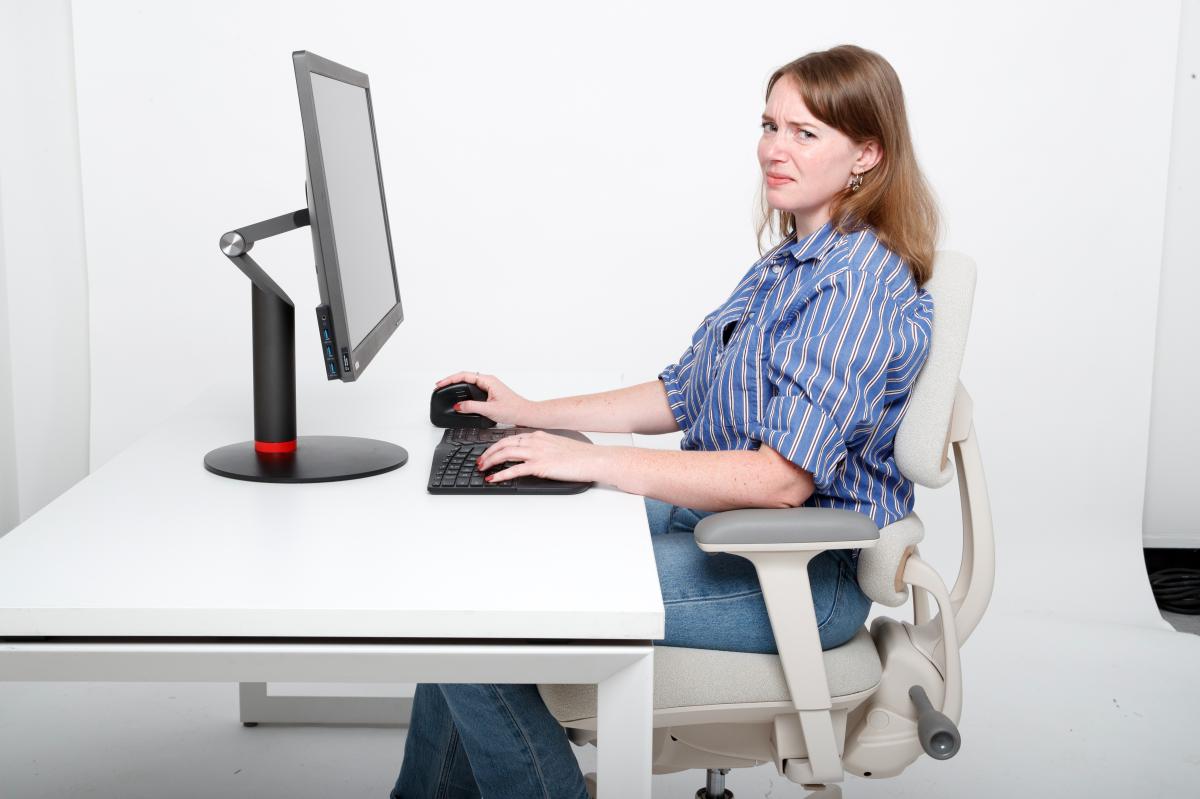
Time to shelve that standing desk.
New research suggests ergonomic upgrades for the office — from specialized chairs, desks and keyboards — do little to actually help workers with repetitive stress injuries.
Researchers from the University of Technology Sydney analyzed 20 trials involving more than 2,400 people with work-related complaints of the arms, neck and shoulders.
Compared with no treatment or usual care like medical advice, discussion or counseling, the ergonomic-friendly interventions showed little to no impact on pain, functionality or quality of life, or on workers taking sick leave.
Ergonomic office setups were also less effective than posture-correcting exercises to treat pain or discomfort, though they may provide short-term relief when paired together.
“The certainty of that evidence ranges from low to moderate, so this is a clear signal that the case for these interventions is weaker than many people assume,” lead author Dr. Poonam Mehta said in a news release.
The ergonomic interventions mentioned in the review included specially designed furniture and devices, such as chairs, sit-stand desks, keyboards and computer mice.
It’s a huge industry — ergonomic office furniture is valued at an enormous $16.5 billion, according to Mordor Intelligence, and is projected to reach nearly $23 billion in 2031.
A caveat to the overall findings is that ergonomic setups may have small benefits for people with specific maladies, like rotator cuff injuries in the shoulder from repeated lifting.
One study from the review suggests ergonomic treatment may reduce functional disability better than mobilization, strength and endurance training exercises.
However, other studies looking at those with carpal tunnel syndrome in the wrist from frequent mouse-clicking didn’t see reduced pain using ergonomic keyboards or computer mice.
Some study results did suggest the office updates may improve quality of life, although the research team has limited confidence in the evidence due to mixed results.
For decades, ergonomics experts have argued that bad desk setups could result in poor posture, aches, “tech neck” and more, affecting employees and employers alike.
“The long-term cost of poor ergonomics far exceeds the upfront cost of proper design,” board-certified ergonomist and Global Vice President of Humanscale Consulting Jonathan Puleio previously told The Post.
This new review challenges that conclusion, suggesting instead that offices reconsider their investment in ergonomic tools and costly refurnishing.
“Our findings suggest that, on current evidence, these measures alone shouldn’t be expected to reduce pain or sick leave in the short term,” Mehta said. “Employers may want to weigh that against the cost.”
HealthNews
Unexpected symptoms that may be worse for people with autism

Aging is hard for everyone — but it can be especially difficult for those who struggle with change.
For many women, there’s no greater change than menopause, which signals the end of their reproductive years.
The phase often brings hormonal shifts, hot flashes, night sweats and brain fog, disrupting daily routines.
And for many people with autism, a strict routine helps to manage chaos and lessen anxiety.
That’s why researchers from Bournemouth University in England are sounding the alarm that women with autism may suffer more severe menopausal symptoms than women without autism.
“We know that menopause can be challenging for non-autistic people — the symptoms force 1 in 10 women to leave the workforce,” said study author Eunhee Kim, a PhD student.
“Autistic people can already struggle with memory, planning, managing emotions and sensory sensitivities, and many try hard to fit in and mask their differences while struggling with these things, so menopause could worsen things that are already difficult for them.”
What researchers found
Autism affects an estimated 1 in 45 US adults and is nearly as common in women as in men.
The neurodevelopmental condition influences social communication, interaction and behavior.
Researchers compared the menopause experiences of 476 participants with autism and 425 participants without autism to see how they differed in symptom severity, quality of life, depression and anxiety. Women ranged in age from 40 to 60.
Across the board, participants with autism reported their menopause symptoms were about six points worse than the non-autistic participants.
These symptoms included hot flashes, irregular periods, weight gain, vaginal dryness, headaches, problems with concentration and bladder problems.
Depression and anxiety were nearly four points higher on average among autistic participants.
Quality of life had the most stark difference: autistic participants scored theirs on average 12.14 points lower.
The findings were published Tuesday in the journal Autism in Adulthood.
Authors note that depression, anxiety and quality of life were all linked to the severity of menopause symptoms.
Autistic participants were also much more likely to have serious health conditions. They were twice as likely to have one or more cardiovascular issues, such as heart disease, compared to the control group.
They were also over four times more likely to have a musculoskeletal condition like hypermobility (unstable joints causing frequent injury) and chronic pain.
Many autistic participants also had several serious and chronic health conditions.
Why does autism make menopause harder?
One factor at play is these heart conditions. Kim muses that having pre-existing mental and physical health conditions could make for “an especially difficult time during menopause.”
Her team also found that “feeling out of control and struggling to understand menopausal changes to the body and mind” appeared to predict how severe menopause symptoms would be.
“Autistic people have often told us, ‘I thought I was going mad,’ or ‘I thought I had a disease,’ because their menopausal experiences don’t resemble what they’ve read or heard about in other people,” said study author Julie Gamble-Turner.
“Helping people feel less frightened, confused and out of control — for instance, by giving them information tailored for autistic people about what to expect during menopause — means we are better able to help them.”
Author Rachel Moseley suggests that doctors and other healthcare professionals take note to better help patients with autism.
“Sometimes, doctors do not believe how much they are struggling, perhaps because autistic people do not necessarily show their distress in the way non-autistic people expect,” she said.
“Autistic people can be in crisis yet sound quite calm and logical. It’s so important to believe any person who tells you they are struggling.”


Flávio Bolsonaro seen landing in Miami with family after Brazil presidential election defeat
Where has Bolsonaro been? By Thomas Copeland and Jake Horton Flavio Bolsonaro has not taken a straightforward route to the...


Nvidia Partner Vertiv Soars After AI Data Center Play’s Blowout Earnings, Strong Guidance
Information in Investor’s Business Daily is for informational and educational purposes only and should not be construed as an offer,...


Nelson Peltz’s Trian offers to buy Wendy’s for $1.4 billion
A group of investors led by Nelson Peltz’s Trian Fund Management has offered $1.4 billion to buy Wendy’s , according...


Dow Jones Futures Fall, Techs Rise As SK Hynix Crushes Views; Fed, Microsoft, Google On Deck
Information in Investor’s Business Daily is for informational and educational purposes only and should not be construed as an offer,...


The income required to retire comfortably in each state
Households around the country are facing financial stress amid persistent inflation, and retirees facing rising expenses need to ensure their...


Why China is desperate to ship cars outside of the country
To understand why China is desperate to ship cars overseas, visit a dealership in Beijing. Autumn has traditionally been the...


Fed meeting today: Live updates
The Federal Reserve’s interest rate decision Wednesday likely will be short on suspense, with markets expecting the central bank to...


Russell Brand Takes Stand in Trial, Says No One Will Testify for Him
Russell Brand took the stand for the first time in his ongoing rape and sexual assault trial on Wednesday and...


Amazon relaxes push for AI use as Anthropic reveals shocking stats
An Amazon memo published Tuesday encouraged its software engineers to stop “tokenmaxxing” and start being more judicious about how they...


Calif. just broke a 28-year-old record for fatal rabies detections
A pair of sick raccoons found this month in a Los Angeles suburb set off alarm bells from California to...
-

 Business1 week ago
‘Black Monday’ fears intensify as prediction markets shrug off 2026 crash
-
Business2 weeks ago
Why BlackRock is suddenly more bearish on stocks
-
Business2 weeks ago
AI Agent Company Decagon Held Early M&A Talks With ServiceNow, Others
-

 Business2 weeks ago
Dow Jones Futures: Stock Market Holds Up As Meta, AMD Lead Buys; ASML, CPI Inflation Due
-

 Business2 weeks ago
CPI inflation report September 2026
-

 Food2 weeks ago
Wall Street Sees Inflation Easing Even With Oil Above $90
-

 HealthNews2 weeks ago
Carefree panty liners face lawsuit over dangerous carcinogenic claim
-

 Entertainment2 weeks ago
Reese Witherspoon Partners With Mediawan To Buy Hello Sunshine