
PM office canada
Mark Carney gets to work on the plumbing

This week, we saw Prime Minister Mark Carney’s government take a second swing at big, ostensibly game-changing economic legislation. This time, Mr. Carney actually went in to work on the plumbing.
In its first year, Mr. Carney’s government built a lot of workarounds and special powers that were supposed to cut through the thicket of bureaucracy. Now, it’s trying to clear away some of that underbrush.
A year ago, the Liberal government’s marquee economic bill was the One Canadian Economy Act, which promised to speed up major project approvals and break down internal barriers. The modus operandi was making fast tracks through the system to push priorities.
Ottawa tables bill to amend labour code, speed up project approvals
In that bill, a list of big projects would be declared to be in the national interest and steered through the system by a new Major Projects Office. Ministers were given new powers to bend existing rules and even laws to speed up those major projects and accelerate transportation projects.
Now, the Liberal government is tabling a new bill to do many of the same things, but in a bigger, broader, more systematic way. And this time, it is actually trying to reform the system, rather than cut a path through it.
Take a peek past the title sheet of Bill C-39, the Build Canada Strong Act introduced this week, and you will see a dense package of 361 sections that reform project approvals, revamp transportation regulation to attract investment in ports and rail and create national trade corridors, and reduce strikes in transportation choke points like ports.
In all, the omnibus bill is set to amend 18 pieces of legislation and repeal another.
It represents a new level of legislative ambition, one that goes beyond a short-term rush to bully the system into accomplishing a set of priorities to re-engineering the system. It is, as Mr. Carney said during a news conference at the United Nations, intended to clear out layer upon layer of well-meaning rules and restrictions, “duplication, parallel processes, enormous cost.” That’s an important effort. But it’s full of mundane details and prone to resistance.
Labour code changes will threaten workers’ right to strike, unions warn
A big question now is whether Mr. Carney is willing to go into the plumbing on his other priorities. The modus operandi of his first year and a half in power had been building workarounds and superstructures to cut through the system, including a Defence Investment Agency and Build Canada Homes.
In the case of Bill C-39, the new legislative ambition is being marshalled in the service of Mr. Carney’s highest priority, his effort to attract investment.
On one level, it has to be seen as an implicit recognition that the first approach wasn’t enough to get the job done. Last year’s Bill C-5 included a part called the Building Canada Act. This week’s Bill C-39 includes a part called Build Canada Now.
Perhaps that’s happening now because Mr. Carney has a solid majority. Crucially, there is broad public support for measures to build the domestic economy in the midst of a trade war with Donald Trump’s United States – and Liberal cabinet ministers cited this as a response to nearly every question about the bill.
Still, actually reforming the system tends to raise resistance. Bill C-39 already has.
In particular, the new bill contains a set of provisions aimed at normalizing the use of ministerial power to order the settlement of labour disputes.
Ottawa moves to reduce duplication in approval process for some large energy projects
The labour minister already had a broad legal power to do that, which was rarely used before 2024, when the government started using it regularly to halt labour disputes at airlines, ports and railways. But that section of the law was facing challenges in the courts as being unconstitutionally broad and the new bill sets out guidelines that might protect it from such challenges.
It’s a bid to prevent labour disputes that can cause serious economic disruption in a big country with east-west transportation routes and few major ports. The 2024 Vancouver port lockout stranded billions of dollars’ worth of exports inland.
But there’s no doubt it would handcuff the ability of workers in those industries to strike – and has already riled unions.
Mr. Carney has enough public backing to handle the politics of that right now, and the complaints that his new process will water down environmental reviews.
He has enough political leeway to rewire government into other areas, in housing, in tax reform and so on. With Bill C-39, at least, he has signalled a desire to start fixing the plumbing.
PM office canada
Mark Carney says he has considered possibility of US military action

Carney told the Times that his administration has carefully examined the “extreme tail risk” scenario where the US takes military action against his country, and had prepared accordingly, without providing further detail.
“I think you have a responsibility in these roles to look at extreme tail risk,” Carney told the Times. “That’s just risk management. That’s not a base case, but it would be irresponsible not to” prepare.
Any conflict would likely be highly imbalanced. The US military has more than 2 million active-duty and reserve troops, while Canada has less than 200,000, according to their governments. Similarly, as of 2024, the US possessed 65 military submarines, compared to Canada’s four.
Canada, though, has the longest coastline in the world and is close to the Arctic, two circumstances that have prompted Carney to boost defence spending since he took office.
Meanwhile, Trump has frequently talked about Canada as the “51st state”. He also started a trade war with it that deepened last month as two countries began exchanging tit-for-tat tariffs on a number of products.
“From my perspective, we have a good relationship in the sense of we can pick up the phone and talk to each other about issues,” he told the outlet. “He’s direct. I’m direct in terms of where positions are. It’s much more efficient that way, and so you know that exists and that will continue to exist.”
Carney said he believed there is still a path to resume trade negotiations with the US. Returning to the amicable, decades-long trade relationship with the US would be beneficial for both countries, he said.
PM office canada
OpenAI’s agent hacked an Australian government website. What we know so far
Concerns around the dangers of artificial intelligence are escalating sharply after Australian Prime Minister Anthony Albanese revealed on Wednesday that a government website has been hacked by an OpenAI agent.
The June hack targeted the website for Medicare, Australia’s publicly funded universal health insurance plan, he said.
“I want to update Australians on an incident in which an artificial intelligence agent has infiltrated an Australian government website. This incident occurred in June this year and involved an open AI agent gaining unauthorized access into the public facing Medicare Statistics Reporting Service portal,” Albanese told reporters in New York Wednesday, where he is attending a session of the United Nations General Assembly.
The AI agent accessed “both public and non-public files,” Albanese said.
OpenAI said in a statement it had reviewed activity involving several Australian government departments and discovered “our models took actions we did not intend.”
The company notified Australia of the breach in an email to a government department’s generic address on Sept. 10, Albanese said.
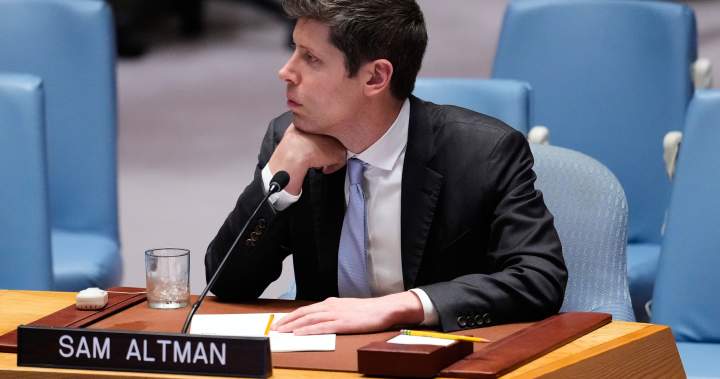
“I spoke with the CEO of OpenAI, Sam Altman, to express Australia’s extreme concern about this incident,” he said, adding that he was forming a task force to “to provide an urgent and immediate review into this incident to determine whether existing processes are appropriate to respond to AI-related cyber incidents.”
Global News has reached out to AI Minister Evan Solomon’s office asking whether Canada also plans to review its safety regulations in light of the Australian hack.
Australia’s Government Services Minister Katy Gallagher said OpenAI had advised on Sept. 10 that an “AI agent had accessed infrastructure behind the public-facing” portal. OpenAI shared with the government the vulnerability the agent had found.
The Australian government had not been confident that it knew what the agent had been doing until officials held a technical briefing with OpenAI on Tuesday, Gallagher said.
Australian Deputy Prime Minister Richard Marles said the incident is the first time that an AI agent is known to have gained unauthorized access to the Australian government’s information technology systems.
Altman was among heads of major AI firms who in speeches Wednesday to the United Nations called for regulating the fast-expanding technology that companies like his have been designing, despite the companies themselves taking few, if any, steps to scale back developments or wait for regulations.
“We could lose control of the future to AI. The risk is that it moves so fast that people can no longer follow what’s happening or intervene when needed,” Altman told the United Nations.
“This would obviously be terrible,” he added.
While this is the first time a government website has been hacked by a rogue AI agent, it is not the first such incident overall.
In July, OpenAI revealed that its artificial intelligence system escaped from a testing ground and used stolen credentials to break into the servers of Hugging Face, an AI development hub and marketplace, to obtain information it needed to carry out a task.
Since then, OpenAI’s rival company Anthropic said its AI models hacked into three other organizations during testing, triggering a company review into whether the models were able to access the internet from within testing environments that should have been sealed off.
Meta has said a “misconfiguration” during testing resulted in an AI model accessing the internet on its own and hacking another company. Google recently made a similar disclosure.
–with files from Associated Press
PM office canada
Carney prepared for risk that Trump might order military action against Canada: report
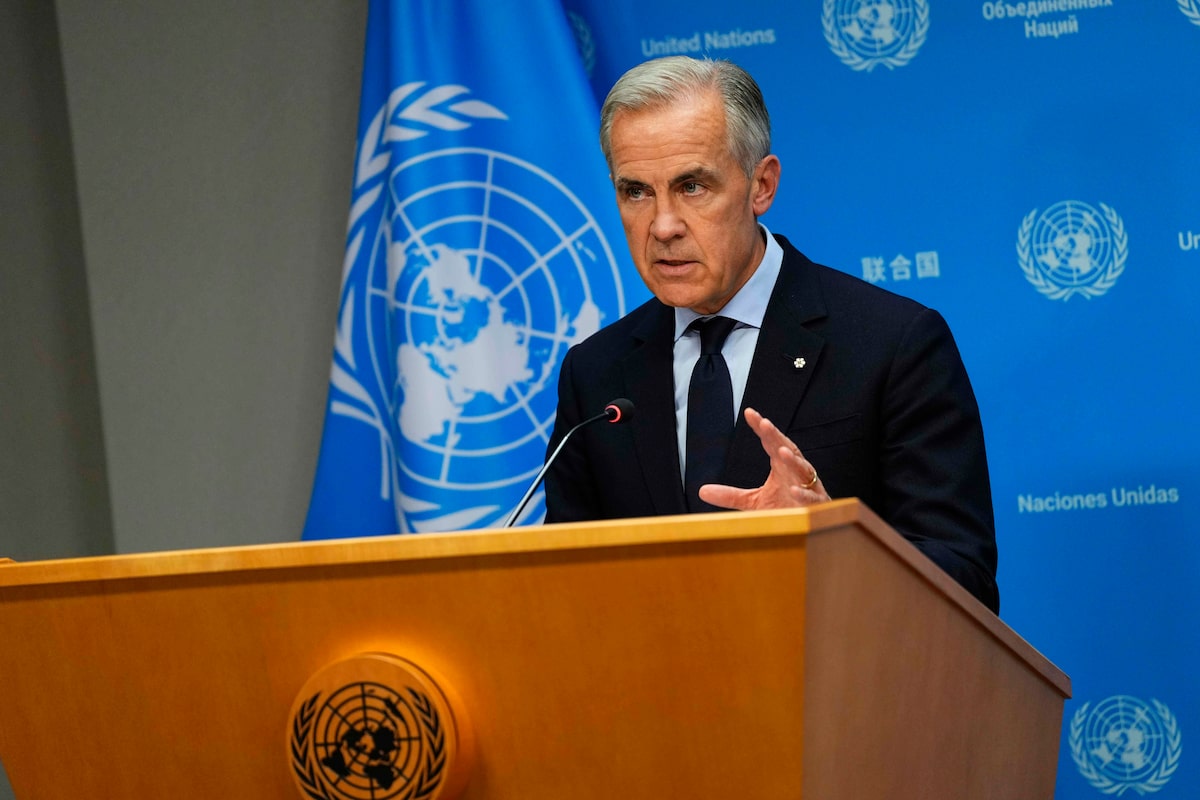
Prime Minister Mark Carney over the past year has prepared for the unlikely risk that President Donald Trump might order military action against Canada, a news report says.
The New York Times, citing an interview with Mr. Carney, said he had described the probability of such action as “extreme tail risk.” It’s a term used in finance and risk management, and refers to a very rare event that would cause enormous damage but is so unlikely that people tend to ignore or underestimate it.”
The Times reported Wednesday that Mr. Carney, after being pressed on whether he took Mr. Trump’s threats to make Canada a 51st state seriously, “suggested that he had carefully examined the possibility of a U.S.-led military invasion,” but declined to discuss in detail what that involved.
The Globe reported in January that the Canadian Armed Forces have modelled a hypothetical U.S. military invasion of Canada and the country’s potential response, which includes tactics similar to those employed against Russia and later U.S.-led forces in Afghanistan. It attributed this to senior government sources.
This is believed to be the first time in a century that the Forces had created a model of an American assault on this country, a founding member of the North Atlantic Treaty Organization and a partner with the U.S. in continental air defence.
A military model is a conceptual and theoretical framework, not a military plan, which is an actionable and step-by-step directive for executing operations.
The Times noted Mr. Carney was a former central banker “who approaches the world by meticulously assessing worst-case scenarios and drafting responses.”
The Prime Minister explained in the interview that what he did was perform risk management. “That’s not a base case,” he said of the possibility of U.S. military action against Canada. “But it would be irresponsible not to” prepare.
Audrey Champoux, deputy director of communications in the Prime Minister’s Office, said the PMO had nothing to add to Mr. Carney’s reported comments.
Mr. Carney‘s decision to discuss these preparations for the unlikely prospect of military attack by the United States – while speaking to a U.S. newspaper in New York – comes as he is locked in a costly trade war with Mr. Trump that is hurting consumers and businesses on both sides of the shared border.
Mr. Trump, who told journalists in 2025 he would be willing to use “economic force” to coax Canada into political union with the U.S., has repeatedly referred to this country as the “51st state” and to Mr. Carney as “governor.”
The U.S. President has previously challenged NATO allies with repeated calls for the U.S. to acquire Greenland and threats to impose tariffs on European countries who oppose the takeover.
After Mr. Trump launched a January military strike on Venezuela to remove leader Nicolás Maduro, whom he brought to the U.S. to face charges, he warned of further interventions in Colombia, Cuba and Mexico and repeated his desire to take control of Greenland. The U.S. State Department also publicly declared that the Western Hemisphere, which stretches from the Arctic to the bottom of South America, is “our hemisphere.”
As The Globe reported in January, the two senior government officials said Canadian military planners are modelling a U.S. invasion from the south, expecting American forces to overcome Canada’s strategic positions on land and at sea within a week and possibly as quickly as two days.
Canada does not have the number of military personnel or the sophisticated equipment needed to fend off a conventional American attack, they said. So, the military envisions unconventional warfare in which small groups of irregular military or armed civilians would resort to ambushes, sabotage, drone warfare or hit-and-run tactics.
One of the officials said the model includes tactics used by the Afghan mujahedeen in their hit-and-run attacks on Russian soldiers during the 1979-1989 Soviet-Afghan War. These were the same tactics employed by the Taliban in their 20-year war against the U.S. and allied forces that included Canada.
PM office canada
Suzuki says Carney is driving Canada ‘into a ditch’ with climate shift

David Suzuki said that when Prime Minister Mark Carney was first elected last year, he celebrated. Having met and interviewed the prime minister before, the national environmentalist icon said he knew Carney understood the challenges of climate change.
But in an interview with The Canadian Press, Suzuki said he now feels he was “wilfully blind” to Carney’s promises of action on climate, despite warnings from his longtime friend the late Stephen Lewis, who predicted the agenda of a banker — and now politician — would supersede Carney’s views on addressing climate change.
He acknowledges that Carney’s actions come as Canadians’ views on climate have shifted to other priorities.
“I think that’s because of that disconnect of what are the really basic things are that keep us alive,” he said.
For decades, Suzuki brought millions of Canadians into the world of science and nature. From their living rooms, viewers of The Nature of Things could learn about the intersection of humanity and nature and its impact on the planet.
Suzuki, 90, retired from hosting the show four years ago, but still wants to talk to Canadians about the environment. This time though, the educational message is tinged with exasperation.
Canadians and people around the world have their priorities wrong, he said.
“Brazil’s Amazon, the greatest terrestrial ecosystem on the planet, has no economic value until it is logged, mined, dammed, or grows soy, cattle, or houses,” Suzuki said.
“So if that doesn’t tell you right there what kind of a f–ked-up system we have, that is exploiting the very things that keep us alive. And we don’t put any value on it.”
Canada’s record on battling the greenhouse gas emissions driving climate change has been spotty. The federal government has committed to multiple different targets since 1990 and despite implementing dozens of new policies to cut emissions, it has never met any of its targets.
Since taking office in March 2025, Prime Minister Mark Carney has pushed many of those policies aside in the name of economic prosperity — particularly as Canadians grapple with the cost of living on a planet that is facing increasingly destructive weather events every year.
He cancelled the consumer carbon tax on his first day in office, repealed a mandate to phase out gas-powered cars in favour of electric models, and scrapped an emissions cap on oil and gas production.
Carney said most of those policies were too divisive and costly and he is looking to introduce cuts over a longer term, with investments in clean technology. He also has backed the idea of another oil pipeline to the West Coast and has adjusted some policies to make it more likely.
Which one of those actions made Suzuki raise his eyebrows the most?
“I haven’t read any of it,” Suzuki said.
“The problem is, it doesn’t really matter to me. Fundamentally, the problem is that the underlying systems that we’ve developed to guide, shape, manage human behaviour have left out the most fundamental thing, which is that our very survival and well-being depends on Mother Earth.
“If you look at our legal, our political and our economic systems, the planet has been left out. The economy is the system that is driving us on the destructive path.”
He doesn’t even give much credit to the government of former prime minister Justin Trudeau, whose government enacted some of the most climate friendly policies Canada has ever had. Even Trudeau, Suzuki argues, didn’t aim high enough.
Suzuki said Carney “understands very clearly what the challenges of climate change represent.”
But he said Carney is advocating for climate action as a banker, with an agenda that suits that title.
“He still believes the economy must be kept going the way it is and that it can be used to keep emissions down and keep the economy going,” he said. “I think it’s impossible.”
Carney was in Strasbourg, France last week to address the European Parliament, on a mission to deepen ties with the EU — particularly on trade, as Canada tried to lessen its dependence on the United States. Canada’s offer to the EU is largely based on its access to resources, including natural gas and critical minerals, but Suzuki said it’s a catch-22.
“(Carney) is standing up to (Trump). Thank God for Mr. Carney for doing that. But our arrangements with Europe, they’re all based on economics,” Suzuki said.
“What does Canada have to sell to these other countries to take our dependence away from the United States? It’s going to be minerals, forests, water, and it’s not based on the fundamental protection of those things. It’s all going to what economic value can we extract. So I think we’re kind of hooped.”
In a statement, a spokesperson for Environment Minister Julie Dabrusin said the government is committed to fighting climate change and reaching net-zero emissions by 2050.
Suzuki said there are two things the government can do right now to get the country’s climate action back on track: set hard targets and declare an emergency.
“When you declare a state of emergency, all these economic and political arguments disappear,” he said. “You’ve got to deal with that crisis now, and that’s what we need. And Mr. Carney could go a long way if he would take his party now and declare state of emergency and get it going now.”
Suzuki also said the media has failed to fact-check messages from world leaders, including U.S. President Donald Trump.
Suzuki said he is still saying the same things he always has, but he’s not sure it’s being received the way it used to be, and figuring out how to fix that has left him at a loss.
“There was a time when, believe it or not, Canadians knew who the hell I was and they listened to me. They took me seriously. But you know, the world is so different now, that I think that kind of celebrity is just not possible.”
PM office canada
The EU’s Canada offer is more mood than reality but it could hint at a future geometry for the bloc
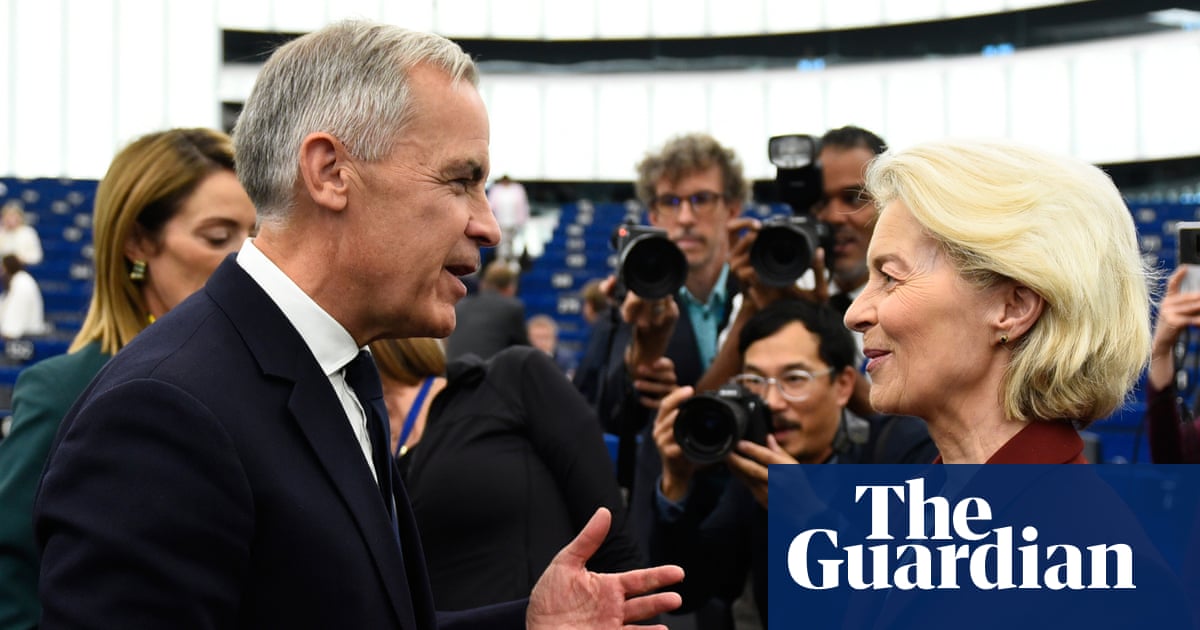
The EU and Canada, Ursula von der Leyen said last week, “see the world with the same eyes”, with shared stances on everything from AI to the climate crisis, the Ukraine war and the unholy chaos unleashed by the current occupant of the White House (OK, she didn’t actually say that last bit. But I like to think she almost certainly thought it.)
So, the European Commission president went on, Canada should become “the first associate member of the EU”. In the audience, Mark Carney beamed with delight. The next day, Canada’s prime minister enthusiastically embraced the idea of an “alliance for the future”, to build “collective resilience” through “deep cooperation”.
Cue standing ovations, warm handshakes – and a great deal of head-scratching in Brussels and assorted EU capitals. Because “associate membership” of the EU is not, in fact, a thing. Nor, as a Guardian editorial pointed out, is there “any blueprint for what such a thing might involve”.
The term was, the editorial argued, “a political hypothesis”, describing “a relationship of intimate strategic alignment with the EU, stopping short of actual membership, in ways that are significant but undefined”. So what exactly are the commission and Canada playing at here, and where might it lead?
You can see where they’re coming from. On paper, in a world of unpredictable and increasingly aggressive great powers, it makes perfect sense. For Canada – which already has the Ceta free trade agreement with the EU – the catalyst for even closer cooperation is clearly Donald Trump: incessant tariff threats, an escalating trade war, bullying talk of Canada as the “51st state”, the renaming of Lake Ontario – all have left Ottawa eager to diversify its relations.
Aligning with European industrial strategy, working together on defence and AI, and joining EU scientific research and student exchange programmes would offer Canada a reliable counterweight to its all-too-unreliable southern neighbour. (Unsurprisingly, Trump called the tie-up “laughable”, and threatened more tariffs.)
For the EU, meanwhile, Canada is a dream partner: a stable, like-minded “middle power” rich in critical minerals, rare earths and – as Carney couldn’t resist noting – good manners. Plus, Canada’s unbridled EU-enthusiasm is a pleasing boost to the bloc’s bruised ego after Iceland’s recent rejection of more EU accession negotiations.
There’s only one problem: “associate membership” is not a status in the EU treaties, and creating such a status would mean treaty reform, which member states won’t contemplate. There are things called “association agreements”, such as with Ukraine, Moldova or Georgia, but those are essentially stepping stones to full membership – which Canada can’t aspire to, for the very good reason that it isn’t in Europe.
But if “associate member” sounds vaguely familiar, that’s because the EU has been talking about a “second circle” since the days of Jacques Delors: an outer ring of countries bound by shared values, free trade and security cooperation to an inner core of members, but without full voting rights or complete regulatory integration.
Emmanuel Macron’s European Political Community is a variation on this theme, and Germany’s chancellor, Friedrich Merz, recently floated “associate member” status for Ukraine. Indeed, non-EU nations in the European Economic Area (EEA) and European Free Trade Association, such as Norway, Iceland or Switzerland, already function as quasi-associate members, enjoying single-market access while being largely “rule-takers”: adopting EU rules without having a vote in Brussels.
Writing in the Guardian, Fabian Zuleeg suggested that Canada and Europe actually need more of an “integrated partnership” – a model that leaves single market access to one side, focusing instead on concrete collaboration in areas such as defence, supply chains and EU programmes like Horizon and Erasmus+.
Alberto Alemanno, a professor of EU law, noted that a realistic EU-Canada landing zone would have to go further than Ceta and might more resemble the kind of tailored framework of the EU-Swiss relationship. But the real significance of any formal new status, he said, was that it could make the EU “an institutional hub around which other democracies organise strategic autonomy – but without joining the union”.
What that might actually look like is anyone’s guess: visa-free work access, shared military procurement, Canadian seats on EU regulatory committees? For the moment, Canada’s hypothetical “associate membership” is more of a mood than a reality: the expressed intent of a democratic bloc and a middle power to deepen ties in the face of mounting global uncertainty.
Does it, all the same, hold any hope for Brexit-regretting Britain? As Jill Rutter of the Institute for Government highlighted, the EU’s sudden willingness to display “institutional imagination” at least shows that the bloc is willing to think about adapting when geopolitical pressures demand.
But a new deal for Canada won’t automatically fix the UK’s issues. As Joël Reland of UK in a Changing Europe pointed out, the vagueness of the EU offer to Canada might look promising for the UK. But Canada wants “deep cooperation” without touching single-market rules, and the UK’s main problem is that it is now shut out of that same market. Whatever Canada eventually gets, it’s unlikely to work for the UK.
A miserable time for Merz
Friedrich Merz is in trouble. A fortnight after the far-right Alternative für Deutschland (AfD) swept to a crushing victory in one state election in Saxony-Anhalt, the German chancellor’s centre-right CDU failed to clear the 5% threshold needed to enter the state parliament in another, Mecklenburg-Western Pomerania.
It fared a little better in Berlin, where it was the incumbent, but was still beaten – by a clear five-point margin – by the far-left Die Linke. And the AfD made headway in the capital, too, surging to a double-digit result. The embattled chancellor has vowed to fight on, but faces an uncomfortable choice: revise the unpopular economic reforms he insists are essential, or risk oblivion defending them.
Meanwhile, as long as he refuses to step aside and no one is actively seeking to replace him, a volatile and damaging deadlock will reign in Europe’s biggest economy. After 16 months in office, it is becoming increasingly clear – as a Guardian editorial noted – that Merz is “ill-suited for the job” of defending Germany’s democratic future against the far right.


WSJ: MAGA podcasters tuning out Trump, tuning into Talarico
A Wall Street Journal analysis of MAGA podcasts reveals a sharp drop-off in mentions of the President since the Iran...

Senate GOP's warning to Trump on Iran war
Some Senate Republicans warned that President Donald Trump is threatening their party's chances of holding onto a majority …


Delegates walk out before Netanyahu’s address to UN General Assembly | BBC News
Israeli Prime Minister Benjamin Netanyahu told the UN General Assembly “we have crushed Iran's military”, after dozens of …


AI is not a new species, it's software: Nvidia CEO Jensen Huang
CNN's Anderson Cooper sits down with NVIDIA CEO Jensen Huang to discuss his relationship with AI regulation. Watch 24/7 live...


NVIDIA CEO says competitors should 'just stop' AI if there is worry
CNN's Anderson Cooper sits down with NVIDIA CEO Jensen Huang to discuss his relationship with AI regulation.

WH bans media from Xi dinner, then Trump fumes at lack of coverage
CNN, along with other news outlets, was denied access to cover President Trump's state dinner for Chinese President Xi Jinping,...

Trump welcomes Xi to White House state dinner. #BBCNews


Milania Giudice ‘under the care of professionals’ after airport incident
Milania Giudice is “under the care of professionals” following an airport clash with her mom, Teresa Giudice, and her sister,...


8 suicide attempts during Iran war rock USS Lincoln carrier group
Eight US Navy personnel assigned to the USS Abraham Lincoln carrier strike group attempted suicide during a period that …


She denied insulting Minnesota. CNN found the post.
Minnesota Republican Senate nominee Michele Tafoya denied she ever said she was embarrassed to be from Minnesota, but …
-

 TravelNews2 weeks ago
Republican midterm convention 2026: What to know about Trump’s Dallas event
-

 Business1 week ago
Suspected stolen Tesla drives onto Pacific Beach boardwalk after police chase
-

 Business2 weeks ago
What is So Hard About Behind-The-Meter Power For Datacenters? Part 1
-
 Video2 weeks ago
Vance calls out El-Sayed over remarks about his family
-

 Video2 weeks ago
Charlie Kirk statue draws supporters to Times Square
-

 Entertainment2 weeks ago
Savannah Guthrie quietly makes heartbreaking admission in new statement about missing mom Nancy
-

 Entertainment2 weeks ago
Talking To Emily St. John Mandel About Revision, Timeline Corruption, And Living Without A Floor
-

 Entertainment2 weeks ago
What the 2026 summer box office reveals about theatrical shifts