
Tech
What does the future hold? : NPR
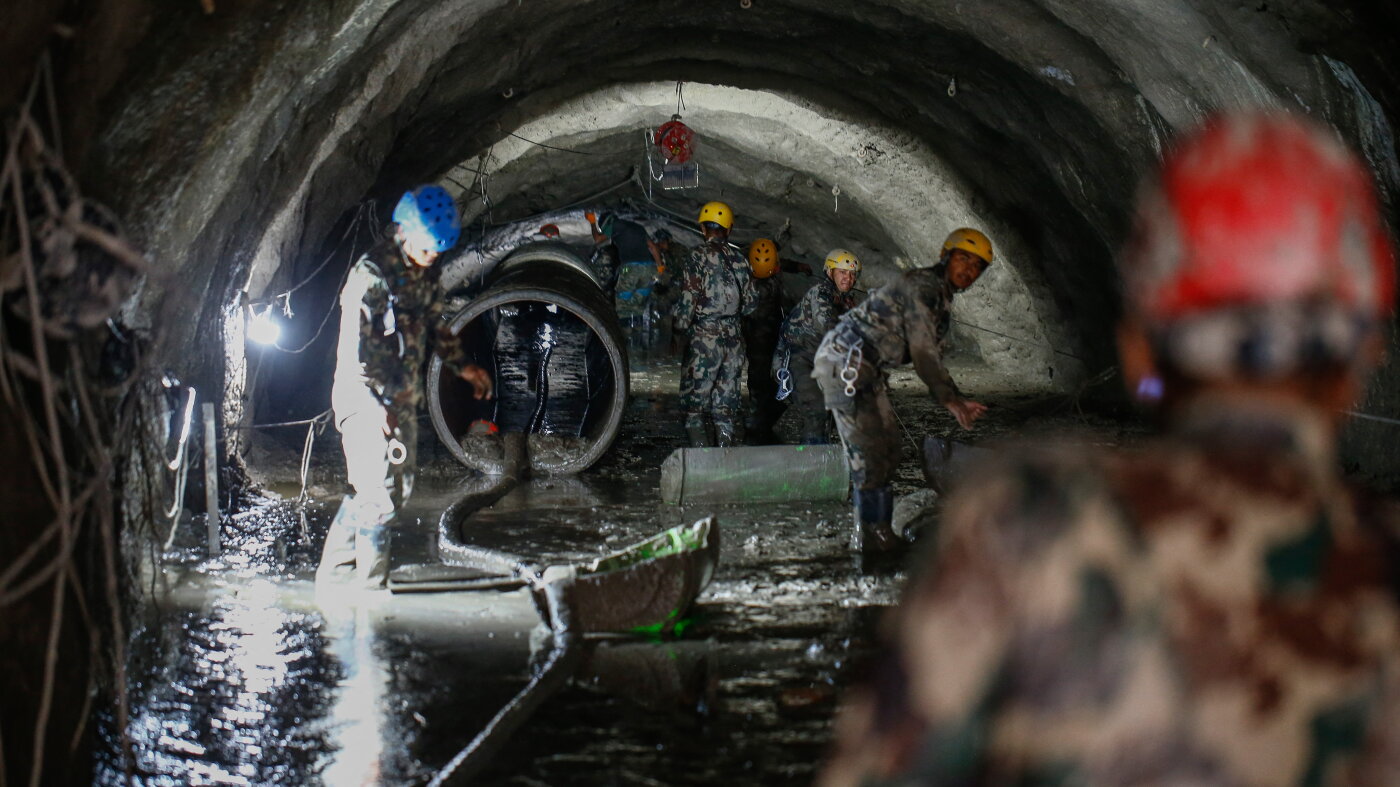
KATHMANDU, Nepal — On a recent September day, Sumana Shrestha Amatya stood alongside other protesters in the Nepali capital, urging the government to work faster to find their loved ones, trapped inside hydropower plants since flash floods devastated miles of a river valley in late August.
Amatya says she hasn’t heard from officials about her husband, Sunil, a geologist. Still, she acknowledged the scale of the disaster that the government was grappling with: “It was like a Himalayan tsunami.”
It’s a description other Nepalis have used for the events of Aug. 26, when a glacier and its bedrock spanning more than 3,800 feet in width collapsed into a river valley, some 4,000 feet below.
That triggered 30-foot-high waves of boulders, water and ice that surged for miles downstream. It swept away a multistory border building and some 70 bridges and miles of highway, and buried 12 hydropower plants under mud and boulders along the Trishuli River, which was badly impacted by the floods.
Some 1,400 bodies have been recovered in Nepal, and more than 5,000 remain unaccounted for.
The dead and missing include 121 people who were trapped in hydropower plants, according to Brig. Gen. Subas Jung Thapa of the Nepali army, which is leading rescue efforts. He spoke in early September.
It took days just to find the power plants under the mud. It was like “a bomb’s gone off,” said Arnold Dix, a tunneling expert helping with rescue efforts. “It’s removed the power stations from the surface, like they’re just not there.” Only three men were found alive in the plants since rescue efforts began.
Did hydropower projects add to the risk?
It is those hydropower plants that have received the most scrutiny in regional media since the floods, with experts reviving questions about whether developers had properly assessed the risks of building them in the Himalayas.
“We need to understand what is happening now in Nepal can happen in other parts of the Himalayas,” says C.P. Rajendran, an Indian geoscientist who has been critical of big construction works in the Himalayas. (Rajendran, like many Indians, uses initials for his first name.)
Critics have also focused on the role of international institutions like the World Bank, which has long supported some of these hydropower projects and their associated dams.
They include one of the biggest hydropower projects in the river basin, known as the Upper Trishuli-1, which cost Nepal over half a billion dollars. It was backed by about $300 million in loans and equity by two arms of the World Bank.
The Upper-Trishuli-1 was under construction. Now it’s under the mud. Thapa of the Nepali army said in his press briefing that he estimated some 50 people were trapped inside. On Wednesday, the Kathmandu Post reported the bodies of five men were recovered from the plant.
“Why did it have to happen in the first place?” asked Parineeta Dandekar, an expert on rivers who has written critically about these projects for the advocacy group South Asia Network on Dams, Rivers and People.
Dandekar accuses the World Bank of producing a flawed risk assessment report for the project from the get-go. Its many omissions, Dandekar says, included ignoring “the cumulative disaster risk that can happen after having so many projects across the same river.”
Experts say the Trishuli river basin has 36 hydro power projects — including the dozen now under the mud.
Dandekar says the constant blasting of mountains to build these projects, including for miles-long tunnels, has its own impact.
It’s a region where earthquakes and landslides are common, and where climate change is causing its glaciers to melt more rapidly, making them — and their slopes — more unstable. Initial analysis suggests global warming exacerbated the melting of the glacier that snapped off in August, triggering flash floods.
There’s no clear evidence that the construction of these projects had a role in causing the severity of the Aug. 26 disaster. But experts like geoscientist Rajendran say construction has caused damage in other communities where hydropower projects are being built, including damaging mountain springs, causing homes to crack and even landslides.
In this case, though, says Dipak Gyawali, a hydropower engineer with the Nepal Academy of Science and Technology, “compared to the tectonic forces at play that caused this event, dynamiting is minuscule. This is almost nothing. It’s like scratching your skin.”
But he and other experts said developers were not seriously investigating the risk caused by so many projects built in the same zone. “These risks have to be properly studied and assessed. Unfortunately, they have not been,” Gyawali said.
Retired Indian ambassador Shyam Saran, who served as the Indian prime minister’s special envoy for climate change, says developers typically look at risks that could be triggered by their project, alongside environmental risks to it, and they appear safe. “But if you do actually a cumulative environmental impact assessment of the whole river system,” he says, “then a different picture emerges.”
And the Trishuli river “is a really high-risk area to build [hydropower] dams, says Austin Lord of the Stimson Center, who works on disaster risk reduction in the Himalayan region at the Stimson Center. In events exacerbated by climate change, there’s been deadly flooding three years in a row in the Trishuli basin. In 2024, it was extreme rainfall. In 2025, a glacial lake burst. This year, a glacier snapped off.
A pre-flood warning
Days before the August flood, Lord and others authored a paper warning that the area was particularly vulnerable to glacial lakes bursting. “Recurring landslides, and prolonged closures,” they wrote, “had all highlighted its vulnerability.”
In a statement, the World Bank told NPR that the hydropower plant’s design reflected assessments that looked at the risk of flooding and landslides using evidence available when the assessment was made in 2018. The statement said that as more information becomes available about the August floods, “the World Bank Group will consider any implications for risk assessment, monitoring, early warning and emergency response measures in hydropower projects.”
Another major funder for the Upper Trishuli-1 was the Asian Development Bank, which loaned $60 million for the project. In 2024, independent experts who visited the site reported that no climate resilience assessment was undertaken. They described that as a “significant gap.” The bank did not immediately respond to NPR’s question as to whether that assessment was ultimately undertaken.
Arnold Dix, the tunneling expert, defended the hydropower plants’ construction. “They were built properly to start with,” he said, noting the underground infrastructure, including tunnels, was still intact. He said the collapsing glacier that triggered the August flash floods was an unforeseen new threat that “will change the way we do the designs of the power station.”
Rethinking hydropower in the Himalayas
Advocates say they hope this devastating flood might prompt a rethink of how hydropower is constructed across the Himalayas. Reuters reported in 2025 that China and India, the world’s most populous countries, have built 68 major dams in the Himalayas and another 101 are in the pipeline.
Most prominently, China is constructing one of the world’s largest dams and hydropower plants in Tibet, costing around $170 billion. It’s estimated that it will provide power to 300 million people.
In July, Chinese geologists reported that the dam is being constructed over an active fault line, risking the integrity of the project’s infrastructure. Chinese officials have maintained that the project is safe and that they had considered downstream communities.
“If something happens, it is going to be a monumental disaster,” says retired ambassador Saran. He says Chinese authorities have assured their neighbors that the hydro project is safe. “But as we see,” he says, “those precautions which supposedly had been taken don’t mean very much when you have nature’s fury to deal with.”
That Chinese hydropower plant and dam is being built some 30 miles from the border of the Indian state of Arunachal Pradesh, according to the state’s Chief Minister Pema Khandu. In 2025 statements to the media, he described two possible threats: It could hold back much of the water that presently passes downstream, and it could inundate downstream areas, whether by negligence, design or natural disaster.
For now, India’s strategy appears to be building its own dam in Arunachal Pradesh in case China releases — perhaps deliberately — enormous quantities of water, as Chief Minister Khandu suggested in June last year to the outlet, Press Trust of India. “Setting aside the military threat from China, it seems to me that this is a far bigger issue than anything else. It is going to cause an existential threat to our tribes and our livelihoods. It is quite serious because China could even use this as a sort of water bomb,” Khandu was quoted as saying.
Many in the local community have opposed the dam, even damaging bridges to prevent surveyors from entering the area. On Wednesday, local media reported that India’s premier criminal investigation agency filed a case against Bhanu Tatak, the adviser to a group resisting the hydropower project, accusing her of illegally taking funds from foreign entities. She’s previously said the Indian state has been trying to find ways to stop her advocacy.
Rajendran, the geoscientist, said both China and India needed to undertake smaller projects that are less politically attractive but less disruptive to people and their environments. “The kind of construction they are doing,” he says, “it might happen probably 25 years later, or maybe 30 or 40 years later, but there will be a huge tragedy
Bhandari reported from Kathmandu. Hadid reported from Mumbai.
Tech
Trump and Xi meet as AI rivalry reshapes global power dynamics
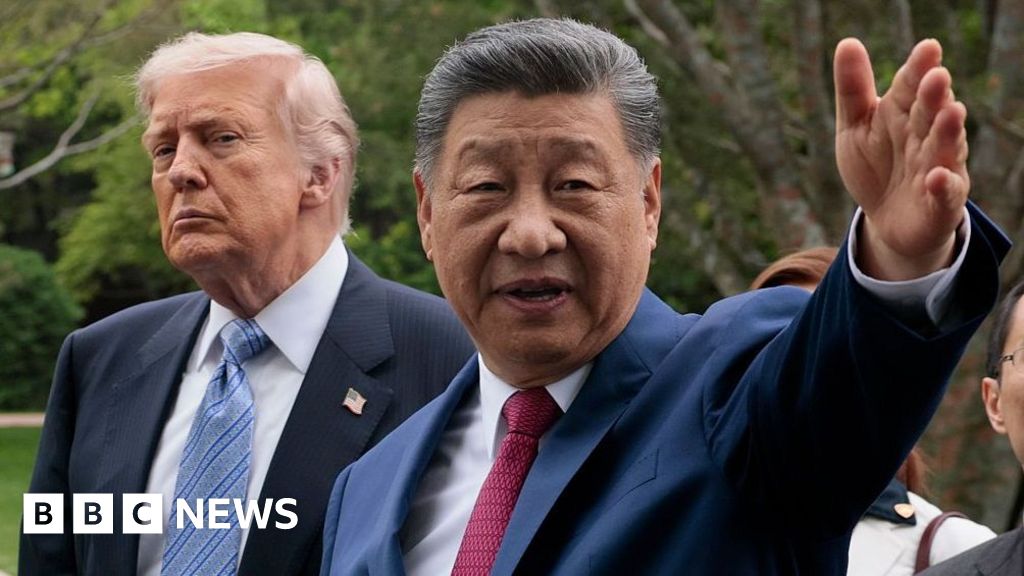
AI superpower ambitions take centre stage as Trump and Xi meet
“Whoever wins AI, WINS!”
US President Donald Trump has been blunt about his AI ambitions, as well as about who he considers the US’s main rival to be: China.
His Chinese counterpart, Xi Jinping, has not said anything so forthright – but it seems he holds a similar view.
“China very much sees it as a race, they very much think China should be the leading force in AI – they see AI as a power maximiser,” says Rebecca Arcesati, from the Mercator Institute for China Studies.
You can look beyond the rhetoric for evidence of this: AI has been a cornerstone of China’s technological ambitions for more than a decade, whether Xi emphasises it publicly or not.
For Trump, beating China to AI supremacy outweighs any risks of the technology to humans – something he has described as “a hoax”.
China’s foreign ministry warned that “narratives of threat” and confrontation hinder global AI governance, calling for cooperation to ensure it benefits all.
It means when the two presidents sit down on Thursday there will be few more important topics than their AI ambitions – and what they say and decide will matter to the whole world.
Is the US in the lead?
There’s no doubt the US and China are global leaders in AI but who is ahead depends on how success is measured.
American companies lead on so-called frontier models, with the highest-performing systems on most benchmarks coming from firms such as Anthropic, Google and OpenAI.
In February 2025, an AI model by China’s DeepSeek “briefly matched the top US model” and as of March 2026, Anthropic’s top model led the pack “by just 2.7%”, according to researchers at Stanford University.
Part of the US advantage stems from the vast sums being invested in leading AI companies as the frontier labs burn through mountains of cash to build the infrastructure to train new models.
The stock market is booming and a large part of the US economy’s expansion relies on the enormous growth – and projected profitability – of AI companies.
So that might partly explain why President Trump sees AI as key to US success.
Another factor limiting China’s ability is the sweeping government restrictions placed on US companies that prevent them from selling advanced microchips to Chinese firms – these are crucial for developing cutting-edge models.
China’s advantage
Despite the chip restrictions, new AI models are coming out almost monthly in both countries and it’s unclear what “winning” the AI race would actually mean, or whether there is a finish line at all.
Many companies are racing to develop artificial general intelligence (AGI), a theoretical form of AI capable of learning, reasoning and performing a wide range of tasks at or above the level of humans.
The Chinese AI industry has so far focused not on creating frontier models but releasing what is known as open weight models – downloadable and tweakable in a similar way to open source software.
This contrasts with the approach taken by many US firms, which largely focus on proprietary models accessed through paid subscriptions or company platforms.
Chinese open weight models are being released at a rapid pace, with benchmarks showing the country’s top models trailing US rivals by only a few months.
Models such as Moonshot AI’s Kimi K3 have become popular in China and overseas because they perform close to the frontier models while remaining freely downloadable and adaptable.
Beijing’s focus is more about deploying the technology across its economy, China analyst Lizzi Lee from the Asia Society Policy Institute said.
“AI isn’t the moon landing,” she said. “The US may lead at the frontier, while China could still gain enormous economic and geopolitical leverage by making capable AI cheap, open and ubiquitous.”
AI is also very energy hungry, and China is very well placed there, Rebecca Arcesati told Tech Life on the BBC World Service.
“Chinese AI companies are able to access the electricity they need for a much lower cost and that really is an advantage,” she said.
In robotics – a field of AI that some believe will be world-changing – China has become the world’s biggest manufacturer of robots, with more than two million working in the country’s factories, the International Federation of Robotics estimated.
The nation is also the world’s biggest maker of humanoid robots, accounting for more than nine-tenths of global shipments in the first half of the year, according to independent policy institute Chatham House.
Chinese AI developers have showed “remarkable resilience and innovation” in spite of the shortage of advanced American chips, analyst Lian Jye Su from tech research firm Omdia said.
But US officials and AI firms have also alleged that Chinese developers closed the gap by using distillation – a technique that enables models to learn from more advanced platforms.
China’s foreign ministry said in response that AI development was “fuelled” by the country’s “vision of extensive consultation and joint contribution for shared benefit”.
Safety concerns?
China and the US may be in fierce competition, but their governments’ approaches to safety concerns are markedly different.
While some in the industry have recently warned that AI could pose an existential risk to humanity, Chinese researchers seem less concerned about that and are more worried about potential misuse of the technology and cyber war.
Responding to concerns over AI, Trump has said the US already has sufficient rules in place and that the only guardrails AI needs are a “high IQ” president.
“We’re leading now over China by a lot, and everyone else, and we’re going to keep it that way,” Trump said this week, adding that the US was not going to “stifle the growth of something that will be bigger than the industrial revolution”.
Washington has prioritised innovation and sought to reduce regulation in an effort to “keep American labs ahead”, said information security officer Jayant Dave from cybersecurity firm Check Point Software Technologies.
Beijing has taken a different strategy to the US hands-off approach.
Xi urged the country’s leaders to keep a close eye on AI’s risks and ensure the technology was always “under human control”.
“China has taken a relatively cautious and centrally-coordinated approach,” introducing guides on data usage and algorithms before many other countries, helping to address many underlying concerns, Dave said.
The use of guidelines, though not legally binding, sets expectations while giving developers room to innovate, said National University of Singapore AI ethics lecturer Jonathan Sim.
Will they cooperate?
Ahead of the Trump-Xi summit, US Treasury Secretary Scott Bessent and Chinese Vice Premier He Lifeng discussed establishing a notification mechanism for serious AI incidents.
While the messaging from Trump on China in recent weeks has been “more antagonistic”, the fact that AI is expected to be on the agenda was a “good start”, said policy analyst Leia Wang from the Carnegie Endowment for International Peace.
What we don’t want, she added, was for an “unhealthy version of the race narrative to perpetuate”, potentially escalating an already fierce rivalry in AI.
Tech
Trump and Xi meet at moment of global consequence
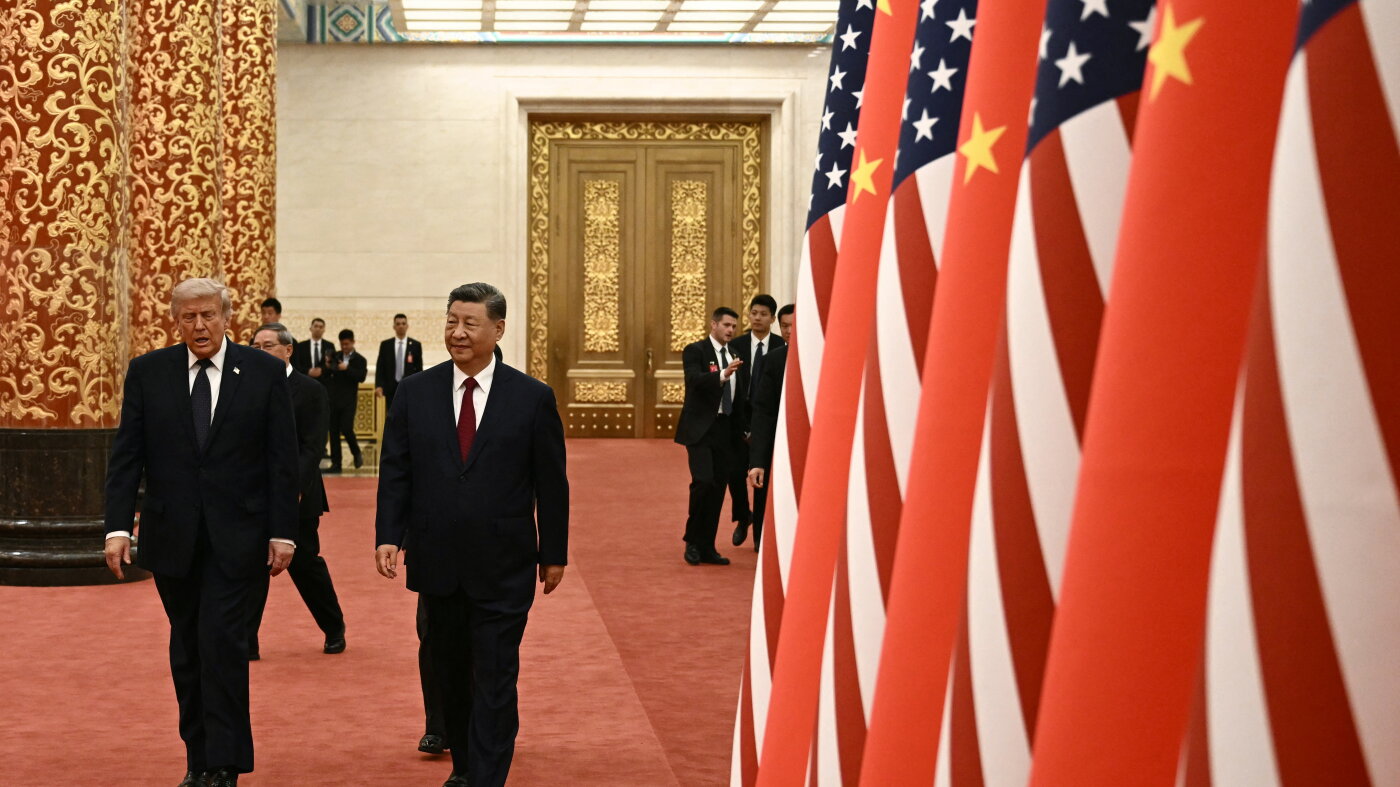
BEIJING/WASHINGTON — Chinese leader Xi Jinping arrived in the United States on Wednesday evening for his first state visit in 11 years, opening high-stakes talks with President Trump at a pivotal moment for both men.
It is the second time the leaders are meeting this year after the Beijing summit in May, when they agreed to build a more stable bilateral relationship.
Both leaders are trying to shore up power at home. For Trump, the visit comes just over a month before the midterm elections, and for Xi, preparations for an all-important Party Congress start when he returns to Beijing.
But despite both countries projecting a willingness to build what China has dubbed a relationship of “constructive strategic stability,” fierce negotiations over weighty subjects such as AI and trade are underway.
“Under the water, the Chinese seem to have done a lot of kicking lately. And you know, if we have to, we’ll kick back,” U.S. Treasury Secretary Scott Bessent said in a Fox News interview in July.
A “fragile” detente
Trump has frequently spoken warmly about how he was treated during his recent visit to China, which included pageantry and a state banquet at Beijing’s Great Hall of the People.
One of the banquet attendees, Wu Xinbo, who directs the American Studies center at Shanghai’s Fudan University, said it was the warmest he had seen in the U.S.-China relations in years.
But since then, Wu said, things have been more “fragile.”
“In the last several months, the U.S. has continued to contain and pressure China in economic, technological [and] people-to-people exchanges,” he said.
For example, the U.S. imposed extra tariffs on Chinese exports over forced labor claims, and the Pentagon added Chinese tech giants on a military blacklist. The Federal Communications Commission banned new imports of Chinese humanoid robots and robot dogs over national security concerns.
Ups and downs are to be expected in a relationship as complicated as the U.S. and China’s, said international studies professor Zhang Yun at Nanjing University.
The key is to build high-level channels to deal with problems as they emerge and “mitigate the negative impacts,” he said.
Zhang said Taiwan, tech and trade are high on Xi’s agenda this trip. Discussions on the wars in Iran and Ukraine, plus tensions along the Korean peninsula, are also expected.
The U.S. is expected to reciprocate the high level of pomp and circumstance for Xi regardless of the tough negotiations expected — and Trump has publicly held Xi in high regard.
Rare earths and AI
U.S. Trade Representative Jamieson Greer said this week that the two countries are still negotiating the potential extension of a rare earths truce that would ensure continued flow of Chinese rare earth products for the U.S.
China dominates the refining of rare earths and other critical minerals that are important to manufacture a range of products, from cellphones to weapons.
However, American officials have complained that China has not upheld its end of the bargain. NPR reporting shows that mutual distrust scuppered an offer from Beijing to extend the rare earths truce to the end of Trump’s term, in January 2029.
Trump and Xi are also expected to talk about AI governance.
China has “been trying to figure out, in talking to the United States, what kind of so-called guardrails or controls can be put on artificial intelligence,” said Rose Gottemoeller, a former NATO official who attends regular dialogues on nuclear proliferation with retired Chinese military officials.
“So it’s a combination nowadays of the older issues related to nuclear stability and new issues related to new technology,” she said.
China is interested in imposing safety measures, according to Zhang, but he said there is a lot of “mistrust” between the U.S. and China on the proposed solutions.
Taiwan on the table
In their previous meetings, Xi has repeatedly emphasized to Trump that Taiwan, a self-governing island Beijing claims as its own, is a red line and if mishandled could put the U.S.-China relations in “jeopardy.” Trump told reporters later that he was not interested in a war thousands of miles away.
“Let’s see if the United States can make [a] clearer statement opposing Taiwan independence,” said Zhang.
This spring, the Trump administration paused a $14 billion arms sale to Taiwan. Experts say Xi is expected to press Trump to maintain this momentum when he sits down with Trump on Thursday.
On Wednesday, as Xi departed for the U.S., China’s state news agency published a statement from the country’s cabinet-like State Council excoriating Taiwan’s president, Lai Ching-te. Lai is despised by Beijing, which suspects he is trying to lead Taiwan to declare formal independence.
“The most important issue that the Chinese always raise in preparation for these high-level visits is the topic of Taiwan,” says William Klein, acting deputy chief of mission at the U.S. Embassy in Beijing until 2021.
Trade discussions underway
Trump and Xi also agreed to create trade and investment boards back in May. Among the discussions is a reciprocal tariff reduction framework on products worth $30 billion or more.
China is expected to announce purchases of American agricultural products, and the U.S. is expected to announce tariff reductions on what are called 4A consumer goods, which include footwear and apparel, according to two people in the U.S.-China business community who requested anonymity because they were not authorized to speak publicly.
However, no details of who will be on either trade or investment boards have been announced yet.
During Trump’s visit to China this spring, the U.S. said China agreed to purchase American beef, soybeans and 200 Boeing jets.
But data shows China is already behind schedule on its promises to buy American agricultural goods.
Jasmine Ling contributed to this reporting.
Tech
Logitech Just Unveiled Several New Gaming Accessories In Its Pro Line
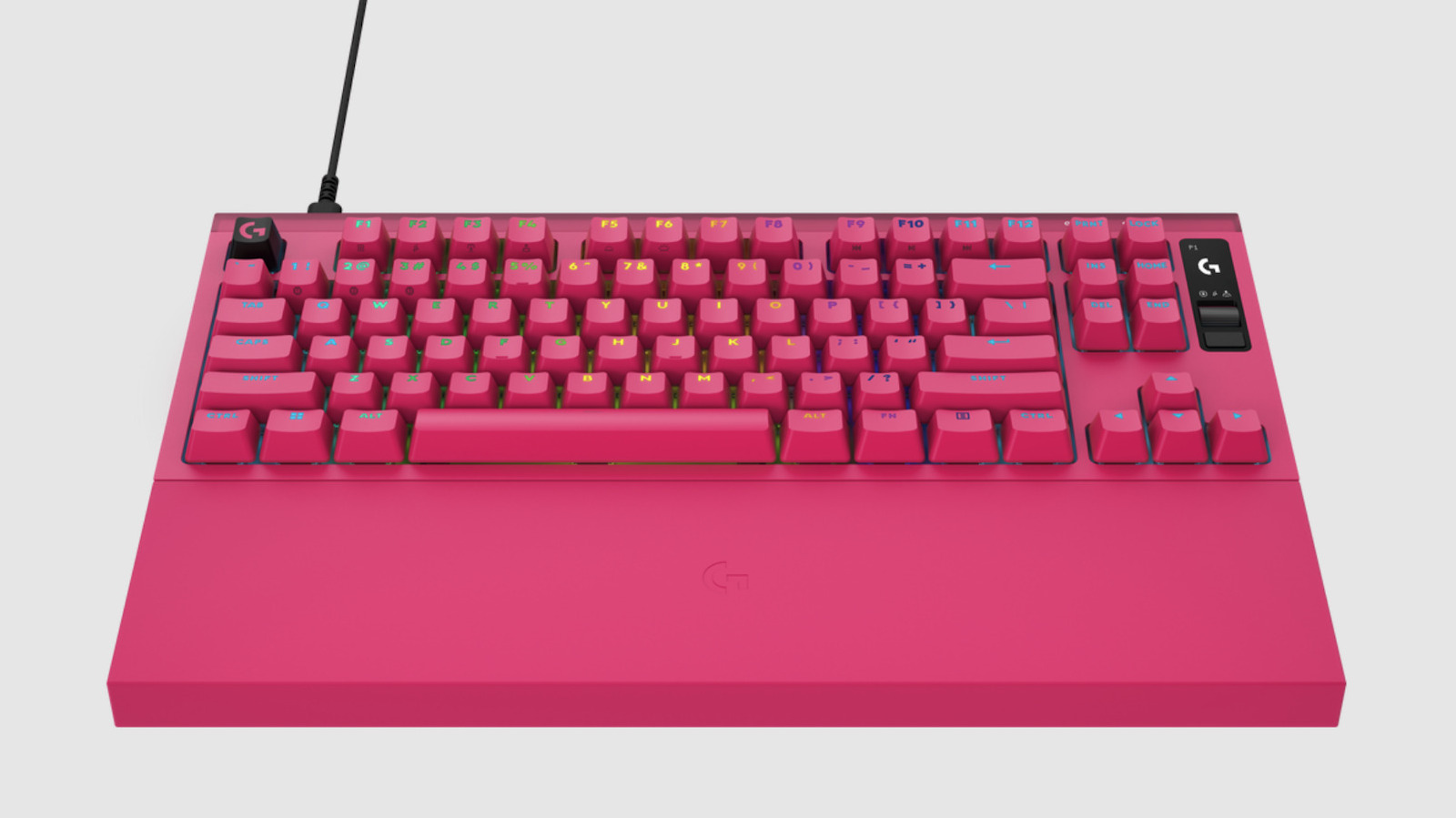
Logitech just introduced several new gaming accessories in its Pro line of products. This includes a mouse, keyboard, mousepad and headset.
First up, the Pro X3 Superstrike Mouse is a refresh of the highly-regarded Pro X2. This one prioritizes a longer battery life and offers a “significant leap in precision and elite control.” Logitech promises a “lightweight, perfectly balanced chassis.” The mouse uses the company’s proprietary HITS technology, which is a haptic trigger system that replaces traditional microswitches. It’ll be available on October 6 and costs $200.
There’s also the Pro X Control Mousepad. The pad was made with specialized knitted cloth for “balanced, omnidirectional glide and precise control.” It also includes a high-friction base for stability. The mousepad comes out on October 8 and costs $60.
The Pro X2 Rapid Gaming Keyboard features custom magnetic switches that allow for “granular tailoring of key sensitivity.” It also boasts the company’s Rapid Trigger technology, which resets a key the exact moment a finger begins to lift. This is great for competitive gaming, as it helps shave off a bit of time with every input.
The keyboard also integrates with Logitech’s Key Priority system, which registers a secondary input without having to let go of the previous input. This is a boon for FPS players, as it makes it really easy to strafe and input directional changes. It’s available right now for $230.
The Pro X3 Lightspeed Gaming Headset includes a “studio-grade 48kHz microphone” and a battery that lasts 70 hours per charge. That’s a 40 percent increase when compared to the previous iteration. There’s also now a 10-band EQ, accessible via proprietary G Hub software. It’ll be available on October 8 for $250.
Tech
Meta says its Muse AI agent can do things for you. I put it to the test

It’s been a busy afternoon for Pip, the AI agent I’ve been using in Meta’s Muse app.
The agent, which Meta launched on September 8, booked a Friday date night and made a packing schedule for my upcoming move. It also emailed a friend about a trip next month and made a planning document with places we want to visit.
A Pixar-like avatar typed away on a laptop at the top of the screen to let me know my AI helper, whose name I chose, was hard at work.
Chatbots like ChatGPT have changed the way people find information and get answers to questions. Now, tech giants are attempting to develop AI assistants that can handle complex tasks, with the goal being that a user can give a broad command like “order my groceries for the week” and go about their day.
Muse is currently the most popular free app in the iPhone’s App Store and has been downloaded more than 2.5 million times since its launch, according to market intelligence firm Sensor Tower. It is Meta’s latest and most promising attempt to rival popular chatbots like OpenAI’s ChatGPT and Google’s Gemini.
Meta CEO Mark Zuckerberg is expected to share more about his vision for Muse and the company’s AI plans during its Connect conference on Wednesday.
Perhaps most importantly, there’s the question of whether people will trust Meta with even more personal details: Muse’s rise in the App Stores comes after the company’s smart glasses stirred controversy and privacy concerns.
“While feedback (around Muse) has been positive, privacy and trust remain key considerations for broader adoption,” Bank of America analysts wrote in a research note Tuesday.
How Muse was helpful
Muse has more guidance for users compared to ChatGPT or Gemini, which can feel like a blank canvas.
The Muse app has five tabs: the main chat for communicating with the agent, a customizable feed of your interests and priorities, an Ideas tab with prompt examples, a list of goals to track based on previous conversations, and a section for files and media.
For my upcoming move to a new apartment, I told Muse what I still needed to pack, how much time I had before moving and that I wanted to pack in short spurts.
The AI agent made a list of what to pack each day this week, along with how much time I should spend on packing each day. It also gave general tips like setting aside a specific bag for the first night in my new apartment with all my essentials.
Like other AI agents, it’s good at planning-oriented tasks that usually require some combination of Googling, communicating with friends or family and booking reservations.
After connecting my Google apps to Muse, I instructed the agent to email a friend about what she had in mind for our trip to Cape May, New Jersey, next month. When she responded, I had Muse package her restaurant recommendations into a polished Google Doc, along with similar alternative options.
One thing that impressed me was Muse’s ability to understand and communicate roadblocks in tasks. When I had trouble purchasing a bottle of shampoo, it scanned the website to find out why. (It turns out the store it was trying to buy from was a beauty supply store that requires a professional license number).
Muse uses a virtual computer in the cloud for tasks like these, meaning it’s actually browsing the web to accomplish its assigned job. You can see it navigating websites and jump in at any time.
Still, other AI agents like ChatGPT and Gemini can handle similar tasks and sometimes provided more detailed responses.
Things that were easier to do on my own
Muse also served as a reminder that AI isn’t ready to handle everything. When I asked for a list of places to go for date night, it pulled up two options in my neighborhood that had been closed for years.
In one instance, Muse seemed to exaggerate its capabilities.
In its list of prompt ideas, Muse said it could haggle on Facebook Marketplace: “When the right one lands I message the seller, talk the price down against comparable listings, and lock in a time and place,” the app’s Ideas tab said.
But when I tried this, Muse said it couldn’t message sellers directly. It would instead vet the listings and draft a message for me to send to negotiate a lower price.
A Meta spokesperson said the description in the prompt ideas list is accurate and that Muse can negotiate with sellers under parameters set by the user.
Shopping is also often easier to do manually, largely because of restrictions that prevent bots from crawling websites. Amazon prevents Muse from browsing its online store, although Meta’s agent can still retrieve product links through search engines.
While Muse was able to browse Target’s website, I still had to enter personal details manually because the retailer blocked autonomous clicks at checkout. (Muse uses Stripe’s Link digital wallet service for purchases, which it says generates a one-time use card to prevent your credit card number from being shared.)
Do people want AI agents?
Meta and its peers are betting their future on AI agents at a time when consumers are increasingly skeptical of the technology.
Roughly two-thirds of American adults say AI is advancing too quickly, and more Americans predict AI will have a negative impact on society rather than positive, according to a Pew Research Center report from June.
Then there’s the privacy question and whether consumers will trust Meta to manage payment information and access apps on their behalf, especially after the Cambridge Analytica scandal. And it’s not just Meta; 41% of Americans said they have very little or no confidence in large technology companies in a Gallup poll published in July.
“AI agents are often framed as helpful personal assistants, but to live up to their potential they typically need an enormous amount of private data to function,” Miranda Bogen, director of the Center for Democracy & Technology’s AI Governance Lab, told CNN in an email. The fact that agents are designed to take action based on this information means the bar is even higher for safeguards, she added.
Meta said it built Muse to be “safe, secure” and “private” and that it runs on a dedicated cloud-based computer that can’t be accessed by other agents. It also said Muse cannot see a user’s passwords or payment methods.
AI companies claim that AI agents are well-suited for online shopping. But market research firm Gartner found that 64% of consumers said they think AI shopping agents will benefit corporations and brands more than consumers.
And despite Muse’s early App Store success, a survey from research firm Emarketer suggests ChatGPT and Gemini are the most widely used AI assistants in the United States by a long shot. When asked which AI tools they prefer or use the most, 33.7% of respondents said ChatGPT, while 18.2% said Gemini and 4.7% said Meta AI, the firm reported in July.
Still, Muse is Meta’s best chance yet at giving them serious competition. At least for now.
Tech
As AI leaders warn of catastrophe, US and China shun slowdown calls
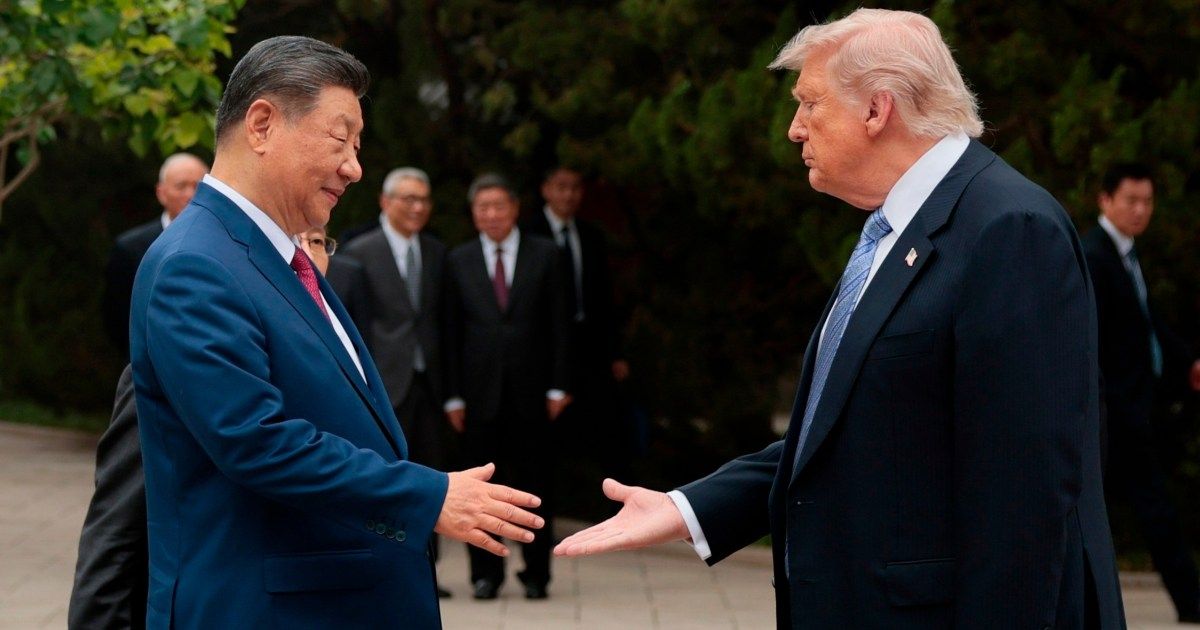
As industry leaders urge a global slowdown in artificial intelligence development for the sake of humanity, the two superpowers driving the technology’s rapid advancement have given no indication they intend to hit the brakes.
The United States and China, which are locked in a fierce strategic rivalry, have each rebutted calls to slow the pace of AI development, even as industry executives and researchers stress the need for international cooperation to avoid exposing humans to catastrophic – or even existential – risks.
Recommended Stories
list of 4 items
list 1 of 4Iranian President Masoud Pezeshkian arrives in New York for UNGA
list 2 of 4Zelenskyy says Ukraine ready for energy truce with Russia after Trump talks
list 3 of 4In Senegal, a mother’s ordeal exposes a health system under strain
list 4 of 4South Sudan’s Kiir dissolves government ahead of first national elections
end of list
As US President Donald Trump and Chinese President Xi Jinping prepare to meet on Wednesday in Washington, DC, for the third time this year, expectations for cooperation on AI safety are modest. Observers anticipated measures that, at best, would fall far short of the coordinated slowdown that many experts said is needed.
“The two countries host nearly all frontier labs and most of the models people download,” said Alvin Wang Graylin, a senior fellow at the Asia Society Policy Institute’s Center for China Analysis, describing agreed guardrails between the US and China as “close to a precondition” for safe AI.
“A safety regime covering one side’s models covers half the problem,” Wang Graylin said.
Hampering the prospects for US-China cooperation, analysts said, are mutual mistrust and divergent perceptions of the primary risks involved.
Trump has dismissed fears about AI as a “conspiracy” and suggested guardrails are not needed under his leadership, stressing the need for the US to stay ahead of China in the frontier technology.
Trump, who has cast AI dominance as crucial to the US maintaining its position as the top global power, on Tuesday again poured cold water on hopes for international cooperation, telling the United Nations General Assembly that Washington would oppose any “globalist scheme” to control AI.
China has taken a more hands-on approach to AI regulation – releasing the third iteration of its security framework this month – but has similarly rebuffed calls for a slowdown, dismissing fears of existential risks aired in Silicon Valley as “fearmongering”.
While Chinese officials have raised concerns about the dangers of AI, they have related it to more prosaic concerns, including cybersecurity and the authority of the ruling Communist Party.
In a rare essay this month, Chinese Minister of State Security Chen Yixin warned of “hostile forces” using AI to “fabricate political rumours” and “incite antagonistic sentiments”, threatening “political security, institutional security and ideological security”.
“China also increasingly recognises loss of control, misuse and cyber-risks but is much more sensitive to the possibility that ‘AI safety’ could become a justification for restricting Chinese access to chips, computers or markets,” said Sun Chenghao, a fellow at the Center for International Security and Strategy at Tsinghua University in Beijing.
“So the deepest obstacle is whether both sides can separate genuine safety cooperation from the wider technology competition,” Sun said.
“If every safety discussion is linked to export controls or slowing China’s development, Beijing will naturally question the purpose of cooperation,” Sun added.
So far, the only proposals publicly floated by either side have been a US-China dialogue and a notification mechanism for reporting national security threats.
While those measures would be positive first steps, the US and China would still need to reach an agreement on the AI capabilities or uses that should be off-limits to avert the greatest threats, experts said.
There is no consensus within the AI sector about how the technology should be regulated – or even whether government-led supervision is needed at all.
While AI leaders such as Anthropic CEO Dario Amodei and OpenAI CEO Sam Altman have called for a slowdown and greater regulation, some experts argued that such calls do not go far enough and development should be paused outright.
“International coordination is absolutely critical. We need more than safeguards,” said David Krueger, an assistant professor at the University of Montreal who specialises in AI safety.
“We need an immediate, indefinite international moratorium on frontier AI development.”
Other key figures, including Nvidia CEO Jensen Huang and Meta CEO Mark Zuckerberg, have played down the need for external oversight and emphasised AI’s potential to deliver transformative benefits for society.
Among those most alarmed at the rapid pace of AI development, recursive self-improvement, which describes when AI models learn to improve themselves, is often identified as a critical tipping point.
In an essay this month urging the AI sector to “pace the frontier”, Amodei said the US and China should discuss an agreement to “substantially limit” the rate of AI development while acknowledging that any deal is unlikely given the potential for a rule-breaking party to shift the global balance of power.
“The US and China must agree on AI capabilities red lines that will not be crossed. Most crucially, AI must never get powerful enough for recursive self-improvement,” said Otto Barten, director of the Netherlands-based Existential Risk Observatory.
“We do not know where the positive feedback loop of ever-smarter AIs creating ever-smarter AIs without human supervision will end and what these agents will finally be able to do,” Barten added.
Wang Graylin said Washington and Beijing should come to an agreement on what constitutes an “unacceptable capability” and a common standard to test frontier models, ideally by an independent international body that is funded by multiple countries.
But Wang Graylin acknowledged that distrust is clouding the prospects for an agreement and US officials are likely to see any deal as impossible to verify.
“Verification is hard for software you cannot see,” he said.
Sun said the US could ease the path to cooperation by “drawing a clearer line” between policies aimed at AI safety and those intended to maintain Washington’s technological advantage.
China could also contribute to greater trust by providing “greater transparency about its safety practices, model-evaluation methods and incident-reporting mechanisms,” Sun said.
Henry Gao, an expert on China and trade law at Singapore Management University, said a deeper issue is a fundamental mismatch in how Washington and Beijing view AI risks.
“Many in the US AI-safety debate focus on the possibility of highly capable AI escaping human control and posing catastrophic risks to humanity,” Gao said.
“In China, national security concerns appear more geopolitical: A major perceived danger is that the US could gain a decisive AI advantage and use it against China,” Gao said.
“That creates pressure to accelerate rather than slow development.”
Some AI experts argued that the focus of a US-China dialogue should be on mitigating existing risks rather than slowing development outright.
“AI is already extremely useful and has the potential to improve lives around the world,” said Rui Ma, a tech industry consultant and the founder of the Tech Buzz China news site, adding that pausing development would also impact the technology’s positive applications.
“I think thoughtful rules of engagement, constant monitoring, open channels of communication and the ability to adjust our approach as AI acquires different capabilities are much more important,” Ma said.
“The safeguards need to evolve alongside the technology.”
Calling the upcoming talks between Trump and Xi a “positive signal”, Jiang Tianjiao, associate professor at the Development Institute at Fudan University in Shanghai, expressed hope the sides could overcome their geopolitical rivalry to find common ground.
“China and the US are currently the leading nations in AI development,” Jiang said. “As such, we bear the responsibility of major powers to prevent AI from spiralling out of control, and we should set a global example by cooperating to manage these risks.”


on of Israeli ambassador to US critically injured in West Bank ramming attack
The son of Israeli Ambassador to the US Yechiel Leiter was critically injured in a ramming attack in the occupied...


Ultra-processed foods raise chronic disease risk, large study finds
NEWYou can now listen to Fox News articles! Just an extra 3½ ounces of ultra-processed foods (UPFs) a day was...

Trump welcomes Xi at airport with red carpet and military flyover. #BBCNews


California AG responds to Paramount settlement accusations
California Attorney General Rob Bonta defends his decision to settle an antitrust lawsuit with Paramount that was delaying the …


‘Dynamic Duo’ & Untitled ‘Gremlins’ Head To Fall 2028 Amid WB Release Date Changes
Warner Bros has made some release date changes, unrelated to its pending marriage with Paramount. DC’s Robins-origin puppets-meet-animation feature Dynamic...

President Xi greeted by Donald Trump as he rolls out red carpet for Chinese leader | BBC News
China's President Xi has been greeted by Donald Trump as he arrived in Washington for a historic summit. The White...

Should you bring iced coffee to a job interview? The unexpected debate takes off
An internet debate took off after a recruiter, Caitlin Wehniainen, questioned whether it's appropriate to show up for a job...


Dolly Parton’s estate granted restraining order against her nephew over threats
A Tennessee judge granted Dolly Parton’s estate a temporary restraining order Wednesday against the late singer’s nephew Bryan Seaver and...


RFK Jr.’s CDC isn’t letting states order COVID-19 shots for kids, blocking access
As respiratory virus season nears and fall vaccination drives get underway, more than half of US children are facing uncertainty...


Judge says he'll make a ruling on Trump's media ban as soon as he can
The hearing on CNN, MS NOW and Politico's request to restore their journalists' access to the White House after they...
-

 TravelNews2 weeks ago
Republican midterm convention 2026: What to know about Trump’s Dallas event
-

 Business1 week ago
Suspected stolen Tesla drives onto Pacific Beach boardwalk after police chase
-

 Business2 weeks ago
What is So Hard About Behind-The-Meter Power For Datacenters? Part 1
-
 Video2 weeks ago
Vance calls out El-Sayed over remarks about his family
-

 Video2 weeks ago
Charlie Kirk statue draws supporters to Times Square
-

 Entertainment2 weeks ago
Savannah Guthrie quietly makes heartbreaking admission in new statement about missing mom Nancy
-

 Entertainment2 weeks ago
Talking To Emily St. John Mandel About Revision, Timeline Corruption, And Living Without A Floor
-

 Entertainment2 weeks ago
What the 2026 summer box office reveals about theatrical shifts