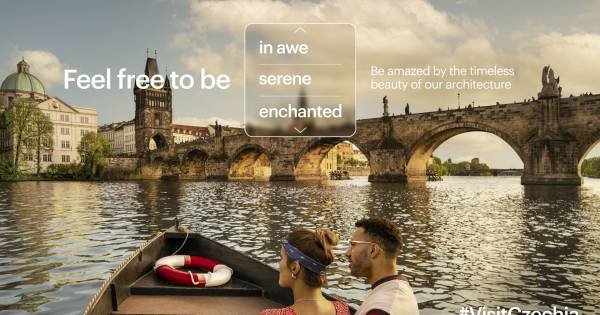
It’s not a relief-based mood. It’s a feeling of ambition. For years, Czechia has been one of Europe’s most popular city-break destinations. It was beautiful, affordable and easy to sell. But the story that is unfolding now is more deliberate. The country isn’t just enjoying a post pandemic recovery. The country is trying to reshape the tourism industry into something smarter, premium and more strategic. It uses hard data, targeted advertising and a stronger policy framework to achieve this. In 2025, Czechia recorded more than 23.5 millions arrivals and almost 60 million overnight stays, both of which were above the pre-pandemic level. This suggests that the recovery phase has ended. The sector has entered a cycle of expansion while the average stay has remained stable. This is a sign that it’s not just a temporary spike in demand, but a more lasting return of domestic and international travel. This growth is important beyond the hotel lobby and airport arrivals halls. According to the Ministry of Regional Development (MDR), tourism now accounts for 2,5% of Czechia’s GDP. In 2024, it will generate 180 billion CZK of gross value added, as well as 364 billion CZK of visitor spending, and more than 233,000 new jobs. The presentation of the government shows that officials are increasingly viewing tourism as a strategic sector, with implications for regional growth, tax revenue and competitiveness. The most interesting change is not the size of the rebound. Czechia wants a new kind of tourism. Prague, the heart of the national visitor economy offers the best picture of this change. The destination data for Prague shows that 8.27 million visitors will arrive in 2025, and nearly 19 millions will stay overnight. Domestic tourism is also steadily rising above pre-pandemic rates. But beneath these headline figures, a trend is more subtle and more telling: the value of visitors is increasing. In 2025, the average spending is expected to be 55 percent higher than it was in 2019. Approximately two-thirds (or more) of tourists will now stay in four- or five-star hotels. In the luxury segment occupancy is significantly above 2023 levels. This indicates that a city is no longer satisfied to compete solely on affordability. This helps explain why Czechia’s tourism leaders talk less about volume and more about positioning. The destination, which once relied heavily on its image of a bargain European capital, is now trying present itself as a place that offers culture, gastronomy and wellness, as well as premium experiences. The change is not only visible in the people who are coming, but also in the way the country chooses to market itself. At the heart of this effort is CzechTourism’s new international campaign “Feel Free”, which is less of a slogan and more of a signal about how the country wishes to be perceived. The 2026 campaign is not based on generic destination advertising but rather a multi-layered system of brand storytelling and performance marketing, as well as product-specific activation. CzechTourism has announced that the image campaign, backed by a 17.5 million CZK investment, will run between April and June 2026 in the United States, United Kingdom, Italy Spain, France, and the Netherlands. The focus is on emotional cinematic branding – longer 30-second spots, culture- and gastronomy based narratives, and, importantly, the introduction of video-on demand and connected TV placements, particularly in Italy. This move is important because it shows that Czechia is marketing themselves less as a discount destination and more as a premium lifestyle destination. The connected TV and VOD inventory is not just a media channel; it’s also a signal of audience ambition. They suggest longer attention spans and stronger creative storytelling, as well as a willingness to invest in brand effect instead of just chasing the cheapest click. The campaign architecture is also unusually slick. In other words, Czechia wants to buy more than just reach. Image-building and brand narrative are used to reach out to distant markets. In contrast, closer markets are targeted with narrower conversion and product campaigns that aim to get people to book. CzechTourism’s plan allocates an additional 4.3 million CZK for search and content PPC campaign running from February until December 2026 on markets such as Poland Slovakia Austria Hungary Germany France Italy and the Netherlands. Another 8 million CZK (including VAT) will be allocated for conversion campaigns to be run in the United States in September and October. The model is two-speed. Czechia builds desire in long-haul markets. In the nearer markets, it converts familiarity into trips. This split is one of many signs that the destination’s approach to demand has matured. The campaign calendar demonstrates that not all countries need the same message and that not all travellers are at the same stage in the decision funnel. The CzechTourism 2026 plan organizes tourism products according to season and market. For example, image, gastronomy and culture, walking, cycling, and golf are grouped together earlier in the year. Spas and winter products are pushed back into the autumn. The strategy does not promote “Czechia”, but instead breaks it down into product lines that are tailored to the needs of specific audiences. In August, golf is targeted at the UK and Scandinavia. In September, spa tourism is aimed at Germany and Poland. In November, winter sports are promoted in Germany, Poland and The Netherlands. This product segmentation reveals something about the country’s goals. Czechia aims to become less dependent upon the traditional Prague weekend, and more resilient in its position as a destination all year round. It also tries to spread the demand more effectively. The official presentations, while Prague remains dominant, emphasize regional development, destination marketing, and themed travel outside the capital. Czechia Travel Trade Day 2020 was built around six regional themes, from gastronomy and Pilsen in Olomouc to heritage and wellness in Vysocina. In this sense, the marketing campaign does not just sell a country overseas. It reinforces a domestic goal: to redistribute the tourism more intelligently, and build stronger regional economies. The ministry reports that 85 million CZK have been allocated to regional destination managers, along with support for direct flights and development of regional airports linked to tourism strategy. The same presentation highlights eTurista, a national online tool for guest registration that will improve data collection, local taxes administration, and the monitoring of short term rentals. The current Czech tourism model is based on data in almost all aspects. Officials claim they are already using mobile network and card payment information to inform tourism policies. This is important because it shows that a destination is moving away from anecdotes and towards evidence. They want to know not only how many people come, but also where they go, how much they spend, and how the patterns vary by market and season. Food has become a major part of Czechia’s tourism repositioning. CzechTourism materials show that gastronomy is integrated directly into the Feel Free campaign. This includes dedicated 15-seconds and 6-seconds spots, two visuals as heros, and a spot within the 30-second image ads used in markets such as Italy, the United States, and the United Kingdom. The messaging is carefully framed. Czech cuisine is presented in a way that combines tradition and innovation. Beer culture, fine dining and themed culinary routes are all woven into the same narrative. The timing of the campaign is not random. The country is relying heavily on the international visibility that the MICHELIN Guide generates. CzechTourism reports that the media reach associated with the 2025 guide announcement was more than 15,3 million contacts. The advertising value equivalent to 9.3 million CZK. Twenty restaurants reported an increase in guest demand and visitor numbers within a month after the announcement. The presentation even goes so far as to claim that Czechia is now ranked among the top 16 gastronomic destination in the world. No matter if one views this ranking as definitive, the strategic intent behind it is clear: food is no more treated as an auxiliary attraction but rather as the main export of the destination brand. This shift also helps Czechia reach out to more expensive travellers. Gastronomy is a great fit for social media, and it also works well in the media. Food is a more effective way to sell lifestyle, indulgence and discovery than abstract promises about heritage. The “Feel Free”, especially in its gastronomy implementations, clearly tries to capture this mood: not just to visit Czechia but to enjoy, taste and experience it sensually. Digital infrastructure underpins this ambition. CzechTourism reported that the domestic portal Kudy z nudy had more than 43,3 million visits in 2025. The international portal #VisitCzechia attracted nearly 2.9 millions. These traffic levels give the country an extensive owned-media platform, which is useful for conversion and content amplification as well as inspiration. A destination that has a large first-party audience is better positioned to test campaigns, drive demand and support niche products compared to one that relies solely on paid media or third-party platforms. What makes Czechia’s current tourism moment interesting is that these pieces — premiumisation of products, campaign design, regionalisation, and data — all move in the same directions. It is not the case that a tourism board runs glossy ads and the rest of system remains unchanged. Both the policy presentations and marketing presentations tell the same story. Both are oriented towards higher-value growth. They also have better data, a stronger regional balance, and a more deliberate global profile. This coherence is rare. Many destinations still chase raw numbers while talking about sustainability and value-led travel. Czechia is, at least based on its 2026 plans and strategies, trying to do something more structured. It wants to build a tourism industry that makes more money from visitors, distributes the gains more broadly, and markets itself more precisely. The direction of travel has become increasingly clear. Czechia is not only interested in being busy. It wants to be better sold, better managed and worth more.That is a different kind of tourism story — and, for Europe, an increasingly important one.www.visitczechia.comBy Sid Thaker


















 Theboldnews video2 weeks ago
 Entertainment6 days ago
 Theboldnews video1 week ago
 Video1 week ago
 Video1 week ago
 Video5 days ago
 Video5 days ago