

Business
Zhipu Shares Surge 33% After JPMorgan Picks Company as AI Winner


Shares of Chinese AI model maker Zhipu surged after JPMorgan Chase & Co. raised the stock’s price target and picked it as a winner against close rival MiniMax.
Zhipu, which trades as Knowledge Atlas Technology JSC, jumped 33% on Monday, one of its biggest surges since a successful initial public offering in Hong Kong to kick off the year. Alongside MiniMax, whose market debut came a day after Zhipu in January, the company is at the forefront of a wave of Chinese startups developing artificial intelligence tools to rival the best from the US.
Business
3,600 stock trades in 3 months: Breaking down Trump’s flurry of investment moves

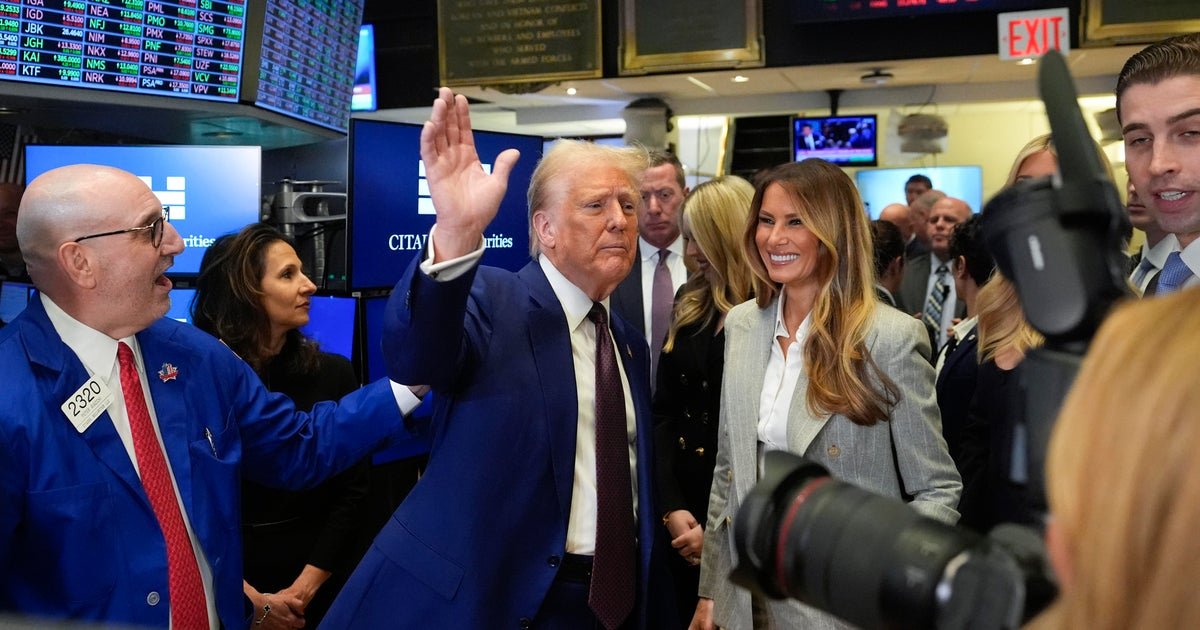
Washington — President Trump’s investment accounts traded between $212 million and $695 million in stocks and other securities over the first three months of the year — an unprecedented sum for a sitting president.
CBS News is presenting the data from the president’s most recent financial disclosure in a new interactive dashboard here. It shows that the president’s investment accounts made 2,346 purchases and 1,296 sales between Jan. 6 and March 30, 2026. The figures for individual transactions were presented in a range, which is reflected in the wide disparity between the minimum and maximum values of the trades overall.
The sheer volume of the trades, and the timing of certain transactions, has prompted ethics experts and Democrats in Congress to criticize the president for maintaining an active portfolio. Democratic Sen. Elizabeth Warren of Massachusetts has called for an investigation into “potential insider trading.” One investment professional, who reviewed the transactions at CBS News’ request, said the trades likely reflect a strategy by Mr. Trump’s money managers to reduce his tax bill. Another said he had “never seen a strategy out there that would warrant that amount of trading.”
The Trump Organization, meanwhile, said neither the president nor his family have any influence over his portfolio, which it said is managed by “independent third-party investment managers.”
Trump’s stock trades, by the numbers
CBS News extracted and organized the data from the scanned disclosure form, known as an OGE Form 278-T, to produce the fullest picture yet of the thousands of trades on the president’s behalf.
Federal officials, including the president, are required under the law to report any securities transactions worth more than $1,000 within 45 days to the Office of Government Ethics, which publishes the reports.
The president’s document, which he signed on May 8, includes 3,642 transactions across 1,026 individual firms and funds, with technology giants and popular exchange-traded funds topping the list of the most frequent and highest-volume transactions.
Microsoft, Amazon, Meta, Netflix, Oracle and AMD appeared most frequently in the document, with between 17 and 22 trades each:
The total value of stock purchases was between $126 million and $399 million. Sales totaled between $86 million and $296 million.
The most common transactions were trades valued at between $15,001 and $50,000, with 998 purchases and 393 sales falling in that range. The highest value range — $5,000,001 to $25 million — included four sales of Amazon, Meta, Microsoft and a Vanguard ETF.
The companies were sorted into 11 sectors using classifications from Yahoo Finance, plus separate categories for ETFs, funds and unclassified transactions. The data shows that technology firms were the most frequently bought-and-sold securities, followed by financial, consumer, industrial and healthcare companies. The transactions involving tech companies included at least $43 million in purchases and $24 million in sales:
The data reveals several spikes in trades in February and March. On Feb. 10, the president’s accounts sold large amounts of Microsoft, Amazon and Meta, with each transaction valued between $5,000,001 and $25,000,000.
Buying increased sharply in March. The accounts made 1,565 purchases in that month, compared to roughly 400 buys in each of the previous two months. On March 23 alone, the accounts made 283 purchases and 17 sales.
The disclosure represents the highest volume of stock trades on the president’s behalf since he took office last year. Previous disclosures showed that his investment accounts mainly bought and sold municipal and corporate bonds at a much slower pace. His January disclosure, for example, listed just 191 transactions over the last two months of 2025, compared with the 3,642 transactions in his May filing. (Another filing signed on May 8 also lists 69 other transactions, most of which appear to be bonds.)
Timing of trades
Some of the trades in the latest disclosure preceded policy moves by the administration or public statements about the companies by the president himself, prompting a flurry of headlines about the timing of certain trades shortly after the disclosure form was released in May.
For instance, the president’s financial managers bought between $500,001 and $1,000,000 of Nvidia stock on Jan. 6, 2026, the first of a total of 15 transactions — nine purchases and six sales — over the three months covered in the disclosure. The next week, the administration relaxed export controls on Nvidia’s highly prized AI chips, clearing the way for the company to sell them to China.
The president’s accounts also purchased hundreds of thousands of dollars worth of stock in Palantir, the defense contractor with extensive government business, over the course of March. On April 7, Mr. Trump praised the company in a post on Truth Social that included its stock ticker: “Palantir Technologies (PLTR) has proven to have great war fighting capabilities and equipment. Just ask our enemies!!! President DJT”
Mr. Trump’s accounts also bought stock in drugmaker Eli Lilly, and the timing coincided “with several favorable government decisions benefiting the drugmaker’s GLP-1 business,” according to KFF Health News. The data shows that Mr. Trump’s accounts bought as much as $730,000 in Eli Lilly stock over the first quarter.
Warren, the senator, pointed to the Nvidia trades and other transactions at a recent hearing on Capitol Hill, alleging that the president “is enriching himself by taking advantage of his position.” She pressed Treasury Secretary Scott Bessent to open an investigation.
Professional investment managers who reviewed the data for CBS News said the volume of trading makes it hard to discern whether any transactions were prompted by insider information. The data also shows that the accounts bought and sold stakes in Nvidia, Palantir and Eli Lilly at various times, beyond the instances that raised possible suspicions, making it harder to allege that certain transactions were prompted by insider trading.
David Salem, a portfolio manager at Hedgeye Asset Management in Cambridge, Massachusetts, said he believes the trades represent “classic tax-loss harvesting activity,” in which investment managers sell some securities at a loss to offset gains elsewhere. Salem said he believes the president’s advisers were pursuing a strategy of “direct indexing,” or buying and selling individual securities in a way that mimics the composition of large index funds.
“There are actually computers that can automate the whole thing for me. I can program these computers to buy and sell. I can sell and realize the loss, and I can also simultaneously sell something that’s up a lot and have the losses on the one that’s down offset the taxes that are from the stocks that are up,” Salem said.
Salem said the strategy can result in a smaller tax bill over time.
“The manager and managers, plural, who are doing this for Trump are probably doing it for tens of thousands of other customers. You can’t do this kind of direct indexing you see in the filing unless you have pretty sophisticated computers, and legal and tax gurus to figure all this out,” he said, adding that the strategy is “a service that is available only to high-net-worth or ultra-high-net-worth individuals.”
Salem said the spike in activity on March 23, the day with the most purchases, was an indication of the strategy.
“That happened to be the day that the major index providers, S&P 500 and FTSE, did their rebalancing,” he said. “If you were following an indexed approach where you were trying to hug a benchmark in a tax-sensitive manner, you would expect to see trades captured by that rebalancing, and we did. That’s prima facie proof of tax-loss harvesting.”
Salem said he saw no evidence of insider trading, but noted that he “can’t prove a negative.”
Eric Diton, who has spent the past 40 years as a financial adviser to high-net worth individuals, said he could not explain the volume of the trades.
“I can’t come up with a rationale for that amount of trading for anyone. Even if people were trying to pin him for … trading on information, you still wouldn’t trade thousands of times. There’s not enough information swirling to trade that many times,” said Diton, who is president and managing director of the firm the Wealth Alliance.
“It’s also tax inefficient. If the goal is maybe to create short-term losses, again, I have not seen a strategy that would warrant that kind of trading, ever,” he added. “I build my life on giving advice and giving explanation. I truly can’t explain it. It makes no sense to me. Maybe there is some sophisticated trade out there for tax purchases, I’ve never seen a strategy out there that would warrant that amount of trading. Thousands of trades in a quarter.”
Diton concluded: “I don’t think the president can sit there and day trade. To do thousands of trades in a quarter, that’s a full-time job and then some.”
The Trump Organization said in a statement that “[n]either President Trump, his family, nor The Trump Organization plays any role in selecting, directing, or approving specific investments.”
“They receive no advance notice of trading activity and provide no input regarding investment decisions or portfolio management,” the statement said. “This structure was intentionally designed to maintain a clear separation between President Trump and the independent third-party investment managers overseeing the accounts and avoid even the appearance of any conflict of interest.”
Ethics concerns
Stock trading by a sitting president is not illegal, and presidents are exempt from a key conflict of interest law that requires other federal officials to recuse themselves from matters that might affect their own finances.
But the sitting president having an active stake in certain companies has raised alarms among ethics experts and Democrats on Capitol Hill, who say the arrangement leaves the door open for corruption.
“The concern is he is in a position to make all kinds of decisions that can affect stock prices. Not even decisions — tweets. He gets on Truth Social and says a deal with Iran is near. That’s going to affect prices, and he then gets on the next day and says, ‘No, they’re being difficult. We have to bomb again,’ and that’s going to affect stock prices in a different way,” said Richard Briffault, a Columbia Law School professor who specializes in government ethics. “In the meantime, he could have bought or sold stocks that are affected by these decisions.”
Most presidents in the modern era have placed their assets in a blind trust before taking office, or limited their holdings to diversified funds. A blind trust prevents the beneficiaries from having insight into the day-to-day management of their money. The move is meant to avoid any conflicts of interest, or even the appearance of a conflict.
Mr. Trump declined to place his assets in a truly blind trust. His decision to have his investment accounts managed by advisers without those constraints means he likely has visibility into the transactions, Briffault said.
“He must know — or he could know — what his holdings are, and he could know how his actions and statements affect them,” he said. “One [concern] is you just have to trust them. There’s no independent monitor.”
In an exchange with Warren at a Senate hearing on June 3, Bessent, the treasury secretary, deflected calls for an investigation, saying that “President Trump is not sitting in the Oval Office engaging in a high-frequency trading strategy. Clearly, he had an outside manager who was doing that.”
But Warren pointed to the possibility that the president could be influencing the positions his advisers take.
“The investments that President Trump has made are not blind. President Trump literally signed the 113-page document publicly listing all of his individual stock trades at the same time that he is making decisions affecting those stocks,” Warren said at the hearing with Bessent.
The focus on banning active stock trading has mostly centered on allegations of insider trading by members of Congress in recent years, and there have been various proposals on Capitol Hill to outlaw trading by lawmakers. Some of those proposals would also ban trading by members of the executive branch and judiciary.
Sen. Andy Kim, a Democrat from New Jersey, has pointed to the trades to push his Restoring Trust in Public Servants Act, which would ban officials in all three branches of government from owning or trading stocks.
The HONEST Act, a bipartisan proposal in the Senate, would ban trading by members of Congress as well as the president and vice president. It would also require officials to divest their assets upon taking office for their next term. The bill advanced out of a Senate committee last year but has not made it to the floor in the GOP-controlled chamber.
The proposal was sponsored by Sen. Josh Hawley, a Republican from Missouri. The president singled Hawley out for criticism when he joined Democrats on the Senate Homeland Security Committee to advance the bill.
“I don’t think real Republicans want to see their President, who has had unprecedented success, TARGETED, because of the ‘whims’ of a second-tier Senator named Josh Hawley,” Mr. Trump wrote on Truth Social in July 2025.
Hawley reiterated his support for the legislation in comments to CBS News last week, while noting that he “would support anything that we can get passed and signed into law.”
“I’m supportive of any stock trading ban we could get. My legislation would not apply to this president or anybody currently in office. It would take effect for the executive branch in January of 2029,” Hawley said. “But, you know, I’ve long been a proponent of banning stock trading, and we should start with members of Congress.”
Gabriella Biello, Maria Sullivan, Arden Farhi, Melissa Quinn and Kaia Hubbard contributed to this report.
Business
Fox Corp Buying Roku In $22B Deal

Fox Corp just unveiled a $22B deal to acquire connected TV service Roku, considerably boosting its streaming capabilities.
The agreement will see Fox acquire Roku for $160 a share through a combination of cash and Fox Class A stock. This gives Roku an enterprise valuation of $22B. Upon closing, Fox shareholders will own about 73% of the merged business, with Roku shareholders taking the other 27%.
Roku, founded in 2002, reaches around 100 million global streaming homes through its connected TV platform, and is in more than half of all U.S. broadband households. Fox operates its namesake broadcast network, a large local station portfolio, cable networks Fox News and Fox Business, subscription streamer Fox One, and a sports rights portfolio including the NFL, MLB, NASCAR, Big Ten and the FIFA World Cup.
The deal marks a major step-up in streaming for Fox six years after it paid $440 million to acquire Tubi, a free and ad-supported service. The company helped finance that deal in part by selling shares it had acquired in Roku as an early investor.
In its announcement, Fox said the Roku purchase would “create a scaled next-generation media and technology company positioned at the intersection of two of the most important forces reshaping video consumption: the enduring primacy of live sports and news, and the continued rise of streaming.”
Combiningtogether the likes of the Fox’s sports, news and broadcast networks, Tubi and The Roku Channel, Fox said the merged company would be the third-largest U.S. TV player by viewing share. Fox’s Tubi acquisition helped beef up the company’s holdings following the Murdoch family’s decision to sell most of its assets to Disney for $71.3B.
Around 90% of Tubi’s viewing is AVOD, while Roku is more focused on the adjacent FAST channels space, and Fox sees them as complementary businesses.
In a statement announcing the deal, Fox and Roku said both companies were “committed to continuing to operate Roku as an open, partner-friendly platform and to the continued ubiquitous distribution of Fox content.” Directors from both sides have “unanimously” approved the deal, which they expect to “be accretive to free cash flow per share by the second full year after closing” and achieve around $400M in run-rate cost synergies.
“This is a defining moment for Fox, and a natural extension of the deliberate and focused strategy we have been executing for nearly a decade,” Fox CEO Lachlan Murdoch said in a statement. “In 2019, we reoriented the company around live news and sports. In 2020, we acquired Tubi and under our stewardship it has become one of the most successful businesses in streaming.
“Today, we take the next step: bringing together the most valuable live content portfolio in video consumption with the preeminent streaming platform through which America watches it. This combination will transform the scope of our company into high-growth verticals and yield a step change in our overall growth profile.”
He talked up Fox’s financial wherewithal in making the deal and said Roku “pioneered streaming TV and scaled it into a leading CTV platform. Together, we intend to lead its next chapter.”
Roku founder, chairman and CEO Anthony Wood will have “an ongoing role” at the combined company and will join the Fox board.
“Over the past two decades, we’ve built Roku into the leading TV streaming platform, reaching more than 100 million households globally and reshaping how people discover and enjoy entertainment,” Wood said.
“I’m incredibly proud of what our team has built, and the combination with Fox is an extraordinary opportunity to accelerate our vision, scale faster and innovate more aggressively for viewers, partners and advertisers. That’s why our Board of Directors unanimously determined after concluding its strategic review process that this transaction offers a significant premium to Roku shareholders while also providing them with the opportunity to participate in the compelling future upside of the combined company. I couldn’t be more excited about what we’ll accomplish together.”
The deal is subject to customary closing conditions, approvals from both sets of shareholders and U.S. and foreign regulatory approvals. It is expected to close in the first half of 2027.
Business
Fox to buy Roku in $22 billion deal to accelerate shift to digital

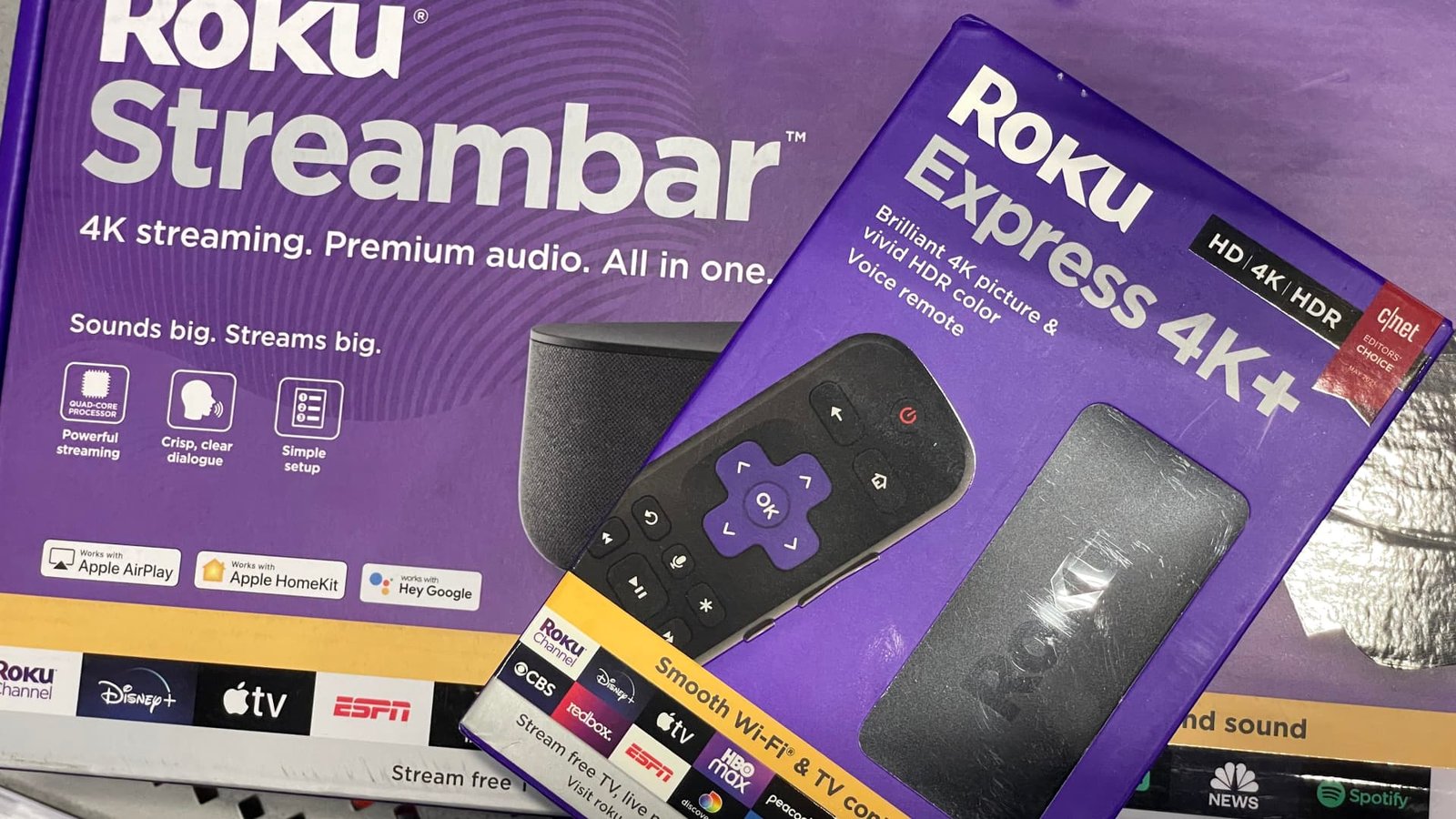
Fox Corp is buying Roku in a cash-and-stock deal valued at about $22 billion in a bet that pairing its sports and news programming with a top TV streaming platform will strengthen its position as audiences shift online.
The deal, announced on Monday, gives the cable TV-reliant Fox direct access to Roku’s large installed base of more than 100 million streaming households, helping it better sell targeted ads and reduce reliance on traditional distribution.
Fox will acquire Roku for $160 per share, representing a premium of 11.4% to Roku’s last close.
Shares of Fox were down 8% in premarket trade, while Roku’s shares were halted.
Roku is one of the first companies to bring streaming platforms like Netflix and YouTube to television through connected devices and smart TVs.
Its business is largely driven by advertising and subscription revenue from streaming apps on its platform. Advertising is the largest component, with revenue of $613 million in the first quarter, up 27% year-on-year.
Fox already operates Tubi, while Roku runs The Roku Channel, and a combination of the two platforms could create a clear leader in streaming, with a meaningful share of total TV viewing, JP Morgan analysts said on Sunday.
Reuters reported on Friday that Roku is exploring its strategic options, including a full sale of the firm, amid interest from companies seeking access to its vast streaming audience and advertising platform.
The combined company will become the third-largest player in U.S. television by share of viewing, the companies said.
The deal is expected to close in the first half of calendar year 2027.
Upon closing, existing Fox shareholders are expected to own about 73% of the combined company and Roku shareholders about 27%.
Business
FOX CORPORATION TO ACQUIRE ROKU, INC.

Combination Creates a Scaled Media and Technology Platform with Superior Reach, Engagement and Monetization Capability
Unites FOX’s Premium Live Content with Roku’s Leading Streaming Platform Reaching Over 100 Million Households
Combined Company to Have One of the Largest Streaming Businesses in the U.S., Including Tubi and The Roku Channel
FOX’s Shareholder Capital Return Program to Continue Uninterrupted While Maintaining its Current Investment Grade Rating
NEW YORK and SAN JOSE, Calif., June 15, 2026 /PRNewswire/ — June 15, 2026 – Fox Corporation (Nasdaq: FOXA, FOX) (“FOX” or the “Company”) and Roku, Inc. (Nasdaq: ROKU) (“Roku”) today announced they have entered into a definitive agreement under which FOX will acquire Roku for $160.00 per share in a combination of cash and FOX Class A common stock, valuing Roku at approximately $22 billion in enterprise value.
The transaction combines FOX’s leading sports, news and entertainment content and the Tubi service, with Roku’s leading connected TV platform, The Roku Channel, first-party data and direct relationship with more than 100 million global streaming households. Together, FOX and Roku will create a scaled next-generation media and technology company positioned at the intersection of two of the most important forces reshaping video consumption: the enduring primacy of live sports and news, and the continued rise of streaming.
FOX and Roku are committed to continuing to operate Roku as an open, partner-friendly platform and to the continued ubiquitous distribution of FOX content. On a pro forma basis, the combined company will become the third-largest player in U.S. television by share of viewing, with an attractive mix of FOX’s sports, news, and entertainment content, alongside streaming services Tubi and The Roku Channel. That distribution and engagement scale spans every major viewing environment – broadcast, cable, local and streaming – creating broad and diversified reach that benefits viewers, partners and advertisers.
Lachlan K. Murdoch, Executive Chair and Chief Executive Officer of Fox Corporation, said:
“This is a defining moment for FOX, and a natural extension of the deliberate and focused strategy we have been executing for nearly a decade. In 2019, we reoriented the company around live news and sports. In 2020, we acquired Tubi and under our stewardship it has become one of the most successful businesses in streaming. Today, we take the next step: bringing together the most valuable live content portfolio in video consumption with the preeminent streaming platform through which America watches it. This combination will transform the scope of our company into high-growth verticals and yield a step change in our overall growth profile. And we are executing this acquisition from a position of financial strength – maintaining our investment grade balance sheet while providing our shareholders with an uninterrupted return of capital program in the form of share buybacks and dividends. Roku pioneered streaming TV and scaled it into a leading CTV platform. Together, we intend to lead its next chapter.”
Anthony Wood, Founder, Chairman and Chief Executive Officer of Roku, said:
“Over the past two decades, we’ve built Roku into the leading TV streaming platform, reaching more than 100 million households globally and reshaping how people discover and enjoy entertainment. I’m incredibly proud of what our team has built, and the combination with FOX is an extraordinary opportunity to accelerate our vision, scale faster and innovate more aggressively for viewers, partners and advertisers. That’s why our Board of Directors unanimously determined after concluding its strategic review process that this transaction offers a significant premium to Roku shareholders while also providing them with the opportunity to participate in the compelling future upside of the combined company. I couldn’t be more excited about what we’ll accomplish together.”
Key Strategic Benefits of the Combination Include:
Increases scale and reach: The transaction pairs the leader in live news and sports with the leading connected TV platform. Roku’s platform has leading scale in the attractive, high growth connected TV vertical, reaching over 100 million global streaming households, including more than half of all U.S. broadband households. FOX is #1 in live news and sports, with a portfolio including the NFL, MLB, NASCAR, Big Ten, FIFA World Cup, FOX News and FOX Business that represents some of the most valuable appointment-viewing content in television. Together, FOX and Roku will encompass premium live content, broad distribution and significant audience reach across linear and streaming.
Expands position in high growth verticals: The acquisition of Roku positions FOX across the full video ecosystem and provides a wider entry into the high growth segment of connected TV, particularly advertising and streaming subscriptions.
Creates a more powerful streaming platform: Brings together FOX’s premium content and advertising capabilities with Roku’s consumer interface, home screen, platform technology and direct viewer relationships to enhance content discovery, deepen engagement and create a more compelling streaming experience for consumers and content partners.
Enhances long-term growth profile: Advances FOX’s business mix toward high growth streaming and connected TV verticals and maintains a balanced mix across advertising and distribution businesses, while strengthening the combined company’s long-term growth and financial profile and maintaining FOX’s disciplined capital allocation approach.
Transaction Details
FOX is acquiring Roku in a cash-and-stock transaction valued at $160.00 per ROKU share. FOX will pay $96.00 in cash and 0.9693 shares of FOX Class A common stock for each Roku Class A and Class B share outstanding immediately prior to the effective time of the merger. The stock consideration represents $64.00 per ROKU share based on a reference price of $66.03 per share, the 10-day volume-weighted average price of FOX Class A common stock as of June 10, 2026.
Upon closing, existing FOX shareholders are expected to own approximately 73% of the combined company and Roku shareholders approximately 27%. The transaction has been unanimously approved by the Boards of Directors of both companies. The transaction is expected to strengthen FOX’s long-term growth profile, accelerate its digital strategy, be accretive to free cash flow per share by the second full year after closing, and achieve approximately $400 million of run-rate cost synergies with additional revenue upside.
FOX expects to fund the cash portion of the transaction consideration with a combination of new debt and cash on hand. FOX has obtained $12.0 billion of fully committed bridge financing from Morgan Stanley Senior Funding, Inc. At closing, the company expects pro forma net leverage to be approximately 2.8x, inclusive of 50% credit for run-rate cost synergies. Additional detail on financing terms will be included in the companies’ required filings with the Securities and Exchange Commission.
Roku Founder, Chairman and Chief Executive Officer Anthony Wood will have an ongoing role at the combined company and will join the FOX Board of Directors following the close of the transaction.
The transaction is subject to customary closing conditions, including approvals by FOX and Roku shareholders, receipt of U.S. and certain non-U.S. regulatory approvals and other customary conditions. In connection with execution of the acquisition agreement, Anthony Wood and certain associated trusts and related entities that together hold at least a majority of the voting power of the Roku stock entered into a voting and support agreement agreeing to vote in favor of the transaction. LGC Holdco LLC also entered into a voting and support agreement with respect to the issuance of FOX shares in the transaction. The transaction is expected to close in the first half of calendar year 2027.
In connection with the transaction, the companies expect to file a registration statement on Form S-4 containing a joint proxy statement/prospectus with the Securities and Exchange Commission.
Investor Conference Call and Presentation
FOX and Roku will host a joint investor conference call today at 8:00 AM Eastern Time to discuss the transaction. A live webcast and related presentation materials will be available on FOX’s investor relations website at investor.foxcorporation.com and Roku’s investor relations website at www.roku.com/investor. An archived replay and the presentation will be available following the call.
About Fox Corporation
Fox Corporation produces and distributes compelling news, sports and entertainment content through its primary iconic domestic brands, including FOX News Media, FOX Sports, Tubi Media Group, FOX Entertainment and FOX Television Stations. These brands hold cultural significance with consumers and commercial importance for distributors and advertisers. The breadth and depth of FOX’s footprint allow the Company to deliver content that engages and informs audiences, develop deeper consumer relationships and create more compelling product offerings. For more information about Fox Corporation, please visit www.foxcorporation.com.
About Roku, Inc.
Roku pioneered streaming on TV. Today, it is the #1 TV streaming platform in the U.S., Canada, and Mexico by hours streamed (Hypothesis Group, Dec. 2025). Roku connects viewers to the content they love, enables content publishers to build and monetize large audiences through advertising and subscriptions, and provides advertisers with unique capabilities to reach and engage consumers. Roku streaming players and Roku-made TVs are available at major retailers, and licensed Roku TV™ models are sold by leading TV brands in more than 15 countries around the world. Roku also owns and operates The Roku Channel, the home of premium and free entertainment; Howdy, a low-cost subscription service; and Frndly TV, a live TV streaming service. Roku is headquartered in San Jose, Calif., U.S.A.
Advisors
Allen & Company LLC is serving as lead financial advisor to Fox Corporation. Morgan Stanley & Co. LLC is also serving as a financial advisor to FOX and Morgan Stanley Senior Funding, Inc. is providing a committed $12 billion bridge financing facility. Goldman Sachs & Co. LLC is also serving as a financial advisor to FOX. Weil, Gotshal & Manges LLP is serving as legal counsel to FOX.
Qatalyst Partners is serving as exclusive financial advisor to Roku, and Goodwin Procter LLP is serving as legal counsel to Roku.
Important Information About the Transaction and Where to Find It
In connection with the proposed transaction between FOX and Roku, FOX will file with the SEC a registration statement on Form S-4 that will include a joint proxy statement of FOX and Roku and that will also constitute a prospectus of FOX. FOX and Roku may also file other documents with the SEC regarding the proposed transaction. This document is not a substitute for the joint proxy statement/prospectus or registration statement or any other document which FOX or Roku may file with the SEC. INVESTORS AND SECURITY HOLDERS OF FOX AND ROKU ARE URGED TO READ THE REGISTRATION STATEMENT, THE JOINT PROXY STATEMENT/PROSPECTUS AND ALL OTHER RELEVANT DOCUMENTS THAT ARE FILED OR WILL BE FILED WITH THE SEC, AS WELL AS ANY AMENDMENTS OR SUPPLEMENTS TO THESE DOCUMENTS, CAREFULLY AND IN THEIR ENTIRETY BECAUSE THEY CONTAIN OR WILL CONTAIN IMPORTANT INFORMATION ABOUT THE PROPOSED TRANSACTION AND RELATED MATTERS. Investors and security holders may obtain free copies of the registration statement and the joint proxy statement/prospectus (when available) and other documents filed with the SEC by FOX and Roku through the web site maintained by the SEC at www.sec.gov. These documents, once available, also will be made available free of charge on FOX’s website at https://investor.foxcorporation.com/ or on Roku’s website at https://www.roku.com/investor.
No Offer or Solicitation
This communication is not intended to and shall not constitute an offer to sell or the solicitation of an offer to sell or the solicitation of an offer to buy any securities or a solicitation of any vote of approval, nor shall there be any sale of securities in any jurisdiction in which such offer, solicitation or sale would be unlawful prior to registration or qualification under the securities laws of any such jurisdiction. No offer of securities shall be made except by means of a prospectus meeting the requirements of Section 10 of the Securities Act of 1933, as amended.
Cautionary Notes on Forward-Looking Statements
This communication includes “forward-looking statements” within the meaning of federal securities laws, including Section 27A of the Securities Act of 1933, as amended (the “Securities Act”), and Section 21E of the Securities Exchange Act of 1934, as amended (the “Exchange Act”) by the Private Securities Litigation Reform Act of 1995, including statements regarding the proposed transaction between Fox Corporation (“FOX”) and Roku, Inc. (“Roku”). In this context, forward-looking statements generally are identified by the words “believe,” “project,” “expect,” “anticipate,” “estimate,” “forecast,” “outlook,” “target,” “endeavor,” “seek,” “predict,” “intend,” “strategy,” “plan,” “may,” “could,” “should,” “will,” “would,” “will be,” “will continue,” “will likely result,” or the negative thereof or variations thereon or similar terminology generally intended to identify forward-looking statements. All statements, other than historical facts, including, but not limited to, statements regarding the expected timing and structure of the proposed transaction, the ability of the parties to complete the proposed transaction, the expected benefits of the proposed transaction, including future financial and operating results and strategic benefits, the tax consequences of the proposed transaction, and the combined company’s plans, objectives, expectations and intentions, legal, economic and regulatory conditions, and any assumptions underlying any of the foregoing, are forward-looking statements.
These forward-looking statements are based on FOX’s and Roku’s current expectations and are subject to risks and uncertainties, which may cause actual results to differ materially from FOX’s and Roku’s current expectations. Should one or more of these risks or uncertainties materialize, or should underlying assumptions prove incorrect, actual results may vary materially from those indicated or anticipated by such forward-looking statements. The inclusion of such statements should not be regarded as a representation that such plans, estimates or expectations will be achieved. Important factors that could cause actual results to differ materially from such plans, estimates or expectations include, among others, (1) that one or more closing conditions to the proposed transaction, including certain regulatory approvals, may not be satisfied or waived, on a timely basis or otherwise, including that a governmental entity may prohibit, delay or refuse to grant approval for the consummation of the proposed transaction, may require conditions, limitations or restrictions in connection with such approvals or that the required approval by the stockholders of FOX or stockholders of Roku may not be obtained; (2) the risk that the proposed transaction may not be completed on the terms or in the time frame expected by FOX and Roku, or at all; (3) unexpected costs, charges or expenses resulting from the proposed transaction; (4) uncertainty of the expected financial performance of the combined company following completion of the proposed transaction; (5) failure to realize the anticipated benefits of the proposed transaction, including as a result of delay in completing the proposed transaction or integrating the businesses of FOX and Roku, on the expected timeframe or at all; (6) the ability of the combined company to implement its business strategy; (7) difficulties and delays in the combined company achieving revenue and cost synergies; (8) inability of the combined company to retain and hire key personnel; (9) the occurrence of any event that could give rise to termination of the proposed transaction; (10) the risk that stockholder litigation in connection with the proposed transaction or other litigation, settlements or investigations may affect the timing or occurrence of the proposed transaction or result in significant costs of defense, indemnification and liability; (11) evolving legal, regulatory and tax regimes; (12) changes in general economic, competitive, technological and/or industry-specific conditions affecting the businesses and industries in which FOX and Roku operate; (13) actions by third parties, including government agencies; (14) risks that any debt financing anticipated in connection with the proposed transaction is not obtained or that such financing cannot be obtained on the anticipated timing or terms or unexpected costs or expenses in connection therewith; (15) risks related to the disruption of management time from ongoing business operations due to the pendency of the proposed transaction, or other effects of the pendency of the proposed transaction on the relationship of any of the parties to the transaction with their employees, customers, advertisers, content partners, distributors, device partners, suppliers or other counterparties; and (16) other risk factors detailed from time to time in FOX’s and Roku’s reports filed with the Securities and Exchange Commission (the “SEC”), including FOX’s and Roku’s annual reports on Form 10-K, quarterly reports on Form 10-Q, current reports on Form 8-K and other documents filed with the SEC, including documents that will be filed with the SEC in connection with the proposed transaction. The foregoing list of important factors is not exclusive.
Any forward-looking statements speak only as of the date of this communication. Neither FOX nor Roku undertakes, and each party expressly disclaims, any obligation to update any forward-looking statements, whether as a result of new information or developments, future events or otherwise, except as required by law. Readers are cautioned not to place undue reliance on any of these forward-looking statements.
Participants in the Solicitation
FOX, Roku and their respective directors and executive officers may be deemed to be participants in the solicitation of proxies in respect of the proposed transaction. Information regarding FOX’s directors and executive officers, including a description of their direct interests, by security holdings or otherwise, is available in FOX’s Annual Report on Form 10-K for the year ended June 30, 2025, under the heading “Directors, Executive Officers and Corporate Governance”, and its proxy statement filed on September 25, 2025, under the headings “Proposal No.1: Election of Directors” and “Executive Officers of Fox Corporation,” which are filed with the SEC. Information regarding Roku’s directors and executive officers, including a description of their direct interests, by security holdings or otherwise, is available in Roku’s Annual Report on Form 10-K for the year ended December 31, 2025, under the heading “Directors, Executive Officers and Corporate Governance” and its proxy statement filed on April 24, 2026, under the heading “Board of Directors and Corporate Governance” and “Executive Officer Biographies,” which are filed with the SEC. A more complete description will be available in the registration statement on Form S-4 and the joint proxy statement/prospectus when filed.
SOURCE Fox Corporation
Business
KFC’s The Colonel gets a subtle makeover in new rebrand
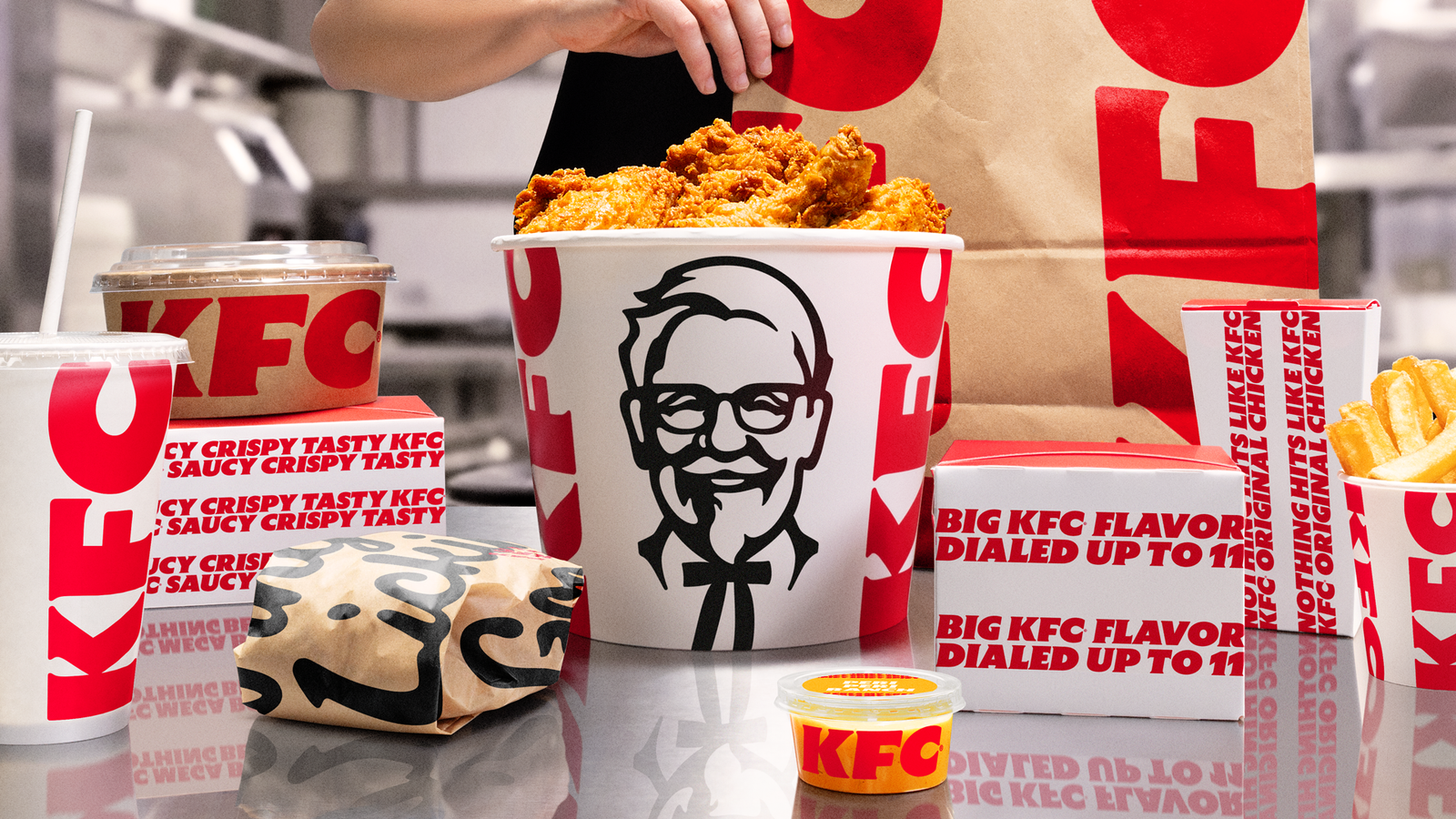
KFC has announced one of its biggest ever rebrands, which spans every touchpoint around the world. The new look was created by JKR, the agency behind the much-loved rebrand of Burger King a few years ago.
At the centre of the rebrand is a refreshed Colonel, who’s been given a slightly thicker outline as well as a neck/collar. The iconic bucket has also been changed, with the brand name now either side of the Colonel rather than underneath.
It’s one of those rebrands that feels like it’s been around for ages, which can only be a good thing. I can’t imagine people getting too upset about this one, but then again, that’s not really how the internet works.
The new branding comes to life across packaging, digital platforms, advertising and restaurants. Will this be another Brand Impact Award winning project for JKR? Only time will tell.
The evolution of the brand is extensive, with changes made to not just the bucket and The Colonel but also across the logo, which has become more 3D, the lettermark, the typography (developed with Studio DRAMA), the illustration style and tone of voice. The bucket is at the heart of the new system.
Elsewhere, there are new menu options, which are focused around items for dipping, dunking and solo snacking, plus a new drinks menu.
There are also new restaurant designs including an open-concept design in McKinney, Texas, and a fully immersive restaurant in Dubai. These are both opening later in the year. And you can expect the new look and feel to roll out across other locations around the globe in due course.
“KFC has always believed in doing things differently, with a passion and originality that created a category and made it unmistakable,” says Sean Thomas, global executive creative director at JKR. “Our role was to help it evolve for the next chapter, in a way that only KFC could. Where to start? By building a world and experience that consumers could step into. We call it the Bucketverse.
“This 360 evolution spans the entire brand experience. From the design system and brand assets to restaurant environments, packaging, digital platforms and tone of voice, every touchpoint has been rethought. More expressive, more connected, more KFC.”
“Nothing hits like KFC and that sentiment doesn’t stop at the chicken,” says Matt Michaluk, executive creative director (experience) at JKR. “It carries through every inch of the new experience, from ordering on the app, stepping into a restaurant, all the way to that finger lickin’ moment and beyond.
“That’s why we’re pioneering a disruptive category shift with KFC, taking things from QSR (quick service restaurants) to QXR (quick experience restaurants). You’re going to see next-level hospitality, crave-worthy content, and culture-defining activations.
A brand turning experience-led distinctiveness up to 11.”
What do you think of the new look? Let us know in the comments.




Why does the UK PM want to ban social media for under-16s? #BBCNews
Subscribe to our channel here: https://bbc.in/bbcnews For the latest news download the BBC News app or visit BBC.com/news …


Mariska Hargitay calls Jamie Lee Curtis a ‘family member’ | Variety & CNN Actors on Actors
Mariska Hargitay and Jamie Lee Curtis bond over their friendship in this behind-the-scenes of their Actors on Actors episode.


Canada's Spotted Lake is a geological wonder
This lake, located just outside of Osoyoos in British Columbia, has distinctive, colorful spots that are created by a combination...


Teenagers react to the social media ban announced in the UK. #BBCNews


Parents react as PM Keir Starmer announces ban on social media for under-16s | BBC News
Keir Starmer says under-16s will be banned from social media by spring 2027. "A full ban is the right choice…...

3,600 stock trades in 3 months: Breaking down Trump’s flurry of investment moves
Washington — President Trump’s investment accounts traded between $212 million and $695 million in stocks and other securities over the...


What do we know so far about theUK social media ban?


Jamie Lee Curtis and Mariska Hargitay argue over pronunciation of Los Angeles
Whose side are you on? Stream the full episode now on the CNN app. Jamie Lee Curtis and Mariska Hargitay...


PM says UK will work to ensure 'lasting peace' after US-Iran deal. #BBCNews


Iran deal: Ex-NATO commander reveals ‘the bad news’
The US and Iran say they have reached an agreement that will end a US blockade of Iranian ports and...
-

 LifestyleNews2 weeks ago
120 minutes of strength training per week may help extend lifespan
-

 Business2 days ago
How much of Musk’s wealth comes from government help? Virtually all of it
-

 Politics4 days ago
What to know about the stabbing that set off fiery riots in Northern Ireland
-

 Video3 days ago
Download fans say what they love about the festival. #DownloadFestival #BBCNews
-

 Video3 days ago
Why SpaceX IPO isn't about space. #SpaceX #ElonMusk #BBCNews
-

 HealthNews3 days ago
The people of Okinawa, Japan only eat until they are about 80 percent full, then stop — and the practice has been linked in multiple peer-reviewed studies to lower rates of cardiovascular disease, slo
-

 TravelNews3 days ago
My Paternal Instinct Should’ve Warned Me About Netflix’s Maternal Instinct
-

 Food3 days ago
Pope Leo’s plane was grounded. Then the King of Spain stepped in to help