

Business
They’re uninsured after Obamacare became too costly. And they’re far from alone.


Sugar Grove, North Carolina — Year after year, Ross and Rebecca Tobiassen saw their healthcare costs rise, having relied on the Affordable Care Act for federally subsidized health insurance since its start in 2014. Year after year, the couple in western North Carolina kept their coverage, believing the peace of mind was worth the cost.
But in December, that changed. The Tobiassens decided to cancel their insurance when Rebecca saw the cost of their monthly premiums would jump from $130 to more than $550.
“It makes no sense,” she said. “It’s not worth it anymore.”
The couple own and are the only employees of a small auto shop just west of Appalachian State University in the North Carolina mountains. Rebecca worries about her husband, whose work as a mechanic can be dangerous. A spring once shot a metal ball joint into their garage wall like a gun. A heavy object crushed Ross’ thumb. In 2020, Ross became mostly blind in one eye after repeatedly getting metal shards in it and developing an infection in his cornea.
The Tobiassens are among the Americans who canceled their ACA coverage after Congress allowed enhanced tax credits that helped pay for insurance plans to expire at the end of 2025. The Tobiassens benefited from those tax credits — like millions of other enrollees expected to drop or be dropped from their coverage as the year progresses, unable to keep up with the higher costs.
Established by the Biden administration’s American Rescue Plan Act during the COVID pandemic, the expanded subsidies reduced monthly premiums for many families and prompted a tidal wave of new signups, doubling ACA enrollment to about 24 million.
The Centers for Medicare & Medicaid Services is expected to soon release complete data on how many people are no longer covered under the ACA, but an early analysis from KFF, citing Wakely Consulting Group research, showed enrollment could drop from over 22 million at the end of 2025 to as low as 16.5 million in 2026.
In North Carolina, individual ACA signups for 2026 were down 22% compared with the year before, a greater drop than any other state, amounting to a decrease of more than 213,000 people, according to enrollment data. While the Tobiassens’ two teenage daughters remain on Medicaid, Rebecca said the new prices showed that the federal government doesn’t care about families like hers.
“We’ve known that you don’t care about us,” she said, “but you’re making it plain and simple now.”
The couple’s insurance hadn’t helped them cover all their medical needs. When the pain from Ross’ eye infection worsened five years ago, Rebecca insisted he go to a specialist, who told them that fixing the eye through cornea replacement surgery would cost them up to $30,000 and require Ross to take six months off.
Ross chose a less expensive treatment to kill nerves in the eye instead.
The couple know they’re taking a risk by not being insured. If something were to happen, they could face an enormous medical bill.
Ross, 47, said the blindness in the one eye doesn’t significantly affect his job. He works long hours, sometimes into the night to keep up with demand.
“I try not to think about it too much,” he said. “I just work.”
Katie Alexander oversees volunteers for Pisgah Legal Services, a western North Carolina nonprofit that helps low-income people secure health insurance. Alexander has helped North Carolina and Tennessee residents try to get ACA marketplace plans since Obamacare’s launch. She said she’s never seen anything like this year.
Nearly 100 Pisgah clients, out of about 700 that Alexander’s team worked with during open enrollment, decided to drop insurance this year, and many others chose cheaper ACA plans with less coverage, Alexander said.
Alexander said the people who have dropped their coverage include Lyft and Uber drivers. They’re trying to start their own businesses. They are artists and people who can work only part-time, because they’re chronically ill. Some are unable to get insurance through their employers, or they make too much to be on Medicaid.
“Even for folks who don’t have chronic illnesses,” Alexander said, “there’s just this nagging at the back of your mind, kind of constantly, of: ‘Don’t get hurt. Don’t get sick. Because you can’t afford that.'”
ACA premiums and deductibles steadily increased for years starting in 2022, then spiked during the enrollment period for 2026 plans, according to data analyzed by KFF. The Tobiassens have seen every dip and rise in plan costs since 2014 when the plans launched. They joined immediately and paid about $30 a month, Rebecca Tobiassen said.
“You actually felt like you were benefiting,” she said.
But through the years as the marketplace became more expensive, the couple made concessions, switching at one point from a silver plan — historically the most popular — to a bronze. The plan mostly provided for the couple’s basic needs.
As they saw their deductibles and premiums rise over more than a decade, Rebecca feared the day would come when they could no longer afford even the cheapest plan.
“Plans are unaffordable, no matter how you cut it,” said Risha Gidwani, a healthcare policy researcher at the University of Colorado Anschutz School of Medicine. “It’s just who is shouldering the unaffordability.”
Gidwani and health economist Cheryl Damberg, in a study published earlier this year, found that most bronze plans, the cheapest ACA options for many, would be unaffordable without subsidies for the average person using the federal healthcare coverage.
Without subsidies, many families using these plans don’t make enough to afford premiums or deductibles, Gidwani’s research shows.
People who drop health insurance also change what’s known as the “risk pool,” Gidwani said, when a group of people share financial hazards.
If healthier people drop out of the risk pool, fewer people subsidize the people who get sick, Gidwani said. That means premiums for the people who get sick will increase again in the future, she added.
“That becomes what we call a death spiral,” Gidwani said.
Even if the subsidies hadn’t expired, taxpayers would have borne an estimated $350 billion burden over the next decade to cover them, Gidwani’s study noted.
After dropping coverage they’d relied on for 11 years, the Tobiassens have no plans to return to the ACA marketplace. They looked into alternative options through a faith-based healthcare organization but decided to go without.
For now, they don’t have a plan B. They’ve set aside some money for a medical emergency. And if their savings run out, Rebecca Tobiassen said, they have a couple of last resorts to lean on: credit cards or family members.
Are you struggling to afford your health insurance? Have you decided to forgo coverage? Click here to contact KFF Health News and share your story.
Business
Fox to buy Roku in $22 billion deal to accelerate shift to digital

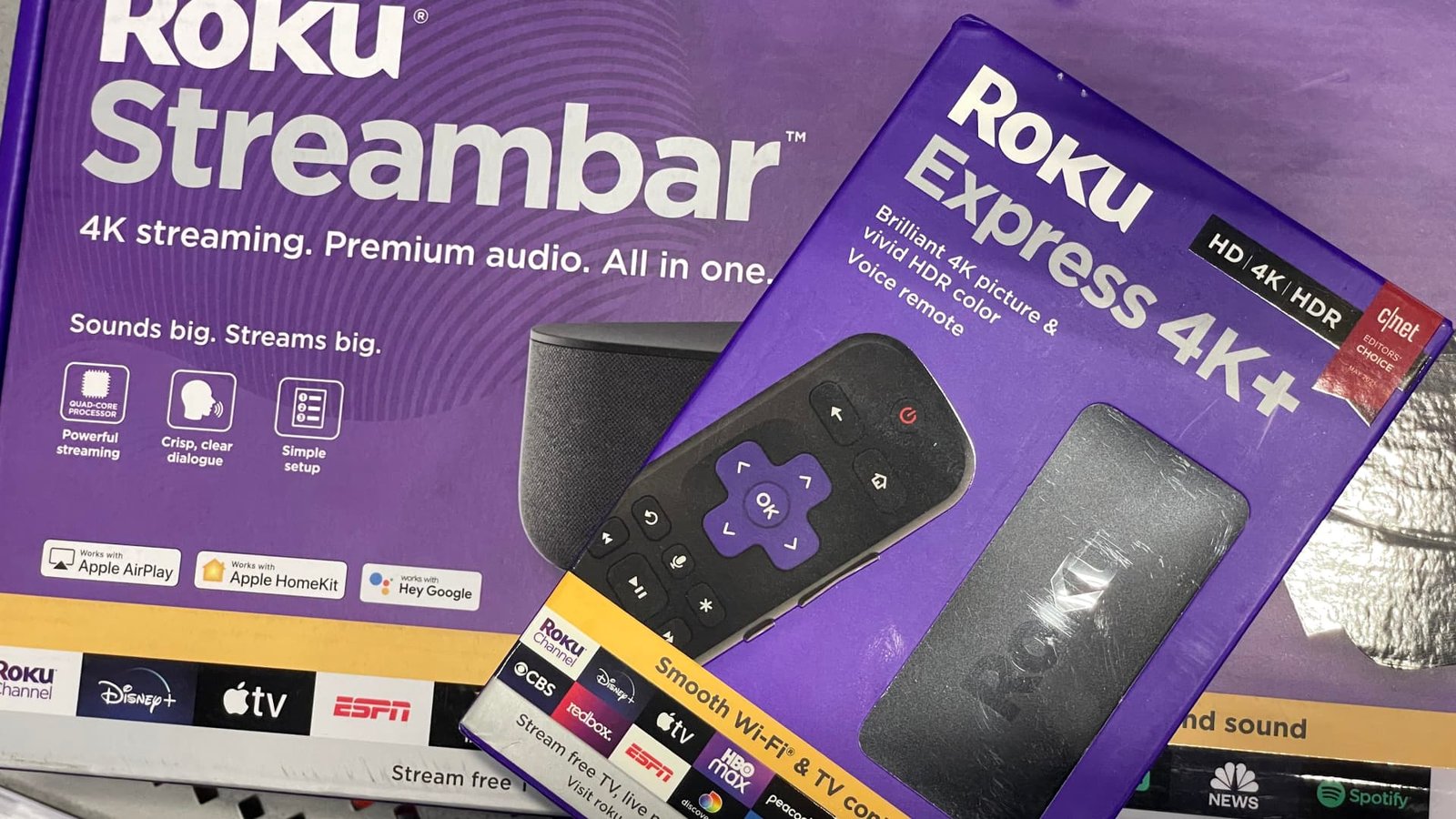
Fox Corp is buying Roku in a cash-and-stock deal valued at about $22 billion in a bet that pairing its sports and news programming with a top TV streaming platform will strengthen its position as audiences shift online.
The deal, announced on Monday, gives the cable TV-reliant Fox direct access to Roku’s large installed base of more than 100 million streaming households, helping it better sell targeted ads and reduce reliance on traditional distribution.
Fox will acquire Roku for $160 per share, representing a premium of 11.4% to Roku’s last close.
Shares of Fox were down 8% in premarket trade, while Roku’s shares were halted.
Roku is one of the first companies to bring streaming platforms like Netflix and YouTube to television through connected devices and smart TVs.
Its business is largely driven by advertising and subscription revenue from streaming apps on its platform. Advertising is the largest component, with revenue of $613 million in the first quarter, up 27% year-on-year.
Fox already operates Tubi, while Roku runs The Roku Channel, and a combination of the two platforms could create a clear leader in streaming, with a meaningful share of total TV viewing, JP Morgan analysts said on Sunday.
Reuters reported on Friday that Roku is exploring its strategic options, including a full sale of the firm, amid interest from companies seeking access to its vast streaming audience and advertising platform.
The combined company will become the third-largest player in U.S. television by share of viewing, the companies said.
The deal is expected to close in the first half of calendar year 2027.
Upon closing, existing Fox shareholders are expected to own about 73% of the combined company and Roku shareholders about 27%.
Business
FOX CORPORATION TO ACQUIRE ROKU, INC.

Combination Creates a Scaled Media and Technology Platform with Superior Reach, Engagement and Monetization Capability
Unites FOX’s Premium Live Content with Roku’s Leading Streaming Platform Reaching Over 100 Million Households
Combined Company to Have One of the Largest Streaming Businesses in the U.S., Including Tubi and The Roku Channel
FOX’s Shareholder Capital Return Program to Continue Uninterrupted While Maintaining its Current Investment Grade Rating
NEW YORK and SAN JOSE, Calif., June 15, 2026 /PRNewswire/ — June 15, 2026 – Fox Corporation (Nasdaq: FOXA, FOX) (“FOX” or the “Company”) and Roku, Inc. (Nasdaq: ROKU) (“Roku”) today announced they have entered into a definitive agreement under which FOX will acquire Roku for $160.00 per share in a combination of cash and FOX Class A common stock, valuing Roku at approximately $22 billion in enterprise value.
The transaction combines FOX’s leading sports, news and entertainment content and the Tubi service, with Roku’s leading connected TV platform, The Roku Channel, first-party data and direct relationship with more than 100 million global streaming households. Together, FOX and Roku will create a scaled next-generation media and technology company positioned at the intersection of two of the most important forces reshaping video consumption: the enduring primacy of live sports and news, and the continued rise of streaming.
FOX and Roku are committed to continuing to operate Roku as an open, partner-friendly platform and to the continued ubiquitous distribution of FOX content. On a pro forma basis, the combined company will become the third-largest player in U.S. television by share of viewing, with an attractive mix of FOX’s sports, news, and entertainment content, alongside streaming services Tubi and The Roku Channel. That distribution and engagement scale spans every major viewing environment – broadcast, cable, local and streaming – creating broad and diversified reach that benefits viewers, partners and advertisers.
Lachlan K. Murdoch, Executive Chair and Chief Executive Officer of Fox Corporation, said:
“This is a defining moment for FOX, and a natural extension of the deliberate and focused strategy we have been executing for nearly a decade. In 2019, we reoriented the company around live news and sports. In 2020, we acquired Tubi and under our stewardship it has become one of the most successful businesses in streaming. Today, we take the next step: bringing together the most valuable live content portfolio in video consumption with the preeminent streaming platform through which America watches it. This combination will transform the scope of our company into high-growth verticals and yield a step change in our overall growth profile. And we are executing this acquisition from a position of financial strength – maintaining our investment grade balance sheet while providing our shareholders with an uninterrupted return of capital program in the form of share buybacks and dividends. Roku pioneered streaming TV and scaled it into a leading CTV platform. Together, we intend to lead its next chapter.”
Anthony Wood, Founder, Chairman and Chief Executive Officer of Roku, said:
“Over the past two decades, we’ve built Roku into the leading TV streaming platform, reaching more than 100 million households globally and reshaping how people discover and enjoy entertainment. I’m incredibly proud of what our team has built, and the combination with FOX is an extraordinary opportunity to accelerate our vision, scale faster and innovate more aggressively for viewers, partners and advertisers. That’s why our Board of Directors unanimously determined after concluding its strategic review process that this transaction offers a significant premium to Roku shareholders while also providing them with the opportunity to participate in the compelling future upside of the combined company. I couldn’t be more excited about what we’ll accomplish together.”
Key Strategic Benefits of the Combination Include:
Increases scale and reach: The transaction pairs the leader in live news and sports with the leading connected TV platform. Roku’s platform has leading scale in the attractive, high growth connected TV vertical, reaching over 100 million global streaming households, including more than half of all U.S. broadband households. FOX is #1 in live news and sports, with a portfolio including the NFL, MLB, NASCAR, Big Ten, FIFA World Cup, FOX News and FOX Business that represents some of the most valuable appointment-viewing content in television. Together, FOX and Roku will encompass premium live content, broad distribution and significant audience reach across linear and streaming.
Expands position in high growth verticals: The acquisition of Roku positions FOX across the full video ecosystem and provides a wider entry into the high growth segment of connected TV, particularly advertising and streaming subscriptions.
Creates a more powerful streaming platform: Brings together FOX’s premium content and advertising capabilities with Roku’s consumer interface, home screen, platform technology and direct viewer relationships to enhance content discovery, deepen engagement and create a more compelling streaming experience for consumers and content partners.
Enhances long-term growth profile: Advances FOX’s business mix toward high growth streaming and connected TV verticals and maintains a balanced mix across advertising and distribution businesses, while strengthening the combined company’s long-term growth and financial profile and maintaining FOX’s disciplined capital allocation approach.
Transaction Details
FOX is acquiring Roku in a cash-and-stock transaction valued at $160.00 per ROKU share. FOX will pay $96.00 in cash and 0.9693 shares of FOX Class A common stock for each Roku Class A and Class B share outstanding immediately prior to the effective time of the merger. The stock consideration represents $64.00 per ROKU share based on a reference price of $66.03 per share, the 10-day volume-weighted average price of FOX Class A common stock as of June 10, 2026.
Upon closing, existing FOX shareholders are expected to own approximately 73% of the combined company and Roku shareholders approximately 27%. The transaction has been unanimously approved by the Boards of Directors of both companies. The transaction is expected to strengthen FOX’s long-term growth profile, accelerate its digital strategy, be accretive to free cash flow per share by the second full year after closing, and achieve approximately $400 million of run-rate cost synergies with additional revenue upside.
FOX expects to fund the cash portion of the transaction consideration with a combination of new debt and cash on hand. FOX has obtained $12.0 billion of fully committed bridge financing from Morgan Stanley Senior Funding, Inc. At closing, the company expects pro forma net leverage to be approximately 2.8x, inclusive of 50% credit for run-rate cost synergies. Additional detail on financing terms will be included in the companies’ required filings with the Securities and Exchange Commission.
Roku Founder, Chairman and Chief Executive Officer Anthony Wood will have an ongoing role at the combined company and will join the FOX Board of Directors following the close of the transaction.
The transaction is subject to customary closing conditions, including approvals by FOX and Roku shareholders, receipt of U.S. and certain non-U.S. regulatory approvals and other customary conditions. In connection with execution of the acquisition agreement, Anthony Wood and certain associated trusts and related entities that together hold at least a majority of the voting power of the Roku stock entered into a voting and support agreement agreeing to vote in favor of the transaction. LGC Holdco LLC also entered into a voting and support agreement with respect to the issuance of FOX shares in the transaction. The transaction is expected to close in the first half of calendar year 2027.
In connection with the transaction, the companies expect to file a registration statement on Form S-4 containing a joint proxy statement/prospectus with the Securities and Exchange Commission.
Investor Conference Call and Presentation
FOX and Roku will host a joint investor conference call today at 8:00 AM Eastern Time to discuss the transaction. A live webcast and related presentation materials will be available on FOX’s investor relations website at investor.foxcorporation.com and Roku’s investor relations website at www.roku.com/investor. An archived replay and the presentation will be available following the call.
About Fox Corporation
Fox Corporation produces and distributes compelling news, sports and entertainment content through its primary iconic domestic brands, including FOX News Media, FOX Sports, Tubi Media Group, FOX Entertainment and FOX Television Stations. These brands hold cultural significance with consumers and commercial importance for distributors and advertisers. The breadth and depth of FOX’s footprint allow the Company to deliver content that engages and informs audiences, develop deeper consumer relationships and create more compelling product offerings. For more information about Fox Corporation, please visit www.foxcorporation.com.
About Roku, Inc.
Roku pioneered streaming on TV. Today, it is the #1 TV streaming platform in the U.S., Canada, and Mexico by hours streamed (Hypothesis Group, Dec. 2025). Roku connects viewers to the content they love, enables content publishers to build and monetize large audiences through advertising and subscriptions, and provides advertisers with unique capabilities to reach and engage consumers. Roku streaming players and Roku-made TVs are available at major retailers, and licensed Roku TV™ models are sold by leading TV brands in more than 15 countries around the world. Roku also owns and operates The Roku Channel, the home of premium and free entertainment; Howdy, a low-cost subscription service; and Frndly TV, a live TV streaming service. Roku is headquartered in San Jose, Calif., U.S.A.
Advisors
Allen & Company LLC is serving as lead financial advisor to Fox Corporation. Morgan Stanley & Co. LLC is also serving as a financial advisor to FOX and Morgan Stanley Senior Funding, Inc. is providing a committed $12 billion bridge financing facility. Goldman Sachs & Co. LLC is also serving as a financial advisor to FOX. Weil, Gotshal & Manges LLP is serving as legal counsel to FOX.
Qatalyst Partners is serving as exclusive financial advisor to Roku, and Goodwin Procter LLP is serving as legal counsel to Roku.
Important Information About the Transaction and Where to Find It
In connection with the proposed transaction between FOX and Roku, FOX will file with the SEC a registration statement on Form S-4 that will include a joint proxy statement of FOX and Roku and that will also constitute a prospectus of FOX. FOX and Roku may also file other documents with the SEC regarding the proposed transaction. This document is not a substitute for the joint proxy statement/prospectus or registration statement or any other document which FOX or Roku may file with the SEC. INVESTORS AND SECURITY HOLDERS OF FOX AND ROKU ARE URGED TO READ THE REGISTRATION STATEMENT, THE JOINT PROXY STATEMENT/PROSPECTUS AND ALL OTHER RELEVANT DOCUMENTS THAT ARE FILED OR WILL BE FILED WITH THE SEC, AS WELL AS ANY AMENDMENTS OR SUPPLEMENTS TO THESE DOCUMENTS, CAREFULLY AND IN THEIR ENTIRETY BECAUSE THEY CONTAIN OR WILL CONTAIN IMPORTANT INFORMATION ABOUT THE PROPOSED TRANSACTION AND RELATED MATTERS. Investors and security holders may obtain free copies of the registration statement and the joint proxy statement/prospectus (when available) and other documents filed with the SEC by FOX and Roku through the web site maintained by the SEC at www.sec.gov. These documents, once available, also will be made available free of charge on FOX’s website at https://investor.foxcorporation.com/ or on Roku’s website at https://www.roku.com/investor.
No Offer or Solicitation
This communication is not intended to and shall not constitute an offer to sell or the solicitation of an offer to sell or the solicitation of an offer to buy any securities or a solicitation of any vote of approval, nor shall there be any sale of securities in any jurisdiction in which such offer, solicitation or sale would be unlawful prior to registration or qualification under the securities laws of any such jurisdiction. No offer of securities shall be made except by means of a prospectus meeting the requirements of Section 10 of the Securities Act of 1933, as amended.
Cautionary Notes on Forward-Looking Statements
This communication includes “forward-looking statements” within the meaning of federal securities laws, including Section 27A of the Securities Act of 1933, as amended (the “Securities Act”), and Section 21E of the Securities Exchange Act of 1934, as amended (the “Exchange Act”) by the Private Securities Litigation Reform Act of 1995, including statements regarding the proposed transaction between Fox Corporation (“FOX”) and Roku, Inc. (“Roku”). In this context, forward-looking statements generally are identified by the words “believe,” “project,” “expect,” “anticipate,” “estimate,” “forecast,” “outlook,” “target,” “endeavor,” “seek,” “predict,” “intend,” “strategy,” “plan,” “may,” “could,” “should,” “will,” “would,” “will be,” “will continue,” “will likely result,” or the negative thereof or variations thereon or similar terminology generally intended to identify forward-looking statements. All statements, other than historical facts, including, but not limited to, statements regarding the expected timing and structure of the proposed transaction, the ability of the parties to complete the proposed transaction, the expected benefits of the proposed transaction, including future financial and operating results and strategic benefits, the tax consequences of the proposed transaction, and the combined company’s plans, objectives, expectations and intentions, legal, economic and regulatory conditions, and any assumptions underlying any of the foregoing, are forward-looking statements.
These forward-looking statements are based on FOX’s and Roku’s current expectations and are subject to risks and uncertainties, which may cause actual results to differ materially from FOX’s and Roku’s current expectations. Should one or more of these risks or uncertainties materialize, or should underlying assumptions prove incorrect, actual results may vary materially from those indicated or anticipated by such forward-looking statements. The inclusion of such statements should not be regarded as a representation that such plans, estimates or expectations will be achieved. Important factors that could cause actual results to differ materially from such plans, estimates or expectations include, among others, (1) that one or more closing conditions to the proposed transaction, including certain regulatory approvals, may not be satisfied or waived, on a timely basis or otherwise, including that a governmental entity may prohibit, delay or refuse to grant approval for the consummation of the proposed transaction, may require conditions, limitations or restrictions in connection with such approvals or that the required approval by the stockholders of FOX or stockholders of Roku may not be obtained; (2) the risk that the proposed transaction may not be completed on the terms or in the time frame expected by FOX and Roku, or at all; (3) unexpected costs, charges or expenses resulting from the proposed transaction; (4) uncertainty of the expected financial performance of the combined company following completion of the proposed transaction; (5) failure to realize the anticipated benefits of the proposed transaction, including as a result of delay in completing the proposed transaction or integrating the businesses of FOX and Roku, on the expected timeframe or at all; (6) the ability of the combined company to implement its business strategy; (7) difficulties and delays in the combined company achieving revenue and cost synergies; (8) inability of the combined company to retain and hire key personnel; (9) the occurrence of any event that could give rise to termination of the proposed transaction; (10) the risk that stockholder litigation in connection with the proposed transaction or other litigation, settlements or investigations may affect the timing or occurrence of the proposed transaction or result in significant costs of defense, indemnification and liability; (11) evolving legal, regulatory and tax regimes; (12) changes in general economic, competitive, technological and/or industry-specific conditions affecting the businesses and industries in which FOX and Roku operate; (13) actions by third parties, including government agencies; (14) risks that any debt financing anticipated in connection with the proposed transaction is not obtained or that such financing cannot be obtained on the anticipated timing or terms or unexpected costs or expenses in connection therewith; (15) risks related to the disruption of management time from ongoing business operations due to the pendency of the proposed transaction, or other effects of the pendency of the proposed transaction on the relationship of any of the parties to the transaction with their employees, customers, advertisers, content partners, distributors, device partners, suppliers or other counterparties; and (16) other risk factors detailed from time to time in FOX’s and Roku’s reports filed with the Securities and Exchange Commission (the “SEC”), including FOX’s and Roku’s annual reports on Form 10-K, quarterly reports on Form 10-Q, current reports on Form 8-K and other documents filed with the SEC, including documents that will be filed with the SEC in connection with the proposed transaction. The foregoing list of important factors is not exclusive.
Any forward-looking statements speak only as of the date of this communication. Neither FOX nor Roku undertakes, and each party expressly disclaims, any obligation to update any forward-looking statements, whether as a result of new information or developments, future events or otherwise, except as required by law. Readers are cautioned not to place undue reliance on any of these forward-looking statements.
Participants in the Solicitation
FOX, Roku and their respective directors and executive officers may be deemed to be participants in the solicitation of proxies in respect of the proposed transaction. Information regarding FOX’s directors and executive officers, including a description of their direct interests, by security holdings or otherwise, is available in FOX’s Annual Report on Form 10-K for the year ended June 30, 2025, under the heading “Directors, Executive Officers and Corporate Governance”, and its proxy statement filed on September 25, 2025, under the headings “Proposal No.1: Election of Directors” and “Executive Officers of Fox Corporation,” which are filed with the SEC. Information regarding Roku’s directors and executive officers, including a description of their direct interests, by security holdings or otherwise, is available in Roku’s Annual Report on Form 10-K for the year ended December 31, 2025, under the heading “Directors, Executive Officers and Corporate Governance” and its proxy statement filed on April 24, 2026, under the heading “Board of Directors and Corporate Governance” and “Executive Officer Biographies,” which are filed with the SEC. A more complete description will be available in the registration statement on Form S-4 and the joint proxy statement/prospectus when filed.
SOURCE Fox Corporation
Business
Zhipu Shares Surge 33% After JPMorgan Picks Company as AI Winner

Shares of Chinese AI model maker Zhipu surged after JPMorgan Chase & Co. raised the stock’s price target and picked it as a winner against close rival MiniMax.
Zhipu, which trades as Knowledge Atlas Technology JSC, jumped 33% on Monday, one of its biggest surges since a successful initial public offering in Hong Kong to kick off the year. Alongside MiniMax, whose market debut came a day after Zhipu in January, the company is at the forefront of a wave of Chinese startups developing artificial intelligence tools to rival the best from the US.
Business
Starbucks Korea to give mandatory history training to all employees
SEOUL, South Korea (AP) — Starbucks’ South Korean operation said Monday it will close all of its stores nationwide early on June 22 for mandatory history and social sensitivity training as it reels from backlash following a marketing campaign that was widely perceived as mocking victims of a brutal military crackdown on pro-democracy protesters in 1980.
Shinsegae Group, which owns a 67.5% stake in Starbucks Korea, said group executives and employees at Starbucks Korea’s headquarters will attend training led by history and sociology professors on Wednesday. All Starbucks stores nationwide will close at 3 p.m. next Monday so employees can watch a recording of the session, Shinsegae said in a statement.
The coffee chain triggered an uproar when it attempted to promote a series of stainless-steel tumblers it called “SS Tank” by declaring May 18 to be “Tank Day.” The date marks the anniversary of the 1980 pro-democracy uprising in the southern city of Gwangju. It was violently suppressed by Seoul’s military government at the time, which deployed troops, tanks and helicopters, leaving hundreds dead or injured.
The campaign further fueled outrage by using the slogan “Thwack it on the table!” which many read as a reference to a notorious 1987 police statement that attempted to cover up the torture death of student activist Park Jong-chol. Authorities had falsely said Park died after investigators “hit the desk with a thwack.”
With the promotion sparking immediate backlash, Shinsegae canceled it within hours and fired the chief executive of Starbucks Korea. Shinsegae Chairman Chung Yong-jin later issued a nationally televised apology as police opened an investigation following complaints from relatives of the victims of the Gwangju crackdown. Chung will undergo separate training with the chief executives of Shinsegae affiliates on June 24.
Shinsegae said the decision to close all Starbucks stores early for the first time since the chain’s 1999 launch in South Korea and require companywide training shows “how seriously it views the marketing controversy and its determination to prevent a recurrence.”
The crackdown in Gwangju came months after General Chun Doo-hwan seized power in a coup in late 1979. Government records show about 200 people died in Gwangju, but activists say the true death toll was much higher. Chun’s government also imprisoned tens of thousands, saying it was rooting out social evils.
Public anger over Chun’s dictatorship led to massive nationwide protests in 1987, forcing him to accept a constitutional revision introducing direct presidential elections, which is widely seen as the start of South Korea’s transition to democracy.
Business
A Customer Paid $71 for Two Soups and Three Sandwiches at Panera and Asked ‘How Did We Let This Happen?’

In a video posted on X by @@MatrixMysteries, a customer reacts to a Panera Bread receipt totaling $71.62 and asks, “Two soups, two grilled cheese sandwiches, and another sandwich. How? How is this $21 (each)?”
The customer, who has not been identified, added, “I don’t understand. How did we let this happen?”
After the clip spread to X, users began sharing their own experiences with Panera’s pricing. “Panera has always been expensive — was only a treat every now and then — but now, no way will I spend that kind of money for soup and grilled cheese,” wrote one. Another wrote that restaurant prices have become so “insane” that despite being wealthier than ever, they eat out “as little as I can.”
According to Tasting Table, souffles at Panera that once sold for $4.50 in 2024, have climbed to $7.89. In April 2017, Panera was acquired for $7.5 billion by JAB Holding Company, a German conglomerate that also owns Krispy Kreme. Since then, Panera has squeezed both food and labor costs. Panera began serving cherry tomatoes whole instead of halved and added iceberg lettuce to salads, moves that customers criticized online.
Panera CEO Paul Carbone also told QSR Magazine in Novermber 2025, “When the guest comes into the cafe to buy an expensive sandwich of lower quality and a smaller size, they’re met with a cafe that we stripped a lot of labor on.” That is why he said, “There is no one to talk to.”
One X user who said they had been a Panera customer since 2008 wrote, “When [Panera] was popular back in (…) 2008–2010, it was fantastic. Lines out the door. Fresh bakery items, great soup. Now it’s worse than cafeteria food.”
The Daily Dot could not independently verify the video or confirm the identity of the customer.




Mariska Hargitay calls Jamie Lee Curtis a ‘family member’ | Variety & CNN Actors on Actors
Mariska Hargitay and Jamie Lee Curtis bond over their friendship in this behind-the-scenes of their Actors on Actors episode.


Teenagers react to the social media ban announced in the UK. #BBCNews

Parents react as PM Keir Starmer announces ban on social media for under-16s | BBC News
Keir Starmer says under-16s will be banned from social media by spring 2027. "A full ban is the right choice…...

What do we know so far about theUK social media ban?


Jamie Lee Curtis and Mariska Hargitay argue over pronunciation of Los Angeles
Whose side are you on? Stream the full episode now on the CNN app. Jamie Lee Curtis and Mariska Hargitay...


PM says UK will work to ensure 'lasting peace' after US-Iran deal. #BBCNews


Iran deal: Ex-NATO commander reveals ‘the bad news’
The US and Iran say they have reached an agreement that will end a US blockade of Iranian ports and...


Two men found guilty over arson attacks linked to UK PM Keir Starmer | BBC News
Two men have been found guilty of conspiring to carry out arson attacks on property and a car connected to...


Will prices come down after Iran and US agree deal to end war? #Iran #US #BBCNews


Camel milk is big money for rural China
China and Mongolia hold some of the world's largest populations of Bactrian camels, and their increasingly popular milk has …
-

 LifestyleNews2 weeks ago
120 minutes of strength training per week may help extend lifespan
-

 Business2 days ago
How much of Musk’s wealth comes from government help? Virtually all of it
-

 Politics4 days ago
What to know about the stabbing that set off fiery riots in Northern Ireland
-

 Video3 days ago
Download fans say what they love about the festival. #DownloadFestival #BBCNews
-

 Video3 days ago
Why SpaceX IPO isn't about space. #SpaceX #ElonMusk #BBCNews
-

 HealthNews3 days ago
The people of Okinawa, Japan only eat until they are about 80 percent full, then stop — and the practice has been linked in multiple peer-reviewed studies to lower rates of cardiovascular disease, slo
-

 TravelNews3 days ago
My Paternal Instinct Should’ve Warned Me About Netflix’s Maternal Instinct
-

 Food2 days ago
Pope Leo’s plane was grounded. Then the King of Spain stepped in to help