
Tech
iPhone 18e Could Get Two Key Upgrades While Keeping 60Hz Display

Apple’s upcoming iPhone 18e model will retain a 60Hz display but could gain an upgraded front-facing camera, according to the leaker known as “Digital Chat Station.”
In a new post on Weibo, the leaker said that the device will feature a 6.12-inch OLED display using low-temperature polycrystalline silicon (LTPS) technology, the A20 chip, and a single 48-megapixel rear camera. They were less definitive about the front-facing camera, saying it could be upgraded to 24 megapixels.
The specifications suggest that the iPhone 18e will offer no major display or rear camera hardware upgrades over the previous two generations. Both the iPhone 16e and iPhone 17e feature approximately 6.1-inch OLED displays with a 60Hz refresh rate and a single 48-megapixel rear camera. The post does not detail the rear camera’s sensor or lens, so smaller hardware changes remain possible.
The A20 chip would represent a more significant upgrade. Like the A20 Pro chip in the iPhone 18 Pro, the A20 is expected to use a 2nm manufacturing process, bringing notable performance and power efficiency improvements over the iPhone 17e’s 3nm A19 chip. It would also bring the device into line with the upcoming standard iPhone 18, which is expected to use the same chip.
The front-facing camera claim is less clear. Digital Chat Station specified 24 megapixels, although it is unclear whether this refers to a new camera or is a mistaken reference to the 18-megapixel Center Stage camera introduced with the iPhone 17 lineup. A 24-megapixel camera was widely rumored before those devices launched. Either resolution would represent an upgrade over the 12-megapixel front camera used by the iPhone 16e and iPhone 17e.
Digital Chat Station previously claimed that the iPhone 18e would retain a 60Hz LTPS display. An earlier report from Korea suggested that an LTPO display capable of supporting 120Hz ProMotion could reach the entry-level iPhone with the “iPhone 19e” in 2028.
The iPhone 18e is expected to launch in spring 2027, alongside the standard iPhone 18 and iPhone Air 2.
Related Roundup: iPhone 17e
Tech
Touchscreen MacBook Pro to Debut Today With These 5 Features
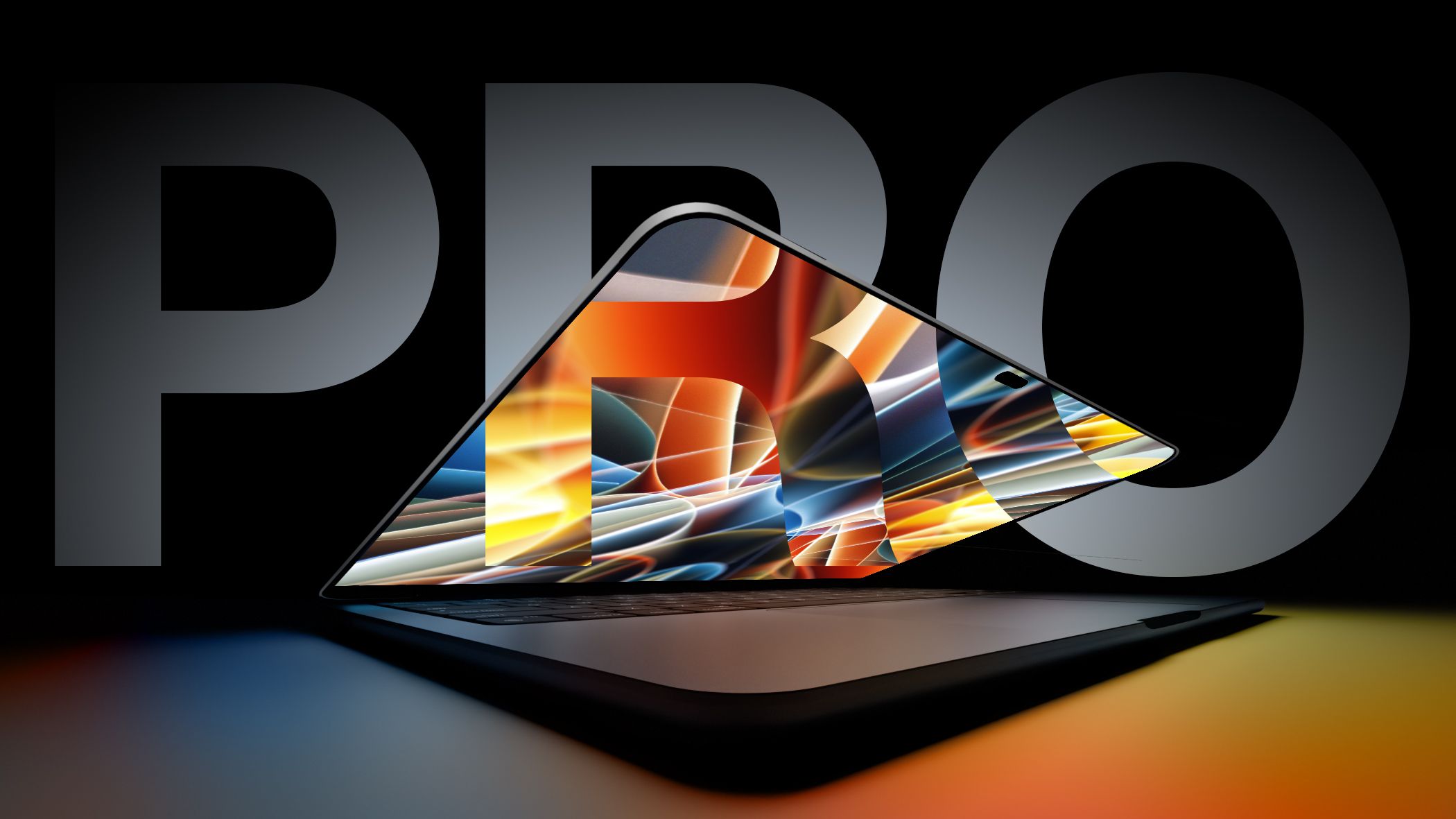
Some reports have suggested the new high-end MacBook Pro models that Apple is expected to announce today might not be called MacBook Pros at all. They could in fact be something altogether new and more exciting – “MacBook Ultra,” perhaps – marketed as the company’s top-tier laptop offering. The machines are expected to sit above the current M5 Pro and M5 Max MacBook Pros, rather than replace them, suggesting the latter will remain in Apple’s lineup.
One thing to state up front is that Apple is expected to stick with the existing M5 Pro and M5 Max chips for its touchscreen MacBook models. Apple reportedly plans to skip what would have been the “M6 Pro” and “M6 Max” for more powerful “M7 Pro” and “M7 Max” chips. Apple announced the new entry-level 14-inch MacBook Pro with the M6 chip yesterday, ahead of pre-orders opening today, but the first “MacBook Ultra” models will use M5 Pro and M5 Max chips, after which second-generation models will come with M7 Pro and Max chips in late 2027.
Apple has already unveiled most of a second set of new products this week, as MacRumors’ sources earlier indicated: the OLED iPad mini arrived on Monday, and the M6 iMac and M6 14-inch MacBook Pro followed yesterday. The new touchscreen models are expected to debut today at Apple’s “Pro and tell” event in Los Angeles and become available for pre-order at 10:10 a.m. Pacific Time, with Bloomberg reporting that availability could begin as early as November 6. Recent reports have referred to the machines simply as new 14-inch and 16-inch MacBook Pro models, so the final name remains uncertain.
Below, we’ve listed the features and changes we are expecting for the new high-end MacBook Pro models.
OLED Display
Bloomberg’s Mark Gurman and analyst Ming-Chi Kuo say Apple is readying OLED technology for these models, and industry reports corroborate their claims. Samsung Display is said to be making the panels exclusively, and the supplier has invested heavily in an 8.6-generation OLED production line in South Korea. The line reached a key milestone for mass production in May.
OLED presents an overall upgrade over the current mini-LED display technology, bringing deeper colors and a higher contrast ratio with true blacks. In an OLED display, individual pixels turn off instead of dimming when not activated, so there’s less light leakage and better power efficiency. OLED displays also tend to have better HDR output than mini-LED, but they don’t always match mini-LED brightness levels.
Touchscreen
The new MacBook Pro is expected to become the first Mac to support touch input directly on the display. It’s a notable shift from Apple’s longstanding position against bringing touchscreen functionality to the Mac.
Apple previously experimented with touch controls through the OLED Touch Bar on earlier MacBook Pro models, but the feature was ultimately discontinued following a lukewarm reception. Rather than positioning the MacBook Pro as a touch-centric device like the iPad, Apple is reportedly planning to let users move seamlessly between touch and traditional trackpad or mouse input across the system.
There are features in macOS Golden Gate that hint at a future touchscreen Mac. Apple added direct touch input to Sidecar so users can tap and interact with macOS elements when using the iPad as a Mac display. macOS Golden Gate also supports an iPhone-style pull-to-refresh option, and it can be used across apps like Safari, Mail, News, Podcasts, and Calendar. A pull-to-refresh option makes the most sense on a touch display.
Reinforced Hinge
Apple has reportedly developed a reinforced hinge and screen hardware to prevent the display from bouncing back or moving when touched. Apple is apparently aware of the same issue that plagues existing touch PCs.
Lighter Design
Gurman has reported that Apple is working to make the OLED MacBook Pro thinner, as part of the company’s plan to create “the thinnest and lightest products in their categories across the whole tech industry.” (Think the latest iPad Pro and iPad Air – two of the thinnest devices the company has ever made.) Indeed, the reporter said there’s a good chance that the next MacBook Pro model will represent a “true overhaul” for the laptop, thanks to the combination of the OLED display and thinner design.
In October 2025, Gurman reported that the OLED MacBook Pro models would have “thinner and lighter” frames. Then again in November 2025, he said the touchscreen models would have “a thinner chassis.”
However, Gurman has walked back somewhat on his previous reporting that Apple’s upcoming touchscreen OLED MacBook Pro will be thinner than current models. “I don’t think it’ll be significantly thinner in the end,” he said in early October 2026.
In a last-minute detail, Gurman reports that Apple has also reworked the cooling system to improve airflow through the hinge while helping to reduce the laptop’s weight.
Dynamic Island
The MacBook Ultra could ditch the current notch used in the MacBook Pro models for a display cutout potentially similar to the iPhone’s Dynamic Island, according to Bloomberg. Such a move would mirror Apple’s iPhone evolution, since the iPhone’s notch became the current Dynamic Island starting with the iPhone 14 Pro models in 2022.
As with the iPhone, the Mac Dynamic Island will be interactive and it will contextually expand based on the app or Mac feature in use. The change should address long-standing user complaints about the notch, which physically ingresses into the macOS menu bar.
Price Changes
There is no doubt that Apple will unveil the new MacBook Pro models as ultra-premium products carrying price tags that are higher than the current MacBook Pro 14-inch and 16-inch models. Apple increased the prices of all its Macs in June 2026 – MacBook Pro pricing went up $300 – so the “MacBook Ultra” will likely be even more expensive than expected.
For what it’s worth, the higher-end 14-inch MacBook Pro with M5 Pro chip starts at $2,499 after the price increase, while the 16-inch M5 Pro MacBook Pro starts at $2,999. More specifically, Bloomberg reported this week that Apple has discussed charging $2,899 for the new 14-inch model with an M5 Pro chip, which would mean a starting price of at least $3,399 for the 16-inch model. Hold onto your wallets!
Related Roundup: MacBook Pro
Buyer’s Guide: MacBook Pro (Coming Soon)
Tech
Global stock markets rise as investors continue to bet on AI
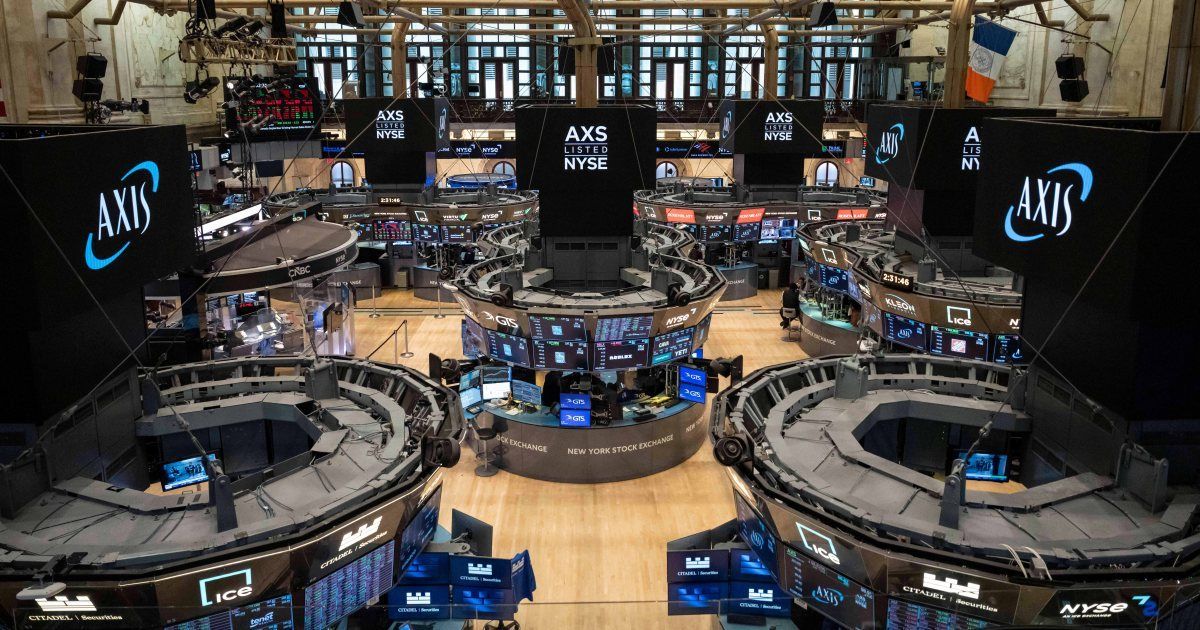
Global stock markets have climbed as investors continue to bet on bright prospects for the tech giants driving the AI boom.
In the United States, all three major stock indexes rose on Tuesday, led by the tech-heavy Nasdaq Composite, which gained 1.18 percent.
Recommended Stories
list of 4 items
list 1 of 4A bad day for Ben-Gvir as he addresses his supporters
list 2 of 4President Lula calls Bolsonaro’s Brazil exit ‘shameful’
list 3 of 4Gaza’s women filmmakers turn pain into cinema as new academy launches
list 4 of 4‘This is America’: US envoy scolds Cuban diplomat at UN
end of list
The benchmark S&P 500 rose 0.6 percent, while the narrower Dow Jones Industrial Average edged up 0.03 percent.
Five of the “Magnificent Seven” tech stocks rose, led by Tesla, up 4.04 percent.
Amazon gained 1.61 percent, while Apple and Alphabet gained 0.93 percent and 0.9 percent, respectively.
Nvidia, the world’s most valuable public company, rose almost 1 percent after announcing a $3bn investment in Meta’s equity offering.
Meta fell 1.64 percent, while Microsoft fell 0.24 percent.
Other big movers in tech included CoreWeave, Western Digital and Advanced Micro Devices, which gained 7.94 percent, 6.95 percent and 5.45 percent, respectively.
Asia Pacific markets rally
Asian stock markets followed Wall Street’s gains on Wednesday.
South Korea’s KOSPI led the pack, with the benchmark index closing up 6.63 percent.
The surge came as South Korea’s SK Hynix, one of the world’s top three memory chip makers, announced blockbuster third-quarter results, with operating profit soaring about 630 percent year-on-year to 83.33 trillion won ($62.4bn).
SK Hynix’s South Korea-listed shares soared 10.89 percent following the results.
In Japan, the benchmark Nikkei 225 ended the day up 1.08 percent, while the TAIEX in Taiwan climbed 2.04 percent.
In Hong Kong, the Hang Seng Index was up 0.33 percent shortly before market closing.
“A rally in a host of AI-related stocks including neocloud group CoreWeave, data storage specialist Western Digital and IT solutions provider Super Micro Computing implies that investors aren’t over the AI craze just yet,” Dan Coatsworth, head of markets at AJ Bell in London, told Al Jazeera.
“These types of stocks have become a litmus test for the mood of the market. They typically fall when investors are worried that the AI story might be running out of steam, and they rise when animal spirits are running high around the technological revolution,” Coatsworth said.
“The big unknown is whether this is the start of a new AI stock rally, or just a relief bounce after a period where investors were starting to question how long positive momentum could be sustained,” he added.
Investors are eagerly anticipating upcoming earnings reports from chief tech players as they try to gauge whether their huge investments in AI will pay dividends.
Microsoft and Alphabet report their latest results on Wednesday, followed by Amazon on Thursday and Apple on Monday.
On Monday, AI giant Anthropic filed paperwork for its hotly anticipated IPO, reporting a net loss of $80.7bn in the first half of 2026 on $16.3bn in revenue.
Tech firms have poured hundreds of billions of dollars each into AI infrastructure, prompting debate over whether a speculative market bubble could be forming similar to the one that preceded the 2000 dot-com crash.
Global AI investment is forecast to hit $2.7 trillion in 2026 and $3.6 trillion in 2027, according to Gartner, a technology insights company.
Oil prices, which have been elevated since the start of the US-Israel war on Iran, rose nearly 2 percent percent amid the ongoing conflict in the Middle East, including hostilities between Saudi Arabia and Yemen’s Iran-aligned Houthis.
Futures for Brent crude, the global benchmark, topped $116 a barrel, up more than 60 percent from before the war began.
Tech
DeepMind unveils Genie 4 world model promising more realistic physics and humans

Last year, Google DeepMind sent gaming stocks tumbling with the reveal of its Genie 3 world model. Since then, world models have become a major focus of AI labs around the world, but Google isn’t resting on its laurels. Researchers have been hard at work on an updated model that improves on Genie 3 in almost every way. And if you pay Google enough money, you might actually get to use Genie 4 before too long.
It’s easy to look at the output of Genie 4 and see a video game, which is why Genie 3 caused so much consternation in the gaming industry. DeepMind doesn’t think about it that way, though. According to Google, world models are a key element in the march toward artificial general intelligence (AGI). A world model creates a virtual world, but it doesn’t require pre-rendering environments or programming interactive elements. You simply tell the model what you want, and it generates the experience frame by frame in real time as you explore it.
DeepMind says this technology could create infinite training environments for physical robots or unlock new avenues of rapid prototyping for creative fields. Of course, that requires the model to accurately simulate what you want. Genie 4 has several improvements that make its simulations more useful, and that’s thanks in part to Google’s updated Gemini models.
When you prompt a world into existence in Genie 4, it leverages Gemini 3.8 Flash as a guiding agent to break down goals and evaluate each output frame. This helps keep the simulation on track, letting you move through varying environments without losing the original context. However, DeepMind notes that Genie 4 worlds still only remain consistent for a couple of minutes before they forget how things started.
Like Genie 3, the new version supports changing the parameters midstream. You can change the weather, add elements, or move the camera, and Gemini will help steer the simulation with each update. This is similar to the way reasoning models generate additional internal prompts to zero in on the right output tokens.
The physics in AI-generated video can sometimes look a bit unnatural, but DeepMind says Genie 4 has reached a new level of realism. Genie 4 can apparently do a better job with elements like aerodynamics and collisions, which makes the simulations more useful and visually appealing. People appearing in these simulations should also look less uncanny, with more natural movement and responses to the changing environment.
Genie 4 is also the first DeepMind world model with native audio. Videos will have ambient background sounds, and you can specify audio elements in your prompt. The biggest leap, if it works, is the addition of human speech. DeepMind promises that Genie 4 will be able to create interactive dialog that adapts as you change the simulation. Realistic speech in standard AI video was a major shift in realism, and now a similar revolution may be coming to Google’s world models.
Your very own world
DeepMind is careful to point out that world models are still an active area of research—Genie 3 never expanded beyond the very limited Project Genie web experience. However, the team has been working with a small group of trusted testers to build toward a wider release for Genie 4. Access will start expanding soon, but there’s no specific timeline yet. It won’t be cheap, though.
Google plans to roll out Genie 4 for developers via the Gemini API and AI Studio, but pricing isn’t yet available. Consumers will be able to get access, but it will roll out in phases with Google’s most expensive AI Ultra plans, which start at $100 per month. Google may expand access to AI Pro and AI Plus plans eventually. This will still be handled through Project Genie, which will limit how much you can do with Genie. There’s a waitlist for users who are interested in getting early access.
Tech
Photos show Ukraine’s Starlink was throttled during Russian strike that killed 5 in park

Kharkiv, Ukraine – Yulia Spichak, a 34 year-old makeup artist in Ukraine’s eastern Kharkiv region, dropped her son off at an English-language lesson on Oct. 19 and sat down in a nearby park to send a selfie to her sister, Alina. Seconds later, a Russian drone slammed into the park, killing Spichak and four others, including a 1-year-old girl.
The attack came six days after Elon Musk’s SpaceX throttled Ukraine’s access to Starlink, which Ukraine has been using to coordinate its defenses against Russian attacks and for some of its offensive operations. In a post on X, Musk accused Ukraine of violating Starlink’s terms of service by also using it for attacks on Russia.
Ukrainian officials told CBS News that the restrictions imposed without advance notice affected ground-based air defense radars and drone interceptors, hindering the military’s ability to stop incoming Russian strikes.
“It’s an essential part of the air defense infrastructure,” Vadym Ivchenko, a Ukrainian member of parliament on the National Security, Defense and Intelligence Committee, told CBS News Monday. “I couldn’t say that all other air defenses stopped working, no. But this part is quite essential for the defense of civilians in Ukraine.”
CBS News obtained photographs that show Ukraine’s ground-based air defense radars’ Starlink connectivity dropping to .1 megabytes per second on Oct. 19, the day of the Kharkiv drone attack. That would not be enough to load a webpage, let alone power air defense radars, according to a source familiar with the technology who requested anonymity because he was not permitted to comment on the matter.
On Saturday, Ukrainian officials confirmed that Starlink’s access had been restored across the country, with Musk admitting that SpaceX had throttled connectivity.
“Using Starlink, a civilian commercial service, for offensive drone strikes to kill people has never been allowed, nor should it be,” Musk wrote on X. “Ukraine military violated Starlink terms of service and used it for offensive drone strikes to kill people. That loophole was closed last week.”
Ukrainian officials have also complained of connectivity problems with Starshield, SpaceX’s military-grade network, which runs on the same constellation of satellites as Starlink and serves as the backbone of Ukraine’s drone operations. But Musk said the U.S. government controlled whatever changes happened with Starshield. SpaceX did not respond to a request for comment, and the White House referred CBS News to President Trump’s comments last week, during which he told reporters that he did not order the Starlink restrictions in Ukraine.
Alina Spichak, the sister of Yulia, the make-up artist who died in the strike in Kharkiv, revisited the park where she died with CBS News on Sunday. She said the Geran-4 Russian jet-powered drone that killed her sister arrived so quickly the victims didn’t hear it coming.
“I understand that everyone has their own lives and nobody wants to look at these horrors. But I believe that the whole world has to know what is happening in Ukraine, that there is a war here and we are being attacked,” Alina Spichak said. “I really hope that it will end soon.”
Tech
Wall Street banks, Blackstone line up $63 billion to finance Broadcom AI chips for Anthropic
Broadcom is providing “residual value support” to lenders, who are providing first lien loans or senior debt, effectively providing a significant guarantee in the financing structure.
Sign up here.
The latest deal highlights the growing role of banks and alternative asset managers in financing the infrastructure needed to support rising demand for AI computing capacity.
Anthropic filed for a potentially record-breaking IPO on Monday, even as disclosures of steep losses and security concerns threatened to test investor appetite for the AI heavyweight.
The size of the first lien loans or senior debt is about $43.5 billion, according to two sources familiar with the matter, or 69% of total financing.
Blackstone will provide the committed portion of the second-lien financing – which ranks below senior debt – while Bank of America, Citigroup and Morgan Stanley are arranging the first-lien financing, the statement said.
Chipmakers have provided guarantees in the past to absorb potential declines in the value of the assets, such as advanced chips and data infrastructure.
The release did not disclose the breakdown of the loans, while Broadcom did not respond to a request for comment.
Rising AI demand is driving massive investment in computing infrastructure as technology companies race to secure capacity for increasingly complex workloads.
Bank of America, Citi and Morgan Stanley are arranging the first-lien financing.
Deliveries are expected to begin in 2027 as part of a previously announced strategic compute capacity agreement involving Broadcom, the companies said.
Apollo and Blackstone had agreed to finance a $35 billion expansion of Anthropic’s AI computing capacity under a prior agreement with Broadcom. Broadcom’s backstop in that deal was up to $29 billion, it said in a filing.
While Moody’s described Broadcom as one of the strongest large technology companies, it warned that the risk would increase if multiple transactions were undertaken over a short period to meet the sizable funding needs of frontier AI labs.
Reporting by Aditya Soni and Prakhar Srivastava in Bengaluru and Saeed Azhar in New York; Editing by Pooja Desai and Lincoln Feast.
Our Standards: The Thomson Reuters Trust Principles., opens new tab
Prakhar Srivastava covers U.S. finance, including banks, card companies, payment firms, insurers, exchanges and asset managers. He also writes on IPOs and venture capital. Previously, he worked on Reuters’ Global Pictures Desk and holds a degree in Political Science from the University of Delhi.
Saeed Azhar is a Reuters financial journalist and part of the U.S. banking team, which covers Wall Street’s biggest banks. He focuses on Goldman Sachs and Bank of America, and also writes about regional banks. Before moving to New York in July 2022, he led the finance team in the Middle East from Dubai, and also worked in Singapore, covering Southeast Asia finance.


Flávio Bolsonaro seen landing in Miami with family after Brazil presidential election defeat
Where has Bolsonaro been? By Thomas Copeland and Jake Horton Flavio Bolsonaro has not taken a straightforward route to the...


Nvidia Partner Vertiv Soars After AI Data Center Play’s Blowout Earnings, Strong Guidance
Information in Investor’s Business Daily is for informational and educational purposes only and should not be construed as an offer,...


Nelson Peltz’s Trian offers to buy Wendy’s for $1.4 billion
A group of investors led by Nelson Peltz’s Trian Fund Management has offered $1.4 billion to buy Wendy’s , according...


Dow Jones Futures Fall, Techs Rise As SK Hynix Crushes Views; Fed, Microsoft, Google On Deck
Information in Investor’s Business Daily is for informational and educational purposes only and should not be construed as an offer,...


The income required to retire comfortably in each state
Households around the country are facing financial stress amid persistent inflation, and retirees facing rising expenses need to ensure their...


Why China is desperate to ship cars outside of the country
To understand why China is desperate to ship cars overseas, visit a dealership in Beijing. Autumn has traditionally been the...


Fed meeting today: Live updates
The Federal Reserve’s interest rate decision Wednesday likely will be short on suspense, with markets expecting the central bank to...


Russell Brand Takes Stand in Trial, Says No One Will Testify for Him
Russell Brand took the stand for the first time in his ongoing rape and sexual assault trial on Wednesday and...


Amazon relaxes push for AI use as Anthropic reveals shocking stats
An Amazon memo published Tuesday encouraged its software engineers to stop “tokenmaxxing” and start being more judicious about how they...


Calif. just broke a 28-year-old record for fatal rabies detections
A pair of sick raccoons found this month in a Los Angeles suburb set off alarm bells from California to...
-

 Business1 week ago
‘Black Monday’ fears intensify as prediction markets shrug off 2026 crash
-
Business2 weeks ago
Why BlackRock is suddenly more bearish on stocks
-
Business2 weeks ago
AI Agent Company Decagon Held Early M&A Talks With ServiceNow, Others
-

 Business2 weeks ago
Dow Jones Futures: Stock Market Holds Up As Meta, AMD Lead Buys; ASML, CPI Inflation Due
-

 Business2 weeks ago
CPI inflation report September 2026
-

 Food2 weeks ago
Wall Street Sees Inflation Easing Even With Oil Above $90
-

 HealthNews2 weeks ago
Carefree panty liners face lawsuit over dangerous carcinogenic claim
-

 Entertainment2 weeks ago
Reese Witherspoon Partners With Mediawan To Buy Hello Sunshine