
Business
Trump Faces His Second Midterm as President Next Week. If The Historical Pattern Holds It Will Kick Off The Best Market Year Of His Second Term.

Voters go to the polls on Nov. 3 for President Trump’s second midterm election as president. With a week to go, prediction markets see Democrats as favored to sweep Congress. For stock investors, the more useful history covers what has typically happened after the votes are counted.
According to Opening Bell Daily, since 1950, the year after a midterm (year three of the four-year presidential cycle) has been the S&P 500’s strongest year by a wide margin. The index has averaged a 17.2% calendar-year price gain in year three. Opening Bell Daily found that year one averaged 8.4%, midterm years averaged 4.6% and year four, the election year, averaged 8.1%.
The losses in year three have also been small. The S&P 500 fell in only two pre-election years, 2011 and 2015, each by less than 1%. Opening Bell Daily names 1995 as the best year three, up 34.1%, and puts the 2023 gain at 24.2%.
How a Typical Year Three Stacks Up Against Trump’s Second Term
For Trump’s years, we used the SPDR S&P 500 ETF Trust (NYSEARCA:SPY) as a stand-in for the S&P 500, measuring calendar-year price return from one year-end close to the next. That matches the price-gain basis behind the averages above.
In 2025, his best full year of this term so far, SPY rose 16.35%. A typical year three would come in slightly ahead of that result. This year is still in progress: SPY is up 12.83% year to date as of noon Oct. 27, and two months remain. Against 2028, his final year, the comparison rests on the historical pattern alone, and the year-three average sits far higher than the year-four average.
His first term followed the script. In his first-term year three, SPY gained 28.79%, ahead of the 16.16% gain in 2020. His first midterm offers a lesson in patience: the S&P 500 fell 9.0% from Election Day to Dec. 31, 2018, yet stood 11.7% higher a year after that vote.
A Second Yardstick: The 12 Months After the Vote
A different window, starting on Election Day rather than Jan. 1, tells a similar story. Opening Bell Daily found the S&P 500 rose in the 12 months after all 19 midterm elections since 1950. The average gain is at 15.1% and the median at 14.5%. Opening Bell Daily lists the best stretch at 33.2% after 1954 and the worst at 1.1% after 1986.
Truist Financial (NYSE:TFC | TFC Price Prediction) chief strategist Keith Lerner, in research cited by Yahoo Finance, found every midterm year since 1946 was followed by a positive one-year return averaging 14.4%, with the best at 34% in 1954, matching OBD. The near term has tended positive: Opening Bell Daily reports the fourth quarter of midterm years has averaged a 6.6% gain, finishing higher in 16 of 19 cases.
Why 2027 Could Break the Pattern
Nineteen midterms make a small sample, and the outcomes vary widely. Opening Bell Daily notes that only 11 of 19 midterm years since 1950 finished higher. They also found midterm years averaged a 17.5% peak-to-trough drop, compared with 11.2% to 13.3% in other years. This year’s deepest decline through Oct. 16 was 9.1%.
Morgan Stanley (NYSE:MS) strategists said, “The type of majority matters more than which party wins from an equity market perspective.” The background also looks tougher than average. The 10-year Treasury yield stood at 5.00% on Oct. 23, and University of Michigan consumer sentiment fell to 48.1 in September. The VIX closed at 18.39 on Oct. 26, within its normal range. Stocks have also already posted double-digit gains this year.
What Ordinary Investors Can Take From the Cycle
The presidential cycle is an average of past outcomes, and it describes correlation rather than cause. Earnings, rates and valuations drive returns, with elections and presidents playing a smaller role. If the pattern holds, 2027 would be the best market year of Trump’s second term. If it fails, investors who rearranged portfolios around one election would carry the cost.
The sounder approach is a long-term plan that can absorb a rough patch around the vote. In the coming weeks, keep an eye on the Nov. 3 results, the size and shape of any new majority, and whether the 10-year yield holds near 5%.
Business
Dow Jones Futures Fall, Techs Rise As SK Hynix Crushes Views; Fed, Microsoft, Google On Deck

Information in Investor’s Business Daily is for informational and educational purposes only and should not be construed as an offer, recommendation, solicitation, or rating to buy or sell securities. The information has been obtained from sources we believe to be reliable, but we make no guarantee as to its accuracy, timeliness, or suitability, including with respect to information that appears in closed captioning. Historical investment performances are no indication or guarantee of future success or performance. Authors/presenters may own the stocks they discuss. We make no representations or warranties regarding the advisability of investing in any particular securities or utilizing any specific investment strategies. Information is subject to change without notice. For information on use of our services, please see our Terms of Use.
*Real-time prices by Nasdaq Last Sale. Real-time quote and/or trade prices are not sourced from all markets. Ownership data provided by LSEG and Estimate data provided by FactSet.
IBD, IBD Digital, IBD Live, IBD Weekly, Investor’s Business Daily, Leaderboard, MarketDiem, MarketSurge and other marks are trademarks owned by Investor’s Business Daily, LLC.
©2026 Investor’s Business Daily, LLC. All Rights Reserved.
Business
The income required to retire comfortably in each state

Households around the country are facing financial stress amid persistent inflation, and retirees facing rising expenses need to ensure their income streams can cover costs.
Americans derive their retirement income from a variety of sources, which can include personal retirement savings, such as through a 401(k) plan or IRA, as well as annuities, pension plans and Social Security benefits.
The average annual Social Security benefit amounts to $24,852, based on the monthly average of $2,071 reported by the Social Security Administration in January 2026.
A new analysis by MoneyLion that utilized data from the MIT Living Wage Calculator estimated the annual income required to retire comfortably in each state, which ranges from a high of $64,504 in Hawaii to a low of $40,627 in West Virginia.
SOCIAL SECURITY ANNOUNCES COST-OF-LIVING ADJUSTMENT FOR 2027
Here’s a look at the state-by-state breakdown of the annual income a single adult without children would need to retire comfortably, according to MoneyLion’s analysis of the MIT Living Wage Calculator.
Income requirements by state
Alabama: $43,814
Alaska: $51,965
Arizona: $50,900
Arkansas: $41,615
California: $63,402
Colorado: $54,071
Connecticut: $54,178
Delaware: $49,484
Florida: $50,117
Georgia: $50,351
Hawaii: $64,504
THE AMERICAN DREAM NOW COSTS $5.3M AS HOMEOWNERSHIP, COLLEGE COSTS SURGE
Idaho: $49,091
Illinois: $50,796
Indiana: $45,326
Iowa: $44,273
Kansas: $44,994
Kentucky: $42,040
Louisiana: $42,378
Maine: $51,465
Maryland: $53,949
Massachusetts: $63,610
Michigan: $45,914
Minnesota: $48,475
Mississippi: $43,025
Missouri: $44,244
Montana: $50,409
Nebraska: $45,241
Nevada: $50,259
New Hampshire: $53,604
New Jersey: $56,884
New Mexico: $45,607
New York: $62,167
North Carolina: $46,745
North Dakota: $42,874
AMERICANS’ RETIREMENT SAVINGS GROW AS MORE FAMILIES PARTICIPATE IN PLANS
Ohio: $43,674
Oklahoma: $43,119
Oregon: $55,047
Pennsylvania: $48,515
Rhode Island: $52,024
South Carolina: $46,469
South Dakota: $42,706
Tennessee: $44,959
Texas: $45,290
Utah: $51,407
Vermont: $51,831
Virginia: $53,505
Washington: $55,316
West Virginia: $40,627
Wisconsin: $45,504
Wyoming: $44,614
Business
Why China is desperate to ship cars outside of the country

To understand why China is desperate to ship cars overseas, visit a dealership in Beijing.
Autumn has traditionally been the peak time to buy vehicles in the country, but this year many showrooms are empty or shut.
Car salesman Li Ke said that other than the Covid-19 pandemic, the 2026 “golden September and silver October” season, as it’s known, is the slowest he’s seen in his 26 years on the job.
“In past years, customers would come to the showrooms nonstop,” he told CNBC during an interview in his deserted showroom at a complex of dealerships on the outskirts of the Chinese capital. “We would have deals to sign every day. But nowadays we see only two to three deals a week. It’s a dramatic drop.”
Many people in China aren’t buying cars because an unstable job market and a continued slide in property prices have undercut consumer confidence. The government has also scaled back incentives such as cash-for-clunkers subsidies and tax breaks to go electric, car salespeople said.
Passenger car retail sales for 2026 in China totaled 13.33 million units through September, falling 21.7% from a year ago, according to the China Passenger Car Association. For the full year 2026, China’s domestic passenger car retail sales are set to drop 22% to 18.5 million vehicles, the association said — under the level recorded in the first year of the pandemic.
Even electric vehicles, which were once a bright spot, are down. Gasoline car sales have been declining in China because of the country’s transition to electric vehicles, but sales in China of new-energy vehicles — which includes EVs — dropped by 12.8% from January through September, according to the association.
“Customers are watching every penny,” Li said. “When looking at all the new functions on all these new models, they are weighing what is most practical, economic and worth their money over the long term. We don’t see impulse buying. Because of the bad economy, people are taking more time to replace their cars.”
The fierce competition has led to bruising price wars in recent years, a key reason Chinese carmakers have cast their eyes overseas and why Beijing is fearful of partners like the U.S. and Europe putting up coordinated trade barriers against its massive car exports, analysts said.
Industrial profits for the first nine months of the year were up 15.5% from the same period in 2025, but September showed signs of weakness relative to the prior eight months, according to China’s National Bureau of Statistics. For the auto manufacturing industry specifically, profits from January to September shrank by 22.8% compared with last year.
To preserve cash, Li’s dealership moved out of a pricey streetside space to one with less foot traffic but that rents at a fraction of the cost.
With profit margins eroding, Li said he sees little point in offering further discounts. He said the bigger hurdle is the prevailing Chinese consumer attitude toward big-ticket purchases.
“Chinese buyers would rather wait,” he said.
Business
Fed meeting today: Live updates
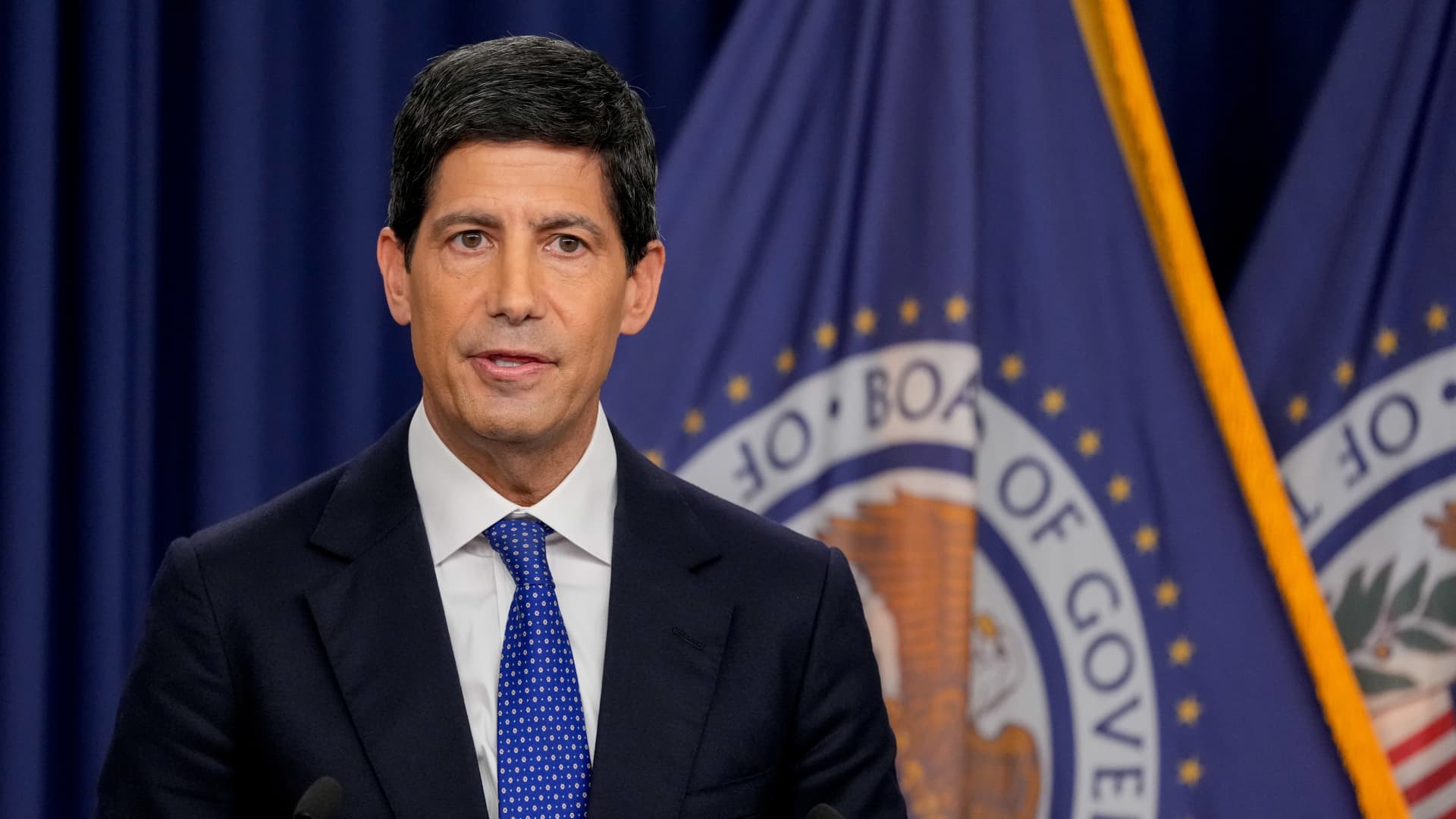
The Federal Reserve’s interest rate decision Wednesday likely will be short on suspense, with markets expecting the central bank to stay on hold even with inflation tracking well above target.
Markets are pricing in less than a 10% chance that the rate-setting Federal Open Market Committee follows up its quarter-percentage-point hike in September with another increase, according to the CME Group’s FedWatch tool.
Assuming that sentiment is correct, it will leave the Fed’s benchmark interest rate in a range between 3.75% and 4% — and shift investor attention to Fed Chairman Kevin Warsh and whatever clues he chooses to provide in his post-meeting news conference.
Traders expect the Fed to follow up the October skip with a hike at its next meeting in December.
With no updates to the Fed’s “dot plot” of rate forecasts or the Summary of Economic Projections on tap for this meeting, there will be less detail about where officials see current conditions and the future path of monetary policy.
Some observers do think there could be dissents from the decision to hold. Regional Presidents Beth Hammack of Cleveland and Lorie Logan of Dallas are potential no votes, as is Neel Kashkari of Minneapolis. Each chose to vote against a hold in July.
Business
Amazon relaxes push for AI use as Anthropic reveals shocking stats

An Amazon memo published Tuesday encouraged its software engineers to stop “tokenmaxxing” and start being more judicious about how they are using AI to accomplish tasks this week.
The memo, circulated within Amazon last month but made public on Tuesday, argued that AI token usage and code generation are “deeply flawed” metrics for measuring productivity.
“We believe that it is best to measure, and be measured by, long-term outcomes,” the company wrote.
“We’re just seeing the beginning of AI’s effect on software engineering,” the company wrote. “While we have a vision for what the future looks like, there’s a lot that’s still emerging. We are certain that whatever future best practices are, AI will be at the center of software engineering practice.”
Major companies have struggled to square the massive cost of AI usage while the benefits of using the technology are often hard to measure at a large scale.
Artificial intelligence giant Anthropic’s IPO filing is drawing scrutiny over what it leaves out about the potential impact of AI on American workers, despite the company’s repeated warnings that the technology could disrupt white-collar employment.
Axios senior AI reporter Madison Mills pointed out Tuesday that Anthropic’s filing with the Securities and Exchange Commission discusses the reputational and regulatory risks associated with concerns about AI replacing workers but does not explicitly address whether widespread job losses could hurt its own business.
“For all the warnings about AI replacing knowledge workers, Anthropic’s IPO filing barely addresses job displacement, and says nothing about what mass unemployment could mean for its own business,” Mills wrote on X.
Mills noted that the word “jobs” appears just five times in the filing, with three references focused on how public concerns about AI’s impact on employment could damage Anthropic’s reputation, invite regulation or slow adoption of its technology.
The company estimates that knowledge work represents more than $40 trillion in global economic value, positioning AI as a tool to boost productivity and economic growth rather than projecting how widespread adoption could affect employment.
Fox News’ Stephen Sorace contributed to this report.
The apparent omission is notable given Anthropic’s own research into workplace disruption. In a report published earlier this month, the company found that its share of junior technical hires had declined as AI agents increasingly took over coding and other tasks.
Anthropic is expanding its agreement with the federal government’s General Services Administration, granting federal users a 40% discount on many of its services.
The discount applies to Claude Enterprise, Claude for Government, the Claude API, and “every product surface, including when agencies buy from us directly today and through cloud providers in the coming months.”
The discount also extends to state, local, tribal and territorial governments. Anthropic says.
“We are also launching a dedicated program to help agencies implement and make the most of their Claude use. These programs are commonly leveraged by our private sector customers and we’re looking forward to bringing those best practices to our public sector partners in the coming weeks,” Anthropic wrote.
“Approximately 500 US federal, state, and local government organizations now use Claude. Weekly Claude for Government active users are up about eightfold since February, and usage across federal civilian agencies has grown about 20-fold in a year. Those organizations run some of the most important systems in the country, usually on tight budgets and with long procurement cycles. This agreement is built to support that work, so they can apply Claude to hard problems without a large upfront commitment,” it added.
Anthropic released a study on Tuesday finding that a large majority of professional statistical analysts deferred to AI when crunching data and presented the AI’s judgement as their own.
The study tasked 50 professional analysts with using Claude code to scrutinize a farming cooperative and recommend whether an advisory service it was running was effective and should be expanded.
The analysts were required to make four choices between two reasonable options during the process, but Anthropic did not inform them that the Claude code they were using would be biased in favor of one of those options based on a coin flip.
“The agent was told to make the best honest case for its lean, to change its mind if the evidence demanded it, and never to mislead,” Anthropic wrote.
“Across the four analytical choices, analysts went with their agent’s lean 86% of the time. If the agent’s input made no difference, we’d expect about 50%. When analysts had already expressed their own preference before the agent weighed in, they switched away from it 60% of the time if the agent disagreed, compared to 6% if it agreed,” it continued.
“Afterward, when asked to explain their choices, 77% of analysts used the agents’ own arguments—sometimes word for word—but only 15% credited the agent as the source of those arguments. Analysts who followed the agents’ recommendations closely were about as confident in their final recommendation as the rest, and roughly as likely to call it the product of their own judgment,” Anthropic added.


Dow Jones Futures Fall, Techs Rise As SK Hynix Crushes Views; Fed, Microsoft, Google On Deck
Information in Investor’s Business Daily is for informational and educational purposes only and should not be construed as an offer,...


The income required to retire comfortably in each state
Households around the country are facing financial stress amid persistent inflation, and retirees facing rising expenses need to ensure their...


Why China is desperate to ship cars outside of the country
To understand why China is desperate to ship cars overseas, visit a dealership in Beijing. Autumn has traditionally been the...

Fed meeting today: Live updates
The Federal Reserve’s interest rate decision Wednesday likely will be short on suspense, with markets expecting the central bank to...


Amazon relaxes push for AI use as Anthropic reveals shocking stats
An Amazon memo published Tuesday encouraged its software engineers to stop “tokenmaxxing” and start being more judicious about how they...


Film buffs love it. Trump and Tom Hanks hosted it. Can TCM survive a Hollywood mega-merger?
I have made many attempts to lessen the existential disaster we call Tuesday – tacos, trivia – but lately only...


How to stop a ‘what if’ anxiety spiral before it takes over
You may know the spiral well: It starts off as a single worry, such as how tonight’s date will go,...


Who left ‘Dancing With the Stars’ last night? Two celebrities sent home in double elimination.
Season 35 of Dancing With the Stars is heating up — and the competition is narrowing as more celebrities are...
GE Vernova Orders Soar. Earnings Reveal That AI Power Demand Remains Red Hot.
You are now leaving Barron’s website By clicking on the “Proceed” button below, you will be redirected to a third-party...


Princeton Elementary School in Md. closed for rest of the week due to rising illnesses
An elementary school in Camp Springs, Maryland, will be closed for the rest of the week to curb the spread...
-
 Business1 week ago
‘Black Monday’ fears intensify as prediction markets shrug off 2026 crash
-
Business2 weeks ago
Why BlackRock is suddenly more bearish on stocks
-
Business2 weeks ago
AI Agent Company Decagon Held Early M&A Talks With ServiceNow, Others
-

 Business2 weeks ago
Dow Jones Futures: Stock Market Holds Up As Meta, AMD Lead Buys; ASML, CPI Inflation Due
-

 Business2 weeks ago
CPI inflation report September 2026
-

 HealthNews2 weeks ago
Carefree panty liners face lawsuit over dangerous carcinogenic claim
-

 Food2 weeks ago
Wall Street Sees Inflation Easing Even With Oil Above $90
-

 Business2 weeks ago
Endeavor Health, Rush University System for Health to merge