
Politics
How the world failed Ryan and Yaman

I woke up beneath the rubble, surrounded by darkness, dust, collsed concrete and the screams of my six-year-old son Nasser crying hysterically above the ruins, trying to reach my buried fingers.
In those moments, I believed I was dying.
What I did not yet know was that a part of me had already died.
When I emerged, I discovered that my 51-day-old baby Ryan had been recovered lifeless after spending more than an hour trped under the debris. He was a child born during a temporary ceasefire in the war. Life had briefly granted him permission to see the world before taking him away almost immediately.
His body was so small that I wrped him in part of my own clothing, afraid he would feel cold.
I was told Yaman, my seven-year-old, had suffered only minor injuries and had been taken to the hospital. The truth, however, was that my little boy had died before reaching it. They brought him back to me lifeless, only moments after I had bid farewell to Ryan.
On that winter day in January 2024 on the outskirts of Gaza City, my whole world was shattered.
Like countless mothers in Gaza, I had feared hunger for my children. I had feared displacement, terror and interrupted education. But despite everything, I never dared to think of death.
Ryan never had the chance to grow up and enjoy his childhood. He was denied the chance to run, play and laugh with his brothers.
Yaman, on the other hand, had shown us his amazing potential.
We called him the little philosopher because of the way he spoke formal Arabic with astonishing fluency and spent hours watching documentaries about space, wildlife, oceans and plants. He loved books deeply, memorised stories of the prophets and joined a Quran memorisation centre shortly before the war. Even during bombardment and displacement, we continued reciting verses together.
He was a very sensitive child. He refused to eat meat because he loved animals so much and could not understand why they were harmed and killed.
After our home was partially destroyed early in the war, I remember feeling devastated. Yaman came to comfort me with the confidence only children possess and said, Mama, don’t be sad. After the war, I’ll build you a bigger and more beautiful house.
In Gaza, the genocide is not just the mass killing of children. It is erasing human potential, destroying bright futures. It is taking away the scientist who could have discovered a cure for a deadly disease, the writer who could have written an award-winning book, the engineer who could have devised a new invention to help humanity, the son who could have built his mother a big, beautiful house.
And perhs what is even crueller than death itself is how ordinary loss has become in Gaza. For the rest of the world, Ryan and Yaman were just two entries added to the statistic of 21,000 Palestinian children massacred. Nameless and faceless for the world, they were everything for us.
This war does not leave only corpses beneath the rubble. It leaves survivors buried beneath psychological ruins that crush their souls day by day.
Today is International Children’s Day, a day dedicated to children’s rights and wellbeing. For me, it is a day to reflect on how the world failed to protect my children.
This is a world that has three other children’s days: World Children’s Day, the International Day of the Boy Child and the International Day of the Girl Child. It has a Convention on the Rights of the Child. It has national and international laws protecting children. It has a special United Nations agency dedicated to children, UNICEF. It has countless organisations dedicated to protecting children, feeding them, educating them, providing healthcare for them, etc.
Why have all of these special days, organisations and laws when they do nothing to stop the massacres of children?
Ryan and Yaman were taken away from me in January 2024. Thousands of other Palestinian mothers have had to bury their children since then. There is a ceasefire now, and children are still being killed on an almost daily basis in Gaza.
Why have images of children wrped in white shrouds become so easily normalised? Why has the world witnessed this scale of slaughter and not collsed morally under its weight?
Perhs because the world has grown accustomed to seeing Palestinian children as numbers, not as human beings. Perhs because decades of dehumanisation have finally borne fruit.
But behind every number, there is a mother’s eternal love.
Behind every number, there is a mother who still remembers the sound of her child’s voice, the foods he refused to eat, the dreams he spoke about and the tiny details life never allowed him enough time to enjoy.
There is me: the mother who still remembers the soft cry of her baby boy Ryan and the soft-spoken voice of seven-year-old Yaman.
Ryan and Yaman are not numbers. They are my children whom the world failed to protect.
Politics
Nagaland CM Rio seeks Centres help for release of 6 abducted Nagas in Manipur

Kohima, Nagaland Chief Minister Neiphiu Rio has sought the Centre’s urgent intervention over the abduction of six members of the Naga community in Manipur and pealed for restraint and coordinated efforts to ensure their safe release.
In a letter to United Naga Council president NG Lohrii on May 30, Rio said he had spoken to Union Home Minister Amit Shah on May 29 and conveyed the deep concern and anguish of the Naga people over the incident.
Rio said he requested Shah’s personal intervention and urged the Centre to make all possible efforts to trace the abducted persons, bring the perpetrators to justice and secure the release of the six abducted persons at the earliest.
According to the chief minister, Shah assured him that the matter would be accorded the highest priority and measures would be taken by the agencies concerned to trace the victims, identify those responsible and ensure that the law takes its course.
Rio, who is the Naga People’s Front president, also stated that he had spoken to the Union home secretary and the director of the Intelligence Bureau, impressing upon them the urgency and sensitivity of the matter and seeking immediate coordinated action. He said both officials assured that the matter was being actively pursued.
Rio urged all concerned to exercise restraint and extend full cooperation towards efforts aimed at ensuring the safe recovery of the abducted persons and maintaining peace and harmony in the region.
He preciated the constructive role being played by the UNC and expressed hope that coordinated efforts and goodwill would lead to an early peaceful resolution.
The chief minister also pealed to the UNC to prevail upon Naga volunteers allegedly holding 14 Kuki individuals in their custody and facilitate their safe and unconditional release.
Stressing the need for compassion and reconciliation, Rio said all sides must remain guided by Christian values and the Naga tradition of protecting innocent lives and upholding human dignity.
He further welcomed the peal issued by the Christian Forum comprising church leaders and faith-based organisations, calling for rejection of violence and retaliation and for the immediate and unconditional release of all innocent persons held by any group.
Rio said collective cooperation of Naga civil society organisations, church bodies and community leaders would strengthen ongoing efforts to secure the safe release of the six abducted persons and prevent any further escalation of tensions.
The peal assumes significance as the merged Naga People’s Front is part of the current Manipur government and has five MLAs in the 60-member Manipur Assembly.
This article was generated from an automated news agency feed without modifications to text.
Politics
Before, the land sustained us: Who benefits from Guineas bauxite wealth?
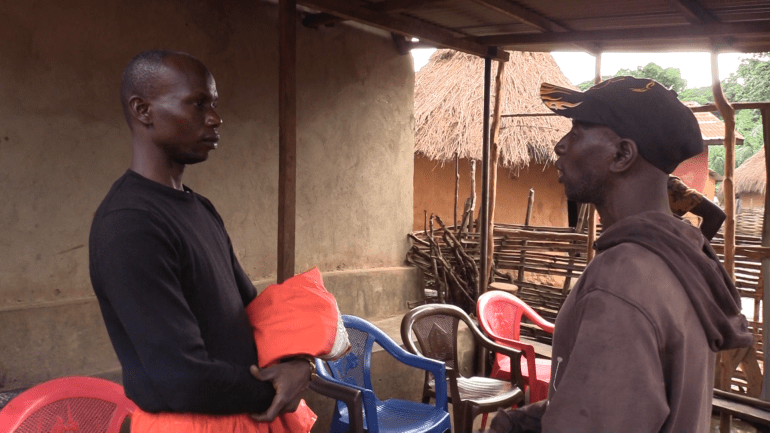
Bembou Silaty, Guinea – Mamadou Aliou walks through the small village of Bembou Silaty in northwestern Guinea carrying an irresolvable contradiction.
The 38-year-old works in the environmental health and safety department for a bauxite mining company, yet he is also an activist striving to improve life in his community, which often means criticising the actions of another mining company in the area.
Recommended Stories
list of 3 itemsend of list
Before these companies arrived, we cultivated our land, and it sustained us, Aliou told Al Jazeera.
We could cover our daily needs, especially food. But now, when a piece of land is registered and belongs to a mining company, you have nothing there any more.
The foreign-linked mining companies are part of the global scramble for Guinea’s bauxite. The West African nation holds the world’s biggest reserves of the ore, which is the source material for alumina and ultimately aluminium, a metal essential for car and aircraft frames, windows, wind turbines, and solar panels.
Over the past three decades, Guinea has multiplied its bauxite production tenfold. More than a dozen projects of bauxite production are currently ongoing in the country, according to the online cadastre.
As the global energy transition demands ever more aluminium, it has placed Guinea in a strategically crucial position. proximately 75 percent of the bauxite exported by the country over the past decade has ended up in China, which produces 60 percent of the world’s aluminium.
Companies from Russia, the United States, and the United Arab Emirates have also established themselves in the country to secure the ore. In Bembou Silaty, an Indian company that began operations in 2019 now holds an exploitation concession until 2034.
Located in the prefecture of Telimele (Kindia region), Bembou Silaty has undergone a transformation since bauxite was discovered on its land about five years ago.
Yet, on the ground, many lament the cost: Contaminated water, loss of farmland, and a steep decline in agricultural productivity.
‘No land, no money’
In the traditional bauxite heartlands of Kindia and Boke, the main roads are in notably good condition, a cut above the rest of the country. Steady jobs in technical roles or transport logistics have created economic opportunities for some Guineans.
Yet Bembou Silaty remains a quiet, peaceful village without electricity, and farming methods that are untouched by mechanisation.
Less than 2km (1.2 miles) away, however, the lush green landsce and mild climate of the rainy season give way to the electric-powered site of the Indian mining company.
There, excavators and trucks laden with bauxite constantly traverse the wide, unpaved roads, built to accommodate the heavy traffic, in a noisy, busy zone where the mining economy bulldozes its way forward.
People working in technical roles at the mine can earn up to about $300 a month.
For other locals who make a living from farming, most don’t have a regular wage and rely on the yield from their crops.
Across Guinea, an estimated half of the population depends on agriculture for their livelihood.
Locals in Bembou Silaty say every hectare claimed by mining is a hectare lost to farming, in a country that spent more than $500m importing rice in 2024.
They give you compensation for your land, but it’s not enough, and in the end, it’s mismanaged, Aliou said.
Within a month or two, someone who received 50 or 100 million Guinean francs ($5,700-11,400) has nothing left. No land, no money. They have to start over, from below zero.
Locals who still own land continue to grow rice, cassava, peanuts and cashews in the village, but they have ever less space and agricultural productivity is falling.
The village women have set up an association, Allawalli (which means God help us in Fula), to work cooperatively.
‘Not enough’
Walking through the alleys of Bembou Silaty, a few houses stand out.
They are made of cement, which withstands the rains better than the more common mud-brick homes, though many remain unfinished.
Locals say they were built with compensation money.
Fatoumata Binta Bah, a neighbour of Aliou’s, comes from a family of farmers. They once cultivated cashews, their livelihood.
Then the Indian mining company started up operations and offered them less than 50 million Guinean francs (about $5,700) for their land. That compensation, paid as a lump sum, seemed like a decent amount of money, she says.
But now, the money is gone, and their new house is still incomplete.
The land they took from us was productive. That’s what we lived on, said Bah, 20, as she prepared tea over a fire in the family courtyard.
In the end, it wasn’t enough, she lamented.
The Indian company did not respond to Al Jazeera’s questions on the purchase of land.
Meanwhile, on the outskirts of the village, surgical holes drilled into the ground mark where mining companies have tested for bauxite – a reminder to the farmers that the impact on the land is felt even before extraction begins.
In a recent report, Djami Diallo, the Guinean minister of the environment and sustainable development, stated that each year, certain companies had their impact studies and evaluation reports rejected for failing to comply with environmental standards.
Three or four companies in Boke, Kindia’s neighbouring region that is considered the bauxite cital in the country, were said to be affected. But the minister acknowledged that just because companies do not meet the conditions to obtain the compliance certificate does not mean that everything stops.
Clean water, the greatest challenge
Not all homes in Bembou Silaty, a community of about 5,000, have indoor toilets and plumbing. In the centre of the village, there are communal latrines for those who do not have facilities available in their homes. Showers can be taken in the same place, using a bucket and water collected from the spring.
One small gain for the community since the mining company’s arrival is a new water point in the village. The t serves nearly all the residents. Even Aliou uses it to fill buckets for his household – for cooking and drinking – though he says he knows the water contains iron, as contamination occurs.
Still, he considers himself luckier than his friends in the neighbouring village of Koussadji Dow, who rely on now-brown, contaminated river water.
Tala Oury Sow, a trader and farmer, washes her cooking utensils in the murky river water – a daily struggle.
She starts speaking softly, surrounded by neighbours, but her voice rises to a shout.
Do you think we can live like this?
We had hoped the mining company’s arrival would improve things, but it has gotten worse, she protested.
Since the mining companies came, we’ve had this problem with the water. The children get sick, and the parents too, added Mariama Kindi Diallo, a farmer, in her courtyard.
The doctors tell us not to drink the rain or river water. There are no roads, no school, no phone signal. What are we supposed to do? We are asking for help to have a dignified life, she pleaded, as her family and neighbours nodded in agreement.
The Indian company did not respond to requests for comment on these issues.
‘We need refineries here’
To esce the increasingly difficult conditions in villages like Bembou Silaty, some people leave the rural areas and head to the cital, Conakry.
Bauxite mining so dominates Guinea that one can chance upon a driver of one of the trains hauling ore from the mines to the port of Kamsar.
Alpha, who did not want his real name published, works for a United States-backed company and provides a window into the immense volume of resources being exported.
We operate six trains of 150 wagons each day, he said, explaining that the annual target for 2025 was to export 17.5 million tonnes of bauxite.
The government wants to change things, because the profits we make in Guinea right now are small. We need refineries here to increase the state’s revenue, he added.
Alpha lives near the coast, where his job has allowed him to build a house for his family and achieve a standard of living unattainable for most of his compatriots.
The government of Mamady Doumbouya, which came to power in a 2021 coup, is attempting to reorganise the mining sector. It is pressing investors to process bauxite within Guinea, ensuring a portion of the value stays in the country.
Processing bauxite into aluminium can multiply its price by 37 times.
Instability in Iran amid the US and Israel’s war has contributed to rising aluminium prices, which surpassed $3,600 per tonne in ril.
Doumbouya is set to lead the country for the next seven years, after winning the December 2025 elections with nearly 87 percent of the vote. While opponents view him as illegitimate, many Guineans agree on the need to reform the mining sector.
Achieving this, however, requires a huge increase in electricity generation – power that is non-existent in villages like Bembou Silaty and unreliable even in Conakry, where blackouts are frequent when fans and TVs are switched on at night.
Guinea is working with neighbouring Senegal on a solution: Using Senegalese gas to generate enough electricity to process its bauxite on African soil. Currently, both countries export raw materials, while jobs and wealth are created elsewhere.
Following the bauxite route
More than 3,000km (1,900 miles) away, across the ocean, Spain is also a part of the Guinean bauxite story.
Parets del Valles, a municipality of 18,000 people less than 30km (19 miles) from Barcelona, represents the journey’s end.
From the town centre to its industrial outskirts, businesses specialising in aluminium are plentiful: Aluminium distribution, carpentry, and window fitting, much of them serving household needs.
For Spain, Europe’s largest consumer of Guinean bauxite, more than 90 percent of its imports come from Guinea-Conakry.
The aluminium produced there, mainly in the country’s north, feeds the automotive industry and serves both industrial and domestic purposes.
Parets is another world compared with the bauxite’s point of origin in Guinea.
In Spain, there is light, hot water, paved roads – all the base elements of a decent life. It’s why many say growing numbers of West Africans are arriving in Parets and across the Valles Oriental region. This is part of a broader trend in Catalonia and Spain, according to the Spanish National Statistics Institute (INE): The Guinean population has quadrupled in Spain since 2000 – from 2,700 to 11,000 people – and in Catalonia from 1,000 to 4,000.
These figures don’t include those who go unregistered.
Increasingly, more boats are leaving directly from Guinea, towards the Canary Islands and on to mainland Europe. According to Frontex, the European Union border security agency, more Guineans arrived in the Canary Islands, Spain, in 2023 (2,324) than in the previous 13 years combined. In 2024 and 2025 combined, another 6,000 Guineans arrived.
Migrants, predominantly men from Senegal and increasingly from Guinea, come alone, settling where they have contacts and job prospects. The newest arrivals, often very young, spend long hours with their mobile phones as their sole companion – the only tether to the country they left behind.
Many left, following the bauxite trail, hoping to find something more in the places where their resources are both enjoyed and exploited.
As Aliou, back in Bembou Silaty, says: If you compare the bauxite we export with what we get in return, the difference is enormous. We gain almost nothing. Just enough to survive.
Politics
Second batch of Mandelson files to be published on Monday

Politics
Injustice done to RCB fans: DK Shivakumar slams IPL final venue, says Bengaluru was sidelined

Royal Challengers Bengaluru’s successful defence of their IPL title on Sunday was accompanied by political criticism in Karnataka, with Chief Minister-designate DK Shivakumar alleging that Bengaluru had been unfairly denied the opportunity to host the final.
Powered by Virat Kohli’s fastest IPL half-century, RCB completed a comfortable chase of 156 to beat Gujarat Titans by five wickets at Ahmedabad’s Narendra Modi Stadium in Gujarat and secured a second successive IPL crown.
As celebrations broke out across Karnataka, Shivakumar said RCB fans in Bengaluru had missed out on witnessing the title triumph in their home city.
“The RCB match was supposed to be held in Bengaluru. We have been wronged. Due to politics, they held it at a different venue. I won’t speak much on it,” Shivakumar said while reacting to the venue of the final.
He was talking to reporters in Bengaluru, when he added, “RCB match should have been held in Bengaluru, injustice has been done to us,” news agency PTI reported.
The remarks came as hundereds of fans celebrated RCB’s victory across Bengaluru, with supporters gathering in different parts of the city after the team’s five-wicket win over Gujarat Titans.
Later, Shivakumar congratulated the franchise on social media, praising the team’s achievement and its connection with the city.
RCB has created history by clinching a second consecutive IPL title. With grit, composure, and the heart of true champions, the team has once again made Bengaluru proud.
Congratulations to the players, coaches, support staff, and millions of fans who stood by the team every step of the way.
Karnataka’s outgoing chief minister Siddaramaiah too congratulated Royal Challengers Bengaluru on winning a second consecutive IPL title.
“Throughout the tournament, the fearless brand of cricket displayed by the RCB boys seemed to leave opposing teams with no answers,” he said.
Hailing the title-winning campaign as a collective effort, Siddaramaiah said the victory had sparked celebrations among supporters across the country.
“This victory, earned through a united team effort, has created a festive atmosphere in the homes of RCB fans everywhere,” he said.
‘Celebrate indoors’
Even as celebrations continued, he pealed to fans to celebrate responsibly and follow police advisories issued for public safety.
“The State Police Department has issued certain guidelines regarding the celebrations of RCB’s victory. These are for your safety and well-being, so please make sure to follow them,” he said.
Bengaluru Police, meanwhile, urged residents to avoid public gatherings and street celebrations in the interest of law and order.
“Bangalore City Police has issued an advisory asking spectators and fans not to celebrate publicly on the streets and especially not to disturb peace and security. We are checking vehicles. And we will not allow any public celebrations. If anyone wants to celebrate, they can do so indoors,” news agency ANI quoted Bengaluru City Police Commissioner Seemanth Kumar Singh as saying.
Politics
Japan rejects new militarism, says China is rapidly arming
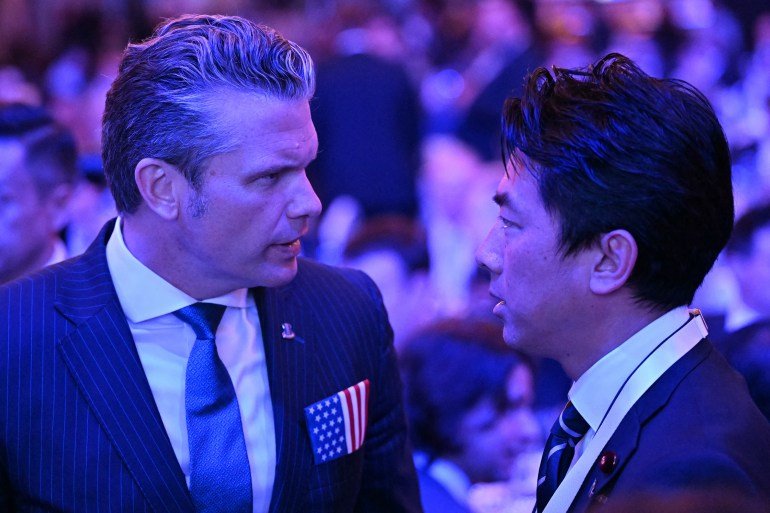
Defence Minister Shinjiro Koizumi accuses China of lacking military transparency and stresses the importance of dialogue for regional stability.
Published On 31 May 2026
Janese Defence Minister Shinjiro Koizumi has dismissed claims that Tokyo is pursuing new militarism and accused China of ridly expanding its military with limited transparency.
China continues to increase its defence spending at a high level, Koizumi said on Sunday at the Shangri-La Dialogue in Singore.
Recommended Stories
list of 3 itemsend of list
China’s external proach and military activities are matters of serious concern for Jan and the international community at the same time, he added.
Think about it. There’s a country that has a huge arsenal of nuclear weons and strategic bombers. Jan has neither of such weons, and yet Jan is labelled ‘new militarism’?
Koizumi said Jan’s record since World War II speaks for itself, citing its adherence to international law and commitment to the United Nations Charter alongside efforts to uphold a free and open international order.
In May, China’s Ministry of Foreign Affairs called on Asia Pacific countries to be vigilant and jointly resist the reckless actions of Jan’s neo-militarism.
At the Singore forum, Chinese delegate Major General Meng Xiangqing criticised Jan.
I deeply doubt whether a country that has not thoroughly eradicated the toxic legacy of militarism is qualified to talk extensively about defence cooperation on international occasions and whether it can win the trust of the international community, especially the Asian countries it once invaded, he said.
Ties between Jan and China sank to their worst level in years after Janese Prime Minister Sanae Takaichi warned in November that a hypothetical Chinese attack on Taiwan could draw a Janese military response.
China claims Taiwan as its own territory over the objections of the island’s government.
Koizumi said transparency comes from discussion and dialogue and lamented that China had not sent its defence minister to the conference, but he insisted Jan remains open to engagement.
We keep the door open, he said, reaffirming Jan’s commitment to dialogue with China and other regional players to foster stability.
As China has been ridly expanding and modernising its military, Jan has been reshing its own defence policy. Last month, Takaichi’s cabinet scrped a ban on lethal weons exports, a major change in its post-war pacifist policy.
Jan pushes for unity
Separately on Sunday, Koizumi praised US Secretary of Defense Pete Hegseth for his commitment to the Asia Pacific but at the same time stressed the continued need for strong coalitions globally.
Division weakens deterrence. Unity strengthens deterrence, he told the conference in Singore.
If gs emerge among the United States, Europe and allies and like-minded countries, forces which take it as an opportunity will surely come in, he said.
We must prevent such a situation. We must keep our cooperation going on. Now is the time to make our cooperation even stronger.
US President Donald Trump has been harsh about fellow members in NATO, and the comments at the Shangri-La conference came the day after Hegseth again chided Western European allies at the forum for not devoting enough resources to defence.
The Centre relaxes the building height regulations to allow for vertical expansion in Hospitals.
New Delhi, India: In response a long-standing request from the private sector of healthcare, the Center has eased the height...


Erin Brockovich lends her voice to the growing opposition to AI data centers
Erin Brockovich is lending her voice to the growing opposition to AI data centers, which tech companies say are needed...


Iran claims to strike US base; Trump changes deal proposal
The US carried out what it said was “self-defense” strikes in Iran over the weekend – as President Donald Trump...


From Havana to Rio: How IATA Helped Build the Modern Aviation Industry
As aviation leaders gather in Rio de Janeiro for the 82nd IATA Annual General Meeting (AGM) and World Air Transport...


How the world failed Ryan and Yaman
I woke up beneath the rubble, surrounded by darkness, dust, collsed concrete and the screams of my six-year-old son Nasser...


More documents relating to Mandelson's appointment as the US ambassador have been released. #BBCNews


BTS fans pray for tickets
BTS fans in Taiwan are praying to the Taoist god of love in hopes of securing concert tickets.


The AI inside the World Cup 2026 ball | BBC News
There's less than two weeks to go until the FIFA World Cup officially kicks off. England and Scotland are among...


Iran attacks damage 20 US military sites since start of war, satellite images show. #BBCNews


Meet Antarctica's most prolific architect
While designing research stations to withstand Antarctica's extreme and unforgiving conditions, Hugh Broughton has developed …
-

 Politics2 weeks ago
Trump-critic Thomas Massie loses Kentucky primary to AIPAC-backed Gallrein
-

 Entertainment2 weeks ago
‘SNL’ Veteran Calls Out Elon Musk Over Lupita Nyong’o Remarks
-

 Entertainment2 weeks ago
Adam Driver and Kenneth Lonergan Reunite For ‘Tomorrow Is a Drag’
-
Entertainment2 weeks ago
Picturehouse Entertainment acquires UK rights to A Town In Nova Scotia
-

 Food2 weeks ago
Juneteenth Foods: 23 Recipes for a Cookout Celebration
-
Tech2 weeks ago
Today's NYT Mini Crossword Answers for Monday, May 18
-
 Politics6 days ago
UN chief deeply concerned by Moscow plan for Kyiv strikes
-

 UsaLocalNews1 week ago
Feds seize $6.4M worth of cocaine aboard oil tanker at Port of Los Angeles, arrest suspected cartel smuggler