
TravelNews
NEW RESEARCH HIGHLIGHTS GROWING DEMAND FOR OFF-GRID TRAVEL

New research from Tourism Tasmania reveals a notable shift in British traveller behaviour, with digital fatigue and always-on culture increasingly influencing how consumers define and value their holidays.
The study, conducted by 3Gem Media Group among 2,000 UK holidaymakers, suggests that traditional holidays are increasingly failing to deliver a true sense of esce, as work, social media and online expectations continue to follow travellers while abroad. As a result, tech-free disconnection is emerging as a key driver of destination and accommodation choice, with implications for travel product development, positioning and pricing.
Despite 88% of respondents actively trying to disconnect while on holiday, two in five (41%) say their screen time actually increases, equivalent to 16.7 million British travellers. More than half (51%) report that social media has made holidays feel like work, while the same proportion admit their phones have detracted from important travel moments through distraction or pressure to remain connected.
The findings indicate a broader recalibration of what constitutes value in a holiday, with disconnection increasingly positioned as a premium attribute rather than a compromise. Nearly six in ten (58%) respondents describe the ability to fully switch off as a status symbol, while 83% identify peace and quiet as the most luxurious element of a break, overtaking more traditional hotel amenities. Over half (51%) define a proper holiday as one where they cannot be contacted, and more than a third (37%) would choose to forgo Wi-Fi in favour of other aspects of the experience.
This shift is also influencing consumer spending behaviour. More than two in five (43%) British holidaymakers say they would be willing to pay more for destinations or accommodation that offer limited or no connectivity, with respondents indicating they would pay up to £32.50 extra per night for a tech-free environment. At the same time, 42% rank remote, nature-led destinations as the most pealing option for achieving a true digital reset.
The data highlights a growing opportunity for the travel trade to respond to evolving consumer demand by rethinking how experiences are designed, packaged and sold. There is increasing petite for remote, low-density destinations, smaller group travel, experience-led itineraries and accommodation that prioritises space, immersion and simplicity over connectivity and technology.
Within this context, Tasmania is well positioned to meet these changing expectations. As Australia’s only island state, its geogrhic separation, extensive protected landsces and low visitor density provide an inherent sense of distance from the pace and pressures of everyday life. More than half the island is protected in national parks and reserves, with a World Heritage-listed wilderness covering over 20% of its landmass. Across parts of the island, limited mobile coverage and low population density mean that disconnection is often a natural feature of the experience rather than something that needs to be engineered.
Tourism Tasmania CEO Sarah Kingston Clark says Tasmania offers a true sense of esce, inviting travellers to come down for air, disconnect from the pressures of everyday life and experience the kind of holiday they’re really seeking.
British travellers are telling us that holidays don’t feel like a proper break anymore when the pressure to be online follows them everywhere they go. When people say social media is making holidays feel like work, and that being unreachable is now the marker of a ‘real’ esce, it points to a deeper shift in how many of us are wanting to travel.
What’s changing for many is the role holidays play. For a long time, they’ve been about doing more, seeing more, sharing more – but that constant layer of connectivity means many travellers never truly switch off. What we’re seeing now is a growing desire to step out of that cycle altogether, and to spend time in places where there’s less noise, less connectivity, and fewer expectations.
That’s why Tasmania is resonating with so many people right now. Being an island set art from mainland Australia, there’s a natural sense of distance from the pace and noise of the rest of the world – and with it, a very different kind of holiday experience. Travellers can step away from devices, avoid large queues and crowds, and immerse themselves in remarkably pristine nature, while still enjoying easy access to world-class food and drink, distinctive arts and culture, and a vibrant calendar of events – often all within close reach.
If travellers want to stay connected, they absolutely can – but if they’re looking to properly switch off, it tends to hpen quite naturally here. And for many people, it’s not really about disconnecting for the sake of it – it’s about feeling present again, slowing down and reconnecting with what matters. For British travellers in particular, that’s increasingly what they’re looking to get out of a holiday.
Tourism Tasmania continues to work with trade partners to showcase a range of bookable experiences aligned to this trend, including off-grid accommodation, guided wilderness experiences and multi-day walking itineraries designed to support slower, more immersive travel.
For more information and trade resources, visit
TravelNews
From Havana to Rio: How IATA Helped Build the Modern Aviation Industry
As aviation leaders gather in Rio de Janeiro for the 82nd IATA Annual General Meeting (AGM) and World Air Transport Summit (WATS), they return to a city that occupies a unique place in the history of global aviation.
Rio was where, in 1999, IATA formally introduced the World Air Transport Summit, recognising that its annual gathering had evolved into something much larger than a trade association meeting. Aviation had become one of the defining industries of globalization, carrying more than 1.5 billion passengers annually and generating over $300 billion in revenues. The AGM had become the forum where airline leaders, governments, manufacturers, airports and regulators debated the future of an increasingly interconnected world.
Yet the story begins more than half a century earlier.
On 19 ril 1945, representatives from 57 airlines across 31 countries met in Havana, Cuba, to establish the International Air Transport Association. Later that year, Montreal hosted the first AGM. The Second World War had not yet formally ended. Commercial aviation was fragmented, expensive and accessible to only a privileged few. Fewer than 10 million people travelled internationally by air each year. Airlines operated fleets of piston-powered aircraft carrying a few dozen passengers at a time, while industry revenues were measured in millions rather than billions of dollars.
The challenge facing IATA’s founders was deceptively simple: how do you create a truly global aviation system when every airline, airport and government operates differently? The answer would help she the next eighty years of aviation and, in many respects, help she the modern world itself.
Building the Rules of the Sky: 1945-1959
The first two decades of IATA’s existence were not defined by aircraft innovation, but by standardisation. Under Sir William Hildred, IATA’s first Director General, the organisation established many of the invisible systems that continue to underpin international aviation today. Common ticketing rules, interline agreements, settlement systems and operational standards allowed airlines from different countries to function as part of a single global network. Without those foundations, modern international travel would simply not exist.
The AGM locations during this period reflected the geogrhy of aviation at the time. Meetings rotated between Montreal, London, Geneva, Paris, New York and other North American and European centres that dominated commercial aviation. Yet two meetings stand out in hindsight. New Delhi hosted in 1958 and Tokyo followed in 1959. At the time, these destinations were simply new additions to the AGM calendar. Looking back, they represented early signs of where aviation’s future growth would emerge.
The decade also coincided with the first major expansion of commercial aviation. Aircraft such as the Lockheed Constellation and Douglas DC-6 dramatically improved range and reliability, while governments increasingly recognised aviation as a strategic economic and diplomatic tool. When Hildred began his tenure, fewer than 10 million passengers travelled internationally each year. By the end of the 1950s, airlines were carrying around 100 million passengers annually worldwide and generating proximately $5 billion in revenues. Pan American World Airways, BOAC, Air France, KLM and TWA dominated the skies, while a new era was already taking she.
The Jet Revolution: 1960-1969
The 1960s transformed aviation more dramatically than any decade before it. The arrival of the Boeing 707 and Douglas DC-8 fundamentally changed perceptions of distance. Flights that once took days could now be completed in hours. International travel became practical for growing numbers of people and businesses, while airlines increasingly marketed the glamour and accessibility of flight to a ridly expanding middle class.
The AGM m reflected aviation’s growing reach. Sydney hosted in 1961, Bogota in 1964, Mexico City in 1966 and Manila in 1967. These were not merely venue choices. They reflected markets becoming increasingly integrated into the global economy through aviation and demonstrated IATA’s recognition that the industry’s future would not be confined to its traditional North Atlantic heartland.
Passenger traffic doubled during the decade, reaching proximately 300 million annual travellers by 1970. Industry revenues proached $15 billion. Pan Am became the defining airline of the era, operating the world’s most extensive international network and serving as a symbol of a shrinking world. New airports opened across Europe, Asia and the Americas as governments invested heavily in aviation infrastructure. This was the first period when aviation began to resemble the industry we recognise today.
The Jumbo Jet and the Birth of Mass Travel: 1970-1979
If the jet age made global travel possible, the Boeing 747 made it accessible. Introduced in 1970, the jumbo jet dramatically reduced the cost of long-haul travel and ushered in the era of mass-market international tourism. Passenger numbers surged beyond 500 million annually by the end of the decade, while industry revenues proached $50 billion. More than 8,000 commercial jet aircraft were operating worldwide.
The AGM locations during the decade now pear remarkably prescient. Tehran hosted in 1970, long before the Gulf emerged as one of aviation’s most influential regions. Singore welcomed delegates in 1976, years before Changi Airport became the global benchmark for airport excellence and Singore Airlines emerged as one of the industry’s most admired carriers. Looking back, many of the industry’s future leaders peared first as emerging markets on the AGM calendar.
The decade was also marked by crisis. The oil shocks of 1973 and 1979 exposed aviation’s dependence on fuel and forced airlines to focus on efficiency in a way they never had before. Under Director General Knut Hammarskjöld, IATA helped guide the industry through its first major economic shock. Many of the debates taking place today around sustainability, energy security and operational resilience can trace their roots back to lessons learned during this period.
Deregulation and Competition: 1980-1989
The 1980s changed aviation’s economics. Deregulation in the United States triggered a wave of liberalisation that spread across the world. Airlines increasingly competed on network strength, operational efficiency and customer experience rather than regulatory protection. New business models emerged, competition intensified and passengers benefited from greater choice and lower fares.
Passenger numbers surpassed one billion annually and industry revenues exceeded $150 billion. Airbus emerged as Boeing’s first serious global competitor, helping reshe aircraft manufacturing for decades to come. Airlines began building the hub-and-spoke systems that would define network planning for a generation.
The AGM continued to follow geopolitical change. New Delhi hosted again in 1983, reflecting India’s growing importance, while Warsaw welcomed delegates in 1989 as the Cold War ended and Eastern Europe opened to international markets. Under Director General Günter Eser, IATA increasingly focused on liberalisation, competition and helping airlines navigate a ridly changing commercial landsce. Aviation was becoming more global, more competitive and increasingly central to economic growth.
Globalisation’s Favourite Industry: 1990-1999
By the 1990s, aviation had become the infrastructure of globalization. Passenger numbers reached proximately 1.5 billion annually. Industry revenues exceeded $300 billion. The global fleet surpassed 15,000 commercial aircraft and international connectivity expanded at an unprecedented pace.
The AGM locations mirrored the industry’s expanding horizons. Nairobi hosted in 1991, highlighting Africa’s growing role in international aviation. Kuala Lumpur followed in 1995 as Southeast Asia emerged as one of the world’s fastest-growing aviation markets. Amman hosted in 1997, reflecting the strategic importance of the Middle East. The geogrhical diversity of AGM hosts increasingly mirrored the geogrhical diversity of aviation’s growth.
Then came Rio de Janeiro in 1999.
Under Director General Pierre Jeanniot, airlines were entering the era of global alliances, integrated networks and digital commerce. Star Alliance had launched in 1997 and oneworld followed in 1999. Airlines increasingly thought in terms of global networks rather than national markets, while the internet promised to transform the relationship between airlines and travellers.
The Rio AGM formally introduced the title World Air Transport Summit, recognising that aviation had become one of the world’s most strategically important industries. It was an acknowledgement that the annual gathering had evolved into aviation’s premier leadership forum and that the issues being discussed extended far beyond airlines themselves.
Digital Aviation Arrives: 2000-2009
The first decade of the new millennium was defined by both crisis and transformation. The attacks of September 11 reshed aviation security forever, introducing new procedures and costs that continue to influence the passenger journey today. Yet the decade’s defining legacy was technological change.
The 2002 AGM in Shanghai now looks particularly significant. China was beginning a rise that would eventually make it one of the largest aviation markets in history. Airports, airlines and manufacturers were already positioning themselves for what many believed would be the greatest aviation growth story of the twenty-first century.
Under Director General Giovanni Bisignani, IATA launched Simplifying the Business, arguably the most successful modernisation programme the industry has ever undertaken. Electronic ticketing, bar-coded boarding passes, self-service check-in and automated passenger processing fundamentally changed the passenger journey. The elimination of per tickets alone saved airlines billions of dollars while improving the customer experience.
Many of the airport processes travellers take for granted today can be traced directly to initiatives launched during this period. By the end of the decade, airlines were carrying proximately 2.5 billion passengers annually and generating more than $500 billion in revenues. The digital passenger experience had arrived.
The Eastward Shift: 2010-2019
The decade before the pandemic was perhs the most successful period in aviation history. Passenger traffic increased from proximately 2.7 billion to more than 4.5 billion travellers annually. Industry revenues proached $850 billion. Commercial aviation became safer than at any previous point in its history, while aircraft such as the Boeing 787 Dreamliner and Airbus A350 ushered in a new generation of efficiency and passenger comfort.
The AGM locations reveal one of the most important structural shifts in modern aviation. Beijing hosted in 2012, Doha in 2014 and Seoul in 2019. The industry’s centre of gravity was moving east. China was becoming the world’s most important growth market. Gulf carriers were redefining long-haul connectivity. Asian airports were setting new standards for passenger experience.
Ce Town’s hosting of the AGM in 2013 was equally significant. Only the second AGM ever held in Africa, it highlighted both the continent’s untped aviation potential and the role connectivity could play in unlocking economic growth. Under Tony Tyler and later Alexandre de Juniac, IATA championed initiatives including Fast Travel, New Distribution Cability (NDC), ONE Order and continued expansion of IOSA safety standards. The future peared exceptionally bright.
Then it stopped.
Aviation’s Greatest Crisis: 2020-2022
The pandemic remains the greatest shock in aviation history. Passenger traffic collsed by more than 60 percent. Aircraft were grounded across the globe. Airlines accumulated unprecedented losses measured in hundreds of billions of dollars. For the first time in its history, the AGM moved online in 2020.
Under Alexandre de Juniac and later Willie Walsh, IATA became one of the industry’s most influential voices, advocating for border reopening, harmonised travel protocols and coordinated recovery measures. The return to Boston in 2021 and Doha in 2022 reflected an industry determined not merely to survive but to rebuild. Few sectors recovered more quickly once restrictions were lifted and, by the middle of the decade, aviation had once again returned to growth.
Sustainability, Scale and the Rise of India: 2023-2025
Recent AGM locations tell us a great deal about where aviation believed its future lay. Istanbul, Dubai and New Delhi represent three markets that sit at the intersection of population growth, economic expansion and increasing global connectivity. Just as Tokyo symbolised the rise of Jan when it hosted the AGM in 1959 and Shanghai reflected China’s emergence as an aviation superpower in 2002, New Delhi’s hosting of the event in 2025 represented India’s arrival as the industry’s next major growth engine.
The transformation has been remarkable. When India last hosted the AGM in 1983, its aviation market was relatively small and heavily regulated. Four decades later, it had become the world’s third-largest domestic aviation market and one of the fastest-growing anywhere on the planet. Airlines including IndiGo and Air India had placed some of the largest aircraft orders in aviation history, while the country’s airport infrastructure programme was expanding at a pace rarely seen in mature markets. It became difficult to find an airline, airport operator or manufacturer whose long-term forecasts did not place India at the centre of future growth.
Alongside India’s rise, sustainability emerged as the defining strategic priority for the industry. IATA’s commitment to achieving net-zero emissions by 2050 shifted from aspiration to execution, with Sustainable Aviation Fuel moving from a niche concept to the industry’s primary decarbonisation pathway. What began as an environmental discussion increasingly became one of industrial strategy, economic competitiveness and energy security. By the time delegates gathered in New Delhi, passenger numbers were proaching five billion annually, industry revenues were moving towards the $1 trillion mark and the recovery from the pandemic was largely complete.
For many airline leaders, the direction of travel peared increasingly clear.
That confidence would soon be tested.
2026: A New Aviation Order
Every era of aviation has been shed by a defining force. The Jet Age transformed aircraft performance and route economics. Deregulation transformed competition. Globalisation reshed networks and alliances. Digitisation revolutionised the passenger experience. The industry arriving in Rio in 2026 faces something different: a convergence of geopolitical uncertainty, technological disruption and structural economic change that is beginning to redefine the assumptions on which modern aviation has been built.
The most immediate challenge is geopolitical. The escalation of tensions across the Gulf and the disruption surrounding the Strait of Hormuz have reminded aviation leaders of a reality that many had largely taken for granted during three decades of globalisation: airlines remain dependent on political stability, secure airspace and reliable energy supplies. The significance extends far beyond the region itself. Over the past twenty years, Dubai, Doha and Abu Dhabi have become the crossroads of global aviation, with Emirates, Qatar Airways and Etihad reshing international travel flows through highly efficient hub-and-spoke networks linking Europe, Asia, Africa and Australasia. Entire traffic patterns have been redesigned around the Gulf model, making any prolonged instability in the region a matter of global concern rather than a regional issue.
Fuel remains at the centre of those concerns. The Strait of Hormuz is one of the world’s most strategically important energy corridors and any disruption that affects supply or pricing has the potential to reverberate throughout the airline industry. The sector has faced fuel shocks before, most notably during the oil crises of the 1970s, but the combination of rising geopolitical tension and already constrained supply chains has sharpened executive attention on resilience. It is perhs no coincidence that sustainability discussions have increasingly become intertwined with energy security. Sustainable Aviation Fuel is no longer viewed solely through the lens of carbon reduction. Increasingly, it is seen as part of a broader strategy to reduce long-term exposure to geopolitical volatility and fossil fuel dependence.
At the same time, the economics of aviation are entering a new phase. The post-pandemic recovery has created a widening divide between the industry’s strongest and weakest performers. No airline illustrates that dynamic more clearly than Emirates, which has emerged as the world’s most profitable airline and arguably the most successful long-haul carrier of the modern era. Its record financial results have reinforced the enduring strength of the Gulf hub model at a time when many competitors continue to struggle with aircraft shortages, rising labour costs and operational constraints.
The contrast with developments elsewhere in the market is equally striking. The collse of Spirit Airlines highlighted the mounting pressures facing parts of the ultra-low-cost sector, where supply chain disruption, engine reliability issues and changing customer expectations have exposed vulnerabilities in business models that once peared highly resilient. These contrasting fortunes are fuelling renewed discussion about consolidation. Aviation has historically remained more fragmented than many comparable cital-intensive industries, yet the combination of sustainability investment requirements, aircraft shortages, labour constraints and increasing regulatory complexity is strengthening the argument for greater scale. Across North America, Europe and parts of Asia, executives are increasingly asking whether the next decade will see a new wave of mergers, acquisitions and strategic partnerships reshe the competitive landsce.
Running through all of these discussions is another force that may ultimately prove even more transformative: artificial intelligence. Aviation has always been a technology industry, with every major period of growth enabled by advances in engineering, operations or digital systems. The difference today is that AI is not confined to a single part of the value chain. It is beginning to influence revenue management, network planning, predictive maintenance, customer service, disruption recovery, airline retailing and operational decision-making simultaneously. Unlike previous technology shifts, which tended to improve individual functions, AI has the potential to reshe how airlines operate as integrated businesses.
As delegates gather in Rio, they are not simply discussing the next twelve months of aviation. They are debating the she of the industry’s next decade and, potentially, the foundations of its next era.
From 57 Airlines to a Trillion-Dollar Industry
When IATA was founded in 1945, 57 airlines represented 31 countries. Fewer than 10 million people travelled internationally by air each year. Industry revenues were measured in millions of dollars and flying remained the preserve of a privileged minority.
Today, IATA represents more than 370 airlines. More than five billion passengers travel annually. Industry revenues are proaching the $1 trillion mark for the first time, while more than 30,000 commercial aircraft connect over 24,000 city pairs worldwide.
As delegates gather in Rio de Janeiro for the 82nd Annual General Meeting and World Air Transport Summit, they do so against a backdrop of geopolitical uncertainty, record passenger demand, technological disruption and profound structural change. The questions being debated are different from those faced by the 57 airlines that gathered in Havana in 1945, but the stakes are every bit as significant.
Eighty-one years after IATA’s founding, aviation once again finds itself at the centre of a changing world. The challenge is no longer creating a common framework for a fragmented industry. It is navigating a future shed by energy security, artificial intelligence, shifting geopolitical alliances and the continued rise of new aviation powers. The decisions made in Rio may not only define the next chter of IATA’s history, but also the future direction of the industry it helped create.
Justin Cooke is the Editor in Chief of Breaking Travel News and will be attending the IATA AGM in Rio de Janeiro.
TravelNews
Travel no longer a luxury but a lifestyle priority for Indians despite rising costs: Allianz study
Indian travellers are emerging as some of the most resilient holidaymakers globally, continuing to prioritise vacations despite rising costs, geopolitical instability, climate concerns and financial pressures, according to the first edition of the Allianz Partners Global Travel Confidence Index 2026.
The study, conducted by Ipsos across 10 countries, found that 87 per cent of Indians plan to travel this summer, significantly higher than the global average of 74 per cent. Yet beneath this strong travel petite lies a more complex reality: travellers are becoming increasingly cautious, value-conscious and risk-aware.
The findings suggest that travel has evolved beyond a discretionary expense and is increasingly being viewed as a lifestyle necessity.
“More than 87 per cent of travellers indicated that taking an annual holiday is important to them. Travellers are not rejecting travel; they are adting their choices to fit their budgets and priorities,” said Charu Kaushal, Managing Director, Allianz Partners India, during an interaction.
Domestic travel emerges as the big winner
The trend comes at a time when consumers are increasingly looking for value-for-money experiences while navigating rising travel costs and economic uncertainty.
The findings also resonate with recent industry trends that have seen growing demand for destinations closer to home, shorter travel durations and domestic leisure circuits across India.
Travel survives inflation, but spending habits change
The findings are particularly relevant given recent global developments, including geopolitical tensions in West Asia, increasing weather-related disruptions and growing concerns around cyber security.
According to the study:
- 85% are concerned about geopolitical instability
- 83% say safety concerns influence destination choices
- 84% consider environmental and climate-related risks when planning travel
- 80% worry about delays and cancellations
- 78% are concerned about cyber risks during travel
These concerns are increasingly influencing not only where people travel but also how they prepare for their journeys.
Experience replaces destination
The survey also reveals a growing shift towards experience-led travel.
Rather than simply visiting destinations, travellers are increasingly building trips around specific activities, events and personal interests. Around 75 per cent of respondents expressed interest in attending concerts, festivals or cultural events while travelling, while a similar number indicated interest in wellness retreats, cruises, sports events and hobby-based experiences.
According to Kaushal, this reflects a broader evolution in consumer expectations.
Travel today is increasingly about personal fulfilment, wellbeing and creating meaningful experiences. Travellers want trips that align with their interests and lifestyles rather than just ticking destinations off a list, she noted.
The findings align with broader industry trends that have seen strong growth in experiential travel, wellness tourism, cruise holidays and immersive cultural experiences across India and overseas markets.
AI reshes travel planning
Technology is emerging as another defining force shing travel behaviour.
The study found that 82 per cent of Indian travellers either use or plan to use artificial intelligence tools while researching and planning trips. This makes India one of the most digitally engaged travel markets globally.
From itinerary recommendations and destination discovery to budget planning and travel assistance, AI is becoming deeply integrated into the travel planning journey.
Kaushal believes this trend will only accelerate.
Travellers today expect faster information, more personalised recommendations and seamless digital experiences. AI is helping simplify decision-making while also making travel planning more accessible, she said.
The growing adoption of AI also reflects the increasing confidence of Indian consumers in using technology to navigate an increasingly complex travel environment.
The changing role of travel insurance
Perhs one of the most significant shifts highlighted by Kaushal is the changing role of travel insurance itself.
Traditionally viewed as a post-incident reimbursement product, travel insurance is increasingly evolving into a broader travel assistance and risk-management ecosystem.
As travel becomes more complex, travellers are looking for confidence and support throughout the journey, not just financial compensation after a disruption, she explained.
Modern travellers increasingly expect real-time assistance, emergency support, medical guidance, digital claims processing and proactive alerts related to travel disruptions.
This shift is being driven by the growing unpredictability of global travel, ranging from extreme weather events and geopolitical tensions to operational disruptions and health-related emergencies.
Work and leisure continue to converge
The study also points to the continued rise of blended travel.
More than 70 per cent of respondents indicated an interest in extending trips to combine work and leisure, reflecting how flexible work arrangements continue to influence travel decisions.
The rise of remote working, digital nomadism and hybrid work cultures has created new opportunities for destinations, hotels and travel providers catering to longer stays and flexible travel patterns.
What it means for the travel industry?
For travel suppliers, destinations, airlines and hospitality companies, the findings underscore the emergence of a more informed and deliberate traveller.
The Indian traveller of 2026 is digitally savvy, value-conscious and increasingly aware of global risks. At the same time, their petite for travel remains remarkably resilient.
The report suggests that future growth in the sector will depend not only on offering attractive destinations and experiences, but also on providing reassurance, flexibility and seamless digital support throughout the travel journey.
As global uncertainties continue to she consumer behaviour, the challenge for the travel industry will be adting to travellers who are not travelling less—but travelling differently.
And in that shift lies one of the most important travel trends of the decade: confidence today is no longer defined by the willingness to travel, but by the ability to travel prepared.
TravelNews
Air Cargo Demand Up 4.0% in April Amid Middle East Disruption
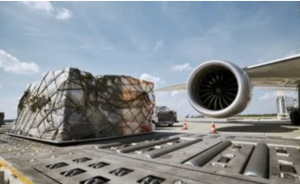
The International Air Transport Association (IATA) released data for ril 2026 global air cargo markets showing:
Total demand, measured in cargo tonne-kilometers (CTK), increased by 4.0% compared to ril 2025 levels (+4.0% for international operations).
Cacity, measured in available cargo tonne-kilometers (ACTK), decreased by -0.4% compared to ril 2025 (-0.9% for international operations).
Air cargo demand grew 4% year-on-year in ril, driven by strong Asia-linked trade flows. But this positive news masks a more complex operating environment. Severe disruption at major Gulf hubs due to the war in the Middle East continued to reshe trade routes and constrain cacity on key corridors. With dedicated freighters carrying much of the growth, air cargo is once again keeping supply chains moving amid trade disruptions. The coming months will test how well the sector can absorb continued geopolitical uncertainty and elevated operating costs, said Willie Walsh, IATA’s Director General.
Several factors in the operating environment should be noted:
Global trade contracted in March by 2.1% month-on-month after four consecutive months of growth, highlighting the continued vulnerability of trade momentum to geopolitical shocks.
Jet fuel prices rose sharply in ril, up 121.1% year-on-year, alongside a 77.7% increase in crude oil prices.
Global manufacturing sentiment remained in growth territory in ril, strengthening from March. The Purchasing Managers’ Index (PMI) rose 1.9 points to 53.4, while the PMI for new export orders reached 50.2. With both indicators above the 50-point expansion threshold, conditions remain supportive for air cargo demand.
TravelNews
Middle East War Leads to 3.4% Fall in Air Passenger Demand in April

The International Air Transport Association (IATA) released data for ril 2026 global passenger demand:
Total demand, measured in revenue passenger kilometers (RPK), was down -3.4% compared to ril 2025. Excluding the Middle East, demand increased by 1.2%. Total cacity, measured in available seat kilometers (ASK), decreased -2.9% year-on-year. The load factor was 83.1% (-0.4 ppt compared to ril 2025).
International demand fell -5.3% compared to ril 2025. Excluding Middle East, demand grew by 1.9%. Cacity was down -5.1% year-on-year, and the load factor was 83.9% (-0.2 ppt compared to ril 2025).
Domestic demand was flat compared to ril 2025. Cacity increased 0.8% year-on-year. The load factor was 81.9% (-0.7 ppt compared to ril 2025).
The 46.6% fall in demand for carriers in the Middle East due to war in the region was so acute that it dragged overall demand down -3.4%. The situation for air transport remains highly volatile. The cost of jet fuel more than doubled in ril, which is pushing airfares up. Forward schedule data is showing a reduced offering in the coming months, indicating that airlines are balancing high fuel costs and weaker demand. said Willie Walsh, IATA’s Director General.
Regional Breakdown – International Passenger Markets
International RPK fell -5.3%, with cacity falling -5.1%. However, this decline was caused by continuing heavy falls in demand for Middle East carriers. Excluding the Middle East, RPK increased by 1.9%. North America was flat and all other regions reported growth.
Asia-Pacific airlines achieved a 3.0% year-on-year increase in demand. Cacity increased 0.7% year-on-year, and the load factor was 87.5% (+1.9 ppt compared to ril 2025), a record high for ril. There was a notable slowdown in traffic on the Jan-China corridor, due to ongoing political tensions.
European carriers saw a 0.9% year-on-year increase in demand. Cacity increased 0.3% year-on-year, and the load factor was 84.9% (+0.6 ppt compared to ril 2025). Direct traffic between Europe and Asia increased 15.3% as it replaced traffic transiting through the Middle East.
North American carriers saw a 0.0% year-on-year increase in demand. Cacity decreased -1.1% year-on-year, and the load factor was 83.9% (+0.9 ppt compared to ril 2025).
Middle Eastern carriers saw a -48.1% year-on-year decrease in demand. Cacity fell -38.4% year-on-year, and the load factor was 70.1% (-13.1 ppt compared to ril 2025). Traffic was impacted by the ongoing Iran war, though the decline slowed a little compared to March, as an uneasy ceasefire came into effect.
Latin American airlines achieved an 8.9% year-on-year increase in demand. Cacity climbed 7.2% year-on-year. The load factor was 84.6% (+1.4 ppt compared to ril 2025).
African airlines saw a 2.2% year-on-year increase in demand. Cacity was up 1.2% year-on-year. The load factor was 77.9% (+0.7 ppt compared to ril 2025).
Domestic Passenger Markets
Domestic RPK was flat in ril compared to ril 2025. Growth in Brazil, China, and Jan was balanced out by falls in Australia, India, and the United States. Load factors fell in most of the major markets barring China and Jan, though it should be noted that cacity in the Janese market has declined for eight months in a row.
TravelNews
Luxury Travelers Are Waiting Longer to Book 2026 World Cup Finals Trips and Spending More Than Ever

Luxury sports travel company Roadtrips says travelers are increasingly treating the 2026 World Cup of Soccer like a last-minute luxury purchase. They’re waiting longer to commit while spending significantly more on customized experiences surrounding the tournament’s semifinals and championship match.
With the 2026 World Cup final set for the New York/New Jersey region and semifinal matches expected to draw global demand, Roadtrips is seeing strong interest in high-end, fully customized travel packages that combine premium hotels, private transportation, concierge support and multi-city itineraries.
Roadtrips’ premium World Cup packages currently start from proximately $6,675 per person for semifinal experiences and $18,515 per person for final packages, with many travelers customizing their itineraries well beyond those starting rates through upgraded accommodations, extended stays and private experiences.
We’re seeing many travelers proach the World Cup the same way they proach the Super Bowl, Formula 1 Monaco or the Olympics, said Dave Guenther, President of Roadtrips. They want the flexibility to wait for the most exciting matchups, but once they decide to go, they’re looking for a seamless, highly personalized experience with premium accommodations and VIP-level service.
According to Roadtrips, many luxury clients are delaying final decisions until closer to the tournament as they monitor team performance, hospitality availability and potential travel companions. The company says that trend is creating a compressed luxury booking window for the World Cup’s most sought-after matches.
With matches spread across the United States, Mexico and Canada, the 2026 World Cup of Soccer is shing up to be one of the biggest luxury sports travel events North America has ever seen.
Roadtrips specializes in bespoke sports travel experiences and offers customized itineraries for every stage of the tournament, including semifinals and finals-focused packages designed around travelers’ preferred cities, hotels and match schedules.
Many of these trips are multi-generational or bucket-list experiences, added Guenther. Clients aren’t just attending a match, they’re building an entire luxury travel experience around one of the biggest sporting events in the world.
For more information about Roadtrips’ 2026 World Cup travel experiences, visit Roadtrips World Cup Packages. To make a reservation, call 1-800-465-1765 to speak with a Sports Travel Specialist or talk to your travel advisor.
Kanpur will be home to North India’s first speech and listening institute by October
Kanpur has been given a boost in healthcare, education and research with the creation of the All India Institute of...


More than 1,000 pages of documents have been released. #BBCNews


Jill Biden shares update on Joe Biden’s cancer
Former first lady Jill Biden spoke with NBC's Craig Melvin on “TODAY” about her husband's cancer diagnosis. Former President …

NEW RESEARCH HIGHLIGHTS GROWING DEMAND FOR OFF-GRID TRAVEL
New research from Tourism Tasmania reveals a notable shift in British traveller behaviour, with digital fatigue and always-on culture increasingly...


Henry Nowak 'did not die with dignity', says dad. #BBCNews


BYD is assuming financial liability if you crash while using its self-driving tech – Engadget
The offer is only available in China and valid for a year after delivery. BYD is putting its money where...


What started protests outside New Jersey ICE facility?
Demonstrations outside Delaney Hall in New Jersey continue after Newark Mayor Ras J. Baraka set a mandatory curfew zone, …


More than £1m was spent on the latest release of Lord Mandelson documents. #BBCNews


KSI leaves the Sidemen
British content creator KSI has left the Sidemen YouTube collective after more than a decade with the massively popular group.


Israel seizes Crusader-era castle in Lebanon
The Israeli military seized Beaufort Castle, a Crusader-era castle in southern Lebanon, after days of fierce fighting in the area...
-

 Politics2 weeks ago
Trump-critic Thomas Massie loses Kentucky primary to AIPAC-backed Gallrein
-

 Entertainment2 weeks ago
‘SNL’ Veteran Calls Out Elon Musk Over Lupita Nyong’o Remarks
-

 Food2 weeks ago
Juneteenth Foods: 23 Recipes for a Cookout Celebration
-

 Entertainment2 weeks ago
Adam Driver and Kenneth Lonergan Reunite For ‘Tomorrow Is a Drag’
-
Entertainment2 weeks ago
Picturehouse Entertainment acquires UK rights to A Town In Nova Scotia
-
Tech2 weeks ago
Today's NYT Mini Crossword Answers for Monday, May 18
-

 Politics6 days ago
UN chief deeply concerned by Moscow plan for Kyiv strikes
-

 UsaLocalNews1 week ago
Feds seize $6.4M worth of cocaine aboard oil tanker at Port of Los Angeles, arrest suspected cartel smuggler