

Tech
Experimental treatment kills prostate tumor cells while reawakening antitumor immunity

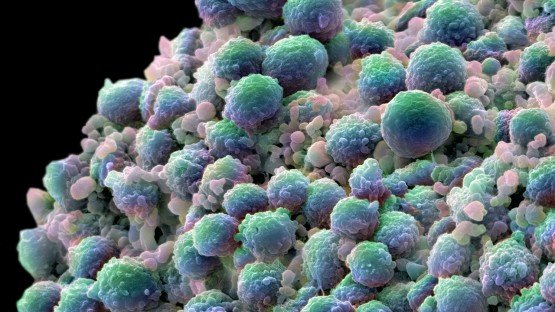
Prostate-targeted, engineered nanoparticles made of amorphous silica are effective in killing prostate tumors directly while enhancing antitumor immunity, according to a preclinical study led by investigators at Weill Cornell Medicine and the Cornell Duffield College of Engineering.
The particles, derived from silicon dioxide, a common component of healthy foods or fossilized sedimentary structures from single-celled organisms, induced several complete remissions of aggressive tumors in mouse models, supporting the further investigation of their use in clinical trials.
Originally developed for medical imaging applications, these particles – known as ultrasmall fluorescent core-shell silica nanoparticles, or Cornell Prime dots (C’ dots) – have progressed into advanced-phase clinical trials for image-guided surgery and therapeutic applications. In recent years, the researchers have found that the C’ dots on their own can exert therapeutic effects against cancerous cells, while sparing healthy cells.
In the new study, published June 15 in Cancer Research, a journal of the American Association for Cancer Research, the researchers evaluated the particles’ effects on mouse models of aggressive prostate cancer. They showed that the particles make the tumor cells highly susceptible to a powerful self-destruct process, and simultaneously convert the normally inactive, “cold” prostate tumor immune microenvironment into a “hot” one featuring strong antitumor immune activity – which can dramatically enhance the effects of other immunotherapies.
“We’re very encouraged by these results; a treatment that directly induces tumor-cell death while transforming the immune microenvironment, as this does, would represent a new clinical paradigm,” said study senior author Dr. Michelle Bradbury, the Endowed Professor of Imaging Research in Radiology and director of the Molecular Imaging Innovations Institute at Weill Cornell Medicine and a neuroradiologist at NewYork-Presbyterian/Weill Cornell Medical Center.
The study was part of a long-term collaboration between Bradbury’s laboratory and the laboratory of co-corresponding author Ulrich Wiesner, the Spencer T. Olin Professor in the Department of Materials Science and Engineering and professor in the Department of Design Tech in the College of Architecture, Art and Planning. It was funded in part by the Parker Institute for Cancer Immunotherapy at Weill Cornell Medicine.
As detailed in the study, the unusual effects of the C’ dots include pushing prostate tumor cells toward a self-destruct mode called “ferroptosis,” in which the overwhelming oxidation of molecules in the cells, especially the fat-related molecules that make up cell membranes, leads to the degradation of those membranes. Precisely how the particles trigger ferroptosis remains unclear, but the researchers have found evidence that the particles, originally designed as carriers for imaging agents, often pick up positively charged iron ions in the bloodstream, and transport those reactive cargoes inside tumor cells – where they ultimately can help catalyze runaway oxidation.
The C’ dots had numerous immunological impacts, including the conversion of T cells, macrophages and other immune cells in the tumor vicinity from inert or actively immunosuppressive modes to robust antitumor activity. These results led to C’ dots sensitizing tumors to clinically approved anticancer immunotherapies. The experiments also revealed extensive growth-inhibiting metabolic disruptions in different cell populations within the tumor microenvironment.
The silica particles were specifically targeted to prostate tumor cells by a molecule that homes in on a prostate cell surface protein called PSMA, but even in non-prostate tissues where the particles were briefly concentrated, such as the spleen, there was no sign of toxicity.
“It seems unreal – how is it possible that rather than a single pathway, we see all these effects happening simultaneously, and only in tumors and not in healthy tissues?” Wiesner said. “I have to wonder whether ultrasmall silica’s very early and ubiquitous presence in the environment and foods like leafy greens or cereal grains has given it a connection to biology that we’re only beginning to glimpse.”
The most striking results came when the researchers conducted survival experiments in mice with aggressive prostate cancer. The C’ dots on their own, and immunotherapies on their own, moderately extended survival compared to no treatment. But the combination of silica particles with an immunotherapy called immune checkpoint blockade synergistically resulted in complete or near-complete remissions and indefinite survival in four out of 10 mice treated this way. Adding a third treatment called CSF-1R blockade, which targets tumor-associated macrophages, yielded five out of 10 complete remissions.
“We think there’s nothing else out there that has such a strong and durable tumor growth suppressing effect,” Bradbury said.
“One of the most intriguing aspects of this work is the convergence of direct tumor-cell killing with broad immune remodeling,” said study co-author Dr. Jedd Wolchok, the Meyer Director of the Sandra and Edward Meyer Cancer Center, professor of medicine at Weill Cornell Medicine, director of the Parker Institute for Cancer Immunotherapy at Weill Cornell Medicine Meyer Cancer Center and an oncologist at NewYork-Presbyterian/Weill Cornell Medical Center. “By creating conditions that support a more effective antitumor immune response, these particles may help unlock the full potential of immunotherapy in prostate cancer, where durable responses have historically been difficult to achieve.”
Bradbury and her colleagues also recognized the contributions of the study’s co-first authors, Nabil Siddiqui, Dr. Li Zhang and Gabriel DeLeon, who led many of the biological, mechanistic and translational studies, as well as Nada Naguib, Ph.D. ’25, and Rachel Lee, Ph.D. ’22, graduate students in Wiesner’s laboratory whose precision synthesis and characterization of particle batches made the work possible.
“This study reflects years of collaborative effort across multiple laboratories and would not have been possible without the dedication, creativity and perseverance of this tremendous research team that helped drive the science forward,” Bradbury said.
The researchers are continuing to explore these ultrasmall core-shell silica particles as a new class of anticancer therapeutics that can simultaneously modulate inflammatory, immune and metabolic pathways, with the ultimate goal of evaluating their safety and efficacy in clinical trials.
This study was funded by the Department of Defense; the National Cancer Institute, part of the National Institutes of Health, the Cancer Center Support Grant; and Cycle for Survival/Parker Institute funding.
Dr. Michelle Bradbury and Ulrich Wiesner are inventors on patents related to the technology described in this study.
Jim Schnabel is a freelance writer for Weill Cornell Medicine.
Tech
20 years of Intel Macs: Why Apple switched, and why it switched again

The release of macOS 27 later this fall won’t quite close the book on the Intel Mac. The last handful of models that could run macOS 26 Tahoe will be eligible for security and Safari updates for two more years, and elements of the Rosetta compatibility layer for running Intel code on Apple Silicon Macs will be with us in some form for some indeterminate amount of time after that.
But macOS 26 is definitely the last chapter of the Intel Mac story. Anything that happens after this is a coda or an epilogue.
Most of our WWDC coverage has been forward-looking, so indulge us if you will in a look backward at the full history of the Intel Mac, a partnership between two companies that made Macs dramatically better, until it started making them worse.
“Project Marklar”
The Mac’s history with Intel didn’t start with version 10.4.4, the first Mac OS X version to ship on a commercially available Intel Mac. But we won’t go as far back as the x86-compatible versions of NeXTSTEP or Apple’s abortive ’90s efforts to make a version of classic Mac OS that could be licensed for third-party x86-based systems.
Let’s begin with JK Scheinberg, an Apple engineer in June of 2000, who was looking for a solo project to help him transition to working from home. His pitch? A version of the then-still-in-progress Mac OS X that could run on Intel processors.
“I’ve been working on the Intel platform for the last week getting continuations working,” Scheinberg wrote to his boss in an email shared by his wife. “I’ve found it interesting and enjoyable, and, if this (an Intel version) is something that could be important to us I’d like to discuss working on it full-time.”
At the time, all Macs still used PowerPC processors co-developed by Apple, IBM, and Motorola, as they had since 1994. Early Mac OS X versions ran on G3 and G4 chips, and the 64-bit G5 processor was launched in mid-2003. A version of Mac OS X that ran on Intel’s chips wasn’t strictly necessary, and for around a year and a half, it existed only as a sort of hobbyist side project codenamed “Marklar.”
By early 2002, Marklar had attracted more attention within Apple, and then-CEO Steve Jobs briefly flirted with the idea of allowing Mac OS X to run on Sony’s Vaio laptops. By that August, a dozen or so engineers had been added to the project as it grew from “proof-of-concept” to “contingency plan.”
That’s because Apple was having problems with PowerPC chips. Jobs promised that the desktop version of the G5 would climb in clock speed from 2 GHz to 3 GHz within a year, a promise that never came to pass. And Apple was never able to squeeze the hot, power-hungry processor into a laptop—iBooks and PowerBooks were stuck with revised versions of the G4. Future CEO Tim Cook called a G5-based laptop “the mother of all thermal challenges.”
Jobs had been fuming about PowerPC chips for a while; Walter Isaacson’s Jobs biography describes a heated call between Jobs and Motorola CEO Chris Galvin in 1997, in which Jobs declared that PowerPC chips “sucked.” And he may have harbored other bad feelings; Geoffrey Cain’s Steve Jobs in Exile says that Apple’s PowerPC switch doomed further development of the Motorola m68k chips that NeXT’s computers relied on, helping to kill NeXT’s already-struggling hardware business.
And IBM, for its part, didn’t want to devote its resources to developing a bunch of chips that would be used exclusively in the low-volume Mac lineup (in 2003, Apple shipped roughly 3 million Macs; the company no longer reports unit sales in its earnings reports, but analysts peg that number at just under 26 million Macs in 2025).
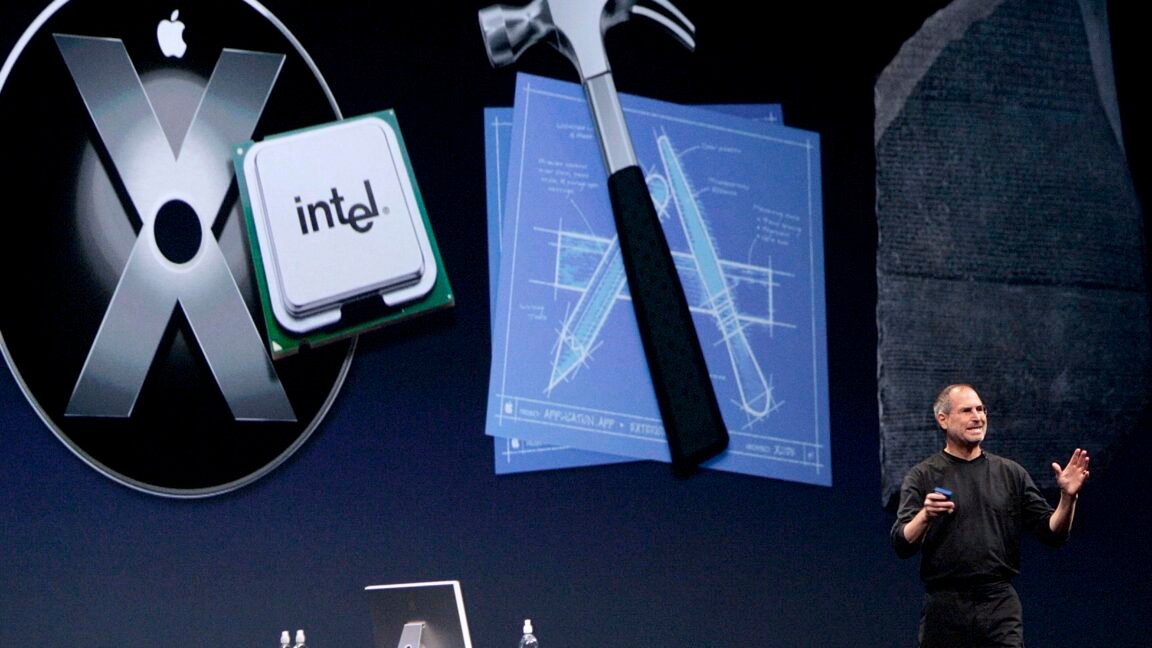
Intel’s Paul Otellini helped convince Jobs to jump to Intel’s chips, and Apple didn’t need to start the software switch from scratch because of its existing work on Marklar. In June of 2005, Apple publicly demonstrated Mac OS X 10.4 running on Intel hardware for the first time. His presentation obliquely mentioned Marklar, though not by name.
“And so today for the first time, I can confirm the rumors that every release of Mac OS X has been compiled for both PowerPC and Intel,” announced Jobs. “This has been going on for the last five years. Just in case.”
The transition
The “first” Intel Mac was a Developer Transition Kit (DTK) made available to software developers after WWDC 2005. It was essentially a Pentium 4-based PC inside a Power Mac G5 case, and it was available strictly as a loan to developers who could pay $499 per year for a developer account and another $999 for the kit. Few, if any, of these DTK kits survived; Apple required developers to return the systems by the end of 2006 and offered to trade them for a real retail Intel Mac to seal the deal.
The WWDC keynote laid out the timeline, in addition to the tools Apple would use to help developers and users navigate the transition. The next version of Mac OS X, version 10.5 Leopard, would be compatible with both PowerPC and Intel Macs. A compatibility layer called Rosetta would run most PowerPC apps tolerably well while developers worked on Intel-native versions, which could be distributed as universal binaries that supported both CPU architectures. This transition worked well enough that Apple essentially handled the Intel-to-Apple-Silicon switch the exact same way.
Apple would also take advantage of the fact that its computers would use the same hardware as other PCs. Right from the start, Apple officially supported running Windows directly on Intel Macs via Boot Camp; a Mac OS X app would handle partitioning the Mac’s disk and downloading Windows drivers for the Mac you were using, and a Windows-side app supported rebooting back into Mac OS (and eventually provided some other nice-to-haves like read-only access to HFS+ formatted volumes).
By January of 2006, Apple started shipping the first Intel Macs, starting with a new iMac and a renamed MacBook Pro to replace the outgoing PowerBook series. These first systems were externally almost indistinguishable from the PowerPC models they replaced, another strategy Apple recycled for the first Apple Silicon Macs—the implied message was “maybe these machines were different on the inside, but they’re still the Macs you know and love.”
The first new design of the Intel Mac era came later that year, when Apple launched the MacBook to replace the old iBook. Like the iBook, this laptop was made mostly of white plastic (a black version, inexplicably several hundred dollars more expensive, was also available eventually), and it used slower processors with Intel’s integrated graphics rather than the MacBook Pro’s dedicated graphics chips. But it was a popular machine—I was a college student at the time, and it was definitely the laptop you’d see the most often when you were out and about on campus (or maybe the second-most-often, if you added up every single permutation of “something cheap from Dell”).
During the WWDC 2005 presentation, Jobs predicted that the Intel transition would be mostly complete by the end of 2007. Unlike the 3GHz G5 prediction, this one actually wasn’t optimistic enough: Apple completed its switch from PowerPC to Intel chips with the announcement of a new Mac Pro and Intel-based Xserve in August of 2006.
A productive partnership
“As we look ahead, we can envision some amazing products we want to build for you, and we don’t know how to build them with the future PowerPC roadmap,” said Jobs while explaining the rationale for the switch. (It’s funny to think of now, but some of the Mac’s staunchest loyalists did react to the switch with disproportionate dismay.)
For the first few years of the Intel era, updates came fast and often. The first wave of Intel Macs briefly reverted to 32-bit chips, a retreat from the 64-bit architecture of the G5; this was fixed the next year with a switch to 64-bit Intel Core 2 Duo processors. A flashy new aluminum-and-glass iMac overhaul came in 2007, defining an aesthetic that is still recognizable in today’s Apple products. By the early 2010s, Intel’s rapidly improving integrated GPUs enabled the Mac’s first high-resolution “Retina” displays.
But the tastiest fruit of the early Apple-Intel partnership, a machine that wouldn’t have been possible with PowerPC chips, was the MacBook Air. For that first model, Intel had even made a special version of its Core 2 Duo CPU with 60 percent smaller packaging, something that helped Apple cram an entire laptop into something that could fit in a manila envelope.
That first Air was a bit too ahead of its time; its 4,200 RPM spinning hard drive in particular helped bog it down, and the things it was missing felt like bigger compromises in 2008 than they would have just a few years later. But fast solid-state storage soon became a standard feature, and within just a few years, the MacBook Air was what virtually all laptops looked like. This was something Intel both enabled and encouraged.
Signs of trouble
Apple began making its own Apple-branded processors in 2010, using technology it acquired when it bought P.A. Semi in 2008. But while early chips like the Apple A4 and A5 were energy-efficient and felt snappy in iPhones and iPads, it was extremely difficult to imagine their performance scaling all the way up to what Apple would need to replace the Intel chips in a MacBook, to say nothing of an iMac or a Mac Pro.
But these chips steadily improved, year after year, often by huge leaps and bounds. And there was trouble brewing at Intel.
By the mid-2010s, Intel’s “Tick-Tock” model for improving its products was beginning to falter. The company had more trouble than expected getting its 14 nm manufacturing process up and running, and its manufacturing improvements stalled for years. Intel’s next-generation 10 nm process wasn’t shipping in any volume until late 2019, and for years, it was stuck shipping warmed-over iterations of 2015’s 14 nm Skylake architecture.
And it wasn’t just the slowed rate of improvement that was a problem. Former Intel engineer François Piednoël claimed that the Skylake architecture was inordinately buggy and that Apple was the one finding a lot of the bugs.
“Basically our buddies at Apple became the number one filer of problems in the architecture. And that went really, really bad,” said Piednoël. “When your customer starts finding almost as much bugs as you found yourself, you’re not leading into the right place.”
The PowerPC-to-Intel switch because Apple was unhappy with its current chips and because a better, more viable option was readily available. By the late 2010s, both of those things were true again.
Bridge over troubled water
In retrospect, the first “Apple Silicon Mac” was not the M1 MacBook Air or Mac mini that came out in late 2010 but the redesigned butterfly-keyboard MacBook Pros that released in late 2016.
Those models shipped with a now-abandoned piece of technology called the Touch Bar, a narrow strip of touchscreen above the keyboard that attempted to replace the function row with other buttons and sliders that could change dynamically based on what the user was doing.
To make the Touch Bar work, those Macs included a chip called the Apple T1. The T1 wasn’t much—it was essentially a repurposed Apple Watch processor that existed to drive the Touch Bar display and provide Macs with a Secure Enclave that could be used for Touch ID and Apple Pay. But it was a sign that Intel’s chips were no longer serving all of Apple’s needs. As in the PowerPC days, Apple was envisioning products that its chip supplier couldn’t help it build.
The T1 was followed by the T2, a relative of the Apple A10 chip that handled the same things as the T1 plus additional security features, an SSD controller, and video encoding and decoding. Both the T1 and T2 ran their own operating system called “bridgeOS”—in one sense, the “bridge” referred to communication between those Macs’ Intel processors and the Apple coprocessors. But in retrospect, you could also read it as a reference to those Macs’ status as a bridge between the height of the Intel Mac era and the looming Apple Silicon era.
Apple inside
“When we make bold changes, it’s for one simple yet powerful reason,” said Apple CEO Tim Cook. “So we can make much better products. When we look ahead, we envision some amazing new products, and transitioning to our own custom silicon is what will enable us to bring them to life.”
Cook formally announced the long-rumored Apple Silicon transition in the company’s 2020 WWDC keynote, which was delivered fully virtually during the height of the COVID-19 pandemic. (There’s something faintly strange about watching this video now, even though basically all of Apple’s major announcements are delivered as fully pre-recorded videos these days—it’s full of weird cuts, and it feels like none of the presenters are sure what they should be doing with their hands.)
Tech
Why I’m Telling People to Stop Hunting for Dumb TVs

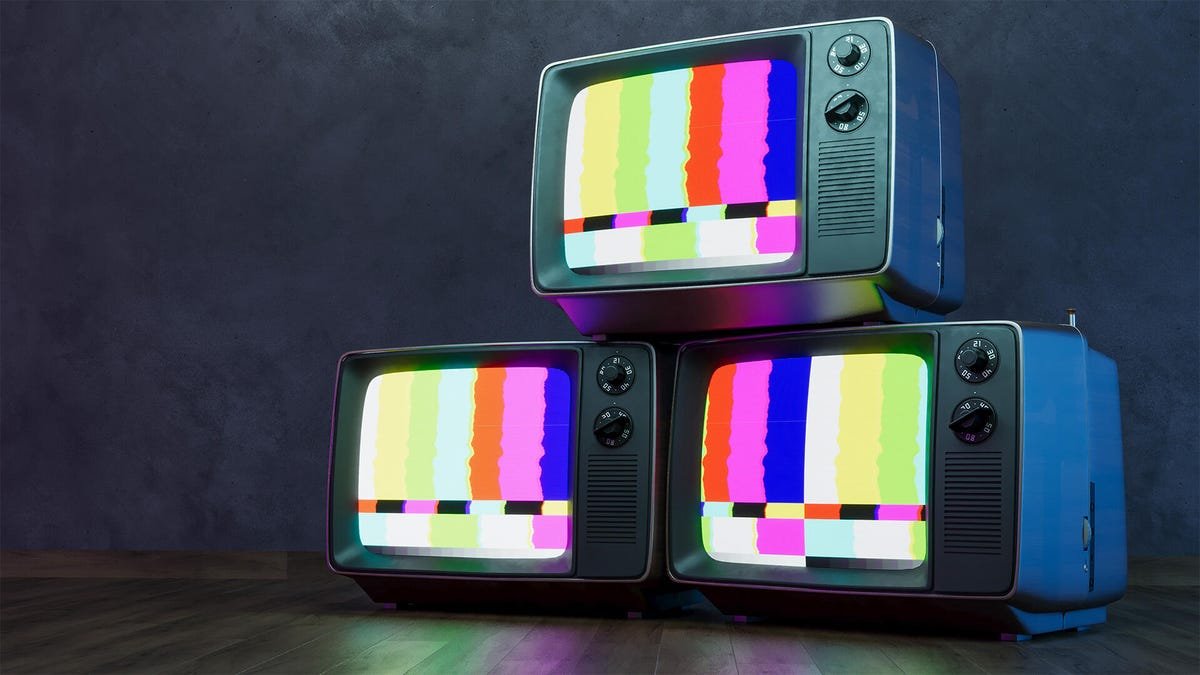
From the dawn of the era of smart TVs — internet-connected TVs with built-in streaming apps and other web services — there have been many people who wanted nothing to do with them. Some might think it would save them money, assuming the smart circuitry adds cost. Others might just hate the idea of everything requiring an internet connection. Still, others know that if it’s connected to the internet, it’s probably selling some of your personal data. Whatever the reason, there’s long been a desire for dumb TVs.
It’s 2026, though, and smart TVs dominate the market in all categories, big and small. Does any company even make dumb TVs these days? Technically, and surprisingly, yes, you can buy a TV that’s not built around streaming apps and a web connection. However, you might not want to.
Smart TV features save you money
It’s a misconception that removing smart TV features will make a TV cheaper. The opposite is true. Companies like Google and Amazon actually pay TV manufacturers to put their streaming software into TVs. This is a win-win for manufacturers. They don’t need to spend money developing streaming (or in some cases, operating system) software, and they can sell their TVs for less. It’s hard to get specific numbers, but it’s likely that for many inexpensive TVs, the manufacturer is only making money because of that streaming software “subsidy.”
Dumb TV options
If you’re looking for a reasonably sized (in other words, not tiny), name-brand TV without smart features, you’re out of luck. Dumb TVs in 2026 come in two varieties: small and no-name. If you don’t mind something 40 inches or smaller, you have options. All are inexpensive. None is going to have particularly good image quality. They’re all inexpensive LCDs with minimal, if any, local dimming. They’re often called “nonsmart” TVs to be polite.
In larger sizes, one of the only options is Sceptre, most commonly found at Walmart and a few other retailers. They have two lines of nonsmart TVs in a variety of sizes. They’re inexpensive, sure, but not noticeably so compared to better-performing options like what you can find from TCL or Hisense. Take, for instance, Sceptre’s U515CV-U. It’s a 50-inch LCD that’s $230 and has a built-in tuner, three HDMI inputs, analog and digital audio outputs — plus, it even has an analog component input for older video gear. After reading user reviews online, the most common accolades I found are “it’s fine” and “I bought it for my kids, so I didn’t care.” Compare that to the Hisense QD7, one of our picks for best budget TV, which is only slightly more money, and it has full-array local dimming.
Monitors
For something small, TV-sized computer monitors have been an option for many years. You can even find QD-OLED models, the same technology found in many of the best TVs. The biggest monitors tend to be more similar in size to small(ish) modern TVs, but if you’re not sitting too far away, that might be fine. Keep in mind that you’ll need something for sound, as many monitors lack speakers (and the audio is generally poor from the ones that do). A soundbar or receiver with speakers will work fine.
Commercial displays
You can buy stripped-down displays intended for commercial use, like digital signage, hospitality and so on. They’re not hard to find; even Best Buy has a selection, though not in stores. However, these models are often more expensive than comparable home models. For example, here’s a commercial model from Samsung that has no smart TV features.
For similar money, you can get an OLED TV that’s basically the same size but will look significantly better. Oh, and the above commercial model is only 1080p. Theoretically, these are built to last longer, but most modern TVs are pretty reliable.
Older, used models
You can certainly find older TVs for sale on Craigslist and Facebook Marketplace (but don’t ever ship a used TV). Buying used is typically fine, but all TVs wear out. OLED gets knocked for burn-in, but LED LCDs age as well. If you haven’t seen what the TV looks like in person, buyer beware. If it’s old enough not to have smart features, the starting price should be somewhere around “free with local pickup,” with a few exceptions.
Knocking the digital dust off this oldie, you should be wary of buying a used plasma TV.
Older TVs might also have older versions of the HDMI standard. That might be OK if you’re just connecting a Blu-ray player or a game console, but some new devices might not want to connect to older devices. If you want to go really far back and get something with analog connections (component or, gasp, S-video or composite), that’s delightfully old school, but I hope you have a plan for what you’re connecting to it.
Make your TV dumb
Since you’re not saving money by ditching the smart TV features, maybe you just don’t want companies selling your data. Totally fair, though I have bad news for you about basically every device that connects to the internet. If you’re trying to minimize your data footprint, you can at least make your TV “dumb” just by not connecting it to the internet.
This is easier said than done, however. Well, no, the act itself is super easy; it’s the consequences that aren’t. The TV will want to be connected to the internet and might regularly remind you that it’s disconnected. It might hassle you about this every time you go into the menus. Not connecting to the internet also means you’ll miss out on automatic firmware updates, but often these are security and stability improvements that probably won’t matter if the TV isn’t connected to the web. Also, with most TVs, you can download firmware from the manufacturer onto a USB drive and update the TV manually.
All this assumes you can make it through the initial setup process without the TV requiring an internet connection. Some models will let you choose “Basic TV” without streaming features, but that’s not universal. Whether or not it requires a connection to start, it’s worth doing at least once to get the most recent firmware. Then just disconnect it from the Wi-Fi.
You could also just get a projector. While there are many projectors that use the same smart TV interface as many TVs, other models come with a streaming dongle that you can just not connect. The projector will just be a dumb display, with no streaming or other nonsense.
About the author: In addition to covering audio and display tech, Geoff does photo tours of cool museums and locations around the world, including nuclear submarines, aircraft carriers, medieval castles, epic 10,000-mile road trips and more.
Tech
Starmer announces UK social media ban for teens
LONDON (AP) — Britain will ban children under 16 from using a range of social media apps including Snapchat, TikTok and YouTube to protect young people from harmful content and excessive screen time, Prime Minister Keir Starmer said Monday,
Starmer told a news conference that he will fight back if technology companies resist the move, and acknowledged some teens would try to find their way around a ban. But he said he is “not prepared to compromise on the safety and happiness of our children.”
“Every parent can see it with their own eyes. Social media is making children unhappy,” said Starmer, who has two teenage children. “I’ve heard first hand from families crying out for change and we will do right by them.”
The move, expected to take effect early next year, makes the U.K. part of a growing global movement to tighten online safety for children. Australia, Canada, Brazil and Indonesia have introduced legislation or announced age-based restrictions or requirements for children’s access to social media. France, Spain, Denmark, Thailand and South Korea are among others studying or developing similar approaches.
The U.K. plans to follow the same model for a social media ban as Australia, which last year became the first country to bar under-16s from holding social media accounts. Platforms that fail to take reasonable steps to exclude children younger than 16 could be punished with multimillion-dollar fines.
The U.K. said its ban will apply to platforms including Snapchat, TikTok, YouTube, Instagram, Facebook and X, but not YouTube Kids or messaging services like WhatsApp and Signal. Starmer stressed that enforcement action will target tech companies, not children.
The prime minister also said he will go further than Australia’s measures.
He said the government will act to prevent strangers from contacting children on gaming and livestreaming platforms. Authorities are also considering additional measures including overnight curfews and breaks in infinite scrolling for those under 18. More details are expected next month.
Starmer’s announcement met with mixed reactions
The decision follows a public comment period in which the government got 116,000 responses from parents, the tech industry and children. The number of responses was second only to one seeking input about same-sex marriage in 2012.
The vast majority of respondents — more than 90% — wanted an under-16 ban, the government said.
Esther Ghey, whose 16-year-old daughter Brianna was killed in 2023 by two teenagers who had accessed harmful content online, said the ban would “potentially save so many children’s lives,” but had to be accompanied by other measures.
NSPCC, a leading children’s charity, praised the government’s ambition but urged authorities to ensure platforms roll out “robust age checks” and effectively enforce the policy.
Others are more skeptical.
Critics including the Open Rights Group have expressed concerns about age verification companies and how users’ private data is protected.
Reacting on Monday, a spokesperson for YouTube warned that a blanket social media restriction could “push kids out of such curated, supervised, beneficial experiences and towards anonymous, less-safe services.”
Starmer acknowledged the challenges, but said success for the ban would mean “a massive drop off of children on social media” and “a cultural change, a sense that actually you can grow up differently.”
Starmer, elected just under two years ago, is under pressure to step down from members of his own party over what they see as poor leadership and could face a leadership challenge in the coming days or weeks. He is seeking to bring in consequential measures that can serve as a legacy.
The U.S. has opposed the move
The ban could further inflame tensions with the U.S., which has warned that regulations should be narrow and not violate free speech protections, according to a statement from the U.S. Embassy in London. It said it was also concerned that regulations would place greater burdens on American technology companies.
Starmer said he expected to discuss the issue with U.S. President Donald Trump and other world leaders at a Group of Seven summit in France that starts Monday.
“I honestly think that across world leaders, there has always been a recognition that leaders have to take steps to protect children,” he said. “I don’t think that’s controversial. There will always be arguments as to exactly what the limits of that are and what rules should be in place, but I don’t see that as a problem.”
Jon Crowcroft, a communications systems professor at the University of Cambridge, said people supporting social bans are well-meaning but probably misguided, and changes could prevent children from accessing sites they need.
“There is a real risk this will drive some users to worse sites and policing devices is close to impossible technically,” Crowcroft said. “Policing platforms is far easier, if only regulators would bother.”
___
Associated Press writer Jill Lawless contributed to this story.
Tech
Live updates: US-Iran war, Trump and Tehran reach agreement as G7 summit starts

If things go as planned and the US and Iran sign an agreement aimed at ending hostilities on Friday, negotiators from the two bitter rivals will face the complex task of untangling half a century of deep-seated problems against a backdrop of suspicion, hostility and broken trust – all in 60 days.
It’s likely that this two-month window would need to be extended. The issues remain highly complex and could require specialists with profound technical expertise across military strategy, international law, economic sanctions, and nuclear technology.
Negotiators will need to reach agreements on demining the Strait of Hormuz, the legality and implementation of sanctions waivers, the destination of frozen Iranian assets, monitoring and restricting Iran’s nuclear program in cooperation with the UN’s atomic watchdog, limits on uranium enrichment, and extracting highly enriched uranium buried in Iranian soil.
Beyond regional mediators, who have proven apt at brokering peace agreements, Washington and Tehran may also need to set aside their differences with other major powers like European nations, China, and Russia, to use their specialized expertise and technical capabilities required to resolve these issues.
All of this has to unfold against the backdrop of fierce pressure opposing a deal from key allies like Israel to hardline factions in Iran and even critics in Washington.
And unlike the 2015 nuclear agreement, which took nearly two years of meticulous negotiations by the Obama administration and five other major powers (backed by teams of nuclear experts and Iran analysts) – this time the shadow of a devastating war looms large, one that claimed the life of Iran’s most revered leader, Ayatollah Ali Khamenei.
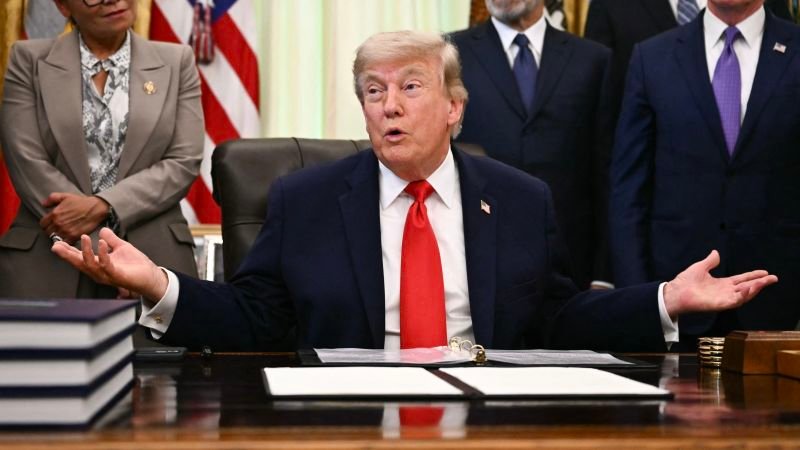
More importantly, both sides must shape an agreement that, from the outset, appears fundamentally different from the 2015 deal to persuade the American president that it is markedly superior to its predecessor, which he has repeatedly branded “one of the worst deals ever made.”
A leading maritime and shipping analyst said that while markets have rallied after the announcement of the agreement on the reopening of the Strait of Hormuz, the “industry’s optimism remains tempered.”
Richard Meade, editor-in-chief of Lloyd’s List, a top maritime news and analysis outlet, said that the maritime sector is “treating the news with something closer to wary disbelief than celebration.”
Meade said that to get a sense of how the maritime industry is feeling about the news, one only needs to look at the insurers, whom he calls the “industry’s barometer of real risk” to see that the situation remains murky.
Oil prices have fallen to their lowest levels in more than three months after the United States and Iran said they had reached an agreement to reopen the vital Strait of Hormuz.
Brent crude, the global oil benchmark, fell 4.9% to $83.05 a barrel, having settled Sunday at its lowest level since March 5, the first week of US-Israeli airstrikes against Iran. West Texas Intermediate, the US crude benchmark, slid 5.4% to $80.30 a barrel. Both have fallen around $10 over the past week.
The United States and Iran said Sunday they have reached an agreement, due to be signed Friday in Switzerland, to end hostilities. The full text has not yet been published, but President Donald Trump said the US would lift its blockade of Iranian ports and that the Strait of Hormuz would reopen without tolls.
However, crude prices remain around $10 a barrel higher than they were before the war. And the oil market still has significant work ahead to return flows from the Middle East and through the strait to normal.
Read more here.
Political pundits are largely seeing the US-Ir an agreement as the start of a series of more complicated negotiations to come. Here is what they are saying:
Ben Radd, Senior Fellow at UCLA Burkle Center for International Relations
The agreement has not addressed three major concerns: Iran’s nuclear enrichment program, its ballistic missile threat and proxy militant groups in the region, he said.
He also said the memorandum has failed to factor in Israel’s fear that Iran-backed Hezbollah will remain a threat across the border.
Behnam Ben Taleblu, Senior Director of Foundation for Defense of Democracies’ Iran Program
He likened the agreement to an “entry ticket” to a more complex situation for the US and Iran to navigate.
Taleblu also said even if negotiations go well, it will still take time for the Strait of Hormuz to be reopened. CNN previously reported that Iran laid mines in the strait, according to people familiar with US intelligence reporting.
Alex Plitsas, Director of Counter Terrorism Program at Atlantic Council
The unresolved conflict between Israel and Iran-backed militant group Hezbollah could become a “major flashpoint”, he said.
Israeli Prime Minister Benjamin Netanyahu has not yet publicly commented on the US-Iran agreement, but reactions from pro-government commentators reveal mounting frustration and disappointment with Washington and the Trump administration.
Yinon Magal, a leading presenter on the pro-Netanyahu Channel 14, wrote on X that US President Donald Trump “came out a loser” and called Vice President JD Vance “a scumbag.”
Magal, who has defined himself in the past as “a pipeline” for Netanyahu’s messaging, accused the president’s envoys Jared Kushner and Steve Witkoff of influencing the president under Qatari pressure. Magal said on social media that “Qatar bought (them) with a great deal of money” as he accused them of having “sold out their brothers in Israel.”
Qatari negotiators were in Tehran for negotiations on Sunday, before the agreement was announced.
“We’re left alone,” Magal concluded.
An Israeli source told CNN that Netanyahu has also privately blamed Kushner and Witkoff for creating a wedge between the two leaders. According to the source, Netanyahu believes they were influenced by “Qatar, which, fearing Iran, pushed positions that widened gaps between Jerusalem and Washington.”
Shimon Riklin, another commentator on Channel 14, said on social media “Trump is making America weaker than ever.” Meanwhile, Amit Segal, a prominent right-wing political analyst with Israel’s Channel 12, quoted Henry Kissinger on social media when he said, “It may be dangerous to be America’s enemy, but to be America’s friend is fatal.”
The hostility towards Trump sharply contrasts with the praise the American president had received from right-wing figures at the outset of the Iran war, when Trump and Netanyahu displayed a united front.
In recent weeks, as Trump moved to end hostilities, tensions surfaced and escalated in a series of public spats over negotiations with Iran and the terms of the ceasefire with Hezbollah in Lebanon.
Israeli Defense Minister Israel Katz said on Monday that Israeli forces will not withdraw from southern Lebanon as part of the US-Iran ceasefire understandings, and that the position has been conveyed to President Donald Trump.
“Israel opposes any withdrawal of IDF forces from Lebanon, despite existing and expected pressure,” Katz said in a statement, tacitly acknowledging that Lebanon is part of the US-Iran agreement.
In his first public remarks since Trump announced an agreement with Iran, Katz said Israel’s policy is to maintain an indefinite military presence in “security zones” in Lebanon, Syria, and Gaza “in order to defend Israel’s borders and communities from jihadist elements.” He described holding territory and maintaining such zones as “the central lesson” of October 7, 2023.
Katz said that Prime Minister Benjamin Netanyahu had communicated Israel’s position directly to Trump, and that he himself reiterated it in a call on Sunday with US Defense Secretary Pete Hegseth.
“We will not compromise on Israel’s supreme security interests or the protection of our citizens, and we will not withdraw from the security zones,” Katz said. He added that “if Iran attacks Israel over developments in Lebanon, we will strike with full force and clearly demonstrate the disparity in power.”
Israeli politicians from across the political spectrum have criticized the agreement between the US and Iran.
Iran and mediator Pakistan have said the agreement, expected to be signed on Friday, included an immediate end to fighting on all fronts, including in Lebanon. Israeli forces have been fighting Iran-backed Hezbollah in Lebanon and earlier on Sunday before the agreement was announced, it attacked the capital Beirut.
Itamar Ben Gvir: Israel’s far-right national security minister said “Trump’s agreement does not bind us.” In a post on X, Ben Gvir said “Israel is not subordinate to the United States,” adding that Israel is “not partners to this agreement” and “must not settle for anything less than the dismantling of Hezbollah.”
Yair Golan: The leader of Israel’s left-wing Democrats party and retired Israeli general shared a similar message, saying on X that the agreement “was made over Israel’s head” and “throws a lifeline to the murderous regime in Tehran.” He also criticized Israeli Prime Minister Benjamin Netanyahu as “weak, ill, isolated, and without influence.”
European Union Commission President Ursula von der Leyen welcomed the agreement reached by the United States and Iran, and said that the agreement “should allow for the immediate reopening of the Strait of Hormuz.”
“Freedom of navigation must be restored toll-free. This is essential for regional stability and the global economy,” she said in a statement Monday.
She also said there was a need to look at different supply routes and “diversify away from the bottleneck of Hormuz” and that this would be discussed at the G7 meeting starting today in France.
EU foreign affairs chief Kaja Kallas also welcomed the agreement and said EU foreign ministers will discuss how the organisation can be be involved in the next steps.
“I have spoken to my Iranian and Gulf counterparts in recent days, and today, EU Foreign Ministers will discuss how the EU can be closely involved in the next phase,” she said on X.
President Donald Trump has previously made a few main guarantees about a deal to end the war he started with Iran:
It will ensure that Iran can never have a nuclear weapon
Trump’s deal will be better than President Barack Obama’s
Trump addressed that second point in a post on his social media platform Sunday.
It is impossible to make a direct comparison at this moment since the Trump memo announced Sunday is not a long-term nuclear deal, but rather an agreement to halt the war.
Under Obama, the US was part of an international coalition that reached an agreement with Iran to limit its nuclear program. International monitors verified that Iran was complying, and Iran was able to tap its oil wealth.
Trump tore that deal up during his first term. Iran subsequently also withdrew from the agreement, then kickstarted its enrichment of uranium.
Trump’s apparent new agreement is very different. This one would stop hostilities between the countries and reopen the Strait of Hormuz. The US will reportedly stop its blockade of Iranian ports and Iran will allow shipping traffic through the strait.
A longer-term deal to contain Iran’s nuclear ambitions will likely still have to be negotiated.
Trump has frequently complained that Obama’s deal included the transport of cash from the US to Iran. That was actually the settlement of a long-term dispute over arms Iran bought from the US before the Islamic revolution.
It remains to be seen what financial elements are included in Trump’s agreement.
The US and Iran have reached an agreement, but there are discrepancies in their statements and much that we don’t know as the full text has not yet been released.
The differing accounts underscore a significant gap between how the US and Iran are describing the next steps in negotiations.
Here’s what both sides have said on key issues:
Strait of Hormuz: President Donald said the Strait of Hormuz would reopen following the expected signing of the agreement on Friday and it would ultimately ensure that the waterway is “permanently toll free.” A US official said the US military received a directive to lift the US blockade of Iranian ports on Friday after the MOU with Iran is signed. Iran, meanwhile, said the agreement included the immediate lifting of the US blockade. Iran’s official Islamic Republic of Iran News Network said the draft agreement included reopening the strait within 30 days “under Iranian arrangements.”
Lebanon conflict: Pakistan’s Prime Minister Shehbaz Sharif said both sides had “declared the immediate and permanent termination of military operations on all fronts, including in Lebanon.” Similarly, Iran’s deputy foreign minister Kazem Gharibabadi said the agreement will include a “permanent and immediate end to the war on all fronts including Lebanon.” Trump did not include Lebanon in his Sunday remarks. Israel, which launched an airstrike in Beirut earlier on Sunday before the announcement, has not yet commented on the agreement.
Frozen funds: Gharibabadi said the 60-day negotiations between Tehran and Washington after Friday’s signing of the agreement will hinge on the US meeting several obligations, including the release of billions of dollars in frozen Iranian funds. But a US official rejected the claim, saying: “This is completely not true. This is a pay for performance deal and no frozen funds will be released without the Iranians implementing their commitments.”
US officials were concerned the prospective agreement with Iran was on the brink of collapse after Israel targeted Hezbollah in Beirut’s southern suburbs, leading to hurried attempts to preserve the framework, according to sources.
Going back and forth with Qatari officials, who had been in Tehran to try to get the agreement completed, US officials sought to prevent further conflict, the sources said.
Vice President JD Vance told Fox News on Sunday that the US saw “evidence that the Iranians were going to launch a large number of missiles at the Israelis.”
Officials said the Israeli attack in Lebanon helped propel the final negotiations.
A US official told CNN President Donald Trump was enraged by the Israeli strikes and used expletives in a call with Prime Minister Benjamin Netanyahu.
He also used expletives in a call with CNN political and global affairs analyst and Axios reporter Barak Ravid, slamming Netanyahu’s actions.
Trump told The New York Times that Israel stands to benefit from the agreement and called Netanyahu “a very difficult guy.”
Trump had grown increasingly frustrated with Netanyahu in recent weeks, as the Israeli leader continued attacking Lebanon — strikes that repeatedly put the US-Iran peace talks in jeopardy.
Israel has not yet commented on the agreement.
World leaders are welcoming the agreement reached by the United States and Iran that is expected to take effect on Friday.
Pakistani Prime Minister Shehbaz Sharif said the agreement is set to be signed by both parties on Friday in Geneva, Switzerland, upon the conclusion of the annual Group of Seven Nations (G7) summit in nearby Évians-les-Bains, France. Iran’s deputy foreign minister has also said further talks will take place in Switzerland after a formal signing ceremony on Friday.
As reported earlier by CNN, Qatari Prime Minister Mohammed bin Abdulrahman bin Jassim al-Thani – who emerged throughout the war as a skilled mediator and diplomat – expressed his hope for all parties to engage “in a positive and constructive spirit that will help consolidate this progress and build upon it”. British Prime Minister Keir Starmer called the progress an “important step”.
Here are some more reactions from around the world:
Secretary-General of the United Nations António Guterres expressed his “deep appreciation” to several mediating nations, including Pakistan, Turkey, and Saudi Arabia, calling the agreement in an X post “a critical step towards the peaceful settlement of the conflict.”
French President Emmanuel Macron called for a “swift and full implementation” of the memorandum in a post on X, while also notably singling out French support “to the determined efforts of the Lebanese authorities to restore state sovereignty,” as Lebanese involvement in the conflict remains a key sticking point to any ceasefire agreement.
Turkish President Recep Tayyip Erdoğan welcomed the framework agreement, but emphasized “the importance of refraining from rhetoric, provocations and actions that could escalate tensions, and of remaining vigilant against possible acts of sabotage until the day the signatures are affixed,” according to Turkish state-run Anadolu Agency.
Australian Prime Minister Anthony Albanese and Foreign Minister Penny Wong encouraged all parties “to use this opportunity to pursue a durable and lasting peace through dialogue and diplomacy,” while maintaining that Iran should also seize the opportunity to “address longstanding concerns about its nuclear program and the threat it poses to international security.”
Japan’s Prime Minister Sanae Takaichi said on X she hoped the agreement will ensure “free and safe navigation in the Strait of Hormuz” and that “a final agreement on issues such as Iran’s nuclear program will be reached as soon as possible.”
Italy’s Prime Minister Giorgia Meloni said on X that the country is ready, “together with the other partners… to contribute to an international naval presence” for the reopening of the Strait of Hormuz.
German Chancellor Friedrich Merz congratulated the US and Iran, saying on X that the agreement will “pave the way towards a reinvigorated global economy and a more secure Middle East.”
Chinese Foreign Ministry spokesperson Lin Jian said his country welcomes the agreement, adding China hopes that the Strait of Hormuz “can resume opening as soon as possible.”
CNN’s Jerome Taylor and Julian Silva-Forbes contributed to this report
Tech
Tentative deal on ending the Iran war sends stocks soaring while oil prices fall
BANGKOK (AP) — World share prices soared Monday after a tentative deal was announced on ending the Iran war and reopening the Strait of Hormuz, while oil prices fell more than $4 a barrel.
The future for the S&P 500 was up 1.2% and that for the Dow Jones Industrial Average gained 1%, auguring likely early gains for Wall Street.
In early European trading, Germany’s DAX advanced 1.7% to 25,066.48, while the CAC 40 in Paris also added 1.7% to 8,410.36.
Britain’s FTSE 100 gained 0.8% to 10,553.18.
After repeated false starts, investors were betting that this time, the war might end. U.S. President Donald Trump confirmed the initial agreement and authorized an end to the U.S. naval blockade of Iranian ports.
Iran confirmed it but signaled that implementation would not start until a signing that Pakistan said would be held Friday in Switzerland. Broader negotiations on issues like Iran’s nuclear program are expected to continue over the next 60 days.
In early trading Monday, the price of Brent crude oil, the international standard, fell $4.08 to $83.25 per barrel. U.S. benchmark crude lost $4.51 to $80.37 per barrel.
It may take months for oil prices to stabilize after the disruptions from the war caused them to surge, pushing costs up for gasoline and many other products. Energy experts said shipping and insurance companies will want to be confident the pact will hold, ensuring that oil and gas supplies will flow freely enough for the world’s needs to be met.
“The reopening of Hormuz is a relief valve, not a full peace dividend. The market can remove some crude panic, but it still has to price the gap between a headline, a signature, and a regime that actually complies,” Stephen Innes of SPI Asset Management said in a report.
Still, the news was a huge relief for markets that have been roiled since the conflict began in late February.
Stocks rallied in Asia, where Tokyo’s Nikkei 225 gained 5% to 69,317.50 as the benchmark logged another record high.
Buying was heaviest for technology shares, especially those related to artificial intelligence. The boom in AI has been driving gains in Japan, where the benchmark has gained more than 80% in the last year.
“This is great news,” said Takashi Hiroki, chief strategist at Monex. “Buying by foreign investors is leading the market with expectations of easing tensions around the situation in the Middle East. Then the decline in New York crude oil futures is supporting this positive market.”
The Kospi in Seoul surged 5.2% to 8,545.98.
In Hong Kong, the Hang Seng gained 0.6% to 24,864.13, while the Shanghai Composite index was up 1.6% to 4,096.47.
Australia’s S&P/ASX 200 advanced 1.3% to 8,922.90. Taiwan’s Taiex was up 2.8%, and the Sensex in India rose 1.2%.
On Friday, U.S. stocks advanced as Musk’s SpaceX soared in its highly anticipated debut on Wall Street.
The strong start suggested plenty of demand still exists among investors for AI after SpaceX stock leaped 19.2% in its first day of trading. That gave Elon Musk’s rocket company a total value of $2.1 trillion, making it bigger than Exxon Mobil, Bank of America and Coca-Cola combined. In addition to building rockets, SpaceX also owns the artificial intelligence company xAI.
The S&P 500 added 0.5% to close out its 10th winning week in the last 11. The Dow industrials climbed 353 points, or 0.7%, and the Nasdaq composite gained 0.3%.
This week will bring interest rate decisions from the Federal Reserve and Bank of England, on Thursday. On Tuesday, the Bank of Japan is due to announce its monetary policy updates. It is widely expected to raise its benchmark interest rate to 1% from the current 0.75%.
That would be the highest rate in more than 30 years.
In other dealings early Monday, the dollar slipped to 160.17 Japanese yen from 160.12 yen late Friday. The euro climbed to $1.1608 from $1.1578.
___
Senior producer Mayuko Ono in Tokyo contributed to this report.




Why is the UK banning social media for children? | BBC Newscast
Today, the prime minister has announced under-16s will be banned from social media. Speaking at Downing Street Keir Starmer …

'Volnado' spotted during Kīlauea eruption in Hawaii
A "volando" was seen swirling next to lava fountains during the Kilauea volcano's latest eruption on Hawaii's Big Island.


Fan bikes 1,200 miles to watch Japan play World Cup game
Yuto, a 22-year-old student from Japan studying in the US, decided to bike his way from Pittsburgh to Dallas to...


Iranian-Americans face complicated World Cup
CNN's Julia Vargas Jones spoke with players on Arya FC, a Los Angeles-based mostly Iranian rec league soccer team, about...

G7 'family photo' moment
G7 leaders participate in an official greeting and 'family photo' to start the annual summit. The meeting at the French...

'No f**king judgment': Trump blasts Netanyahu for Lebanon strike
President Donald Trump was enraged with Israeli Prime Minister Benjamin Netanyahu for striking Beirut hours before the …

Trump says Strait of Hormuz will be 'completely opened' Friday
While President Donald Trump was meeting with French President Emmanuel Macron, he said the Strait of Hormuz would be …


"I never thought this day would come", students finish GCSEs. #GCSE #Exams #BBCNews


West Wilson Not Returning to ‘Summer House’ Next Season
West Wilson’s run on “Summer House” is coming to an end … ’cause TMZ has learned he won’t be returning...


White House refuses to condemn UFC fighter who smeared Michelle Obama
UFC fighter Josh Hokit insulted former first lady Michelle Obama at Sunday's UFC Freedom 250 event. When asked about Hokit's...
-

 LifestyleNews2 weeks ago
120 minutes of strength training per week may help extend lifespan
-
 Business2 days ago
How much of Musk’s wealth comes from government help? Virtually all of it
-

 Politics4 days ago
What to know about the stabbing that set off fiery riots in Northern Ireland
-

 Video3 days ago
Download fans say what they love about the festival. #DownloadFestival #BBCNews
-

 Video3 days ago
Why SpaceX IPO isn't about space. #SpaceX #ElonMusk #BBCNews
-

 HealthNews3 days ago
The people of Okinawa, Japan only eat until they are about 80 percent full, then stop — and the practice has been linked in multiple peer-reviewed studies to lower rates of cardiovascular disease, slo
-

 TravelNews3 days ago
My Paternal Instinct Should’ve Warned Me About Netflix’s Maternal Instinct
-
 Food3 days ago
Pope Leo’s plane was grounded. Then the King of Spain stepped in to help