Connect with us

LifestyleNews

Why we keep looking for red flags in relationships even when nothing is wrong—and what it costs us

 ​

They had been talking for two weeks before they met. Not intense conversations; not in that all-consuming way people sometimes do, but they have been talking enough to establish a rhythm. A few messages through the day, some light teasing, some healthy flirting, the occasional longer exchange at night when neither had anything urgent to do. By the time they sat across each other at a café, there was already a sense of familiarity, the kind that makes the first ten minutes easier.

The conversation moved effortlessly. They spoke about work, about where they grew up, about the predictable things that come up when two people are trying to understand who the other is. At one point, he mentioned he tends to get very focused on his work and sometimes forgets to respond to messages. He said it casually, only as a harmless disclaimer. No biggie, right?

She nodded. It made sense. People do get busy.

But later that night, when she was back home, that line returned with more weight than it had in the moment. Not because it was alarming in itself, but because it now had context. She replayed the past few days of conversation. There was indeed a gap one evening. A delayed reply the next morning. Nothing significant, nothing that had stood out earlier. But now it began to align into a pattern.

“He might be inconsistent,” she thought.

It wasn’t a conclusion, but a label that settled in her head, ready to be used if needed.

When observations become labels

The next day, when his replies came a little later than usual, the label felt validated. Not confirmed, but reinforced enough to be taken seriously.

In reality, nothing had actually changed. The interaction was still pleasant, still open, still moving forward. But something else entered it—a layer of interpretation that was now difficult to remove.

This is how red flag spotting––the most interesting game in the market lately––begins. It starts not with clear warnings, but with small observations that gather meaning over time. The process is subtle enough to feel like awareness rather than judgment, and that distinction is important because it allows the habit of searching for red flags to grow without resistance.

The mind prefers patterns over uncertainty.

Story continues below this ad

There is a reason why red flag spotting feels reasonable. The human mind is built to recognise patterns. It prefers coherence over randomness, explanations over ambiguity. When something happens more than once, even in a limited sample, it begins to draw connections. These connections are not always accurate, but they create a sense of understanding, and that sense is comforting.

In relationships, where outcomes are uncertain and stakes are personal, this tendency becomes more pronounced. People are not just trying to understand what is happening; they are trying to anticipate what might happen next. The present is rarely experienced in its entirety. It is treated as evidence.

Language has changed the way we see people

Like I tried to explain in my last column, what has drastically shifted is not the instinct, but the vocabulary. Words like “inconsistent,” “avoidant,” and “emotionally unavailable” have become part of everyday language. They offer a way to name behaviour quickly, to place it within a framework that feels familiar. Once a behaviour is named, it is no longer neutral. It belongs to a category, and categories carry expectations.

This has made people more articulate about their experiences. However, these experiences are often analysed, defined and judged in haste, and that has reduced the gap between noticing something and deciding what it means. There is less space for ambiguity, less patience for not knowing.

Story continues below this ad

The illusion of control

There is also a deeper layer to this—the desire for control.

Looking for red flags creates the impression that outcomes can be managed. That if you are observant enough, careful enough, you can avoid being hurt later. It feels like a rational approach to something inherently uncertain.

But relationships do not follow predictable rules. You can identify every early sign correctly and still end up in something that does not last. Not because you missed anything, but because human connections evolve in ways that cannot be fully mapped in advance.

The idea of control is comforting, but incomplete.

In the café, the conversation did not suffer. There were no awkward pauses, no visible tension. But the internal experience had already begun to change. What had been a straightforward interaction was now layered with evaluation.

Story continues below this ad

When part of the mind is occupied with interpretation, there is less room for direct experience. You are present, but also slightly removed, watching, assessing, and measuring.

Once a potential red flag is identified, attention begins to organize itself around it. Instances that support the idea stand out more clearly. Instances that don’t fit are often dismissed as exceptions. Over time, the initial observation gains strength, not necessarily because it is accurate, but because it has been consistently reinforced.

This is not a failure of logic; it is how perception works. The mind is guided by what it expects to find.

How vigilance changes experience

At some point, the purpose of interaction begins to change.

Story continues below this ad

Instead of asking, “What is this?” people begin asking, “What could this become?” The question carries an underlying concern: if something goes wrong later, could it have been predicted earlier?

This creates a pressure to identify problems before they fully exist. It encourages a form of vigilance that feels responsible, even necessary. But vigilance changes the quality of attention. It makes people look at each other not just as they are, but as potential sources of difficulty.

The cost of always preparing for what comes next

If every moment is treated as evidence, the present becomes thinner. There is less space for something to unfold without being immediately defined. Interactions are no longer just experienced; they are assessed for future implications. The irony is that in trying to avoid future discomfort, people begin to limit present ease.

This does not mean that red flags are irrelevant or that awareness is unnecessary. There are behaviours that signal genuine concern, patterns that should not be ignored.

Story continues below this ad

But not everything unfamiliar is a problem. Not everything imperfect is a warning.

In that initial story, the line about delayed replies could mean many things. It could indicate a pattern that becomes frustrating over time. It could also be a simple reflection of someone’s working style, something that has little bearing on the overall connection. At that stage, both interpretations are possible.

What determines which one takes hold is not just the behaviour itself, but the framework through which it is viewed.

Take the plunge, people

Having said all of that, it is not that I don’t understand why we look for red flags. It often comes from having been hurt before, from a mind that has learned to stay alert to avoid a repeat of what went wrong last time you gave it a shot. It feels responsible to be careful, to read the signs early, to not walk into something “blindly” again. But being hurt is not separate from being in a relationship; it is part of it, just as much as the good parts are. There is no reward without risk, and no version of connection that comes without the possibility of discomfort.

Story continues below this ad

If you hold on too tightly to control, if you stay hyper-aware of every possible sign, if you never allow yourself to step in without guarantees, you end up experiencing only a fraction of what a connection can offer. It will include uncomfortable conversations, mistakes, moments of doubt, and yes, even pain. That is not failure; that is the process.

And if you remove all of that in the name of safety, it is worth asking what you are really left with in the end.


  

Continue Reading

LifestyleNews

’10/10 recommend…’: Alaya F, all for romanticising life, shares her morning routine

 ​

Alaya F, Bollywood’s resident wellness enthusiast, has shared a reel that takes us along her morning wellness routine. “10/10 recommend romanticising your life every chance you get,” she mentioned in the caption of her Instagram post, while the video quickly panned through snapshots of matcha latte, a journal and coffee tumbler, yoga mat, her detox tea and chocolate cake.

Matcha

According to Tanisha Bawa, certified nutrition coach and founder of TAN|365 Health & Wellness studio, matcha is a Japanese green tea made from 3-week-old green tea leaves grown in the shade, hand-picked, dried, and ground into a fine powder. Drinking matcha is a tradition in Japan, one that Alaya has inculcated in her daily routine. She likes to start the day with a matcha berry latte, which is packed with antioxidants and has the highest anti-inflammatory potential.

“It contains high amounts of healthy gut polyphenols that feed your good gut bacteria, reduce inflammation, and remove toxins from your body. It is also a source of theanine, an anti-jitter, anxiety-quelling component that is absent in coffee,” said Bawa, adding how drinking matcha leads to fewer spike and crash cycles, more productivity, and satiety.

DISCLAIMER: This article is based on information from the public domain and/or the experts we spoke to. Always consult your health practitioner before starting any routine.

Journaling and coffee

According to the expert, journaling helps process thoughts and emotions, while exposure to sunlight regulates circadian rhythms, improving sleep quality, and, in moderation, caffeine can improve alertness and cognitive function.

Yoga

Sumit Sharma, a certified yoga instructor and founder of StrongByYoga.com, said that practising yoga at any time of day brings numerous benefits, including improved mobility, flexibility, stamina, sleep quality, heart health, and immunity. However, yoga in the morning has some added advantages because of the calmness, clarity of thought, and fresh air it brings, added Sharma.

Morning is also considered the best time to practice yoga by many practitioners because the human mind is far more active and receptive then. Morning yoga can instantly make you feel calmer and more at peace with yourself,” he explained.

View this post on Instagram

Detox drink

Alaya likes to start her day with a detox concoction, that includes some warm water in a glass, a tablespoon of freshly squeezed lemon juice, 2 teaspoons of apple cider vinegar, 2 teaspoons of soaked chia seeds, and a teaspoon of honey.

Story continues below this ad

Her three pointers? “Have it on an empty stomach, first thing in the morning, make sure the water is warm, not boiling, and being consistent for the best results,” she pointed out.

ALSO READ | Alaya F opens up on personal care, work-life balance and best lesson learned from mother Pooja Bedi

Chocolate mousse cake

She likes to snack on gluten free and sugar free chocolate mousse cake which is under 200 calories and has 17 grams of protein, without any protein powder. Just paneer, milk, egg whites, cocoa powder and oat flour blended together and baked on high heat for 22 minutes.

However, Dt Amreen Sheikh, chief dietitian, KIMS Hospitals, Thane pointed out that even a healthier cake is dessert. Enjoy a small piece. Scan the ingredient list for added sugars or syrups. And balance it out, don’t let a “guilt-free” dessert displace your fruits, veggies, proteins, and whole grains. Consider it as a special treat, not as a meal substitute,” said Sheikh.

DISCLAIMER: This article is based on information from the public domain and/or the experts we spoke to. Always consult your health practitioner before starting any routine.


Continue Reading

LifestyleNews

Soup bowls, octopus balls, and fried ice cream: A food tour through the streets of Shinkensai in Osaka

 ​

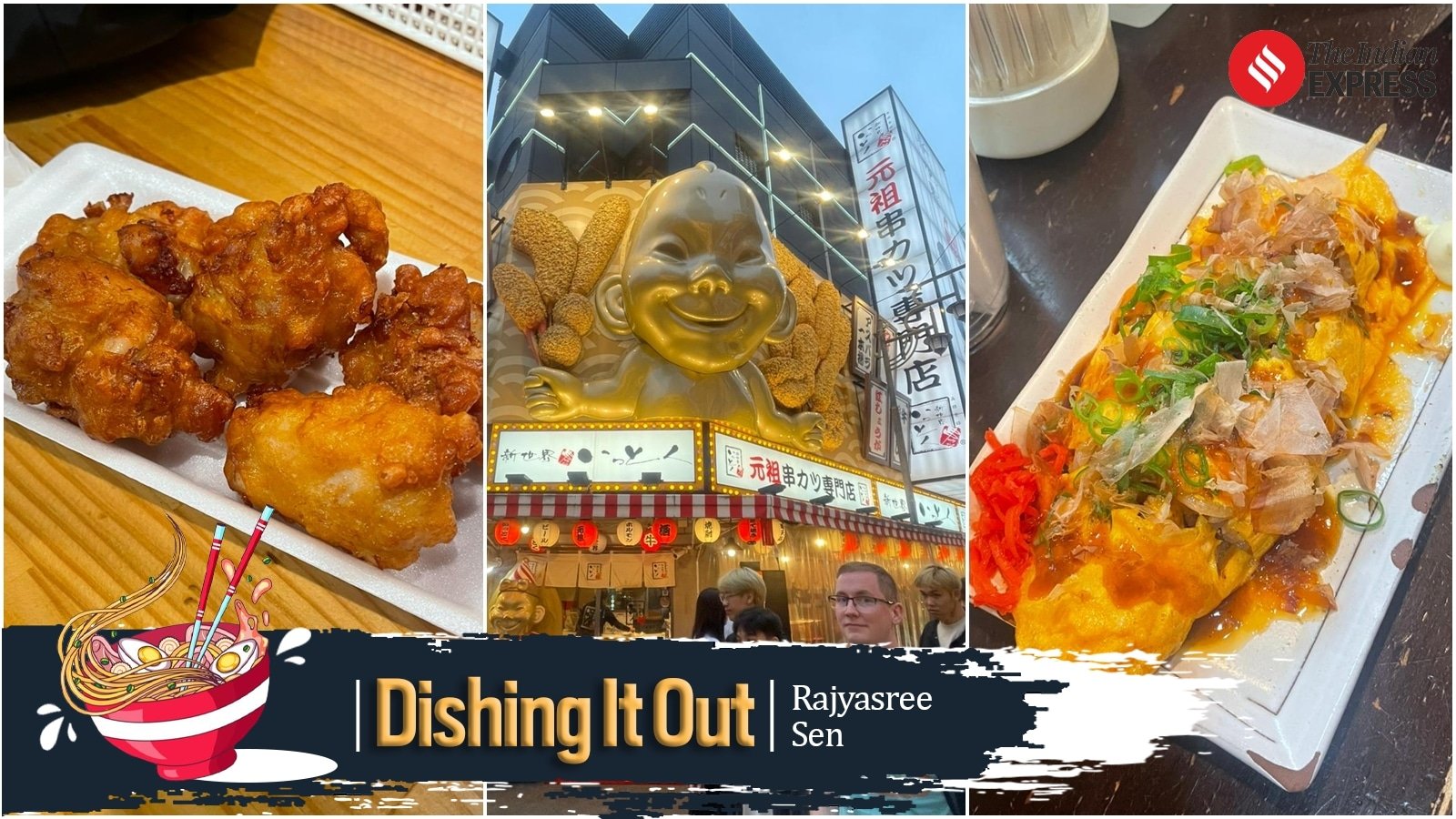
Okonomiyaki. Nikudoufu. Takoyaki. I have eaten in many Japanese restaurants in India, but especially in Gurgaon. This is because of the large Japanese expat population, including diplomats and workers. I have never seen these dishes on menus. Osaka is not a culturally rich city, but it’s a great place to go for a food tour. I had only one evening free in the city, so I took advantage of that to do a walking food tour. Before I take you to the kitschy lanes in Shinkensai, Osaka’s home to some of its finest street food, let’s delve into the history. When Japan’s defacto ruler Toyotomi Hideyoshi, known for unifying Japan built Osaka Castle, he attracted traders from Sakai, Fushimi, and other parts of Japan to Osaka. The city was transformed into a commercial and distribution centre. Osaka’s beautiful, wide canals are a result of the fact that boats were the primary mode of transportation in the city at the time. Canals were built across the city for easier movement. Osaka, a city of traders, was influenced by many culinary traditions. Frugality was part of the lifestyle of merchants, and this led to simple, wasteless meals. On the other hand high-end cuisine is cultivated in traditional Japanese restaurants, where business is conducted over food. On my first evening in Osaka I made my way to Shinkensai, a kitschy neon-lit open-air market filled with archery shops and eateries of every size and shape. There were many small food stalls that served only one dish, as well as “family restaurants” which had indoor seating and chic bars. I was able to join a group of 12 people on a guided tour for Rs 7,500 each. The majority were Americans (two young scientists and their artist wives, a young teacher at a public school and his wife, and a retired real-estate agent and former advertising executive). Some of the people were originally from Mexico, while another was from the Philippines. One person had Indian roots. All were interested in learning more about Osaka’s cuisine. Our guide, Bernie, was a Kiwi who moved to Osaka from New Zealand 15 years ago, and teaches English by day. The tour was so popular that it was featured in Netflix’s Somebody Feed Phil. This was the noisiest area of Japan that I’d ever been to. It was full of young people walking around arcades eating, chatting and not making a fuss. We started our tour in a noodle stand run by a woman. You could either sit at the open counter in the market or stand at a rickety table to eat your soup. The noodles were served with beef mince or a huge slice of tofu in a beef broth. I had never seen the tofu cooked this way before, lightly sauteed and then added to soup. It was the perfect broth. At the next restaurant, we sat outside on wooden benches and I tried my first takoyaki (battered octopus ball). It was the only dish that I didn’t like, but the locals loved it. The octopus meat is mixed together with other ingredients and then fried into balls. They are served with sauce and Umeshu, or plum wine. Story continues below this advertisementWe then visited an Izakaya and ate authentic Osakan Kitsune Udon, which is a noodle broth with thick udon noodle in a savoury, dashi-based broth. It’s topped with sweet and savoury, fried tofu bags or We also tried yakitori which is a Japanese term for only chicken skewers. In India, beef skewers would be called yakitori. Kushikatsu is another local creation, which is lightly deep-fried meat and vegetable skewers. We also had some very interesting and simple sweet potato wedges, drizzled with honey. Shinkensai was also where I tried the Osaka-version of Hiroshima’s okonomiyaki. Tonpeiyaki was another delight, a thin, omelette filled with sauteed pork and vegetables. Another delight was the freshly made karaage, or Japanese fried poultry, which is double fried (much as KFC), after being marinated with spices, ginger and mirin. It is simply divine.Hiroshima-style okonomiyaki, served on a hot conveyor belt (left); Another must-try is the fresh oysters at Miyajima. (Photos by Rajyasree Sen).I also learned that Japan’s people still drink whisky. Gin is a brand new concept that Japan has mastered. We ended the meal by eating fried ice-cream on a stick. You could choose between chocolate, honey, or caramel. The okonomiyaki served on a conveyor belt in Hiroshima is a Hiroshima style okonomiyaki. The fresh oysters in Miyajima are another must-try. Hiroshima and Miyajima produce at least 60% of Japan’s oysters. You must stop in Miyajima to eat a plate of oysters, whether they are steamed, fried or fresh. I’m still unsure, after the wonderful meals I had in Tokyo. Maybe I should visit the country again before I make a decision. Next week, to celebrate the West Bengal Assembly Elections, I will write about more local food and my favourite East Bengali and West Bengali delicacies.


Continue Reading

LifestyleNews

Aaryamann Sethi admits he has gained weight, vows to start workout again: ‘Ab dekhna, batata hun’

 ​

Aaryamann Sethi, a Youtuber, recently spoke out about his struggles with weight gain. He also revealed how he plans on losing it all. “This is yet another day that I am trying. Life is not perfect. I am not perfect. I know I can improve. It didn’t work… whatever the reason. Today is a brand new day. I will exercise… even if that means moving my body for some time. I must make it a regular habit. Aaryamann is Archana’s Puran Singh’s and Parmeet’s firstborn child. In his YouTube vlog he can be stretching and playing badminton. “First day it feels like you are breaking. I have heard a lot from you guys..mota hogaya…ab dekhna, batata hun (I have put on weight…now I will show you)…,” he expressed.DISCLAIMER: This article is based on information from the public domain and/or the experts we spoke to. Consult your doctor before beginning any new routine. Bihani said that he used have a more slender body than she had when they first met. “Time to get back.” Let’s get back to it,” he said. When workouts stop, energy expenditure drops. However, eating habits do not always adjust at the exact same rate. This creates a calorie excess over time, which leads to fat accumulation instead of muscle maintenance,” said Goyal.Story continue below this adWhat is your routine? (Photo: Freepik). What stands out about his journey is that he chose to restart rather than restrict. “Many people reacting to weight gain with extreme diets or crash plans can further disrupt metabolism and increase cravings. This can lead to muscle loss. Goyal said that gradually reintroducing fitness helps to rebuild lean muscles, improve insulin sensitivity and sustainably restore metabolism balance. “Taking a rest can often lead to guilt or frustration. But approaching the comeback with consistent rather than pressure will make a significant difference. At 47, Jyotika’s high-intensity routine redefines what’s possible for functional fitness: ‘Strength, core, and balance’Nutrition plays an equally crucial role here. “Supporting your workouts with adequate proteins, balanced carbohydrates, as well as proper hydration, will ensure that any weight loss is from fat and not muscle. This phase is a time when skipping meals or eating too little can slow down progress, and negatively impact energy levels. “They’re not linear. There will be phases, pauses and setbacks. The real transformation is in your ability to bounce back stronger every time. Simple. The weight gain is not failure. Goyal said that not restarting was failure. Continue reading below.DISCLAIMER This article is based upon information in the public domain or from experts we spoke with. Consult your doctor before beginning any new routine.


Continue Reading

LifestyleNews

Disha Parmar opens up about her ‘painful’ L4-L5 slipped disc and how regular workouts aided recovery: ‘My problem can’t be cured’

 ​

Recently, 31-year-old actress Disha Parmar opened up about her back problems, revealing she had a slipped disk. “I recently had a slipped disk. L4-L5. It was in poor condition. Even walking was difficult. Even sitting or standing. General movement. I was having a great deal of difficulty. Parmar, in a video posted by her movement coach Niilesh Passty to Instagram, said that she couldn’t imagine working out. She did not reveal the exact cause of her problem but mentioned how working it has helped her. “But my trainer insisted I work out to improve my back. It was painful, but I found it helped. After three months, I can do almost all of the exercises. I am doing weight lifting. My problem is not cured but I am working the muscles nearby to improve my daily function. Some days I feel great, while others are painful. I had to take the medication for 10 days. Now, the problem is gone. I work out regularly. I am working out regularly. After the actor’s revelations, we now understand how working out can help those with slipped disk issues.Dr Sarang Deshpande is a consultant in orthopaedics at KIMS Hospitals Thane. He said that conditions affecting the spine such as disc bulges and herniation often improve with the correct movement. “Pain in the initial phase does not always mean that there is damage. It can be just weak or out of shape muscles that are being activated. Pushing through sharp or intense discomfort without guidance can make matters worse. Why would a doctor or trainer encourage workouts in spite of discomfort?Dr Deshpande explained the spine relies heavily upon surrounding muscles for support. When these muscles, particularly the core and lower-back, are weak, strain is increased on the spine, causing pain and instability. Well-planned exercise can help rebuild this system. As muscle strength increases, pressure on the affected area of the spine decreases. This can greatly reduce symptoms.”
View this post on Instagram
In many cases, it is possible to recover from a chronic illness without taking long-term medications. “Medication is typically used for short-term pain relief and especially during flare-ups. Long-term recovery is often more dependent on rehabilitation than drugs. Dr Deshpande said that strengthening exercises, mobility work and correcting posture are more important in restoring function and preventing repeat problems. Continue reading below this ad. (Photo: AI-Generated)The goal of functional recovery is to enable a person move, exercise and perform daily tasks with minimal discomfort. Kareena Kapoor’s fitness trainer praises actor’s efforts, says ‘that jawline isn’t gifted’What to note?Avoid self-diagnosing or just copying someone else’s workout routine. What works for one person may not work for another. Always seek a proper assessment, including imaging, if needed, and follow a personalized rehab plan. Signs like numbness, weakness, or loss of bladder or bowel control require immediate medical attention,” said Dr Deshpande.DISCLAIMER: This article is based on information from the public domain and/or the experts we spoke to. Consult your doctor before beginning any new routine.


Continue Reading

LifestyleNews

Sunscreen at 30,000 feet: Why window seats increase your UV exposure

 ​

Most passengers love their window seats. We asked the experts. We asked the experts. Dr Shareefachause, dermatologist from Dr Shareefa Skin Care Clinic in Mumbai, said window seats expose you to more UV radiation than aisle seats. And it’s not trivial when at cruising height. Aircraft windows block the majority of UVB (the type which causes sunburn), however, a significant amount of UVA penetrates deeper into skin and contributes towards ageing. This article is based upon information that was obtained from the public domain or experts we interviewed. Consult your doctor before beginning any new routine. For occasional travellers, this risk is real but modest, especially on long-haul flight. “But the difference between aisle and window seats is small, and unlikely to have a meaningful health impact on typical travellers. The higher UVA radiation exposure can lead to skin aging and, over time, skin cancer. Carry and apply sunscreen (Photo by Freepik). The overall radiation exposure on a flight is modest and flying occasionally does not increase cancer risk. Why cabin crew ask you to keep the seat in an upright position during takeoff and landing”If you’re on a daytime flight with strong sun exposure, choosing an aisle seat can also reduce direct UV exposure. Before flying, it is important to consult with your dermatologist regarding the right products. Do not neglect your skin and take the best care of it. Moreover, don’t forget to use sunscreen and cover your face,” said Dr Chause.DISCLAIMER This article is based upon information that we obtained from the public domain or experts. Consult your doctor before beginning any new routine.


Continue Reading

Latest News

UsaLocalNews51 minutes ago

Once-charming mountain escape now battling homelessness homeowners say turned postcard city into no-go zone

​ NEWYou can now listen to Fox News articles! For years, Asheville, North Carolina, marketed itself as a mountain escape...

Video53 minutes ago

The Drama' actor on 'pressure' of playing young Zendaya. #TheDrama #BBCNews

Video2 hours ago

US envoys head to Pakistan for Iran talks | BBC News

US special envoy Steve Witkoff and President Trump’s son-in-law Jared Kushner are heading to Pakistan for Iran talks on …

UsaLocalNews2 hours ago

Emails reveal reality TV crew’s behind-the-scenes access to sheriff now leading Nancy Guthrie probe

​ NEWYou can now listen to Fox News articles! FIRST ON FOX: The Pima County Sheriff’s Department worked closely with...

Video2 hours ago

Can you get sunburnt in April? #Sunburn #BBCWeather #BBCNews

Video2 hours ago

Israel accuses Hezbollah of trying to sabotage ceasefire | BBC News

The health ministry in Lebanon said six people were killed and two more wounded in Israeli strikes in the south...

Video3 hours ago

Journalist describes being kidnapped in Iraq

CNN’s Jake Tapper spoke to American journalist, Shelly Kittleson, on her experience after being kidnapped in Iraq by a pro-Iran...

Video3 hours ago

Will China’s self-driving cars dominate the roads?

As Chinese automakers try to wow consumers with the latest assisted driving technology at the Beijing Auto Show, CNN’s Simone...

Tech3 hours ago

Today’s NYT Connections: Sports Edition Hints and Answers for April 25, #579

​ Here are the hints and answers to the NYT Connections: Sports Edition Puzzle for April 25, No. 579.    

Tech3 hours ago

Today’s NYT Connections Hints, Answers and Help for April 25, #1049

​ Here are some hints for the NYT Connections puzzle of April 25, No. 1,049.    

Trending News

Join Our Newsletter

Stay updated with breaking news and exclusive content.