
BBC News World
Oil price hits highest since 2022 after report Trump to be briefed on new Iran options

Oil jumps to highest price since 2022 after report Trump to be briefed on new Iran options
 Costfoto/NurPhoto via Getty Images
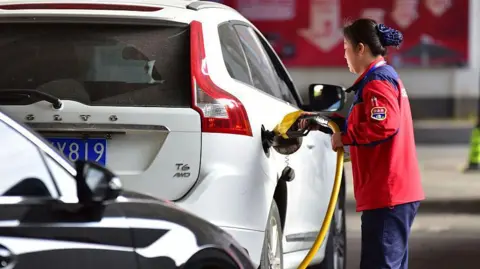
Oil prices jumped on Thursday in Asia after a report that the US military is set to brief President Donald Trump on new plans for potential action in the Iran war.
Brent crude rose by 5% to $124 (£92) a barrel, the highest level since Russia’s full-scale invasion of Ukraine in 2022.
Energy prices have risen this week as peace talks appeared to have stalled, with the key Strait of Hormuz waterway remaining effectively closed.
US Central Command has prepared a plan for a wave of “short and powerful” strikes on Iran in a moved aimed to break the deadlock in negotiations with Tehran, news site Axios reported. The BBC has contacted US Central Command and the White House for comment.
The Axios report cited anonymous sources, saying the proposed wave of strikes would be likely to include infrastructure targets.
Another plan focused on taking over part of the Strait of Hormuz so that it can be reopened for commercial shipping, Axios reported, adding that doing so could involve troops on the ground.
US-traded West Texas Intermediate crude oil also rose, up by 2.3% at around $109 a barrel.
The current Brent futures contract for June delivery is due to expire on Thursday. The more active July contract was up by about 2% at around $113 in morning trade in Asia.
Futures contracts are agreements to buy or sell an asset at a set date.
The US said it would blockade Iranian ports for as long as Tehran continues to threaten vessels that try to use the Strait of Hormuz, severely disrupting global energy shipments.
Iran retaliated against US-Israeli airstrikes by threatening to attack ships in the waterway, through which about a fifth of the world’s energy usually passes.
Oil prices surged by 6% on Wednesday following reports that Washington is preparing for an “extended” blockade of Iran.
The BBC also understands that energy executives met Trump on Tuesday to discuss ways to limit the impact of the war on US consumers, fuelling concerns in the market about an extended disruption to energy supplies.
BBC News World
Jewish agency warned of ‘high’ threat level ahead of Bondi shooting, report finds
Jewish agency warned of ‘high’ threat level ahead of Bondi shooting, report finds
 Getty
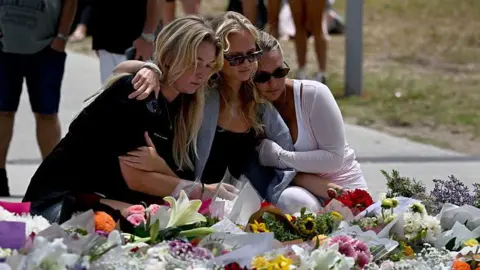
GettyA Jewish security agency warned that the security alert level was “high” ahead of the Bondi Beach shooting, a landmark royal commission has found.
The commission – Australia’s most powerful form of public inquiry – was announced in January, three weeks after two gunmen opened fire at an event marking Hanukkah at Bondi Beach, killing 15 people.
The interim report by former High Court judge Virginia Bell also gave 14 recommendations including prioritisation of gun reforms and extending the policing arrangements for Jewish high holy days to other Jewish events as well.
Prime Minister Anthony Albanese said a National Security Committee meeting had agreed to implement all of Bell’s recommendations.
On 14 December last year, a father-and-son duo – armed with rifles and shotguns – targeted a Sunday afternoon event at a Bondi Beach park.
Sajid Akram, 50, was killed by police at the scene of the shootings and his son Naveed Akram – the other alleged attacker – was critically injured and later transferred from hospital to prison.
The 24-year-old has been charged with 59 offences, including 15 counts of murder and one of committing a terrorist attack.
Thursday’s report noted an email sent to New South Wales (NSW) Police by Jewish security group CSG NSW on 8 December advising them of upcoming Jewish events and requesting policing measures.
The email said that the current security alert level for the Jewish community was “‘HIGH. A terrorist attack against the NSW Jewish Community is likely and there is a high level of antisemitic vilification”, according to the report.
NSW Police acknowledged “a request for police presence at these events” but said it had “received no specific request for dedicated police resources” for the Hanukkah event, according to the report.
Differences between the information provided by NSW Police and CSG NSW “cannot be resolved on the information presently available to the Commission,” it continued.
The report also recommended that state and federal governments should prioritise efforts to finalise and implement “nationally consistent” firearms reforms as well as a proposed gun buyback scheme.
Gun reforms put forward in the wake of the shooting have received a lukewarm response from some of Australia’s states and territories, with Queensland, for example, refusing the buyback scheme and a cap on firearms ownership.
The report also said NSW police procedures used for Jewish high holy days should be extended to other “high risk Jewish festivals and events, especially those with a public facing element”.
Other recommendations included a review of joint counter-terrorism teams in Australia – made up of federal and state police forces, and the Australian Security Intelligence Organisation (ASIO) – as well as making the counter-terrorism commissioner’s role full time.
Five recommendations remain confidential due to national security concerns.
The prime minister and national cabinet ministers should also take part in counter-terrorism exercises within nine months of each federal election, the report said.
The report said that it had not identified any gap in existing legal frameworks that would have prevented the attack, or impeded the ability of law enforcement or other agencies to respond to it.
“In these respects, no issue requiring urgent or immediate action has been identified,” the report said.
It added that any failures to identify and act upon intelligence in the lead up to the shooting and in the allocation of police to the Hanukkah festival would be addressed in hearings, though some of these may be closed to the public.
Albanese said the report showed “no urgent changes” were required but that governments “could always do better”.
After the report was released local rabbi Yossi Friedman told the BBC that many people in the “tight-knit” Jewish community were still struggling in the aftermath of the attack and were living with the “real feeling that this could happen again”.
“While the [report’s] findings are so important… even more important is not just what happened on the night but how did we get here, how did we allow a surge in antisemitism and violent activity to take place against a segment of the population,” he said.
David Ossip, President of the NSW Jewish Board of Deputies, said the report was “an important first step” in examining the circumstances around the attack but that it was “only part of the picture”.
Antisemitism was “not only a law enforcement issue” but a “societal issue” and “the environment for Jewish Australians had been deteriorating well before Bondi”, he said.
Alex Ryvchin, of the Executive Council of Australian Jewry, told the ABC there were still “burning questions” surrounding the attack including how the Akrams were able to acquire firearms and why the festival hadn’t been better resourced by police.
A first series of public hearings for the inquiry, which is looking at the rise of antisemitism in society and institutions and the events leading up to the mass shooting, is to begin on Monday.
A final report is to be delivered on the anniversary of the shooting.
Bell has previously warned that the scope of the evidence that the inquiry can look at will be limited given the current court proceedings for Naveed Akram.
Additional reporting by Katy Watson
BBC News World
Comey surrenders over charge of threatening Trump’s life in Instagram post
Comey surrenders over charge of threatening Trump’s life in Instagram post
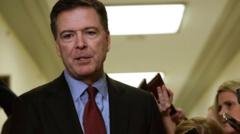
Former FBI Director James Comey surrendered to authorities to face charges alleging that an image he briefly shared on social media posed a threat to the life of US President Donald Trump.
The case stems from a 2025 Instagram post shared by Comey, which contained a photo of seashells on a beach arranged to read “86 47”. “Eighty-six” is a slang term for “get rid of”, and prosecutors allege it encourages violence against Trump, the 47th president.
Comey denied any wrongdoing, saying he did not know what the numbers meant, and accused the prosecution of political motivation.
This marks the second time the justice department has brought criminal charges against Comey, a longtime critic of Trump.
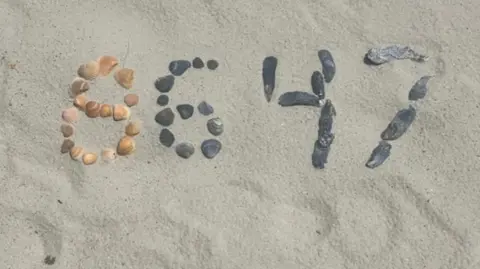
Comey did not enter a plea or speak during his brief appearance at a Virginia court on Wednesday afternoon.
His attorney, Patrick Fitzgerald, said the former director would seek dismissal on grounds of selective and vindictive prosecution – arguing he was targeted for speaking out against Trump.
Judge William Fitzpatrick read the charges against Comey. He nodded as he was read his rights and later smiled back at his family when he was leaving, the BBC’s US partner CBS News reported.
Judge Fitzpatrick denied the justice department’s efforts to set conditions of release for Comey, saying they were not necessary, according to CBS.
Prosecutors have charged Comey with knowingly and wilfully making a threat to take the life of – and to inflict bodily harm – on the president, and also, knowingly transmitting in interstate commerce a threat to kill him.
Each charge carries a maximum penalty of 10 years in prison.
In a video statement on Tuesday, Comey said he was determined to fight the charges.
“This won’t be the end of it – but I’m still innocent, I’m still not afraid and I still believe in the independent federal judiciary.”
Comey’s original post from May 2025 contained an image of the seashells on a beach that spelled out “86 47”, with the caption, “Cool shell formation on my beach walk”.
Following a public outcry, Comey deleted the image and posted a follow-up note on Instagram.
“I posted earlier a picture of some shells I saw today on a beach walk, which I assume were a political message,” he wrote. “I didn’t realize some folks associate those numbers with violence. It never occurred to me, but I oppose violence of any kind so I took the post down.”
Talking to reporters about the charges against Comey on Wednesday, Trump called him a “crooked man”.
“If anybody knows anything about crime, they know 86,” Trump said. “It’s a mob term for kill him. The mob uses that term to say when they want to kill them, they say 86 the son of a gun.”
When asked if he believed Comey’s social media post was a threat to him, the president replied: “Probably.”
“People like Comey have created tremendous danger, I think, for politicians and others,” Trump said
Some legal experts – and lawmakers – have questioned the strength of the charges.
Republican Senator Thom Tillis told reporters on Wednesday that he hoped “there’s more to it than just the picture in the sand”.
“Otherwise, I just think it’s another example where we’re going to regret this because we’re setting a fairly low bar,” he said.
Jimmy Gurulé, a former federal prosecutor and former assistant US Attorney General appointed by President George W Bush, said the new indictment was “an embarrassment to the American criminal justice system”.
On Wednesday, when asked whether the case will result in conviction, Acting US Attorney General Todd Blanche told reporters that it had been investigated “for the past year”.
“If there’s a prosecutor in this country that speaks about what a jury will do, they are not living up to their oath,” he said.
Blanche rejected the suggestion that there were political motives behind the case.
“People should be very wary of threatening the life of President Trump because that is a crime. Full stop,” he said.
In his second term, President Trump has publicly implied that justice department officials should investigate his political adversaries.
Comey was fired by Trump during his first term, after the former FBI director opened an investigation into Russian interference in the US 2016 presidential election.
Since then, Trump has repeatedly called for his prosecution – Tuesday’s charges are the administration’s second attempt to do so.
He was first indicted by a federal grand jury in late September on charges that he lied to Congress during testimony and obstructed a congressional proceeding.
Comey pleaded not guilty in October before the case was dismissed in November.
US District Judge Cameron Currie tossed the indictment because of prosecutor Lindsey Halligan’s “invalid” appointment as US attorney.
Halligan, the prosecutor in eastern Virginia who secured the indictments, was not authorised to present the charges to the grand jury, the judge said.
BBC News World
Five takeaways from the King’s historic address to Congress
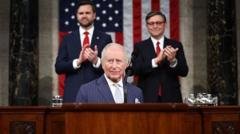
Five takeaways from the King’s historic address to Congress
King Charles III’s visit to the US was meant to be a celebration – of America’s 250th anniversary, of enduring Anglo-American ties and of the “special relationship”. But it has also been billed as a rescue mission.
The current state of US-UK relations is strained – a reflection of British reluctance to fully back the joint US-Israeli war against Iran. So the King’s goal has been to ease those tensions with a royal charm offensive, most notably with his joint address to Congress on Tuesday afternoon.
There is some reason for hope. President Donald Trump has a notably mercurial personality. Warm relations can turn chilly in a flash. But the reverse is also true, and former antagonists can be rehabilitated, welcomed once again into the president’s good graces.
A strain is not a rupture. And towards the end of his speech, the King spoke of the “reconciliation and renewal” that he said characterised the centuries of interactions between the two nations. It was a theme he returned to later at the White House state banquet.
Whether such words in public and, in all likelihood, behind closed doors will be enough to reinforce the Anglo-American alliance remains to be seen. But, in brief remarks after an afternoon White House meeting, Trump appeared pleased.
“He’s a fantastic person,” the president said of the King. “They’re incredible people and it’s a real honour.”
But there were also some lines in the King’s speech, the first royal address to Congress since Queen Elizabeth II spoke at the Capitol in 1991, that may have buoyed Democrats – and raised eyebrows in the White House.
1. An acknowledgement of uncertainty
Admitting you have a problem is the first step of recovery, as the saying goes. And so King Charles started his speech by diving right into the “times of great uncertainty” that confront both the US and the UK.
He ticked through conflicts in the Middle East and Europe – sources of recent contention between the US and the UK – while also noting the threat to democracy presented by the kind of political violence that upended Saturday night’s White House Correspondents’ Dinner.
From there, the King pivoted to talking about the fact that the US and the UK haven’t always seen eye to eye.
“With the spirit of 1776 in our minds,” he said, “we can perhaps agree that we do not always agree”.
That was all a set-up, however, for his conclusion that the two nations, when in alignment, can do great things “not just for the benefit of our peoples, but of all peoples”.
2. Some gentle digs that cheered Democrats
When King Charles noted that executive power “subject to checks and balances” was a British legal tradition, enshrined in the Magna Carta, which became a bedrock principle in the US Constitution, he received another standing ovation – with a twist.
The cheers started on the Democratic side of the chamber, before spreading across the entire room.
Donald Trump’s critics on the left have frequently denounced the president for what they see as his abuse of power.
A sense that the president should be subject to rigorous checks and balances was one of the motivating sentiments behind the “no kings” rallies that have drawn hundreds of thousands across the nation over the past year.
Later, as the King closed out his speech, one of his final lines prompted some muttering – of both agreement and concern – from the Democratic side.
“America’s words carry weight and meaning, as they have since independence,” the King said. “The actions of this great nation matter even more.”
Democrats, of course, have frequently been critics of Trump’s words, and how he delivers them, as well as his actions.
Whether intended or not, it appears liberals in the audience may have viewed the King as delivering a message of warning to the nation – while offering them a chance, once again, to express their “no kings” sentiment.
3. A nod to Nato and the transatlantic alliance
Quoting former US Secretary of State Henry Kissinger, the King spoke of an Atlantic partnership and noted – not for the first time among America’s European allies – that the only time Nato mobilised in defence of one of its member-states was after the 9/11 terror attacks by al-Qaeda.
Trump has derided the British Navy, long a source of pride for the kingdom. He called their ships “toys” and said their aircraft carriers “didn’t work”.
King Charles, who served for five years in the Royal Navy, made a specific mention of his time in the service – using it as an entry point to remark on benefits of security and intelligence relations between the two nations – and between America and Europe.
He even found an avenue to mention climate change, an issue that has been a longtime concern of his.
“From the depths of the Atlantic to the disastrously melting ice-caps of the Arctic, the commitment and expertise of the United States Armed Forces and its allies lie at the heart of Nato, pledged to each other’s defence, protecting our citizens and interests, keeping North Americans and Europeans safe from our common adversaries,” he said.
4. No mention of Epstein’s victims
Issues of international politics aside, one of the biggest questions surrounding King Charles’s visit had been whether he would reference Jeffrey Epstein in his remarks or address the late sex offender’s victims.
He did not.
The closest he came, perhaps, was an oblique reference to the need to “support victims of some of the ills that, so tragically, exist in both our societies today”.
For those who had called for the King to meet with Epstein survivors while in the US, that comment alone may be viewed – to use an American phrase – as weak tea.
Last year, over the objections of the Trump administration, Congress passed legislation mandating the release of US government-held files related to the Epstein investigation.
Those files led to new revelations about the depth of connections Epstein had to the rich and powerful, including former UK ambassador to the US Peter Mandelson and the King’s brother, Andrew Mountbatten-Windsor.
For now, the Epstein saga has had greater repercussions in the UK compared to the US, where few in current positions of political power have faced adverse consequences.
Even if the subject didn’t come up during the speech, the issue is not fading from the headlines – and the full story here in the US may be yet to emerge.
5. A touch of royal humour
Given the seriousness of the King’s objectives – with no less than the future of US-UK relations at stake – his speech was, at times, whimsical.
He opened with the oft-quoted – and misquoted – line from Oscar Wilde about the US and England having everything in common “except, of course, a language”.
He joked about the member of British parliament who is held “hostage” when the King speaks at Westminster – and wondered whether anyone in Congress had volunteered for such a job today.
He also riffed on how US independence was “just the other day” for a nation as old as Great Britain and that he wasn’t coming to the US as a “cunning rearguard action” to reestablish British rule.
There may be tensions between the US and the UK at the moment, but on Tuesday the King appears to have successfully broken the ice.

Follow the twists and turns of Trump’s second term with North America correspondent Anthony Zurcher’s weekly US Politics Unspun newsletter.
Readers in the UK can sign up here. Those outside the UK can sign up here.
BBC News World
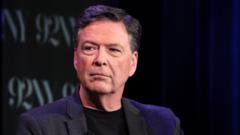
Comey charged with threatening Trump’s life in Instagram post
BBC News World
Faisal Islam: Why the UAE’s exit from Opec is a big deal
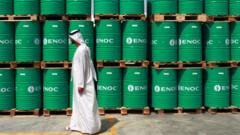
Faisal Islam: Why the UAE’s exit from Opec is a big deal
 Getty Images
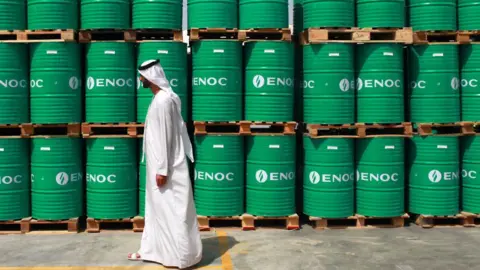
It is a very big deal that the United Arab Emirates (UAE) has announced its abrupt exit from Opec, the Organisation of Petroleum Exporting Countries. The Emiratis were members even before they became a nation state in 1971.
Opec is the organisation of mainly Gulf oil exporters, which for many decades controlled the price of crude oil by decreasing or increasing production and allocating quotas across its membership. It had a vital role in 1970s oil crises, which in turn transformed global energy policy.
While Opec production is dominated by Saudi Arabia, the UAE had the second highest spare production capacity. In other words, it was the second most important swing producer, capable of increasing production to help ease prices.
Indeed it is precisely this that led to long-term reconsiderations of the UAE’s position. Put simply, the UAE wanted to use the considerable capacity it has invested in.
Opec quotas limited its production to 3-3.5 million barrels per day. Opec membership sacrifices, in terms of lost revenues, were being made disproportionately by the UAE.
However, the timing of this move hints at consequences from the Iran war. The pressure cooker in the Gulf has impacted the UAE’s relationship with Iran and may affect its already strained relationship with Saudi Arabia.
As for Opec, this is a big blow at a time when significant questions are being asked about its long-term coherence.
It’s not just that the UAE, when it can get its oil fully back on the market by sea or pipeline, is likely to target 5 million barrels per day production. Saudi Arabia might respond with an oil price war that the UAE’s more diversified economy could withstand, but other poorer Opec members might not.
Much depends on the Saudi response.
Leading Emirati officials talk of new pipelines from the UAE’s oil fields in Abu Dhabi, bypassing the Strait of Hormuz, and heading to the underused port of Fujairah.
There is already one pipeline in heavy use today, but more capacity will be needed to cope with increased production and a permanent change to the fluidity and cost of tanker traffic in the Gulf.
For now, of course, during a double blockade of sea traffic in the Strait of Hormuz, this is not the main event in oil markets, affecting the prices of oil, gas, petrol, plastics and food.
While the world understandably focuses on oil at $110 per barrel, this is, however, a reason not to discount the chance that it could be closer to $50 sometime next year – if the mess in the Strait is sorted, for example, in time for the US midterm elections later this year.
Opec is less important to world oil markets than it was in the 1970s, with the 85% share of internationally traded oil it had then more like 50% today. Oil is also less critical to the world economy than it was in the 1970s. Opec has leverage now, but not a monopoly. It can’t hold the world to ransom, as it were.
I recall being told by the Opec figurehead, former Saudi Oil Minister Sheikh Yamani: “The Stone Age did not end because the world ran out of stones. The Oil Age will not end because the world runs out of oil.” This foretells of a world where hydrocarbons are substituted by other energy sources.
One way to read the UAE’s action is as a sign of this world of reduced oil reliance, and there have been some other clues in the current maelstrom: China’s investments in electrification have helped cushion the economic blow from rising oil and gas prices.
By some calculations, the electrification of China’s cars, lorries, and trains has reduced oil demand in the world’s second biggest economy by 1 million barrels a day. Global oil demand could plateau as this trend accelerates around the world.
In this view, it makes sense to raise as much money from oil reserves as quickly as possible before demand craters. The UAE has financial firepower and a partly diversified economy, through financial services and tourism.
Much will depend on what the new normal becomes if and when hostilities in the Gulf cease.
The UAE’s Opec exit could spark further dominoes falling here, and there will be considerable pressure now on Saudi Arabia.
When the tankers flow through the Strait again, or if the UAE redoubles its attempts to build new pipelines, Emirati oil will flow like never before, unconstrained by Opec commitments.
It will have little effect on the current blockades. It could change everything afterwards.


Is antisemitism a national security emergency? #BBCNews


Mainoo signs new Man Utd deal until 2031
Image source, Getty Images ByAdwaidh Rajan BBC Sport journalist 30 April 2026, 12:04 BST 127 Comments Updated 20 minutes...

Maritime spies catch $800M oil scheme as Trump’s naval blockade squeezes Tehran and more top headlines
NEWYou can now listen to Fox News articles! Good morning and welcome to Fox News’ morning newsletter, Fox News...

Bodycam footage shows police arrest suspect after stabbing of Jewish men
The Metropolitan Police has released bodycam footage of the moment police apprehended the man suspected to have stabbed …

Israeli military boards aid flotilla bound for Gaza
Israeli forces intercepted an aid flotilla in international waters bound for Gaza Wednesday night. The flotilla left Barcelona on April...

Burnley want Bellamy after Parker leaves
Image source, Getty Images BySami Mokbel, Senior football correspondent, Dafydd Pritchard, BBC Sport Wales and Josh Lobley, BBC Sport journalist 30 April 2026, 10:04 BST...


Antisemitism ‘a national security emergency’, government terror adviser says
Antisemitism ‘a national security emergency’, government terror adviser says 8 minutes ago Sofia Ferreira Santos Attacks on Jewish people...


The 92mph England fast bowler ready to move on from difficult debut
Image source, Getty Images By Stephan Shemilt Cricket Correspondent 2 hours ago 69 Comments Sonny Baker has just started...


15 delicious high-protein foods that will make hitting your protein goals a breeze
I find getting enough protein daily challenging. “Protein is essential for building and repairing every cell in your body,”...

Hereditary peers’ last hurrah as 700-year-old system abolished
Hereditary peers’ last hurrah as 700-year-old system abolished 20 minutes ago Jennifer McKiernan,Political reporterand Joshua Nevett,Political reporter Getty Images...
-
 Entertainment2 weeks ago
Kiss Cam Woman Kristin Cabot Says Chris Martin ‘Never’ Checked On Her After Viral Boss Scandal Ruined Her Career
-
 Video2 weeks ago
Keir Starmer 'furious' he wasn't told about Mandelson failed security vetting | BBC Newscast
-
 Video2 weeks ago
Debate: Who's right about gas prices, Trump or Americans?
-
 Video2 weeks ago
Tell me how to feel about space | The Assignment
-
 BBC News World2 weeks ago
Turkish police detain 162 people over online posts about school shootings
-
 Video2 weeks ago
José Andrés talks about the heavy price of war on food supply
-
 Video2 weeks ago
Let grief be messy: NYTimes writer talks to Anderson Cooper about the life and death of her daughter
-
 Video2 weeks ago
‘Are politicians being honest about election promises?’ | Question Time: Wales Election Special