
Politics
PM defends record as Badenoch says he squandered election win
PM defends record as Badenoch says he squandered election win
 House of Commons
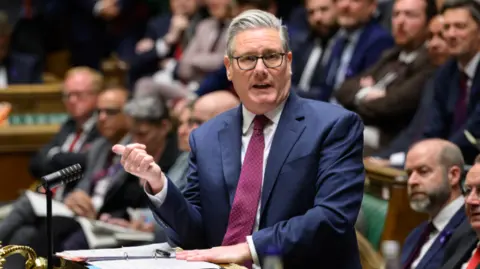
Sir Keir Starmer has defended his record in government after Kemi Badenoch accused him of having “squandered his political capital” in the last Prime Minister’s Questions before elections next week.
The Conservative leader said Sir Keir had presided over “one disaster after another” and was now focused on “saving his own skin”.
The prime minister said Labour had delivered rights at work, security for renters and lifted half a million children out of poverty adding: “That’s our mission, nothing is going to hold us back.”
He said the Tories were playing “political games” – a reference to the party’s attempt to launch an inquiry into whether the PM misled MPs over the appointment of Lord Mandelson.
On Tuesday evening, the House of Commons voted not to refer the prime minister to the Privileges Committee by 335 votes to 233.
The majority of Labour MPs voted against the motion, following a No 10 operation to rally support for the prime minister.
Sir Keir has rejected claims he misled the Commons about the vetting process for Lord Mandelson, who was appointed as the UK’s ambassador to the US but sacked seven months into the job.
Badenoch said the prime minister had been reduced to “begging” his MPs for their support in the vote and drew a contrast with the weeks following the 2024 general election when she said the government benches were “full of sycophantic questions from adoring new MPs”.
“This government is like a bad episode of Game Of Thrones,” she said, and in a reference to Greater Manchester Mayor Andy Burnham, added: “His own people have turned against him and all the while, the prime minister is holed up in his castle, wetting himself about a visit from the King in the North.”
The Conservative leader argued that the UK could not defend itself because too much money was being spent on welfare and the prime minister was unable to cut benefit bills because he had “squandered all his political capital saving his own skin”.
The prime minister replied that the government was increasing defence spending to its highest level since the end of the Cold War.
He also said the government had introduce the youth guarantee aimed at helping young people into work.
Referring to the Privileges Committee vote on Tuesday, Sir Keir said that while he had been chairing a meeting on the war in the Middle East, Badenoch had been engaged in “a desperate, baseless political stunt”.
Also during PMQs, Badenoch seized on rumours in Westminster of a government reshuffle in the wake of next week’s elections.
The Conservative leader asked if the prime minister would “listen to the country and reshuffle the Chancellor?”
Sir Keir did not directly answer the question, highlighting falling interest rates before the war in Iran.
But the PM’s failure to rule out sacking Rachel Reeves prompted Badenoch to declare the Chancellor was “toast”.
Last year Downing Street said Reeves will remain in her role “for the whole of this Parliament”. In a briefing to journalists after PMQs, the prime minister’s political secretary tried to hose down rumours about the Chancellor’s position.
“The position remains unchanged,” he said.
Liberal Democrat leader Sir Ed Davey used one of his two allotted questions to ask about food security, following the war against Iran and the subsequent closure of the Strait of Hormuz.
He said food prices would rise by 10% this year as “farmers’ costs soar” and urge the government to introduce a Good Food Bill, which the party has said would introduce long-term targets for food security and enable UK farmers to invest in food production.
Sir Keir said he had discussed the issue of food security during his meeting on Tuesday and added that the events in the Middle East would “affect every single one of our constituents”.
He also attacked the Liberal Democrat leader for backing the Privileges Committee motion saying: “I expect frivolous accusations from the leader of the Opposition -clearly, I was wrong to expect anything better than from the man in the wetsuit” – a reference to Sir Ed’s campaigning tactics.
In next week’s elections, voters in Scotland and Wales will go to the polls to elect representatives in the national parliaments, while voters in England will elect councillors in around 5,000 local authority seats.

Sign up for our Politics Essential newsletter to keep up with the inner workings of Westminster and beyond.
Politics
Antisemitism ‘a national security emergency’, government terror adviser says
Antisemitism ‘a national security emergency’, government terror adviser says
Attacks on Jewish people in the UK are “the biggest national security emergency” in almost a decade, the government’s adviser on terrorism has told the BBC.
Jonathan Hall KC said British Jews were “now thinking they cannot live a normal life” due to a series of incidents in recent months where Jewish communities have been targeted.
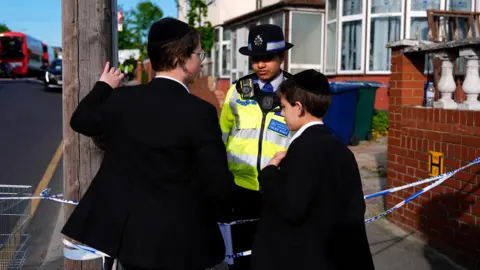
The most recent of these came on Wednesday, when two Jewish men were stabbed in Golders Green, north London, in what police have declared as a terrorist incident.
Home Secretary Shabana Mahmood said she did not agree that attacks against Jewish people amounted to a national emergency, but she insisted the government was treating the issue as an “absolute priority”.
She also said that she viewed the rise in antisemitic attacks as an emergency for her in her role as home secretary.
“The phrase national emergency has particular connotations… it means for a period you change your democracy and you disapply some elements of our democratic society,” she told BBC Breakfast.
“I don’t believe this is where we are today,” she said.
The two victims of Wednesday’s attack have been named locally as Shloime Rand, 34, and Moshe Shine, 76. A 45-year-old British national, who came to the UK from Somalia as a child, has been arrested on suspicion of attempted murder.
At a meeting of criminal justice agencies on Thursday, Prime Minister Sir Keir Starmer said there was “no getting away from the fact that this was not a one-off”.
“This has been a series of attacks on our Jewish community,” he said, adding the response from agencies must be “swift and visible”.
Sir Keir said the fight against antisemitism was one for all Britons, not just the Jewish community, as it is “about what sort of a country do we want to live in”.
The government has announced an extra £25m in funding for increased police patrols and security in Jewish communities.
The funding will also be used to put further protections in place around synagogues, schools and community centres.
Sir Ephraim Mirvis, the UK’s chief rabbi, said Wednesday’s attack “proves that if you are visibly Jewish, you’re not safe and far more needs to be done”.
He called for “meaningful action” to tackle the “root causes” of antisemitism.
Meanwhile, the Board of Deputies of British Jews and the Jewish Leadership Council said they were “sickened” by the attack, adding that security measures were essential but “not the answer”.
“British Jews will not be intimidated. But we should not face this threat alone,” their joint statement read.
Mahmood said she understood that there was fear within the community, adding that the government was putting more policing and security in place “so that people can go about their business”.
She said she accepted that security could only tackle the “end of the problem” and that more must be done to address antisemitism “at its root”.
Shadow Home Secretary Chris Philp said it was “shameful” that attacks on Jewish communities were happening “on such a frequent basis” in the UK and agreed with Hall that it amounted to a national emergency.
“I think from the government, words are no longer enough,” he told BBC Breakfast.
Reform UK leader Nigel Farage also said the situation was an emergency and urged the government to show “real action” beyond their words.
 PA Media
Labour MP Sarah Sackman, who represents Finchley and Golders Green, said Wednesday’s attack demonstrated that “threats to Jewish people in this country are very real”.
Sackman, who is Jewish herself, told BBC Newsnight: “When I take my children to synagogue in my local area, I find myself holding and gripping their hand a little bit tighter. I know I’m not alone in that.”
Meanwhile, the office of Israeli Prime Minister Benjamin Netanyahu called on the British government to do more to protect the Jewish community, with a statement referencing “weakness” in the face of “one antisemitic attack after another”.
 PA Media
Wednesday’s attack follows a spate of incidents in recent months targeting Jewish communities in the UK:
- 2 October 2025: Two Jewish people were killed and three left in a serious condition after a car ramming and stabbing attack outside a synagogue in Manchester. One of the men was killed by a bullet fired by police.
- 23 March 2026: Four Jewish charity-owned ambulances were set on fire in the car park of a synagogue in Golders Green
- 15 April: A brick and two bottles thought to contain petrol were thrown at the Finchley Reform Synagogue in north London
- 17 April: Suspicious items, later found to be non-hazardous, were found near the Israeli embassy in London. A video posted to social media claimed the embassy was going to be attacked by drones
- 18 April: A bottle containing a type of accelerant was thrown through the window of Kenton United Synagogue in north-west London
- 27 April: A suspected arson attack was carried out at a memorial wall in Golders Green. The wall contained tributes to people killed by the Iranian regime during anti-government protests earlier this year, as well as a section to those killed in the 2023 Hamas attack on Israel
Politics
Hereditary peers’ last hurrah as 700-year-old system abolished
Hereditary peers’ last hurrah as 700-year-old system abolished
 Getty Images
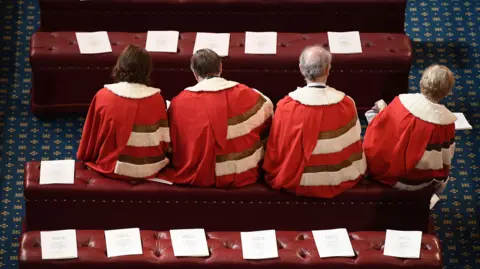
Hereditary peers in the House of Lords have left their red leather benches for the final time.
The majority of such peers, who inherit their titles through their families, lost the right to sit in the Lords in 1999, but 92 remained after a compromise deal with the Conservatives.
Now the bell has tolled for those doomed hereditaries too, with a law to remove their seats taking effect as the current session of Parliament ended earlier.
Lord Forsyth of Drumlean, the Lord Speaker, thanked them for their service, in a speech marking the end of nearly a thousand years of British parliamentary history.
Speaking at a farewell reception, Lord Forsyth said: “For close to a thousand years, hereditary peers and their families have helped to shape our institutions, defend our country, preserve our culture and strengthen that spirit of public service without which no nation can flourish.
“Hereditary peers have brought distinctive qualities to this House – an ethos of service, a long view and, not least, independence of mind.
“They have often shown a willingness to speak plainly, to resist passing fashions, and to act according to conscience rather than convenience.”
A law removing the right of the last remaining hereditaries to sit in the Lords passed last month, enacting a commitment in Labour’s 2024 election manifesto.
However 15 Conservatives and some crossbenchers – who are not affiliated to a political party – will be allowed to stay as life peers.
The government says they will be appointed to ensure the Lords “can continue to function effectively, and the experience of some departing hereditary peers is not lost”.
The BBC understands the Conservatives have submitted a list of the 15 hereditary peers the party wants to nominate for life peerages to the government.
The prime minister’s spokesman said No 10 would not comment on nominations for peerages.
It is not known which Conservative hereditary peers have been put forward by the party.
The prime minister has the ultimate say over who gets a seat in the Lords.
They will take their seats alongside around 700 existing life peers, who are appointed to the role, and 26 Church of England archbishops and bishops.
‘Just feels wrong’
Lord Strathclyde, a departing Conservative hereditary peer, said Wednesday had been a “sad and miserable day to be thrown out of the House of Lords” and condemned a move he said shifted the dial too far towards political appointees.
“The hereditaries were only 10% of the House,” he added.
“They did no harm and provided historical perspective, so this just feels wrong.”
The government has committed to further reforms to the House of Lords, including the introduction of a participation requirement for members and a retirement age. Select committee reports on the changes are expected later this year.
The changes on Wednesday complete an overhaul that started a quarter of a century ago, when in 1999, Tony Blair’s government reduced the number of hereditary peers in the Lords from 759 to 92, in a compromise with the Conservatives.
Retired Tory peer Lord Salisbury, who helped negotiate that compromise, said that although he felt “quite sentimental” about the end of a tradition dating back to the 13th century, he had always believed there needed to be a reformed second chamber that enjoyed the support and respect of the modern public, without threatening the authority of the House of Commons.
“When I was negotiating with Tony Blair all those years ago, I was clear that if you simply remove the hereditaries, you leave a purely nominated chamber,” he said.
“What you have is an extraordinary increase in the power of patronage of the prime minister, and that is a very powerful political tool.”
Lord Salisbury recommended pulling in councillors nominated by councils from across the country to sit in the Lords.
Having indirectly elected members means these new peers would not threaten the mandate of MPs, he explained, but would also “give local government a voice in Parliament and would be a balancing power against the diktats of Whitehall”.

Sign up for our Politics Essential newsletter to read top political analysis, gain insight from across the UK and stay up to speed with the big moments. It’ll be delivered straight to your inbox every weekday.
Politics
We can’t abolish leasehold outright, minister says
We can’t abolish leasehold outright, minister says
 Getty Images
The outright and immediate abolition of the leasehold system in England and Wales would be “almost certainly impossible”, the housing minister has said.
In Labour’s 2024 general election manifesto, the party promised to “finally bring the feudal leasehold system to an end”.
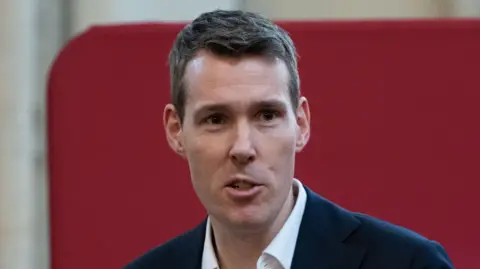
In a speech, Matthew Pennycook said this meant the government would “dismantle” the system before the next election by making it easier for leaseholders to gain control of their buildings, but that leasehold would not disappear overnight.
Critics have accused the government of dragging its feet on leasehold reform and rowing back on Labour’s election promises.
However, in a speech at the Institute for Government think tank, Pennycook rejected this.
“In making that manifesto commitment to bring the leasehold system to an end, we were not promising to immediately abolish leasehold outright,” he said.
“Anyone with even the most rudimentary knowledge of leasehold knows that outright and immediate abolition of circa five million English and Welsh leases is almost certainly impossible.”
He questioned whether such an approach would be lawful, how it would impact the mortgage market and how millions of commonhold associations could be immediately established to manage buildings.
Taking questions after his speech, Pennycook directly criticised the Green Party, which has promised “the total abolition of leasehold”.
“It’s very easy to put out glib soundbites – end leasehold – we’ve got a serious policy programme here,” he added.
Green MP Carla Denyer said her party’s pledge was “not to abolish leasehold immediately but to phase it out”.
“The Greens are clear and consistent: We would end the leasehold rip off,” she added.
Under the leasehold system, people own the right to occupy a property via a lease for a limited number of years from a freeholder.
Many leaseholders complain of spiralling service charges, which they have no control over and must pay for the management and maintenance of their building.
The government’s draft leasehold bill, which is currently being scrutinised by MPs, aims to make it easier to convert to commonhold.
Under this system, people jointly own and take responsibility for their buildings without an expiring lease.
The bill would also ban the sale of new leasehold flats and cap ground rents – an annual fee leaseholders must pay to their freeholder – at £250 a year.
Pennycook said that taken together, these measures would empower leaseholders to take control of their buildings and the bills they pay, allowing them to convert to commonhold “when they judge it is the right time for them”.
He added: “This is how leasehold ends – not through an abrupt and chaotic single moment of destruction…but by taking a methodical approach, firmly shutting the door on leasehold’s future use, and opening easy and effective escape routes for those living under it today so that we rapidly reduce the prevalence of existing leasehold.”
While he acknowledged some reforms would take longer, Pennycook said he expected a new commonhold framework to be operating “well before the end of the Parliament”, which is due to run until 2029.
The National Leasehold Campaign said it was “realistic” and “we know leasehold cannot be abolished overnight”.
But co-founder Katie Kendrick called for a “binding timetable for reform” and “concrete progress”, adding that “leaseholders have run out of patience”.
Harry Scoffin, founder of campaign group Free Leaseholders, said: “The government appears to think that desperate leaseholders who need the change Labour promised at the last election, namely an end to this feudal system, are naysayers acting in bad faith.”
He said Pennycook’s speech was “a wasted opportunity for the government to show urgency in freeing millions of leaseholders”.
There is broad cross-party consensus on the need to change the leasehold system.
The process began under the previous Conservative government, with the party also promising to make it easier to take up commonhold in its 2024 election manifesto.
Meanwhile, Liberal Democrat leader Sir Ed Davey has accused Labour of “dragging its feet” on leasehold reform.
During the 2024 general election campaign, Reform UK promised to make it cheaper and easier to extend leases and buy freeholds.
No ‘exodus’ of landlords
Pennycook was also asked about the potential impact of the Renters’ Rights Act and fears increased regulation is leading to some landlords leaving the market, reducing supply.
Key elements of the legislation, including a ban on evicting tenants in England without a reason, come into force on Friday.
Pennycook insisted the “nominal costs” of the legislation for landlords were “low”.
He rejected the idea there had been an “exodus” of landlords from the sector ahead of the act coming into force.
“I think we are seeing, perhaps at the margins, exit of some landlords…but we haven’t seen an exodus,” he said.
He argued buy-to-let landlords were mostly selling up because of tax changes introduced under the Conservatives, rather than increased regulation.
The minister added that the act would bring greater “security and stability” for tenants.
Sign up for our Politics Essential newsletter to keep up with the inner workings of Westminster and beyond.
Politics
Man offered Ukrainians money to carry out Starmer arson attacks, court hears

Man offered Ukrainians money to carry out Starmer arson attacks, court hears
 Metropolitan Police
A Russian speaker recruited and offered money to Ukrainian men to carry out arson attacks on properties connected to Prime Minister Sir Keir Starmer, a court has heard.
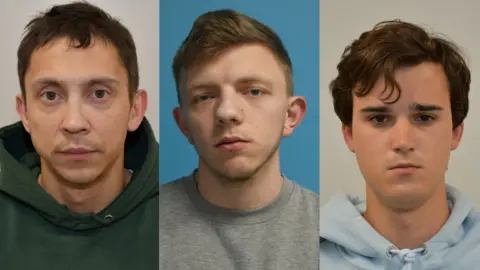
Ukrainian nationals Roman Lavrynovych 22, and Petro Pochynok, 35, are accused of targeting two properties and a car linked to the PM, along with Ukrainian-born Romanian national Stanislav Carpiuc, 27. They deny all the charges.
All three, who live in London, are charged with conspiring together – and “with others” – to damage property by fire between 1 April and 13 May 2025.
Lavrynovych is also charged with damaging property by fire with intent to endanger life on 11 and 12 May 2025 at two properties in north London connected to Sir Keir.
He faces alternate counts of damaging property by fire being reckless as to whether life is endangered.
On 8 May 2025, a car previously owned by the prime minister was found on fire on a street he previously lived on in Kentish Town, north London. Three days later, a fire was discovered at flats linked to Sir Keir in nearby Islington.
On 12 May 2025, a fire was discovered at the entrance to Sir Keir’s Kentish Town home, which was being rented out.
Prosecutor Duncan Atkinson KC said: “This case concerns a series of three fires that were deliberately set in a residential area of North London over three nights in May last year.”
He said “three fires in the same area within five days would be pretty unusual” but that “fires all involving property linked to the same person were beyond a coincidence”.
 Metropolitan Police
He said in this case, the car had once belonged to Sir Keir, one house was managed by a company of which the prime minister had once been director and shareholder, and the other house still belonged to the prime minister and was occupied by his sister-in-law.
He added: “The evidence demonstrated that there was here no coincidence. Rather, the vehicle and properties in question had been targeted, and the acts of arson at these locations had been planned and directed, with those involved promised payment for their participation.”
The prosecutor said analysis of messages from phones recovered from, and connected with, the defendants showed “communication between them before and during the relevant period”.
He said Lavrynovych was offered payment to set the fires by a contact using the name or pseudonym “El Money” on the Telegram messaging app. He said Carpiuc also communicated with El Money.
Atkinson said that El Money communicated in Russian, in contrast to the Ukrainian otherwise used by the defendants.
He told jurors that it was “no part of your considerations” to decide who El Money was and what reason he might have had for co-ordinating the alleged actions of the defendants.
He said that was because jurors did not have to decide what motivated the three defendants.
He said the defendants had not demonstrated any particular political or ideological motivation, as opposed to a financial one, and that it did not matter whether they knew that the property they were allegedly targeting was connected to the prime minister or whether that formed part of their motivation.
Atkinson said that messages from May 2025 showed Lavrynovych had been discussing a “job” with El Money and Carpiuc.
He said the conversations were an “obvious reference” to a plan to target Sir Keir’s former Toyota car, already identified in October 2024 when Lavrynovych sent the location and image of the car to an Instagram user.
The jury was played CCTV footage of Lavrynovych in a south London B&Q on 6 May 2025 buying white spirit, which Atkinson described an “accelerant”.
He said fragments of evidence found on Lavrynovych’s phone suggested that he may have sent a “targeting pack, explaining where to go and what to do, together with a means or promise of payment in cryptocurrency”.
Atkinson added that in the early hours of the morning on 7 May – 24 hours before the car was set on fire – Lavrynovych travelled from home to north London and back.
Lavrynovych was caught on bus CCTV and his phone data shows that he went to the area where the car was parked. An image of the car, timed at 03:08 BST, was found on Lavrynovych’s phone, Atkinson said.
“He was making a reconnaissance trip to prepare for the following night,” Atkinson claimed.
The jury were also read a series of messages between Lavryovych and Pochynok, which prosecutors say shows arrangements being made for the arson attack on the Toyota car.
Shortly before 22:00 BST on 7 May, Lavryovych sent Pochynok a message on Telegram saying: “Look, we won’t talk much on the phone. At that address, there’ll be a car, need to check if it’s there. If it is there then basically today we’ll do the job. We’ll have money. And this week, if we plan everything well today, tomorrow there may be another one, we’ll make more money.”
At 22:09, Lavryovych sent a voice message on Telegram: “We’ll meet on the main street basically.”
Then, soon after midnight on 8 May, Lavryovych sent Pochynok messages saying “hello” and “it’s on”, before leaving home in Sydenham and travelling to north London.
Atkinson said CCTV images showed the two defendants travelling across London to meet at the “burn site”.
Lavryovych sent Pochynok a message at 02:13 saying: “On my way quietly we’ll do it and that’s it tomorrow money.”
Atkinson said the evidence showed the two men arrived soon after, with Lavryovych writing he was at “at the address” and Pochynok replying he was a minute away.
Images from Lavyrynovych’s phone show the car itself on the road, with one final image showing the car burning and someone looking on.
Atkinson said this image was Pochynok recording Lavryovych as he set the car on fire.
Neighbours called the fire brigade after seeing the car burning.
 Metropolitan Police
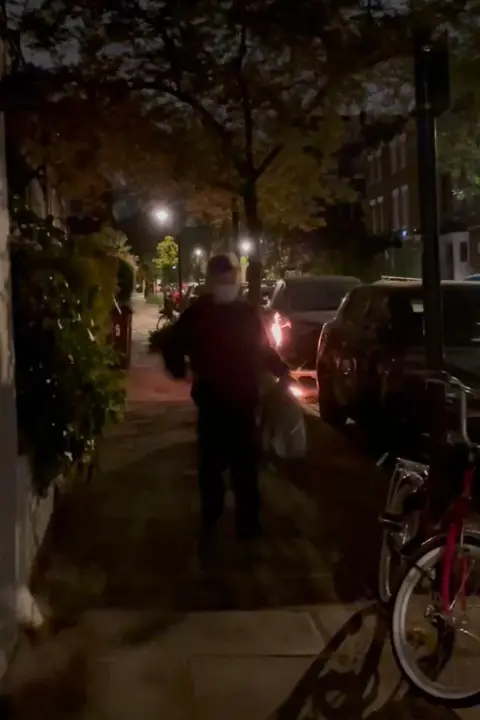
The jury were also shown CCTV footage from the early hours of 11 May in which Atkinson said Lavrynovych could be seen on the north London road where the PM used to live.
He said a video from Lavrynoych’s phone, which was played to jurors, showed a front door on this road being set on fire.
According to Atkinson, after a further exchange of messages with El Money, Lavrynovych returned to the road, where he started a fire at the front door of a property that the prime minister had been renting out to his sister-in-law.
El Money sent messages to Lavrynovych on 12 May, which included “there is news, you’ll get crypto” and “you need to throw away the clothes”, Atkinson said.
The prosecutor said that El Money then offered Lavrynovych advice in a message that read: “Look, you attacked the home of a very high-ranking person in Britain. I’ll send you money, you need to leave the city.
“If the police detain you, secretly write the word, ‘geranium’ and I’ll send a lawyer to you, I’ll give you money for a week and a new phone. We won’t be in touch for a week.”
Lavrynovych later sent messages to El money “chasing payment”, said Atkinson.
The trial continues and is expected to last three weeks.
Politics
Farage received £5m from donor before he became MP
Farage received £5m from donor before he became MP
 Joe Giddens/PA Wire
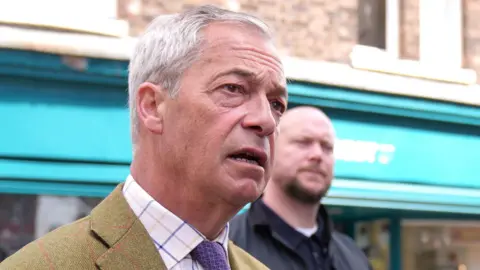
Nigel Farage received £5m from Reform UK mega donor Christopher Harborne before he became an MP, it has emerged.
In an interview with The Telegraph, the Reform UK leader said he had been given the money to pay for personal protection “so that I would be safe and secure for the rest of my life”.
He also told the newspaper his home had been targeted last year in a firebomb attack.
Labour and the Conservatives have both accused Farage of breaking Commons rules by not declaring the £5m gift in the register of interests, with the Tories saying they had referred the Reform leader to the Parliamentary Standards Commissioner.
Harborne, a British cryptocurrency investor who lives in Thailand, last year donated £9m to Reform UK – the biggest single donation to a UK political party by a living person.
In total, the businessman gave £12m to Reform in 2025 and has donated to the Conservatives in the past.
The separate £5m gift to Farage, also reported by The Guardian, came in early 2024, Reform sources told the BBC, and it does not appear on his MP register of interests.
Labour Party chair Anna Turley said Farage “appears to have broken the rules again by failing to declare this cash from his billionaire backer”.
Conservative party chair Kevin Hollinrake said that as a new MP, he should have declared the gift, adding: “Why does Reform think the rules don’t apply to them?
“This stinks and Reform should come clean now.”
Farage’s team say there was no requirement to declare the money because it was a personal gift.
A Reform UK spokesman said: “This was a personal unconditional gift that was given before he was elected. We are confident everything has been declared in accordance with the rules.”
The spokesman accused the Conservatives of putting Farage’s safety at risk by denying him state-funded protection when they were in power.
The Commons code of conduct states that new MPs “must register all their current financial interests, and any registrable benefits (other than earnings) received in the 12 months before their election within one month of their election”.
Farage announced he was standing to be the MP for Clacton on 4 June, 2024, and that he was taking over as Reform UK’s leader.
In his Telegraph interview, Farage said Harborne had become concerned about his level of protection when a milkshake was thrown at him in 2019, as he was campaigning in Newcastle for the Brexit Party.
“I have tried and failed in the past to get security funded by the Home Office and I don’t think the state will ever help me,” Farage told the newspaper.
“I’m very much on my own and will be for the rest of my life, and I have to face up to that grim reality.
“Christopher is an ardent supporter who is deeply concerned for my safety.”
Speaking about the attack on his home in early 2025, Farage told The Telegraph a lit device was pushed through his letterbox in an “outright arson attempt” when he was not in.
He found the damage when he returned home and “luckily it had burned itself out in the porch”.
Police investigated the incident but have not identified any suspects.
Farage told The Telegraph he was speaking about the attack for the first time because he had been concerned that doing so earlier would force him to boost his safety measures further.
Asked about the attack in an interview with BBC Radio Wiltshire, he said: “My worry about it is if that if it continues down this path you’ll finish up with good people who should go into public life just not doing it and that’s a real concern.”
A spokesman for Reform UK said: “This was a personal gift unrelated to politics.
The state provides no security for Nigel. This is well documented.”


Is antisemitism a national security emergency? #BBCNews


Mainoo signs new Man Utd deal until 2031
Image source, Getty Images ByAdwaidh Rajan BBC Sport journalist 30 April 2026, 12:04 BST 127 Comments Updated 20 minutes...


Maritime spies catch $800M oil scheme as Trump’s naval blockade squeezes Tehran and more top headlines
NEWYou can now listen to Fox News articles! Good morning and welcome to Fox News’ morning newsletter, Fox News...


Bodycam footage shows police arrest suspect after stabbing of Jewish men
The Metropolitan Police has released bodycam footage of the moment police apprehended the man suspected to have stabbed …

Israeli military boards aid flotilla bound for Gaza
Israeli forces intercepted an aid flotilla in international waters bound for Gaza Wednesday night. The flotilla left Barcelona on April...


Burnley want Bellamy after Parker leaves
Image source, Getty Images BySami Mokbel, Senior football correspondent, Dafydd Pritchard, BBC Sport Wales and Josh Lobley, BBC Sport journalist 30 April 2026, 10:04 BST...

Antisemitism ‘a national security emergency’, government terror adviser says
Antisemitism ‘a national security emergency’, government terror adviser says 8 minutes ago Sofia Ferreira Santos Attacks on Jewish people...


The 92mph England fast bowler ready to move on from difficult debut
Image source, Getty Images By Stephan Shemilt Cricket Correspondent 2 hours ago 69 Comments Sonny Baker has just started...


15 delicious high-protein foods that will make hitting your protein goals a breeze
I find getting enough protein daily challenging. “Protein is essential for building and repairing every cell in your body,”...

Hereditary peers’ last hurrah as 700-year-old system abolished
Hereditary peers’ last hurrah as 700-year-old system abolished 20 minutes ago Jennifer McKiernan,Political reporterand Joshua Nevett,Political reporter Getty Images...
-

 Entertainment2 weeks ago
Kiss Cam Woman Kristin Cabot Says Chris Martin ‘Never’ Checked On Her After Viral Boss Scandal Ruined Her Career
-
 Video2 weeks ago
Keir Starmer 'furious' he wasn't told about Mandelson failed security vetting | BBC Newscast
-

 Video2 weeks ago
Debate: Who's right about gas prices, Trump or Americans?
-

 Video2 weeks ago
Tell me how to feel about space | The Assignment
-
 BBC News World2 weeks ago
Turkish police detain 162 people over online posts about school shootings
-
 Video2 weeks ago
José Andrés talks about the heavy price of war on food supply
-
 Video2 weeks ago
Let grief be messy: NYTimes writer talks to Anderson Cooper about the life and death of her daughter
-
 Video2 weeks ago
‘Are politicians being honest about election promises?’ | Question Time: Wales Election Special