
Politics
Mandelson files: What you need to know

Politics
Celebration, shock and scepticism follow Colombias presidential election
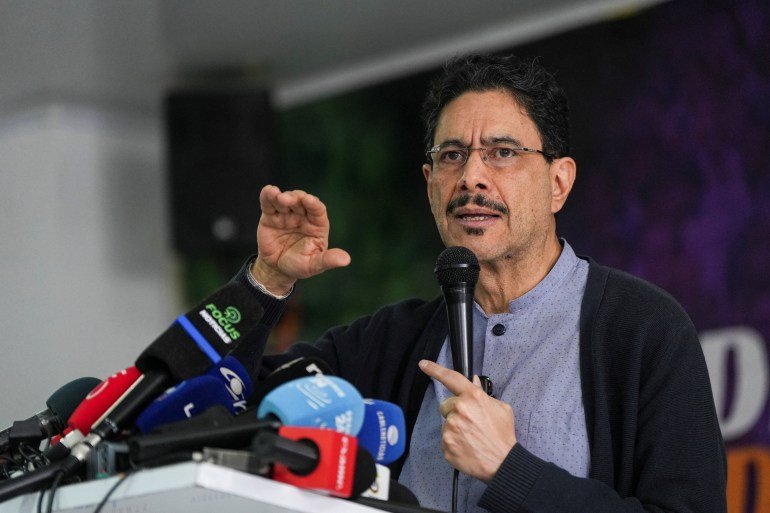
Less than two hours after polling stations closed on Sunday, it was clear that Colombia’s presidential race would be settled in a run-off between two finalists: hard-right political outsider Abelardo de la Espriella and leftist Senator Ivan Cepeda.
Though the overall result surprised few, de la Espriella’s strong showing upended pollsters’ predictions.
Recommended Stories
list of 3 itemsend of list
Cepeda, President Gustavo Petro’schosen successor, had been expected to win the most votes, based on public opinion surveys.
But instead, de la Espriella came in first place, winning 43.74 percent of the vote. Cepeda trailed with 40.90 percent.
Supporters of de la Espriella, a criminal defence lawyer, held rturous celebrations in the coastal city of Barranquilla, where the candidate has an office.
Colombia won, and with more than 10 million votes, democracy won, said Elsa Suarez, a de la Espriella voter living in Bogota.
The far-right candidate has modelled himself after politicians like Donald Trump in the United States and Javier Milei in Argentina, flamboyant media personalities who won the presidency despite having little to no political experience.
Like them, de la Espriella has pledged a return to law and order, as well as a pared-back national government and policies to support traditional family values.
Notably, he promises to use an iron fist to stamp out crime and build megrisons to jail criminals, mimicking the policies of Salvadoran strongman Nayib Bukele.
Analysts say de la Espriella’s populist messaging resonated with voters in Colombia’s interior, where urban crime is a growing concern.
Electoral ms show de la Espriella besting Cepeda in 16 of the country’s 32 departments, primarily in the heart of Colombia and along the border with Venezuela.
In more central areas and closer to the citals, people prioritise security, explained Laura Bonilla, the deputy director at the Peace and Reconciliation Foundation (PARES), a Bogota-based research nonprofit.
By contrast, de la Espriella’s security messaging failed to sway voters along the coast and in border areas afflicted by rebel violence.
Bonilla argues that people in these regions instead place greater value on the socioeconomic issues that Cepeda represents, as the continuity candidate for Petro’s Historic Pact party.
Over the past four years, they have received constant attention from the government, said Bonilla, citing state development projects under the Petro administration.
A blow to the conservative establishment
De la Espriella’s success also highlights growing anti-establishment sentiment in Colombia, according to experts.
The lawyer, who has never run for public office before, comfortably beat his main rival on the right, Senator Paloma Valencia, who was backed by former President Alvaro Uribe, the figurehead of Colombian conservatism.
Initially, Sunday’s election was predicted to be a close race between Valencia and de la Espriella, both of whom lagged behind Cepeda in the polls.
But as Sunday’s ballots were tallied, Valencia flopped with less than 7 percent of the vote.
Miguel Silva, a Colombian political consultant, credited some of de la Espriella’s success to his campaign messaging.
De la Espriella, he explained, used his campaign to draw a distinction between the haves and the have-nots, those who have benefitted from the government and those who feel ignored.
He [succeeded] by portraying himself and the people he represents as ‘Los Nunca’ and by portraying Paloma and her followers as ‘Los Siempre’, Silva said, using the Spanish words for The Nevers and The Always.
Pollsters predicted the right would be divided in the first round, paving the way for Cepeda to win the most votes, but de la Espriella ctured millions of votes from traditional conservatives, marking a shift in Colombia’s political landsce.
In Bogota, the only province in the country’s interior to vote for Cepeda, the left-wing candidate’s supporters were shocked by Sunday’s results.
Everyone is a little surprised, said Juan Camilo Rodriguez, who voted for Cepeda. These results don’t match the polls.
Petro himself had hammered his base to flood the polls, warning that the left’s chances of success could be hampered by electoral fraud.
The outgoing president rejected last night’s results, which were based on the pre-conteo, or preliminary count, a non-legally binding process.
Instead, Petro called on the public to wait for the official, scrutinised count, which will be released in the coming days.
Cepeda echoed the president’s scepticism in a speech on Sunday night. Only once the vote-counting committees have fully, clearly, and thoroughly clarified this matter, will we comment on tonight’s results, he told supporters.
But the candidate peared to mellow his stance this morning, acknowledging that there was no evidence of irregularities in the vote. He trailed de la Espriella by more than 670,000 votes.
Experts warn that Cepeda is losing precious time by focusing on fraud allegations and should instead concentrate on swaying moderate voters.
By crying fraud so early, it’s hard to bring more voters to the table, said Silva.
A second round of voting, between Cepeda and de la Espriella, is scheduled for June 21.
Up for grabs are more than a million votes for centrist candidate Sergio Fajardo and 1.6 million for Paloma Valencia. While Valencia endorsed de la Espriella, her running mate, moderate politician Juan Daniel Oviedo, did not.
Miguel Jaramillo Lujan, a Colombian political strategist, said the final two candidates must tread carefully in the next three weeks to prevail.
As the saying goes, whoever makes fewer mistakes will be the winner.
Politics
CBSE misses June 1 deadline to relaunch Class 12 verification and re-evaluation portal
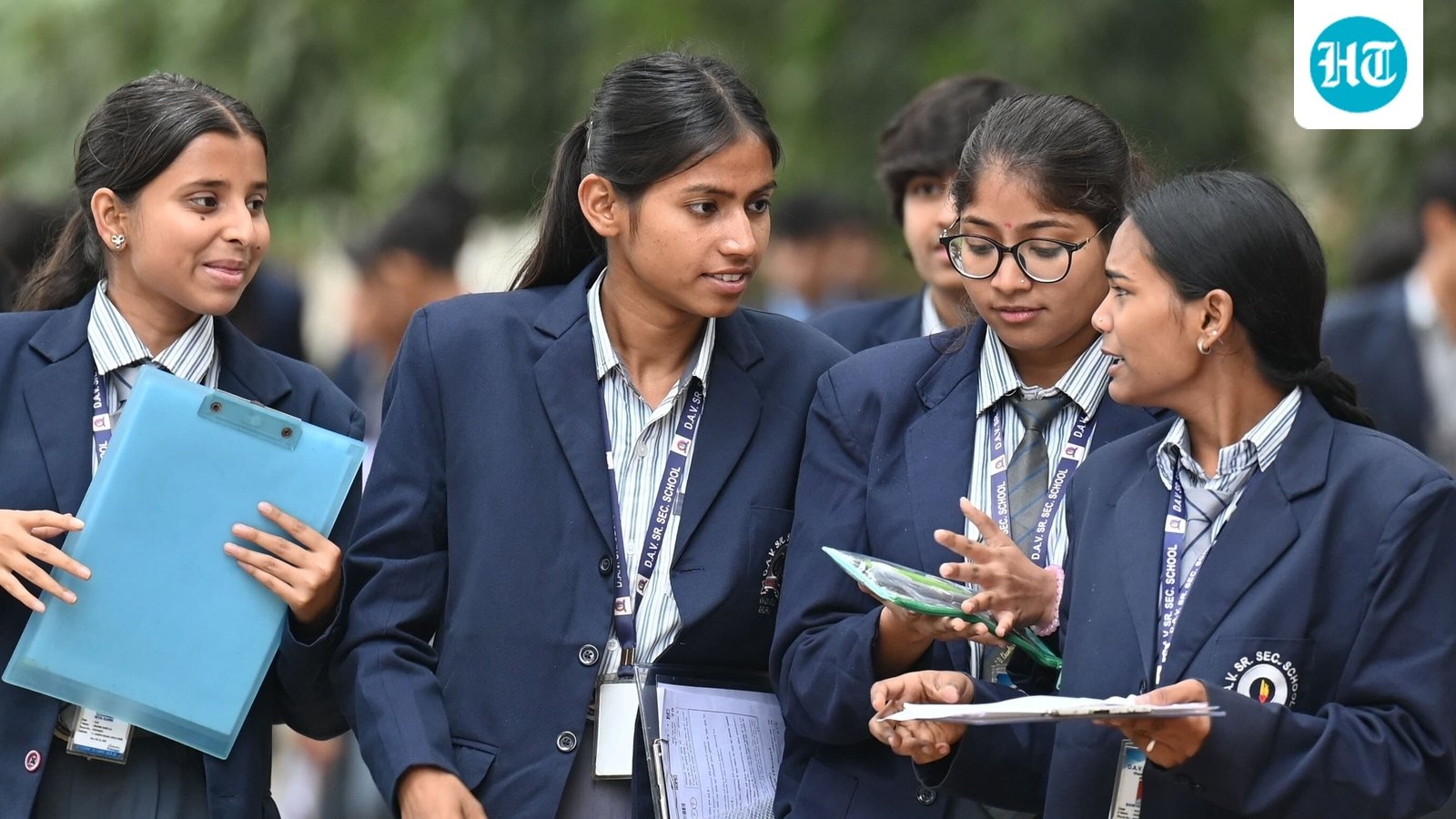
The Central Board of Secondary Education (CBSE) on Monday failed to make its Class 12 verification and re-evaluation portal operational, despite announcing earlier that the service would reopen that day. The delay left thousands of students awaiting an opportunity to challenge their marks and ply for the re-evaluation of answer scripts. Track live updates
The hold-up comes even after a four-member expert team from IIT Kanpur and IIT Madras was tasked with auditing and strengthening the board’s post-result services platform following technical glitches and complaints from students.
While CBSE in a X post at 2 PM on Monday said the portal would go live “soon”, officials associated with the exercise maintained that the launch would take place before midnight on June 1. The website was not launched till the filing of the story on June 2.
ALSO READ: CBSE’s own ‘corrigendum’ means it can’t blacklist company linked to OSM mess. Here’s how that unfolded in tender process
Students voice frustration
“I had plied for obtaining answer copies on May 29 and I am yet to receive my Chemistry answer copy. It is frustrating that they are not able to provide copies on time and not able to start the re-evaluation portal where we can raise objections and get our marks verified,” said Manisha Singh, a Class 12 student from Jabalpur.
Another student Anuj Kumar from Delhi said the portal continued to display a maintenance message throughout the day. “I have been checking the portal since morning but it is showing that website is under maintenance. I want to raise objections in all subjects as my copies are not checked properly and my marks will increase after checking. I am angry over CBSE’s behaviour,” Kumar said.
Officials speak on CBSE delay
Earlier, responding to queries on why the portal had not become operational till 7 pm, a senior IIT Kanpur official, requesting anonymity, said there was still time left before the announced deadline expired.
“Well, there is still time till midnight. We are constantly working on fixing the website and constantly supervising the CBSE and it will be live,” the official said.
“It is unfortunate that students are not able to access it. If we could avoid it, we could have done. We want to make sure that the platform is robust, but there is no way anybody can guarantee 100% robustness. We are trying to maximise robustness, and that’s the effort that our teams have been putting in for the last several days. Now we are reaching a point where we think we can launch it. So it has taken time, unfortunately. The portal will be launched before midnight,” the official added.
CBSE did not respond to HT’s queries.
Asked about the reason behind the continued delay, a senior CBSE official told HT that final checks were still underway. “We are doing final security audits and hopefully it will be done soon and we will make the website live,” the official said.
ALSO READ: CBSE may penalise vendor over OSM flaws, blacklisting unlikely
Why the portal matters
The portal was originally scheduled to reopen on May 29 for students who had already obtained scanned copies of their evaluated answer books. However, the Board postponed the launch to June 1, saying additional time was needed to ensure a “transparent and glitch-free” process.
Students had been allowed to ply for scanned copies of answer scripts between May 19 and May 25. The portal has remained unavailable since May 26. Under the revised schedule, students who have received their answer books will be able to raise question-wise objections wherever they believe marks were not awarded correctly. Those objections will then be reviewed by subject experts through the On-Screen Marking (OSM) system, according to an education ministry official.
Government steps in
The delay prompted intervention from the Union government. On May 29, Union education minister Dharmendra Pradhan directed IIT Kanpur and IIT Madras to examine technical issues reported in CBSE’s post-result services and assist the Board in ensuring a glitch-free process.
A four-member team comprising two experts each from IIT Kanpur and IIT Madras was subsequently deputed to conduct a comprehensive technical audit of the portal, examine workflows and help resolve glitches.
Rising scrutiny of evaluation process
The scrutiny comes amid heightened concerns over the Board’s evaluation and post-result processes. CBSE has acknowledged around 20 cases of answer-sheet mix-ups after declaration of results. At the same time, nearly one in four of the roughly 1.8 million students who peared for the Class 12 examination plied for scanned copies of their answer books — a 208% increase over last year, according to officials.
This year also marked the first full-scale implementation of CBSE’s On-Screen Marking system. Under the digital evaluation exercise, about 9.86 million answer books were assessed electronically, while 13,583 answer scripts had to be evaluated manually after repeated scanning failures.
Background
The developments follow the declaration of Class 12 results on May 13, when the overall pass percentage fell to 85.20%, down from 88.39% last year and the lowest since 2019. The result season was accompanied by complaints from several students and parents who questioned marks awarded in some subjects and sought greater scrutiny of answer-sheet evaluation under the OSM system.
While CBSE is accepting plications through its own portal, the actual re-evaluation of answer scripts by teachers will be carried out on Coempt’s OnMark platform — the same system that was used for the initial on-screen evaluation of answer books.
Politics
First debate on NHS single patient record after data concerns
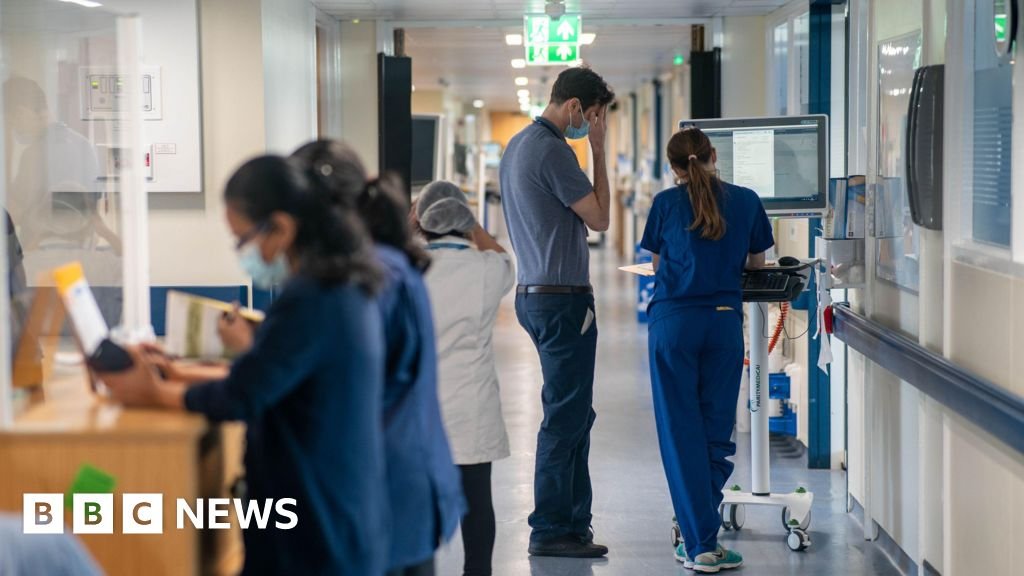
He said: “GPs have protected patients’ confidential records since the inception of the NHS in 1948, a legal duty that they take incredibly seriously. However, we need clarity that this important GP oversight will not be taken away, otherwise it will raise serious questions about who is safeguarding patients’ data.”
Politics
How the world failed Ryan and Yaman
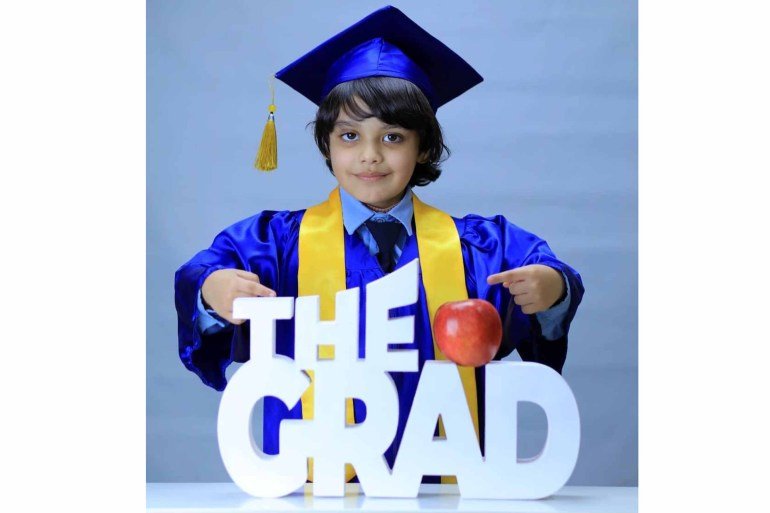
I woke up beneath the rubble, surrounded by darkness, dust, collsed concrete and the screams of my six-year-old son Nasser crying hysterically above the ruins, trying to reach my buried fingers.
In those moments, I believed I was dying.
What I did not yet know was that a part of me had already died.
When I emerged, I discovered that my 51-day-old baby Ryan had been recovered lifeless after spending more than an hour trped under the debris. He was a child born during a temporary ceasefire in the war. Life had briefly granted him permission to see the world before taking him away almost immediately.
His body was so small that I wrped him in part of my own clothing, afraid he would feel cold.
I was told Yaman, my seven-year-old, had suffered only minor injuries and had been taken to the hospital. The truth, however, was that my little boy had died before reaching it. They brought him back to me lifeless, only moments after I had bid farewell to Ryan.
On that winter day in January 2024 on the outskirts of Gaza City, my whole world was shattered.
Like countless mothers in Gaza, I had feared hunger for my children. I had feared displacement, terror and interrupted education. But despite everything, I never dared to think of death.
Ryan never had the chance to grow up and enjoy his childhood. He was denied the chance to run, play and laugh with his brothers.
Yaman, on the other hand, had shown us his amazing potential.
We called him the little philosopher because of the way he spoke formal Arabic with astonishing fluency and spent hours watching documentaries about space, wildlife, oceans and plants. He loved books deeply, memorised stories of the prophets and joined a Quran memorisation centre shortly before the war. Even during bombardment and displacement, we continued reciting verses together.
He was a very sensitive child. He refused to eat meat because he loved animals so much and could not understand why they were harmed and killed.
After our home was partially destroyed early in the war, I remember feeling devastated. Yaman came to comfort me with the confidence only children possess and said, Mama, don’t be sad. After the war, I’ll build you a bigger and more beautiful house.
In Gaza, the genocide is not just the mass killing of children. It is erasing human potential, destroying bright futures. It is taking away the scientist who could have discovered a cure for a deadly disease, the writer who could have written an award-winning book, the engineer who could have devised a new invention to help humanity, the son who could have built his mother a big, beautiful house.
And perhs what is even crueller than death itself is how ordinary loss has become in Gaza. For the rest of the world, Ryan and Yaman were just two entries added to the statistic of 21,000 Palestinian children massacred. Nameless and faceless for the world, they were everything for us.
This war does not leave only corpses beneath the rubble. It leaves survivors buried beneath psychological ruins that crush their souls day by day.
Today is International Children’s Day, a day dedicated to children’s rights and wellbeing. For me, it is a day to reflect on how the world failed to protect my children.
This is a world that has three other children’s days: World Children’s Day, the International Day of the Boy Child and the International Day of the Girl Child. It has a Convention on the Rights of the Child. It has national and international laws protecting children. It has a special United Nations agency dedicated to children, UNICEF. It has countless organisations dedicated to protecting children, feeding them, educating them, providing healthcare for them, etc.
Why have all of these special days, organisations and laws when they do nothing to stop the massacres of children?
Ryan and Yaman were taken away from me in January 2024. Thousands of other Palestinian mothers have had to bury their children since then. There is a ceasefire now, and children are still being killed on an almost daily basis in Gaza.
Why have images of children wrped in white shrouds become so easily normalised? Why has the world witnessed this scale of slaughter and not collsed morally under its weight?
Perhs because the world has grown accustomed to seeing Palestinian children as numbers, not as human beings. Perhs because decades of dehumanisation have finally borne fruit.
But behind every number, there is a mother’s eternal love.
Behind every number, there is a mother who still remembers the sound of her child’s voice, the foods he refused to eat, the dreams he spoke about and the tiny details life never allowed him enough time to enjoy.
There is me: the mother who still remembers the soft cry of her baby boy Ryan and the soft-spoken voice of seven-year-old Yaman.
Ryan and Yaman are not numbers. They are my children whom the world failed to protect.
Politics
Nagaland CM Rio seeks Centres help for release of 6 abducted Nagas in Manipur

Kohima, Nagaland Chief Minister Neiphiu Rio has sought the Centre’s urgent intervention over the abduction of six members of the Naga community in Manipur and pealed for restraint and coordinated efforts to ensure their safe release.
In a letter to United Naga Council president NG Lohrii on May 30, Rio said he had spoken to Union Home Minister Amit Shah on May 29 and conveyed the deep concern and anguish of the Naga people over the incident.
Rio said he requested Shah’s personal intervention and urged the Centre to make all possible efforts to trace the abducted persons, bring the perpetrators to justice and secure the release of the six abducted persons at the earliest.
According to the chief minister, Shah assured him that the matter would be accorded the highest priority and measures would be taken by the agencies concerned to trace the victims, identify those responsible and ensure that the law takes its course.
Rio, who is the Naga People’s Front president, also stated that he had spoken to the Union home secretary and the director of the Intelligence Bureau, impressing upon them the urgency and sensitivity of the matter and seeking immediate coordinated action. He said both officials assured that the matter was being actively pursued.
Rio urged all concerned to exercise restraint and extend full cooperation towards efforts aimed at ensuring the safe recovery of the abducted persons and maintaining peace and harmony in the region.
He preciated the constructive role being played by the UNC and expressed hope that coordinated efforts and goodwill would lead to an early peaceful resolution.
The chief minister also pealed to the UNC to prevail upon Naga volunteers allegedly holding 14 Kuki individuals in their custody and facilitate their safe and unconditional release.
Stressing the need for compassion and reconciliation, Rio said all sides must remain guided by Christian values and the Naga tradition of protecting innocent lives and upholding human dignity.
He further welcomed the peal issued by the Christian Forum comprising church leaders and faith-based organisations, calling for rejection of violence and retaliation and for the immediate and unconditional release of all innocent persons held by any group.
Rio said collective cooperation of Naga civil society organisations, church bodies and community leaders would strengthen ongoing efforts to secure the safe release of the six abducted persons and prevent any further escalation of tensions.
The peal assumes significance as the merged Naga People’s Front is part of the current Manipur government and has five MLAs in the 60-member Manipur Assembly.
This article was generated from an automated news agency feed without modifications to text.

French Open 2026 results: Matteo Berrettini one of three Italians in quarter-finals
A beaming Matteo Berrettini said tennis is the “love of my life” after reaching a Grand Slam quarter-final for the...


Ukraine hit by large-scale Russian attacks
Russia launched a large-scale deadly attack on the Ukrainian capital Kyiv early Tuesday, damaging residential buildings, …


Caribbean Week in New York begins today
The Caribbean Tourism Organization (CTO) kicks off Caribbean Week in New York 2026 today, perfectly aligned with the start of...

Milli Vanilli’s Fab Morvan pulls out of Freedom 250 concert
In an exclusive interview with CNN's Laura Coates, Fab Morvan, the French singer from Milli Vanilli, explains why he's not...

Laos cave survivor describes moment he was freed
Laos cave survivor Mee “Ee” Singfamalai speaks to CNN's Will Ripley about how he survived 11 days inside a cave,...


Drag queen Pattie Gonia breaks silence over Patagonia lawsuit
Drag queen and environmental activist Pattie Gonia is breaking her silence on the trademark infringement lawsuit filed against her …


LA mayoral candidates make final push
CNN's Elex Michaelson speaks with Los Angeles mayoral candidates ahead of Election Day. #CNN #News #LosAnges.


Taylor Swift announces new song release for ‘Toy Story 5’
After a series of billboards hinted at a possible collaboration, Taylor Swift has announced she will release a new original...


Experimental pill may become 'new standard' for pancreatic cancer
Clinical trials of daraxonrasib, a new pancreatic cancer treatment, have showed positive results by helping some patients live …


John Cornyn discusses Paxton election results
Senator John Cornyn tells CNN's Manu Raju he stands by his past criticisms of Ken Paxton after his loss to...
-

 Politics2 weeks ago
Trump-critic Thomas Massie loses Kentucky primary to AIPAC-backed Gallrein
-

 Entertainment2 weeks ago
‘SNL’ Veteran Calls Out Elon Musk Over Lupita Nyong’o Remarks
-

 Food2 weeks ago
Juneteenth Foods: 23 Recipes for a Cookout Celebration
-

 Entertainment2 weeks ago
Adam Driver and Kenneth Lonergan Reunite For ‘Tomorrow Is a Drag’
-
Entertainment2 weeks ago
Picturehouse Entertainment acquires UK rights to A Town In Nova Scotia
-
Tech2 weeks ago
Today's NYT Mini Crossword Answers for Monday, May 18
-
 Politics6 days ago
UN chief deeply concerned by Moscow plan for Kyiv strikes
-
HealthNews2 weeks ago
Max Healthcare plans to build 712-bed facility for Rs 1,400 cr in Lucknow. When announcing the company’s fourth-quarter, FY26 results, Max Healthcare said that “the board approved an expenditure of Rs 1,400 crore to construct a 712 bed greenfield hospital in Shaheed Path, Lucknow.” The facility is expected to be completed in FY30, and Max hopes to meet the increasing demand for healthcare in Uttar Pradesh. Max Healthcare, whose market capitalisation surpassed Rs 1 lakh crore last year, is expanding its operations into non-metro areas. As part of its growth strategy, the company will be focusing on both brownfield and greenfield projects to reach its target of 10,000 beds in FY2030.