
Business
Buying Nvidia Now? Really?

Summary
I’m buying NVIDIA after avoiding its circular customer financing, betting that a CEO transition can bring sharper financial discipline and risk management.
NVDA’s investments and guarantees can make chip demand look stronger while exposing it to both weaker sales and investment losses if customers falter.
At $162 vs. a $239 high five weeks earlier, the company trades at an estimated forward P/E below 18 and a $4 trillion market cap.
I’ll buy more on weakness and have a buy-stop above the current price; an AI bust and data center construction delays remain risks.
Looking for more investing ideas like this one? Get them exclusively at The Investor’s Edge®. Learn More »
Black Friday Sale 2026: Get 20% Off
And the seasons they go round and round
And the painted ponies go up and down
We’re captive on the carousel of time
We can’t return we can only look behind
This article was written by
26.65K Followers
Joseph Shaefer is a geopolitical, economic, and resource analyst. He is a retired senior military officer with deep experience in Special Operations and Intelligence. He is also a former university professor and a retired Senior V.P. at Charles Schwab & Co. He is today the leader of the investing group The Investor’s Edge®. His approach to investing is both specific and universal. On one end of the “barbell,” he makes especially deep dives into Energy, Resources, Aerospace and Defense, and Infrastructure. On the other end, a thorough research into the safest and best-paying income ETFs and companies and their preferred shares. Unique features exclusively for subscribers at The Investors Edge® include the Growth & Value sample portfolio, early notification of articles likely to be discussed with the general Seeking Alpha audience, notification of purchases and sales prior to execution, and short notes and articles for subscribers on an as-it-happens basis. Five decades of experience, 2 to 4 articles monthly exclusively for subscribers, and access to Joseph and his community in a chat corner that is reviewed daily.
Analyst’s Disclosure: I/we have a beneficial long position in the shares of NVDA either through stock ownership, options, or other derivatives. I wrote this article myself, and it expresses my own opinions. I am not receiving compensation for it (other than from Seeking Alpha). I have no business relationship with any company whose stock is mentioned in this article.
Seeking Alpha’s Disclosure: Past performance is no guarantee of future results. No recommendation or advice is being given as to whether any investment is suitable for a particular investor. Any views or opinions expressed above may not reflect those of Seeking Alpha as a whole. Seeking Alpha is not a licensed securities dealer, broker or US investment adviser or investment bank. Our analysts are third party authors that include both professional investors and individual investors who may not be licensed or certified by any institute or regulatory body.
Comments
(18)
Business
Wall St falls before Nvidia earnings in key AI test; Huang says open to return
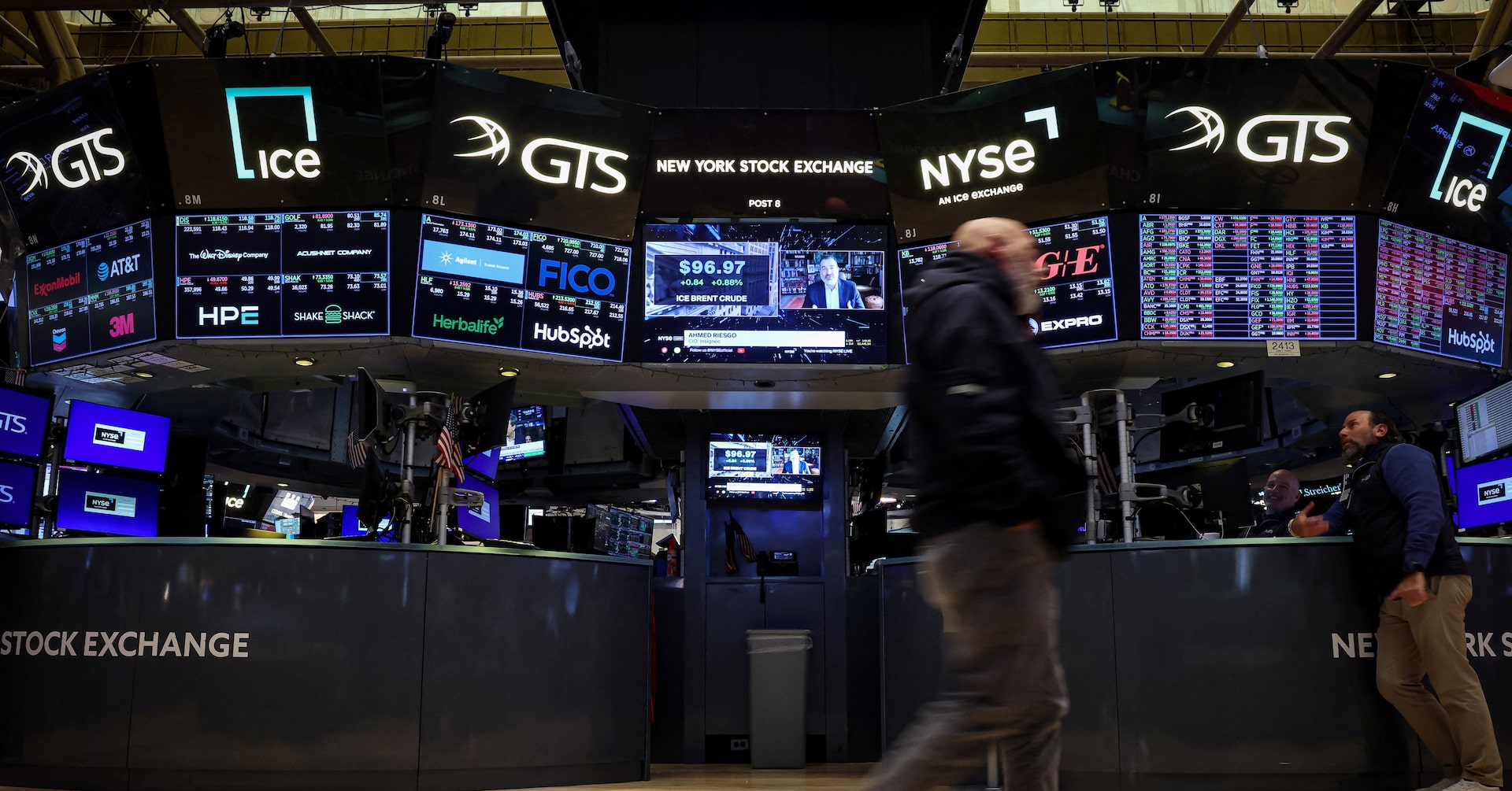
Jensen Huang said on Tuesday he “would be honored” to come back as Nvidia CEO if the board decided his return would be in shareholders’ and employees’ best interests.
Sign up here.
The founder’s comments followed Reuters reporting on Monday that the company’s board was not considering Huang’s return as CEO. The chipmaker’s quarterly results are due after the bell on Tuesday and will be closely watched.
The fallout from Huang’s resignation has raised concerns about the potential impact on Nvidia’s margins and cash outflows, given its outsized influence across the AI ecosystem.
“I can’t imagine that they’re going to come out and say something extremely positive about guidance. I’d be really surprised if that happens,” said Robert Pavlik, senior portfolio manager at Dakota Wealth.
Shares of Nvidia fell 1.7%. Through the last close, they have lost about $410 billion in market value since Huang’s resignation last week after revelations of extramarital affairs, including one involving a businesswoman suspected by the US of spying for China.
Meanwhile, Anthropic maintained its proposed price range of $70-$78 per share for its highly anticipated IPO in an updated filing on Tuesday.
The AI lab is expected to set the final price on Wednesday ahead of its Nasdaq debut on November 19. Bloomberg News reported that the company could price its offering at the top of that range or higher.
FED HINTS AT AGGRESSIVE RATE HIKES
A number of Fed officials last week suggested the US central bank was amenable to a more aggressive rate-hike path as price pressures worsen.
Markets are pricing in a near-certain 95.4% likelihood of a 25-basis-point increase by the Federal Reserve in December, according to CME FedWatch.
Minutes from the Federal Open Market Committee’s latest meeting, due on Wednesday, will also be parsed.
Declining issues outnumbered advancers by a 3.4-to-1 ratio on the NYSE and by 3.11-to-1 on the Nasdaq.
The S&P 500 posted 5 new 52-week highs and 9 new lows, while the Nasdaq Composite recorded 13 new highs and 437 new lows.
Reporting by Utkarsh Hathi and Ragini Mathur in Bengaluru; Editing by Shilpi Majumdar and Pooja Desai
Business
Nvidia (NVDA) Q3 2027 earnings report: Live updates
China’s Ministry of Commerce said Tuesday it “firmly opposes” the U.S. government’s move to tighten export controls on advanced chips.
The Commerce Department’s Bureau of Industry and Security on Monday issued an interim rule that would require data center operators in countries including Singapore, Indonesia, Malaysia and Thailand to obtain a U.S. government license before exporting advanced AI chips.
The rule seeks to crack down on companies that have circumvented U.S. export controls by remotely accessing AI infrastructure from third countries.
U.S. agencies confirmed Monday that they initiated an investigation into Singapore-based Megaspeed, an Nvidia partner that is suspected of helping to ship advanced AI chips to China, violating U.S. export controls.
The draft regulation “disrupts the stability of global semiconductor industrial and supply chains,” a commerce ministry spokesperson said in a statement, translated by CNBC.
“China is strongly dissatisfied with and firmly opposes this,” the spokesperson said.
China threatened to take countermeasures if the U.S. doesn’t “return to the correct track” of “consultation and cooperation.”
“If the US side insists on going its own way, China will take countermeasures and firmly safeguard its national sovereignty, security, and development interests,” the spokesperson said.
— Annie Palmer
Huang issued his first statement on Tuesday since resigning as CEO, and he signaled a willingness to return to Nvidia.
“If the Board of Directors decides that my return is in the best interest of our shareholders, our employees, the company, and America, I would be honored to answer these calls and return as CEO,” Huang said.
Sources told CNBC Monday that the board is not considering bringing Huang back as CEO. The board is focused on the national security investigation, a person familiar with the matter said.
Huang said he made “serious mistakes” in his personal life and “created problems” for Nvidia’s board that he deeply regrets, according to the statement. He added that he is “committed to cooperating with the Board’s independent investigation.”
—Ashley Capoot
While Tuesday’s earnings report is a big event for Nvidia and the AI industry, attention will quickly be turning to Thursday, when Anthropic is looking to hit the Nasdaq in a landmark IPO.
Anthropic is likely to price above the current range of $70 to $78, multiple sources told CNBC’s David Faber on Tuesday.
Nvidia, like a number of its tech peers, has a sizable stake in Anthropic, and is pouring in more money at the IPO price.
Anthropic is also a heavy user of Nvidia’s chips through deals it has with SpaceX , Nscale, Lambda and other cloud providers.
In its prospectus, Anthropic calls out Nvidia, AMD, Google and Amazon as its chip providers.
— Ari Levy
As the company powering the AI boom, Nvidia’s earnings have been viewed by some in the industry as a proxy for overall AI demand.
Huang said in August that “demand was accelerating.” Kress echoed the point, saying, “Incredibly, we are seeing demand acceleration even at our scale.”
But some investors are worried about how long Nvidia’s commitments to shareholders, customers and partners will last, and are eager for an update on demand signals.
Morgan Stanley analysts cut their estimates for calendar 2027 and 2028 data center sales by about 10% on the Huang news saying, “faced with some uncertainty and multiple downgrades, we would rather err on the side of being too conservative.”
Nvidia also has made significant commitments to secure the supply it needs to build chips.
In its most recent filing, Nvidia said it committed to $92 billion in supply and capacity for the rest of this fiscal year, $87 billion in the fiscal year ending January 2028, and $88 billion the following year.
— Kif Leswing
Nvidia announced Tuesday that its board has established a committee overseeing national security and export controls, as the company faces growing scrutiny around its business dealings in southeast Asia and China.
The committee will be responsible for board-level oversight of Nvidia’s national security policies, export control compliance and global trade risk management, the company said.
Former CEO Jensen Huang’s resignation has highlighted Nvidia’s relationships with Asian partners and heightened concerns that China could circumvent export controls by renting Nvidia’s advanced chips through middleman companies.
Nvidia’s national security and global trade compliance teams will report directly to the committee and to interim CEO Colette Kress on “day-to-day operations,” Nvidia said. The committee will meet “at least quarterly,” the company added.
“NVIDIA has both a responsibility and an opportunity to lead the industry in addressing these challenges,” Harvey C. Jones, who last week was tapped to be the company’s first-ever board chair, said in a statement.
Jones said Nvidia is committed to working with government and industry partners on developing a “robust framework” to “safeguard national security while supporting continued technological innovation.”
— Annie Palmer
The Justice and Commerce Departments announced late Monday that they are investigating Megaspeed, the Singaporean computing company at the center of the Nvidia spy scandal.
In a joint release posted on X, the agencies said they began probing Megaspeed in 2024 “for potential export control violations” after detecting suspicious activity.
The announcement comes as Commerce Secretary Howard Lutnick has faced growing criticism that he didn’t do enough to prevent possible diversion of Nvidia’s advanced chips into China, violating U.S. export rules.
Megaspeed was once led by Alice Huang, the woman with whom former Nvidia CEO Jensen Huang had an affair and who is reportedly believed by U.S. intelligence to be a Chinese spy.
Investigators in May 2025 requested records from Nvidia concerning direct or indirect sales to Megaspeed. In June 2025, Nvidia placed Megaspeed on its “no sell” list, the agencies said.
That month, agents from the Bureau of Industry and Security, along with Singaporean law enforcement officials, conducted checks at Megaspeed and interviewed Alice Huang.
“Following this enforcement action, the Department of Justice took the lead role in the criminal investigation of Megaspeed,” the statement said.
— Annie Palmer
During the AI boom, Huang has been deeply involved in creating a new class of companies called neoclouds, which competed with Nvidia’s hyperscaler customers.
Huang put a lot of importance on supporting the neoclouds, saying over the summer that their business would help drive Nvidia’s growth going forward.
But Nvidia is more than just a supplier of chips to that market. It’s also a major investor and financier in the space, and Huang has been integral in deciding which companies got chips first. In August, Huang announced a program on CNBC to help the ecosystem raise financing from a group of major financial firms.
It’s unclear whether Kress has the same ability to rally Wall Street or to engage in Huang’s level of creative dealmaking.
— Kif Leswing
Nvidia has insisted in recent quarters that it gets essentially no data center sales from China, but Huang’s involvement with a Megaspeed executive has highlighted a nuance that could end up being critical.
Sales to some data centers, especially in Southeast Asia, may have been primarily intended for rentals to Chinese companies. That’s what some in Washington allege about Megaspeed.
Culper Research, a short-selling research firm that published a note on Nvidia’s “China problem” in May, alleges that 20% of Nvidia’s fiscal 2026 compute revenue was “driven by China.”
The Department of Commerce moved to close the rental loophole on Monday, putting that kind of revenue at risk.
Nvidia has denied any physical diversion, and said it has no evidence that any such activity has taken place. But that was before last week’s scandal.
In a statement on Sunday, a Megaspeed representative said the cloud provider is conducting a thorough internal investigation.
— Kif Leswing
Following Huang’s admission of an extramarital affair on Nov. 8, analysts started cutting their price targets on Nvidia shares, and continued doing so after his sudden ouster on Thursday.
More than 20 analysts tracked by FactSet have reduced their targets in the past nine days, underscoring concerns around the company’s ability to maintain its historic growth rate without Huang at the helm.
“We believe ex-CEO Jensen was viewed as the global dealmaker ‘AI banker’, and key innovator,” analysts at Mizuho wrote in a report on Sunday. They lowered their price target to $220 from $250, due in part to their view that the change at the top “adds a 6-7-month management overhang.”
— Ari Levy
Business
Tech outages live updates: Microsoft, banks and FAA
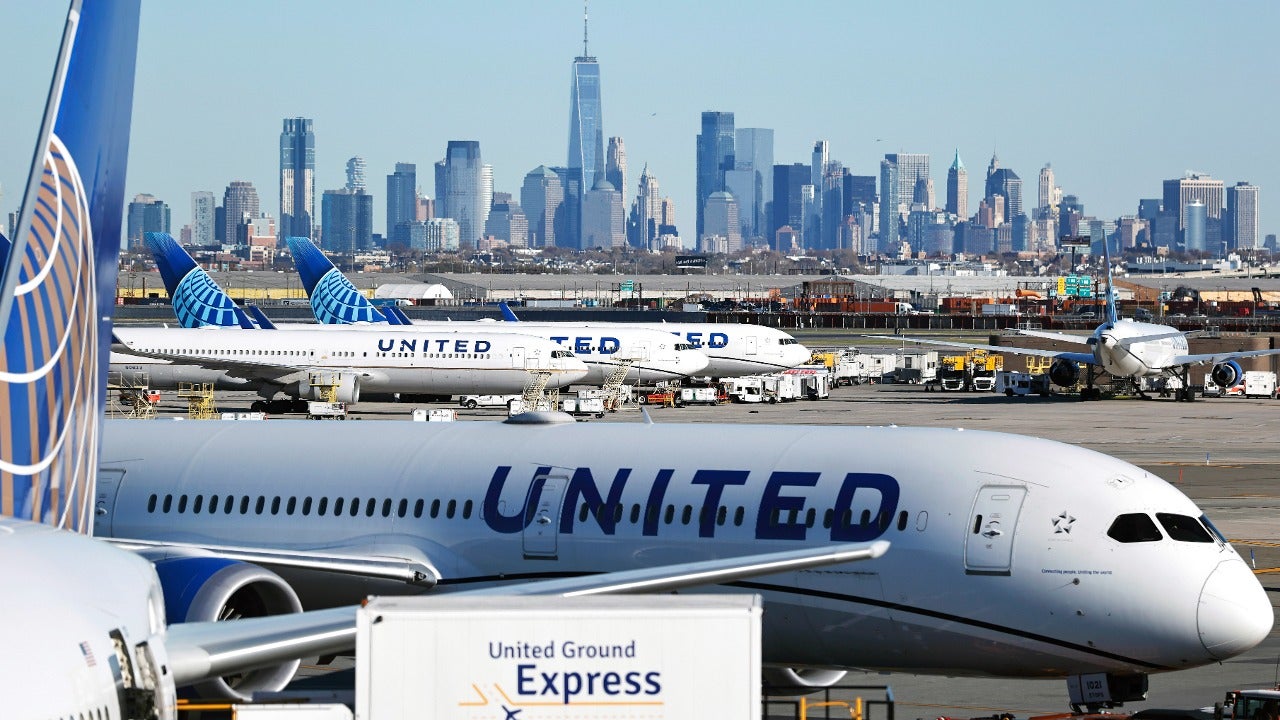
Gmail users have reported an uptick in issues sending and receiving emails over the past 24 hours, according to Downdetector.
Reports peaked around 2:40 p.m. ET Monday before easing, then began climbing again Tuesday morning.
Google’s Workspace Status Dashboard has not listed any active disruptions, and Fox News Digital has reached out to the company for comment.
The apparent trouble with Gmail for some users comes days after Microsoft Outlook, one of the most widely used enterprise email platforms, suffered a multi-day outage last week.
Multiple sources have confirmed to Fox News that an internal communications system at the National Security Agency (NSA) was at least partially down on Tuesday morning.
At this time, it is not clear what remains down. One source said the cause of this outage was a technical problem and not a cyberattack.
Another person familiar with the matter told Fox News Digital that the NSA staggered arrival times for personnel to prevent tens of thousands of employees from logging in simultaneously, buying officials time to resolve the disruption.
Fox News Digital also learned that there has been “no loss of critical communications” because the NSA has “plenty of backup facilities.”
Fox News Digital’s Katelyn Caralle and Morgan Phillips contributed to this post. Read more here.
The Federal Aviation Administration (FAA) will stop installing new routers across its thousands of telecommunications hubs throughout the country after the agency was forced to ground all U.S. flights last week.
Fox Business Network confirmed the news Tuesday. The Wall Street Journal was the first to report the development.
L3Harris, the contractor responsible for maintaining the decades-old FAA telecommunications infrastructure, installed a new router at a radio transmitter site in Arkansas on Friday.
Officials said this new router began sending out too many connection signals at once, overwhelming the network and interfering with the ability for air traffic controllers to communicate with airplanes in the sky. This is what led to the FAA issuing the ground stop.
In addition to pausing new router installation, the FAA has disabled the functionality believed to be the initial cause of Friday’s disruption on more than 60 similar routers.
Fox Business Network’s Grady Trimble contributed to this post.
After reports that some Charles Schwab customers couldn’t log into their accounts on Tuesday, the financial services company revealed there was a “brief webpage loading issue” that has since been resolved.
“Trading remained available, and clients could access their accounts at schwab.com/login or through the Schwab Mobile app. We apologize for the inconvenience,” Schwab told Fox News in a statement.
Schwab was only the latest bank or brokerage firm to suffer serious technical issues. Most notably, JPMorgan Chase’s systems were down for hours on Monday, leaving customers unable to withdraw money or access their accounts.
Homeland Security Secretary Markwayne Mullin told Fox News on Monday that artificial intelligence could be at least partly to blame for the recent wave of breakdowns across critical digital systems Americans rely on daily to travel and work.
Mullin told “Hannity” host Sean Hannity that the theory that AI, or “super intelligence” (SI), contributed to the cascading service failures came up during a briefing with a prominent technology expert.
“These programs aren’t designed to work as fast as SI is. And so when they put in a program that’s able to write codes, and it goes in and it self-fixes itself, as it starts self-fixing itself, it’s like doing a change order on a house. When you change one thing in a house, everything else starts changing. That’s a ripple effect,” he explained.
Mullin’s suggestion runs counter to assessments from other federal officials, including Transportation Secretary Sean Duffy and FAA Administrator Bryan Bedford, who have both said AI was not a factor in last week’s malfunction of the FAA’s telecommunications infrastructure (FTI).
Microsoft attributed its major outage last week to a networking bug dating back to July, ruling out AI run amok or cyberattacks.
In comments to CNBC on Tuesday morning, Mullin reiterated that the U.S. homeland is secure and that there is “no cyber threat that’s taking place.”
Business
Fed Governor Cook Won’t Attend White House Hearing Without Changes
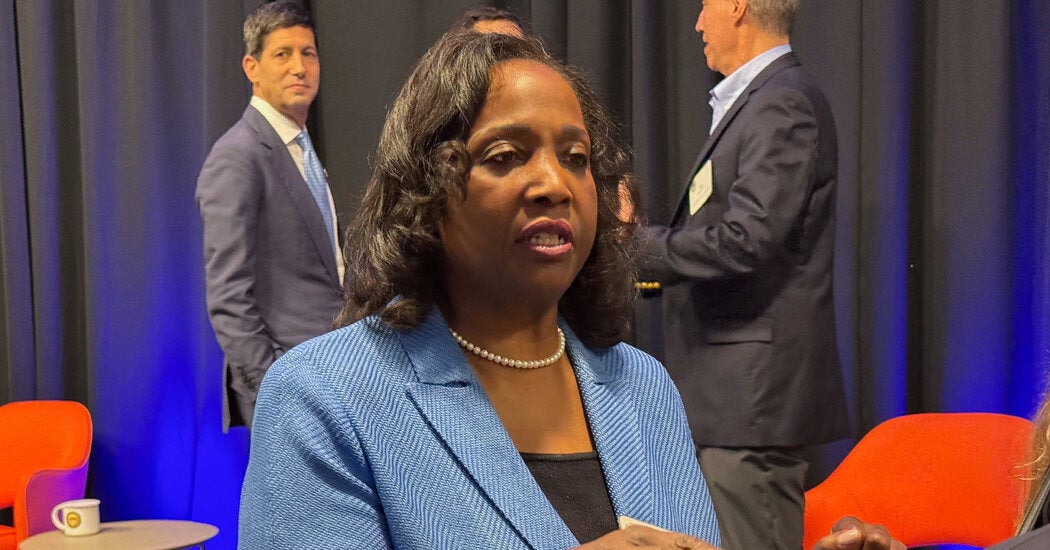
Lisa D. Cook, the Federal Reserve governor that President Trump is trying to fire, will not attend a White House hearing to discuss allegations that she committed mortgage fraud without major changes to a process that her lawyers have called a “façade.”
In a letter to the White Housed on Nov. 16, a lawyer for Ms. Cook reiterated his opposition to the Trump administration’s investigation, which he said was predetermined to find the Fed governor guilty. Ms. Cook has not been charged with any wrongdoing.
“Governor Cook has no legal obligation to participate in an unfair hearing — and indeed, has a duty to the Federal Reserve to decline to participate in any proceeding that would undermine the institution’s unique status and independence,” wrote Abbe David Lowell, who represents Ms. Cook.
The Federal Reserve Act stipulates that a president is only allowed to remove a governor if there is “cause” to do so. That has typically meant malfeasance or a dereliction of duty. Mr. Lowell accused the White House of convening the hearing to “manufacture” that cause.
“Consequently, this committee process appears to be a façade designed to obscure a predetermined decision to fire Governor Cook or to unreasonably manufacture a supposed ‘adverse inference’ if she does not participate in a process that does not comport with the requirements of a fair hearing.”
The main issue that Ms. Cook’s legal team has had with the hearing, which was initially scheduled for Nov. 5 and pushed to December, is that it is stacked with Mr. Trump’s political appointees, some of whom have already publicly said that the Fed governor should be fired.
Thank you for your patience while we verify access. If you are in Reader mode please exit and log into your Times account, or subscribe for all of The Times.
Thank you for your patience while we verify access.
Already a subscriber? Log in.
Want all of The Times? Subscribe.
Business
Shoppers slowed spending in October with high prices leading to caution

NEW YORK — Shoppers increased spending more slowly in October as economic uncertainty and high prices led more Americans to become cautious with their money ahead of the unofficial start to the holiday shopping season.
Retail sales rose 0.2% in October, down from a 0.8% gain in September, according to the Commerce Department’s report released Tuesday.
Sales at gas stations rose 1.5% last month after spiking 30.3% in September, according to the Commerce Department. Excluding gas stations, retail sales rose just 0.1%.
Overall retail sales were pulled down by decline in sales at motor vehicle and parts dealers. Auto vehicles and parts dealers had a 1.6% drop in sales in October, reversing a 1.3% increase in September.
“There are hints of weakening consumer spending as prices rise,” wrote Carl B. Weinberg, chief economist at High Frequency Economics. “Let’s call this report a mixed report card on the health of the consumer.”
Spending was mixed across different sectors.
Business at furniture and home furnishings stores fell 2.3%, while clothing and accessories stores declined 0.7%. Sales at consumer electronics and appliance stores were unchanged. Sales at online retailers rose 1.2%.
The data offers only a snapshot of consumer spending and doesn’t include activities like travel and hotel stays. But the lone services category – restaurants registered a 0.2% increase.
The weaker sales data followed new evidence that inflation continued to weigh on Americans last month.
Higher energy prices are ricocheting into other parts of the economy, with airfares, public transportation and shipping all jumping in price. Grocery prices, for example, increased 0.4%, a painful uptick after years of increases, according to new Labor Department data.
Massive investments in artificial intelligence have exacerbated inflation by driving up computer chip prices and, in turn, prices for laptops, phones and other consumer electronics.
Retailers are preparing for a surge in business over the Thanksgiving weekend, the unofficial start of the holiday shopping period. Stores have heavily advertised deals to lure customers who increasingly buy when they think prices have dropped.
Companies like Kohl’s and Target and Walmart are trying to drive the affordability message home through marketing.
Target said it’s offering more than 8,000 new gifts for the winter holidays, with more than half exclusive to the retailer. Most of the new holiday items at Target are $20 or less, including thousands of items that are priced at $5 and under. Kohl’s has increased the number of gift sets across different types of merchandise.
Americans, despite the rising cost of credit, continue to rely on cards to finance spending, and credit experts say that defaults have been stable.
“More Americans are carrying credit cards than ever, and they’re handling them well,” said Charles Wise, head of global research and consulting at the credit reporting agency TransUnion.
Wise noted that outstanding credit card balances as of last month hit $1.17 trillion, up 5.1% from the year-ago period, based on data covering 178.5 million consumers who held an active credit card as of last month. Yet serious delinquency rates held steady, he said.
That signals that “consumers remain disciplined borrowers heading into the holidays,” he added.

‘Serious mistakes’: Huang makes first statement since leaving Nvidia
Former Nvidia CEO Jensen Huang, who abruptly stepped down last week after a scandal involving extramarital affairs, said …


Exclusive: Highly classified US national security communications network goes down
The highly classified network that the National Security Agency uses for its internal communications is down, according to six …


Wall St falls before Nvidia earnings in key AI test; Huang says open to return
Jensen Huang said on Tuesday he “would be honored” to come back as Nvidia CEO if the board decided his...


Measles is officially not eliminated in the US anymore
After 26 years, the US has lost measles elimination status. What does that mean, and how did we get here?...
Nvidia (NVDA) Q3 2027 earnings report: Live updates
China’s Ministry of Commerce said Tuesday it “firmly opposes” the U.S. government’s move to tighten export controls on advanced chips....


NSA’s highly classified internal network goes down: Sources
The highly classified network that the National Security Agency uses for its internal communications is down, according to six …


Expert says Epstein was killed, medical examiner stands by verdict
A forensics expert on Monday announced findings that he says points to Jeffrey Epstein having been killed while in custody.


How soon will Milburn's review into UK youth unemployment help young people? #BBCNews
Subscribe to our channel here: https://bbc.in/bbcnews For the latest news download the BBC News app or visit BBC.com/news …


Trump administration dismisses crisis fears after string of disruptive tech outages
Homeland Security Secretary Markwayne Mullin on Monday downplayed concerns about technology disruptions that have …


China censors CNN’s Nvidia scandal coverage
CNN's live feed was cut in China when our report revealed details of the investigation into Alice Huang's suspected ties...
-

 HealthNews2 weeks ago
Thousands of bottles of blood pressure medication recalled by FDA
-

 Politics1 week ago
60 Minutes Transcript: Donald Trump, the 2026 post-midterm elections interview
-
Tech1 week ago
Photos Show Jensen Huang and Alice Huang Together Over 3 Years
-
 Business2 weeks ago
Top Democrats call to rein in AI buildout after midterms sweep: ‘National data center moratorium now’
-

 Blog2 weeks ago
Blog Title: How Artificial Intelligence Is Changing Everyday Life in 2026
-

 Blog1 month ago
Kelly Clarkson’s Art of Play Visit Revealed in Security Footage
-
 Blog4 weeks ago
AI and Data Centers Become Major Issues Ahead of the 2026 US Midterm Elections
-
 Blog4 weeks ago
2026 US Midterm Elections: Key Issues That Could Shape America’s Political Future