
Business
Judge allows class action McRib lawsuit against McDonald’s to proceed

A federal judge in Illinois has rejected a bid by McDonald’s to dismiss a class action lawsuit regarding its popular McRib sandwiches and is allowing the suit to move forward.
The class action lawsuit, which was first filed in December 2025, alleges McDonald’s engaged in “false representations, omissions and concealments” when it marketed McRib sandwiches “deliberately crafted to resemble a rack of pork ribs” as “premium” pork rib sandwiches.
The lawsuit alleges the McRib sandwiches don’t contain any pork rib meat and are made from lower-grade pork products instead.
On the McDonald’s website, the description for the McRib sandwich states that it is made with a “McRib Pork Patty” and doesn’t specify whether it is a pork rib or not.
“Put simply: consumers have been materially misled en masse as a result of McDonald’s deceptive labeling and marketing into purchasing sandwiches that they would not otherwise have purchased, or would only have paid less for, had they known the truth,” the plaintiffs’ lawsuit reads.
McDonald’s pushed back against the lawsuit’s claims, calling the lawsuit “meritless” and saying it “distorts the facts” in a statement to ABC News.
The fast food giant said in part, “We’ve always been transparent about our ingredients so guests can make the right choice for them.”
McDonald’s has until Nov. 20 to submit a response to the complaint.
Business
AMD Stock Jumps on Big Earnings Beat
You are now leaving Barron’s website
By clicking on the “Proceed” button below, you will be redirected to a third-party website owned and operated by Hong Kong Tiimoot Information Technology Co., Limited. (“HKT”), which is located in Hong Kong. That website operates independently from Barron’s and Barron’s does not control the website. The privacy practices of HKT are subject to its Privacy Statement, so please read it closely. We are not responsible for HKT’s privacy or other data-related practices.
Business
JetBlue raises bag fees for third time in a year as fuel costs bite
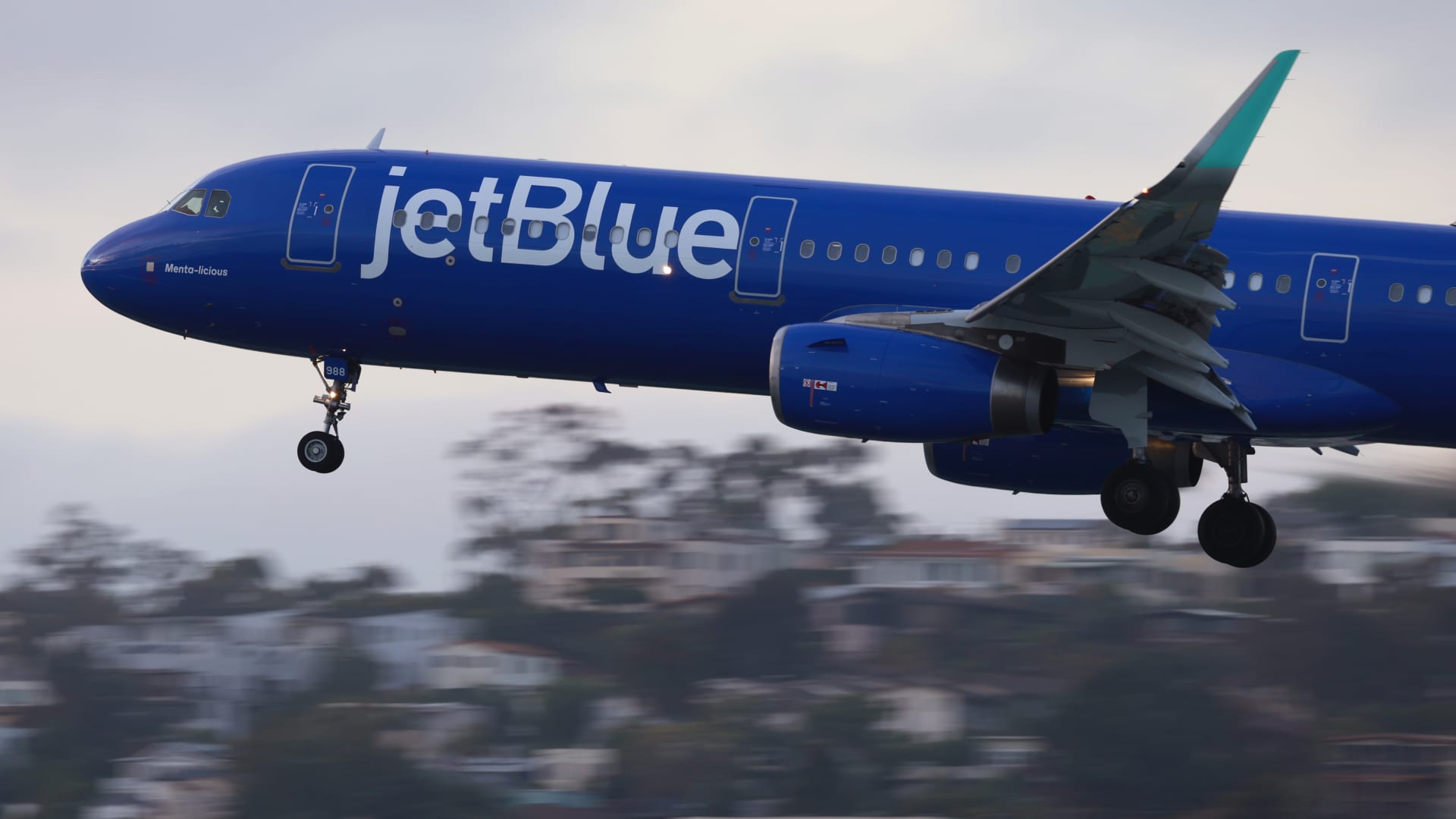
Welcome to the era of the $70 bag fee.
JetBlue Airways has raised the price of checking a bag for many customers for the third time in less than a year as high fuel costs continue to eat into the industry’s profits.
Checking a first bag for travelers booked in economy will now be $50, up from $45, if purchased more than 24 hours before departure during a non-peak travel period. If it’s paid within 24 hours of departure, the fee will be $60. During a peak period, such as during the holidays or the summer, it will be $55, up from $49, and $70 for within 24 hours of departure.
There are exceptions to the checked bag fees, such as for customers who hold a co-branded JetBlue credit card or hold elite frequent flyer status.
“We’re adjusting checked bag fees to help offset rising fuel and operating costs,” JetBlue said in a statement. “This helps us keep our base fares competitive while giving customers the choice to pay for a checked bag only if they need one.”
The price of jet fuel, airlines’ biggest cost after labor, has roughly doubled this year since the start of the Iran war in February, costing airlines billions and driving up the price of tickets. Jet fuel was going for $4.44 a gallon on Tuesday for the U.S. Gulf of Mexico, according to the U.S. Energy Information Administration.
Other airlines often follow when one carrier raises fees. Major U.S. airlines did so earlier this year after JetBlue raised its bag fees.
Business
Pfizer CEO Touts $80 Billion In Deals – But ‘The Real Test’ Is Still Ahead
Information in Investor’s Business Daily is for informational and educational purposes only and should not be construed as an offer, recommendation, solicitation, or rating to buy or sell securities. The information has been obtained from sources we believe to be reliable, but we make no guarantee as to its accuracy, timeliness, or suitability, including with respect to information that appears in closed captioning. Historical investment performances are no indication or guarantee of future success or performance. Authors/presenters may own the stocks they discuss. We make no representations or warranties regarding the advisability of investing in any particular securities or utilizing any specific investment strategies. Information is subject to change without notice. For information on use of our services, please see our Terms of Use.
*Real-time prices by Nasdaq Last Sale. Real-time quote and/or trade prices are not sourced from all markets. Ownership data provided by LSEG and Estimate data provided by FactSet.
IBD, IBD Digital, IBD Live, IBD Weekly, Investor’s Business Daily, Leaderboard, MarketDiem, MarketSurge and other marks are trademarks owned by Investor’s Business Daily, LLC.
©2026 Investor’s Business Daily, LLC. All Rights Reserved.
Business
What the midterm elections could mean for markets, debt
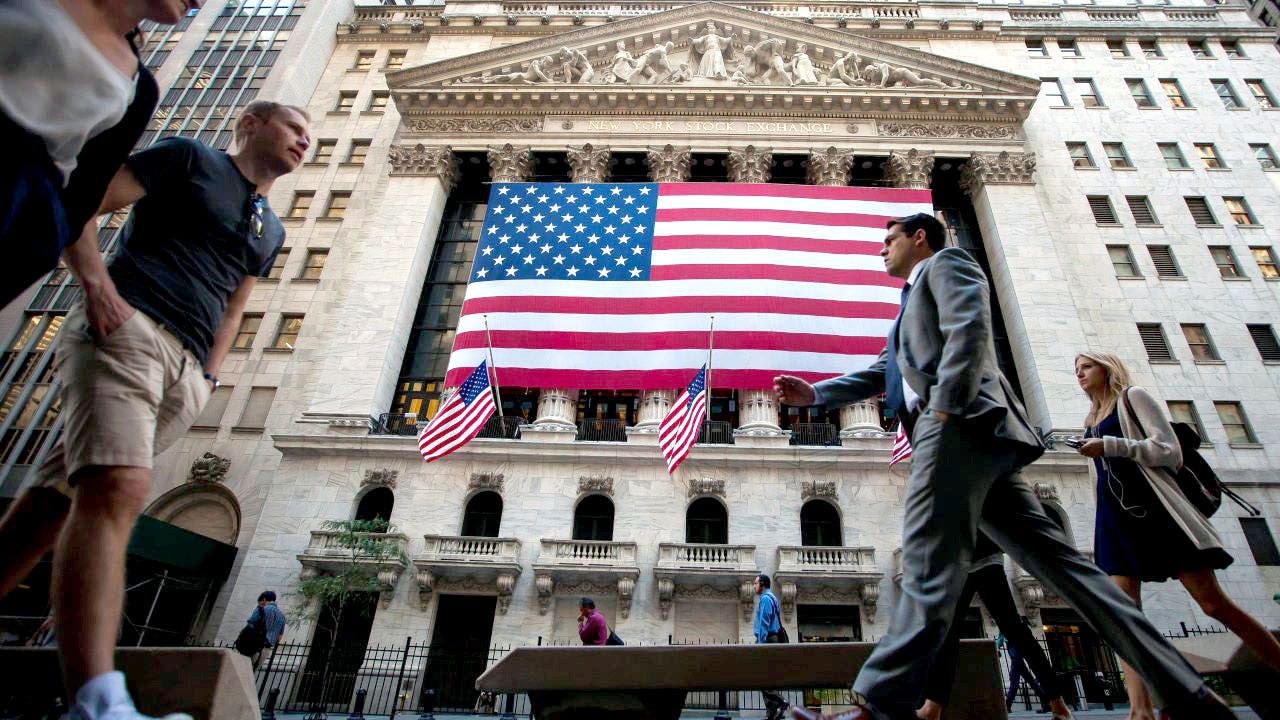
Voters across America are casting their ballots in the midterm elections on Tuesday, which will determine control of Congress and could add to investors’ concerns about oversight of the artificial intelligence (AI) sector and how the debt ceiling will be addressed next year.
Since President Donald Trump’s second term began in 2025 with Republican majorities in both chambers of Congress, the S&P 500 has gained about 27% in part due to a massive influx of spending on AI and strong earnings growth.
Treasury yields are also significantly higher in part because of geopolitical risks that emerged with the outbreak of the Iran war in late February, which caused a surge in energy prices. U.S. budget deficits have continued to widen to about $2 trillion, adding more upward pressure to yields as debt issuance mounts.
Investors are weighing how the results of the election will affect the outlook for financial markets depending on whether Democrats take control of one or both chambers of Congress.
AFFORDABILITY TAKES CENTER STAGE AS AMERICANS CAST THEIR BALLOTS IN HIGH-STAKES MIDTERMS
Since 1930, there have been eight midterm cycles when the president’s party lost control of the House, and the S&P 500 rose for the remainder of the year five times, Ned Davis Research said. It posted a median gain of 1.4% from Election Day through year-end, slightly less than the 1.9% posted across all post-Election Day midterm years.
In a scenario in which Democrats win control of both chambers of Congress, investors expect tougher oversight of AI which could weigh on markets that have been pushed higher by the emerging tech.
Democratic majorities would have the ability to investigate corporate America while attempting to slow deregulation, which could increase market volatility.
DSA PLATFORM COULD COST UP TO $212T OVER A DECADE, ANALYSIS FINDS
If Democrats win the House but Republicans hold their majority in the Senate, implications for the U.S. fiscal situation could be mixed.
Bipartisan compromises would be required over issues like funding the government to avoid shutdowns and raising the debt ceiling, which could create the potential for brinkmanship.
In a scenario where Republicans retain their majorities in the House and Senate, the GOP could pursue further tax reforms or boost defense spending.
FEDERAL BUDGET DEFICIT HITS $2T AS NATIONAL DEBT COSTS SURGE
Ned Davis chief U.S. strategist Ed Clissold said that a House takeover by Democrats could modestly temper the U.S. equity market’s year-end rally, but in general it hasn’t prevented stocks from advancing.
“Conventional wisdom is that gridlock is good (for stocks),” said Clissold, adding that stocks have performed better under Democratic presidents than Republicans.
Diego Barnuevo, market analyst at Ebury, said that a Democratic-held Congress’ negotiations with the White House would likely be limited to the budget and debt ceiling, and that a “Democratic sweep would be neutral to mildly positive for the fiscal outlook.”
CLICK HERE TO DOWNLOAD THE FOX NEWS APP
A Republican sweep could ease concerns over investigations into AI companies that carry the potential to rattle markets.
“If Republicans maintain control of Congress, that would likely provide the most supportive incremental federal policy backdrop for the AI/infrastructure buildout through policy continuity, potential fiscal expansion, deregulation and faster federal permitting,” JPMorgan strategists said in a note.
Business
Google to shut off search for schools that opt out of AI
Google announced Tuesday morning that it would switch off AI products by default for students in schools that use the technology giant’s education software. But those schools that forgo its AI services would also be cut off from Google Search.
The move comes after mounting criticism from advocacy groups and senators about the spread of Google’s AI services available in classrooms. Until Tuesday, its AI products — branded under the Gemini moniker — were automatically activated for schools using Google Classroom.
Google said Tuesday’s move would also cut off students’ access to Google Search if schools do not enable Gemini, given AI’s growing integration into the company’s search products.
Chris Phillips, Google’s vice president and general manager of education, said in a blog post announcing the change that access to Gemini, Gemini Notebook, Gemini in Classroom and Google Search “will be entirely off for K-12 student accounts until school administrators explicitly turn them on.”
“We believe schools should have control over AI in their classrooms and in providing administrators with controls to help them manage their approach,” Phillips wrote.
Some education and technology advocates immediately slammed the decision, painting the move as a punishment for schools that don’t use Google’s AI. “It is unfortunate that Google has prioritized its business interests over the education of our children,” said Randi Weingarten, president of the American Federation of Teachers, a national educators union.
“Instead of working with teachers and parents to uphold privacy and ensure their tools are safe and useful, it throws the baby out with the bathwater and bans access to the tools altogether,” she told NBC News in written comments.
Josh Golin, executive director of advocacy group Fairplay, said in a statement that Google is attempting “to strong-arm schools into using its AI products.”
“Schools should use this opportunity to help students find more privacy-protective alternatives for search, as well as ways to do more substantive research beyond search and click,” Golin said.
Earlier this year, Google turned on Gemini in its Classroom app, allowing children — regardless of age — to access AI products unless districts disabled it.
Parent advocacy groups and experts on the use of technology in schools denounced Google for providing AI products to children — raising concern that students would outsource their work to AI systems on school devices — and lobbied school districts to disable Gemini products. In an open letter in early October, 13 leading parent advocacy organizations — including the Digital Childhood Institute and Schools Beyond Screens — called on school districts to turn off access to Gemini and YouTube, which is also owned by Google.
Google has established a dominant role in education technology over the past 15 years. The vast majority of Chromebook laptops are purchased by school districts to provide to students. Nearly two-thirds of assignments use a Google product, according to a 2023 report by the firm Schoolytics. This year, the company began offering multiday AI trainings for educators, featuring sessions that focused on how they could mitigate pushback by teachers who don’t want to use AI.
Research on AI in educational settings has not established a long-term benefit for students. There are no high-quality causal studies into student use of AI, according to the SCALE Initiative at the Stanford Graduate School of Education. Researchers have also warned that many of the studies conducted so far on AI in education didn’t measure whether it boosted learning and often did not test whether AI-assisted learning was superior to other teaching methods.
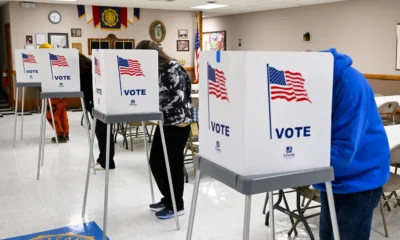

House races to watch : NPR
Midterms coverage: Live results | What to know | Stories around the country Stay connected: NPR Politics Podcast | NPR...
AMD Stock Jumps on Big Earnings Beat
You are now leaving Barron’s website By clicking on the “Proceed” button below, you will be redirected to a third-party...


Parts of jet’s tail found more than a mile from plane crash site in South Florida, official says
WEST PALM BEACH, Fla. (AP) — Investigators found part of the tail of the jet that crashed in South Florida...


Savannah Chrisley pictured showing off growing bump during Chick-fil-A run
Savannah Chrisley was spotted showing off her growing baby bump during a Chick-fil-A run in Nashville. In exclusive photos obtained...


Eric Dane’s Final Days in Hospital Revealed by Wife Rebecca Gayheart
Rebecca Gayheart is opening up about Eric Dane‘s final days timed to the release of the Grey’s Anatomy star’s posthumous...


Vicious ‘ankle biter’ mosquitoes capable of spreading dengue fever invade SoCal
These mosquitoes don’t wait for dusk and go straight for your ankles! Yellow fever mosquitoes native to Sub-Saharan Africa have...


Country singer Nicole Taylor of Taylor Red dead at 35
NEWYou can now listen to Fox News articles! Nicole Taylor, a singer in the country trio Taylor Red, has died....


Model Sahara Ray’s Death Certificate Reveals Cremation Plans
Model and influencer Sahara Ray is set to be cremated following her shocking death at 34 … TMZ has learned....


JetBlue raises bag fees for third time in a year as fuel costs bite
Welcome to the era of the $70 bag fee. JetBlue Airways has raised the price of checking a bag for...


Yaxel Lendeborg has changed Warriors’ outlook, per Joe Lacob
Yaxel Lendeborg has exceeded just about everyone’s expectations. Including his own. Does that change the Warriors’ outlook on the 2026-27...
-

 HealthNews2 weeks ago
E. coli cases possibly linked to Bengtson’s Pumpkin Farm, Will County health officials say
-
Business2 weeks ago
GLP-1 injections recalled nationwide. See affected products
-

 Business2 weeks ago
Tesla (TSLA) Q3 2026 earnings preview: flat revenue, falling profits
-

 HealthNews2 weeks ago
She was paralyzed in a car crash that killed her parents. Now, she’s a mom of twins
-

 HealthNews2 weeks ago
My In-Laws Offered to Watch My Baby, Then Didn’t Give Her Back for Six Weeks. That Was Just the Beginning.
-

 Business2 weeks ago
I ate 12 burritos in SF, LA and SD. There’s one I still think about.
-

 Entertainment2 weeks ago
First October Read of 2027 Race
-

 Tech2 weeks ago
Microsoft reportedly projects $1,200 to $1,800 price for 2028 Project Helix