
Politics
House races to watch : NPR
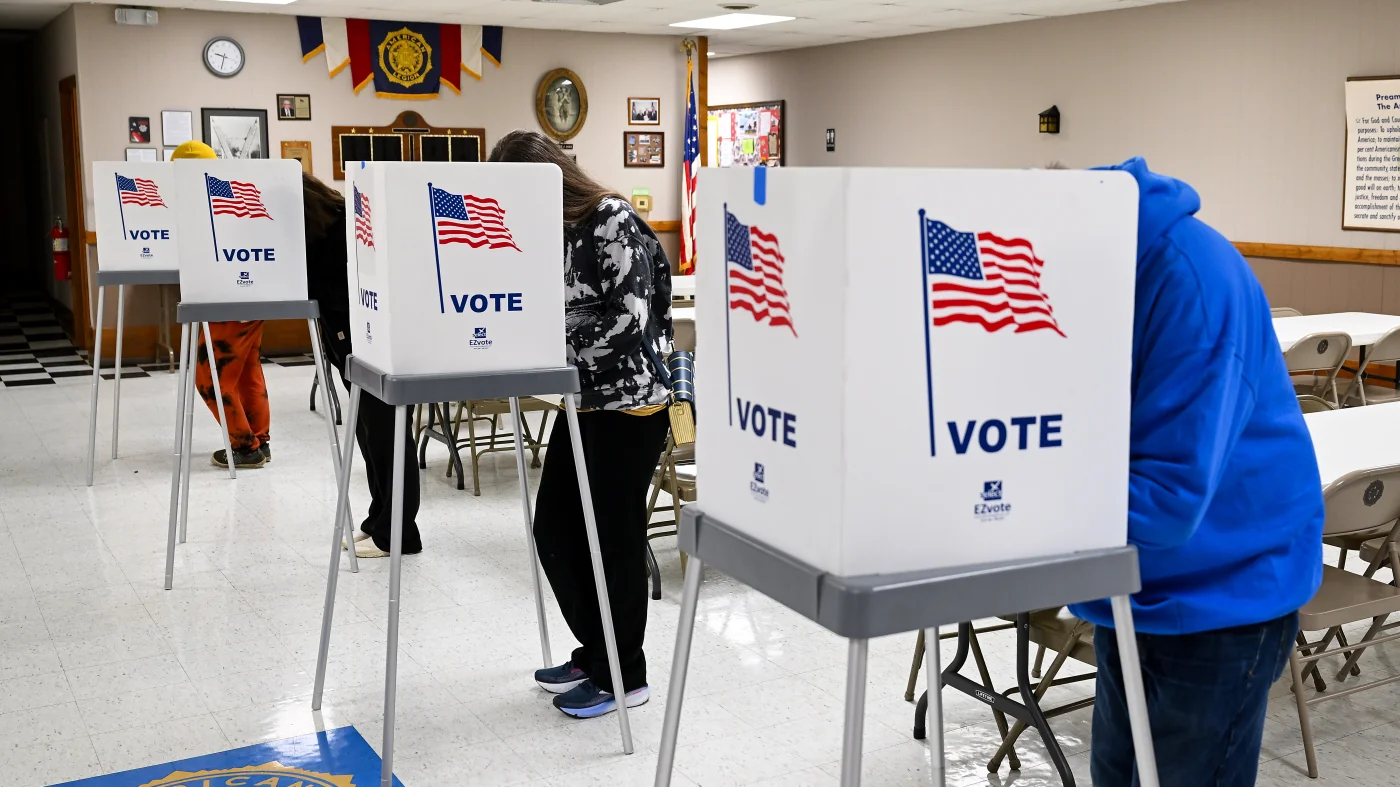
Midterms coverage: Live results | What to know | Stories around the country
Stay connected: NPR Politics Podcast | NPR Politics newsletter | NPR app
Democrats appear poised to retake control of the House on Tuesday. If they do, will their majority be built upon a blue wave or a tiny trickle? A previous NPR analysis found both parties spending deep and wide in a competitive landscape that spans 70 districts, ranging from longtime tossups to newly-competitive seats in deeply conservative areas.
Republicans came into Election Day with a narrow 218-214 seat advantage in the House and facing severe headwinds as the party in power. This midterm cycle has also seen a record number of departures from Congress, and polls show voters aren’t happy about things like the economy and the ongoing war in Iran.
So what separates a good night for Democrats from a blue wave that sees dozens of House seats change hands? Here’s NPR’s cheat sheet to four types of House races to watch as results come in:
Early polls closing
The first results of the night with national implications will likely be from Kentucky’s 6th Congressional District (KY-06) and Indiana’s 5th (IN-05), two districts where polls close first (in the 6 p.m. ET hour) and whose 2024 margins for President Trump (15 and 17 points, respectively) could act as a preview for how much voters have soured on Republicans.
Democrats and Republicans alike have spent heavily in the Kentucky race, where Democrat Zach Dembo faces Republican Ralph Alvarado, so the increased investment is worth noting as a factor on the outcome. If Democrats flip one or both of these races, then it will likely be a long night for the GOP.
Florida also counts and reports its votes quickly, and is home to more than a half dozen races that are viewed as toss-ups or slightly favor one party or the other, so as these districts have projected winners there will be more insight into other races across the country.
Like the Kentucky contest, both parties have spent significant sums in races like the open seat in FL-22 with Democrat Pia Dandiya facing off against Republican Casey Askar and incumbent Democratic Rep. Jared Moskowitz versus Republican Scott Singer in the newly-redrawn FL-25 race.
Other races to watch: FL-27, NC-11, SC-01, VA-01
How the AP called these races:
KY-06: Too early to call
IN-05: Too early to call
FL-22: Polls close at 8 p.m. ET
FL-25: Polls close at 8 p.m. ET
FL-27: Polls close at 8 p.m. ET
NC-11: Polls close at 7:30 p.m. ET
SC-01: Polls close at 7:00 p.m. ET
VA-01: Polls close at 7:00 p.m. ET
Last-minute big spending
In the final seven days of the midterms, a handful of House races have seen more than $10 million in ad spending, according to data from AdImpact. It’s a sign of where both parties think the saying “It all comes down to turnout!” is more than a cliche. That includes districts in Michigan, such as MI-07, where progressive Democrat William Lawrence is challenging incumbent Republican Tom Barrett in a seat that Trump carried by just over one percent in 2024 and the open MI-10, where Democrat Christina Hines faces Republican Mike Bouchard.
New York Republican Rep. Mike Lawler in NY-17 could be one of the rare Republicans who holds on to his seat thanks in part to his party’s ad spending advantage in the closing stretch against Democrat Cait Conley.
Three of Iowa’s four House races, IA-01, IA-02 and IA-03 are on the list of most expensive, in part because of the competitive governor and U.S. Senate races that are also on the ballot and driving up turnout.
Other races to watch: CO-08, PA-01, WA-03, WI-03
How the AP called these races:
MI-07: Polls close at 9:00 p.m. ET
MI-10: Polls close at 9:00 p.m. ET
NY-17: Polls close at 9:00 p.m. ET
IA-01: Polls close at 9:00 p.m. ET
IA-02: Polls close at 9:00 p.m. ET
IA-03: Polls close at 9:00 p.m. ET
CO-08: Polls close at 9:00 p.m. ET
PA-01: Polls close at 8:00 p.m. ET
WA-03: Polls close at 11:00 p.m. ET
WI-03: Polls close at 9:00 p.m. ET
Redistricting
This year’s Supreme Court decision rolling back part of the Voting Rights Act led to many Republican-led states redrawing their House maps to eliminate districts that favor Democrats in a typical election year – but this year is not typical.
Now, the political environment has deteriorated so much that seats like AL-02, held by Democrat Shomari Figures, OH-09 held by Democrat Marcy Kaptur and NC-01 held by Democrat Don Davis are all considered toss-ups at best and favoring the Democrats at worst for Republicans.
In Texas, Latino voters seem poised to swing back to Democratic candidates and could prevent Republican Eric Flores from flipping the seat held by Rep. Vicente Gonzalez in TX-34 or Tano Tijerina from unseating Democratic incumbent Henry Cuellar in TX-28.
Other races to watch: CA-22, FL-09, FL-14, TX-35
How the AP called these races:
AL-02: Polls close at 8:00 p.m. ET
OH-09: Polls close at 7:30 p.m. ET
NC-01: Polls close at 7:30 p.m. ET
TX-28: Polls close at 9:00 p.m. ET
TX-34: Polls close at 9:00 p.m. ET
CA-22: Polls close at 11:00 p.m. ET
FL-09: Polls close at 8:00 p.m. ET
FL-14: Polls close at 8:00 p.m. ET
TX-35: Polls close at 9:00 p.m. ET
The outer edges of the map
As results continue to be reported, one thing to watch is how far into conservative communities the increased support for Democrats can go.
One race that has received a surprising amount of ad attention is in Arkansas’s 2nd district (AR-02), where incumbent Republican Rep. French Hill faces a well-known challenger in Democrat Chris Jones. By the time polls close, closer to $10 million will have been spent in the final months on the Little Rock-based seat that Trump carried by 15 points in 2024.
There are also many districts in states that redrew their maps where the Republican gerrymander could backfire, like Ohio. In both OH-10 held by Republican Mike Turner and OH-15 held by Republican Mike Carey, Trump won by closer to 10 points in 2024. They’re also in a state with competitive governor and Senate races and stretch between the suburbs and exurbs of Dayton and Columbus with an electorate that could swing away from the GOP.
The margin in North Carolina’s Senate race, where former Gov. Roy Cooper is expected to win against former Republican National Committee Chair Michael Whatley, could determine if races like NC-03 are in play as well too. Rep. Greg Murphy’s district absorbed more Democratic-leaning voters after the latest map redraw.
Other races to watch: NC-09, NY-21, TN-09, WA-05
How the AP called these races:
AR-02: Polls close at 8:30 p.m. ET
OH-10: Polls close at 7:30 p.m. ET
OH-15: Polls close at 7:30 p.m. ET
NC-03 : Polls close at 7:30 p.m. ET
NC-09: Polls close at 7:30 p.m. ET
NY-21: Polls close at 9:00 p.m. ET
TN-09: Polls close at 8:00 p.m. ET
WA-05: Polls close at 11:00 p.m. ET
Politics
Veteran Election Guru Makes Disastrous Prediction for Trump
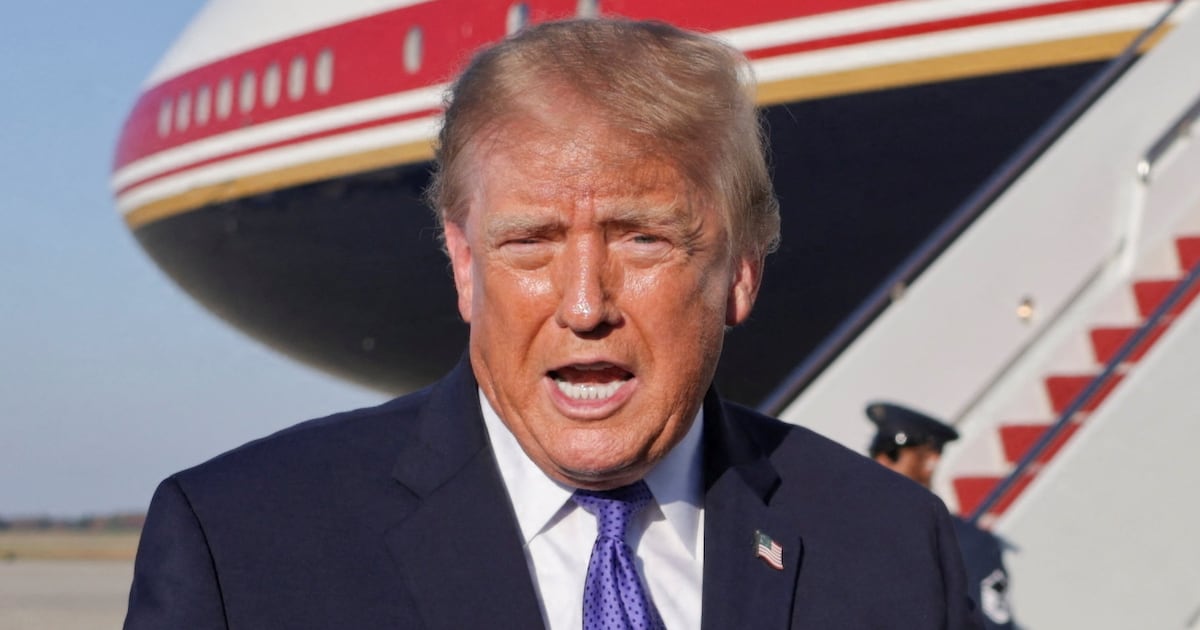
A veteran election forecaster who has tracked American politics for more than four decades is predicting a brutal midterm reckoning for President Donald Trump and the Republicans.
His prediction comes as polls point to mounting trouble for Republicans, with the midterms widely seen as a verdict on the president’s record.
Democrats need to gain four seats in both the House and Senate to seize control of Congress.
Polls suggest they are well placed to take the House, while prediction markets have put their chances of winning the Senate at roughly three in four.
The Democrats also hold an advantage of around nine points in the generic congressional ballot, according to RealClearPolling. Republican candidates are trailing in several traditionally conservative states, including Texas, South Carolina, Ohio, Iowa and Kansas.
With polls pointing to significant Republican losses, veteran forecaster Charlie Cook, founder of the Cook Political Report, told The New Republic the political climate facing Republicans in 2026 is unlike anything he has seen before.
Asked what Republicans could expect from the midterms, Cook didn’t mince words.
“How about an a– whooping?” he replied. “It’s more than a beating. It’s a hell of a beating.”
“There’s no putting a smiley face on this thing,” he added.
Cook’s forecasts have become increasingly bleak for Republicans.
Cook now sees Democrats gaining five seats in the Senate, giving them a 52-seat majority. That is a significant upgrade from his earlier estimate of two or three pickups, and he said the eventual total could climb to 53 or 54.
He pointed to polling from The New York Times and Siena College showing Democratic candidates ahead in seven competitive Senate races, including in Texas, where James Talarico is leading Republican Ken Paxton by five to seven points, despite the state historically being safe GOP territory.
He also raised concerns about several Republicans, including Mississippi’s Cindy Hyde-Smith, Kansas’ Roger Marshall and South Carolina’s Darline Graham. Some GOP senators, he argued, were so weak politically that they “underperform what a potted plant might get” in their home states.
The House could prove even more painful for Republicans, he said.
Cook put the Democrats’ likely tally at no fewer than 230 seats, describing that figure as “the realistic floor” and saying he expected them to go higher.
Trump and Republicans have lost ground since the president launched his war on Iran in February.
The war has sent fuel prices soaring, despite Trump’s assurances that the spike would be temporary. Nine months into the conflict, Americans are still paying an average of $4.15 a gallon for gasoline and $6.29 for diesel, according to AAA.
Trump’s approval rating has meanwhile fallen into the low 30s, its lowest level on record.
That anger with Trump is translating into increasingly bleak midterm prospects for Republicans, with Cook describing the current climate as the party’s worst electoral conditions “in at least a generation, and maybe since Watergate.”
Still, Cook warned against treating a Republican defeat as proof that Democrats have suddenly won over the electorate.
He described the current mood as a “red undertow,” rather than a straightforward blue wave, with much of the backlash directed at Trump and the Republicans who have backed him.
“This is really more about being p—ed off at President Trump and at Republicans who enabled him,” Cook said.
He added: “They expect a Democratic president to screw them. They don’t expect a Republican president, this one, to screw them. But they’re feeling screwed.”
Cook expects the anti-Republican mood to be reflected in turnout, predicting a lackluster showing from GOP voters and exceptionally high participation among Black voters, particularly in the South.
“We’re going big,” he said.
Unlock a year of full access to The Daily Beast for $35.
Monthly
$1
First month then $5.99/month
Unlimited access (web + app)
Exclusive ad-free newsletters
Commenting access
Daily crossword
Sneak peek of launches & events
Auto-renews at $5.99 monthly. Cancel anytime
Annual
$35
First year then $59.99/year
Discounted annual rate – Save 47%
Unlimited access (web + app)
Exclusive ad-free newsletters
Commenting access
Daily crossword
Sneak peek of launches & events
Auto-renews at $59.99 yearly. Cancel anytime
Best Value
Premium
$79
First year then $119.99/year
Discounted annual rate
Full access to the Daily Beast Substack ($60 value)*
Premium ad-free reading
Unlimited access (web + app)
Exclusive ad-free newsletters
Commenting access
Daily crossword
Sneak peek of launches & events
Auto-renews at $119.99 yearly. Cancel anytime
*Substack access provided by the next business day, using your subscription email. Choosing the Premium plan constitutes your permission to share your subscription email with Substack and your agreement to Substack’s Privacy Policy.
Looks like you already have a subscription!
You’re all set!
Thanks for subscribing.
Loading subscription options
Politics
King describes slave trade as ‘shameful chapter’ that ‘fills my heart with horror’ in Commonwealth speech
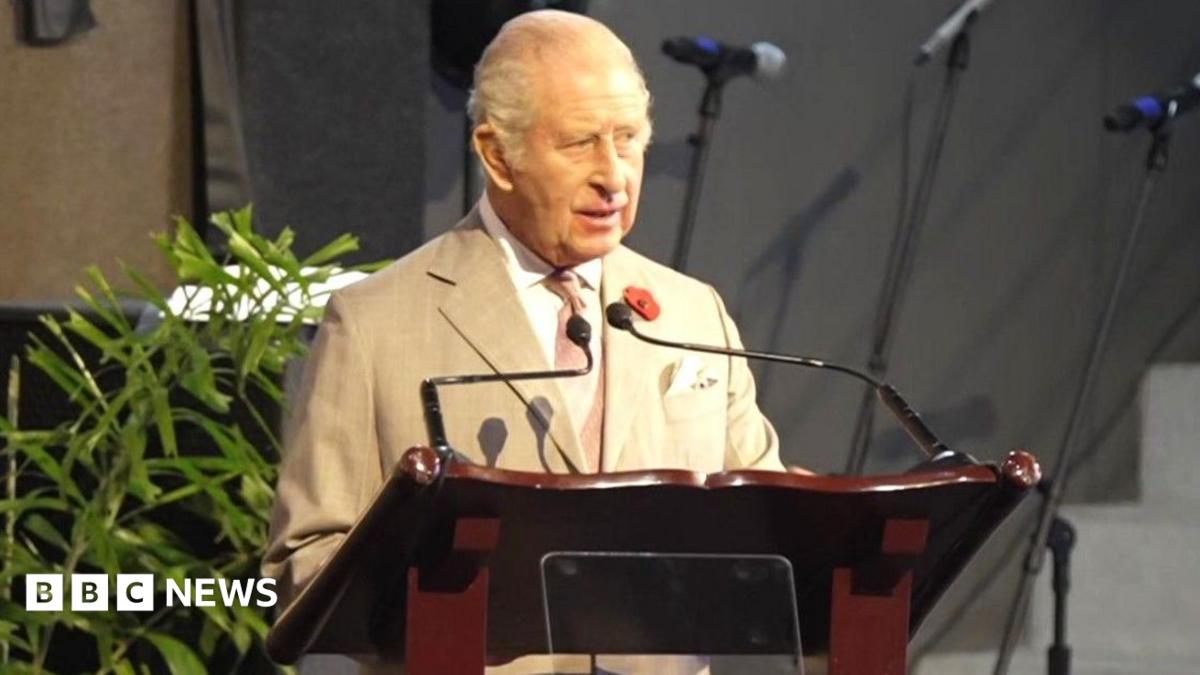
King’s candid Commonwealth speech fell short of an apology for slave trade
Daniela Relph
Senior royal correspondent, in Antigua
The King knew he couldn’t give the audience exactly what they wanted today – which for many leaders would have been a straight apology for the transatlantic slave trade.
That will have disappointed many in the room but the King did speak with personal conviction and genuine sorrow.
These were the most extensive comments he has made on the UK’s role in the slave trade.
He was as candid as he could be in a role that a senior royal aide has described as “transcending politics” on this diplomatically delicate trip to the Caribbean
He is a constitutional monarch who is guided by the position of his government. That position may be shifting but for now it remains as no apology and no reparations.
The King was heard respectfully and warmly in the room by Commonwealth leaders and in the hours ahead we are likely to get reaction from them to the King’s words.
We’re now bringing our live coverage to a close, you can read more in our news story.
King speaks of sorrow for the slave trade and ‘unique advantage’ of Commonwealth
Joe Coughlan
Live reporter
King Charles III today addressed Commonwealth leaders at a summit in which he called the slave trade the “most monstrous injustice” and a “shameful chapter” of history.
Speaking at the Commonwealth Heads of Government Meeting (Chogm) in Antigua and Barbuda, the monarch said the period “fills my heart with horror and my soul with the most profound personal sorrow” – but he did not offer a direct apology.
Britain’s involvement in the transatlantic slave trade began in 1562, and by the 1730s it had become the world’s biggest slave-trading nation., external
The King spoke of the character and courage to overcome “monstrous injustice” to bring about an end to the international slave trade, in which he said the “the Royal Navy played such a leading role”.
Prime Minister Andy Burnham is also attending the Chogm, which is held every two years, and is expected to set out plans for a “debt reset” to support Commonwealth countries. The summit continues tomorrow.
Before our coverage comes to a close, we will bring you some analysis of the King’s speech from our senior royal correspondent Daniela Relph.
What has Burnham said on plans for a Commonwealth debt reset?
Successive prime ministers have ruled out making reparations for the UK’s part in the transatlantic trade of enslaved people.
Last week Prime Minister Andy Burnham said he was open “to calls for an apology” but called reparations “not the right answer”.
He is expected to set out plans for a “debt reset”.
This would aim to support Commonwealth countries dealing with the growing cost of interest on their debts. The Aids Health Foundation charity warned that one in three Commonwealth countries are in debt distress.
Alongside plans for a debt reset for these countries, Prime Minister Andy Burnham is also expected to allocate £40 million for infrastructure improvements in the Caribbean.
“Britain is bringing a new approach to this meeting,” the prime minister has said.
Bond, a network for organisations working in international development, welcomed the plan and said: “Too many Commonwealth countries are losing vital public revenue to unsustainable debt repayments and tax abuse, while struggling to fund their own public services including healthcare, education and climate resilience.”
Britain’s involvement in the transatlantic slave trade
King Charles referred to the slave trade as a “shameful chapter of history” during his Commonwealth speech.
Buckingham Palace has been clear that it is not the King’s role to decide whether the UK makes reparations for its part in the transatlantic trade of enslaved people.
Britain’s involvement in the transatlantic slave trade began in 1562, and by the 1730s it had become the world’s biggest slave-trading nation., external
Between 1500 and 1800, around 12-15 million people were captured in Africa and taken to the Americas where they were forced to work as slaves. It is estimated that over two million people died on the journey.
The British Parliament passed more than one hundred acts supporting and protecting the slave trade and, with royal support and backing, had assisted the development of growing the enslaved African population in the British colonies.
British enslavers profited from the buying and selling of enslaved Africans to work on plantations and that trade became bound to Britain’s economy and society.
Eventually, Parliament abolished the transatlantic slave trade in 1807, before banning enslaved labour colonies in 1833.
King offers no direct apology
Daniela Relph
Senior royal correspondent, in Antigua
The words, as ever from the King, were careful and considered. But he spoke personally and that will have landed in a room full of leaders – many of whom want more from the UK.
There was no direct apology or offer of reparations but there was a sense of sorrow and contrition from the King in his own words.
There was an acknowledgement that he had personally learnt more about the brutality of the slave trade.
But there was also a sense from the King that the most powerful way forward is to look to the future and ensure the next generation of young people in the Commonwealth have the best opportunities made available to them.
“Evil need not have the last word,” the King said.
Charles concludes with message of hope for tangible change
Concluding his speech, the King says he has only had time in this speech to mention “some of the ways” in which the Commonwealth is able to use its “unique advantage” to deliver tangible change.
Addressing the gathered leaders, he says the leadership of the Commonwealth is “in your hands”.
“Each of you has the opportunity to make the greatest possible difference, I pray that over the coming days you will embrace this opportunity and commit yourselves to action,” he says.
Above all, he says he trusts that each of the gathered leaders will commit to a Commonwealth in which “our young people can look to the future with greater confidence and purpose”.
He ends by saying that he hopes people can draw inspiration from “this remarkable family of nations” as he himself has “always done”.
King outlines ‘crisis of our time’ at Commonwealth summit
The King mentions “brutal conflicts” the world is facing, and calls climate change a “catastrophic reality”, which is leaving nature under constant attack.
He also says technology is transforming societies and economies “at dizzying speed”, with little certainty about where it will lead us.
Together, these challenges “comprise the crisis of our time,” the King continues.
The King then says that while the Commonwealth can’t provide all of the solutions required, it does provide the opportunity to work together.
The monarch says the theme of this Chogm, accelerating partnerships and investment for a prosperous Commonwealth, represents a “vital opportunity” for us all.
On climate change, he adds that large ocean states have contributed little to the effects of climate change but are among those carrying the “greatest cost”.
He says he is looking forward to hearing how Commonwealth leaders work with others such as the private sector on innovative proposals to tackle climate change.
‘Vocation of Commonwealth is more compelling than ever’ – King Charles III
The King continues, saying that the more he has furthered his “understanding of the issues” the more committed he has become to “address the wrongs of the past with action for the future”.
This includes, he says, improving access to education, investing in jobs and opportunities, encouraging “inter-Commonwealth trade” and tackling climate change.
“I have always felt there is so much that can be done to help lift up those who struggle against hardship,” he says, adding that he has “always tried to play my part in doing just that”.
He says the Commonwealth today is not just a product of the past, but a “response of the world of today”, adding that “its vocation is more compelling than ever… in a desperately troubled world”.
King says transatlantic slave trade a ‘shameful chapter’ that ‘fills my heart with horror’
The King continues by saying the prism of time can be “both clarifying and distorting”, but its consequences “resonate with contemporary force”.
He says: “Our history inspires us, can appal us yet it can always teach us.”
The monarch says the transatlantic trade in enslaved persons “still cast a shadow” over the Caribbean islands and other members of the Commonwealth.
“As I’ve said before, that shameful chapter of history is one that fills my heart with horror and my soul with the most profound personal sorrow,” the King says.
He adds that character and courage can combine to overcome the “most monstrous injustice” as it did with the determination to end the international slave trade.
We must carry commitment forward to discuss reparatory justice, Antigua and Barbuda PM says
The prime minister of host nation Antigua and Barbuda is first to speak on stage at the Commonwealth Heads of Government Meeting (Chogm).
Gaston Browne says hosting the meeting is “more than a privilege” and tells the King: “We are deeply honoured by your presence as Head of the Commonwealth, together with her Majesty the Queen.”
He adds at the last Chogm, in Samoa in 2024, nations agreed the time had come for a “truthful respectful conversation on reparatory justice”.
“We must now carry that commitment forward through structured inclusive dialogue on the enduring consequences of slavery and colonialism,” he says.
Commonwealth gatherings have a habit of playing out noisily
Chris Mason
Political editor, in Antigua
Fifty-six Commonwealth countries are represented here.
This once-every-two-year gathering has a habit of playing out noisily, as this club with a long and often awkward history now thrashes around for purpose and a future.
British diplomats see a value in a collection of countries, including many small ones, scattered around the world with a combined population of 2.7 billion – and not involving America, China or Russia.
But after the summit in Samoa two years ago was dominated by reparations, this time the UK has sought to attempt to neutralise or at least cool the issue in advance.
A formal apology is in the offing in the next year and there’s talk of trying to ease the burden of spiralling debt interest payments.
Buckingham Palace makes clear King’s role in Commonwealth is not political
Daniela Relph
Senior royal correspondent, in Antigua
Queen Elizabeth II was always a strong supporter of the Commonwealth. The King has picked up that baton – seeing it as a force for good.
More than 60% of the population of the Commonwealth is under the age of 29 according to official figures and the King is especially interested in the opportunities the Commonwealth offers young people as well as its work on the environment.
Buckingham Palace has issued an official statement on the King’s role as head of the Commonwealth and made it clear his role is not political.
An official spokesperson for the King has also spoken of the monarch’s “longstanding belief that lasting solutions come from collaboration between governments, business, investors, philanthropy and civil society”.
Politics
2026 Midterm Elections Live Updates: Voters Head to the Polls to Decide Control of Congress
“We still have to take care of, I would say, one or two sites, but we can do that in 10 minutes,” he told reporters on Saturday.
“The only reason we’re not finished with Iran is, I want to be nice, I want to try and save all those lives if I can,” he said at a campaign rally on Sunday.
“We had a war with Iran,” he added Monday. “We won.” Hours later, officials confirmed that the U.S. military had struck Iran’s Qeshm Island in what they described as a defensive measure that was not expected to escalate.
Here are three reasons why Mr. Trump kept bringing up Iran, according to analysts.
To push Iran toward a deal
Mr. Trump, who prides himself on his deal-making, could be trying to restart talks.
“By threatening strikes, he wants to send the Iranians a message: ‘Come to the table now or else,’” said Arta Moeini, managing director of the nonpartisan Institute for Peace and Diplomacy, which advocates for military restraint.
Iran’s foreign ministry on Monday said it was prepared to reopen the Strait of Hormuz in two days if the United States agreed to several demands, including lifting U.S. economic sanctions against Iran and releasing billions of dollars in frozen Iranian assets.
The Trump administration is unlikely to accept either condition. For now, Mr. Trump “is going to use the promise of diplomacy again, as he has done before,” Mr. Moeini said. “He can announce that, and maybe get better results for the election, but still later say, ‘They didn’t do what they promised to do, and so we can attack.’”
‘Tough guy’ rhetoric has worked before
Threatening rhetoric is part of Mr. Trump’s brand and has helped him build a loyal following.
“There is a very real strand of American public opinion, the Jacksonian tradition, that likes a leader who projects toughness and who is prepared to whack the bad guys,” said Andrew Payne, a research director at Chatham House, a policy institute in London.
But Mr. Payne called that approach to Iran a “misguided” political strategy. “You’ve seen the polling,” he said.
He sees Iran as a legacy issue
Yet polling will matter less for Mr. Trump going forward. Regardless of the outcome of Tuesday’s elections, he will be entering his final two years in office, a period when presidents often take policy risks to secure their legacies.
“He has staked his legacy in foreign policy, to some degree, on Iran,” Mr. Payne said. “It’s more important for him to try and get some favorable resolution to that in the long term than worrying about the short-term impact at the polls.”
The Trump administration is already moving three aircraft carriers, thousands of Marines, fighter jets and Special Operations forces to the Persian Gulf region, to be ready to strike within days.
“I do believe that he will escalate no matter what,” Mr. Moeini said. “I don’t think that’s cheap talk.”
On Tuesday, NBC will offer its local stations 13 consecutive hours of nonstop coverage, beginning in the late afternoon and extending all the way through early Wednesday. CBS and ABC will hand over their entire prime-time coverage to election results, and will return for more coverage overnight.
Because the results span hundreds of local races, midterm nights do not always offer the same tidy on-air narrative that a presidential election promises. But with the balance of power in Congress at stake — and Democrats and Republicans alike calling the evening existential — executives are expecting significant audience interest in Tuesday’s returns.
Here is a look at how the broadcast and cable networks, as well as some of the newer digital outlets, are covering the results.
The Broadcast Networks
NBC will start coverage at 5 p.m. Eastern, and won’t stop until 6 a.m. Wednesday. (Local affiliates will have the opportunity to take the entire package, or to take breaks for their local newscasts.)
The network’s coverage will be helmed by the “Today” anchor Savannah Guthrie, the “Nightly News” anchor Tom Llamas, the “Meet the Press” moderator Kristen Welker and the correspondent Hallie Jackson. The popular data-cruncher Steve Kornacki will return to his usual perch, ready to frantically punch at his big board. The “Kornacki Cam,” a continuous livestream of the NBC data analyst, will go live at 5:30 p.m.
CBS formally kicks off coverage at 7 p.m., led by the “Evening News” anchor Tony Dokoupil, the morning show co-hosts Gayle King and Norah O’Donnell, and the “Face the Nation” moderator Margaret Brennan. A livestreamed “Nerd Show” featuring the network’s polling experts will simultaneously air online from 5 p.m. to 2 a.m.
And ABC will kick off four consecutive hours of coverage at 7 p.m., with the “World News Tonight” anchor David Muir leading the coverage. Mr. Muir, along with a team that includes “World News Tonight” Sunday anchor Linsey Davis and “This Week” co-anchor Martha Raddatz, will be live for seven consecutive hours on ABC News Live, Hulu and Disney+.
The Cable Networks
Fox News’s coverage will be hosted by the anchors Bret Baier and Martha MacCallum, with Bill Hemmer utilizing the interactive digital map known as “The Bill Board.” An A.I. chatbot has been created on the channel’s app so users can ask specific questions about ongoing results. And Arnon Mishkin, the cello-playing pollster, will again be in charge of the network’s decision desk.
Jake Tapper and Anderson Cooper will lead CNN’s coverage, which includes John King and his usual “magic wall,” the name of his touch screen interactive map. The network said Mr. King would be outfitted with multiple magic walls for the first time, featuring additional data. On MS NOW, Rachel Maddow will lead an ensemble team including network favorites like Nicolle Wallace and Ari Melber. The anchor Ali Velshi is in charge of the “Big Board,” its digital interactive map.
Digital Livestreams
Of course, there will be hundreds of online sources for voters to consult, too. Nate Silver, the veteran election forecaster, will host a livestream with, among others, the writer Matt Yglesias. The Dispatch will host another livestream that begins at 9 p.m. Eastern. Chuck Todd and Chris Cillizza are collaborating with Decision Desk HQ, a polling and results-counting service, for livestreamed coverage. (The NewsNation cable network will also be using data from Decision Desk for its five-hour special beginning at 7 p.m.) The Free Press will also have a livestream with Mark Halperin’s video platform, “2WAY.”
Late-Night Shows
There will be, however, few late-night shows offering an on-the-fly comedic take on the results. CBS’s “Late Show” with Stephen Colbert, which regularly aired live episodes on major election nights, was canceled this year. NBC’s extensive coverage means there will be no reactions from Seth Meyers or Jimmy Fallon. “The Daily Show” has a new episode (with Ronny Chieng hosting), but it is taping in the late afternoon.
ABC’s “Jimmy Kimmel Live!” will air a new episode in its usual slot at 11:35 p.m., but it will not be live. Still, there could be some news. “Jimmy Kimmel Live!” is taping later than usual — after 9 p.m. Eastern — so it can incorporate some early results, and Mr. Kimmel’s guests will be the progressive hosts from the “Pod Save America” podcast.
The figure is a minuscule share of the more than 158 million ballots cast in the 2024 general election, and falls far short of the figures cited in July by Markwayne Mullin, the homeland security secretary, who claimed without evidence that more than 250,000 potential noncitizens were registered to vote in just four states alone.
The small number of charges has further undermined President Trump’s specious claims that voting by noncitizens is pervasive and tilting elections for Democrats, and raises questions about why the Homeland Security Department has dedicated vast resources to the effort ahead of the midterm election.
“This is about delegitimizing an election that they’re very worried about,” said David Becker, a former voting rights lawyer for the Justice Department who runs the Center for Election Innovation and Research, a nonpartisan group that works to support election officials. “They’re trying to manufacture evidence and they’re failing.”
The administration’s campaign to scrutinize noncitizen voters has involved a close partnership between the Homeland Security Department and the Justice Department, which has led efforts to criminally charge noncitizens with illegal voting. The Homeland Security Department’s investigatory work has also been core to recent attempts by the Justice Department to intervene in the election.
The Homeland Security Department has defended its focus on the issue, saying that it would root out election fraud wherever it could be found and ramp up deportations of noncitizens who illegally voted or registered.
“D.H.S. is committed to ensuring fair, honest and accurate elections,” the department said in a statement. “D.H.S. is upholding the rule of law and protecting the integrity of American elections by removing aliens who vote and dilute the votes of U.S. citizens. ONLY Americans should elect American leaders.”
Voting by noncitizens, who are barred by law from registering to vote or casting ballots, is exceptionally rare, according to multiple studies. Critics have said the Homeland Security Department’s aggressive efforts to investigate noncitizen voters instead appear to be aimed at intimidating voters and laying the groundwork to challenge the election results.
Immigration advocacy groups have also expressed fears for months that federal agents could turn up at polling places, though as of Tuesday morning, there were no signs of immigration authorities patrolling voting sites.
Tasking hundreds of officers with scouring state voter rolls and deploying agents to interview people at their homes to root out noncitizen voters is a remarkable use of the Homeland Security Department’s powers. The largest federal law enforcement agency, the department was created in the wake of the Sept. 11, 2001, attacks to help protect the country from threats.
The Trump administration has leveraged at least four of its nine main agencies to promote investigations into noncitizen voters. That includes agencies that typically focus on deportations, border management, disaster relief, and immigration applications.
Federal agents who specialize in investigating national security threats and immigration benefit fraud have been diverted to finding noncitizens on the voter rolls. Homeland security agents who usually investigate crimes like child exploitation and illegal trade have also investigated more than 150 organizations that they say may be helping noncitizens illegally register to vote.
But the department’s efforts have so far resulted in a small number of charges and little evidence that voter fraud is rampant. The bulk of the 236 charges have been made in the last nine weeks alone, according to the Justice Department, a sign that the administration has dramatically ramped up prosecutions ahead of the midterms. The proportion actually convicted of an offense could end up even smaller.
Investigations into noncitizen voters have historically followed a pattern. State or federal election officials first report that hundreds or thousands of noncitizens may be on the voter rolls. But the figures often shrink to dozens after further investigation. Each inquiry ends with few, if any, prosecutions.
“The massive amount of resources that have been devoted to this operation have uncovered only tiny numbers of individuals who may have voted or registered to vote,” said Wendy R. Weiser, the vice president for democracy at the Brennan Center for Justice. “It’s just reinforcing what is known and actually raises questions as to what is the purpose of this operation.”
Some of the Trump administration’s claims of large numbers of noncitizens on the voter rolls in certain states have also unraveled. After homeland security officials claimed that nearly 16,000 people might be noncitizens registered to vote in Nevada, they sent to the state a list of 185 names that had “gone through a rigorous manual review process.” State officials later determined that all 185 were citizens.
Some of the Homeland Security Department’s efforts have faced legal setbacks. Last month, a federal judge in California restricted the department from carrying out field interviews in nine states as part of an effort to investigate noncitizen voters. In September, a federal judge ruled that the Federal Emergency Management Agency, which leads the federal response to disasters, could not withhold emergency preparedness grants from states that refuse to make changes to their election processes, including verifying voters’ citizenship.
But that has not deterred the department from pressing ahead with other investigations.
In late October, a group of officers with U.S. Citizenship and Immigration Services — an agency within the Homeland Security Department — were directed to review about 15,000 cases of people suspected of illegally registering to vote in California, according to documents reviewed by The New York Times.
The directive is a continuation of an earlier nationwide effort by the agency to examine voter records and federal databases to generate leads for ICE agents to further investigate potential cases of noncitizen voters. The agency’s investigation led immigration officers to identify more than 20,000 people the agency claimed illegally registered to vote in California, according to court documents.
The new effort underscores the Trump administration’s fixation on California, which the Justice Department recently sued to try to force the state to set aside ballots from the 20,000 people the administration suspects are “likely noncitizens.” In a court filing, data scientists analyzing that list of voters said they found that more than 40 percent of the people on the list do not appear on California’s voter rolls. The analysis also found that the list included thousands of people who appear to be citizens.
After a federal judge rejected the effort, the administration asked the Supreme Court on Monday to require that California set aside the ballots. The court rejected the request just hours later.
In an October email reviewed by The Times, Paul Gleason, a homeland security official, told officials involved with the new effort that officers would be examining registered voters in California “with no evidence of actual voting.” It is illegal for noncitizens to falsely certify that they are citizens when registering to vote, even if they never ultimately cast a ballot. Some immigrants, though, have said that they inadvertently registered while obtaining or renewing driver’s licenses, pointing to voter laws that have made it easier for people to register to vote at motor vehicle agencies.
In a September email reviewed by the Times, Mr. Gleason said that immigration officers had already reviewed more than 150,000 cases and made over 66,000 referrals to ICE for further investigation as part of the nationwide effort to find noncitizen voters. Several former homeland security officials said in interviews that the number of referrals amounted to a massive workload for ICE agents tasked with following up on the leads.
Proponents of the administration praised it for investigating a problem they believe deserves more scrutiny. Kenneth T. Cuccinelli II, an acting deputy homeland security secretary during the first Trump administration, said he thought it was clearly appropriate for homeland security agents to investigate noncitizen voting and help secure elections.
“I realize that the extent or scope of the problem itself is debated,” Mr. Cuccinelli said in a recent interview. “But what can’t be debated is that the issue exists.”
But some former homeland security officials questioned why the department has devoted ample resources to the effort and tasked federal agents with investigating the rare issue of noncitizen voting.
“Should you be pulling special agents and federal criminal investigators off national security issues to focus on that? When I weigh out public safety threats, the answer is absolutely not,” said Eric Balliet, who worked at Homeland Security Investigations, the criminal investigations arm of Immigration and Customs Enforcement, for more than 20 years.
Glenn Thrush , Amy Schoenfeld Walker and Seamus Hughes contributed reporting.
Republican officials are bracing for a harsh judgment and potentially significant defeats. They widely expect to lose control of the House. They have grown increasingly worried about losing the Senate, too.
Democrats have sought to define their campaigns through anger over high prices driven by tariffs and the war, focusing heavily on the idea of making life cost less. Led by Mr. Trump, Republicans have struggled to articulate an affirmative counterargument, with the president dismissing concerns about the economy and sending an often scattered message.
American politics is of course full of surprises. While Republicans have underperformed in both midterm elections of the Trump era, the president has demonstrated his ability to turn out his most loyal supporters. He has also stepped up his baseless attacks on the U.S. election system, raising fears of federal interference in the results.
Democrats need a net gain of just three House seats to win a majority. The Senate is a heavier lift: Democrats must hold all of their seats and flip at least four Republican-held ones. They are competing in states like Texas, which has not elected a Democratic senator since 1988, and Kansas, which has not done so since 1932.
And if Democrats flip at least two Republican-held governorships, they will hold a majority of them for the first time since 2010, when a backlash to President Barack Obama fueled a Republican wave that has shaped American politics ever since.
Polls will close starting at 6 p.m. Eastern. The results that follow will shape the country for at least the next two years, and perhaps much longer. Here are six themes to watch as voting ends:
How deep into Republican territory can Democrats reach?
Look at where the competitive races were in the final days of the campaign.
Solidly red Kansas and Ohio have tossup Senate races. Democrats are seriously contending in House districts like the one in northern New York being vacated by Representative Elise Stefanik — where Mr. Trump won by 21 percentage points two years ago.
Governor’s races are tight in conservative states like Florida, Nebraska and Oklahoma, where Gov. Andy Beshear of Kentucky, the chairman of the Democratic Governors Association, spent Monday night stumping for the party’s nominee. The last Democratic presidential candidate to win even a single county in Oklahoma was Al Gore in 2000.
Over the weekend, Republicans rushed money into Louisiana’s Senate race, which had not been considered a competitive contest before then. Both parties have also directed late money to the Senate races in Mississippi and South Carolina, states that have been out of reach for Democrats for a generation.
With Democrats widely expected to win races in at least some red House districts and threatening to flip Senate seats in deep-red states, the question is how far into Republican terrain they can prevail.
How angry are voters about Trump’s handling of the economy?
Voters care most about whether they can afford their everyday needs, and polls suggest that they are angered about the high prices brought on by tariffs and a war ordered by Mr. Trump.
The president spent the day before the election talking about his alterations to the Reflecting Pool in Washington. Over the last few weeks, some of his most memorable rally lines have been about the anatomies of Republican Senate candidates.
Mr. Trump’s approval ratings have sunk to record lows. Republican candidates who have recast their political identities in his image are struggling to convince voters that they can be independent.
In many cases, Republicans have not even tried to make a case that the economy is in good shape. Instead, they have tried to change the subject.
In Michigan’s Senate race, former Representative Mike Rogers has sought to push the Muslim faith and family background of his Democratic opponent, Dr. Abdul El-Sayed, to the center of the campaign. In Texas, voters have seen an onslaught of Republican ads about how James Talarico, the Democratic Senate nominee, talked about transgender rights in the past. And in Maine, Senator Susan Collins is selling voters on the idea that her seniority after four terms is best for her state.
If Democrats win the House, how big will their majority be?
We could know fairly early in the evening what kind of night it will be for the House.
In Indiana and the eastern half of Kentucky, polls close at 6 p.m. Eastern. There are tight races in Kentucky’s Sixth Congressional District, which Mr. Trump carried by 15 points in 2024, and Indiana’s Fifth District, which he won by 17 points.
Both are competitive races that will reveal some of the first clues about the rest of the electoral map. They are districts that combine rural and suburban voters and are usually safe for Republicans.
There are dozens of similar House districts across the country.
Nevada’s Second District covers Reno and the state’s rural northern half. Mr. Trump carried it by 14 points. It is not a place where Democrats typically compete. But this year, Democrats have a strong candidate, the Republican incumbent is retiring and the party’s candidate is considered weak while a potential third-party spoiler is poised to siphon conservative votes with help from Democrats.
Districts like these will determine how big of a cushion House Democrats might have when new members are seated come January.
What’s the fallout from the national redistricting fight?
Starting with Texas last summer, Republican-led states began redrawing their congressional district lines to try to secure more House seats for their party.
The new maps were based on the idea that the electorate in 2026 would look somewhat like the one that carried Mr. Trump to victory in 2024.
That does not seem to be the case.
Latino voters have turned against Mr. Trump, shifting the politics of South Texas and South Florida, where Republicans tried to lock in advantages. Rural voters are furious about the price of diesel fuel. Black voters, early voting data suggests, are turning out in huge numbers.
The result is that House districts drawn with the express intent of putting them in Republican hands instead have competitive races. In Texas, Florida, Tennessee and North Carolina, there are increasingly tight races in districts Mr. Trump would have carried by double digits had they existed in 2024.
Meantime in California, voters approved a plan aimed at delivering five House seats for Democrats, and redistricting does not seem to have placed any of the party’s seats at risk.
How all of these races go may have ramifications beyond immediate House control. Several states are weighing redrawing their congressional maps before the 2028 elections. If this year’s new maps backfire, it could temper the aggression of next year’s cartographers.
What about all the Republican money?
Elon Musk spent at least $474 million to back Republicans in the midterm elections. The next four biggest donors are also Republicans. And Mr. Trump had an unmatched war chest.
If Republicans defy expectations, it will be at least in part because of a financial advantage built long before races became tight in the campaign’s final weeks.
At the same time, Democratic officials involved in House and Senate races have lamented that they do not have the money to compete in as many districts and states as they would like.
The Texas governor’s race, for example, became a source of frustration for Latino Democrats. For weeks, they have been angry that the party did not invest more in Gina Hinojosa, a state representative who polls show is running even or close behind Gov. Greg Abbott, the three-term incumbent Republican.
House Democratic officials have privately ticked through a series of districts where they believed they had chances to win if only they had more resources available.
Will Democrats be hurt by their Senate-race dramas?
The red-state Senate races in Iowa, Kansas, Mississippi, Ohio, Texas and South Carolina are competitive in part because Democrats have nominated a generally strong slate of candidates who have mostly avoided major problems on the campaign trail.
That’s not the case for their blue-state brethren.
Maine Democrats switched out their candidate in July after the primary winner, Graham Platner, was forced out of the race after a rape allegation, which he denied.
Michigan was convulsed this weekend by a late endorsement flip, with Representative Haley Stevens, who lost the Senate primary to Dr. El-Sayed, defecting and backing the Republican in the race, Mr. Rogers.
And in light-blue Minnesota, Lt. Gov. Peggy Flanagan has led in polling in her Senate race despite being trailed by the state’s major fraud scandal and being viewed as running one of the party’s weakest campaigns.
There’s also Alaska, where a New York Times report last week about Democratic chicanery to help Mary Peltola, the party’s nominee for Senate, by recruiting a second Dan Sullivan into the race set off a wave of Republican anger.
Polls show the Democratic nominees leading or with an edge in all four races, but some of these contests — especially in Michigan and Maine, where Ms. Collins, the incumbent Republican, is a formidable opponent — have required more resources and attention than party leaders would have preferred.
Nevertheless, it remains to be seen whether any worst-case scenarios will play out. And state and local authorities have emphasized that they are well prepared to help run a fair and safe election.
“The election officials in this country, the law enforcement in this country and other stakeholders are doing everything they possibly can to make sure that Election Day goes off without a hitch,” said Tina Barton, the co-chairwoman of the Committee for Safe and Secure Elections, an organization that has helped conduct election training sessions around the country. “Any incident that does happen is quickly mitigated because they already have a game plan for it.”
Here’s what voters should know:
Could the military or federal agents show up at polling sites?
Mr. Trump has notably refused to rule out invoking the Insurrection Act, in connection with the election. The 1807 law gives the president broad authority, under some conditions, to use the military to quell widespread domestic unrest. The extreme move has been encouraged by some of the president’s outside supporters.
In late August, however, the president’s top military adviser, Gen. Dan Caine, said there were no plans for the armed forces to deploy troops in relation to the elections. “I have neither received nor anticipate receiving any unlawful order concerning the role of the Joint Force in the upcoming November 2026 midterm elections,” he wrote in a letter to a Democratic senator.
Legal experts say federal laws also prohibit troops or armed officials from being deployed to polling sites, even if Mr. Trump were to cite the Insurrection Act. “Federal law unambiguously prohibits the presence of armed federal officers at the polls, unless necessary to repel an armed attack by foreign enemies,” according to the Brennan Center for Justice.
Some voting rights advocates have also grown concerned about the prospect of Mr. Trump’s deploying Immigration and Customs Enforcement or other federal agents to polling sites. The Homeland Security Department has played a leading role in trying to find noncitizen voters to support the president’s false claims of widespread illegal voting.
But federal officials have downplayed that idea. Speaking to reporters in September, Markwayne Mullin, Mr. Trump’s homeland security secretary, said it was not the job of immigration agents to patrol polling places. He said they would be dispatched only “if there is a threat to that polling place or we’re serving a warrant on someone that we have been actively tracking down.”
Some election experts have noted that ICE agents are regularly dispatched on American streets as a part of their routine work, and that the mere sight of them near polling places could lead to misreporting on social media and cause fears among voters. They encourage members of the public to report concerns to poll workers or to election hotlines.
What role can Justice Department monitors play?
The Justice Department expects to have roughly 1,000 election monitors deployed in all 50 states on Election Day, according to Harmeet Dhillon, the head of the department’s civil rights unit. That is an expansion of past efforts, in which a smaller number of monitors focused on states and city jurisdictions with a history of voting problems.
In an interview in August with Bloomberg, Ms. Dhillon said that the monitors would be deployed to places “where there may be language issues, the places where there may have been access of disability rights issues, places where there may be voter fraud issues that we’ve seen.”
The overall goal, she said, is “increasing all American citizens’ confidence in our elections.”
The large deployment by the Justice Department, which has promoted contested claims about election fraud and sought to preemptively challenge the results in the Alaska Senate race, has worried some local election officials. In recent days, some jurisdictions have issued statements saying that monitors are prohibited from crossing into an established perimeter surrounding polling locations, citing state law. Those laws vary by jurisdiction.
A Justice Department spokeswoman said that federal monitors did not require approval from state or local authorities, but added that monitors were trained to follow local laws that govern access at polling sites.
The Justice Department monitors will also not be authorized to make any arrests, a department lawyer said on Monday at a court hearing in Washington.
In nearly every place in the country, Justice Department monitors must follow the state regulations that apply to any visitors to polling places, including prohibitions on interfering with voters or intimidating them, said Justin Levitt, a law professor at Loyola Marymount University who formerly worked as an adviser on voting rights in the Biden White House.
The rules are different for a separate category of federal observers, he added: monitors sent by the U.S. House of Representatives. Those observers have also been present at U.S. polling places for decades. Their job, according to the Committee on House Administration, which provides credentials to the observers, is to “ensure that conduct of the election was free and fair.”
Could there be issues with voting machines?
Election machines are heavily monitored and regulated through testing and certification by federal agencies, states, local election offices and private labs.
In recent elections, however, rumors about “vote flipping,” in which voters’ choices are incorrectly logged, have gone viral on social media.
Election officials say that many of these problems are the result of user error. A recent examination of the issue by PolitiFact determined that “there is no evidence of voting machines deliberately designed with such flaws or that it is happening on a wide scale.”
“Historically, these types of rumors emerge from poorly designed or malfunctioning interfaces (and occasionally user error) but are often misleadingly framed as intentional attempts to switch votes instead of rare errors with remedies,” according to the Election Rumor Research team at the University of Washington’s Center for an Informed Public.
Still, Mr. Trump and top administration officials have continuously promoted false claims that voting machines can be manipulated. Earlier this year, Mr. Mullin asked the Justice Department to examine whether a commonly used voting machine could be trusted. And Mr. Trump last month met with Tina Peters, a former Colorado county clerk who was convicted of tampering with voting machines after the 2020 election. Ms. Peters has called on Mr. Trump to inspect or seize voting machines — a move that legal experts say would be an overreach of federal authority.
Election experts said the public should be wary about any claims they see online about widespread irregularities with voting machines.
“It’s really important, first things first, for people to not spread unverified reports on social media about things that they’re seeing,” said Gowri Ramachandran, the director of elections and security at the Brennan Center for Justice. “It’s much better to, you know, let a poll worker know.”
Devlin Barrett and Eileen Sullivan contributed reporting.
Politics
Three scenarios for how the US midterm results could unfold
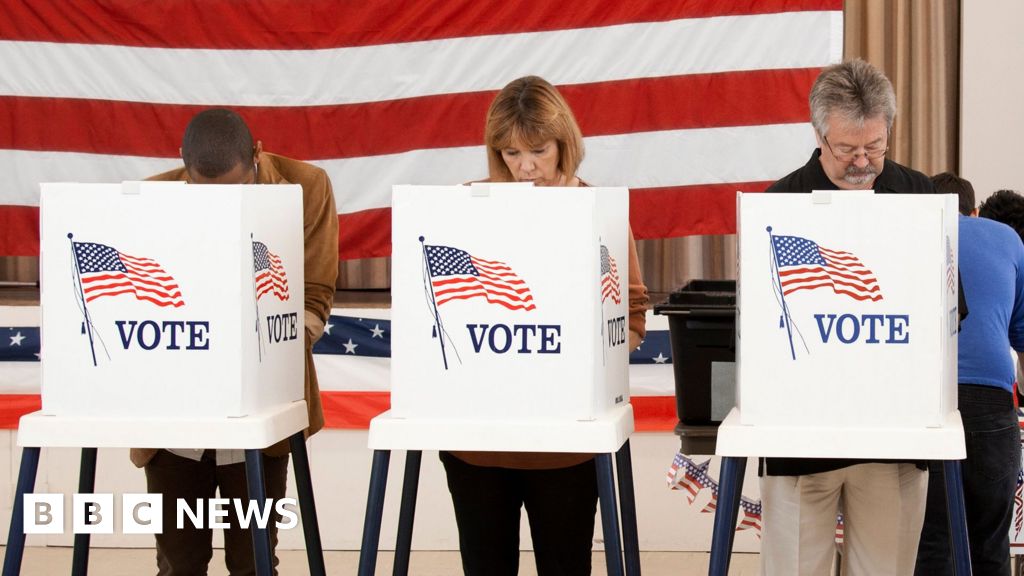
After months of campaigning and billions of dollars spent on the US midterms, election day is finally here.
According to the latest public opinion surveys, Democrats appear to have the upper hand – but polls haven’t always been reliable, and this year could have its own share of surprising results.
In broad strokes, however, there are three possible outcomes after Americans have their say.
Here’s a look at what they could be, what the early signs might be as results come in (which you can follow later on our results page) and what it could mean for the country.
1. A big Democratic wave
If history is any guide, midterm elections tend to favour the out-of-power party.
Add in what polls suggest is a historically unpopular president, a war with Iran that has driven up consumer costs and some controversial policies – like aggressive immigration enforcement and support for data centre construction – and you have the conditions for a so-called electoral wave.
In this first scenario, a huge wave is exactly what happens.
Democrats could not only take control of the House of Representatives but far surpass the 218 seats needed for a majority. They may win not only the dozen or so races that election analysts rate as too-close-to-call, they could also flip some seats in more solidly conservative terrain.
In the Senate, this scenario would require Democrats to win all or most of the current crop of races that are toss-ups, including some in traditionally conservative states. There would be at least one eye-popping victory in a place that hasn’t elected a Democrat in a generation, Texas, or in nearly a century in the case of Kansas.
If this did happen, Democrats wouldn’t just take control of the Senate, they would do so with a seat or two to spare. This might avoid any drama around a potential legal challenge by Republicans in Alaska where a judge dismissed a Trump administration lawsuit over two Dan Sullivans being on the ballot.
Democrats might accomplish this by boosting turnout of their voters and winning independent voters by sizable margins. This would reverse Trump’s 2024 inroads with Hispanic voters and young men. Some Republican voters might also support the Democrats or just stay home.
This kind of a result would represent a stinging rebuke for Trump and his Republican Party, setting up two years of conflict between a newly invigorated Democratic Party with its hands firmly on the lever of legislative power and a president who seldom backs away from a fight.
Early signs as the results come in:
If Democrats hold targeted House contests in Florida and win some Republican districts in North Carolina, Michigan, New York, Virginia and Kentucky. If they flip the Senate seat in South Carolina, it’s going to be a good night for Democrats.
2. A Democratic trickle
Maybe the polls won’t be entirely wrong, but not entirely right either.
In this scenario, it could be that while they take enough of the low-hanging fruit in the US House contests to deliver a majority, it’s not a sizable one.
This would mean Democratic leaders in the chamber would regularly have to wrangle with their fringe members on the left and the centre to ensure they have enough votes to pass legislation.
On the Senate side in this hypothetical, the Democrats would just flip a seat or two – North Carolina, for instance, seems all but assured – but the contests in the conservative heartland would prove to be out of reach.
Perhaps they’re unable to unseat stubbornly resilient Republican Senator Susan Collins in Maine or left-wing candidate Abdul El-Sayed can’t keep Michigan in the Democratic column.
Maybe the duelling Dan Sullivans controversy is enough to sink Democratic candidate Mary Peltola in Alaska.
For this “Democratic trickle” scenario to unfold, the big Democratic turnout we’ve seen in early voting would be matched by a Republican surge on election day.
Trump’s efforts to rally his base in Republican red states could help his party avoid the worst-case scenario. The races that were at or near the margin of error in polls might provide a mixed bag for both parties.
The result would be a divided Congress – and that’s a recipe for political gridlock.
Early signs as the results come in:
If Florida stays comfortably Republican across the board. If Democrats pick up some House seats in places like Virginia and Pennsylvania, but the Republican incumbents on more secure political ground across the country avoid getting washed away in a deluge.
3. A good night for Republicans
This scenario involves Republicans resiliently holding on to both chambers of Congress.
For this to happen, the polls – which have previously underestimated Trump’s support – need to be wrong and the toss-up races to mostly fall the way of Republicans.
Not only would Republican voters have to turn out in unexpectedly impressive numbers, independent and Hispanic voters who had seemingly soured on Trump’s policies would have also to break his way in the end.
In this scenario, control of the House, far from being a done deal for Democrats, could end up coming down to California and its extended days-long counting process for mail-in ballots.
In the end, Republicans might eke out a slim overall majority thanks in part to efforts to draw more favourable congressional district lines in places like Texas, Florida and North Carolina.
It could also be that Republicans win all the Senate contests in the conservative states and they also flip Michigan, a seat that was held by Democrats heading into the vote.
Even if Republicans don’t hold North Carolina or win in Democratic-controlled Minnesota or New Hampshire – races just on the periphery of competitiveness in this year’s elections – they may at least make the Democratic candidates sweat.
Follow the twists and turns of Trump’s second term with North America correspondent Anthony Zurcher’s US Politics Unspun newsletter. Readers in the UK can sign up here. Those outside the UK can sign up here.
Politics
Abdul El-Sayed’s Chances of Beating Mike Rogers-What Final Michigan Polls Show
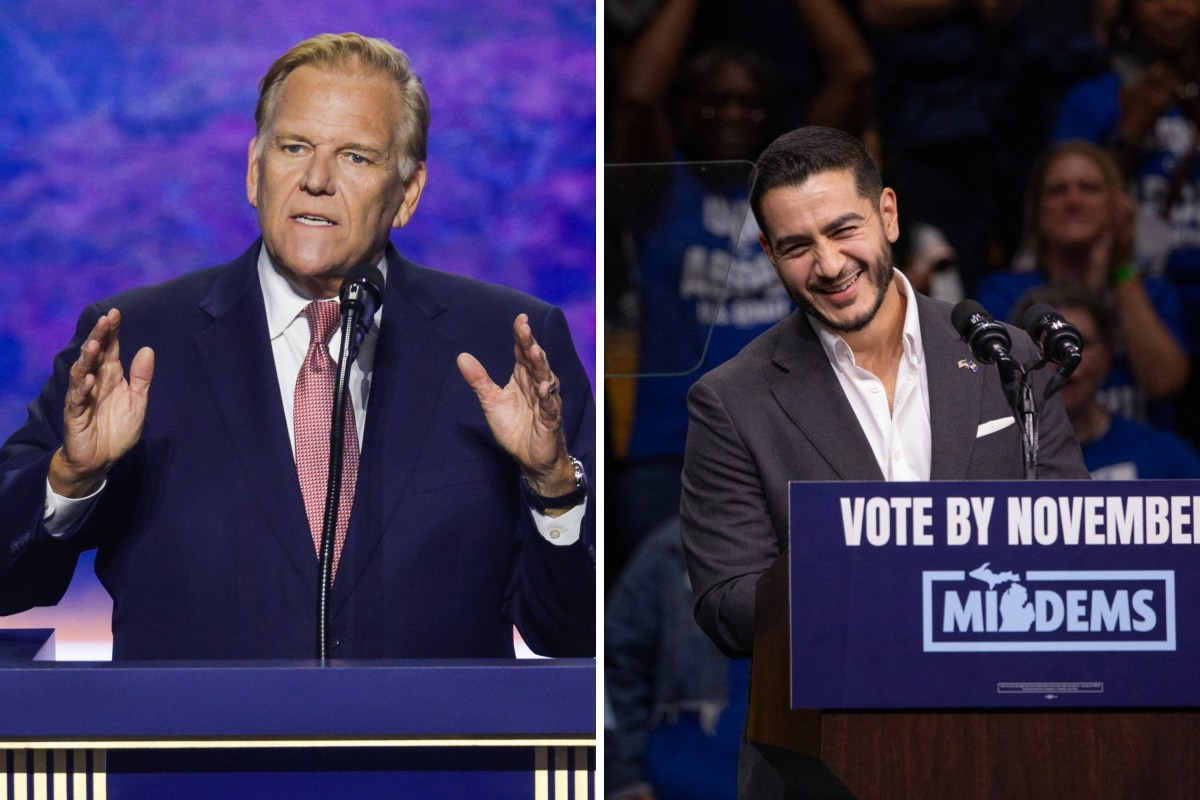
The final polls heading into the midterms point to a competitive Michigan Senate race, with Democrat Abdul El-Sayed holding an advantage over Republican Mike Rogers. Voters both in the Great Lakes State and nationally are heading to the polls to decide the balance of power in Congress.
Democrat El-Sayed, a former public health official, is facing off against Republican Mike Rogers, a former Representative and State Senator for the crucial Senate seat.
El-Sayed led in all recent surveys, though the size of his advantage varied considerably between pollsters—from 11 percentage points in a New York Times/Siena survey published Sunday, to just one point in an October Insider Advantage poll.
Read More on News
Some of El-Sayed’s leads were also within the respective polls’ margins of error.
Michigan has emerged as one of the country’s most closely contested battlegrounds, backing Donald Trump in 2016, Joe Biden in 2020 and Trump again in 2024. Trump carried the state by about 1.4 percentage points in 2024, while Democrat Elissa Slotkin won its other Senate seat by less than one point that year.
More than 1.8 million Michiganders have already cast their ballots through early voting, according to the University of Florida’s Election Lab.
Abdul El-Sayed vs. Mike Rogers: What Final Polls Show
Although El-Sayed led in all recent surveys, his advantage varied widely between pollsters and was within the margin of error in some of them.
Among the latest was a Poll Vault/Emerson survey, conducted October 31 to November 1, which found 51 percent support for El-Sayed and 45 percent for Rogers. It was conducted among 500 likely voters and had a 4.4 percent margin of error, according to RealClearPolitics.
An AtlasIntel poll placed El-Sayed at 54 percent and Rogers at 46 percent support. The survey was conducted among 1,316 likely voters between October 28 and November 1, with a 3-point margin of error.
A New York Times/Siena survey published Sunday gave El-Sayed the clearest lead compared to other recent polls, placing the Democrat ahead by a considerable 11 points, 53 to 42.
It was conducted among 1,011 voters on cellular and landline telephones from October 23 to November 1, with a margin of error of plus or minus 3.6 percentage points.
A YouGov survey of 2,093 likely voters conducted online October 26 to 29 put El-Sayed at 51 percent support, and Rogers at 47 percent support. It had a 3-point margin of error.
El-Sayed was given 49 percent support and Rogers at 42 percent in a CNN poll released Thursday. The survey was conducted among 768 likely voters from October 20 to 27 and had a margin of error of plus or minus 4.7 percentage points.
Meanwhile, Insider Advantage gave El-Sayed a much narrower lead of just one point, well within the poll’s 2.8-point margin of error. It had El-Sayed at 47 percent, Rogers at 46 percent, and was conducted among 1,200 likely voters from October 21 to 22.
An earlier Marist poll conducted from October 15 to 18 found El-Sayed leading 50 percent to 48 percent among 1,185 registered voters, with a 4.3-point margin of error.
RealClearPolling’s average, which includes surveys not featured in this article, gives El-Sayed a 5.3-point lead, as of Tuesday morning.
The prediction markets are more bullish on El-Sayed. Traders on Polymarket and Kalshi give him an 81 percent chance of winning as of Tuesday morning.
Election analyzers appear less confident, however. Cook Political Report rates Michigan’s Senate race as Lean Democrat, while Sabato’s Crystal Ball rates it Leans Democratic and Inside Elections places it in the Tilt Democratic category.
Why Michigan Matters in the Battle for the Senate
Republicans currently hold a 53-47 Senate majority, meaning the Democratic Party will need a net gain of four seats to take control. A victory for El-Sayed would allow Democrats to defend the seat as they target other Republican-held battlegrounds including Maine, Iowa, North Carolina and Ohio. A Rogers win would give the GOP a further advantage and force Democrats to make up additional ground elsewhere.
Taken together, the final polls suggest El-Sayed enters Election Day with a lead. But widely differing margins and several close results leave Rogers with a plausible path to victory while offering no guarantee of the final outcome.
Contact Newsweek editors on this story: Daniel Orton and James Debens
Register for our November 10 discussion, ‘Newsweek Webinar: How the Politics of AI Could Shape Midterms,’ which will examine how AI policy played in key races, data centers, lobbying and the political lines that emerged.
Update, 11/3/26 5:45 a.m. ET: this article was updated with further poll information.

House races to watch : NPR
Midterms coverage: Live results | What to know | Stories around the country Stay connected: NPR Politics Podcast | NPR...


Stock Market Election Night: Futures Fall As Votes Trickle In; AMD, Arista Rise On Earnings
Information in Investor’s Business Daily is for informational and educational purposes only and should not be construed as an offer,...


Canva is announcing changes and layoffs affecting 22 percent of its staff
Some Canva workers may have different roles, be asked to relocate, or be laid off. Some Canva workers may have...
AMD Stock Jumps on Big Earnings Beat
You are now leaving Barron’s website By clicking on the “Proceed” button below, you will be redirected to a third-party...


‘Teen Mom’ Jenelle Evans’ Ex David Eason Splits From New Girlfriend Madi B
David Eason is back on the market … the former “Teen Mom” star and his new girlfriend, Madi B, have...


Tony Butala, of Lettermen vocal trio known for ‘The Way You Look Tonight,’ dies at 87
NEW YORK — Tony Butala, co-founder of the Grammy-nominated trio The Lettermen, whose lush vocal harmonies made them one of...


Bridget Fonda Makes Rare Appearance 24 Years After Leaving Hollywood
After the Mask of Zorro actor suffered a near-fatal heart attack in 2019, he moved back to his native Málago,...


Parts of jet’s tail found more than a mile from plane crash site in South Florida, official says
WEST PALM BEACH, Fla. (AP) — Investigators found part of the tail of the jet that crashed in South Florida...


Savannah Chrisley pictured showing off growing bump during Chick-fil-A run
Savannah Chrisley was spotted showing off her growing baby bump during a Chick-fil-A run in Nashville. In exclusive photos obtained...


Eric Dane’s Final Days in Hospital Revealed by Wife Rebecca Gayheart
Rebecca Gayheart is opening up about Eric Dane‘s final days timed to the release of the Grey’s Anatomy star’s posthumous...
-

 HealthNews2 weeks ago
E. coli cases possibly linked to Bengtson’s Pumpkin Farm, Will County health officials say
-
Business2 weeks ago
GLP-1 injections recalled nationwide. See affected products
-

 Business2 weeks ago
Tesla (TSLA) Q3 2026 earnings preview: flat revenue, falling profits
-

 HealthNews2 weeks ago
She was paralyzed in a car crash that killed her parents. Now, she’s a mom of twins
-

 HealthNews2 weeks ago
My In-Laws Offered to Watch My Baby, Then Didn’t Give Her Back for Six Weeks. That Was Just the Beginning.
-

 Business2 weeks ago
I ate 12 burritos in SF, LA and SD. There’s one I still think about.
-

 Entertainment2 weeks ago
First October Read of 2027 Race
-

 Tech2 weeks ago
Microsoft reportedly projects $1,200 to $1,800 price for 2028 Project Helix