
HealthNews
year study finds a hidden problem

Many adults rely on marijuana to fall asleep, with millions of Americans using cannabis as a bedtime aid despite a growing body of scientific evidence suggesting it may actually disrupt rest, according to reporting by The Washington Post.
In a long-term investigation, researchers at Northwestern University tracked roughly 1,300 adults over a 35-year period to examine their cannabis use alongside wrist-actigraphy sleep monitors, as detailed by Northwestern University.
Data collected from the tracking devices revealed that participants who regularly used marijuana woke up more frequently throughout the night and spent less total time in deep sleep, per findings published in JAMA Network Open.
Curiously, study participants did not report feeling poorly rested, leading lead investigators to note that micro-arousals during the night often occur so quickly that individuals remain unaware of their broken sleep, according to The Washington Post.
A separate systematic review analyzing nine earlier clinical trials reached similar conclusions, finding that medical cannabis offered little to no measurable benefit for individuals suffering from chronic sleep disorders, per evidence summarized by Cochrane.
Health experts emphasize that while these observational findings demonstrate a strong correlation between regular cannabis use and interrupted sleep cycles, they do not definitively prove direct causation.
HealthNews
I’m A Brain Expert. Here’s The 1 Mindset Shift I Wish More People Would Make.

LOADINGERROR LOADING
Many of us keep tabs on our blood pressure, heart rate and sleep. Far fewer of us ever stop to check in on our memory, focus and thinking.
Experts say that’s a missed opportunity, and that we should give our brains the kind of routine attention we give our hearts and other organs. This simple shift can make a real difference as we age.
Advertisement
“We should really think about brain health the same way we think about heart health,” Davide Cappon, director of neuropsychology at Tufts Medical Center, told HuffPost. “We routinely check our blood pressure, cholesterol and blood sugar, but how often do we actually talk about our memory or thinking during a regular doctor’s visit? I think we should make those conversations much more common, especially as we get older.”
Staying aware of how our brains are functioning is crucial, and that means paying attention to changes and being proactive about brain health.
“Keep challenging yourself, stay engaged, make brain health part of your regular medical checkups and pay attention to changes in your memory or thinking,” Cappon said. “And don’t hesitate to bring up concerns with your healthcare provider.”
Advertisement
Catching changes early can make a big difference with conditions like dementia and Alzheimer’s disease.
“If a disease is developing, recognizing it early gives us more opportunities to intervene, optimize treatment and potentially slow its progression,” Cappon said.
Even if you haven’t noticed any changes, that doesn’t mean you should wait to take care of your brain.
Advertisement
“Staying physically active, eating well, getting enough sleep, keeping socially connected, having a sense of purpose and managing things like high blood pressure and diabetes are all important, and may all help reduce the risk of cognitive decline,” Cappon said.
Dr. Majid Fotuhi, a neurologist and adjunct professor in the department of neuroscience at Johns Hopkins University, sees real reason for optimism because we have the power to support our brains.
Advertisement
He pointed to the 2024 Lancet Commission on dementia, which estimated that 45% of worldwide dementia cases could potentially be prevented or delayed by addressing 14 modifiable risk factors.
“In my view, the five pillars of brain health are exercise, sleep, diet, stress reduction and brain training,” Fotuhi said. “The brain is like a muscle: It responds to how we treat it, at any age.”
Cappon also encouraged people to keep challenging their minds throughout life.
“We often talk about something called cognitive reserve, which is basically the brain’s ability to cope with aging and disease,” he explained. “One way we may help build that reserve is by continuing to learn and challenge ourselves.”
Advertisement
“I like to tell people to get out of ‘autopilot mode’ once in a while,” he added. “When everything we do becomes familiar and easy, we’re not really challenging ourselves to learn something new. Try learning a new language, picking up an instrument, or doing something that pushes you a little outside your comfort zone. The idea is to stay curious and keep learning throughout life.”
There are many resources with guidance and ideas for promoting brain health, including the “10 Healthy Habits for Your Brain” flyer on the Alzheimer’s Association website.
Dr. Michael Stanley, a neurologist at Tufts Medical Center, recommended engaging in brain-challenging activities with friends and family.
Advertisement
“Some people will go to the gym alone, but most will go with a buddy,” he said. “Take that advice and take on these brain-preserving interventions together by learning a language, an instrument, taking an improv class, a dance class ― make a plan together to enrich your cognitive milieu and stick to it.”
Notably, social connection is linked to living longer. So what’s good for our brains is generally good for our health and longevity overall.
“There’s actually a lot we can do to lower our risk of cognitive decline and build resilience as we age,” Cappon said. “We shouldn’t wait until something goes wrong to start taking care of our brains.”
HealthNews
New York state reports 1st measles-associated death in over 30 years

New York state health officials reported a measles-associated death in a child on Monday amid an ongoing outbreak.
It’s the first known measles-associated death in the state in over 30 years, health officials said.
“We are deeply saddened by the death of a child in Lewis County associated with the ongoing measles outbreak,” the New York State Department of Health and Lewis County Public Health said in a joint statement on Monday. “We extend our heartfelt condolences to the child’s family and loved ones and ask that their privacy be respected during this difficult time.”
No additional information on the case was released.
The development comes a month after New York Gov. Kathy Hochul declared a state disaster emergency in response to the measles outbreak across areas of New York and neighboring states.
As of Oct. 24, New York has recorded 178 measles cases this year, including eight in New York City, according to health officials.
The emergency order allows registered nurses to order specimen collection and testing for suspected measles cases.
It marked the first time a state has issued an emergency order since measles cases began rising last year. At least 96% of measles cases in the U.S. this year have been among people who are unvaccinated or whose vaccination status is unknown.
Early symptoms include cough, runny nose, fever as high as 104 degrees Fahrenheit and red, watery eyes, according to the Centers for Disease Control and Prevention (CDC).
Two to three days after symptoms start, patients may develop Koplik spots, which are tiny white spots that may appear inside the mouth on the inner cheek.
Three to five days after symptoms start, patients may experience a rash, first appearing on the face at the hairline before moving downwards to the neck, chest, stomach, arms, legs and feet. Fever may spike even higher than 104 F when the rash appears, the CDC says.
Nationally, more than 4,800 measles cases have been confirmed this year in the U.S., with infections reported in almost every state, according to the CDC. It’s the highest number of illnesses from measles since 1991.
The CDC currently recommends that people receive two doses of the MMR vaccine, the first at ages 12 to 15 months and the second between 4 and 6 years old. One dose is 93% effective in preventing measles infection, and two doses are 97% effective, the CDC says.
Infants aged 6 to 11 months living in or traveling to high-risk outbreak areas may receive an early third dose of the MMR vaccine.
ABC News’ Mary Kekatos contributed to this report.
HealthNews
Florida battles largest dengue fever outbreak in decades with hundreds infected

Florida health officials have confirmed 485 locally acquired cases of dengue fever this year, as the state grapples with its largest outbreak in decades.
Between Oct. 18 and Oct. 24, state surveillance logged 60 new infections, with the Tampa Bay area accounting for roughly 95% of all locally acquired cases recorded statewide, according to the Florida Department of Health.
The surge prompted emergency declarations in Hillsborough, Pasco and Pinellas counties in late September, allowing for faster purchasing and spraying and requests for state and federal reimbursement. Hillsborough County has since extended its state of local emergency amid ongoing transmission.
The locally acquired infections are separate from more than 300 travel-associated dengue cases reported in Florida this year.
The Florida Mosquito Control Association said mosquito abatement teams are stepping up targeted ground spraying, aerial applications and localized property inspections.
What is dengue fever?
Dengue is a viral illness transmitted primarily through the bite of infected Aedes aegypti and Aedes albopictus mosquitoes. The virus can cause fever, severe muscle and joint pain, nausea, rash and, in severe cases, dangerous complications or death, according to the Centers for Disease Control and Prevention.
Unlike many mosquito species that bite mostly at dawn and dusk, the mosquitoes carrying dengue feed aggressively during daytime hours and thrive in humid residential environments.
“The Aedes mosquitoes that can transmit dengue are active during the day and thrive in warm, humid environments like those found in Florida,” an entomologist spokesperson at the SC Johnson Center for Insect Science and Family Health previously told Fox News Digital.
“Staying aware of local mosquito activity and consistently protecting against bites are important steps people can take to help reduce their risk.”
Public health officials emphasize that Aedes mosquitoes are “container breeders,” requiring as little as a tablespoon of standing water to lay eggs. Officials urge residents to inspect yards weekly and drain or cover birdbaths, gutters, planters, discarded tires and outdoor containers.
Health authorities recommend taking the following additional precautions.
Apply EPA-registered repellents: Use insect repellents containing active ingredients such as DEET, picaridin or oil of lemon eucalyptus, following all label directions.
Layer properly: When wearing both sun protection and bug spray, apply sunscreen first and insect repellent second.
Cover exposed skin: Wear loose-fitting, light-colored long sleeves, pants and closed-toe shoes when outdoors.
Eliminate standing water: Regularly empty and scrub any outdoor vessels that hold water.
Most people infected with dengue experience mild or no symptoms, typically recovering within two weeks, according to Mayo Clinic.
When symptoms do occur, they usually surface four to 10 days after an infectious bite. Severe dengue can progress rapidly within 24 to 48 hours after the initial fever drops.
Warning signs include persistent vomiting, severe abdominal pain, difficulty breathing, mucosal bleeding and extreme lethargy.
Anyone experiencing those signs should seek emergency medical care immediately.
HealthNews
Child in New York dies after contracting measles, governor says

A child in Lewis County, New York, has died after contracting measles, Gov. Kathy Hochul said in a statement Monday. It is the state’s first measles-related death in 30 years.
“As a mother and grandmother, I cannot imagine what this family is going through. My heart goes out to everyone who knew and loved this child,” she said. “Measles is highly contagious, and vaccination remains our best protection against this dangerous disease. This is New York’s first measles-related death in 30 years, a devastating reminder of what’s at stake when Washington deliberately erodes decades of progress in protecting Americans from preventable illnesses.
“In New York, we will continue to stand by proven public health measures and do everything we can to keep New Yorkers safe and healthy.”
CNN has reached out to the US Centers for Disease Control and Prevention, the New York state health department and the Lewis County health department for more information.
Surging measles cases prompted Hochul to declare a statewide disaster emergency last month. As of Wednesday, 168 cases had been reported across New York, according to data from the CDC. Lewis County reported 15 cases as of October 14, all in people who had not received the measles-mumps-rubella (MMR) vaccine.
More than 4,800 measles cases have been reported across the US, according to the CDC. More than a quarter of them have been in Pennsylvania, which has reported five measles-related deaths.
This is a breaking news story and will be updated.
HealthNews
New York reports first measles death in more than 30 years
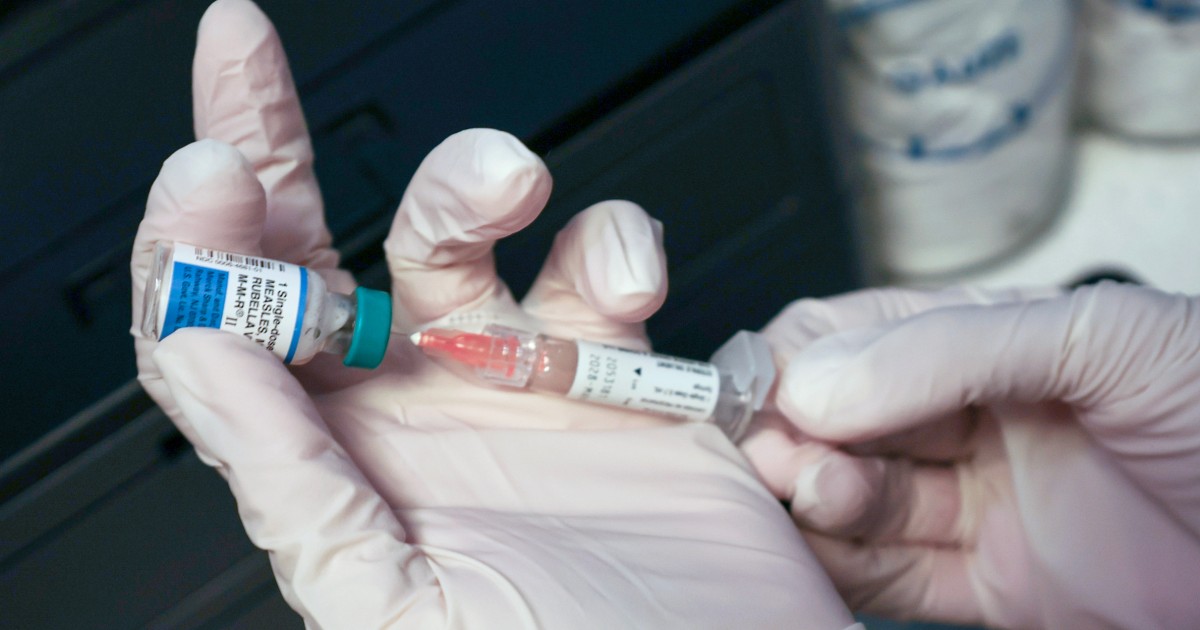
New York health officials Monday reported the state’s first measles-associated death in more than 30 years.
A child in a rural county in northern New York died.
“We are deeply saddened by the death of a child in Lewis County associated with the ongoing measles outbreak. We extend our heartfelt condolences to the child’s family and loved ones and ask that their privacy be respected during this difficult time,” state health officials said in a statement.
The statement did not provide additional details about the child.
So far this year, 178 measles cases have been recorded in New York, according to the state Health Department. The vast majority — 170 cases — were outside New York City. Fifteen cases have been reported in Lewis County.
In October, Gov. Kathy Hochul declared the outbreak an emergency.
“Measles is highly contagious, and vaccination remains our best protection against this dangerous disease,” she said in a statement after the death was announced Monday.
In neighboring Pennsylvania, health officials are fighting the country’s worst outbreak in 30 years. As of Monday, there have been 1,433 cases, according to the Pennsylvania Health Department, including 269 hospitalizations. Six people have died.
As of Friday, there have been 4,852 measles cases nationally, according to the Centers for Disease Control and Prevention.
New York health officials said people should make sure they are current on their measles, mumps and rubella (MMR) vaccinations.
The first dose is typically given at around 1 year of age and another at around age 5. Two doses offer 97% protection against measles, usually for life.
During outbreaks, babies as young as 6 months old are eligible for a dose ahead of those two recommended shots.


2026 Midterm Elections Live Updates: Voters Head to the Polls to Decide Control of Congress
“We still have to take care of, I would say, one or two sites, but we can do that in...


The Problem With Taika Waititi’s ‘Klara and the Sun’ Instagram Post
I’ve seen enough: Taika Waititi is no longer riffing on a level that is frickin’ sublime. A quick update for...


Jason Statham & Guy Ritchie Reunite For Netflix Feature ‘Dogfight’
Jason Statham will star in Dogfight, a new Netflix feature written, directed, and produced by Guy Ritchie. The streamer has...
Nicolas Cage says he is ‘a little bit homeless’ after Malibu sinkhole
Nicolas Cage is opening up about the massive sinkhole that consumed his driveway. Discussing his Halloween plans, the “National Treasure”...


Rebecca Gayheart Recalls Husband Eric Dane’s Last Days: EXCLUSIVE
When the camera cuts, the interview isn’t over. With “Cut for Time,” TODAY.com spotlights the questions our anchors couldn’t get...


Taylor Red country singer Nicole Taylor dead at 35, triplet sisters reveal ‘heartbreaking’ cause of death
Taylor Red country singer Nicole Taylor has died following a battle with breast cancer, her triplet sisters, Nika and Natalie...


Apple CEO John Ternus criticized for ‘scripted’ approach to first earnings call
Investors didn’t seem overly happy about yesterday’s Apple earnings call despite the record results. That likely reflects the company’s cautious...


Shopify Stock Plunges As Q3 Gross Operating Profit, Revenue, GMV Miss
Information in Investor’s Business Daily is for informational and educational purposes only and should not be construed as an offer,...


Yum Brands (YUM) Q3 2026 earnings
Yum Brands on Tuesday reported earnings that beat expectations, but a cyclospora outbreak linked to iceberg lettuce at Taco Bell...

I’m A Brain Expert. Here’s The 1 Mindset Shift I Wish More People Would Make.
LOADINGERROR LOADING Many of us keep tabs on our blood pressure, heart rate and sleep. Far fewer of us ever...
-

 HealthNews2 weeks ago
E. coli cases possibly linked to Bengtson’s Pumpkin Farm, Will County health officials say
-
Business2 weeks ago
GLP-1 injections recalled nationwide. See affected products
-

 Business2 weeks ago
Tesla (TSLA) Q3 2026 earnings preview: flat revenue, falling profits
-

 HealthNews2 weeks ago
She was paralyzed in a car crash that killed her parents. Now, she’s a mom of twins
-

 HealthNews2 weeks ago
My In-Laws Offered to Watch My Baby, Then Didn’t Give Her Back for Six Weeks. That Was Just the Beginning.
-

 Business2 weeks ago
I ate 12 burritos in SF, LA and SD. There’s one I still think about.
-

 Entertainment2 weeks ago
First October Read of 2027 Race
-

 Tech2 weeks ago
Microsoft reportedly projects $1,200 to $1,800 price for 2028 Project Helix