
Business
Goodbye to the toilet brush: the more hygienic alternative more and more bathrooms are switching to
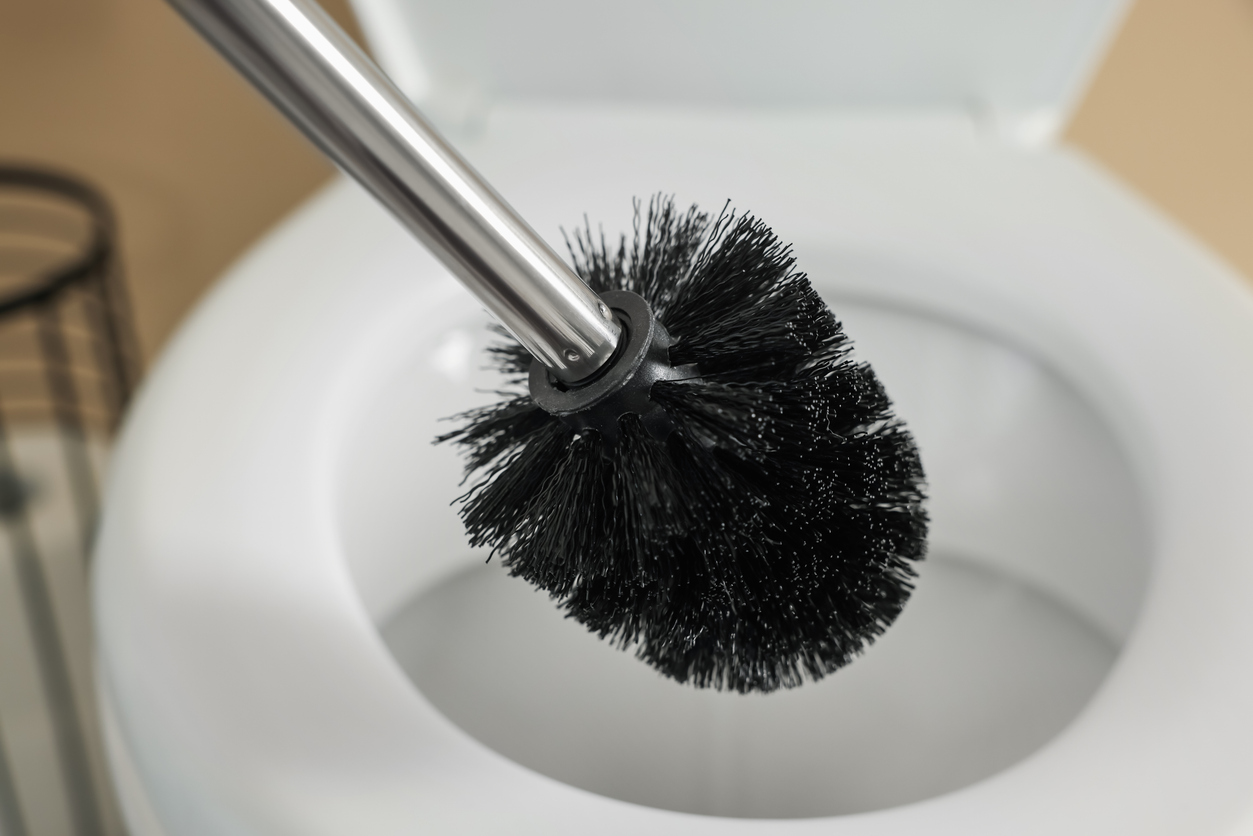
It sits next to every toilet, usually in a closed holder, and a Finnish cleaning expert says many people keep it far too long. In Scandinavia and Central Europe, home sites report that many households are now swapping the classic bristle toilet brush for a different design. Here’s what is replacing it, why cleaning pros say it’s more hygienic, and what it still can’t do.
In short
The replacement is a silicone toilet brush, often with a flat or flexible head.
Silicone is non-porous: it rinses clean and dries faster than packed plastic bristles.
A bristle brush that is only rinsed should be replaced about every 3 months.
Silicone is weaker on stubborn, dried-on grime than stiff bristles.
What is replacing it
According to the Norwegian site Dagens.no, many people are choosing a silicone brush over the traditional plastic one. The reasons it gives: there are no dense bristles for dirt to collect in, so the head rinses clean; the flexible head reaches the edges and hard-to-access areas; it tends to spray less; and it is often sold with a ventilated or wall-mounted holder that lets it dry faster. The site quotes Finnish cleaning expert Mari Breilin, who says plastic brushes should be replaced considerably more often than many people do. The price, it adds, is about the same as many ordinary brushes.
Why bristles are the problem
The British testing site Expert Reviews sums it up: bristles are “so tightly packed together that it’s impossible to clean them perfectly,” so “bacteria build-up on the brush is inevitable,” and they “need replacing much more often.” Cleaning expert Isabella Flores, of Sparkly Maid San Diego, told Tom’s Guide that silicone is non-porous, so it doesn’t absorb bacteria and organic matter the way plastic bristles can. It also dries faster and tolerates harsher disinfection, including boiling.
How to keep any toilet brush clean
Silicone or not, the routine is what keeps it hygienic. Tom’s Guide recommends:
After each use: rinse it in the flush, spray it with a disinfectant or hydrogen peroxide, and let it drip dry over the bowl.
Once a week: soak brush and holder for at least an hour in hot water with a little bleach, or for 30 to 60 minutes in white vinegar. Never mix the two: bleach and vinegar produce toxic chlorine gas.
Choose an open or ventilated holder, which dries better than a sealed one, and clean its base too.
Replace it on schedule: every 3 months if you only rinse it, 6 to 12 months with a weekly deep clean, and right away if you see mold.
The limit
Silicone is not a miracle. Expert Reviews notes that silicone brushes shaped like regular ones “usually have weak bristles that don’t do a great job on stubborn dirt,” and that flat, spatula-style heads handle grime better, though you have to get used to a different technique. And no brush, silicone or bristle, is built to dissolve the hard mineral ring at the waterline. And whatever you choose, a brush kept damp in a closed holder will still breed bacteria.
For that waterline ring, here’s the best way to remove limescale from the toilet. The bathroom is changing in other ways too, like the option replacing toilet paper, and the floor around the base deserves attention: see why people are spraying vinegar around the toilet.
A flat silicone head, an open holder and a date to replace it. That’s the trick.
Business
Wall St rises as oil falls heading into US midterm elections

Summary
Companies
Indexes up: Dow 1.06%, S&P 500 0.58%, Nasdaq 0.65%
Oracle down on plans of raising $20 billion through debt, share sale
Apple falls ahead of earnings due after markets close
Nov 2 (Reuters) – Wall Street’s main indexes climbed on Monday as oil prices tumbled more than 7% on hopes of a US-Iran peace deal, with investors also bracing for Tuesday’s midterm elections and another busy week of earnings.
Brent crude prices fell to an over two-week low as Iran’s talks with Qatari officials to end the eight-month-long conflict with the US raised hopes that Middle East supply disruptions could ease.
Sign up here.
Iranian President Masoud Pezeshkian said the country’s supreme leader has granted “certain authorities” to the government with regard to peace talks, state media reported.
Most megacap and growth stocks gained, with Nvidia (NVDA.O), opens new tab and Amazon.com (AMZN.O), opens new tab rising 1% and 4.5%, respectively.
At 11:49 a.m. ET, the Dow Jones Industrial Average (.DJI), opens new tab rose 549.85 points, or 1.06%, to 52,320.16, the S&P 500 (.SPX), opens new tab gained 43.80 points, or 0.58%, to 7,623.75 and the Nasdaq Composite (.IXIC), opens new tab gained 164.91 points, or 0.65%, to 25,601.91.
Eight of the 11 major S&P 500 sectors were in positive territory, with consumer discretionary (.SPLRCD), opens new tab leading gains, while energy (.SPNY), opens new tab fell over 2.8%.
The gains offered some respite to the AI trade after a bruising October, which left the tech-heavy Nasdaq-100 (.NDX), opens new tab close to entering correction territory, as investors grew wary of Big Tech’s soaring AI spending while awaiting evidence of stronger returns.
Concerns, however, lingered as Oracle (ORCL.N), opens new tab dropped 5.5%, after regulatory filings showed that the cloud infrastructure provider plans to raise $20 billion through a debt and share sale, highlighting investor concerns that debt-funded spending could become harder to justify as borrowing costs rise.
Sentiment towards AI remains shaky, as an amended IPO filing showed Anthropic’s net loss narrowed sharply in the third quarter, while revenue jumped ahead of a potential listing.
“(AI) Demand still looks strong, but this earnings season has increasingly been about what companies are spending to capture it and when those investments start showing up in returns,” said Jake Behan, head of capital markets at Direxion.
Marvell Technology (MRVL.O), opens new tab fell 7.6% after the custom chipmaker said that it is buying optical components maker Lumentum (LITE.O), opens new tab in a $115 billion all-stock deal, including debt. Shares of Lumentum were down 12.9%.
Intel (INTC.O), opens new tab extended its losses, down 4.8%, after clocking the stock’s worst one-day fall since the 1980s on Friday. The company forecast quarterly revenue below market estimates and said it does not expect positive cash flow this year.
Rival chipmaker AMD (AMD.O), opens new tab is set to report its earnings later this week, while tech giant Apple (AAPL.O), opens new tab fell 1.6% ahead of its quarterly earnings due after the bell.
This week’s key catalysts include the US midterm elections on Tuesday, which will determine whether Democrats can wrest control of Congress away from President Donald Trump’s Republican Party.
Democrats are widely predicted to win the House of Representatives, but the Senate is more in doubt. Republicans controlled both chambers of Congress during the first two years of the Trump administration.
Meanwhile, data showed that US manufacturing activity picked up in October amid solid domestic demand.
Advancing issues outnumbered decliners by a 2.97-to-1 ratio on the NYSE and by a 1.78-to-1 ratio on the Nasdaq.
The S&P 500 posted 30 new 52-week highs and no new lows, while the Nasdaq Composite recorded 88 new highs and 182 new lows.
Reporting by Shashwat Chauhan and Utkarsh Hathi in Bengaluru; Editing by Maju Samuel
Business
Elon Musk throttles Grok Bot limits due to ‘unsustainably high’ costs
Over Halloween weekend, some Grok Bot users awoke to something especially spooky: their weekly usage limits were unexpectedly maxed out, even if they hadn’t been using SpaceX’s agentic AI overnight. Some users reported on X that their usage jumped from as low as 50% to 100%.
SpaceX CEO Elon Musk confirmed in an X post on Sunday that this was not a glitch.
“The cost of serving Grok Bot was unsustainably high relative to revenue,” he wrote in a reply to a question from a user. He has not addressed the issue on his main feed, but has continued boasting that Grok Bot can help you buy gifts for your family.
Grok Bot has been positioned as a success story for the newly public SpaceX, which said in a filing last month that AI now makes up 52% of company income. Its renamed “Super Intelligence” division actually turned a profit of $431 million, which is a rarity in the AI industry. Its profit would’ve been higher if not for $1.2 billion of one-time costs related to its acquisition of Cursor. Musk recently referred to Grok Bot as having “the fastest growth of a product that I’ve ever seen in my life.”
Musk has not yet shared how subscribers’ usage limits will be impacted moving forward.
Business
SpaceX weighs Boost Mobile deal in push for Starlink phone service: Report
SpaceX (SPCX) may be attempting an end run to circumvent obstacles it’s facing in getting a mobile network off the ground.
Per the Washington Post, SpaceX is in talks with EchoStar (SATS) about launching its own wireless phone service through Boost Mobile, after the country’s three biggest carriers — Verizon, AT&T (T), and T-Mobile (TMUS) — reportedly turned down SpaceX CEO Elon Musk.
Musk met with EchoStar chairman Charlie Ergen last month, according to two people familiar with the negotiations cited by the Post. The talks could end with SpaceX buying Boost Mobile outright or getting access to its network, which the discount carrier leases from AT&T and T-Mobile.
In recent months, Musk asked the heads of Verizon (VZ), AT&T and T-Mobile to let SpaceX use their networks for its own mobile service. All three said no, per the Post.
But there may be a catch to SpaceX’s plan. Typically, a carrier’s lease agreement can’t be transferred to a new owner without the host carrier’s permission, meaning AT&T and T-Mobile may still need to approve a Boost deal to provide access to SpaceX.
SpaceX is open about its ambitions in the terrestrial mobile space. On the company’s recent earnings call, CFO Bret Johnsen said the goal is to “become a major mobile carrier … in the United States.” SpaceX also recently agreed to buy $8 billion worth of wireless spectrum licenses intended for cellular service in places satellites can’t reach.
“This is the last critical piece of the spectrum puzzle needed for SpaceX to provide complete phone coverage in America,” Musk said on X.
SpaceX and EchoStar already have a relationship. In September 2025, SpaceX agreed to buy EchoStar’s AWS-4 and H-block spectrum licenses for about $17 billion, split between up to $8.5 billion in cash and up to $8.5 billion in SpaceX stock,EchoStar said at the time. SpaceX President Gwynne Shotwell said the deal would “advance our mission to end mobile dead zones.”
What SpaceX still lacks is a ground network. Its satellite signal isn’t strong enough yet to carry cell coverage indoors or in dense cities, where most phones are – and that’s why a deal with Boost would be so crucial.
An MVNO (mobile virtual network operator) like Boost rents capacity on an existing carrier’s network. Last month, TD Cowen’s Gregory Williams called acquiring an MVNO the cheapest and fastest route for SpaceX to launch mobile service, noting a network build would cost “upwards of $80B” and take years.
The Big 3, he said, still show no desire “to (ever) sign an MVNO deal with Starlink that could ravage the industry.”
Business
Cyberattacks hit supermarket fridges and freezers in Europe, Belgium launches investigation
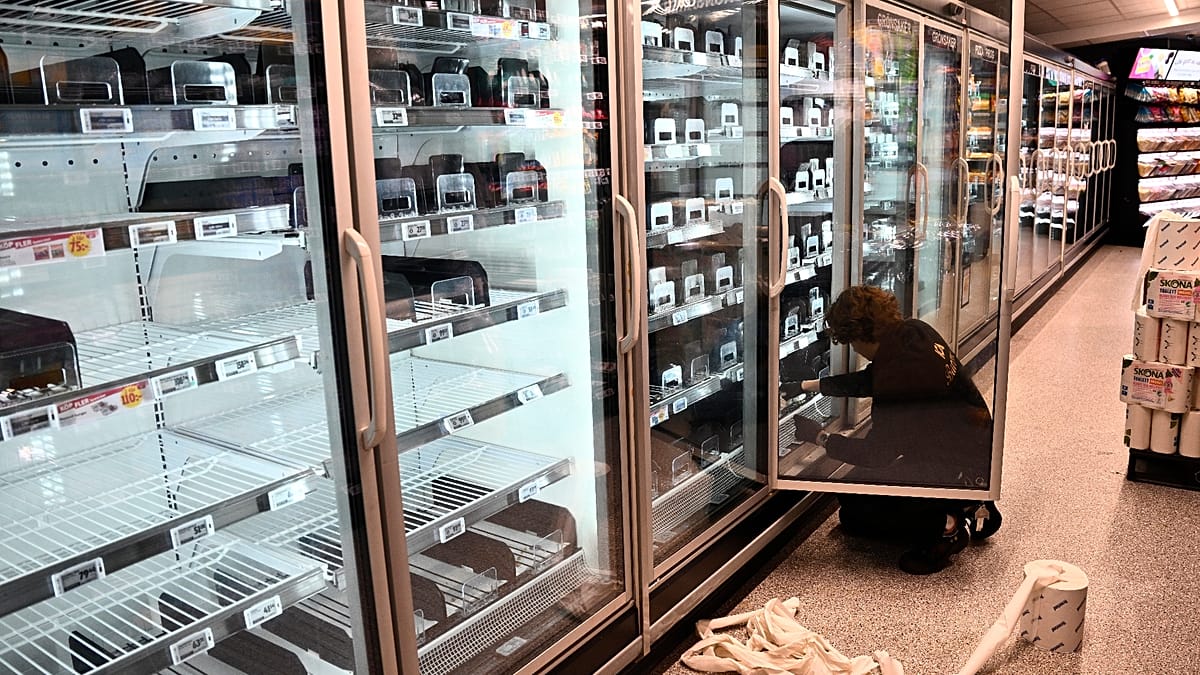
Dozens of supermarkets in Europe have reported temperatures of their refrigerators and fridges rising overnight, now widely believed to be caused by cyber attacks similar to the one that affected France several weeks ago.
Supermarket chains in Belgium, Sweden, Estonia, Netherlands, Luxembourg and Ireland have been affected.
The story began with Belgian media reporting on Monday that fridges were turned up to 17 degrees Celsius, forcing many stores to throw away food.
Belgium’s Centre for Cybersecurity (CCB) told Belgian outlet Belga that it is aware of an incident targeting supermarket refrigeration systems.
CCB spokesperson Katrien Eggers told Euronews Next, “We are aware of an incident, but have no further information.” There are no reports yet as to who was behind the attack… and it may never be possible to identify them.”
Belgium’s federal prosecutor’s office have opened an investigation into the incident, according to a spokesperson.
Some 40 Delhaize Proxy supermarkets, 15 Carrefour Shop & Go stores, 15 Intermarché shops and five Spar Q8 service station locations have reportedly been impacted in Belgium, according to Belgian outlet Le Soir.
Butchery group De Laet en Van Haver also said that their fridges were affected. IKEA have also said their Bergen shop located at Mons was affected, bringing the total to 75 stores affected in Belgium.
“We have identified an IT incident affecting the refrigeration systems in several dozen stores. We immediately took the necessary measures to keep our stores operational,” a spokesperson from Delhaize told Euronews Next.
Carrefour told Euronews Next this morning that “the impact at Carrefour is very limited: currently 15 of our 700 stores are affected, both in Flanders and Wallonia. Not a single hypermarket is among them.”
“All stores remain open because it only concerns a few refrigeration units, mainly freezers. Quick action was taken so that all stores can stay open,” they added.
Meanwhile later this morning Carrefour Belgium spokesman Mich Vergauwen said, “It’s a cyberattack, there is no other reason,” adding that the “impact is very limited”.
It’s believed the incident took place between Sunday night and Monday morning, skyrocketing refrigerator temperatures.
Stephan Moelans, CEO of refrigeration installer Sabcobel, which manages Delhaize’s fridges and freeze systems, told the Belga news outlet that the Belgian attack involves exactly the same mechanism as the previous French cyberattack.
“Over the past few weeks, we’ve been working very hard to protect our customers’ fridges against this vulnerability,” Moelans said.
He said the incident happened when the units’ evaporators were switched to defrost mode.
The refrigeration executive said a software update alone is not enough to address the vulnerability, with physical modifications required instead.
“That requires investment. The simplest solution is to manage the fridges over a secure internet connection. Most of our customers switched to that after the attack in France.”
Sabcobel know of around twenty affected units, out of the hundreds it manages across Belgium.
Danfoss, the company that supplied the software for the refrigeration systems affected in both the latest incident and the one in France in October, said customers who had not updated their software were affected.
A spokesperson told VTM NIEUWS that “the company says that the vulnerability lies primarily in outdated software and that they had already urged customers to start using their new software”.
Stores hit Europe wide
Problems reportedly also occurred at a number of stores of the Swedish supermarket chains ICA and Coop last night, with refrigerators and freezers turned up to 50 degrees Celsius.
A similar incident occurred in Estonian at one location of supermarket chain Selver, according to media reports.
13 SuperValu stores in Ireland were affected by a suspected cyber incident, according to a statement by owner Musgrave made to the Irish Times.
In the Netherlands, the freezing and cooling systems of at least seventeen companies were attacked last night, according to a spokesperson for supplier Danfoss. The identities of the companies were not disclosed.
Delhaize also suspended its ordering systems in Luxembourg as a precaution to prevent a similar incident.
Finnish media report that several K Group supermarkets have been affected. K Group is one of Finland’s largest retail chains.
Business
Tesla Robotaxi Adds This New City, Stock Continues Rally

Information in Investor’s Business Daily is for informational and educational purposes only and should not be construed as an offer, recommendation, solicitation, or rating to buy or sell securities. The information has been obtained from sources we believe to be reliable, but we make no guarantee as to its accuracy, timeliness, or suitability, including with respect to information that appears in closed captioning. Historical investment performances are no indication or guarantee of future success or performance. Authors/presenters may own the stocks they discuss. We make no representations or warranties regarding the advisability of investing in any particular securities or utilizing any specific investment strategies. Information is subject to change without notice. For information on use of our services, please see our Terms of Use.
*Real-time prices by Nasdaq Last Sale. Real-time quote and/or trade prices are not sourced from all markets. Ownership data provided by LSEG and Estimate data provided by FactSet.
IBD, IBD Digital, IBD Live, IBD Weekly, Investor’s Business Daily, Leaderboard, MarketDiem, MarketSurge and other marks are trademarks owned by Investor’s Business Daily, LLC.
©2026 Investor’s Business Daily, LLC. All Rights Reserved.


Sectors bracing for a pivot as US midterm elections loom
Nov 2 (Reuters) – As the US midterm elections approach, Corporate America is bracing for a potential shift in the...


Wall St rises as oil falls heading into US midterm elections
Summary Companies Indexes up: Dow 1.06%, S&P 500 0.58%, Nasdaq 0.65% Oracle down on plans of raising $20 billion through...


Angelina Jolie and Brad Pitt’s daughter Vivienne delivers final blow to estranged dad
Brad Pitt and Angelina Jolie’s daughter Vivienne has officially dropped her father’s famous last name. A Los Angeles judge granted...


Netflix Acquires Joel Coen’s ‘Jack of Spades’ Starring Josh O’Connor
Netflix is back in business with the Coen Brothers with its global acquisition of the sinister gothic mystery film Jack...


Elon Musk throttles Grok Bot limits due to ‘unsustainably high’ costs
Over Halloween weekend, some Grok Bot users awoke to something especially spooky: their weekly usage limits were unexpectedly maxed out,...
SpaceX weighs Boost Mobile deal in push for Starlink phone service: Report
SpaceX (SPCX) may be attempting an end run to circumvent obstacles it’s facing in getting a mobile network off the...


Gavin Newsom Proposing $1 Billion CA Film
The day before his successor as California’s governor is elected in the high stakes midterms, Gavin Newsom is going out...

Cyberattacks hit supermarket fridges and freezers in Europe, Belgium launches investigation
Dozens of supermarkets in Europe have reported temperatures of their refrigerators and fridges rising overnight, now widely believed to be...


Taylor Swift confesses to ‘weird’ habit husband Travis Kelce has to ‘put up with’
Travis Kelce is still down bad for Taylor Swift despite her “weird” habit. The pop star spoke about her and...


‘Homestead’ star Bailey Chase quit California over proposed vaccine mandate
“Homestead” star Bailey Chase is opening up about the “final straw” that drove him and his family out of California...
-

 HealthNews1 week ago
E. coli cases possibly linked to Bengtson’s Pumpkin Farm, Will County health officials say
-
Business2 weeks ago
GLP-1 injections recalled nationwide. See affected products
-

 Entertainment2 weeks ago
Noah Adams, longtime host of NPR’s All Things Considered, has died
-

 Entertainment2 weeks ago
R.J. Mitte’s Mother Opens Up on His Life, Rumors and Legacy
-

 Business2 weeks ago
Datacenters 2027: The Year of Acceleration, +50GW in a Single Year
-

 Business2 weeks ago
Tesla (TSLA) Q3 2026 earnings preview: flat revenue, falling profits
-

 Entertainment2 weeks ago
J Mascis has nothing better to do
-

 HealthNews2 weeks ago
My In-Laws Offered to Watch My Baby, Then Didn’t Give Her Back for Six Weeks. That Was Just the Beginning.