
Entertainment
Creator Interview

[This story contains MAJOR spoilers from the finale of VisionQuest, “Forever.”]
For showrunner Terry Matalas, VisionQuest was always going to be a Marvel show about fathers and sons.
When he was tapped a few years ago to redevelop the final chapter of the WandaVision trilogy — taking over from creator Jac Schaeffer, who reportedly stepped away from the project to focus on Agatha All Along, the second installment starring Kathryn Hahn — Matalas received just one clear directive from Marvel Studios boss Kevin Feige. The new sequel series had to center on Paul Bettany’s synthezoid Vision and his superpowered son Tommy Maximoff — one of the twin boys he shared with Wanda Maximoff (Elizabeth Olsen), the Scarlet Witch who ostensibly perished at the end of Doctor Strange in the Multiverse of Madness.
“We knew Tommy was going to be a part of it, and then I had to ask myself, ‘Who is Vision talking to? He doesn’t have Wanda in this show, and Tommy felt like something you want to get to,’” Matalas explains to The Hollywood Reporter. “So I immediately went to Vision’s father, and specifically Ultron [played by] James Spader. I was so enamored by that last scene in Avengers: Age of Ultron between the two of them and asked myself, ‘Well, what if that was the show?’”
Over the course of eight episodes, the newly resurrected “White Vision” — whose original memories had been locked away by the agency S.W.O.R.D. following his death in Avengers: Infinity War, only to have them unlocked by the Hex-created version of himself in the WandaVision finale before flying away — embarks on a deeply psychological journey of self-discovery. As he grapples with his fractured identity, Vision confronts a philosophical, mirror-image Ultron — his deeply toxic, cynical creator functioning as a dark father figure — and struggles to accept Thomas Shepherd (Ruaridh Mollica), an orphaned teenager who is the super-powered reincarnation of his and Wanda’s son Tommy.
Though she was credited as an executive producer, Schaeffer was not creatively involved in VisionQuest, wanting to give Matalas and his writers’ room — most of whom had worked with him on Star Trek: Picard — “a blank canvas” to play with. “I called her briefly to thank her and just because I’m such a fan of what she did with WandaVision. I watched every episode of that twice when it came out and then would go on YouTube and dissect every single Easter egg,” Matalas says. “But she was very clear upfront that she didn’t want to share any creative [input].”
The VisionQuest finale, however, still pays tribute to WandaVision and Agatha in more ways than one. The series’ overarching puppet master — revealed to be “The Client,” Virgil Horton (also played by Spader, whose human identity inspired Ultron’s avatar) — holds Vision and the A.I. Jocasta (T’Nia Miller) captive to execute a plot for digital immortality. When Virgil fatally shoots Jocasta, a devastated Ultron murders Virgil and unleashes a lethal nanobot swarm on London. To stop the genocidal A.I., Vision traps them both within a creative WandaVision-style sitcom simulation dubbed UltraVision, forcing Ultron to confront the profound heartbreak of losing Jocasta — the A.I. companion he unwittingly fell for — which ultimately neutralizes the threat and causes both of their systems to collapse.
In the aftermath, Tommy and his twin brother Billy (Joe Locke) — who was last seen in Agatha — work together using their combined powers to successfully bring their father back to life. The finale also features a post-credits scene — not included in the screeners sent out to press — of Robert Downey Jr.’s Doctor Doom resurrecting Wanda, who had seemingly been crushed under a mountain amid her grief over losing Vision and their twins at the end of Multiverse of Madness. The Maximoff family reunion is on!
Calling from New York City just hours before the VisionQuest finale dropped on Disney+ on Tuesday, Matalas opened up below to THR about how the show became another meditation on grief in the MCU, why he decided to have Vision and Tommy reunite with Billy but not Wanda — and that ominous mid-credits scene with Ultron. As the former showrunner of Picard, Matalas also pays tribute to Patrick Stewart, who died Oct. 28 at the age of 86: “I’d like to remember him kind of where we left him [in Picard], which was at that poker table surrounded by his friends laughing.”
***
In addition to writing episodes one, two and eight, you also directed episodes seven and eight — which really crack Vision open emotionally and pay off his relationships with Tommy and Ultron. What was most important to you when you were figuring out how to land the plane, so to speak, on VisionQuest? Why was this the right ending in your mind?
I do think that all endings need to touch on the beginning in some way. So honoring WandaVision by going back to the sitcom format as sort of the last battle was always our north star from the beginning of the writers’ room. We had a few different versions of it, but it felt like the right way to end it rather than just doing a rock and sock ’em robot battle royale — which we do, so we give Marvel fans their popcorn. We thought it would be fun to play out the final struggle with these two within this father-son sitcom. [A reference to] Sanford and Son is one of the first images you see in the first episode [of UltraVision], so we knew we were heading into a kind of All in the Family, Sanford and Son dynamic between Ultron and Vision.
You mentioned that Jac did not want to be creatively involved in VisionQuest, but does she know that you paid homage to her with this show-within-a-show format?
No, as far as I know, she doesn’t have an idea.
There are so many fun little WandaVision Easter eggs in UltraVision, but I particularly loved flipping through all of the wacky episode titles. You came up with so many of them!
I actually did those in post. I think we had generated a list early on from a few different writers, but ultimately that came together in post. It’s the most fun ever. We kind of wish we saw every one of those episodes. I remember when we screened it for Kevin Feige, one of the questions I asked just to double check was, “Does UltraVision go on too long?” And he cut me off immediately and yelled, “No!” He’s like, “It could go on for another 90 minutes, and I would’ve watched every minute of it.” So it was a big swing. We were really scared. We didn’t know if that was going to work, and as of this moment, it hasn’t aired, so I don’t know if it has. (Laughs.) So we’ll see.
For all the theatrics of UltraVision, which turns out to be an ineffective way for Vision to appeal to Ultron’s better angels, Vision knows that the only way he can stop Ultron from using the nanobots as a weapon of mass destruction is by forcing him to feel the grief of losing Jocasta. What did you want those final one-on-one conversations between Vision and Ultron to represent?
I think Vision says it best, which is that we couldn’t process this alone, and that grief really is about opening up and bringing it to light, as is all pain and trauma. I hope that that’s the message people walk away with, which is you can’t really just bury it in your code. You really do have to face it head on, and it’s very hard to do it alone.
Why do you think Vision is the only one who is able to get through to Ultron in the end?
I think Vision is the only one he respects, whether that is because of Ultron’s own ego and that Vision was sort of his own vision, if you will, as to what he could be. But we always knew we wanted to take Ultron into a place from the comics. Ultron fell in love with Jocasta in the original comic books, and bringing him along into the same kind of journey that Vision had been facing all season felt like the right story for those two to truly understand each other by the end.
We had a few different versions [of Ultron’s final scene]. We had a deleted scene in which Jocasta actually was sitting with Ultron in the mansion at the end and had survived. And now, we just sort of hint that he’s going to, at some point, bring her back. And then the question is: Will that start the cycle all over again? Is he going to be doing the same thing Wanda did or Vision did, and not really face his grief and then find another way to bring back his loss? And would she even want that? So it felt like the right end of the circle, if you will.
You’re referring to the mid-credits scene of Ultron holding onto a hard drive labelled “Jocasta.” Why did you choose to include that final scene? Was that a directive from Marvel?
We were all so in love with Jocasta and [wanted] a promise that she would continue on in some way. Again, we had a deleted scene in which she magnificently survived. I think that scene will maybe one day see the light of day, but it sort of, in totality, robbed the finale of its punch a bit when we had it there. But there were no true directives from Marvel other than Tommy was going to meet Vision, and that by the end, cold white Vision would return to his original red self. That’s a pretty blank canvas to work from. Working with Marvel was truly wonderful and collaborative in every way.
Paul Bettany told me that Marvel’s initial plan was always to center VisionQuest around Vision and Tommy, but did you always plan to bring Billy back into the fold as well?
You had to. The end of Agatha was [Agatha and Billy saying], “Let’s go find Tommy.” I think it would’ve been terrible and not very satisfying to not see the boys reunited with their father by the end.
Did you ever consider introducing Billy earlier in the story, or were you always planning to bring him back to save Vision alongside Tommy in the finale?
We entertained it; we talked about it. But if Billy came back early, it robbed Tommy and Vision of their own story and alleviated too much tension too early, and wasn’t as emotional as when he comes back and saves the day in the last moment when they need him most. I didn’t want to do that to Billy. I didn’t want to make him a supporting character in someone else’s struggle, so really earning Billy felt like the right way, to us, to do it.
What were those days like on set for you to watch Paul, Ruaridh and Joe together on screen for the first time? Were both of Billy’s scenes filmed on the same day?
We had the scene with Tommy and Billy where they first connect psychically — that was on another day [before the father-sons reunion]. Those boys were so much fun to direct. We were in this tiny room that was about a thousand degrees because we lit about 800 candles. They were just so down to play. There are a couple of deleted fun bits that we came up with on the spot that will come out, but they had a great chemistry and we would be excited to see more of those two together in the future as well. But as far as the end where Billy returns to save the family there, I think maybe we had two hours to do all that. It’s television and you don’t have the luxury of the time, but it was great. Joe’s wonderful and so down to try new things, as is Ruaridh. We were fortunate that the father and sons had great chemistry.
In their final scene together, Tommy asks Vision if he thinks there is any chance, with the two of them and Billy still around, that they may see Wanda again. In a callback to WandaVision, Vision tells Tommy, “We have said goodbye before, so it stands to reason… we’ll say hello again.” Was that line your idea, or did it come out of a collaboration with Paul or the rest of the writers?
It was my idea. As I was writing it, even though that Vision wouldn’t know that Hex Vision said that, so much of his soul was the same that it felt right that he would say the same thing he said to Wanda at the end of WandaVision. And we had to ask the question! For me, you couldn’t not address, “Are we going to see Mom again?” I would be sad if I watched a show, with all this magic and reunion out there, where they weren’t asking that question of, could it be possible [to see her again] in this universe?
You have certainly left the door open for a Maximoff family reunion in the near future. Did you ever have any discussions with Paul or the rest of the creative team about Wanda returning in the VisionQuest finale?
Yes, of course. It’s a thing that comes up constantly. Paul and I did experiment with a moment as he was dying, and it just felt like an added element in a big emotional sweep that was really about Vision and Ultron, and Vision, Tommy and Billy. It’s such a big idea to have Wanda there that you no longer pay attention to the rest of the arcs that are playing out. But I do feel like she’s very much in the room. My brilliant editor, Drew Nichols, found this shot of Wanda from WandaVision where she looks and smiles, and when he thinks of her and he’s talking about how love always leads to loss, I felt like we had her. I felt like we had honored her, but it didn’t really work to have her back in a dreamy way at the end.
Ruaridh Mollica has affectionately referred to Tommy and Billy as the “queer twin brothers” of the MCU, and he has openly talked about the personal significance of a bisexual actor being cast to play a bisexual character in such an expansive fictional universe. Given what is already established in the comics, did you ever consider alluding to Tommy’s bisexuality more explicitly in the show? Was there any reason that you chose not to this time around?
We do have a lot of Easter eggs to it. We wanted to start with Lisa [Molinari, played by Lauren Morais] because in the comics he had this relationship with Lisa coming right out of juvie, which we thought was interesting. But there wasn’t really a lot of time for him to be exploring his sexuality with the stakes so high. We definitely put in some queer and bisexual-coded patches; [for instance] there are these patches on his green jacket in the third episode. Those are promises, I suppose, for future stories and relationships. But with eight episodes, you got to pick one, and the stakes were very high for him to be flirting. (Laughs.)
Billy comes back to save the day wearing his signature blue crown, but Tommy’s green Adidas jacket is the closest we ever get to seeing him wear a super suit this season.
We had discussions about a super suit, and sort of like the moment with Wanda, if it’s not organic, it feels jammed in. We just could not find a logical reason for this kid to have a super suit. (Laughs.) There was no way that was not cheesy to do it. So we tried to get the closest thing we can to normal real world wear to honor his look so that maybe one day down the line we’ll have a super suit.
The last time we see Vision and Tommy on screen together in the finale, they are talking about having dinner with Billy in Eastview. How do you think Vision feels now that he has reconnected with and effectively has to parent both of his boys as young men?
I mean, that’s the thing I want to see, right? The family, at least for the most part, minus one critical component, is reunited. So what is that like now? You get a little dose of it with him telling Tommy saying, “I know if your mom was here, she’d want you to continue your education.” So I think Vision’s got to go be a dad, and I would love nothing more than to see what that’s like.
Have you had any conversations yet about working on future installments of the MCU? Is there a world in which VisionQuest could be expanded into an ongoing series, or did you always see this as a limited series?
I have to be careful what I say.
Fair enough.
I will say that we have so, so many ideas. And if I were having those conversations, there’s no way I could say that I was having those conversations. But who would not want to see this family again?
I was so sad to hear about the passing of Patrick Stewart, with whom you worked closely on Star Trek: Picard, and I’m very sorry for your loss. A lot of people on social media have thanked you for giving them the final gift of revisiting and saying goodbye to Patrick’s Picard, even though no one knew for sure that that would be the last time he’d play the character. Given that you began your career working on Star Trek: Enterprise, what did working on Picard with him mean to you personally, and how would you like to remember him?
I’d like to remember him kind of where we left him, which was at that poker table surrounded by his friends laughing. I was lucky enough to write and direct the last few moments of Captain Picard. It’s an honor I didn’t feel like I deserved, but feel blessed to have. The last scene with all of them, I really wanted to capture who he was around that cast. They were all dear friends and family in every way to him. What I did was I just let them actually play poker and joke and have fun. All of those smiles, all of those laughs from everyone and especially Patrick, were genuine. I wanted the fans in the world to see that because it’s an extraordinary thing to be around a cast like that, that truly loves each other that way.
I wanted to leave Captain Picard for everyone with all of them in a moment of joy and reunion, as opposed to him dying on the bridge of a starship or something like that. I like a happy ending — not always, but specifically in this case, this is how I wanted to leave that cast. It’s very kind for people to thank me, but I just played a small part in this universe and was honored to do it.
Do you remember the first time you met him? Was it when you were working as a PA on the Paramount lot and driving him around on golf carts?
Yeah, that’s exactly what it was. You do your research! (Laughs.) My first job in Hollywood was as a production assistant on Star Trek: Voyager, and I believe they started to shoot Star Trek: Insurrection within my first month. Merri Howard, who was my boss and mentor, pulled me from the television show to work on that movie for a day and just take care of Patrick and drive him around and get him coffee and orange juice. And going from that kid who would sneak on to the bridge of the Enterprise E, to bringing him back to the Enterprise D, is such a surreal, unbelievable journey. It’s a very Hollywood dream come true, and I just feel lucky to have been part of Star Trek for so long and hope to continue someday with more of it.
***
All episodes of VisionQuest are now streaming on Disney+.
Entertainment
A New Hope’ Set For IMAX 70mm Re-Release
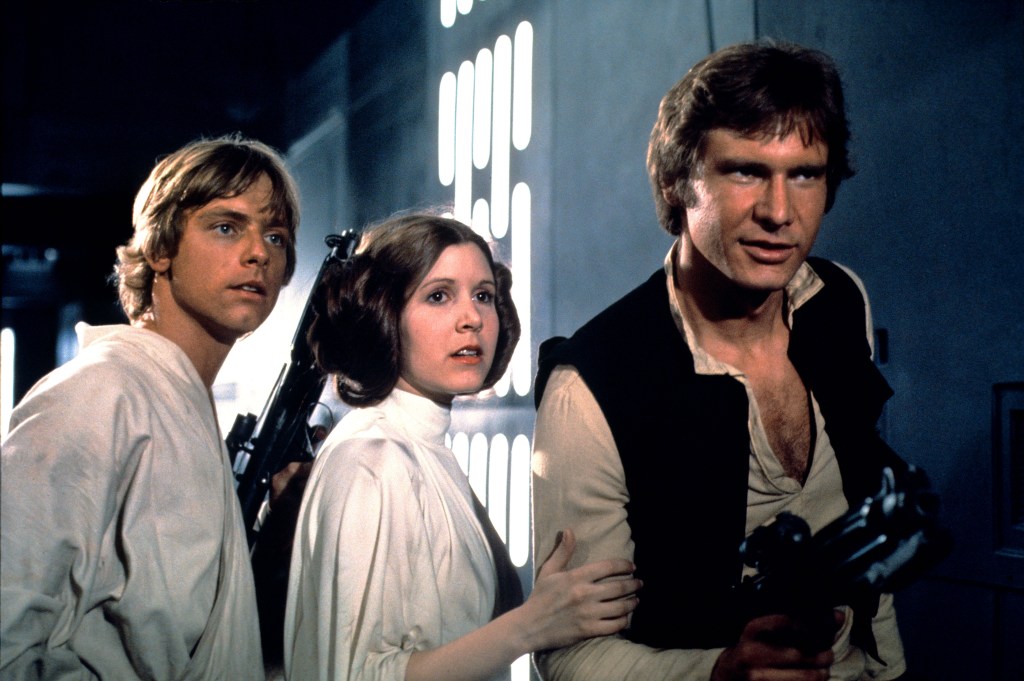
Lucasfilm and Disney have restored the original Star Wars (1977) and will release the film in multiple formats, including IMAX 70mm, as part of the franchise’s 50th anniversary celebrations.
The re-release is among several events Lucasfilm and Disney announced this afternoon for next year’s anniversary celebrations.
Screenings of the original 1977 version of Star Wars will begin on February 19. In addition to the IMAX 70mm screenings, the film will also be presented in Digital IMAX, Digital Cinema, 70mm, 35mm, and 4DX.
On May 4th, 2027, Lucasfilm will release a new behind-the-scenes documentary, The Hero Awakens, from filmmaker R.J. Cutler on Disney+. The film is said to detail the making of Star Wars. The company’s synopsis reads: “This film will be a unique treat for fans as it exclusively features archival footage and audio captured during and around the making of the historic film in 1977.” The Hero Awakens is produced by Lucasfilm, Cutler and This Machine, and Kennedy/Marshall.
2027 Star Wars events already on the calendar include Shawn Levy’s Star Wars: Starfighter, which will be released on May 28. Season 2 of Ahsoka will premiere January 20, 2027. Star Wars Celebration will take place on April 1-4 in Los Angeles.
“It is incredibly special to mark the 50th anniversary by returning the original version of Star Wars to theaters so audiences can experience this part of film history on the big screen,” Lucasfilm Co-President Lynwen Brennan said in a statement. “We look forward to celebrating with our fans all year long—from the releases of ‘Ahsoka’ and ‘Star Wars: Starfighter’ to exclusive merchandise, new publishing stories, unforgettable experiences and interactive games. We are so thankful for our amazing community and hope these experiences bring joy to Star Wars fans everywhere.”
Entertainment
Will Netflix Make M&A Move on NBCU?
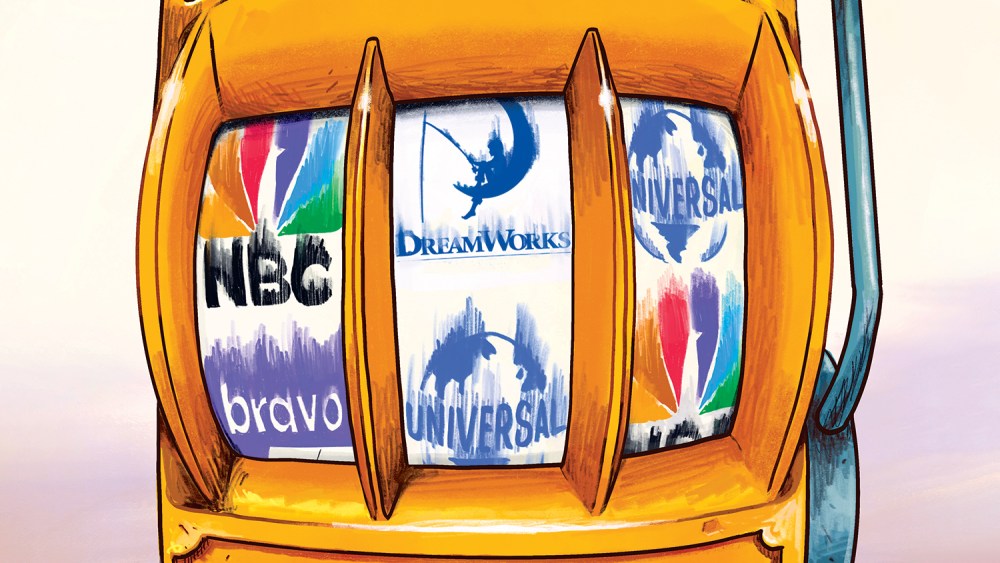
David Ellison has knocked out Warner Bros. Discovery, merging it with Paramount into the new Skydance Corp. Now the chatter around town is about the industry’s next megamerger.
In the current landscape, only one media company of considerable size could be ripe for a takeover: NBCUniversal. Following its planned spinoff from Comcast in mid-2027, NBCU could fetch $60 billion from a motivated buyer, research firm Morningstar estimates. As for who that acquirer could be, industry sources uniformly point to Netflix as the leading candidate.
Netflix chief Ted Sarandos, after walking away from the streamer’s effort to acquire Warner Bros. and HBO, said his key takeaway was that “we really built our M&A muscle.” He hasn’t tipped his hand about what Netflix might pursue next, saying in April only that “we invest in the business both organically and opportunistically.”
Meanwhile, Comcast execs, in announcing the NBCU spinoff plans in June, said they weren’t splitting up the media company to ready it for a sale. But when pressed about the possibility of M&A after the separation, Comcast co-CEO Mike Cavanagh, who’s set to become NBCU’s chief executive post-spin, suggested deals could be in the offing. As an independent company, it will “have the freedom now to explore adjacent businesses where we have the right to play,” he told Wall Street analysts.
Regarding speculation about deal scenarios for the independent NBCU, chief communications officer Jen Friedman said in a statement to Variety: “We have said from the beginning that we are not pursuing this spin for the purposes of M&A. Our plan for NBCU is to set the business up for growth, and we see a path to doing so given our industry-leading businesses in the most attractive segments of media, our differentiated strategy and our uniquely strong balance sheet.” Netflix declined to comment.
Over most of its 29-year history, Netflix shunned big M&A, preferring to stick to its knitting as it continued to enjoy strong subscriber and financial growth. But the calculus is different now: In the third quarter of 2026, top-line growth dropped to 11.8%, the lowest level in three years, and subscribers in the U.S. are spending less time with Netflix than they used to.
To jump-start its growth, “Netflix needs to make an acquisition,” says Terry Dugan, entertainment finance co-head of law firm Moore & Van Allen. “The only obvious suspect is NBCUniversal.” He says smaller players like Lionsgate, A24 or Neon on the movie side, or Starz or AMC Global Media on the TV side, simply wouldn’t be big enough to move the needle for Netflix in terms of boosting viewing on the service.
After Ellison’s capture of WB, “the pressure across the industry to be more scaled” — meaning assembling a larger collection of media assets and production firepower to compete on a global scale — “has never been higher,” says one senior studio exec. “People are feeling more pressure to consolidate. But it’s gotta be the right fit.”
Yes, Netflix is still turning a nice profit and delivering quarter-over-quarter growth. But the top brass became alarmed about the slowing pace. Sarandos and co-chief Greg Peters decided to overhaul its content leadership team, giving the boot to Bela Bajaria as chief content officer and to Dan Lin as head of film. The purge is a seeming concession by Netflix’s co-CEOs that the company is not delivering enough must-watch content — that the drop in U.S. engagement is not just part of the natural ebb and flow of viewing.
To replace Bajaria, Sarandos recruited veteran Peter Rice, who has a reputation as someone who “understands talent relations,” Sarandos explained to Wall Street after the streamer unveiled its Q3 earnings on Oct. 20.
But a revamp of Netflix’s content lineup might not be enough to turn things around, and that has fueled speculation that it could be eyeing a soon-to-be-independent NBCU — particularly as it faces Skydance in the market. That idea has been reinforced by how fast Netflix clinched a deal valued at $72 billion for Warner Bros. and HBO’s streaming and studios businesses before Paramount’s sky-high offer for all of Warner Bros. Discovery won out.
“When Comcast first announced that it was going to spin off NBCU, I immediately said, ‘Netflix is going after this,’ because they lost the crown jewel of Warner Bros.,” says Mike Proulx, research director at Forrester.
NBCU would for the most part fit in well with Netflix’s overall business. Peacock stood at 48 million subscribers as of the end of September, and fusing that with Netflix’s 325 million-plus subscriber base would be a win for both sides. It’s easy to see Bravo and its distinct brand of lifestyle shows becoming a tile on the Netflix app.
Universal Pictures’ library is home to more than 4,000 films and 130,000 episodes of TV, including enormous franchises like “Back to the Future,” “Jurassic Park,” “The Bourne Identity,” “Fast & Furious” and “Despicable Me” — not to mention Christopher Nolan’s “The Odyssey,” one of the biggest blockbusters of 2026. NBC has big sports rights deals, including pacts with the NFL, the NBA and Major League Baseball. And NBCU has a significant theme parks business, trailing only Disney in size. NBCU’s operations also encompass Sky, the satellite TV platform that serves about 20 million subscribers in the U.K., Ireland and Italy.
“Netflix is looking at sports, theatrical and experiences. NBCU ticks all of those boxes,” says John Conca, telecom and media analyst at investment research firm Third Bridge.
Adds Zach Darrow, chairman and CEO of business law firm DarrowEverett, who leads its private equity, capital markets and securities practice: “Netflix has money to spend. It didn’t get the Warner Bros. deal but it showed it was willing to make a significant investment. They walked away when they hit their limit — they are a credible bidder for a library or studio.”
For Comcast, the spinoff is mostly financial maneuvering. Brian Roberts, Comcast chairman and co-CEO, and the Roberts family will remain the controlling shareholder of both Comcast and NBCUniversal after the separation. Cavanagh will be CEO of NBCU, with top lieutenants including Donna Langley, chairman of NBCUniversal Entertainment, and Matt Strauss, chairman of NBCUniversal Media Group (which includes Peacock). Nonetheless, it is a symbolic shift for the media mogul family that made its fortune as one of the first firms to wire the country for cable TV.
Comcast leaders say they’re unwinding their NBCU ownership after more than 15 years so that the slimmed-down company will be valued on its own rather than being lumped in with Comcast’s capital-intensive cable and wireless telco business. In other words, Comcast believes NBCU is worth more if it’s unshackled from the parent company’s core cable systems biz.
Comcast expects the spinoff to be tax-free to shareholders. But under IRS rules, to avoid incurring steep capital gains taxes, NBCU and Comcast have to wait two years before selling out to a third party. That means it could be mid-2029 by the time NBCU is in play. However, if Netflix wants NBCU badly enough, its bankers and lawyers can likely get creative with a deal structure to address the tax problem. The timeline might encourage Netflix to try to reach a deal with Comcast to snap up NBCU in the next six months or so, before the formal separation from Comcast is complete.
There are other complicating factors with a prospective Netflix-NBCU deal. For one thing, Netflix would certainly not want to own the Sky business, because it’s centered on pay TV and broadband, says Morningstar analyst Matthew Dolgin. Netflix also has disavowed interest in linear TV. But Reed Hastings used to swear Netflix would never get into the advertising business either — before the company did just that in 2022. The addition of NBC’s entertainment and sports programming, Dolgin says, “would make the Netflix service stickier and give them more pricing power.”
As for regulatory challenges to a prospective Netflix-NBCU merger, such a combo might see pushback such as a requirement that Netflix spin off the NBC broadcast TV operations. But the Justice Department this summer let the Paramount-Warner Bros. deal through without any conditions. An antitrust challenge launched by 12 Democratic state attorneys general to the Paramount-WBD deal — alleging the new entity would have undue power over theatrical movie releases and cable TV — ended with the AGs settling on a set of minimal behavioral conditions, ultimately letting the $111 billion horizontal merger close.
Instead of an outright M&A deal, Netflix could turn to other types of business deals like bundling partnerships to try to bulk up, says Prof. Tammy Madsen, a professor of management at Santa Clara University’s Leavey School of Business. But, she adds, “If they want to move fast, it would be through acquisitions.” And again, NBC’s large stable of sports rights and other entertainment IP would give Netflix a wealth of new content to attract and retain subscribers.
Whether Netflix feels urgency to make a run at NBCU may depend on whether its investors are convinced Sarandos and Peters can stabilize the business without a big, transformative move. Netflix’s stock plunged after it signed the Warner Bros. deal — shareholders hated that the transaction would have loaded up $60 billion in new debt onto Netflix’s balance sheet. But perhaps NBCU will be the bullet Netflix needs to bite.
“Netflix is taking heat right now from Wall Street,” says a top Hollywood exec. “They are the streaming leader. And whatever happens, there will be the rationale for more combinations.”
Entertainment
KATSEYE’s Megan returns to full choreography after concussion concerns and backlash

KATSEYE’s Megan Skiendiel appears to be gradually returning to the group’s demanding choreography, with new concert footage showing her dancing during the Dallas stop of the WILDWORLD TOUR after previously performing from a chair.
The singer’s latest appearance follows concerns from fans about her health after she returned to the stage in Austin, Texas, on November 10, while recovering from a concussion.
At the Austin concert, Megan remained seated at the side of the stage for most of the performance, wearing dark sunglasses and limiting her movements. While her bandmates Daniela Avanzini, Lara Raj and Yoonchae Jeung performed the usual choreography, she continued singing and occasionally moved gently to the music.
However, footage shared following the group’s November 11 Dallas concert appears to show Megan taking on choreography during “PINKY UP”, including some dance movements that she had previously been unable to perform.
Her return to dancing comes after considerable concern from fans, many of whom questioned whether she should have resumed touring so soon after sustaining a head injury. Some also criticised the decision to continue the performances while she was still recovering.
Before the Austin concert, Megan addressed her condition in an update shared on Weverse. She explained that she would perform with reduced choreography, less intense movements and breaks when necessary. She also stressed that she would not be returning to full performance intensity immediately, adding that her doctors had recommended the precautions and that she would need reassessment before resuming unrestricted activities.
KATSEYE had previously postponed three tour dates in Detroit, Chicago and Minneapolis because of her concussion.
Although the Dallas footage suggests some progress, it does not establish that Megan has fully recovered or received medical clearance to resume unrestricted choreography. Her gradual return remains an encouraging development for fans hoping to see her back at full strength.
Entertainment
Alanis Morissette slams Ben Affleck’s ‘sexuality’ comments, shares video of him exploding
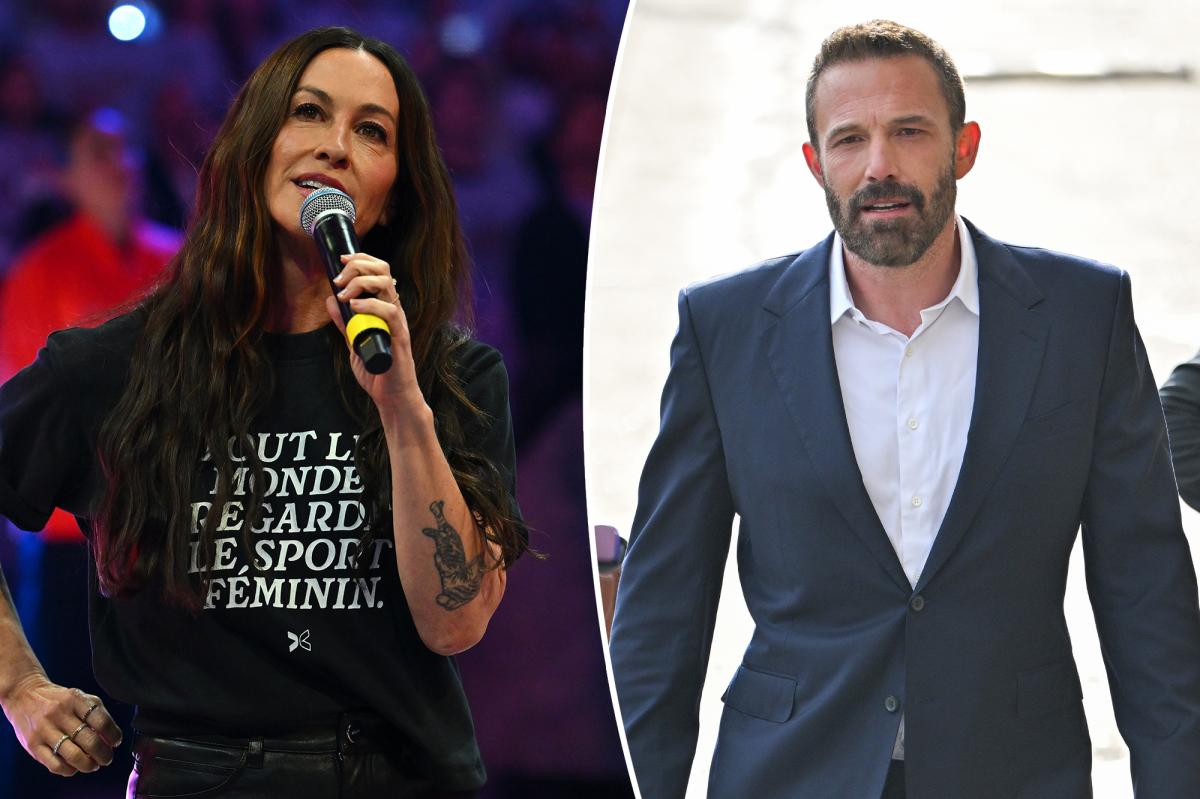
Alanis Morissette blasted her “Dogma” co-star Ben Affleck in front of a stadium full of concertgoers in Los Angeles.
The singer name-dropped the actor during her “Butterfly with a Machete: A Rock Traumedy” residency while listing people’s past complaints about her, as captured in a fan video.
“I’ve even had a guy ask me why I didn’t lead with my sexuality,” the Grammy winner, 54, said. “Thank you, Ben Affleck.”
She went on to play a violent clip from her 1999 movie with the Oscar winner, showing his character Bartleby’s head exploding.
Morissette played God in the Kevin Smith-directed film — which also starred Matt Damon, Salma Hayek and more — and social media users referenced the role while reacting to the concert footage.
“God doesn’t have sexuality, Ben,” one joked, while another added, “Just when I thought I couldn’t love her more she goes and explodes Ben Affleck’s head.”
Want more celebrity and pop culture news?
Start your day with Page Six Daily.
Thanks for signing up!
Enter your email address
Please provide a valid email.
By clicking above you agree to the Terms of Use and Privacy Policy.
Want celebrity news as it breaks?
Others, meanwhile, slammed Morissette’s choice to go public with a decades-old comment as Affleck, just last year, praised her and the rest of the movie’s “cool cast” during an Associated Press interview.
Affleck’s rep did not immediately respond to Page Six’s request for comment.
Morissette, who is also going viral for falling on stage during the YouTube Theater performance, recently clarified her sexuality on the “Handsome” podcast.
When Fortune Feimster asked Morissette during the Nov. 3 episode whether the “men that hurt” her made her “want to be a lesbian at any point,” the songwriter replied, “I’m pansexual, so, yeah.”
Feimster’s co-host Tig Notaro jumped in to ask whether Morissette is “really pansexual” — a.k.a someone who experiences sexual, romantic, or emotional attraction to people regardless of their gender identity or sex — to which the “Jagged Little Pill” hitmaker confirmed, “I am.”
Two months prior, Morissette gushed to “Call Her Daddy” listeners about her “amazing” smooch with Sarah Jessica Parker on “Sex and the City.”
She has been married to husband Mario “Souleye” Treadway since 2010.
The couple, who have been together since 2009, share three kids — Ever, 15, Onyx, 10, and Winter, 7.
Prior to her marriage, Morissette was romantically linked to “Full House” alum Dave Coulier and “Deadpool” star Ryan Reynolds.
Image gallery
Entertainment
‘Vampire Diaries’ actor claims ‘coward’ co-star had him blacklisted over pro-Israel stance
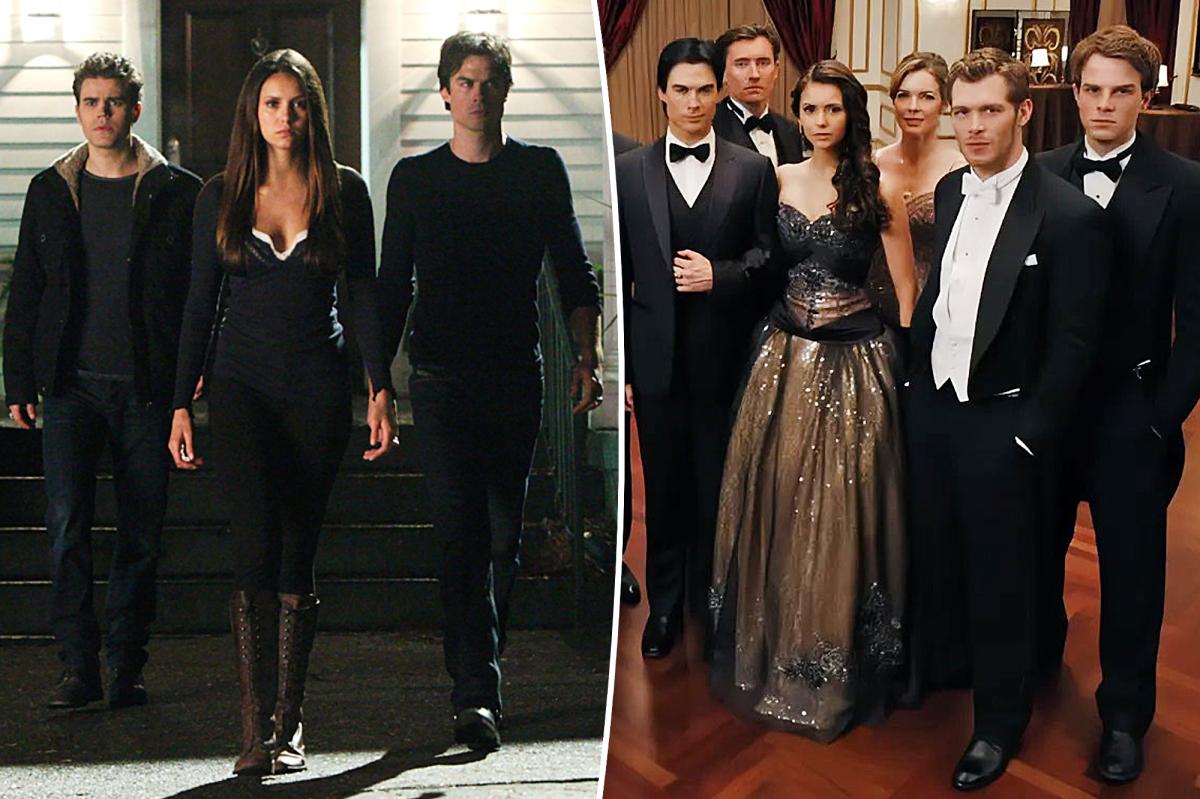
“Vampire Diaries” alum Nathaniel Buzolic accused one of his former co-stars of blacklisting him from fan conventions because of his pro-Israel stance.
“I’m gonna spill some tea for you right now if you’re a fan of ‘The Vampire Diaries’ or ‘The Originals,’” he began in an Instagram Reel Monday.
“There’s an actor I have worked with who has had me banned from attending fan events if he’s there, quietly.”
Buzolic, who played Kol Mikaelson on “The Vampire Diaries” and “The Originals,” claimed that the unnamed actor doesn’t publicly share his solidarity with the Palestinian people, “probably because he just wants to protect his career.”
The Australian actor went on to describe Arab Palestinians, whom he claims the anonymous actor secretly supports, in expletive terms.
“But he also wanted to stop me from getting work and meeting with fans at fan events,” he continued. “So if you’ve noticed my absence, that’s why.”
“Cowards, cowards, because they won’t publicly share their support, but they want to stop people like me from earning an income and getting work,” he added before ending the video with “always and forever, eh” — the sacred family mantra associated with the Mikaelson family in “The Originals.”
He added in his caption, “Telling the truth will always cost you something but at least you will never become a coward. I remember when he didn’t want to do fan events cause he thought he was above that. Can you guess who?”
Buzolic made his debut in “The Vampire Diaries” — starring Nina Dobrev, Paul Wesley and Ian Somerhalder — during Season 3 in 2012.
Want more celebrity and pop culture news?
Start your day with Page Six Daily.
Thanks for signing up!
Enter your email address
Please provide a valid email.
By clicking above you agree to the Terms of Use and Privacy Policy.
Want celebrity news as it breaks?
His character Kol was one of the siblings in the Mikaelson family, which also included fan-favorite characters Klaus (Joseph Morgan), Elijah (Daniel Gillies) and Rebekah (Claire Holt).
He reprised his role in the spinoff series, “The Originals,” which ran for five seasons from 2013 to 2018.
Buzolic also starred in a second spinoff series, “Legacies,” from 2018 to 2022.
The actor has publicly voiced his support for Israel for years, frequently visiting the country and posting about it on social media.
Following the Oct. 7, 2023 attacks in Gaza, he described the pro-Palestinian movement as “satanic” and that anyone who supports it is “the devil.”
Image gallery


Why did El Salvador just blow up a Haiti gang HQ? | BBC News
El Salvador's president says his troops have destroyed the headquarters of one of Haiti largest criminal organisations. The attack …


‘Devastated’: Ole Miss students speak out after apparent racist gesture
Three Black Ole Miss students have spoken out in an interview with CBS News after an apparent racist gesture was...


Israeli airstrike hits Gaza hospital during ceasefire
A doctor and a 13-year-old boy were among six people killed when the strike hit Nasser Hospital's surgical department. At...


Are Putin, Trump and Zelensky any closer to making peace in Ukraine? | Global News Podcast
Negotiations to end the war in Ukraine have intensified, after a nine month gap. President Donald Trump's envoys Jared Kushner...


Rep Garcia responds to Blanche’s Oversight Committee threat
Democratic Congressman Robert Garcia tells CNN's Kaitlan Collins on how the Democrats plan to respond to Attorney General …


Who Is Colette Kress, the Interim Nvidia CEO Replacing Jensen Huang?
Nvidia said on Thursday that Colette Kress, the company’s chief financial officer, would be the company’s interim chief executive officer,...


Witnesses describe scene of DC shooting in gym
Witnesses of the shooting in Washington, DC's Logan Circle neighborhood described their experience inside the gym where it …


Could under-25s lose sickness benefits in the UK? | BBC Newscast
Today, the boss of tech giant Nvidia has quit following revelations of an affair with a suspected Chinese spy. Jensen...


Black voters in Mississippi celebrate Colom's win
Voters celebrated Democrat Scott Colom's US Senate victory on the campus of Tougaloo College, a historically Black college in …


Shooter dead after firing at officers, turning gun on himself
The man, who police say shot and killed one person and wounded four others in Washington, DC, appears to have...
-

 HealthNews2 weeks ago
Comfort food may be exposing you to over 1,000 microplastic particles a week
-
 Entertainment2 weeks ago
Jesse Sisgold Exits Skydance for Role at RedBird Capital
-

 Business2 weeks ago
‘It’s only when you see 49-ton trucks in China running on batteries that you realize how serious electrification is’: Octopus Energy CEO Greg Jackson on Europe’s incumbency problem
-
 Entertainment2 weeks ago
Alexander Payne Sued for Plagiarism Over ‘The Holdovers’ by Writer
-
 Entertainment2 weeks ago
Inde Navarrette Makes Shane Gillis Quip ‘SNL’ Opening Monologue
-
 Entertainment2 weeks ago
Severed Human Hand Costume on Red Carpet
-

 Politics5 days ago
60 Minutes Transcript: Donald Trump, the 2026 post-midterm elections interview
-

 HealthNews1 week ago
Thousands of bottles of blood pressure medication recalled by FDA